2 Days in Granada: The Perfect Weekend Itinerary
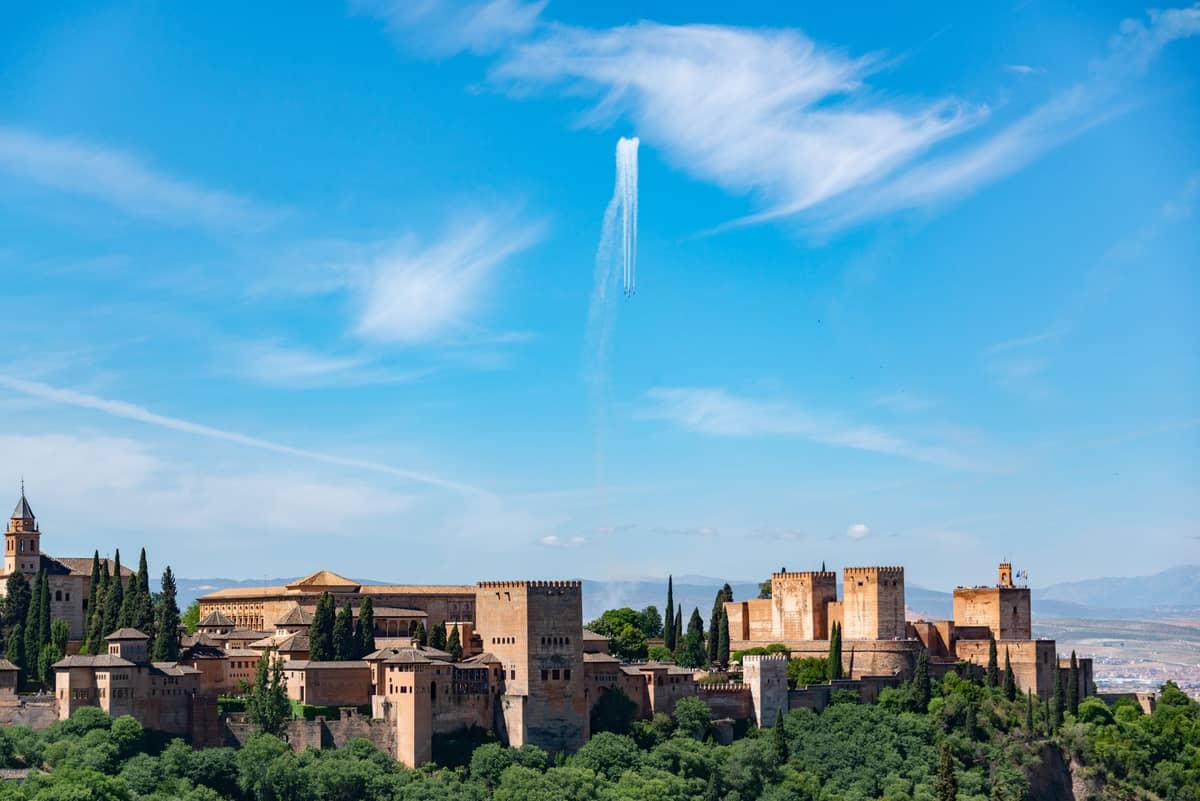
Two days in Granada, Spain is enough to cover the Alhambra, the Albaicín, the cathedral quarter, flamenco in Sacromonte, and the city's legendary free tapas culture — if you plan correctly. This guide gives you a day-by-day structure, realistic timing estimates, and the booking details that most itineraries leave out.
Tickets & tours
Live prices and dates from our booking partner. If you book, we may earn a commission at no extra cost to you.
TL;DR
- Book Alhambra tickets before anything else — daily quotas sell out weeks or months ahead, and the Nasrid Palaces require a fixed timed entry slot.
- Devote Day 1 entirely to the Alhambra complex (plan 4 hours minimum) and the Albaicín at sunset. Day 2 covers the cathedral quarter, Sacromonte, and the city centre.
- The Granada Cathedral only opens to tourists after 14:00 on Sundays — a detail that catches many weekend visitors off guard.
- Granada sits at 738 m elevation in Andalusia: summers push past 35°C and winters can freeze at night. April, May, September, and October offer the most comfortable conditions for walking.
- Free tapas with every drink order is standard practice in Granada — lean into it and you will eat well without spending much.
Before You Arrive: The One Thing You Cannot Leave to Chance
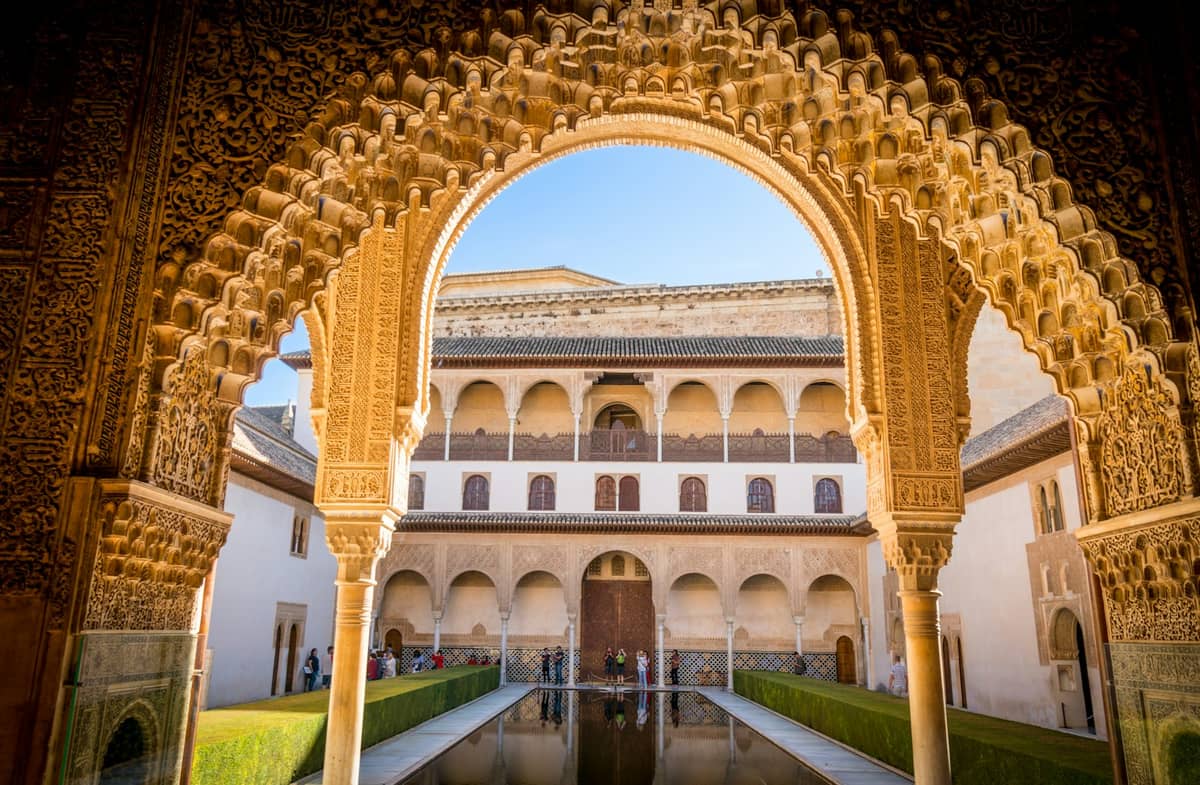
The Alhambra operates on a strict daily visitor quota. In peak months (March through October), tickets for the most coveted section, the Nasrid Palaces, routinely sell out weeks or even months in advance. If you are planning a weekend trip and have not yet secured tickets, stop reading this and check availability at the official Patronato de la Alhambra y Generalife ticketing site first. No other planning decision matters as much.
⚠️ What to skip
Do not assume you can buy Alhambra tickets on the day. Walk-up availability is rare from March through October. Even in the quieter months of November through February, weekend slots can disappear quickly. Buy online at the official patronato site as far in advance as possible, and note that your Nasrid Palaces entry time is fixed — arriving outside that window means you will not get in, regardless of which other areas you have visited, and tickets collected on-site must be withdrawn at least one hour before your assigned Nasrid Palaces slot.
Standard general admission (Alhambra General) covering the Alcazaba, Nasrid Palaces, and Generalife is listed at around €22.27 per adult, though prices are subject to change — verify the current rate on the official site before booking. There are also night visit tickets for the Nasrid Palaces if you want a dramatically different experience, though these are even more limited in availability.
If official tickets are sold out, guided tours from authorised operators sometimes hold allocations. These cost more but can be the only viable option if you have left booking late. A Granada City Pass bundles the Alhambra with the cathedral and other sites, sold through major booking platforms — worth comparing against buying separately if you plan to visit multiple paid monuments.
Day 1 Morning: The Alhambra Complex
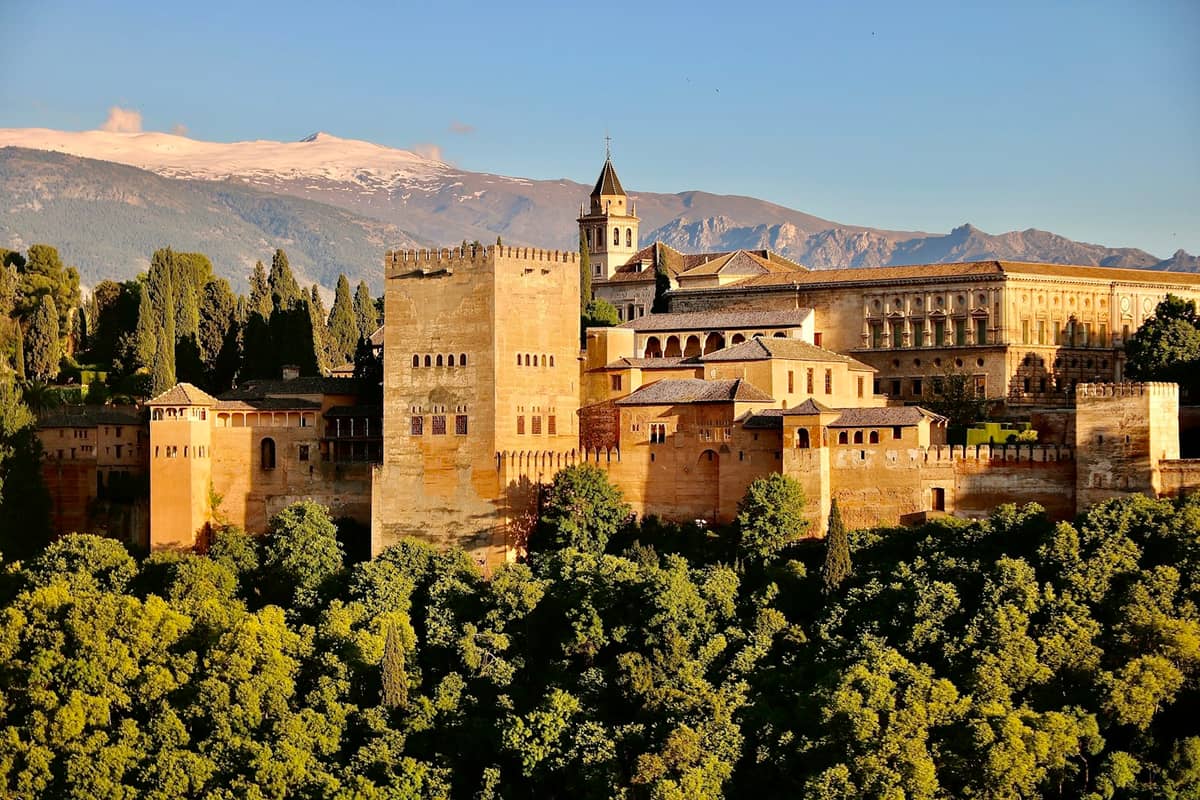
Arrive at the Alhambra gates for opening at 08:30. Early entry is not just about beating crowds — in July and August, afternoon temperatures on the hill regularly exceed 35°C, and the site has limited shade. The Alhambra complex covers the Alcazaba (the original military fortress with its panoramic tower), the Nasrid Palaces (the Moorish royal apartments that are the main draw), the Palace of Carlos V, and the Generalife gardens. Budget at least 3.5 to 4 hours for the full complex.
- Alcazaba Start here — it has flexible entry during opening hours and the Torre de la Vela gives the best overview of the whole complex before you enter the palaces.
- Nasrid Palaces The fixed time slot on your ticket governs entry here. Plan your morning around it. The Patio de los Leones and the ornate stucco ceilings of the Sala de los Abencerrajes are the visual centrepiece of any Granada visit.
- Palace of Carlos V A Renaissance circular courtyard built inside the Alhambra complex — architecturally striking and far less crowded than the Nasrid Palaces.
- Generalife The summer gardens and water channels of the sultans' country estate. Go late in your visit when the main palace crowds have thinned.
✨ Pro tip
If you collected physical tickets at the on-site office, you must do so at least one hour before your Nasrid Palaces entry time. For most visitors arriving at 08:30, a 09:00 or 09:30 palace slot works cleanly. If buying for a collection, factor in queue time at the office.
Day 1 Afternoon and Evening: The Albaicín and Sunset at San Nicolás
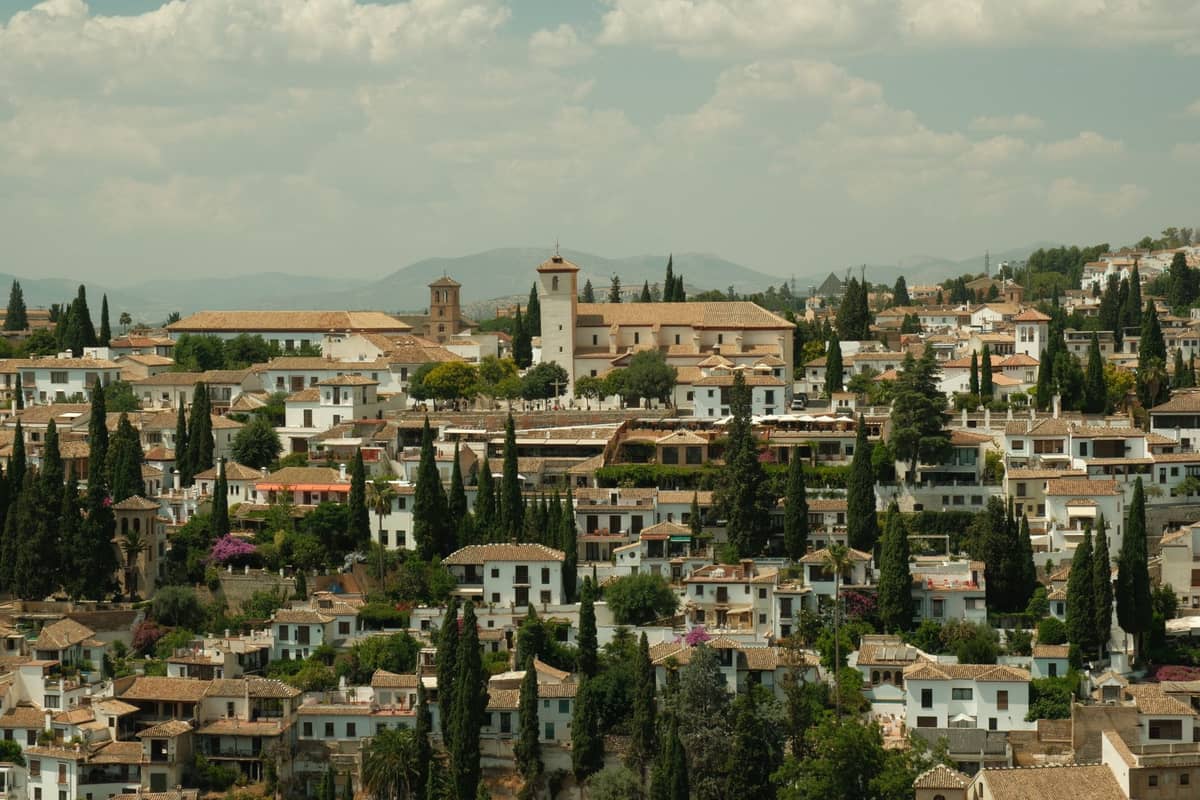
After the Alhambra, descend to the Carrera del Darro — the narrow street running along the Darro river at the base of the Alhambra hill — and begin working your way up into the Albaicín. This medieval hillside quarter is a UNESCO World Heritage Site in its own right, listed together with the Alhambra. Its whitewashed carmenes (walled garden houses), mosque ruins, and Moorish-era bathhouses feel genuinely distinct from the rest of Andalusia.
The Bañuelo Arab Baths on Carrera del Darro are one of the best-preserved 11th-century hammams in Spain and admission is low — worth 20 minutes of your time. Further up, the Casa de Zafra provides context on Nasrid domestic architecture. Budget 2 to 3 hours for the neighbourhood before making your way to the viewpoint.
The Mirador de San Nicolás is where every photography of Granada you have ever seen was taken — the Alhambra directly opposite, the Sierra Nevada behind it when skies are clear. It gets extremely crowded at sunset in high season, with musicians, vendors, and hundreds of visitors. Arrive 30 to 45 minutes before sunset to secure a decent vantage point. If the crowd puts you off, Mirador de San Miguel Alto is a steeper climb but much quieter with equally strong views.
💡 Local tip
Sunset time in Granada shifts significantly across the year — from around 18:00 in December to after 21:30 in June. Plan your afternoon accordingly. In summer, you have plenty of time after the Alhambra. In winter, the light goes faster and you may need to skip some Albaicín detours.
End Day 1 with dinner in the city centre. Granada's free tapas tradition means that every drink order at most bars comes with a small plate of food at no extra charge. Over two or three drinks, you can eat a full and varied meal. The area around Plaza Nueva and Calle Navas is reliable for this, though locals tend to drift further into the Realejo district or towards Campo del Príncipe for spots with less tourist markup.
Day 2 Morning: The Cathedral Quarter and Royal Chapel
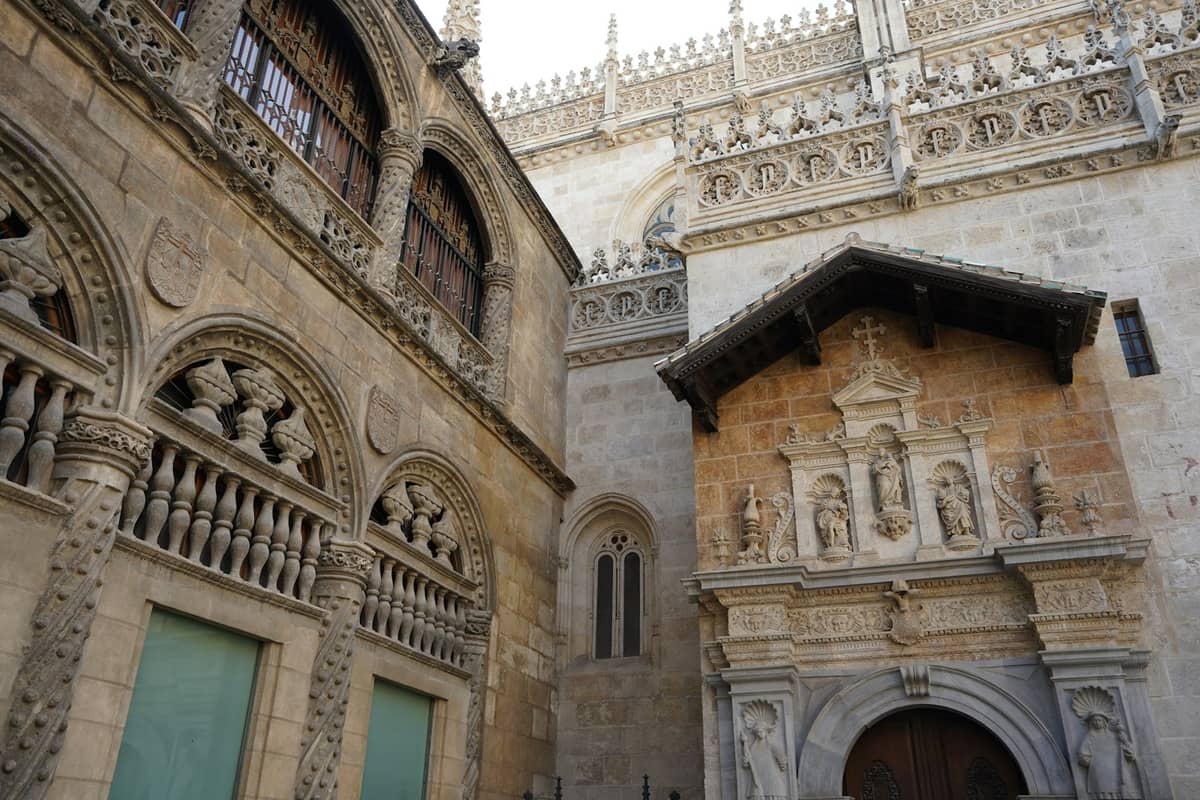
The Granada Cathedral is one of the largest in Spain, a hulking Renaissance structure begun in 1523 on the site of the city's main mosque. Attached to it is the Capilla Real (Royal Chapel), the mausoleum of Ferdinand and Isabella — the monarchs who commissioned Columbus's voyages and took Granada from the Nasrid dynasty in 1492. The chapel houses their original coffins, their personal art collection, and Isabella's crown and sceptre.
One essential Sunday warning: the Granada Cathedral does not open for tourist visits until 15:00 on Sundays. If you are doing a strict Saturday-Sunday weekend, plan your Sunday morning around other activities and save the cathedral for the afternoon. The Royal Chapel has different hours and is managed separately — check current opening times on the official site before you go, as they vary by season and religious calendar.
The immediate area around the cathedral is worth exploring at ground level. The Alcaicería — originally the Nasrid silk market, now a reconstructed souvenir bazaar — runs alongside it. It is unabashedly touristy, but the narrow alley layout gives an impression of the original mercantile district. The Corral del Carbón, a 14th-century Nasrid caravanserai tucked behind the cathedral, is free to enter and one of the few remaining examples of its kind in Spain.
Day 2 Afternoon: Sacromonte and Flamenco
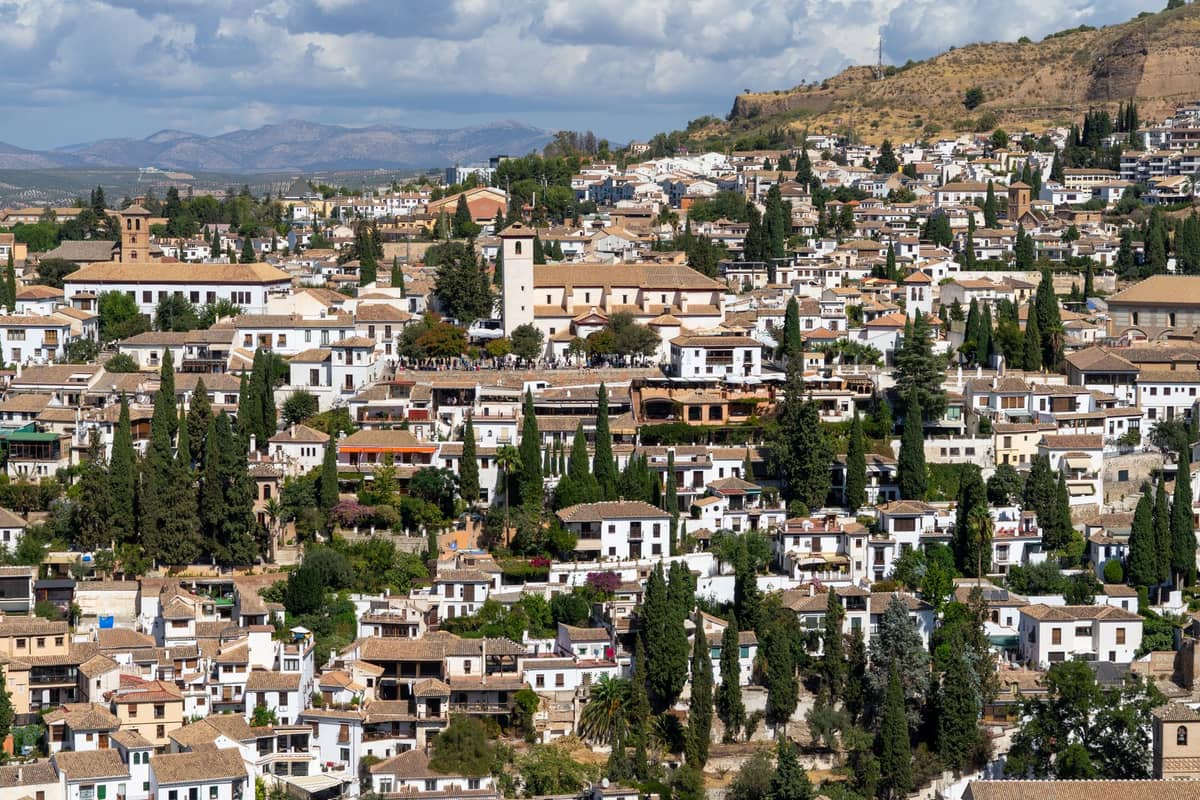
From the cathedral area, make your way toward Sacromonte — the hillside neighbourhood of cave dwellings facing the Alhambra. This is where Granada's Romani community has lived for centuries and where the city's distinctive flamenco style, known as zambra, developed. It is not a theme park version of flamenco culture: the neighbourhood has real residents, real history, and real working artists alongside the tourist venues.
The Museo del Sacromonte (Museo Cuevas del Sacromonte) sits at the top of the hill and explains the history of cave dwelling, gitano culture, and traditional crafts in Granada. It is genuinely educational rather than performative, and the views over the Darro valley from the site are excellent. Budget 45 minutes to an hour.
For flamenco, evening shows in the cave venues of Sacromonte are the most atmospheric option in Granada. These are tourist-oriented performances, but in a genuine physical setting — actual cave rooms carved into the hillside. Tickets typically need to be booked in advance. For more context on how to choose between the different flamenco options in Granada, the Granada flamenco guide breaks down the main venues, price ranges, and what to expect.
Practical Logistics: Getting Around and Where to Stay
Granada is a compact and largely walkable city. The main tourist circuit — Alhambra hill, Albaicín, cathedral quarter, Sacromonte — can be covered on foot, though the hills demand some stamina. The city has a municipal bus network and a Metro line. Minibuses (lines C30, C31, C32) connect the city centre with the Alhambra hill and the Albaicín. Taxis and app-based VTC services (Uber, Cabify) are available for evenings or when you are carrying luggage.
For neighbourhood choice, staying in or near the city centre (around Gran Vía or Plaza Nueva) puts you within walking distance of everything. The Albaicín and Realejo are atmospheric options with more character, though Albaicín streets are steep and cobbled. Read through the Granada accommodation guide before committing, especially if you are travelling with limited mobility or heavy bags.
- Centro / Gran Vía area Most convenient for first-time visitors. Flat terrain, close to the cathedral and the main bus stops for the Alhambra. Widest range of hotels at all price points.
- Albaicín Atmospheric and close to the viewpoints, but streets are narrow and steep. Not ideal with large luggage or mobility issues. Parking is essentially impossible.
- Realejo The former Jewish quarter, now residential and popular. Quieter than the centre, good tapas spots, short walk to the cathedral and Alhambra bus stops.
- Alhambra hill (Parador) The Parador de Granada sits inside the Alhambra grounds — the most singular place to stay in the city, and priced accordingly. Book months in advance.
ℹ️ Good to know
Granada's Federico García Lorca Airport (GRX) is around 15-18 km from the city centre. An airport bus connects to central stops including the bus station. Taxi fares to the centre are regulated but change periodically — check current rates with the Ayuntamiento de Granada or verify in-app before travel. The city is also well-connected by RENFE train from Madrid, Sevilla, and other Andalusian cities, and by bus from across Spain.
Two days in Granada Spain covers the major monuments and gives you a real sense of the city's character, but it does leave things out. The Monasterio de San Jerónimo, the Parque de las Ciencias (a serious science museum, popular with families), the Monastery of La Cartuja, and the Carmen de los Mártires gardens all deserve time. If you can extend to three or four days, the full Granada guide will give you the additional structure you need.
FAQ
How many days do you actually need in Granada?
Two full days is enough to visit the Alhambra, Albaicín, and the cathedral quarter without feeling rushed, provided you plan logistics in advance. Three days allows you to add Sacromonte more comfortably, explore the city at a slower pace, and fit in a day trip to the Sierra Nevada or the Alpujarras villages. Four days gives you genuine breathing room.
Can you buy Alhambra tickets on the day?
Occasionally, yes — there is sometimes a small allocation of same-day tickets released at the on-site ticket offices. But from March through October, and on most weekends year-round, the daily quota sells out well in advance. Counting on walk-up tickets is a significant gamble that could ruin the entire trip. Book online at the official Patronato de la Alhambra y Generalife website as early as possible.
Is Granada Cathedral open on Sundays?
The cathedral holds religious services on Sunday mornings, which means tourist visits are restricted until 15:00. If your weekend trip includes a Sunday, plan other activities for Sunday morning and visit the cathedral in the afternoon. The Royal Chapel (Capilla Real) has separate management and hours — check the official site for current Sunday times.
Where is Granada, Spain?
Granada is in Andalusia, in southern Spain, at the foot of the Sierra Nevada mountains. It sits at approximately 738 metres elevation, which makes it significantly cooler than the Andalusian coast, especially in winter. The nearest major airport is Granada-Jaén (GRX), about 15-18 km from the city centre. By high-speed train, it is around 3.5 hours from Madrid.
What is the best time of year for a 2-day Granada visit?
April, May, September, and October offer the most comfortable conditions for the amount of walking this itinerary requires. Daytime temperatures sit around 22-27°C, precipitation is relatively low, and the light is good for photography. July and August are dry but brutal, with afternoon highs regularly above 35°C and peak tourist crowds. December through February can see near-freezing nights but rewards visitors with quiet monuments and the possibility of snow on the Sierra Nevada backdrop.
Tickets & tours
Live prices and dates from our booking partner. If you book, we may earn a commission at no extra cost to you.
Planning a trip? Discover personalized activities with the Nomado app.