Museo Cuevas del Sacromonte: Inside Granada's Cave-Dwelling Culture
The Museo Cuevas del Sacromonte (officially the Centro de Interpretación del Valle del Darro) preserves and interprets the cave-house tradition of Granada's most storied hillside neighborhood. Set into the slopes of Barranco de los Negros, the museum combines recreated interiors, ethnographic exhibits, and sweeping Darro Valley panoramas into a single compact visit that contextualizes everything else you'll see in Sacromonte.
Quick Facts
- Location
- Barranco de los Negros s/n, Sacromonte, 18010 Granada, Spain
- Getting There
- Bus C34 from Granada centre toward Albaicín–Sacromonte; private cars are restricted. Walk uphill from the bus stop along Verea de Enmedio.
- Time Needed
- 1–1.5 hours for a self-guided visit; up to 2 hours for a guided group tour
- Cost
- General admission 5 €; children under 10 free; guided group visits 6 € per person. Verify current prices at sacromontegranada.com before visiting.
- Best for
- Cultural history, Romani heritage, ethnographic detail, Darro Valley views
- Official website
- sacromontegranada.com
What the Museo del Sacromonte Actually Is
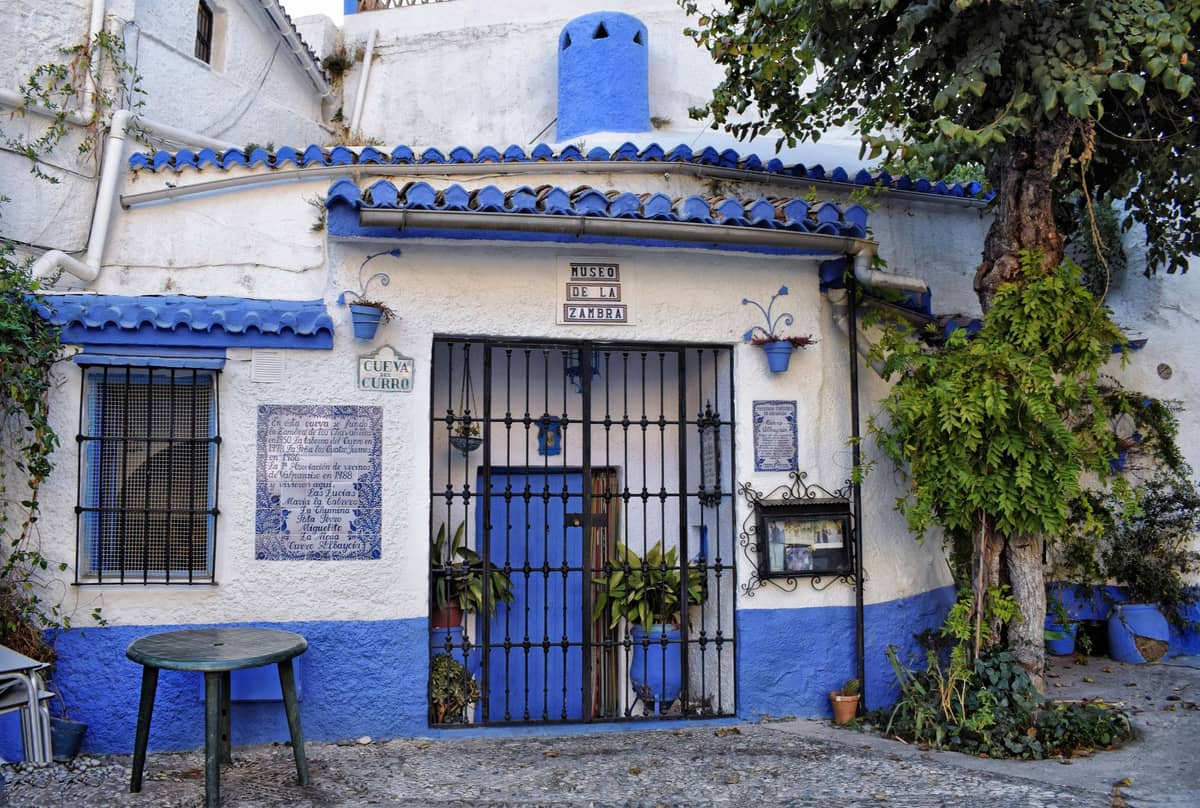
The full official name is Museo Cuevas del Sacromonte, Centro de Interpretación del Valle del Darro, and understanding that double identity matters before you arrive. This is simultaneously a cave-house museum and an ecological interpretation center. You are not walking through a single grand exhibition hall. You are moving between a series of genuine cave dwellings carved into the hillside, each fitted out to show how different inhabitants lived and worked: a blacksmith's cave, a weaver's cave, a potter's space, a domestic interior with whitewashed walls and low ceilings that retain the cool of the rock even on August afternoons when the temperature outside climbs past 35°C.
The Sacromonte neighborhood has been associated with Granada's Romani community for centuries, and the museum takes that heritage seriously without reducing it to spectacle. Panels and reconstructed objects address daily life, craft traditions, and the way the cave-dwelling community developed its own social structures on these slopes overlooking the Alhambra. If your only encounter with Sacromonte so far has been through flamenco show marketing, this museum offers necessary grounding.
ℹ️ Good to know
Opening hours are seasonal. Summer schedule (15 March – 14 October): 10:00–20:00, last entry 19:40. Winter schedule (15 October – 14 March): 10:00–18:00, last entry 17:40. Closed 25 December and 1 January. Phone: +34 958 215 120.
The Walk Up: What to Expect Before You Arrive
The approach to the museum is itself part of the experience, and visitors who underestimate the uphill walk sometimes arrive flustered. From the bus C34 stop, you follow Calle Verea de Enmedio upward through the characteristic whitewashed lanes of Sacromonte. The path is uneven in places, the gradient is real, and on summer mornings it is already warm by 10:00. Wear flat, closed shoes with grip. In winter, the same path can be slick after rain.
Private vehicles are restricted in this part of the historic center, so driving is not a realistic option for most visitors. The bus C34 is the standard route from central Granada, and it connects conveniently with the Albaicín network. Plan about 15 minutes on foot from the bus stop to the museum entrance.
⚠️ What to skip
The museum is on a hillside reached by steep, uneven lanes. Visitors with significant mobility limitations should contact the museum directly at info@sacromontegranada.com or +34 958 215 120 before visiting. The official site does not specify step-free access routes.
The walk rewards patience. As you climb, the city recedes and the landscape opens up over the Darro Valley. By the time you reach the museum entrance, you already have a working understanding of why people settled here: sheltered hillside, proximity to water, and a natural fortress-like position. This topographic logic is something the cave dwellings of Sacromonte share with the broader neighborhood history.
Tickets & tours
Live prices and dates from our booking partner. If you book, we may earn a commission at no extra cost to you.
Flamenco show in a Sacromonte cave in Granada with drink
From 26 €Instant confirmationFree cancellation2-hour guided walking tour of Albaicin and Sacromonte
From 15 €Instant confirmationFree cancellationGuided tour of the Caminito del Rey from Granada
From 135 €Free cancellationGuided tour of Albaicin and Sacromonte
From 14 €Instant confirmationFree cancellation
Inside the Caves: What You See and How It Changes by Time of Day
The museum's reconstructed caves are arranged along the Barranco de los Negros slope. Each cave is a discrete room or suite of rooms, furnished with period tools, textiles, and domestic objects. The ceilings are low by modern standards. The walls are thick and unfinished at the rock, smoothed toward the entrance where guests would have sat. Ventilation shafts cut through to the surface let in threads of natural light that shift noticeably between morning and afternoon.
In the morning, the caves facing east catch angled light that picks out texture in the whitewash and the grain of wooden furniture. By midday the light is flatter and less interesting photographically, but the air inside stays noticeably cooler than outside, which in July is a genuine relief. Late afternoon, roughly 16:00 to 18:00 in summer, brings warmer light on the exterior terraces and on the valley views, making it the best window for photography of the landscape rather than the interiors.
The ethnographic displays cover blacksmithing, ceramics, weaving, and domestic routines. The quality of the reconstructions is solid rather than spectacular: this is not a slick heritage attraction with touch screens and dramatic lighting design. It is a careful, relatively low-budget effort to preserve material culture that could easily have been lost. That restraint is either appealing or underwhelming depending on what you expect from a museum visit.
💡 Local tip
Photography is generally permitted in the caves. Morning visits (10:00–12:00) offer the best natural light inside individual cave rooms. Bring a wide-angle lens or phone setting if you want to capture full interiors: the spaces are narrow.
Historical and Cultural Context
Sacromonte's cave-dwelling tradition developed over centuries, with the hillside becoming particularly associated with Granada's Romani population from the 15th and 16th centuries onward. The caves were not temporary shelters: they were permanent homes, insulated by the earth against both summer heat and winter cold, and they were modified and expanded by generations of families. By the 20th century, the community had developed a dense social and artistic culture rooted in these spaces, including the flamenco tradition that Sacromonte is now internationally recognized for.
The museum's dual identity as an interpretation center for the Darro Valley means it also addresses the ecology and geography of the ravine below, placing the human settlement within the wider landscape. For visitors planning to spend more time in the area, the Sacromonte neighborhood offers significant context for understanding the museum's exhibits. The 1963 flooding of the Darro devastated many cave homes and displaced much of the community; the museum acknowledges this rupture in the neighborhood's history without sanitizing it.
Sacromonte's cultural heritage does not exist in isolation. The hillside sits within a broader Moorish and post-Reconquista landscape that includes the Abadía del Sacromonte, the abbey founded in the early 17th century just above the cave district, and the Albaicín quarter below. Understanding the layered history of these slopes gives the museum considerably more depth than it appears to have at first glance.
The Valley Views: An Underappreciated Bonus
Several of the cave terraces open onto direct, unobstructed sightlines across the Darro Valley toward the Alhambra and the Sierra Nevada beyond. These are not advertised as the main attraction, and most general guides overlook them entirely in favor of the cave interiors. In clear weather, and Granada has roughly 300 sunny days per year, the view from the upper terraces of the museum is genuinely striking: the red walls of the Alhambra set against snow-capped peaks, with the ravine dropping away below.
This is a different vantage point from the famous Mirador de San Nicolás in the Albaicín: less crowded, less formal, and with a stronger sense of integration into the landscape rather than observation of it. In late afternoon in autumn, when the Sierra Nevada has its first snow and the air is clear, the view across the valley from the museum terraces is worth the entrance fee on its own.
Who Should Visit and Who Might Not
The Museo Cuevas del Sacromonte is not a large or elaborate institution. A self-guided visit covers the key spaces in 60 to 90 minutes, and if you have a low tolerance for modest production values or text-heavy exhibits, you may find it underwhelming. The interpretive panels are informative but not dramatically presented. The reconstructed caves are evocative but not immersive in the way of a high-budget living history experience.
Visitors who come with specific interest in Romani culture, ethnographic history, or the social history of Andalusia will find genuine substance here. So will anyone who wants a quieter alternative to the crowds around the Alhambra and who enjoys the combination of cultural content and outdoor landscape in a single visit. At 5 euros general admission, the risk is low.
Travelers prioritizing efficiency and maximum monument density should note that the uphill walk and moderate exhibit depth make this a secondary rather than primary stop. If you are working through Granada's major sites, the full Granada attractions list will help you decide where this fits in your itinerary. Those with only a day or two in the city should see the Alhambra and Albaicín first and add this museum if time allows.
Practical Walkthrough: Visiting from Start to Finish
Take bus C34 from central Granada toward the Albaicín–Sacromonte terminus. From the stop, walk uphill following signs for the Museo Cuevas del Sacromonte along Verea de Enmedio and into Barranco de los Negros. The walk takes roughly 15 minutes at a moderate pace. Purchase tickets at the entrance: 5 euros general, children under 10 free. Guided group visits cost 6 euros per person and should be booked in advance.
The site is open every day except 25 December and 1 January. In summer (15 March to 14 October), hours run 10:00 to 20:00 with last entry at 19:40. In winter (15 October to 14 March), hours are 10:00 to 18:00, last entry 17:40. Allow 60 to 90 minutes for the self-guided route, or up to two hours if you join a guided group.
After the museum, the logical extension is a walk further along the Sacromonte hillside toward the Abadía del Sacromonte, or a descent into the Albaicín for lunch. The Albaicín walking tour guide outlines a practical route that connects these neighborhoods efficiently.
Insider Tips
- Visit on a weekday morning in spring or autumn: weekends draw larger groups and the cave interiors feel noticeably more crowded. The museum rarely reaches the congestion levels of Alhambra or Albaicín viewpoints, but group tours do pass through on fixed schedules.
- The upper terraces of the museum provide one of the least-photographed Alhambra views in Granada. Bring a lens that can capture the full sweep of the valley, and arrive in late afternoon (around 16:30–17:30 in summer) for warm directional light on the Alhambra's red walls.
- In summer, the cave interiors stay cool even when temperatures outside exceed 35°C. If you are mid-way through a hot afternoon city walk, the museum offers genuine temperature relief, not just cultural value.
- The bus C34 schedule changes seasonally. Check the Transportes Rober website or ask at your accommodation for current timetables before relying on a specific departure time.
- If you plan to combine this visit with a flamenco show in Sacromonte, book the show before visiting the museum. Shows at the cuevas typically start in the evening; the museum provides useful context that enriches the performance, particularly the sections on the role of music and dance in cave-community life.
Who Is Museo del Sacromonte For?
- Travelers with a specific interest in Romani heritage and Andalusian social history
- Anyone wanting a quieter, crowd-light alternative to Granada's busiest monuments
- Photography enthusiasts seeking an under-documented Alhambra and Sierra Nevada viewpoint
- Visitors pairing a cultural museum stop with an evening flamenco show in Sacromonte
- Families with children who can handle the uphill walk and benefit from hands-on, tactile exhibits in small cave spaces
Nearby Attractions
Other things to see while in Sacromonte:
- Abadía del Sacromonte
Perched on the slopes above Granada's cave district, the Abadía del Sacromonte is a 17th-century monastery complex built over sacred grottoes tied to the city's early Christian martyrs. It offers a rare combination of religious art, baroque architecture, underground cave chapels, and panoramic views of the Alhambra and the Vega — all within a short walk of the Albaicín.
- Cuevas del Sacromonte (Cave Houses)
Perched on the hillside above the Albaicín, the Cuevas del Sacromonte preserve eleven original cave dwellings that tell the story of the Roma and other communities who shaped one of Granada's most distinctive neighborhoods. The Museo Cuevas del Sacromonte offers a rare, grounded encounter with troglodyte domestic life, traditional crafts, and the cultural roots of flamenco, all within reach of the city center.
- Ermita de San Miguel Alto
Perched at the summit of the Albaicín hills above the Sacromonte neighbourhood, the Ermita de San Miguel Alto rewards the climb with one of the most complete panoramas in Granada. The Alhambra, the Sierra Nevada, and the rooftops of the old city spread out below, and unlike the famous Mirador de San Nicolás, the crowds rarely follow you this far up.
- Flamenco Shows in Sacromonte (Tablaos)
Sacromonte's whitewashed cave tablaos are where Granada's flamenco tradition feels most alive. This is not a polished theatre show. It is zambra performed in low-ceilinged grottoes carved into the hillside, with the Alhambra glowing on the ridge opposite and the smell of candle wax in the air. Here is everything you need to decide if it is worth your evening.
Planning a trip? Discover personalized activities with the Nomado app.