Cuevas del Sacromonte: Inside Granada's Historic Cave Houses
Perched on the hillside above the Albaicín, the Cuevas del Sacromonte preserve eleven original cave dwellings that tell the story of the Roma and other communities who shaped one of Granada's most distinctive neighborhoods. The Museo Cuevas del Sacromonte offers a rare, grounded encounter with troglodyte domestic life, traditional crafts, and the cultural roots of flamenco, all within reach of the city center.
Quick Facts
- Location
- Barranco de los Negros s/n, 18010 Granada, Spain
- Getting There
- Walk uphill from the Albaicín (30–40 min from Plaza Nueva) or take a local bus toward Sacromonte; steep terrain, wear sturdy shoes
- Time Needed
- 1.5 to 2.5 hours for a thorough visit
- Cost
- Adults €5 (self-guided); reduced rates available for groups by prior arrangement
- Best for
- Cultural history, photography, understanding Granada's Romani and flamenco heritage
- Official website
- sacromontegranada.com
What the Cuevas del Sacromonte Actually Are
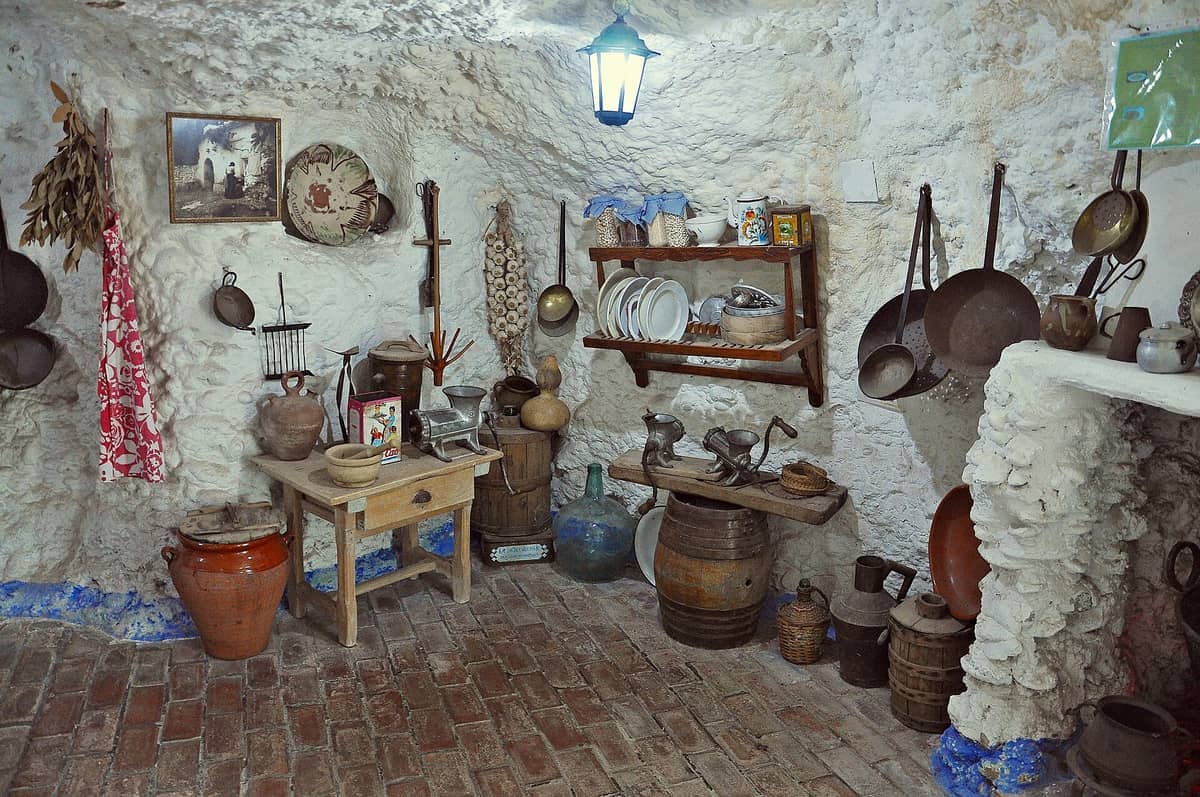
The Cuevas del Sacromonte, formally organized as the Museo Cuevas del Sacromonte, are eleven original cave dwellings preserved on the Sacromonte hillside and opened to the public as a living ethnographic museum. These are not reconstructions or theatrical sets. They are genuine caves, carved into the soft conglomerate rock of the barranco, that families called home for generations. The museum protects and contextualizes them, but the caves themselves remain structurally unchanged: low whitewashed ceilings, compact rooms linked by narrow passages, and a particular smell of cool earth that no amount of renovation fully erases.
Each of the eleven caves is themed around a specific aspect of traditional life in Sacromonte: domestic arrangements, agricultural tools, blacksmithing, weaving, and the rituals of daily existence in a community that had very little by material measure but developed one of the most expressive musical cultures Spain has ever produced. The Roma (Gitano) community settled these slopes in significant numbers after the fall of the Nasrid Kingdom in 1492, and the cave houses became the incubator of the flamenco art form that Granada continues to trade on today.
ℹ️ Good to know
Winter (26 October to 28 March): 10:00–18:00 daily, last entry 17:40. Summer (29 March to 25 October): 10:00–20:00 daily, last entry 19:40. Closed 25 December and 1 January. Verify current hours at sacromontegranada.com before visiting.
The Walk Up: Setting the Scene Before You Arrive
Getting to the museum is part of the experience, for better and worse. The most rewarding approach is on foot from Granada's center, walking through the Albaicín and then climbing the Camino del Sacromonte. The path narrows progressively, the houses along it becoming more eccentric, their whitewashed facades adorned with ceramic plates and potted geraniums. By the time you reach the upper stretch of the barranco, the sound of traffic has dropped away and the Alhambra appears directly across the valley, its towers catching the light with almost theatrical timing.
The walk from Plaza Nueva takes roughly 30 to 40 minutes at a moderate pace. It involves a sustained uphill gradient and some uneven cobblestones, so footwear matters. If the climb is not practical, a local bus serves the Sacromonte area, though departure points and timetables shift periodically. Check with Granada's public transport options before your visit, as the bus schedule to this neighborhood is not as frequent as central routes.
The approach also means that the neighborhood itself becomes part of what you observe. On weekday mornings you may pass residents bringing groceries up on foot or motorbike. On weekend afternoons the path fills with tourists on their way to the flamenco tablaos that operate in the cave venues further along the hill. These two populations coexist with varying degrees of harmony, and watching them navigate the same narrow track tells you something real about what Sacromonte is today.
Tickets & tours
Live prices and dates from our booking partner. If you book, we may earn a commission at no extra cost to you.
Inside the Museum: Eleven Caves, One Coherent Story
The self-guided visit follows an open-air path that connects the caves along the hillside. There is no single linear route enforced by barriers; you move at your own pace between numbered dwellings. The informational panels are available in Spanish and English, and they are denser with historical detail than you might expect from a site this small. The curators have clearly invested in accuracy over spectacle.
The domestic caves are the most arresting. Inside, the temperature drops noticeably, a function of the thick rock insulating the space year-round. Caves that looked scorching from outside in July feel genuinely cool within. In January, they feel warmer than the exposed hillside. This thermal quality is precisely why cave dwelling persisted here long after it became economically unnecessary for some residents. The thick walls also mean near-silence inside, which makes the acoustic difference between interior and exterior feel almost architectural in its own right.
The craft caves document the small industries that Sacromonte families relied on: metalwork, basketry, and particularly the forging of implements. Several of the displays include original tools rather than reproductions, and the explanatory panels are careful to distinguish between what is period-accurate and what is reconstructed for display. One of the caves deals directly with flamenco, presenting the instruments, costumes, and spatial arrangements of performances held in cave venues, offering context that makes a subsequent visit to a live show considerably richer.
If the cultural and historical thread of flamenco interests you beyond the museum's overview, the flamenco shows in Sacromonte take place in working cave venues a short walk away. Experiencing both in the same afternoon, museum first, then a tablao performance in the evening, gives the art form proper grounding.
Views, Light, and Photography Conditions
The museum sits on the south-facing slope of the Sacromonte hill, looking south and southwest toward the Alhambra and the Sierra Nevada range behind it. At midday the light is flat and harsh, producing blown-out whites on the cave facades and muddy shadows in the foreground. Late afternoon, roughly from 16:00 onward in summer and from 14:30 in winter, is when the Alhambra's towers glow amber and the contrast between the whitewashed cave walls and the dark ridge behind them becomes genuinely striking.
Inside the caves, photography is possible but challenging. The interiors are lit with warm artificial light of modest intensity. Wide-angle lenses work better than telephoto, and a phone stabilized against the door frame will often outperform a handheld DSLR in these conditions. The real photographs worth making at this site are from the exterior paths, looking back toward the city with the cave entrances in the foreground and the Alhambra beyond.
💡 Local tip
For the best combination of light and manageable crowds, arrive between 10:00 and 11:00 on a weekday morning. Tour groups tend to arrive mid-morning and peak around noon. Arriving at opening gives you the caves largely to yourself, and the morning light from the east catches the opposite hillside in an appealing way.
Practical Considerations: Terrain, Accessibility, and Seasonal Factors
The museum's terrain is the single most important practical consideration for most visitors. The site is built into a working hillside, with natural stone paths, irregular steps, and unpaved surfaces connecting the caves. It is not wheelchair accessible, and visitors with significant mobility limitations should weigh this carefully. The museum offers a 20% discount on admission for visitors with disabilities, but the physical access constraints are real and not resolved by ticketing policy alone.
For families with young children, the terrain is navigable but requires attention. Pushchairs and prams are not practical. The cave interiors tend to hold the interest of curious children well, particularly the craft displays and the novelty of the spaces themselves. Older children who have some background in Spanish history or who have visited the Alhambra will connect the dots more readily.
Weather affects the experience in specific ways. Rain makes the unpaved paths slippery and reduces the quality of views significantly. Summer afternoons above 35°C are uncomfortable on the exposed sections of the route, though the cave interiors provide genuine relief. The most comfortable visiting conditions are in spring (April to May) and early autumn (September to October), which also align with the best overall months to visit Granada.
Cultural Context: Why This Neighborhood Exists the Way It Does
Sacromonte's identity is inseparable from the history of displacement and marginalization that pushed Roma communities to the hillside in the first place. Understanding this context transforms the museum from a quirky architectural curiosity into something with genuine weight. The neighborhood is documented in the Sacromonte neighborhood guide, which covers the broader area including the cave churches, the abbey, and the street life that continues after the museum closes.
Directly above the cave houses sits the Abadía del Sacromonte, a 17th-century abbey complex with its own complicated history involving sacred relics, the Counter-Reformation, and the Morisco population of Granada. The Abadía del Sacromonte and the cave museum together cover very different chapters of the same hillside's story, and combining them in a single visit takes a half-day rather than two hours.
For visitors approaching Granada's Moorish and post-Reconquista heritage more broadly, the cave museum fits naturally into a wider itinerary. The guide to Granada's Moorish heritage places the Sacromonte within the longer arc of the city's history, connecting it to the Albaicín, the Nasrid Palaces, and the other monuments that define Granada's historical character.
What the Museum Does and Does Not Deliver
At €5 for adults, the Museo Cuevas del Sacromonte is not going to absorb a full day. It is a compact, focused experience, and visitors who arrive expecting a large-scale museum with extensive collections will feel it is over quickly. What it delivers instead is density of specificity: a close, quiet engagement with a very particular way of life in a very particular place. The caves are real. The objects are largely real. The hillside context is immediate and unrepeatable.
What it does not do is romanticize. The displays acknowledge poverty, dislocation, and the ambivalence of tourism's relationship with the neighborhood without turning that acknowledgment into polemic. Visitors who approach the site with curiosity and some patience for informational panels will leave better informed. Visitors who come purely for visual spectacle or Instagram backgrounds may find the interior caves too dark and the exterior paths too rough.
⚠️ What to skip
The site is not suitable for wheelchairs or mobility aids. The paths are steep, unpaved in sections, and include irregular stone steps. If mobility is a concern, assess the terrain honestly before purchasing tickets. There is no partial-access option once inside the site.
Insider Tips
- The cave interiors maintain a relatively constant, cool temperature year-round compared with the exterior. In summer, bring a light layer for inside the caves even if it is 35°C outside, and in winter, the caves will feel warmer than the windy exterior path.
- The museum's exterior terrace areas offer some of the clearest unobstructed sightlines to the Alhambra on the entire Sacromonte hill, without the crowds of Mirador de San Nicolás. Late afternoon is ideal for this view.
- Combine the museum with the Abadía del Sacromonte above and a flamenco show in the evening at one of the cave tablaos for a full Sacromonte day that covers the neighborhood's religious, domestic, and artistic dimensions in sequence.
- The path from the museum back down toward the Albaicín is different from the main Camino del Sacromonte and passes through quieter residential sections. Ask at the ticket desk about the walking routes back to the center before you leave.
- Weekday mornings before noon are consistently quieter than afternoons or weekends. Tour buses from the Alhambra often deposit groups here after midday, so the morning window offers a noticeably different experience of the space.
Who Is Cuevas del Sacromonte (Cave Houses) For?
- History and cultural heritage visitors who want depth behind the Sacromonte neighborhood's reputation
- Photographers looking for authentic architectural subjects and Alhambra viewpoints away from crowded miradors
- Travelers with a specific interest in flamenco who want cultural grounding before attending a live show
- Families with children aged 8 and up who are engaged by hands-on and immersive displays
- Visitors on a budget: at €5 adult admission with children under 10 free, this is one of Granada's better-value cultural experiences
Nearby Attractions
Other things to see while in Sacromonte:
- Abadía del Sacromonte
Perched on the slopes above Granada's cave district, the Abadía del Sacromonte is a 17th-century monastery complex built over sacred grottoes tied to the city's early Christian martyrs. It offers a rare combination of religious art, baroque architecture, underground cave chapels, and panoramic views of the Alhambra and the Vega — all within a short walk of the Albaicín.
- Ermita de San Miguel Alto
Perched at the summit of the Albaicín hills above the Sacromonte neighbourhood, the Ermita de San Miguel Alto rewards the climb with one of the most complete panoramas in Granada. The Alhambra, the Sierra Nevada, and the rooftops of the old city spread out below, and unlike the famous Mirador de San Nicolás, the crowds rarely follow you this far up.
- Flamenco Shows in Sacromonte (Tablaos)
Sacromonte's whitewashed cave tablaos are where Granada's flamenco tradition feels most alive. This is not a polished theatre show. It is zambra performed in low-ceilinged grottoes carved into the hillside, with the Alhambra glowing on the ridge opposite and the smell of candle wax in the air. Here is everything you need to decide if it is worth your evening.
- Mirador de San Miguel Alto
Perched at about 850 metres above sea level in the Albaicín/Sacromonte hills, the Mirador de San Miguel Alto offers one of Granada’s most elevated panoramic views. It is free, effectively always accessible, and rewards the uphill walk with unobstructed sightlines across the Alhambra, the Albaicín, and the Sierra Nevada beyond.
Planning a trip? Discover personalized activities with the Nomado app.