Granada's Moorish Heritage: Beyond the Alhambra
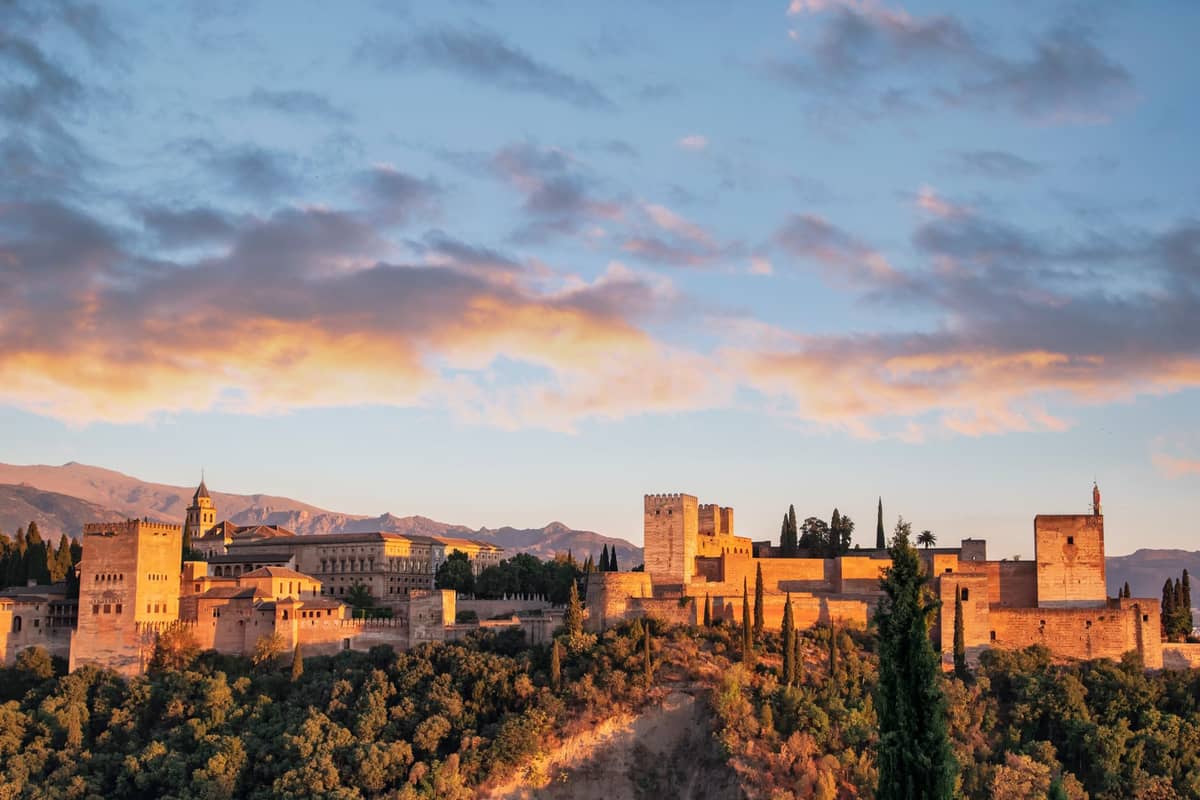
Most visitors spend their entire time in Granada fixated on the Alhambra and never realize the city holds a dozen other Moorish monuments within walking distance. This guide covers the essential sites, ticket combinations, walking routes, and practical details you need to explore Granada's full Islamic heritage.
Tickets & tours
Live prices and dates from our booking partner. If you book, we may earn a commission at no extra cost to you.
TL;DR
- Granada preserves far more Moorish heritage than the Alhambra alone: Arab baths, Nasrid palaces, a medieval caravanserai, and an entire hillside quarter survive across the city.
- The Monumentos Andalusíes pass (around €7) covers four key sites: El Bañuelo, Casa Horno del Oro, Palacio de Dar al-Horra, and the Maristán. The Alhambra Dobla de Oro ticket adds all of these plus full Alhambra access for around €30.
- Most of the secondary monuments are free on Sundays, making that the ideal day to explore them without budget pressure.
- The Albaicín retains its medieval street plan and is a UNESCO World Heritage Site alongside the Alhambra, yet entry is free and crowds thin out below the famous Mirador de San Nicolás viewpoint.
- El Bañuelo is a historic monument, not a functioning spa. Bathing is not permitted; it is one of Spain's best-preserved 11th-century Islamic hammams, visited like a museum.
Why Granada's Moorish Heritage Extends Far Beyond the Alhambra
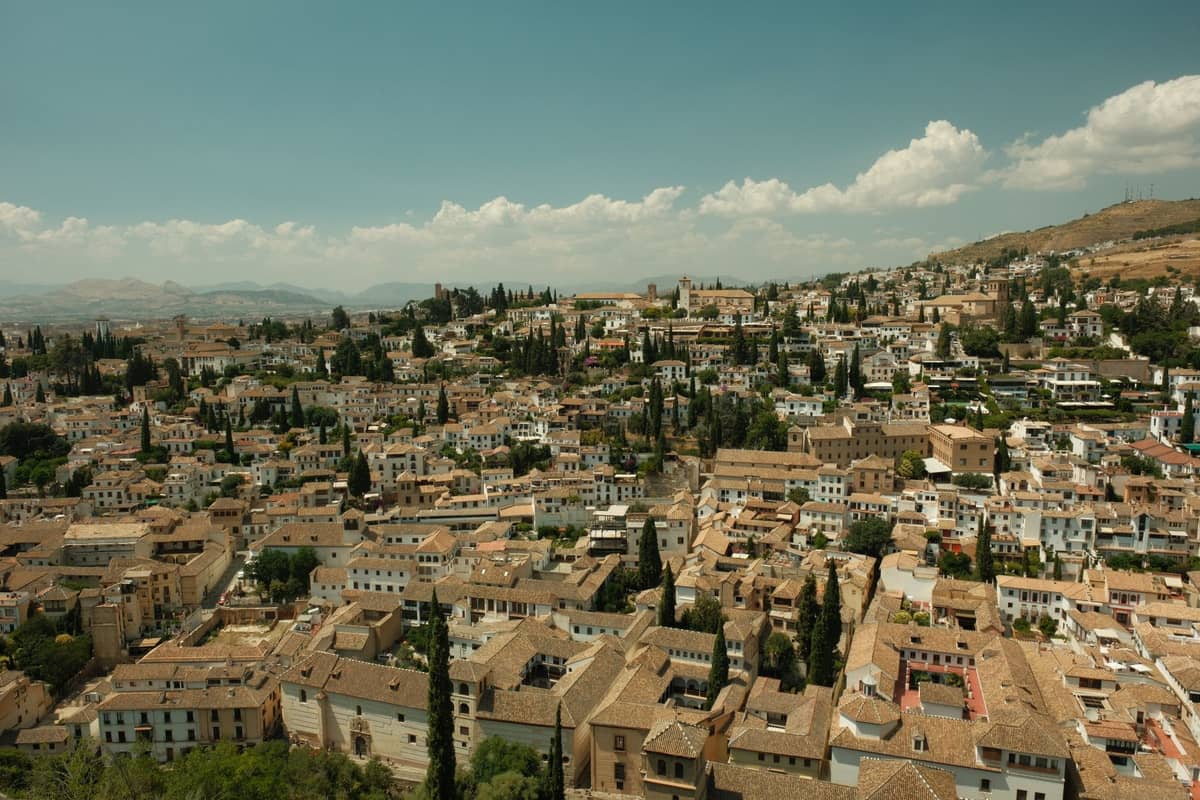
Granada was the last Nasrid sultanate on the Iberian Peninsula, holding out until 1492 when Ferdinand and Isabella completed the Reconquista. During the preceding two and a half centuries, the city accumulated a density of Moorish architecture that rivals any Islamic capital of the medieval Mediterranean world. The Alhambra palace complex is the most spectacular surviving example, but it was never the whole story. Hammams served daily life, caravanserais hosted merchants, palaces dotted the hillside suburbs, and an entire neighborhood, the Albaicín, functioned as a city within a city. Much of that fabric still stands.
Most visitors allocate a single day to Granada, spend it at the Alhambra and leave without knowing what else exists. That is a significant loss. The secondary Moorish monuments are less dramatic than the Nasrid Palaces, but they are more intimate, far less crowded, and often free or very cheap to enter. Combined, they add up to a genuinely different picture of how Islamic Granada actually functioned as a living city, not just a royal showcase.
ℹ️ Good to know
The Alhambra, Generalife, and Albaicín quarter together form a UNESCO World Heritage Site designated in 1984 and extended in 1994. The secondary monuments in this guide fall within or adjacent to that protected zone. Always check opening hours directly with the Patronato de la Alhambra y Generalife before visiting, as schedules change seasonally.
El Bañuelo: The Best-Preserved Arab Baths in Spain
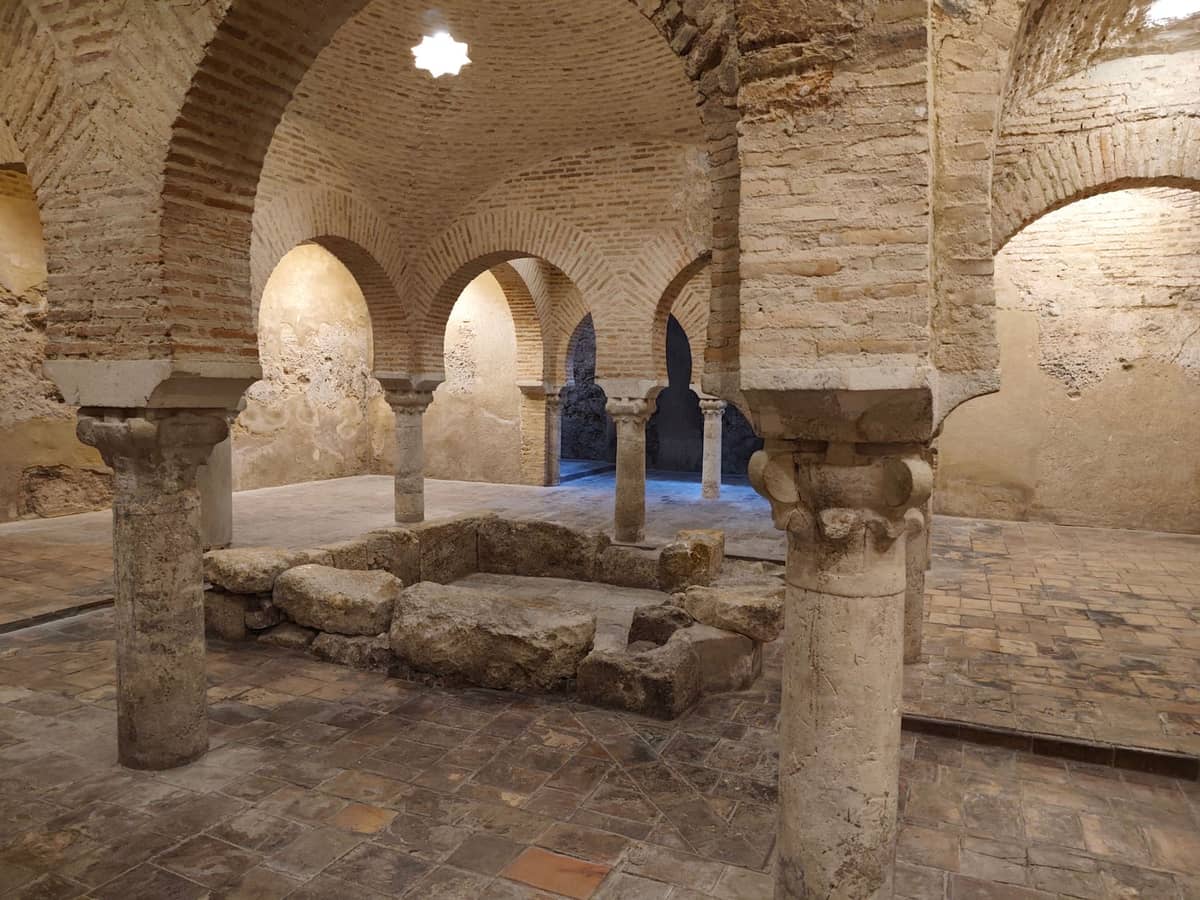
El Bañuelo sits on Carrera del Darro 31, a street that runs along the Río Darro between the Alhambra hill and the Albaicín. Built in the 11th century during the Zirid period, it predates the Nasrid dynasty that built the Alhambra and is one of the oldest standing Islamic monuments in the city. The baths survived because they were converted to various secular uses after 1492 rather than being demolished or heavily remodeled.
Inside, the layout follows a classic hammam sequence: changing room, cold room, warm room, and hot room. Star-shaped skylights in the vaulted ceilings let in diffuse natural light, one of the visual signatures of Andalusí bath architecture. The space is compact but remarkably intact. This is not a reconstruction; the columns, horseshoe arches, and brick vaulting are largely original. El Bañuelo is a monument visited as a museum. No bathing takes place. Visitors walk through the cold, warm, and hot rooms and read interpretive panels about daily life in Moorish Granada.
- Opening hours (winter: 15 Sep – 30 Apr) Daily 10:00–17:00. Closed 25 December and 1 January.
- Opening hours (summer: 1 May – 14 Sep) Daily 09:00–14:30 and 17:00–20:30. Note the midday closure in summer.
- Entry price Around €7, included in the Monumentos Andalusíes pass. Free on Sundays.
- Location Carrera del Darro 31, a 10-minute walk from Plaza Nueva. No significant elevation gain.
⚠️ What to skip
The midday closure in summer (roughly 14:30–17:00) catches a lot of visitors off guard. If you are planning a morning walk along Carrera del Darro, arrive before 14:00 or plan to return in the late afternoon. The summer evening slot (17:00–20:30) is actually ideal: the heat drops, light is better for photography, and crowds are lighter than mid-morning.
The Nasrid Palaces Beyond the Hill: Dar al-Horra, Horno del Oro, and the Maristán
Several Nasrid-period buildings survive in the Albaicín and along the Darro valley that most visitors never find. Three are included in the Monumentos Andalusíes pass alongside El Bañuelo, and each illustrates a different dimension of medieval Moorish urban life.
- Palacio de Dar al-Horra A 15th-century Nasrid palace in the upper Albaicín, traditionally associated with Aixa, mother of the last sultan Boabdil. Two-story arcaded courtyard with original stucco and tile work. One of the least-visited major Islamic monuments in Granada, partly because the uphill walk deters casual tourists. Worth every step.
- Casa Horno del Oro A Nasrid-era house on Carrera del Darro, a short walk from El Bañuelo. The courtyard preserves original carved stucco panels. The name ('House of the Gold Oven') likely refers to a medieval use of the building. Currently used partly as an exhibition and visitor center.
- Maristán Granada's 14th-century Nasrid hospital, founded by Sultan Muhammad V. The word 'maristán' is derived from Persian and refers to a place of care for the mentally ill, an institution rare in medieval Europe. The remains include a fountain basin now relocated to the Plaza de los Aljibes in the Alhambra. The site itself is a shell, but the historical significance is considerable.
The Corral del Carbón: Granada's Medieval Caravanserai
The Corral del Carbón is the only surviving caravanserai (alhóndiga) from the Nasrid period in the Iberian Peninsula. Built in the 14th century as a combined warehouse, merchant hostel, and trading post, it sits in the commercial center of modern Granada, about a five-minute walk from the Cathedral. After 1492 it served as a coal market (hence the name 'Charcoal Yard') and later as a theater. Today it functions as an Alhambra visitor information office and occasional performance venue.
The building is remarkable for its horseshoe-arch entrance gate, one of the most photographed Moorish doorways in the city that is not on the Alhambra hill. The interior courtyard is three stories tall with wooden galleries on the upper levels. Entry is free. Because it doubles as an administrative office, it is accessible during standard working hours without tickets or queues. This makes it the easiest Moorish monument to slot into a city-center walking route, and a useful orientation point if you are starting to explore Islamic Granada for the first time.
✨ Pro tip
The Corral del Carbón is free to enter and requires no ticket. It sits a block from the Alcaicería, Granada's reconstructed Moorish silk market. Combining both in a single 30-minute circuit gives you a strong sense of how the commercial heart of medieval Moorish Granada was organized, without paying anything.
The Albaicín and Sacromonte: Living Moorish Urbanism
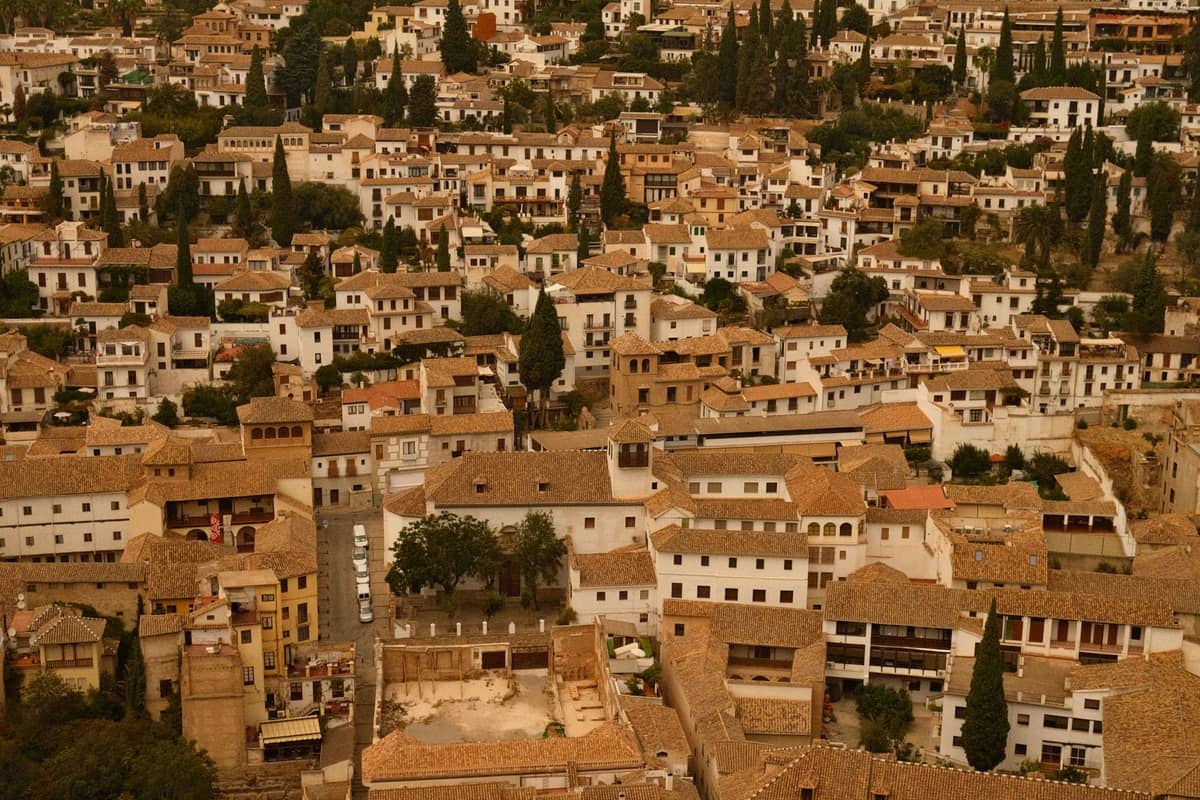
No discussion of Granada's Moorish heritage is complete without the Albaicín, the hillside neighborhood that was the city's main residential quarter during the Nasrid period. It was declared a UNESCO World Heritage Site in 1994, extending the original 1984 designation that covered only the Alhambra and Generalife. The Albaicín walking tour is one of the best ways to navigate it: the street plan is genuinely medieval, with narrow callejones (lanes) that follow Nasrid-era property boundaries, and it is very easy to get disoriented without a route.
The Albaicín is not a museum district. People live here. The neighborhood has a real residential character, with local bars, small grocery shops, and children playing in the squares. The Moorish heritage is embedded in the urban fabric: you will see Arabic-era house walls incorporated into later constructions, Nasrid-period water channels (acequias) still running through gardens, and the remains of the old city walls on the higher slopes. The famous viewpoint at Mirador de San Nicolás gets crowded, especially at sunset, but if you walk 10 minutes further uphill toward the Mirador de San Miguel Alto, the crowds thin dramatically and the views are arguably better.
Adjacent to the Albaicín, the Sacromonte quarter occupies cave dwellings carved into the hillside facing the Alhambra. It has a distinct cultural identity shaped by its Roma community and is the traditional home of Granada's Zambra flamenco style. The Museo del Sacromonte documents both the cave-dwelling architecture and the cultural history of the neighborhood. It is worth the uphill walk for context before attending a flamenco show in one of the cave venues.
Tickets, Passes, and the Sunday Free Entry Rule
Granada's secondary Moorish monuments are managed partly by the Patronato de la Alhambra y Generalife and partly by the city council. This produces a slightly confusing ticket landscape, but the practical options are straightforward.
- Monumentos Andalusíes pass (around €7) Covers El Bañuelo, Casa Horno del Oro, Palacio de Dar al-Horra, and the Maristán. Valid for one day. Buy at the Corral del Carbón information office or at the kiosks at any of the four sites. Also available through the official Alhambra ticketing platform (tickets.alhambra-patronato.es).
- Dobla de Oro combined ticket (around €30 day / €23 night) Includes the full Alhambra visit (Nasrid Palaces, Alcazaba, Generalife) plus all five Moorish city monuments: Corral del Carbón, El Bañuelo, Casa Horno del Oro, Maristán, and Palacio de Dar al-Horra. The night version replaces the daytime Nasrid Palaces visit with the evening session. Must be booked through the official Alhambra ticketing platform. Verify current prices before publishing.
- Sunday free entry Corral del Carbón, El Bañuelo, Casa Horno del Oro, and Palacio de Dar al-Horra are free to enter on Sundays. This is the single best budget strategy for exploring Moorish Granada outside the Alhambra.
- Official guided tour of the Albaicín and Sacromonte Organized by the Alhambra's official body. Around €15 per person, children under 12 free. Runs at 17:00 (October–May) or 18:00 (June–September), lasting approximately 2 hours. Led by accredited heritage guides.
If you are also planning to visit the Alhambra, read the Alhambra tickets guide before making any bookings. The Nasrid Palaces sell out weeks in advance during peak season (March–May, September–October), and the Dobla de Oro pass requires you to select a specific timed entry for the Nasrid Palaces at the time of booking.
💡 Local tip
If your Alhambra visit is already booked and you want to add the city monuments, buy the standalone Monumentos Andalusíes pass rather than attempting to upgrade. The Dobla de Oro is best purchased as a single booking before you arrive. Mixing and matching after the fact is unnecessarily complicated.
Planning Your Route: How to Connect the Sites
The geography works in your favor. El Bañuelo, Casa Horno del Oro, and the Maristán all cluster within a short walk along Carrera del Darro. The Corral del Carbón is a further short walk downhill toward the city center. Palacio de Dar al-Horra requires an uphill walk into the Albaicín from Plaza Nueva, making it the natural endpoint of an uphill circuit rather than a detour.
A practical half-day circuit: start at Plaza Nueva, walk along Carrera del Darro to visit El Bañuelo and Casa Horno del Oro, then continue uphill into the Albaicín to reach Palacio de Dar al-Horra. From there, loop back down through the Albaicín's main squares (Plaza Larga, Plaza San Miguel Bajo) before descending to the city center via the Maristán remains and finishing at the Corral del Carbón. Total walking distance is around 4–5 km with roughly 150 m of elevation gain. Wear flat-soled shoes; the Albaicín cobblestones are uneven and slippery when wet. For more structured itinerary planning, the 2 days in Granada guide shows how to combine Moorish heritage sites with the rest of the city.
Timing matters. The sites along Carrera del Darro are busiest between 10:00 and 13:00, when tour groups move through after finishing morning sessions at the Alhambra. Late afternoon, particularly after 16:00, is significantly quieter. The Albaicín itself is busiest at sunset due to the crowds at Mirador de San Nicolás. If you want a calm experience on the viewpoint terraces, visit in the morning or arrive at Mirador de San Miguel Alto instead for a more peaceful alternative.
FAQ
Is the Alhambra the only Moorish monument in Granada?
No. Granada preserves multiple Nasrid-period buildings across the city: El Bañuelo (11th-century Arab baths), Palacio de Dar al-Horra (15th-century Nasrid palace), Casa Horno del Oro, the Maristán (14th-century hospital), and the Corral del Carbón (14th-century caravanserai). The entire Albaicín neighborhood also retains its medieval Islamic street plan and is a UNESCO World Heritage Site.
How do I get the Monumentos Andalusíes pass?
The pass costs around €7 and covers El Bañuelo, Casa Horno del Oro, Palacio de Dar al-Horra, and the Maristán. Buy it at the Corral del Carbón information office in the city center, at kiosks at any of the four included sites, or online through tickets.alhambra-patronato.es. Verify the current price before visiting, as fees are updated periodically.
Which Moorish monuments in Granada are free?
The Corral del Carbón is free to enter every day. El Bañuelo, Casa Horno del Oro, and Palacio de Dar al-Horra are free on Sundays. Walking through the Albaicín and Sacromonte neighborhoods costs nothing. The Albaicín's narrow streets, old city walls, and Arabic-era water channels are all accessible without any ticket.
Can I visit El Bañuelo without booking in advance?
Yes. El Bañuelo does not require advance booking and is far less congested than the Alhambra. Simply arrive during opening hours and buy a ticket on-site or with the Monumentos Andalusíes pass. Note the midday closure in summer (roughly 14:30–17:00) and the different winter and summer schedules.
What is the best time of year to explore Granada's Moorish heritage?
Spring (April–May) and early autumn (September–October) offer the most comfortable conditions: daytime temperatures around 22–27°C, lower rainfall than winter, and manageable crowds. July and August bring extreme heat (regularly above 35°C) that makes the uphill Albaicín walk taxing by mid-morning. Winter visits are viable and far less crowded, though some sites have reduced hours and the Albaicín can be cold and wet.
Tickets & tours
Live prices and dates from our booking partner. If you book, we may earn a commission at no extra cost to you.
Planning a trip? Discover personalized activities with the Nomado app.