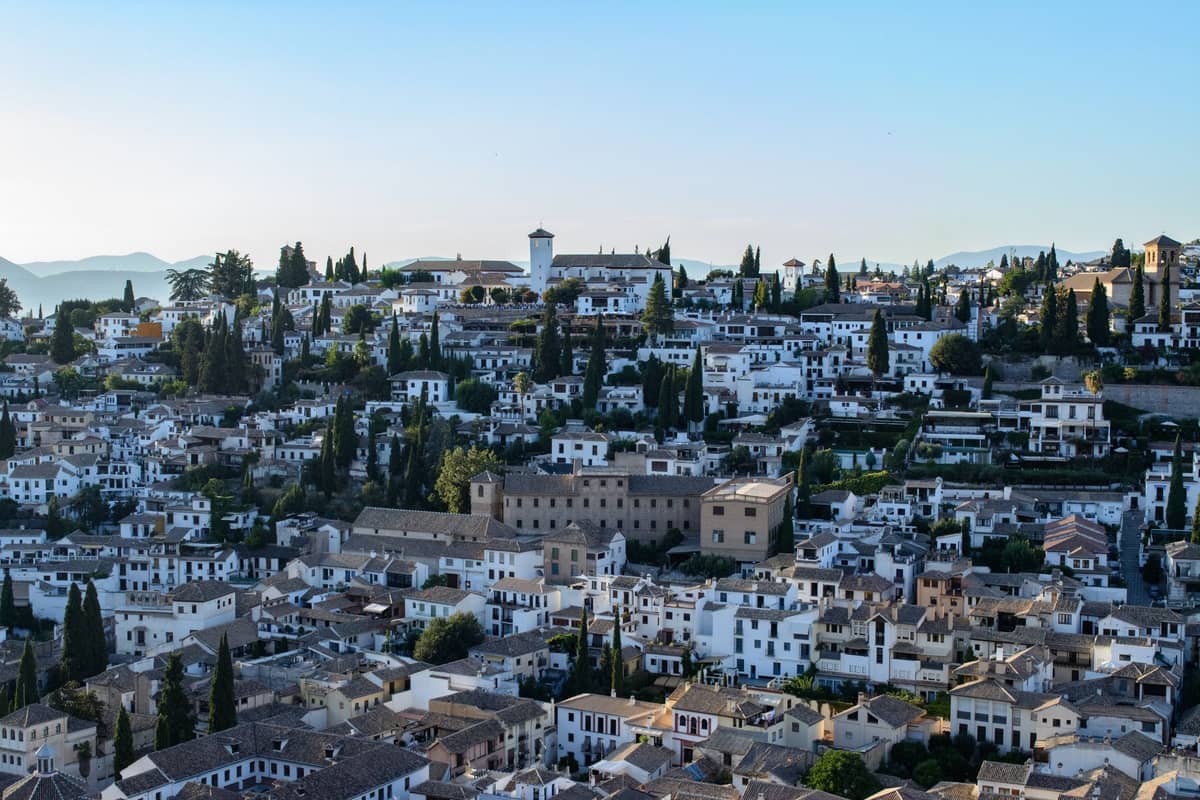
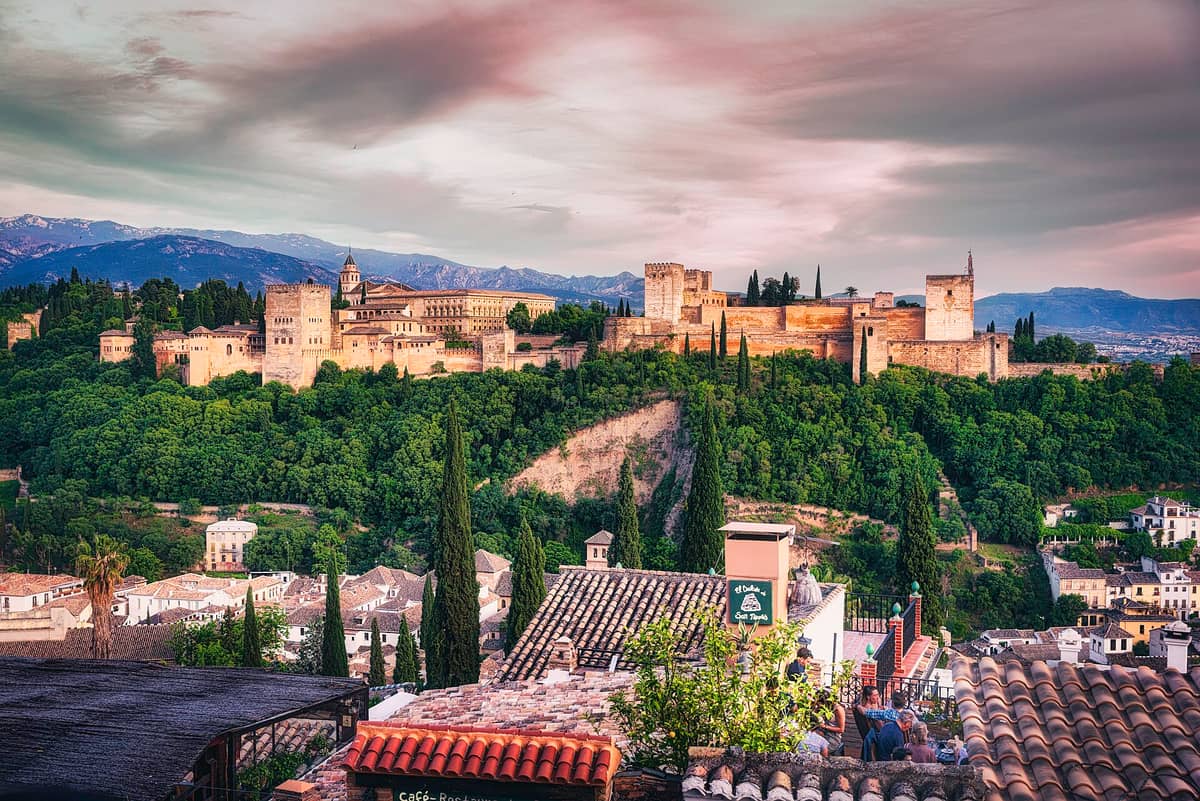
The Albaicín is Granada's oldest surviving neighborhood, a UNESCO-listed Moorish quarter of whitewashed houses, steep cobbled lanes, and sweeping views across the Darro gorge to the Alhambra. It rewards slow exploration at any hour, from quiet morning walks through its medieval streets to sunset crowds at Mirador de San Nicolás.
The Albaicín (also spelled Albayzín) is Granada's medieval Islamic quarter, tumbling down a hillside directly opposite the Alhambra across the narrow gorge of the Río Darro. Its street plan has changed little since the Nasrid period, making it one of the best-preserved Moorish urban landscapes in Europe and part of a UNESCO World Heritage Site since 1984 (with the Albaicín district itself added in an extension in 1994).
Orientation
The Albaicín occupies the hill of San Miguel, rising steeply from Calle Elvira and Plaza Nueva at its southern base to the upper viewpoints near the Church of San Nicolás and beyond. Its western boundary runs roughly along Calle Elvira, one of Granada's oldest commercial corridors. To the east, the neighborhood is defined by Carrera del Darro and then Paseo de los Tristes, the riverside promenade that follows the Darro as it cuts below the Alhambra hill. To the northeast, the Albaicín bleeds gradually into Sacromonte, the cave-dwelling district of flamenco tradition, along the path known as Cuesta del Chapiz.
Think of the neighborhood in horizontal layers. The lowest tier, along Carrera del Darro, is the most accessible and the most walked: flat, scenic, and directly connected to Plaza Nueva and the city center. The middle tier, reached by climbing any of a dozen narrow callejones, holds most of the residential fabric, the carmen gardens hidden behind high walls, and the smaller plazas where locals actually live. The upper tier, near the Mirador de San Nicolás and the streets around the old mosque, is where tourism concentrates at golden hour, but early in the morning it belongs entirely to the neighborhood.
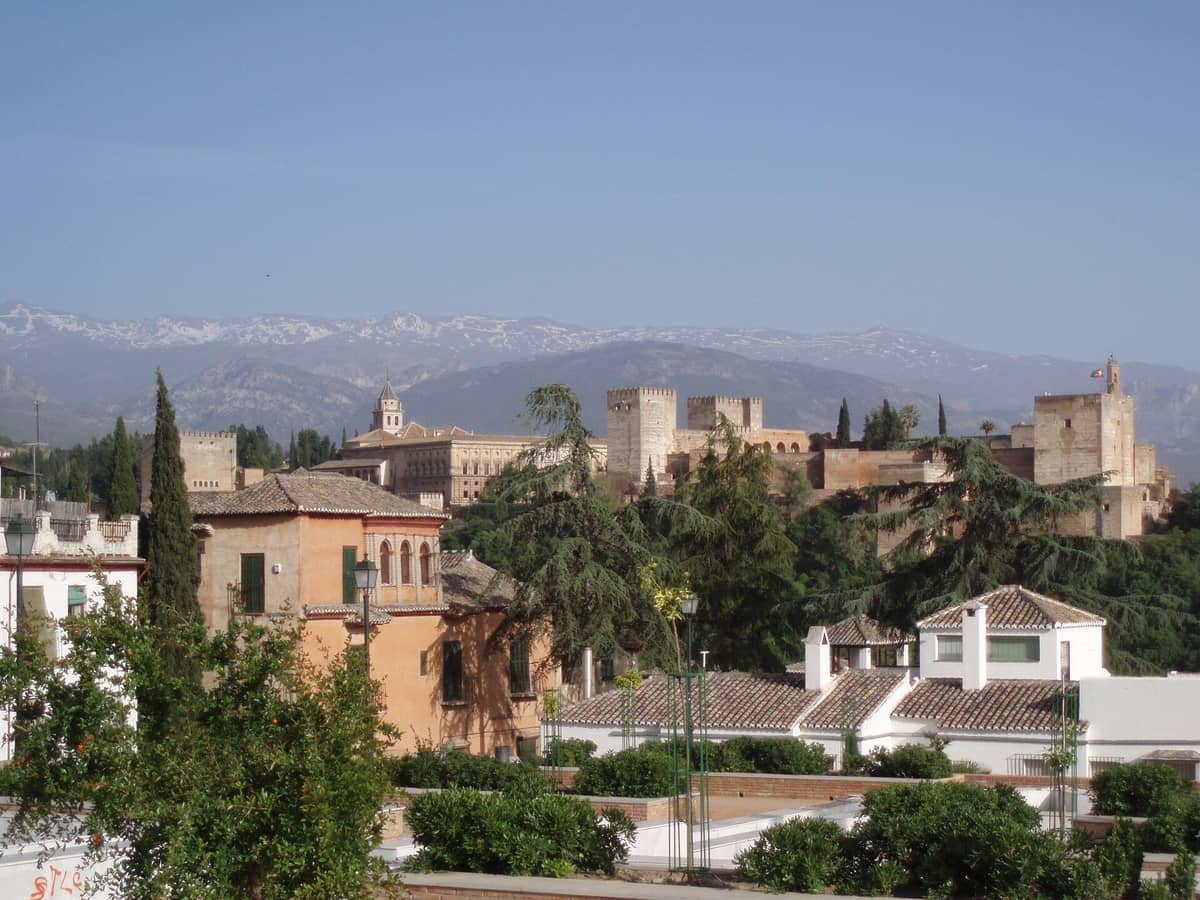
Immediately south of the Albaicín, across the Darro gorge, rises the Alhambra hill. The two neighborhoods face each other in a relationship that has defined Granada's visual identity for centuries. To the west is Granada's commercial center, reachable in under ten minutes on foot from Plaza Nueva. The Sacromonte district sits just uphill to the northeast, and the two areas are often explored together on the same walk.
Character and Atmosphere
What distinguishes the Albaicín from every other historic district in Andalusia is how completely its medieval street plan survived. Elsewhere, 19th-century urban reforms straightened lanes and widened roads. Here, the topography made that impossible, and so the Albaicín kept its tight web of callejones, its dead-end courts (adarves), its irregular plazas, and the high whitewashed walls of its cármenes, the private garden houses that are the neighborhood's signature form of architecture.
In the early morning, the lower streets near Carrera del Darro carry the sound of the river below and little else. Cats cross the cobblestones ahead of you. The light arrives late to these narrow lanes because the hill blocks the sun until well into the morning, leaving the lower alleys in cool shadow while the upper mirador is already bright. By mid-morning, the first tour groups begin climbing from Plaza Nueva, and the neighborhood shifts in register. The streets around Mirador de San Nicolás fill steadily through the afternoon.
Sunset is the Albaicín's most theatrical hour. From the mirador, the Alhambra turns from amber to deep gold against the backdrop of the Sierra Nevada, and on clear winter days the snowcapped peaks behind it are close enough to feel implausible. Buskers play, vendors sell tea, and the viewpoint becomes genuinely crowded between 6 and 8pm in summer. After dark, most visitors descend, and the upper streets return to the residents who actually live here: retirees on balconies, children kicking footballs in the small plazas, and the occasional group moving between the tea houses on Calle Calderería Nueva.
The Albaicín is a living neighborhood, not a preserved open-air museum. University students rent rooms in its upper streets. Young families have moved in as the area has gentrified over the past two decades. The tea houses along the lower Calle Calderería Nueva (known informally as the 'Calle de las Teterías') reflect the neighborhood's historical Moorish identity but also a more recent North African immigrant community that has made the area its own since the 1980s and 1990s.
💡 Local tip
The Albaicín rewards early risers. Walking the upper lanes before 9am means near-solitude, better light for photography, and the full sensory experience of the neighborhood without tour groups. By mid-afternoon the streets around Mirador de San Nicolás can feel overwhelmed.
What to See and Do
The Mirador de San Nicolás is the neighborhood's defining viewpoint and the place every visitor ends up eventually. It sits in front of the Church of San Nicolás in the upper Albaicín and frames one of the most reproduced views in Spain: the full length of the Alhambra palaces with the Sierra Nevada rising behind them. The view works at any time of day but is most dramatic in late afternoon. The square itself has a relaxed, slightly carnival atmosphere in the evenings, with musicians and vendors, and is perfectly safe despite its reputation for pickpockets — just keep your phone in a front pocket.
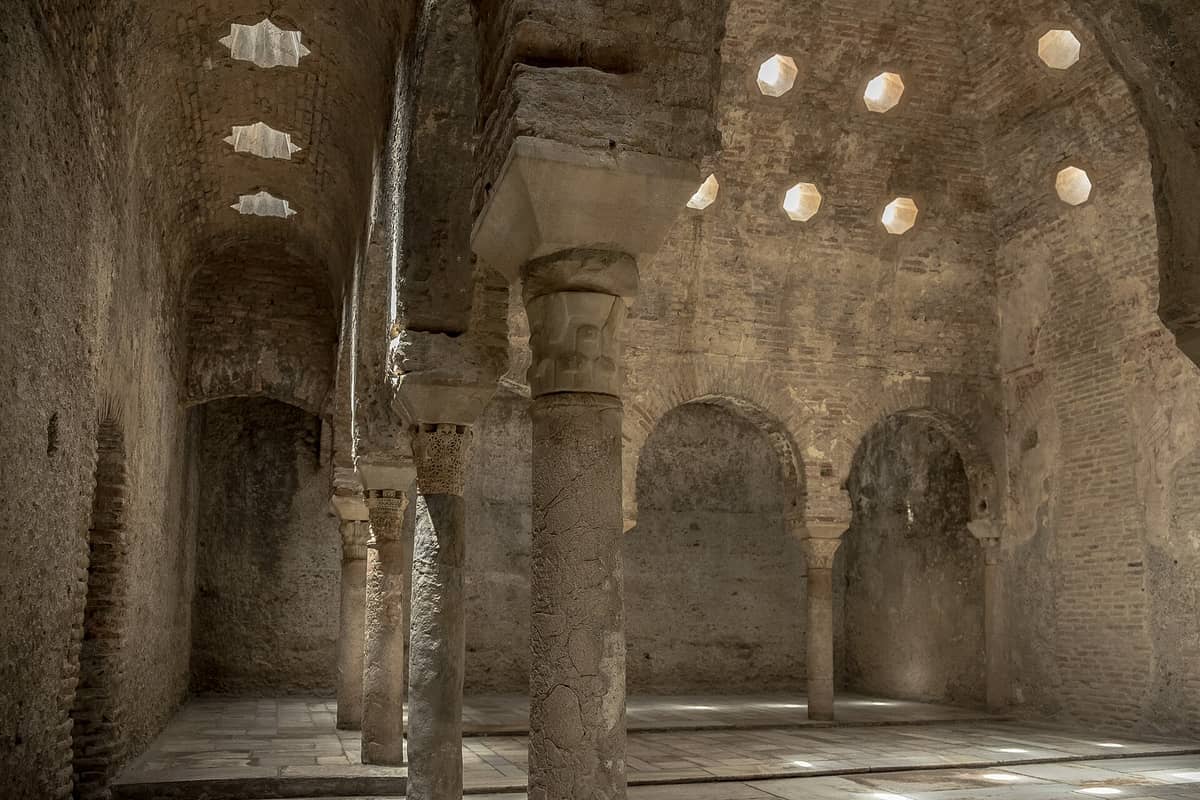
Along Carrera del Darro, a ten-minute walk from Plaza Nueva, stands El Bañuelo, a set of 11th-century Moorish baths that rank among the best-preserved Arab bath complexes in Spain. The star-shaped skylights punched through the brick vaults are an architectural detail worth seeing even if you have limited interest in history. Admission is inexpensive (verify current prices before visiting) and the site is rarely crowded.
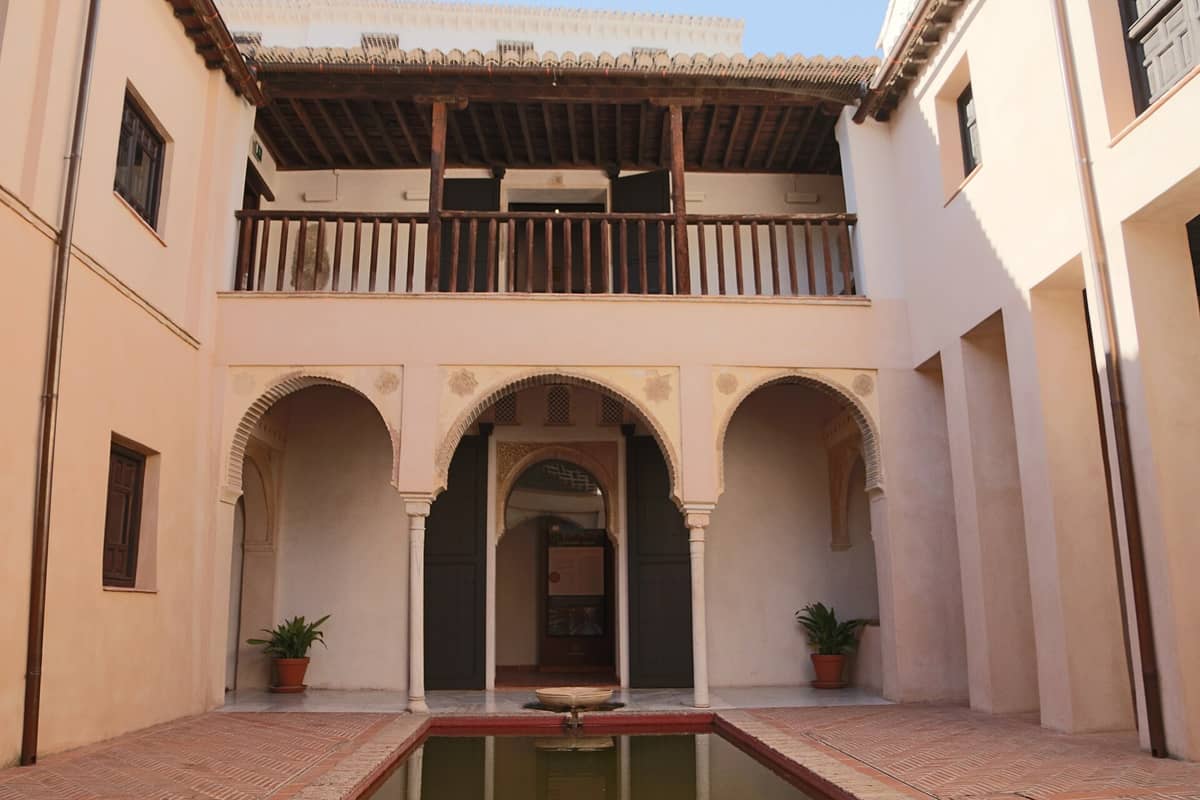
Higher up in the Albaicín, the Palacio de Dar al-Horra is a 15th-century Nasrid palace that served as the residence of Aixa, mother of Boabdil, the last Nasrid sultan. It is one of the best examples of domestic Nasrid architecture outside the Alhambra itself, and far fewer people visit it. Nearby, the Monastery of Santa Isabel la Real, founded by Queen Isabel I in 1501, occupies the site of a former Zirid palace. Between these two monuments, the narrow streets of the upper quarter — Calle San Agustín, Callejón del Gallo, Plaza Larga — give the clearest sense of what daily life in this neighborhood actually looks like away from the viewpoints.
For a structured route through the neighborhood, a dedicated Albaicín walking tour covers the main landmarks in a logical sequence and avoids the dead ends that first-time visitors inevitably encounter in the medieval street plan. The quarter's connection to Granada's broader Moorish heritage is also covered in depth in the Granada Moorish heritage guide.
Mirador de San Nicolás — the definitive Alhambra viewpoint, best before 10am or after 7pm
El Bañuelo (Arab baths) on Carrera del Darro — 11th-century, very well preserved
Palacio de Dar al-Horra — Nasrid domestic architecture, rarely crowded
Calle Calderería Nueva — tea houses, spice shops, North African crafts
Carrera del Darro — riverside walk below the Alhambra walls
Paseo de los Tristes — open plaza at the foot of the hill, good for an evening drink
Casa de Castril — houses the Archaeological Museum of Granada
Mirador de San Miguel Alto — higher and quieter alternative to San Nicolás, with wider views
If you have time for a second viewpoint, Mirador de San Miguel Alto sits above the Albaicín on the highest point of the hill. The climb is steeper and longer than San Nicolás, but the crowd is a fraction of the size and the panorama extends further, taking in the full city spread below.
Eating and Drinking
The Albaicín's food scene divides sharply between the lower streets, which function as a genuine restaurant corridor for both locals and visitors, and the upper lanes, where options are sparser but often more authentic. Paseo de los Tristes, the broad terrace at the foot of the hill beside the Darro, has a strip of café-restaurants with unobstructed Alhambra views. The terraces here are some of the most scenic in the city, and the prices reflect that — plan on paying a premium for the location rather than the cuisine.
Calle Calderería Nueva, running uphill from the Gran Vía intersection near Calle Elvira, is the concentration point for the neighborhood's tea houses (teterías). These serve mint tea, Moroccan pastries, and hookah pipes in dim, cushion-lined interiors, and they operate on a slow, unhurried schedule that suits the Albaicín's general rhythm perfectly. The street is tourist-facing but genuinely pleasant for an afternoon break, particularly in winter when the warm interiors are welcome.
Granada's famous tradition of free tapas with every drink extends into the Albaicín, though the most generous bars are concentrated in the lower part of the neighborhood near Plaza Nueva and Calle Elvira rather than the upper streets. The free tapas guide for Granada covers which bars offer the best complimentary food across the city, including this area.
The upper Albaicín has a handful of small restaurants and bars tucked into converted cármenes, some with garden terraces. These tend to serve Andalusian food with some North African influence — lamb dishes, couscous, and pastela appear on menus alongside more conventional Spanish offerings. Prices in the upper quarter are generally moderate, and these spots are worth seeking out specifically because they are away from the main tourist circuits.
ℹ️ Good to know
Several restaurants in the Albaicín close on Monday or Tuesday. The neighborhood is quieter in the middle of the week, and some smaller spots operate limited hours. It is worth checking opening times before making a specific trip uphill.
Getting There and Around
The most direct approach to the Albaicín on foot starts at Plaza Nueva, which sits at the base of the hill and connects directly to Carrera del Darro. From Plaza Nueva, you can either walk along the river on Carrera del Darro (flat and scenic) or begin climbing immediately through the lanes above the square. Plaza Nueva is roughly a 5–10-minute walk from the main shopping street, Gran Vía de Colón, and about 5–8 minutes from the Catedral area.
Several small urban bus lines serve the Albaicín because the streets are too narrow for standard buses. The C31 connects the neighborhood with the city center (Albaicín to Centro route), and C32 links the Alhambra hill with the Albaicín. These are small vehicles that navigate the tight lanes, and they stop frequently. Fares are standard urban rates (verify current prices with Transportes Rober before visiting). The buses are useful for reaching the upper neighborhood without the climb, though they run on limited frequency and can fill quickly in peak season.
The nearest Metro de Granada station is Universidad, approximately 7 minutes' walk from the lower edge of the Albaicín. The metro connects the city center with the western and northern metropolitan area, so it is most useful for arriving from outside the center. For general advice on moving around the city, the getting around Granada guide covers all transit options in detail.
Taxis and ride-hailing apps (Uber, Cabify) can drop you at points around the lower perimeter of the Albaicín, but cannot enter most of the interior streets. The neighborhood is pedestrian-only above a certain point, and even where cars are technically permitted, the lanes are so narrow that navigation is impractical. The most useful taxi drop-off points are Plaza Nueva, the bottom of Calle Elvira, and Paseo de los Tristes.
⚠️ What to skip
Driving into the Albaicín is strongly discouraged. Many streets are physically inaccessible to standard vehicles, and those that are not have restricted access zones (ZAL) enforced by cameras. Parking within the quarter is effectively impossible for visitors. Arrive on foot, by bus, or by taxi dropped at the perimeter.
Where to Stay
Staying in the Albaicín puts you inside one of Europe's great historic urban landscapes, with the Alhambra visible from many upper-floor terraces and the sounds of the neighborhood rather than traffic outside your window. The accommodation options range from small boutique hotels in converted cármenes to holiday apartments and a handful of guesthouses (casas rurales) in the upper quarter. Prices tend to be mid-range to high, reflecting both the location premium and the difficulty of servicing properties in a pedestrian-only area.
The best location within the Albaicín for accommodation depends on your priorities. Staying near the lower edge, close to Carrera del Darro or Paseo de los Tristes, gives easy access to the rest of the city and to the riverside walk. Staying higher up, near the Mirador de San Nicolás or the streets of the upper quarter, gives the most authentic residential experience and the best rooftop views, but means a 15-20 minute walk (mostly uphill) back from Plaza Nueva every evening.
The Albaicín suits independent travelers and couples who want character and atmosphere over convenience. Families with young children or anyone with mobility limitations should think carefully before booking in the upper quarter: the cobbled slopes are steep, the streets are uneven, and there are no elevators between street level and most properties. The complete where to stay in Granada guide compares the Albaicín against other neighborhoods including the centro and the Realejo.
Safety and Practical Notes
The Albaicín is a safe neighborhood by any reasonable standard during daylight hours and in the early evening. The streets around Mirador de San Nicolás, Carrera del Darro, and Paseo de los Tristes are well-used and well-lit. The main risk during the day is standard urban pickpocketing in the crowded viewpoint areas, not anything more serious. Keep phones and wallets in front pockets at the mirador, particularly during the busy sunset period when attention is naturally directed at the view.
After midnight, the character of the neighborhood changes. The upper lanes away from the main routes become very quiet and poorly lit. The streets themselves are not dangerous, but they are disorienting for anyone unfamiliar with the layout, and walking alone through unlit alleys late at night is unnecessary when better-lit routes exist. Stick to Cuesta del Chapiz, Calle Elvira, Carrera del Darro, and Paseo de los Tristes after dark. If you need police or medical assistance anywhere in Spain, the general emergency number is 112.
The physical demands of the Albaicín are worth considering honestly. The hill is steep, the cobblestones are uneven, and reaching the upper viewpoints from Plaza Nueva involves a climb of roughly 100 meters in elevation over a short horizontal distance. Most visitors find it manageable at a relaxed pace, but anyone with knee problems or limited mobility should factor this in. The small C31/C34 buses that serve the upper neighborhood are a genuine alternative to the full climb. See the Granada viewpoints guide for a comparison of the different mirador options and how to reach each one.
💡 Local tip
If you are combining the Albaicín with a visit to the Alhambra on the same day, do the Alhambra first (it requires timed entry and significant walking) and then cross the Darro to the Albaicín in the late afternoon. The view of the Alhambra from Mirador de San Nicolás at sunset is a fitting close to the day. Book Alhambra tickets well in advance — see the Alhambra tickets guide for details.
For those planning a broader visit to Granada, the two days in Granada itinerary allocates a full afternoon and evening to the Albaicín and structures the rest of the city visit efficiently around it.
Summary
TL;DR
UNESCO-listed medieval quarter with the best-preserved Moorish street plan in Spain — essential for any visit to Granada.
Mirador de San Nicolás offers the defining view of the Alhambra; visit before 10am or after 7pm to avoid the peak crowds.
El Bañuelo (11th-century Arab baths on Carrera del Darro) and Palacio de Dar al-Horra are the standout monuments beyond the viewpoints.
The neighborhood is safe during the day and early evening on main routes; after midnight, stick to well-lit streets and avoid isolated alleys.
Best suited to independent travelers and couples who prioritize atmosphere over convenience — steep, cobbled terrain and no vehicular access make it less practical for families with young children or travelers with mobility limitations.
Two days in Granada, Spain is enough to cover the Alhambra, the Albaicín, the cathedral quarter, flamenco in Sacromonte, and the city's legendary free tapas culture — if you plan correctly. This guide gives you a day-by-day structure, realistic timing estimates, and the booking details that most itineraries leave out.
Walk Granada's UNESCO-listed Albaicín quarter at your own pace. This guide covers the full route from Plaza Nueva to Mirador de San Nicolás, every key stop along the way, seasonal timing advice, and the practical details most visitors only find out when they arrive.
Buying Alhambra tickets is the single most important logistical task before visiting Granada. This guide covers official prices, every ticket type, the timed entry system for the Nasrid Palaces, and how to avoid the most common booking mistakes.
Granada's climate swings from near-freezing January nights to 36°C July days, and its tourist calendar is shaped by everything from Semana Santa processions to Alhambra ticket availability. This guide breaks down every month so you can match your trip to your priorities, whether that's perfect weather, low prices, or catching a specific festival.
Granada sits at one of Spain's most rewarding crossroads, with the Sierra Nevada, white mountain villages, Mediterranean coast, and great Andalusian cities all within reach. These are the best day trips you can do from Granada, with advice on how to get there and what to see.
Granada is one of Spain's most important cities for flamenco, with nightly performances ranging from intimate cave shows in Sacromonte to polished tablao productions near the historic centre. This guide covers the best venues, price ranges, booking strategies, and what first-timers need to know before they go.
Granada is one of the few places left in Spain where ordering a drink automatically earns you a free plate of food. This guide explains the rules, the best neighborhoods, drink prices, timing, and the common myths that catch tourists off guard.
Granada rewards budget travellers generously. From UNESCO-listed Moorish streets and hilltop viewpoints to free-entry monuments and river walks beneath the Alhambra, the city has more genuinely free experiences than almost anywhere in Andalusia.
Everything you need to navigate Granada Spain, from airport transfers and the Metro to the dedicated mini-buses for the Alhambra. Includes current fares, seasonal schedules, and the one booking mistake that locks visitors out of the Nasrid Palaces.
Getting to Granada is easier than most travellers expect. This guide covers every realistic option: flying into GRX, taking the high-speed AVE from Madrid, catching a bus from Málaga Airport, and everything in between, with current prices, journey times, and practical planning notes on which route suits your trip.
Granada rewards curious travelers who look beyond the Alhambra queues. From a free 13th-century royal pavilion buried in a municipal building to a panoramic hilltop hermitage above the cave district, these are the places that most visitors walk straight past.
December is one of Granada's most rewarding months to visit. The city fills with Christmas lights and markets while Sierra Nevada, just 30 km away, opens its ski slopes. Crowds at the Alhambra thin out, hotel prices drop, and the tapas bars are as good as ever. Here is everything you need to plan a winter trip.
Granada rewards those who plan carefully and spend wisely. This guide covers the finest hotels near the Alhambra, the best Michelin-recognized restaurants in the city, private cultural experiences, and the practical logistics that separate a smooth luxury trip from an expensive disappointment.
Most visitors spend their entire time in Granada fixated on the Alhambra and never realize the city holds a dozen other Moorish monuments within walking distance. This guide covers the essential sites, ticket combinations, walking routes, and practical details you need to explore Granada's full Islamic heritage.
Granada's nightlife runs later than almost anywhere else in Spain, fueled by a large student population and a culture that treats midnight as a warm-up. This guide covers the best neighborhoods for drinks, which clubs deliver, what things actually cost, and how to avoid the classic tourist mistakes.
Granada is one of the most affordable cities in Spain — if you know how the system works. This guide breaks down free tapas, Alhambra ticket pricing, tourist passes, free attractions, and the best times to visit for lower costs and smaller crowds.
Semana Santa in Granada is one of Andalusia's most atmospheric Holy Week celebrations, with daily processions from Palm Sunday to Easter Sunday winding through medieval streets. This guide covers routes, schedules, seating, crowd tips, and everything a visitor needs to experience it properly.
Granada rewards those who look up, and those who climb. This guide covers every significant mirador and panoramic viewpoint in the city, from the famous terrace at San Nicolás to the high-altitude plateau of the Sierra Nevada, with practical advice on timing, access, and what you'll actually see from each spot.
Granada rewards families who plan ahead. From timed-entry Alhambra tickets to the hands-on Parque de las Ciencias and snow-capped Sierra Nevada day trips, this guide covers every family-friendly activity in Granada, Spain, with practical advice on crowds, costs, and seasonal timing.
Granada sits at the foot of the highest mountain range in mainland Spain, putting serious alpine terrain within an hour of the city centre. This guide covers the best hikes near Granada, from accessible gorge walks to high-altitude summit routes, with practical advice on getting there.
Granada is one of Spain's most historically layered cities, but it comes with real trade-offs: intense summer heat, Alhambra ticket logistics, and crowds that can frustrate the underprepared. This guide gives you the full picture so you can decide if it belongs on your itinerary.
Las Alpujarras is one of the most rewarding day trips from Granada — a chain of Moorish-era whitewashed villages clinging to the southern slopes of the Sierra Nevada. This guide covers how to get there by bus or car, which villages to prioritize, what to eat, and how to make the most of a single day in the mountains.
Granada, Spain is one of Europe's most atmospheric cities for couples. Moorish palaces, candlelit flamenco caves, ancient bathhouses, and hilltop sunsets combine to create something genuinely difficult to replicate anywhere else. This guide covers the best romantic experiences, practical planning details, and practical planning notes on what actually lives up to the hype.
Sierra Nevada is Spain's highest skiable and southernmost major ski resort, sitting just 40 km from Granada city. This guide covers the full picture: season dates, lift pass pricing, how to get there, what the slopes are actually like, and what most first-timers get wrong.
Granada, Spain packs an extraordinary range of experiences into a city of just 230,000 people: a UNESCO-listed palace complex, a medieval Moorish quarter, cave flamenco, and a tapas culture where every drink comes with free food. This guide cuts through the noise and tells you exactly what to do, when to go, and what to skip.
Granada's food culture runs much deeper than free tapas. This guide covers the city's signature dishes, seasonal specialties, best markets, and practical tips for eating well in one of Andalusia's most distinctive culinary cities.
Granada, Spain has one of Europe's most distinctive food cultures: order a drink and a free tapa arrives automatically. This guide covers the free tapas system in full, the best neighborhoods to eat, what dishes to prioritize, and the restaurants worth booking in advance.
Choosing where to stay in Granada Spain shapes your entire trip. This guide breaks down the four main neighbourhoods for visitors, with a clear look at terrain, atmosphere, hotel options, and price ranges to help you book with confidence.