Semana Santa in Granada: The Complete Holy Week Processions Guide
Semana Santa in Granada is one of Andalusia's most atmospheric Holy Week celebrations, with daily processions from Palm Sunday to Easter Sunday winding through medieval streets. This guide covers routes, schedules, seating, crowd tips, and everything a visitor needs to experience it properly.
Tickets & tours
Live prices and dates from our booking partner. If you book, we may earn a commission at no extra cost to you.
TL;DR
- Semana Santa in Granada runs from Palm Sunday to Easter Sunday, with multiple cofradías (brotherhoods) processing each day through the city center.
- The Carrera Oficial (official route) passes through Puerta Real and around the Granada Cathedral — the most crowded and atmospheric stretch.
- Street viewing is free; reserved seats along the Carrera Oficial are sold through the Real Federación de Hermandades y Cofradías.
- Book accommodation months in advance — Holy Week is the busiest period of the year in Granada.
- Weather in late March or April can be cool and unpredictable — check our best time to visit Granada guide for seasonal context.
What Is Semana Santa in Granada?
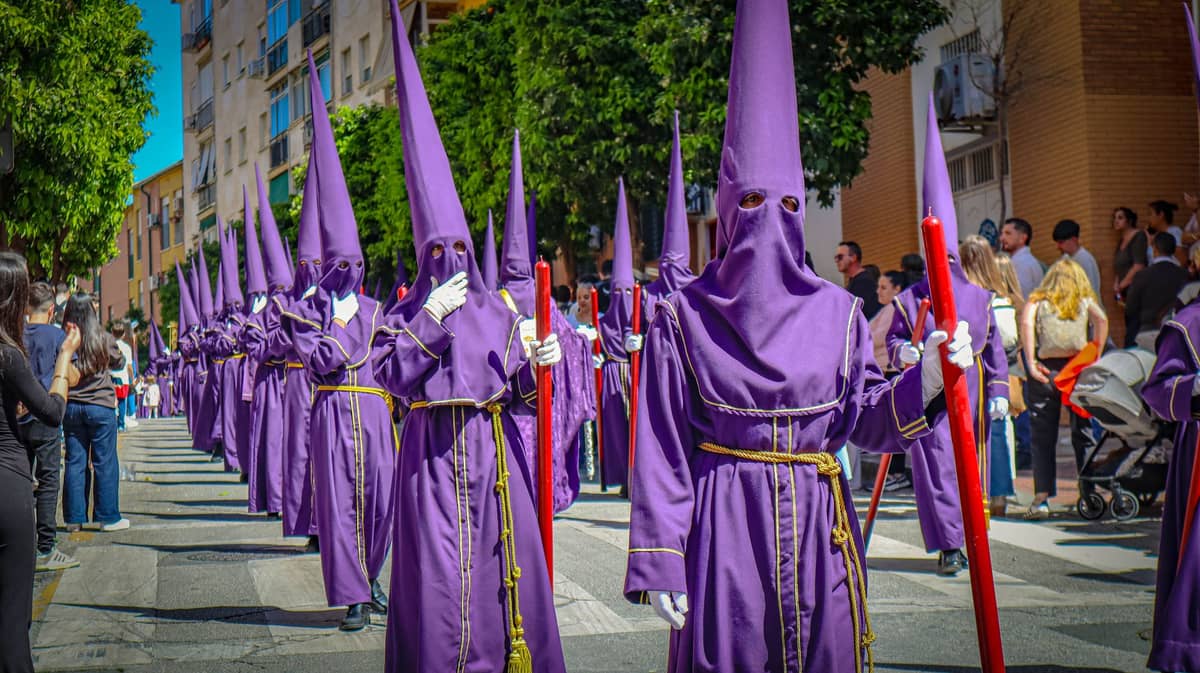
Semana Santa, or Holy Week, is the week leading up to Easter Sunday in the Catholic calendar. In Granada, it is organized jointly by the Real Federación de Hermandades y Cofradías de Semana Santa de Granada and the Archdiocese of Granada. The celebration involves dozens of cofradías — religious brotherhoods with centuries of tradition — who process through the city carrying ornate pasos: large wooden floats bearing sculpted figures of Christ, the Virgin Mary, and scenes from the Passion.
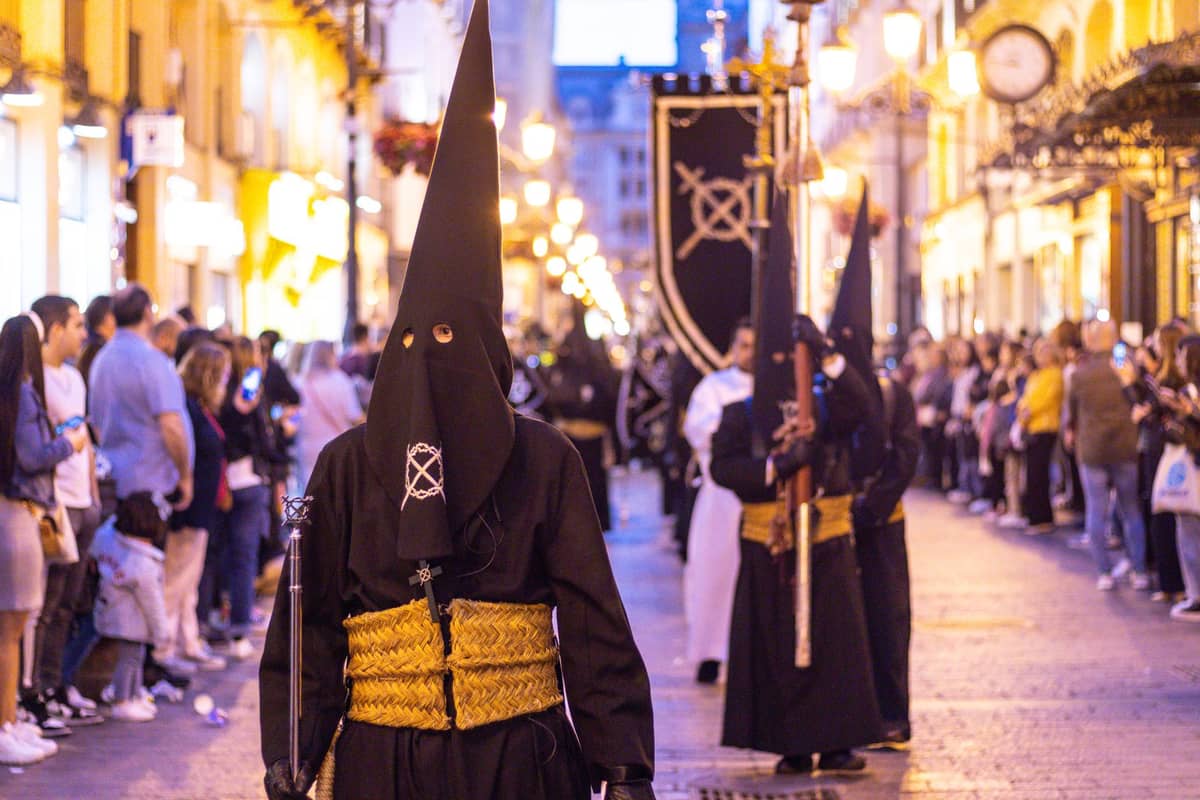
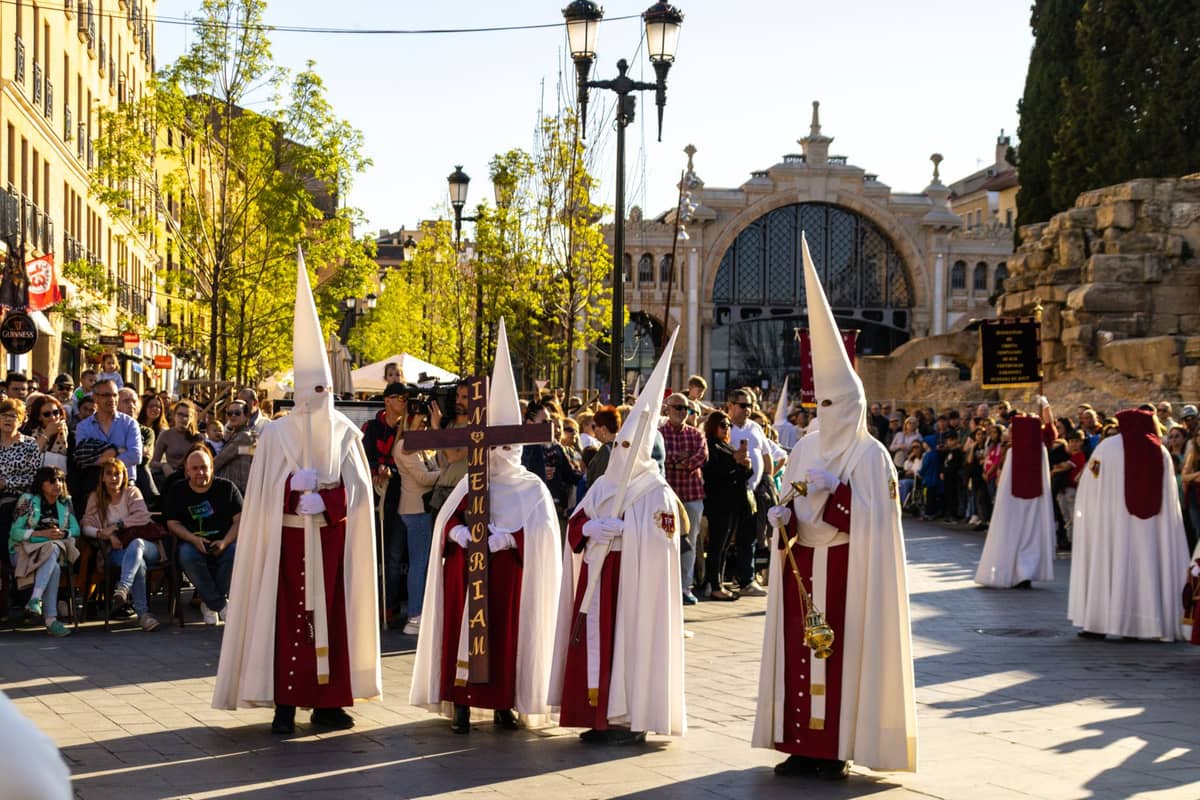
Each cofradía has its own parish, its own pasos, its own color scheme, and its own route through the city. The nazarenos — penitents in long robes and tall pointed hoods called capirotes — walk in silence beside the floats. If you've never seen this before, the sight can be striking, even startling. The pointed hoods are part of a centuries-old Catholic penitential tradition; they have no association with any modern extremist movement, something worth knowing before you arrive.
ℹ️ Good to know
Semana Santa falls on different dates each year, always tied to the Easter calendar. It typically lands somewhere between late March and mid-April. Check the official Archdiocese of Granada website (archidiocesisgranada.es) for the exact dates and published timetables each year — these are released a few months in advance.
The Official Route and Key Viewing Spots
The Carrera Oficial is the designated central stretch of the procession route that all major brotherhoods must pass through. It runs: Carrera de la Virgen, Plaza del Campillo, Plaza Mariana Pineda, Ángel Ganivet, Puerta Real, Calle Mesones, Marqués de Gerona, Plaza de las Pasiegas, and around the Cathedral. This corridor is where the formal reviewing stands are set up, where the bleachers fill with reserved-seat ticket holders, and where the processions are most tightly choreographed.
Beyond the Carrera Oficial, each brotherhood processes through its own neighborhood before and after the central stretch. This means processions wind through the Albaicín, the Realejo, the Centro, and other districts at different points in the day — sometimes for hours before reaching the official route. Watching a paso navigate a narrow uphill alley in the Albaicín, with barely centimeters to spare, is genuinely more impressive than the Carrera Oficial grandstands.
- Plaza de las Pasiegas (Cathedral square) Most atmospheric spot along the Carrera Oficial, especially after dark. The Cathedral facade provides a dramatic backdrop, and the saetas (improvised flamenco laments) sung from balconies here are unforgettable.
- Puerta Real Wide central junction where multiple routes converge. Good sightlines and easier crowd movement than narrower streets.
- Calle Mesones and surrounding streets Narrow and intense. Standing here at night, with torchlight and incense, is the most immersive viewing option for free.
- Albaicín neighborhood streets Less crowded early in the day, more intimate, and the visual contrast of white-walled houses against the pasos is striking. Worth arriving early.
- Campo del Príncipe A wide square in the Realejo that several brotherhoods cross. Good for families and easier to access than the Cathedral area.
Schedules: When Do the Processions Happen?
Every day of Holy Week has its own processions, with Palm Sunday (Domingo de Ramos) and Holy Thursday through Good Friday being the most dramatic. The Real Federación publishes an official guide each year — the Guía de Horarios e Itinerarios — listing every brotherhood's departure time, route, passage through the Carrera Oficial, and expected return. This is the essential document for planning your viewing.
Most processions depart their home parishes in the late afternoon, roughly between 15:30 and 18:00, and return late at night. Some of the most significant ones, particularly on Holy Thursday and Good Friday, run well past midnight. The Madrugá — the early hours of Good Friday — is the most emotionally intense moment in Semana Santa, with processions moving through silent streets in the small hours of the morning. If you can only be in Granada for one night, Holy Thursday into Good Friday is the one.
✨ Pro tip
Download the official Horarios e Itinerarios PDF from the Archdiocese of Granada (archidiocesisgranada.es) as soon as it's published, usually in February or early March. Screenshot the specific times for whichever brotherhoods or locations interest you — street signal is often poor in narrow historic streets during processions.
Tickets, Seating, and Free Viewing
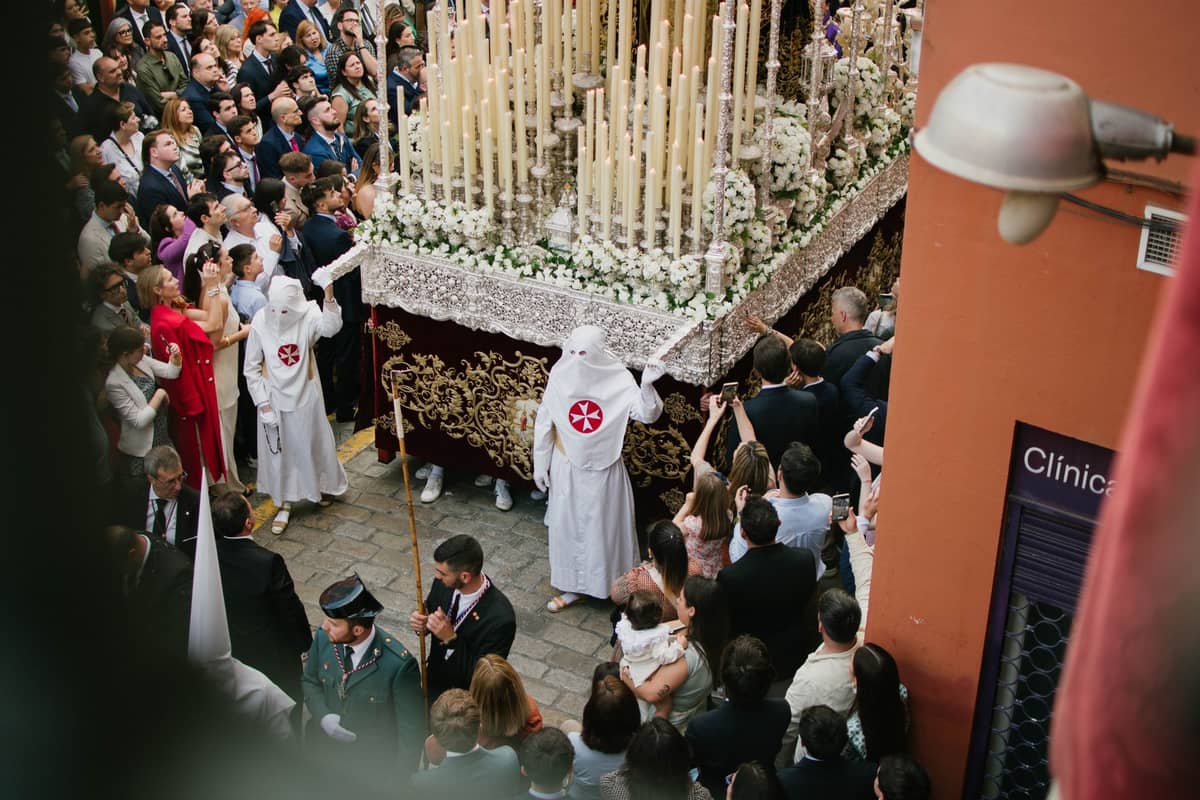
Watching the processions from the street is completely free. You can position yourself almost anywhere along the route and wait for the procession to pass. The trade-off is that popular spots along the Carrera Oficial fill up fast, and once the procession starts, the crowd locks in. Arrive at least an hour early for any spot along the Cathedral stretch on Holy Thursday or Good Friday.
Reserved seating — the sillas and palcos (chairs and elevated platforms) set up along the Carrera Oficial — is sold through the Real Federación de Hermandades y Cofradías and its authorized channels. Prices and availability are announced seasonally on their website (hermandadesdegranada.com). These seats are worth considering if you want a guaranteed, unobstructed view for the formal passage of the pasos and don't want to stand for two or three hours. That said, the standing experience in the side streets often beats the grandstand in terms of atmosphere.
- Free street viewing: best in narrow side streets and neighborhood sections, where the pasos pass close and the crowds are thinner.
- Reserved seats on Carrera Oficial: book through the Real Federación website; check availability from late January onwards.
- Hotel balconies and terraces: some hotels along the route offer balcony access during processions — ask when booking.
- Bar terraces: cafés along the route sometimes have outdoor seating — arrive early and order something to hold your spot.
⚠️ What to skip
Traffic in central Granada is severely restricted during Semana Santa. Many bus routes are diverted and large areas of the center become pedestrian-only during processions. If you're driving or relying on urban buses to get around, check the Transportes Rober website for temporary route changes — these are published before the week begins.
Planning Your Visit: Practical Logistics
Accommodation books out fast. Hotels and apartments in central Granada, the Albaicín, and the Realejo fill up months ahead of Semana Santa. If you're planning to come specifically for Holy Week, start looking at accommodation in autumn of the previous year. Budget options disappear first; even mid-range hotels often sell out by January.
Granada sits at around 738 meters above sea level, and late March or April can still bring cold evenings, particularly after 21:00 when temperatures can drop to single figures. Daytime highs average around 19–22°C in late March and April, but nighttime lows can fall to 4–7°C. If you're watching the Madrugá processions into the early hours, dress for winter conditions. Layers are essential. Check our guide to the best time to visit Granada for a full climate breakdown.
Getting around the city during Semana Santa requires patience. The Metro de Granada and ride-hailing apps (Uber and Cabify operate in Granada) can be useful for reaching the outskirts, but the central historic area is best navigated on foot. For context on normal transport options, see the getting around Granada guide.
If you're also planning to visit the Alhambra during your trip, book those tickets separately and well in advance — Semana Santa is peak demand season and Alhambra slots sell out quickly. Read the Alhambra tickets guide before you plan.
- Accommodation Book 3-6 months ahead minimum. Central locations fill first; consider the Realejo or Albaicín for atmosphere and walkable access to procession routes.
- Clothing Warm layers for night viewing are non-negotiable. A compact rain jacket takes up little space and may be essential — March and April can bring showers.
- Cash Street vendors and smaller cafés along procession routes often prefer cash. ATMs in the center get busy during Holy Week; withdraw in advance.
- Alhambra tickets Book separately and as early as possible through the official Patronato de la Alhambra website. Don't assume availability during Semana Santa week.
- The official guide Download the Guía de Horarios e Itinerarios PDF each year. Annual digital guides are also distributed by the Federation and local media.
What Makes Granada's Semana Santa Different
Granada's Semana Santa is often compared unfavorably to Seville's by visitors who have done both, and in terms of sheer scale and spectacle, Seville is larger. But Granada has qualities that Seville cannot replicate. The topography alone sets it apart: watching a multi-ton paso carried on the shoulders of costaleros up a steep cobbled street in the Albaicín, with the illuminated Alhambra visible in the background, is a specific experience you won't find anywhere else in Spain.
The saetas — spontaneous flamenco laments sung from balconies and windows as the pasos pass below — are another element unique to Andalucía. In Granada, with its deep flamenco tradition, these moments carry particular weight. A saeta sung from a window in the Albaicín at midnight, directed at a paso of the Virgin, stops crowds completely. It is not performance for tourists; it is a live tradition that has been happening in these streets for centuries.
Granada's Moorish heritage also gives the city's Holy Week a distinctive physical setting. The processions move through streets that were once the medina of a Nasrid sultanate. The Moorish heritage of Granada is impossible to ignore during Semana Santa — the juxtaposition of Catholic ceremony with Andalusian-Islamic architecture is particular to this city alone.
💡 Local tip
The quieter, less-photographed processions on Monday and Tuesday of Holy Week are worth seeking out. Fewer crowds, more intimate atmosphere, and the logistical chaos of the later days hasn't yet set in. Check the official timetable for neighborhood processions that don't pass through the Carrera Oficial — these are often the most genuine experiences.
FAQ
Is Semana Santa in Granada free to attend?
Yes, watching the processions from the street costs nothing. You can position yourself anywhere along the public route. Reserved seats (sillas y palcos) along the formal Carrera Oficial section are sold through the Real Federación de Hermandades y Cofradías — check hermandadesdegranada.com for availability and pricing each year.
When should I arrive in Granada to see the best processions?
Holy Thursday evening through Good Friday early morning (the Madrugá) is the most dramatic period. Palm Sunday is also significant and less chaotic. If you can only come for one day, Holy Thursday is the priority — but arrive in the city at least a day before to get your bearings and secure your position along the route.
Why are the penitents wearing pointed hoods?
The pointed hoods (capirotes) worn by nazarenos are a centuries-old symbol of Catholic penance, used across Andalucía and other parts of Spain during Holy Week. They have no association with any modern extremist group. The tradition predates and is entirely separate from any modern usage of similar shapes elsewhere.
Do all processions follow the same route?
No. Each cofradía has its own neighborhood route from its home parish to the Carrera Oficial and back. Only the central Carrera Oficial section — running through Puerta Real, Calle Mesones, and around the Cathedral — is shared. Check the official Guía de Horarios e Itinerarios for individual brotherhood routes.
What should I wear to watch Semana Santa in Granada?
Layer up, especially for evening and night viewing. Granada sits at around 738 meters altitude, and April nights can drop to 4-7°C. A compact rain jacket is wise for March and April, when showers are possible. Comfortable shoes are essential — you'll be standing on cobblestones for extended periods.
Tickets & tours
Live prices and dates from our booking partner. If you book, we may earn a commission at no extra cost to you.
Planning a trip? Discover personalized activities with the Nomado app.