Realejo is Granada's former Jewish quarter, spread across the southern slopes of the Alhambra hill. It combines medieval heritage with a lively tapas culture, street art, and a genuinely residential character that sets it apart from the more tourist-heavy centro.
Realejo occupies a quiet but historically loaded corner of Granada, stretching from the southern foot of the Alhambra hill down toward the Genil river. Once the city's Jewish quarter under Moorish rule, it is now one of Granada's most liveable and characterful neighbourhoods: part medieval lanes, part terrace bars, part open-air gallery. It sits close enough to the main sights to be convenient, yet distinct enough in feel to reward anyone who lingers.
Orientation
Realejo sits at the southern edge of Granada's historic core, administratively grouped under the Realejo-San Matías district. Its northern boundary climbs toward the Alhambra walls, while its lower reaches extend south toward the Fuente de las Granadas and the Genil river corridor. To the east, the neighbourhood gives way to the foot of the Albaicín and Sacromonte hills via the Darro valley. To the west, it transitions into the commercial spine of central Granada around Puerta Real and Gran Vía de Colón.
The main streets that define the area include Calle Pavaneras, Calle San Matías, Cuesta del Progreso, and Calle Varela. These connect the neighbourhood to Plaza Isabel la Católica and the cathedral district in roughly five to ten minutes on foot. Campo del Príncipe is the neighbourhood's gravitational centre: a wide, sloping square that functions as the social heart of Realejo, flanked by bars and overlooked by an imposing stone church.
Realejo divides naturally into two zones. The lower section, around Campo del Príncipe and Calle Pavaneras, is flatter and more accessible, full of terraces and neighbourhood bars. The upper section climbs steeply toward the Alhambra walls along narrow lanes that grow quieter and more residential with every hundred metres. For anyone planning a visit to the Alhambra, Realejo forms a natural staging point: it sits directly below the monument's southern entrance and provides an atmospheric alternative base to the more congested streets near the main gate.
Character and Atmosphere
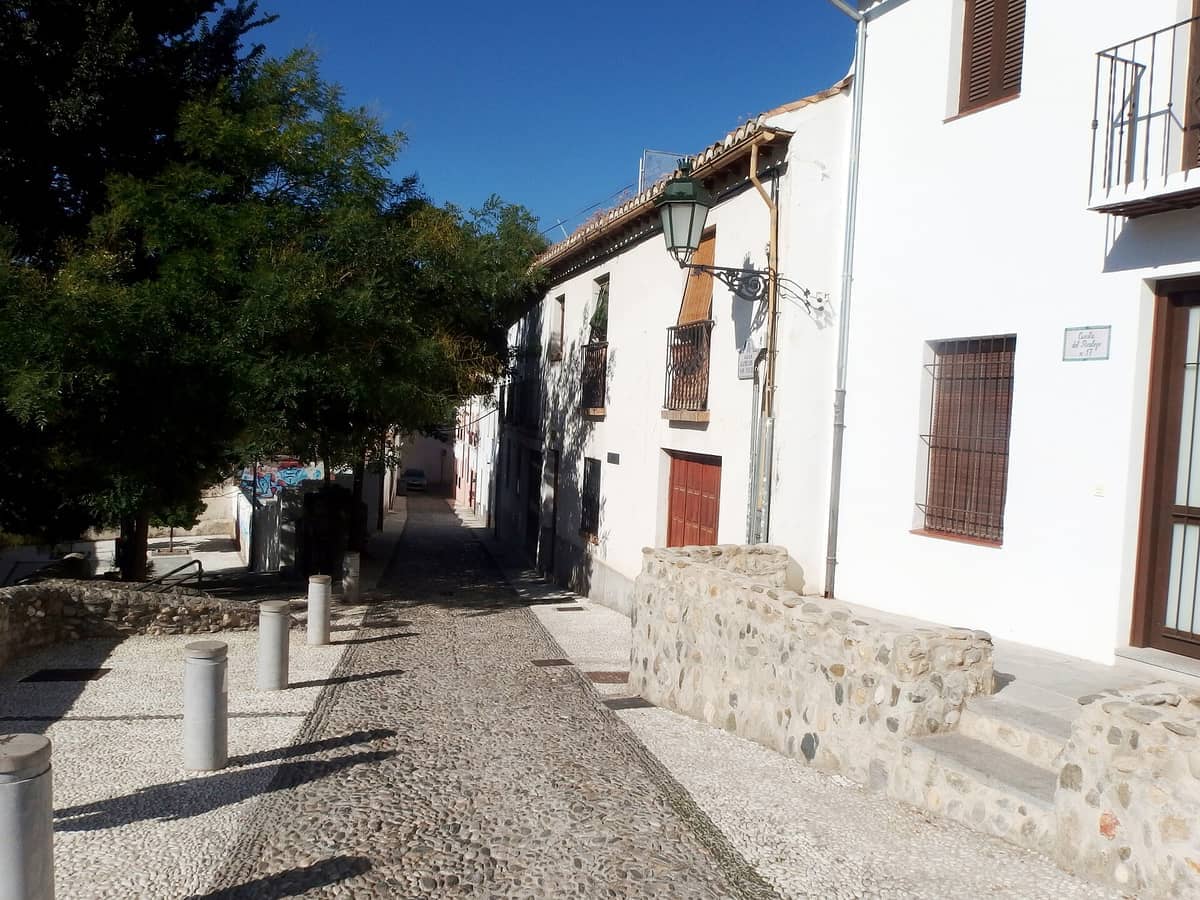
Realejo has a layered quality that takes time to read. On the surface it looks like a quiet residential neighbourhood with wide pavements, neighbourhood grocery shops, and children cycling in the square. Look more carefully and you start to notice the Nasrid-era stonework embedded in otherwise ordinary facades, the medieval doorways flanked by potted geraniums, and the sprawling street murals that cover entire gable ends. This is a neighbourhood where history and daily life occupy the same square metre.
Mornings in Realejo are unhurried. Café owners stack chairs onto terraces, the light falls at a low angle across the cobbles of Campo del Príncipe, and older residents walk dogs along Calle San Matías before the city heats up. By midday the lower streets have filled with university students and local workers grabbing lunch, and the tapas bars around the square begin to show their function: every drink comes with a small plate of food, a Granada tradition that makes this neighbourhood unusually good value for a meal.
Afternoons bring a different quality of light to the upper lanes. The sun drops behind the Alhambra hill early, leaving the steep streets in deep shade while the tops of the walls above still glow amber. This is the best time to walk the higher parts of Realejo: the heat is bearable, the streets are relatively empty, and the contrast between the fortified walls above and the lived-in neighbourhood below is striking. By evening, Campo del Príncipe fills again, this time with a louder, younger crowd. Weekends after midnight can be genuinely noisy around the main square.
One of Realejo's most distinctive visual qualities is its street art. The Granada-born muralist known as El Niño de las Pinturas has left large-scale works across the neighbourhood: faces, figures, and abstract forms that cover the sides of residential buildings. These are not decorative afterthoughts; they are substantial works in their own right, and walking the streets with an eye for them turns a short transit into a proper tour. The art gives the neighbourhood a creative edge that offsets its otherwise quiet, residential personality.
💡 Local tip
Walk the upper streets of Realejo in the late afternoon, between around 5pm and 7pm in summer, when the Alhambra walls catch direct light and the lanes below are cool and quiet. This is the neighbourhood at its most photogenic and its least crowded.
History: Granada's Jewish Quarter
Before it was Realejo, this neighbourhood was known as Garnata al-Yahud, which translates broadly as 'Granada of the Jews'. Under Moorish rule, it functioned as the city's primary Jewish district, a self-contained community with its own institutions, tradespeople, and places of worship. The Jewish population of Granada was significant enough that the district had its own identity distinct from the Muslim city to the north.
Following the Christian reconquest of Granada in 1492, the same year Ferdinand and Isabella expelled the Jews from Spain entirely, the neighbourhood was stripped of its Jewish character and repurposed. The name Realejo, meaning roughly 'royal enclosure' or 'small royal area', reflects the district's use as a military and administrative zone in the immediate post-conquest period. Buildings were converted, institutions replaced, and the community that had given the quarter its identity disappeared.
Despite these upheavals, traces of the earlier city survived. The Cuarto Real de Santo Domingo is the most significant surviving Nasrid structure in the neighbourhood: a 13th-century royal palace with a beautifully preserved reception hall whose carved plasterwork and timber ceiling rival anything in the Alhambra. The building was incorporated into a later convent and survived largely intact, making it one of the most important and least visited monuments in the city. For context on how Realejo fits into Granada's wider Moorish past, the Granada Moorish heritage guide covers the full picture across the city.
What to See and Do
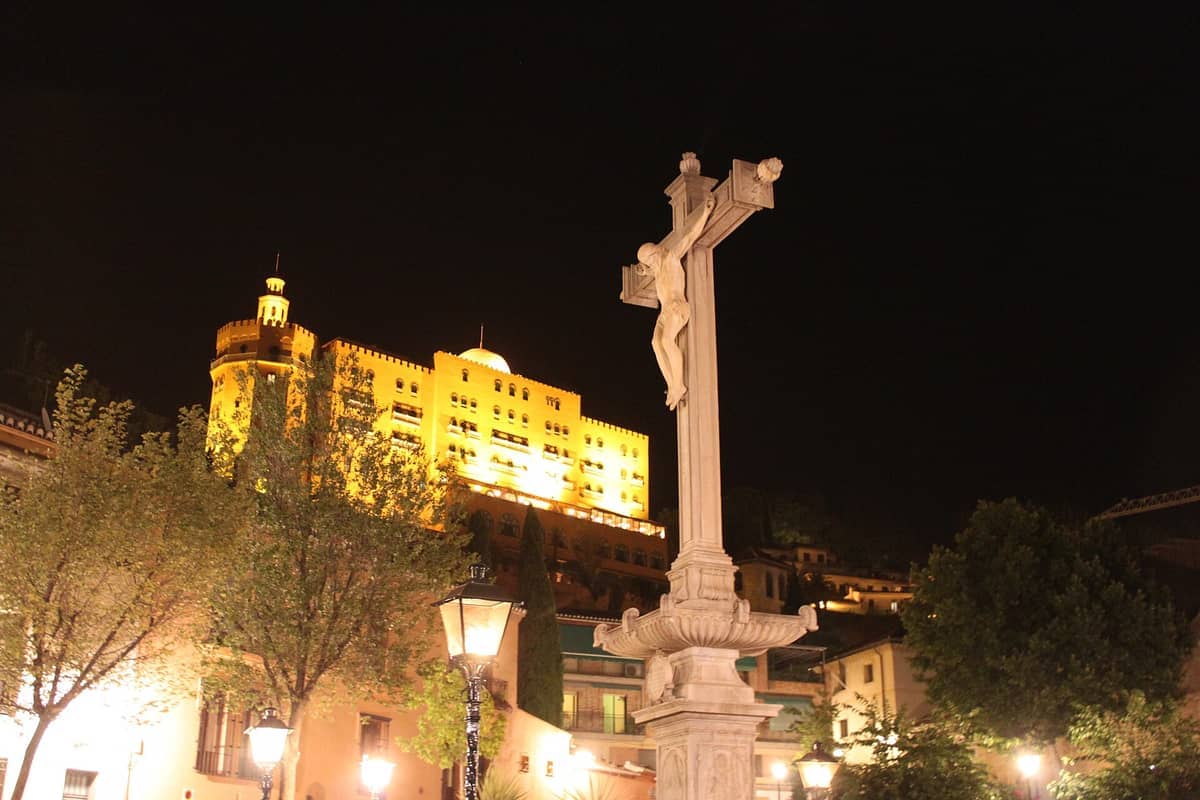
The neighbourhood's anchor point for any visit is Campo del Príncipe, a large square that functions as the neighbourhood's living room. Its central stone cross and surrounding bars make it a natural meeting place at all hours. The square has a relaxed, non-touristy quality during the day that shifts to something livelier after dark, particularly on weekends.
The Cuarto Real de Santo Domingo, on Calle del Real de Santo Domingo, deserves more attention than it typically receives. Opening hours are limited and vary, so it is worth checking in advance, but the interior is exceptional: the main Nasrid hall is one of the finest examples of 13th-century Islamic palatial architecture outside the Alhambra itself, with almost no competition for your attention inside.
Street art hunting is a legitimate activity in Realejo. The works of El Niño de las Pinturas are concentrated in the lower and middle sections of the neighbourhood, particularly around Calle Pavaneras and the streets branching off Campo del Príncipe. The style is figurative and bold, and the scale of several works is genuinely impressive in context. No admission fees, no queues.
From the upper streets of Realejo, a short climb brings you to the southern approaches of the Alhambra itself. The Carmen de los Mártires, a 19th-century garden complex on the hill just outside the Alhambra walls, is accessible from Realejo via Cuesta de los Mártires and is often overlooked by visitors focused on the main monument. The gardens are peaceful and the views across the city are excellent. Entry is free.
Campo del Príncipe: the neighbourhood's main square, best visited in the evening
Cuarto Real de Santo Domingo: exceptional Nasrid palace, check opening hours before visiting
El Niño de las Pinturas murals: concentrated around the lower streets
Carmen de los Mártires: free gardens on the Alhambra hill, accessible from upper Realejo
Walking the upper lanes toward the Alhambra walls for architecture and atmosphere
ℹ️ Good to know
The Cuarto Real de Santo Domingo has variable opening hours and occasional closures for events. Check the Ayuntamiento de Granada's cultural listings before making it a priority on a short visit.
Eating and Drinking
Realejo is one of Granada's better neighbourhoods for eating and drinking, largely because it serves a local clientele rather than a passing tourist flow. This has practical consequences: prices are lower, portions are more generous, and the free tapas tradition, which Granada maintains across the city, is well observed here.
The bars clustered around Campo del Príncipe and along the lower section of the neighbourhood are the primary draw. Order a beer or a glass of wine and a small plate of food arrives automatically at no extra charge: a Granada custom that distinguishes the city from most of Andalusia and the rest of Spain. For a fuller guide to navigating this tradition, the free tapas guide for Granada explains the mechanics and lists what to expect.
The food in Realejo tends toward traditional Granadan and Andalusian cooking: thick stews in cooler months, fried fish, jamón from the Alpujarras region to the south, and bocadillos made with local bread. Some bars lean more international, reflecting the neighbourhood's student and artist population, but the majority stick to Spanish standards. There are also a handful of quieter cafés in the side streets that suit a morning coffee or a work session during the day.
For a broader sense of what to eat across Granada, the Granada food guide covers the city's specialities in detail. Realejo sits comfortably within walking distance of the Alcaicería market area and the Mercado de San Agustín near the cathedral, which provides fresh produce and prepared food if you are self-catering.
⚠️ What to skip
Campo del Príncipe can get loud on Friday and Saturday nights, with bar terraces filling from around 9pm and noise continuing past midnight. This is worth knowing before booking accommodation directly on or adjacent to the square.
Getting There and Around
Realejo is walkable from most of Granada's central points of interest. From Plaza Isabel la Católica, near the cathedral, the walk down Calle Pavaneras or through Calle San Matías to Campo del Príncipe takes around seven to ten minutes on flat or gently sloping ground. From the main Alhambra ticket area at the top of the hill, the descent via Carril de San Cecilio or Cuesta del Relejo takes ten to fifteen minutes, with some steep sections.
Several city bus routes serve Realejo. Lines S2, C5, C30, C31, C32, C34 and C35 connect the neighbourhood to the wider city. For Alhambra access specifically, lines C30, C32 and C35 connect the lower neighbourhood to the monument. Fares and timetables are subject to change, so verify current information with the operator before travel. For a full overview of how to move around the city, the getting around Granada guide covers buses, the Metro, and walking routes.
The Metro de Granada light rail runs through the central city but does not have a stop directly in Realejo. The closest useful stops are in the Gran Vía or Constitución corridor, from which Realejo is a short walk. Taxis and ride-hailing services (Uber and Cabify both operate in Granada) are straightforward alternatives for late nights or if you are carrying luggage.
The upper streets of Realejo are steep enough that they require some care if you have mobility limitations or heavy bags. The lower section around Campo del Príncipe is flat and easy to navigate. If you are arriving at Granada from the airport, the city sits about 17 kilometres from Federico García Lorca Granada-Jaén Airport (GRX), with a regular airport bus connecting to the city centre.
Where to Stay
Realejo is a reasonable base for visitors who want proximity to the Alhambra without paying the premium of the hotel zone immediately outside the monument. The neighbourhood has a mix of small hotels, guesthouses, and self-catering apartments spread across its streets. For a broader comparison of where to stay across Granada, the Granada accommodation guide covers all the main neighbourhood options.
The lower streets around Campo del Príncipe and Calle Pavaneras offer the most accessible accommodation, within easy walking distance of both the historic centre and the Alhambra approaches. The upper streets are quieter and more atmospheric but involve more walking on steep ground. Neither zone has the density of hotels found in the centro, which means availability can be tighter, particularly in high season.
Realejo suits independent travellers, couples, and visitors who prioritise neighbourhood character over convenience to every major sight. It is not ideal for families with young children if the accommodation is in the steeper upper section, where carrying a pushchair becomes impractical. The nightlife around Campo del Príncipe on weekends means light sleepers should either choose accommodation away from the square or book later check-in times and accept the trade-off.
💡 Local tip
If you are visiting primarily for the Alhambra, staying in Realejo puts you within a fifteen-minute walk of the southern entrance. This is a genuine advantage over staying in the centro, where you either need a bus or a longer uphill walk to reach the monument.
Practical Notes
Realejo is generally safe by the standards of a European city centre. The usual precautions apply in busy squares and bar areas at night: keep an eye on belongings in crowded outdoor spaces, particularly around Campo del Príncipe when it is full. No sources identify specific elevated crime concerns in this neighbourhood beyond standard urban awareness. For planning your wider visit, the full Granada things to do guide provides the broader context for how Realejo fits into a longer itinerary.
Realejo is also a useful base for day trips. The Alpujarras villages to the south are accessible from Granada's bus station in under two hours, and the Sierra Nevada ski resort is within 45 minutes. For planning days outside the city, the day trips from Granada guide covers the main options.
TL;DR
Realejo is Granada's former Jewish quarter, directly below the southern walls of the Alhambra, with a genuine residential character that keeps it calmer and cheaper than the tourist-heavy centro.
Campo del Príncipe is the social heart of the neighbourhood, with strong tapas bar culture and Granada's free tapas tradition firmly in place.
The Cuarto Real de Santo Domingo is the neighbourhood's headline monument: a 13th-century Nasrid palace with extraordinary surviving decoration and almost no crowds.
Street art by El Niño de las Pinturas gives the lower streets a distinctive visual identity worth exploring on foot.
Best for: independent travellers, couples, architecture enthusiasts, and anyone prioritising access to the Alhambra without wanting to stay in a resort-style hotel zone. Not ideal for very light sleepers near Campo del Príncipe on weekends, or visitors with mobility issues in the upper lanes.
Two days in Granada, Spain is enough to cover the Alhambra, the Albaicín, the cathedral quarter, flamenco in Sacromonte, and the city's legendary free tapas culture — if you plan correctly. This guide gives you a day-by-day structure, realistic timing estimates, and the booking details that most itineraries leave out.
Walk Granada's UNESCO-listed Albaicín quarter at your own pace. This guide covers the full route from Plaza Nueva to Mirador de San Nicolás, every key stop along the way, seasonal timing advice, and the practical details most visitors only find out when they arrive.
Buying Alhambra tickets is the single most important logistical task before visiting Granada. This guide covers official prices, every ticket type, the timed entry system for the Nasrid Palaces, and how to avoid the most common booking mistakes.
Granada's climate swings from near-freezing January nights to 36°C July days, and its tourist calendar is shaped by everything from Semana Santa processions to Alhambra ticket availability. This guide breaks down every month so you can match your trip to your priorities, whether that's perfect weather, low prices, or catching a specific festival.
Granada sits at one of Spain's most rewarding crossroads, with the Sierra Nevada, white mountain villages, Mediterranean coast, and great Andalusian cities all within reach. These are the best day trips you can do from Granada, with advice on how to get there and what to see.
Granada is one of Spain's most important cities for flamenco, with nightly performances ranging from intimate cave shows in Sacromonte to polished tablao productions near the historic centre. This guide covers the best venues, price ranges, booking strategies, and what first-timers need to know before they go.
Granada is one of the few places left in Spain where ordering a drink automatically earns you a free plate of food. This guide explains the rules, the best neighborhoods, drink prices, timing, and the common myths that catch tourists off guard.
Granada rewards budget travellers generously. From UNESCO-listed Moorish streets and hilltop viewpoints to free-entry monuments and river walks beneath the Alhambra, the city has more genuinely free experiences than almost anywhere in Andalusia.
Everything you need to navigate Granada Spain, from airport transfers and the Metro to the dedicated mini-buses for the Alhambra. Includes current fares, seasonal schedules, and the one booking mistake that locks visitors out of the Nasrid Palaces.
Getting to Granada is easier than most travellers expect. This guide covers every realistic option: flying into GRX, taking the high-speed AVE from Madrid, catching a bus from Málaga Airport, and everything in between, with current prices, journey times, and practical planning notes on which route suits your trip.
Granada rewards curious travelers who look beyond the Alhambra queues. From a free 13th-century royal pavilion buried in a municipal building to a panoramic hilltop hermitage above the cave district, these are the places that most visitors walk straight past.
December is one of Granada's most rewarding months to visit. The city fills with Christmas lights and markets while Sierra Nevada, just 30 km away, opens its ski slopes. Crowds at the Alhambra thin out, hotel prices drop, and the tapas bars are as good as ever. Here is everything you need to plan a winter trip.
Granada rewards those who plan carefully and spend wisely. This guide covers the finest hotels near the Alhambra, the best Michelin-recognized restaurants in the city, private cultural experiences, and the practical logistics that separate a smooth luxury trip from an expensive disappointment.
Most visitors spend their entire time in Granada fixated on the Alhambra and never realize the city holds a dozen other Moorish monuments within walking distance. This guide covers the essential sites, ticket combinations, walking routes, and practical details you need to explore Granada's full Islamic heritage.
Granada's nightlife runs later than almost anywhere else in Spain, fueled by a large student population and a culture that treats midnight as a warm-up. This guide covers the best neighborhoods for drinks, which clubs deliver, what things actually cost, and how to avoid the classic tourist mistakes.
Granada is one of the most affordable cities in Spain — if you know how the system works. This guide breaks down free tapas, Alhambra ticket pricing, tourist passes, free attractions, and the best times to visit for lower costs and smaller crowds.
Semana Santa in Granada is one of Andalusia's most atmospheric Holy Week celebrations, with daily processions from Palm Sunday to Easter Sunday winding through medieval streets. This guide covers routes, schedules, seating, crowd tips, and everything a visitor needs to experience it properly.
Granada rewards those who look up, and those who climb. This guide covers every significant mirador and panoramic viewpoint in the city, from the famous terrace at San Nicolás to the high-altitude plateau of the Sierra Nevada, with practical advice on timing, access, and what you'll actually see from each spot.
Granada rewards families who plan ahead. From timed-entry Alhambra tickets to the hands-on Parque de las Ciencias and snow-capped Sierra Nevada day trips, this guide covers every family-friendly activity in Granada, Spain, with practical advice on crowds, costs, and seasonal timing.
Granada sits at the foot of the highest mountain range in mainland Spain, putting serious alpine terrain within an hour of the city centre. This guide covers the best hikes near Granada, from accessible gorge walks to high-altitude summit routes, with practical advice on getting there.
Granada is one of Spain's most historically layered cities, but it comes with real trade-offs: intense summer heat, Alhambra ticket logistics, and crowds that can frustrate the underprepared. This guide gives you the full picture so you can decide if it belongs on your itinerary.
Las Alpujarras is one of the most rewarding day trips from Granada — a chain of Moorish-era whitewashed villages clinging to the southern slopes of the Sierra Nevada. This guide covers how to get there by bus or car, which villages to prioritize, what to eat, and how to make the most of a single day in the mountains.
Granada, Spain is one of Europe's most atmospheric cities for couples. Moorish palaces, candlelit flamenco caves, ancient bathhouses, and hilltop sunsets combine to create something genuinely difficult to replicate anywhere else. This guide covers the best romantic experiences, practical planning details, and practical planning notes on what actually lives up to the hype.
Sierra Nevada is Spain's highest skiable and southernmost major ski resort, sitting just 40 km from Granada city. This guide covers the full picture: season dates, lift pass pricing, how to get there, what the slopes are actually like, and what most first-timers get wrong.
Granada, Spain packs an extraordinary range of experiences into a city of just 230,000 people: a UNESCO-listed palace complex, a medieval Moorish quarter, cave flamenco, and a tapas culture where every drink comes with free food. This guide cuts through the noise and tells you exactly what to do, when to go, and what to skip.
Granada's food culture runs much deeper than free tapas. This guide covers the city's signature dishes, seasonal specialties, best markets, and practical tips for eating well in one of Andalusia's most distinctive culinary cities.
Granada, Spain has one of Europe's most distinctive food cultures: order a drink and a free tapa arrives automatically. This guide covers the free tapas system in full, the best neighborhoods to eat, what dishes to prioritize, and the restaurants worth booking in advance.
Choosing where to stay in Granada Spain shapes your entire trip. This guide breaks down the four main neighbourhoods for visitors, with a clear look at terrain, atmosphere, hotel options, and price ranges to help you book with confidence.