Where to Stay in Granada: Best Neighbourhoods & Hotels Explained
Choosing where to stay in Granada Spain shapes your entire trip. This guide breaks down the four main neighbourhoods for visitors, with a clear look at terrain, atmosphere, hotel options, and price ranges to help you book with confidence.
Tickets & tours
Live prices and dates from our booking partner. If you book, we may earn a commission at no extra cost to you.
TL;DR
- Granada's four main areas for visitors are Centro, Albaicín, Realejo, and the Alhambra hill — each suits a different travel style.
- Centro is the best base for first-time visitors: flat streets, great transport links, and walking distance to most Granada attractions.
- Albaicín is atmospheric and unforgettable but involves steep cobbled streets — not ideal if you have heavy luggage or mobility concerns.
- Hotel prices range from around €70/night in low-season Albaicín guesthouses to €300+ at the Parador de Granada in high season.
- Book Alhambra tickets before choosing your hotel — tickets sell out weeks in advance and your entry time affects your morning logistics.
Understanding Granada's Layout Before You Book
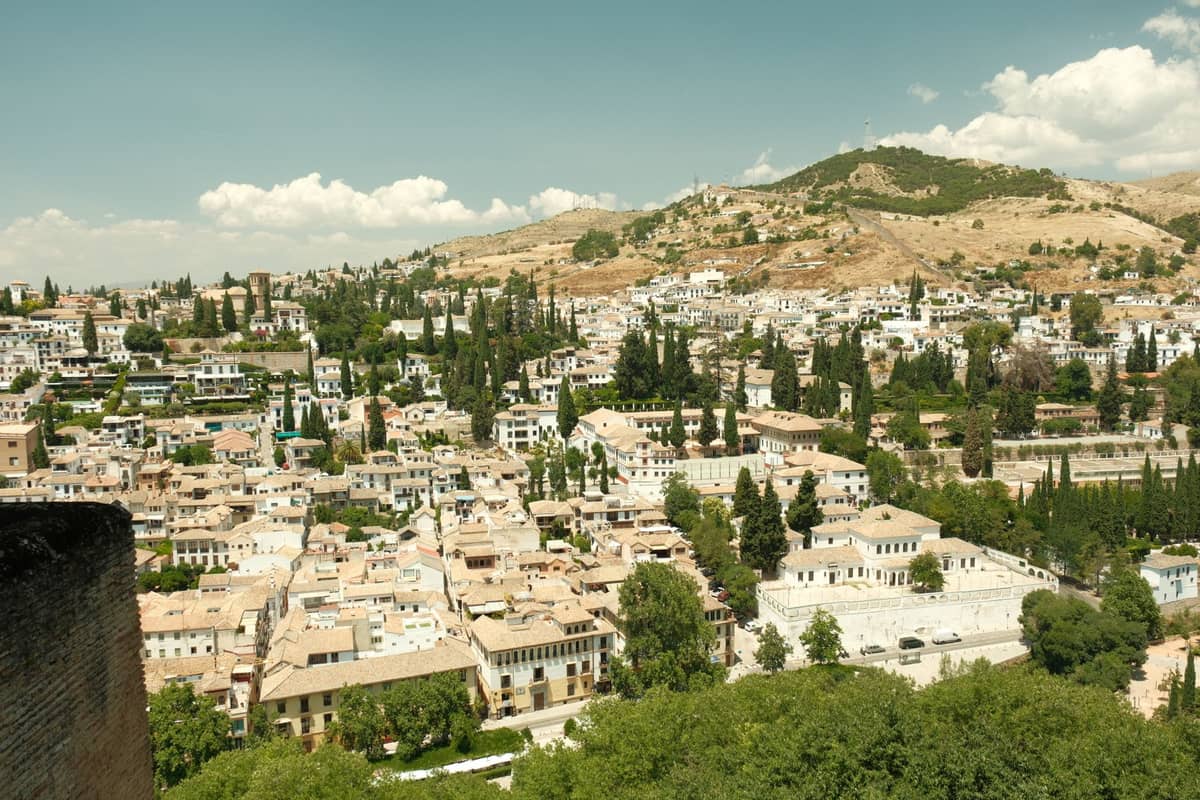
Granada sits at around 738 metres above sea level in Andalusia, southern Spain, with a population of roughly 233,000. The city is more vertical than most visitors expect. The historic core divides into distinct hillside quarters and a flatter central district, and the elevation changes between them are significant enough to influence which neighbourhood suits you best. A 20-minute walk in Granada can involve a 100-metre climb — worth knowing before you book a place with great views but awkward luggage access.
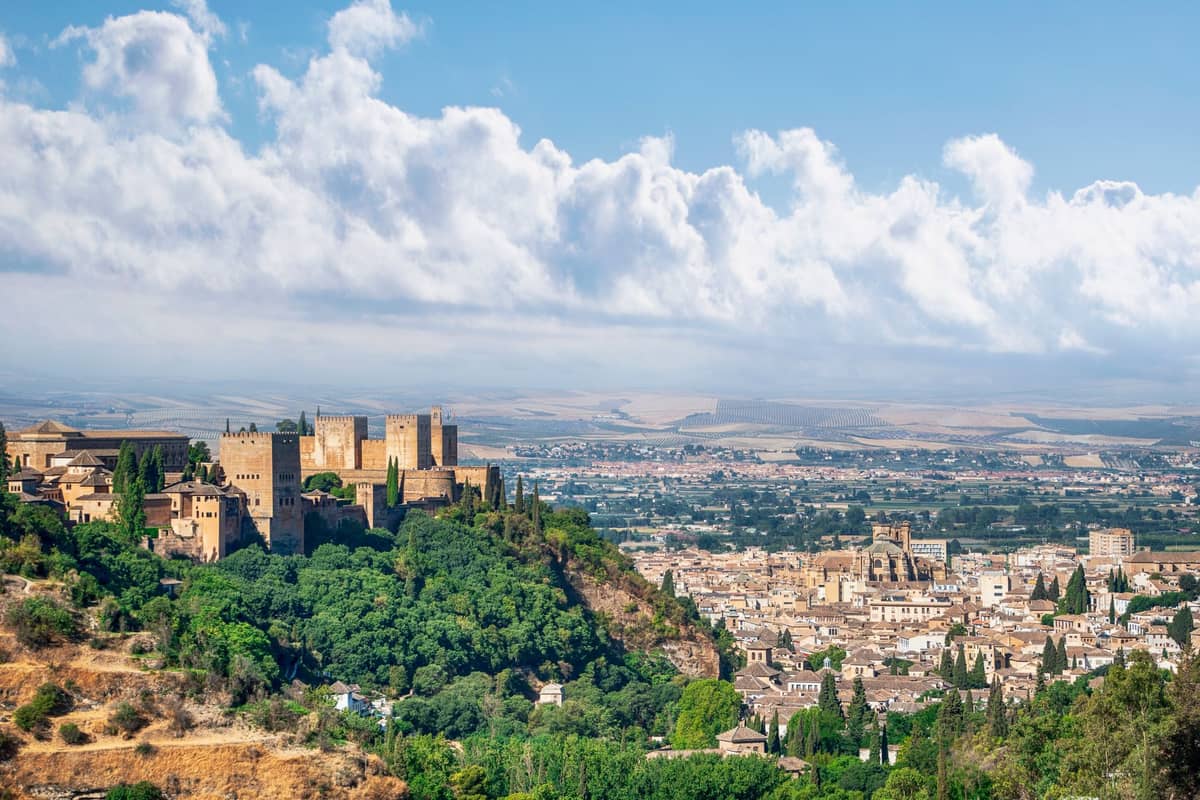
The four areas that matter most for accommodation decisions are Centro (the flat historic centre around the Cathedral and Gran Vía), Albaicín (the UNESCO-listed Moorish hillside quarter), Realejo (the old Jewish quarter below the Alhambra), and the Alhambra hill itself. Each has its own hotel stock, price profile, and practical trade-offs.
ℹ️ Good to know
Granada follows Central European Time (CET, UTC+1), switching to CEST (UTC+2) during summer daylight saving. Hotel check-in is typically from 14:00-15:00, and restaurants operate on Spanish schedules: breakfast until 11:00, lunch 13:00-16:00, dinner from 20:30. Plan airport transfers and early arrivals accordingly.
Centro: The Smartest Base for Most Visitors
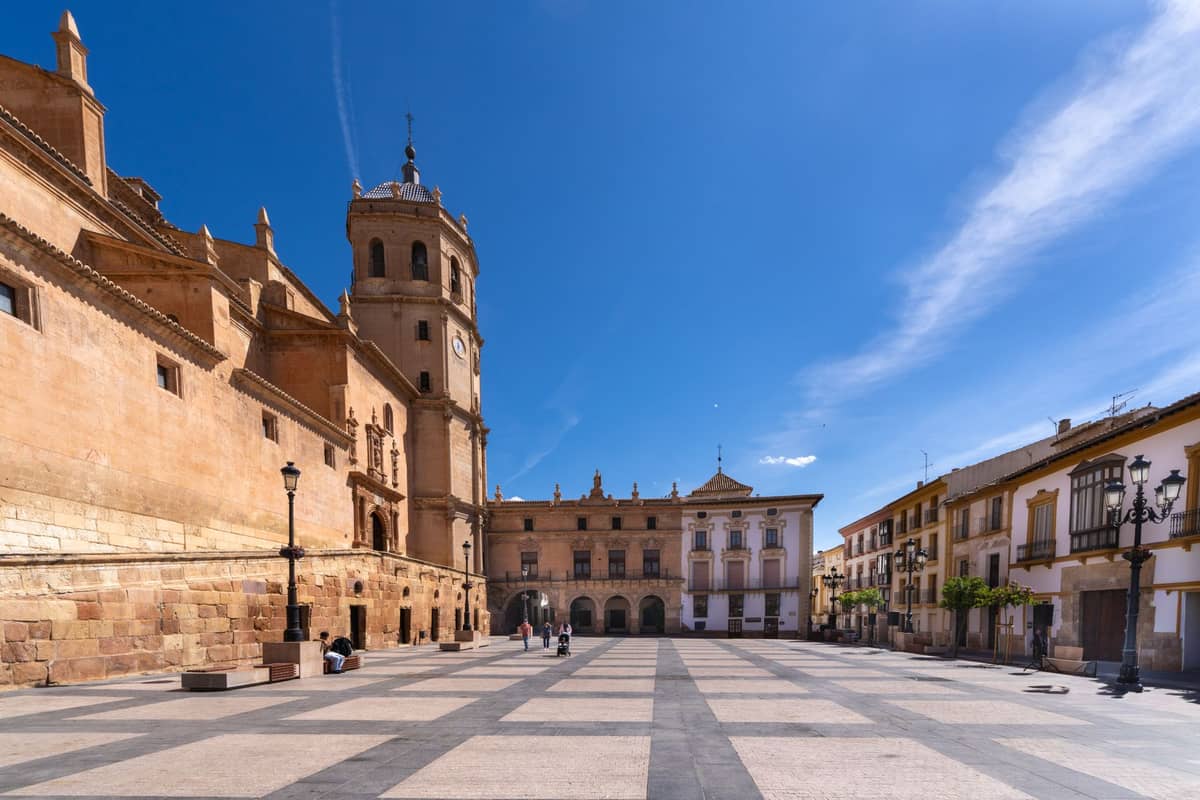
The central district — anchored by the Cathedral, Plaza Nueva, and Gran Vía de Colón — is where Granada's flat topography works in your favour. Streets are mostly paved and walkable, taxi and bus access is straightforward, and almost every major sight is within 20 minutes on foot. For anyone visiting Granada for the first time, or travelling with children or heavy bags, this is the most practical choice.
Centro concentrates a strong mix of hotels across all price points. You'll find everything from budget hostels near Calle Elvira to four-star boutique hotels in converted palaces a few steps from the Granada Cathedral. The neighbourhood also has the densest concentration of tapas bars — Granada's famous tradition of free tapas with every drink is practised across the city, but Centro and the streets around Plaza Nueva offer the most variety per square metre.
The trade-off is atmosphere. Centro is the most tourist-heavy part of Granada. Streets like Calle Navas and Calle Elvira get crowded from mid-morning through late evening in peak season (July-August and Semana Santa). If you're after a quieter, more local feel, you'll find it in Realejo or parts of Albaicín rather than here.
- Best for First-time visitors, families, anyone prioritising logistics and flat streets
- Typical hotel range Budget hostels from around €25-40/night; mid-range hotels €80-150; luxury boutique hotels €200-400+
- Landmark hotels Palacio de Santa Paula (Gran Vía), a converted 16th-century convent, typically priced around €400/night in high season
- Key drawback Highest tourist concentration; some streets are loud until late, especially on weekends
Albaicín: Atmosphere Over Convenience
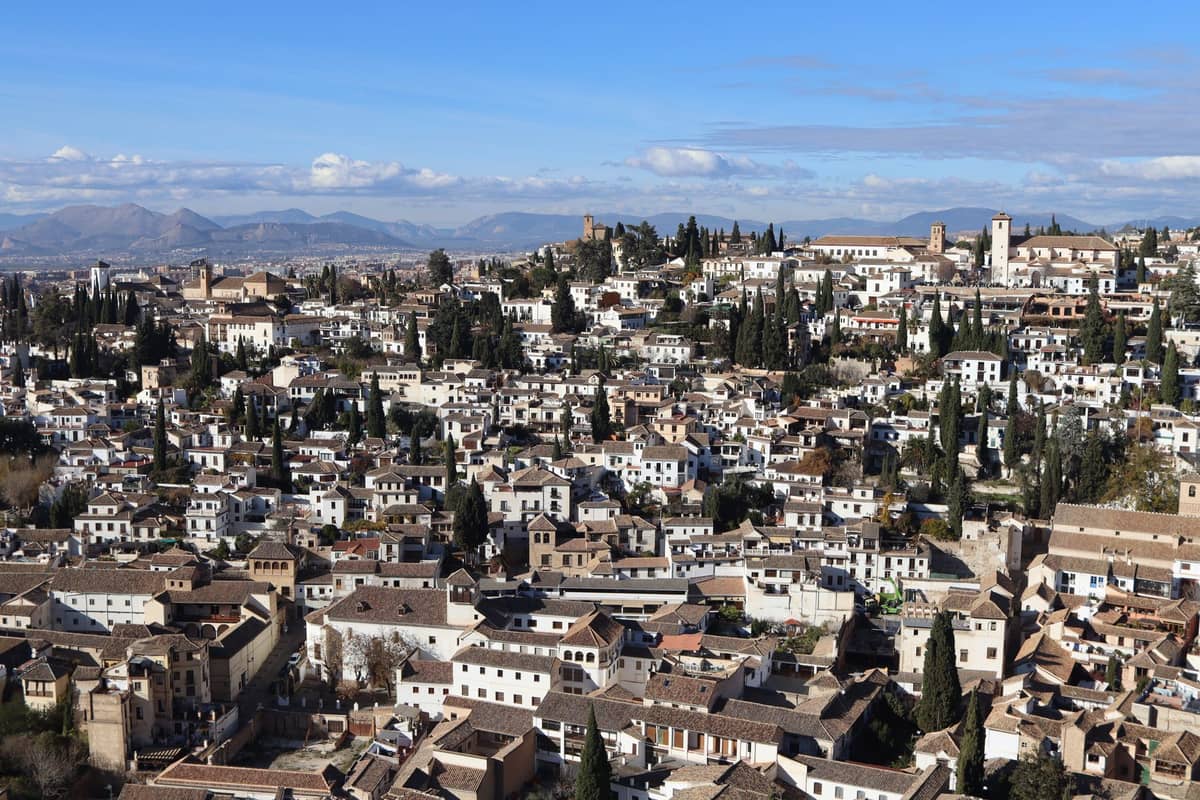
The Albaicín — officially recognised as a UNESCO World Heritage Site alongside the Alhambra — is the kind of neighbourhood that stays with you. Narrow cobbled lanes, whitewashed houses with interior courtyards (carmenes), and rooftop terraces with direct sightlines to the Nasrid Palaces: it delivers a version of Granada that no other area replicates. The Mirador de San Nicolás at sunset, with the Alhambra glowing against the Sierra Nevada, is 30 seconds from several guesthouses here.
The honest caveat: Albaicín is physically demanding and logistically awkward. Luggage-wheeling on the callejones (alleyways) is genuinely difficult. Taxis can drop you at the neighbourhood perimeter, but drivers often cannot reach small guesthouses on the upper slopes. If you're staying for one or two nights on a romantic trip and travelling light, this is worth it. If you have four bags and a tight schedule, the trade-off tips the other way.
Hotel stock in Albaicín skews toward smaller boutique guesthouses and casas rurales rather than international chains. Prices vary considerably: double rooms in simpler guesthouses start around €70-110 per night in low season, rising to €150-200+ at more refined properties. Casa Morisca, a converted 15th-century Nasrid house with original ceramic tilework and a central fountain patio, is frequently cited as the benchmark property in this neighbourhood, with doubles from roughly €70 in low season and around €150 in high season (verify current rates before booking).
⚠️ What to skip
Albaicín guesthouses often have no lift and steep internal staircases. Always check room accessibility before booking if this matters to you. Also confirm whether the property has a car drop-off point or if you'll need to carry luggage uphill from the nearest accessible road.
Realejo: The Balanced Pick for Independent Travellers
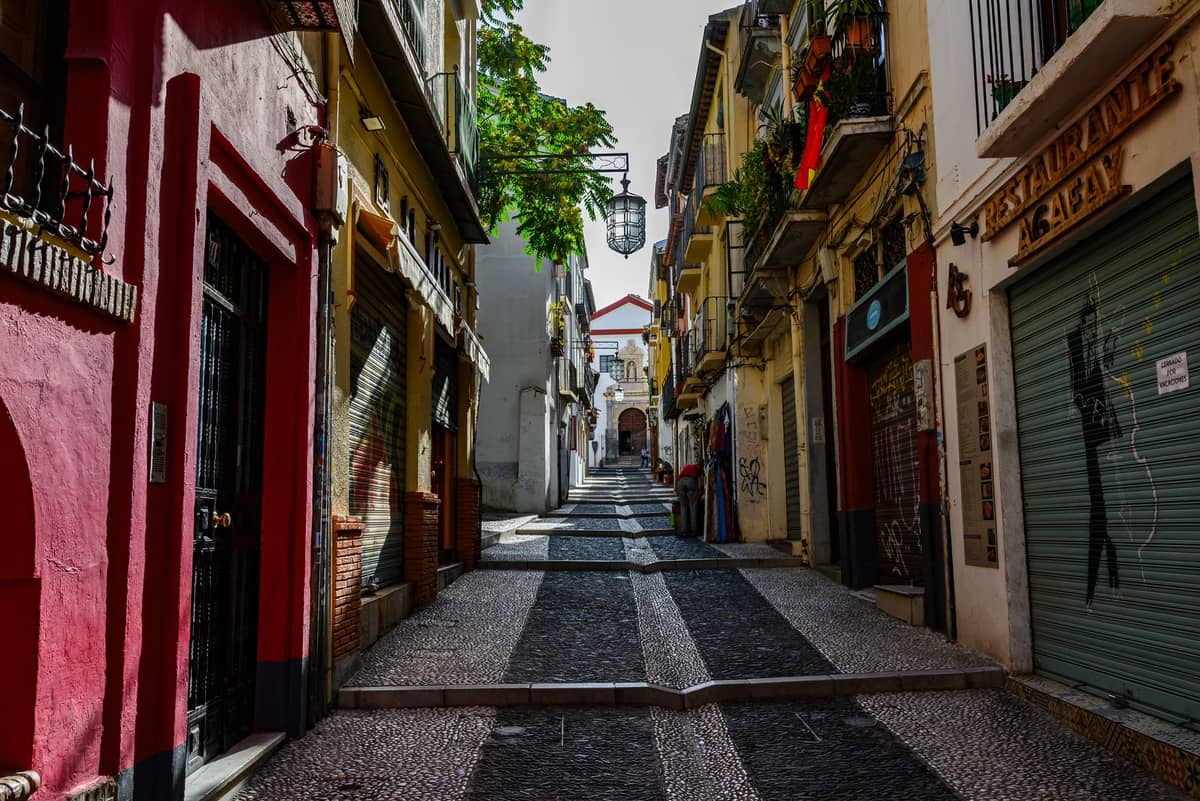
Realejo — the former Jewish quarter, also called El Realejo — sits at the foot of the Alhambra hill and edges into the southern flank of Centro. It has the residential density and street life of a real neighbourhood without the tourist saturation of the Cathedral area. The Campo del Príncipe, Realejo's central square, is one of the best places in Granada to sit with a beer and watch local life unfold, particularly on warm evenings.
The neighbourhood has a strong tapas bar culture concentrated around Calle Molinos and the streets feeding into Campo del Príncipe. It also has a visible street art scene — large-scale murals on several building facades — which gives it a creative, younger-skewing character compared to the more heritage-focused Albaicín. Walking distance to the Alhambra entrance is around 15-20 minutes uphill, and to Centro it's roughly 10-15 minutes on flat ground. That combination of access without the noise of Centro makes Realejo worth serious consideration.
Hotel supply in Realejo is thinner than in Centro but growing. Several small boutique hotels and holiday apartments have opened here in recent years. Prices tend to track slightly below Centro equivalents, making it reasonable value for what you get in terms of atmosphere and location.
Alhambra Hill: The Special-Occasion Option
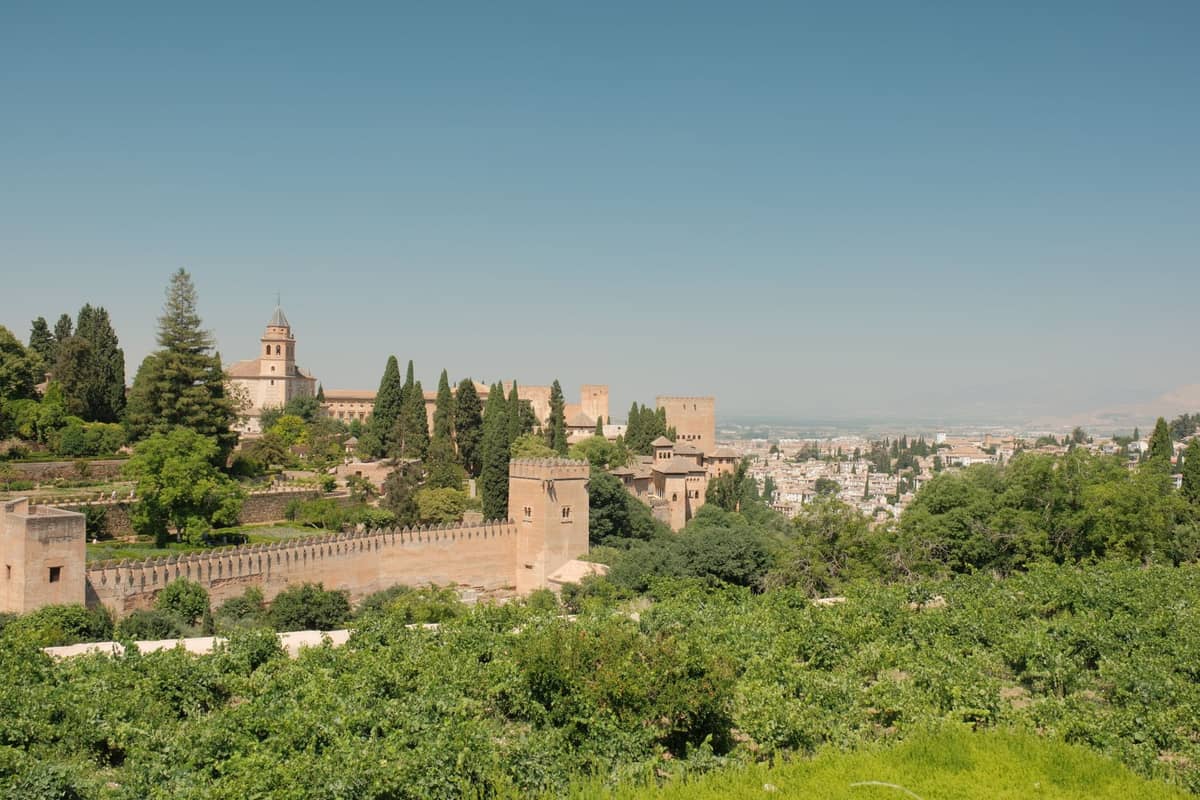
Staying on the Alhambra hill itself is a niche choice that suits one type of visitor well: someone who wants to walk out of their hotel directly into the Alhambra complex, avoid the queue logistics of arriving from the city, and experience the monument at dawn or dusk when day visitors are gone. The Parador de Granada is the only hotel within the Alhambra perimeter walls, occupying a converted 15th-century convent on the grounds between the Nasrid Palaces and the Generalife.
The Parador is rated four stars and priced accordingly: expect roughly €230-280+ in low season and €300-400+ in high season or during major events (verify before booking at the Paradores official site). The rooms vary substantially — some face interior courtyards, others have Alhambra garden views — so it's worth specifying preferences at booking. Breakfast at the Parador is expensive relative to the city, but the setting at the hotel's Generalife-adjacent terrace is genuinely difficult to replicate anywhere else.
The practical limitation: outside the Alhambra, you're not really in Granada's city life. Reaching tapas bars, the Cathedral quarter, or Realejo requires either a downhill walk of 20-30 minutes or a taxi. For anyone staying more than two nights, this isolation gets old. For a single-night splurge or a honeymoon stay, it's close to ideal.
✨ Pro tip
If you book the Parador, request a room with views toward the Generalife gardens rather than the interior courtyard. The price difference between room categories is sometimes smaller than you'd expect, and the garden-facing rooms are significantly more memorable.
Seasonal Pricing, Practical Logistics, and Getting Around
Granada's hotel prices follow clear seasonal patterns. The peak periods are July-August (hot, very busy, maximums regularly above 35°C), Semana Santa in spring, and the Corpus Christi festival period. The shoulder seasons — April-May and September-October — combine moderate temperatures (daytime highs around 20-27°C) with lower rates at most hotels, making them the best overall value. For a deeper breakdown, see our guide to the best time to visit Granada.
Getting to your hotel from Federico García Lorca Granada-Jaén Airport (IATA: GRX), located around 17 km from the city centre in the municipality of Chauchina, involves three main options. A regular airport bus connects to central stops including Avenida de Andalucía, the bus station, Gran Vía de Colón, and Paseo del Violón at a fixed fare (verify current price with the operator before travel). Taxis operate from a regulated stand at arrivals with metered or fixed fares set by the Ayuntamiento de Granada — confirm current rates before travel. Uber and Cabify also operate in Granada, with pickup from designated VTC areas at the airport.
Within the city, Granada's urban bus network (operated by Transportes Rober) and the Metro de Granada light rail cover most of the main districts. However, Albaicín and the upper Alhambra hill are not served by metro and have limited bus access on the narrower streets. If you're staying in either of those areas, budget for occasional taxis or plan your walks. For a full breakdown of city transport options, our guide to getting around Granada covers routes, fares, and the practical quirks of each option.
- Book Alhambra tickets before finalising your hotel — the entry time slot affects whether you want to be 10 minutes away (Alhambra hill, Albaicín) or 30 minutes away (Centro south end)
- Centro hotels near Gran Vía and Calle Reyes Católicos offer the best balance of transport links — the bus station and train station are accessible from here without a car
- Albaicín guesthouses often have free private parking arrangements nearby, which matters if you're arriving by rental car — confirm this before booking
- Granada operates on Spanish meal times: if your hotel includes breakfast, it typically runs until 11:00; dinner at hotel restaurants starts around 20:30
- Tap water in Granada is safe to drink — you don't need to budget for bottled water throughout your stay
- Most hotels in all price categories accept card payments; carry some cash for small tapas bars in Realejo and Albaicín where card minimums apply
Visitors planning to explore beyond Granada should note that day trips to Sierra Nevada and the Alpujarras villages are significantly easier from a Centro or Realejo base, where rental car collection and bus departures are more accessible than from the upper Albaicín. If skiing at Sierra Nevada or hiking is part of your itinerary, factor that into your neighbourhood choice.
💡 Local tip
Granada's free tapas culture means your food budget can stretch considerably if you eat and drink where locals do. Staying in Realejo or Centro puts you within walking distance of the best tapas streets. Albaicín and the Alhambra hill have fewer options immediately nearby, and prices at the handful of restaurants up there tend to reflect the captive audience.
FAQ
Where should a first-time visitor stay in Granada Spain?
Centro is the clearest recommendation for first-timers. It's flat, well-connected by bus and taxi, and puts you within 15-25 minutes' walk of virtually every major sight. The Albaicín is more romantic but involves steep streets and trickier logistics — better suited for a return visit when you know the city.
Is Albaicín a good place to stay in Granada?
For the right traveller, yes. If you're travelling light, comfortable with hills, and want the most atmospheric stay possible — whitewashed lanes, Alhambra views, small guesthouses — Albaicín delivers. If you have heavy luggage, mobility concerns, or a packed itinerary that requires easy transport access, the practical frustrations will outweigh the atmosphere.
How much do hotels in Granada Spain cost?
Prices span a wide range. Budget hostels in Centro start from around €25-40 per night. Mid-range boutique hotels in any neighbourhood typically run €80-150. The Parador de Granada, on the Alhambra grounds, ranges from roughly €160 in low season to €300+ in peak periods. High-end central properties like Palacio de Santa Paula can reach €400/night in high season. April-May and September-October offer the best combination of reasonable prices and good weather.
Is it worth staying at the Parador de Granada?
For a special occasion, absolutely. It's the only hotel inside the Alhambra walls, and the access it provides — walking to the monument at dawn, staying after most visitors leave — is genuinely unique. For longer stays or budget-conscious travellers, the isolation from city life and the premium price make it harder to justify. One or two nights as part of a longer trip is the sweet spot.
Where to stay in Granada if you want to experience flamenco?
Sacromonte, the cave-dwelling district on the slopes above Albaicín, is the historic home of Granada's flamenco tradition. Accommodation there is very limited, but staying in Albaicín puts you within easy walking distance. Realejo also has good access to flamenco venues in the city. For context on what's authentic and what's tourist-oriented, our flamenco guide covers the options in detail.
Tickets & tours
Live prices and dates from our booking partner. If you book, we may earn a commission at no extra cost to you.
Planning a trip? Discover personalized activities with the Nomado app.