Generalife Gardens: Granada's Hilltop Garden Retreat Above the Alhambra
The Generalife was the summer palace and garden estate of Granada's Nasrid sultans, perched on the Cerro del Sol above the Alhambra complex. Today its terraced water channels, rose-lined walkways, and cypress allées offer one of the most atmospheric garden experiences in Spain, best appreciated in spring or early morning before the crowds arrive.
Quick Facts
- Location
- Calle Real de la Alhambra s/n, 18009 Granada (Alhambra Hill)
- Getting There
- City bus to Alhambra entrance, or walk up via Cuesta de Gomérez (20–25 min from Plaza Nueva)
- Time Needed
- 1–2 hours for the gardens alone; 3–4 hours if combining with the full Alhambra complex
- Cost
- Gardens, Generalife and Alcazaba ticket €12.73; General Day ticket €22.27; night gardens ticket €8.48. Verify current prices at tickets.alhambra-patronato.es
- Best for
- Garden lovers, history enthusiasts, photography, couples, spring and autumn visitors
- Official website
- www.alhambra-patronato.es
What the Generalife Actually Is
The Generalife Gardens are not a public park. They are the surviving core of a royal agricultural and pleasure estate that the Nasrid sultans of Granada used as a retreat from palace life, built in the late 13th and early 14th centuries during the reigns of Muhammad II and Muhammad III. The Arabic name is believed to derive from 'Jannat al-Arif', meaning something close to 'the garden of the architect' or 'the noble garden', though scholars still debate the exact etymology.
What you see today is a layered landscape: the original Nasrid bones (water channels, pavilion foundations, the famous Patio de la Acequia) sit beneath centuries of Christian-era modifications, formal Spanish garden additions, and 20th-century horticultural work. It is not a pristine medieval garden. It is something more interesting: a garden that has evolved continuously while preserving the essential logic of Islamic garden design, where water, shade, and scent are the primary materials.
The Generalife forms part of the same UNESCO World Heritage Site designation that covers the Alhambra and the Albaicín quarter, listed since 1984 and extended in 1994. That designation is not a formality: the site is actively managed by the Patronato de la Alhambra y Generalife, which controls visitor numbers, restoration work, and access schedules.
The Layout: What You Will Walk Through
Visitors approach the Generalife from the Alhambra complex along a shaded path lined with tall cypress trees. The ascent is gradual but uneven underfoot in places, and the temperature drops noticeably once you enter the cypress corridor, even in July heat. This transition from sun to shade is deliberate: it is how the estate would have been experienced on arrival from the sultans' palace below.
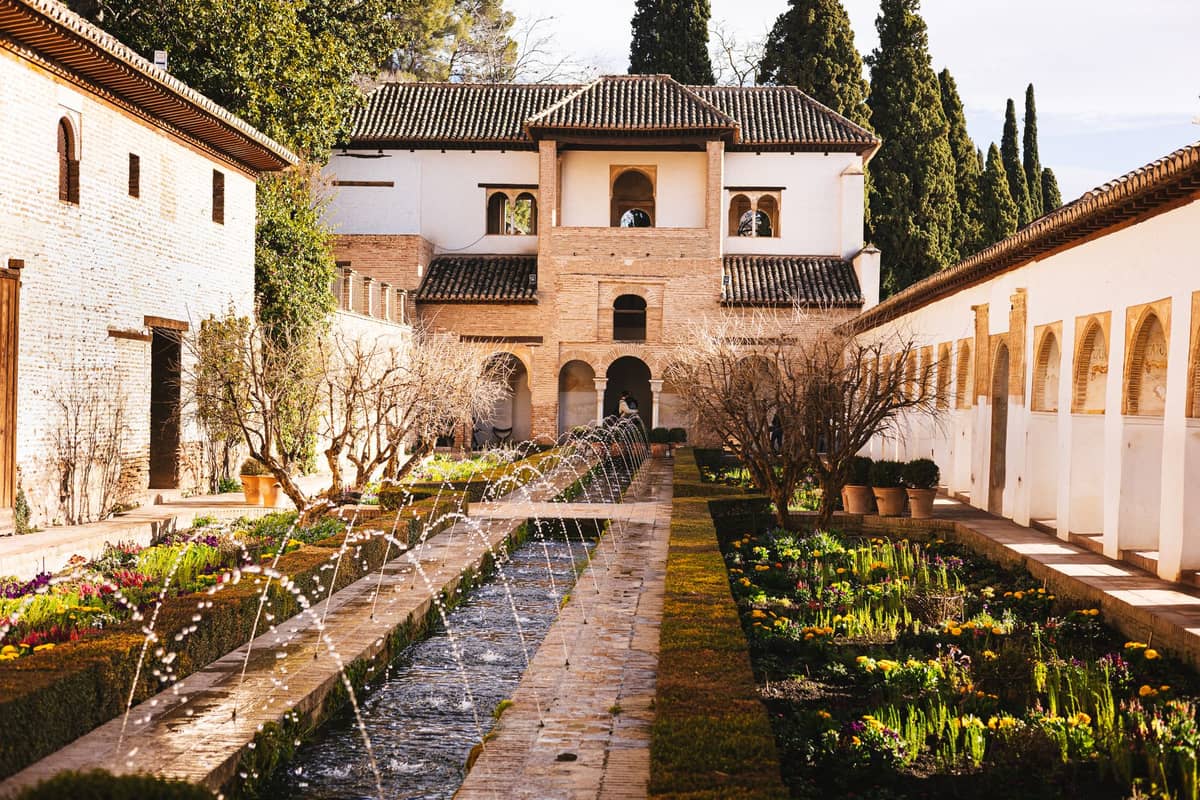
The first significant space is the Patio de la Acequia (Court of the Water Channel), the architectural heart of the estate. A long, narrow channel runs the length of the courtyard, flanked by flower beds and low jets of water that arc across the channel at regular intervals. The jets are a later addition, but the channel itself is original. The sound is constant and surprisingly cool in acoustic terms: the splash of water on stone is the dominant note in a space where the walls would otherwise trap the heat of the Granada summer.
On the north end of the Patio de la Acequia, a loggia overlooks the Alhambra's roofline and the Albaicín hillside beyond. This is one of the best viewpoints on the Alhambra Hill, and unlike the Mirador de San Nicolás on the opposite hill, it looks across the palace from above and to the side rather than straight on. The perspective reveals the relationship between the defensive Alcazaba towers and the residential Nasrid palace wings in a way that is hard to grasp from street level.
💡 Local tip
The Patio de la Acequia gets very crowded between 11:00 and 14:00. If you enter the Generalife at opening (08:30) or after 17:00 in summer, you will often have stretches of the courtyard almost entirely to yourself.
Beyond the patio, a series of terraced gardens climb the hillside. The upper terraces include the Escalera del Agua, a staircase where water runs down stone channels carved into the handrails, keeping your hands cool as you climb. It is one of those details that sounds like a tourism cliché until you actually touch it.
Tickets & tours
Live prices and dates from our booking partner. If you book, we may earn a commission at no extra cost to you.
Alhambra guided group tour with Nasrid Palaces and Generalife Palace
From 40 €Alhambra guided tour with Carlos V Palace, Generalife and Alcazaba
From 35 €Alhambra and Generalife skip-the-line private tour
From 65 €Instant confirmationAlhambra and Generalife Premium tour in English
From 59 €Instant confirmation
How the Experience Changes by Time and Season
Spring (April and May) is when the Generalife makes its strongest argument. The rose beds flanking the Patio de la Acequia are in full colour, the wisteria over the pergola walkways is releasing its scent, and the daytime temperature sits in the low to mid-20s Celsius, which is ideal for walking. The light in the morning is soft and directional, cutting across the water channel and the tiled fountain basins at an angle that rewards photography and simply being present.
Summer visits are viable but require adjustment. By July and August, daytime highs in Granada regularly exceed 35°C, and the Generalife's stone surfaces retain heat. The cypress shade is real but limited. An early start (08:30–10:00) or a late afternoon slot (18:00 onwards in the long summer evenings) transforms the experience. The night gardens ticket, typically running around 22:00–23:30 in summer at €8.48 (verify current prices at tickets.alhambra-patronato.es), is worth considering: the garden is lit without the full floodlighting that makes some monuments feel theatrical, and the temperature drops to something genuinely comfortable.
Autumn is underrated. October brings lower visitor numbers, temperatures around 24°C during the day, and a quality of afternoon light particular to Andalusia in this season. If you are planning a visit around the broader question of when to be in Andalusia, the best time to visit Granada guide covers the full seasonal picture.
Winter visits (October 15 to March 31) operate on reduced hours, closing at 18:00. The gardens lose much of their floral colour, but the structural elements, the cypresses, the water channels, the pavilion arches, become more legible without the summer planting. Rain is more likely, especially in November. The Patio de la Acequia in light winter rain, with the jets turned off and the channel reflecting a grey sky, is a genuinely different kind of beautiful.
⚠️ What to skip
Opening hours change seasonally. Summer hours (08:30–20:00) apply from April 1 to October 14. Winter hours (08:30–18:00) apply from October 15 to March 31. Verify current schedules at the official Patronato website before your visit, as adjustments are made periodically.
Tickets, Access, and Practical Logistics
Tickets for the Generalife are sold as part of the broader Alhambra ticketing system managed by the Patronato de la Alhambra y Generalife. The gardens-only ticket (covering the Generalife and Alcazaba, excluding the Nasrid Palaces) costs €12.73. The full General Day ticket, which adds entry to the Nasrid Palaces and the Partal gardens, costs €22.27. Children under 12 enter free but still require a ticket. Reduced prices apply for EU Youth Card holders, visitors with disabilities, and those over 65. Always verify current prices at tickets.alhambra-patronato.es before purchasing.
Booking in advance is not optional in practical terms, it is essential. Tickets for the full Alhambra complex, particularly those including a timed entry slot to the Nasrid Palaces, sell out weeks ahead during spring and summer. The gardens-only ticket has more availability, but selling out is still possible. Do not arrive at the gate and expect to purchase on the day during peak season.
Getting to the Alhambra Hill from central Granada: the city bus service runs from several central stops to the Alhambra entrance and is the most straightforward option. Alternatively, the walk up Cuesta de Gomérez from Plaza Nueva takes 20–25 minutes and is uphill throughout but shaded in parts. The path via Cuesta del Rey Chico approaches from the Sacromonte side and gives a slightly different perspective on the hill. Taxis and ride-hailing apps (Uber and Cabify operate in Granada) can drop you at the main access point.
ℹ️ Good to know
Wheelchair users and visitors with limited mobility: approximately 70% of the monument is accessible via modified routes with ramps and adapted paths. A free wheelchair rental service is available at the Access Pavilion, subject to availability. Strollers are allowed on the open garden paths but not inside the pavilion interiors.
Photography and Sensory Notes
The Patio de la Acequia is the primary photographic target, and every visitor with a camera or phone will be pointing at the same thing: the long channel with its arcing water jets, the pavilion at the far end, and the tower of the Comares palace visible over the roofline in the background. To get that shot without 40 people in frame, arrive at 08:30 or wait until after 17:00 on a summer evening.
The terraced upper gardens are less photographed and more rewarding for detail work: the texture of clipped myrtle hedges, the shadow patterns cast by cypress rows across gravel paths, the water-stained stone of the channel edges. The light from the north-facing loggia looking toward the Albaicín is at its best in the morning, when the hill opposite catches direct sun.
In terms of smell, the Generalife in spring has a layered fragrance profile that shifts as you move through it: the faint earthiness of cypress resin, the heavier sweetness of roses near the central beds, and the clean smell of water on stone that the channel produces constantly. In summer, dry rosemary and lavender plantings add a sharper note. It is a sensory environment designed with intent, and it still functions as such after seven centuries.
Is It Worth Your Time?
The Generalife Gardens are not the main draw for most first-time visitors to the Alhambra. That title belongs to the Nasrid Palaces, and rightly so. But treating the Generalife as a brief appendix to the palace visit is a mistake. Allow at least 90 minutes, ideally longer, and move through it slowly. The gardens reward observation rather than movement.
Who might find it less worthwhile: visitors who are primarily interested in the interiors and tile-work of the Nasrid period, rather than outdoor spaces. If you are covering Granada quickly in a single day and the Nasrid Palaces are the priority, the gardens-only ticket offers a more affordable partial visit, but the Palaces remain the irreplaceable element of the complex.
For visitors with more time, the Generalife fits naturally into a broader exploration of the Alhambra Hill. The Palacio de Carlos V is within the same complex, and the Carmen de los Mártires gardens just outside the Alhambra perimeter offer a quieter, less visited green space that complements the Generalife experience well. A full afternoon on the hill can be one of the best things you do in Granada.
If you are assembling a broader Granada itinerary, the Alhambra tickets guide covers the full booking process, ticket types, and timing strategy in detail.
Insider Tips
- The night visit to the Generalife Gardens (check current schedules and availability at tickets.alhambra-patronato.es) is consistently underbooked compared to daytime slots. The garden lit at night is a qualitatively different experience and summer temperatures at 22:00 are genuinely comfortable.
- The free wheelchair rental at the Access Pavilion is first-come, first-served. If accessibility equipment is important to your visit, call the Patronato in advance to check availability on your specific date.
- The upper terraces of the Generalife (above the Patio de la Acequia) receive far fewer visitors than the courtyard itself. Most tour groups pause at the patio and turn back. Walking all the way up to the Escalera del Agua and looking back down over the whole estate gives you the proportions of the place in a way the lower level does not.
- If you are doing the full Alhambra complex visit, most visitors go to the Nasrid Palaces first (because timed entry makes it obligatory). Reversing the standard flow by walking to the Generalife immediately after entry, before the crowds fully arrive, works well on quieter days when you have a morning Nasrid slot.
- Wear comfortable, flat-soled shoes. The garden paths include gravel sections, uneven stone paving, and gentle slopes. Sandals work but make the gravel sections less comfortable on longer walks.
Who Is Generalife Gardens For?
- Garden enthusiasts with an interest in Islamic horticultural history and water garden design
- Photographers who want to work in golden-hour morning light on a major heritage site
- Couples looking for a quieter, more contemplative alternative to the Alhambra's busiest interiors
- Spring and autumn visitors who can appreciate the gardens in full seasonal colour and mild temperatures
- Visitors who want a meaningful Alhambra Hill experience without committing to the full complex ticket price
Nearby Attractions
Other things to see while in Alhambra Hill (La Sabika):
- Alcazaba
The Alcazaba is the oldest surviving section of the Alhambra complex, a Nasrid military fortress perched at the western tip of the hill. Its towers offer some of the most commanding views in Granada, looking out over the Albaicín, the Darro valley, and on clear days, the snow-capped Sierra Nevada.
- Alhambra
The Alhambra is one of the most visited monuments in the world for good reason: it is an extraordinarily complete surviving example of Nasrid Islamic palatial architecture, set above Granada on the hill of Sabika. This guide covers what to expect at each section of the complex, how to secure tickets, and how to make the most of your visit.
- Carmen de los Mártires
Tucked just minutes from the Alhambra entrance, Carmen de los Mártires is a sprawling 19th-century romantic garden on Alhambra Hill that most visitors walk straight past. Shaded paths, ornamental lakes, Moorish-influenced terraces, and resident peacocks reward those who take the detour.
- Casa-Museo Manuel de Falla
Tucked into the hillside near the Alhambra, the Casa Museo Manuel de Falla preserves the modest carmen where Spain's greatest 20th-century composer worked for nearly two decades. Original furnishings, a working piano, and handwritten manuscripts make this one of Granada's most intimate cultural visits.
Planning a trip? Discover personalized activities with the Nomado app.