Carmen de los Mártires: Granada's Forgotten Garden Above the City
Tucked just minutes from the Alhambra entrance, Carmen de los Mártires is a sprawling 19th-century romantic garden on Alhambra Hill that most visitors walk straight past. Shaded paths, ornamental lakes, Moorish-influenced terraces, and resident peacocks reward those who take the detour.
Quick Facts
- Location
- Paseo de los Mártires, s/n, 18009 Granada — Alhambra Hill
- Getting There
- AlhambraBus C30 or C32 to Auditorio Manuel de Falla/Carmen de los Mártires stop; 5-min walk uphill from there
- Time Needed
- 45–90 minutes
- Cost
- Free entry (verify before visiting, as status may change)
- Best for
- Garden lovers, couples, families with young children, photography, quiet escape from the Alhambra crowds
What Is Carmen de los Mártires?
Carmen de los Mártires is a romantic public garden occupying a privileged position on Alhambra Hill, just a short walk west of the main Alhambra ticket office. While thousands of visitors file past the entrance road each day toward the palaces, almost none of them turn down the side path that leads here. The result is one of the most undervisited green spaces in any major Spanish city.
The property takes its name from the Christian martyrs who were reportedly imprisoned on this site during the Nasrid period, before the fall of the emirate in 1492. After the Reconquista, Carmelite monks established a monastery here and maintained the grounds for centuries. The current garden layout dates largely from the 19th century, when a private owner transformed the estate into a landscaped carmen, the Granadan term for a walled villa with ornamental garden. The municipality of Granada eventually acquired the property and opened it to the public.
The gardens sit on the same forested hill as the Alhambra complex, which means the surrounding woodland, the elevation, and the general atmosphere are all part of the same experience. What Carmen de los Mártires adds is stillness — something the Alhambra itself, with its timed entry queues and tour groups, cannot offer.
The Garden Itself: What You Will Actually See
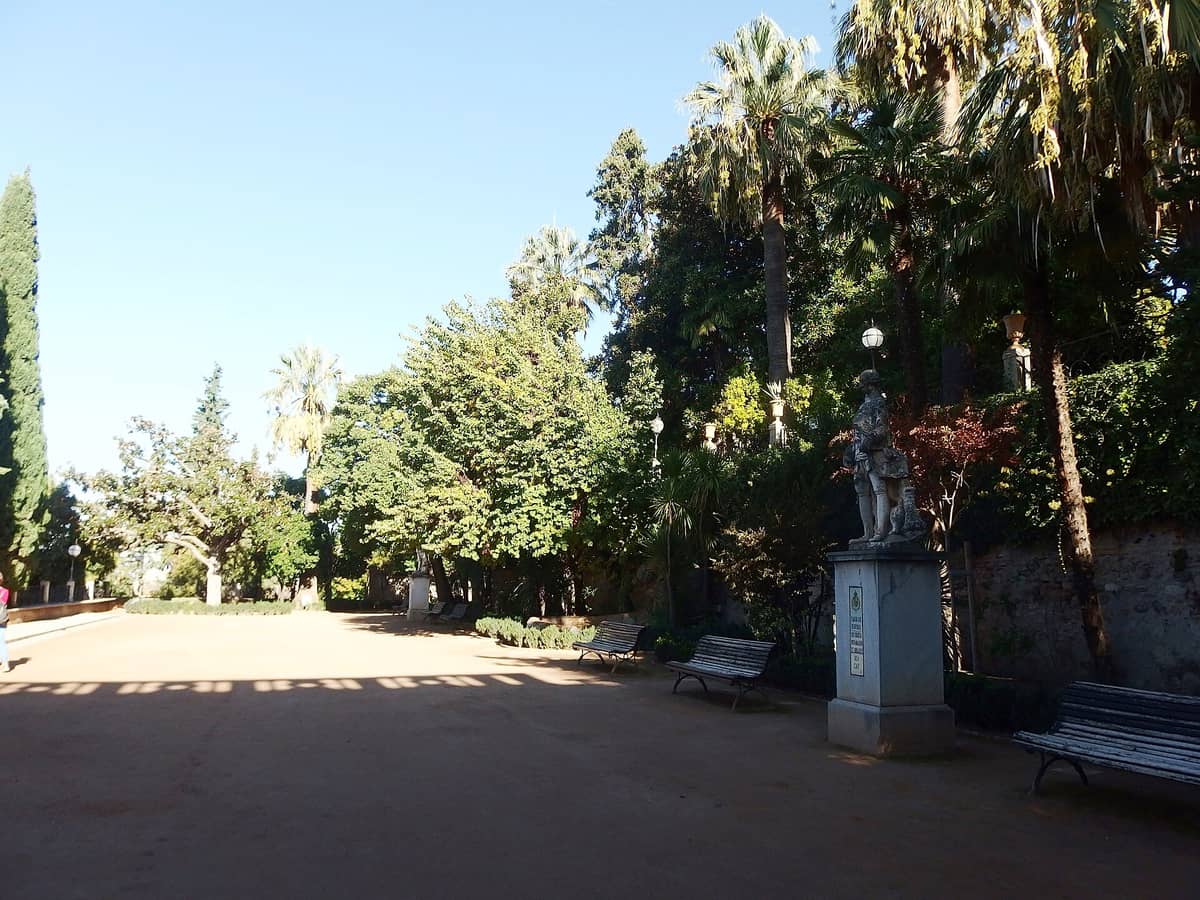
The grounds are divided into several distinct zones, each with a different character. Near the entrance, a formal parterre of trimmed hedges and gravel paths sets a composed, almost stately tone. The geometry here is crisp, with low box hedging outlining symmetrical beds. In spring, roses fill these beds with color and a light scent that drifts across the gravel on still mornings.
Further in, the garden opens into a larger naturalistic section with a small lake at its heart. The lake is home to ducks and the garden's most memorable residents: a small group of peacocks that wander freely across the lawns and gravel paths. The birds are entirely accustomed to visitors and will approach without encouragement, which makes for easy wildlife photography. The lake reflects the surrounding trees and, on clear days, creates a mirror image of the sky that photographers find productive in the early morning, before any wind picks up.
A shaded avenue of tall cypress and plane trees forms the spine of the property. Walking beneath them on a July afternoon, the temperature drops noticeably. The canopy is dense enough to block direct sun entirely, and the sound of Granada's traffic fades to almost nothing. Peacock calls echo occasionally from somewhere deeper in the grounds. This shaded corridor alone is reason enough to visit in summer, when the Alhambra's exposed courtyards can feel brutal under the Andalusian sun.
💡 Local tip
The gardens are an easy 10-minute walk from the Alhambra ticket pavilion. If you have a morning Alhambra slot, consider arriving 30 minutes early and spending that time in Carmen de los Mártires rather than standing in the access queue.
Tickets & tours
Live prices and dates from our booking partner. If you book, we may earn a commission at no extra cost to you.
Granada CF Nuevo Estadio de Los Carmenes Interactive Guided Tour
From 18 €Instant confirmationFree cancellationAlhambra guided tour with Carlos V Palace, Generalife and Alcazaba
From 35 €Alcazar of Cordoba skip-the-line tickets and guided tour
From 19 €Instant confirmationFree cancellationAlcazar of the Christian Monarchs guided tour in Cordoba
From 19 €Instant confirmationFree cancellation
Historical and Cultural Context
The name of the site carries real weight. During the late Nasrid period, Christian prisoners are said to have been held in underground caverns beneath what is now the garden. The Carmelite order, which built its monastery here after 1492, preserved the memory of those prisoners through the site's dedication. The monastery itself no longer stands in its original form, but the spiritual gravity of the location shaped how the grounds were understood and maintained for centuries.
The 19th-century romantic garden movement that reshaped the estate placed Carmen de los Mártires firmly in a European tradition of picturesque landscape design, combining formal French-influenced parterres with more naturalistic English-style plantings. This same impulse shaped gardens across Andalusia during that period. For context on how Granada's Moorish heritage has been layered with later European interventions, the Granada Moorish heritage guide offers useful background.
The carmen typology itself is worth understanding. A carmen in Granada is a specific kind of urban villa: a walled property on the slopes of the Albaicín or Alhambra Hill, combining a modest house with an elaborate walled garden. The word derives from the Arabic term for vineyard. Carmen de los Mártires is one of the largest surviving examples of this form, and one of the few accessible to the general public.
How the Experience Changes by Time of Day
Morning visits, particularly on weekdays, are the quietest. By 10:00 when the gates open, the light on Alhambra Hill is soft and directional. Birdsong is loud and overlapping, the garden smells of damp earth and cut grass from overnight irrigation, and it is entirely possible to walk the full grounds without encountering more than a handful of other visitors. This is when the place reveals its real scale and its genuine calm.
By midday, particularly on spring and summer weekends, the atmosphere shifts. Families arrive with children, who discover the peacocks immediately and spend a satisfying amount of time trailing after them. The lake area becomes a natural gathering point. The garden is still far less crowded than anywhere in the Alhambra complex, but the solitude of early morning gives way to a more sociable, park-like mood.
Late afternoon, especially in summer, brings a second quieter window. The worst heat has passed, the golden light falls at a low angle through the cypress trees, and the reopening after the midday closure (see hours below) means a brief period of near-emptiness. Sunset photographers who plan around this timing find the garden rewarding.
ℹ️ Good to know
Opening hours are seasonal. April 16 to October 15: Mon–Fri 10:00–14:00 and 18:00–20:00; Sat, Sun, and holidays 10:00–20:00. October 16 to March 31: Mon–Fri 10:00–14:00 and 16:00–18:00; Sat, Sun, and holidays 10:00–18:00. Verify these hours at the official Granada city website before visiting, as they can change.
Getting There and Practical Logistics
The gardens are at Paseo de los Mártires, s/n, in Granada's Alhambra Hill area. From the city centre, the most practical option is the AlhambraBus C30 or C32, which runs from Plaza Nueva up to the Alhambra. Get off at the Auditorio Manuel de Falla/Carmen de los Mártires stop and walk uphill along Paseo de los Mártires. The walk takes around five minutes and is clearly signed.
If you are already at the Alhambra complex, the gardens are a short walk west from the main ticket pavilion along the same road. They can be combined naturally with a visit to the Generalife or the Palacio de Carlos V on the same day, though the gardens deserve their own unhurried time rather than being squeezed into a few spare minutes.
On foot from Plaza Nueva, the uphill walk along Cuesta de Gomérez and then the forest road takes 20 to 25 minutes at a moderate pace. The paths are paved and suitable for most walkers, though the gradient may be uncomfortable for those with mobility difficulties. The interior garden paths are largely flat once you are inside.
⚠️ What to skip
Accessibility within the gardens is uneven. The main paths are wide and level, but some connecting sections between garden zones involve steps or uneven gravel. Specific wheelchair access information is not confirmed by official sources — contact the Granada city parks department before visiting if step-free access is essential.
Photography, Weather, and What to Bring
For photography, the lake area offers the most compositional variety: reflections, open sky, wildlife, and a backdrop of mixed trees. The formal parterre near the entrance suits close-up work on plant textures and geometric patterns. The long cypress avenue is excellent for depth-of-field shots in morning or late afternoon light. None of these require specialist equipment — a smartphone with a decent camera performs well in the natural light conditions found here at most times of day.
Weather conditions matter more than at enclosed sites. In summer (July and August), daytime temperatures in Granada regularly exceed 35°C and occasionally approach 40°C. The tree cover inside Carmen de los Mártires provides genuine relief, but the walk up to Alhambra Hill is exposed. Carry water, wear sun protection, and consider visiting during the cooler evening opening hours rather than at midday. In winter, the gardens are quietest and the light is gentle, but some sections may feel bare. Spring (April to May) is the best season: roses in bloom, comfortable temperatures around 22–26°C, and reliable sunshine.
For broader guidance on timing a Granada trip around both weather and crowd levels, see the best time to visit Granada guide.
Who Should Skip This, and Who Should Not
Carmen de los Mártires will disappoint visitors who want historical interpretation, architectural drama, or structured cultural content. There are no on-site exhibitions, no audio guides, and no staff explaining what you are looking at. The garden exists as a garden: to walk through, sit in, and observe. If your priority is monument density and historical narrative, spend that time inside the Nasrid Palaces instead.
The garden is well suited to families with children, who respond well to the peacocks and the open lawns. It works equally well for couples looking for a quieter alternative to the famous Mirador de San Nicolás, which is beautiful but rarely uncrowded. Visitors who have already seen the major Alhambra attractions and want to decompress will find Carmen de los Mártires a natural ending point for a long day on the hill.
Insider Tips
- The midday closure on weekdays (14:00 to 16:00 or 18:00 depending on the season) catches many visitors off guard. Check the exact seasonal hours before building your day around a garden visit.
- The peacocks sometimes display their tail feathers in the parterre area near the entrance in the late morning. This is unpredictable, but arriving around 11:00 on a calm spring day gives you a reasonable chance of seeing it.
- The garden's elevation gives partial views toward the Vega de Granada, the agricultural plain west of the city. For a clearer sense of Granada's wider geography, find a gap in the trees near the western perimeter fence.
- If you are visiting the Alhambra on a timed morning ticket, the garden is a far more pleasant place to wait for your entry slot than the exposed queue area near the ticket pavilion. Walk here first, then return when your time approaches.
- Spring evenings (May, during the summer hours period) are particularly atmospheric: the city lights begin to appear below, the temperature is ideal, and almost no one else is here after 19:00 on a weekday.
Who Is Carmen de los Mártires For?
- Garden and landscape photography, especially in spring and during golden hour
- Families with children who will enjoy the free-roaming peacocks and open lawns
- Couples wanting a quiet, uncrowded alternative to Granada's main viewpoints
- Alhambra visitors who want a calm starting or ending point for a day on the hill
- Anyone needing genuine shade and quiet during a hot Granada summer afternoon
Nearby Attractions
Other things to see while in Alhambra Hill (La Sabika):
- Alcazaba
The Alcazaba is the oldest surviving section of the Alhambra complex, a Nasrid military fortress perched at the western tip of the hill. Its towers offer some of the most commanding views in Granada, looking out over the Albaicín, the Darro valley, and on clear days, the snow-capped Sierra Nevada.
- Alhambra
The Alhambra is one of the most visited monuments in the world for good reason: it is an extraordinarily complete surviving example of Nasrid Islamic palatial architecture, set above Granada on the hill of Sabika. This guide covers what to expect at each section of the complex, how to secure tickets, and how to make the most of your visit.
- Casa-Museo Manuel de Falla
Tucked into the hillside near the Alhambra, the Casa Museo Manuel de Falla preserves the modest carmen where Spain's greatest 20th-century composer worked for nearly two decades. Original furnishings, a working piano, and handwritten manuscripts make this one of Granada's most intimate cultural visits.
- Fundación Rodríguez-Acosta (Carmen Rodríguez-Acosta)
Perched on the slopes of Alhambra Hill, the Fundación Rodríguez-Acosta is a layered surprise: a modernist villa-garden complex built by a Granadan painter in the early 20th century, now housing an eclectic art collection and the scholarly Museo Gómez-Moreno. Guided visits run in set morning passes; admission is 5 euros, with various reductions and free entry for children under 12.
Planning a trip? Discover personalized activities with the Nomado app.