Casa Museo Manuel de Falla: Inside the Composer's Granada Home
Tucked into the hillside near the Alhambra, the Casa Museo Manuel de Falla preserves the modest carmen where Spain's greatest 20th-century composer worked for nearly two decades. Original furnishings, a working piano, and handwritten manuscripts make this one of Granada's most intimate cultural visits.
Quick Facts
- Location
- Paseo de los Mártires s/n, Alhambra Hill, Granada
- Getting There
- Walk up from Plaza Nueva via Cuesta de Gomérez, or take a city bus to the Alhambra area
- Time Needed
- 45–75 minutes
- Cost
- 3€ general; 1€ reduced (students, pensioners, groups); free Wednesdays 09:00–11:00 (check current schedule)
- Best for
- Classical music lovers, fans of Spanish cultural history, slow travelers
- Official website
- www.manueldefalla.org/casamuseo.php
What Is the Casa Museo Manuel de Falla?
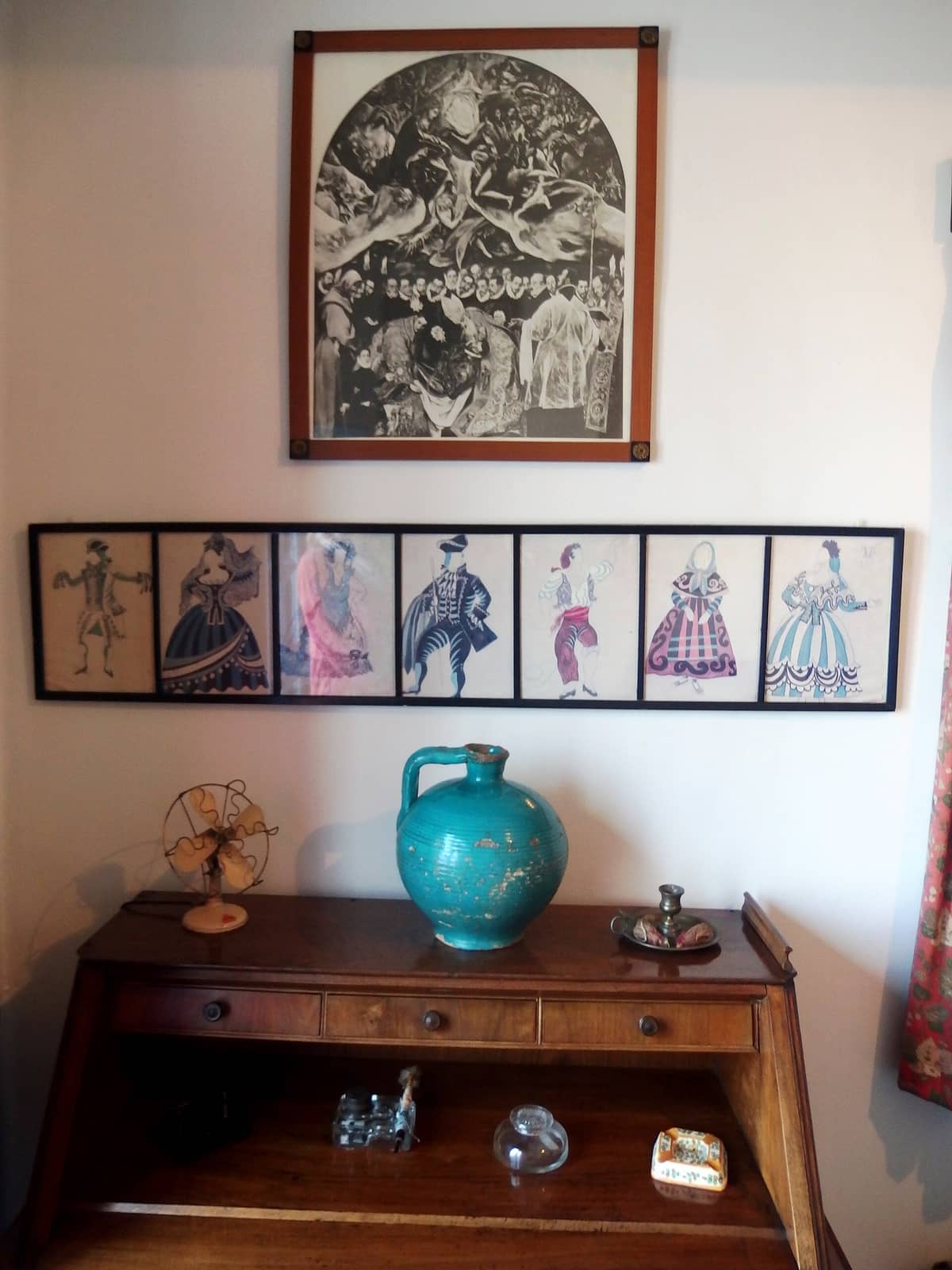
The Casa Museo Manuel de Falla is a small house museum on the Alhambra hill, occupying the actual home where the Cádiz-born composer Manuel de Falla lived from 1921 until he departed for Argentina in 1939, never to return. It is not a reconstructed period room or a symbolic tribute: the bedroom, workroom, kitchen, and garden remain essentially as Falla left them, right down to the upright piano he played and the manuscripts stacked on his desk.
The house is a traditional Andalusian carmen, a walled urban villa with a private garden, set on a quiet lane called Paseo de los Mártires. On one side, the Alhambra complex rises above you. On the other, the rooftops of Granada drop away toward the plain. The address alone tells you something about Falla's years here: he chose a place where the city's greatest monument was almost literally in his backyard, and where silence was still possible.
💡 Local tip
If you want the house entirely to yourself, arrive at opening time on a weekday morning. Groups rarely appear before 11:00, and the early light through the garden makes the space feel genuinely inhabited rather than curated.
The Historical Context: Why Granada, Why This House?
Manuel de Falla arrived in Granada in 1919 on an extended visit and simply stayed. He had spent formative years in Paris alongside Debussy, Ravel, and Dukas, absorbing French Impressionism while deepening his understanding of Andalusian folk music. By the time he settled in the carmen on Paseo de los Mártires, he was already celebrated for his ballet El amor brujo and his Noches en los jardines de España. Granada gave him proximity to both the Moorish architectural tradition he revered and the flamenco roots he studied seriously.
The years in this house were productive and, toward the end, increasingly shadowed. He collaborated closely with Federico García Lorca, became associated with the Centro Artístico, Literario y Científico de Granada (founded in 1885, long before Falla arrived), and organized an influential 1922 Cante Jondo competition intended to document and dignify the deep song tradition. He also worked on his monumental cantata Atlántida throughout his Granada years, a work that remained unfinished when he died in Argentina in 1946. The weight of that incomplete project is quietly present in the workroom.
Understanding the relationship between Falla and Granada requires some familiarity with the city's Moorish heritage. For that background, the Granada Moorish heritage guide is a useful companion before you visit.
Tickets & tours
Live prices and dates from our booking partner. If you book, we may earn a commission at no extra cost to you.
Traditional Flamenco Show at Tablao Casa Ana in Granada
From 20 €Instant confirmationFree cancellationAlhambra guided tour in Italian
From 49 €Instant confirmationFree cancellationAlhambra guided group tour with Nasrid Palaces and Generalife Palace
From 40 €Alhambra guided tour with Carlos V Palace, Generalife and Alcazaba
From 35 €
Walking Through the House: Room by Room
Visits are guided and conducted in small groups, typically no more than a dozen people at a time. The guide, usually an art historian or music specialist affiliated with the Auditorio Manuel de Falla, moves you through the main rooms in a sequence that feels unhurried. Expect about 45 to 60 minutes inside, with additional time in the garden if you want it.
The workroom is the center of gravity. Falla's upright piano sits exactly where it always stood, and the manuscripts and correspondence displayed in glass cases are originals, not facsimiles. The room is small enough that you stand quite close to the score pages. The handwriting is dense and precise. On the desk, personal objects including a crucifix and a small devotional print signal the Catholic faith that grew more intense in his later years. The room smells faintly of old paper and wood, not damp or musty, just old.
The bedroom is spare: an iron bedstead, a washstand, a few framed devotional images. It communicates the asceticism that defined Falla's private life in Granada. He was reportedly a difficult host and a near-recluse, famously sensitive to noise, a fact that feels almost comic given that he lived next to what would become one of Spain's most visited monuments. The kitchen and dining areas are preserved with original ceramics and everyday objects that ground the museum in domestic rather than heroic terms.
The garden, a classic carmen design with tiered terraces and clipped hedges, is worth ten minutes on its own. On a clear morning, there is a partial view toward the Vega plain, and the quiet is notable. The garden is not formal in the Generalife style, but it has the same principle: water, shade, and enclosure against the heat.
The Alhambra gardens offer a grander version of this Andalusian carmen tradition. If you plan to visit both, book your Alhambra tickets well in advance, since slots fill weeks ahead.
How the Experience Changes by Time of Day and Season
Morning visits, particularly in spring and autumn, have a quality that afternoon slots cannot replicate. The low angle of light enters the workroom from the garden side and falls across the piano and manuscript cases at an angle that photographs well and simply looks right. The temperature inside the house stays cool until late morning regardless of season, which makes summer morning visits at 09:00 opening genuinely comfortable even in July.
In winter, between October and May, afternoon visits extend to 17:00, which suits travelers combining this with a morning at the Alhambra. The house feels more enclosed and interior in winter light, which is not a disadvantage: the warm tones of the wood furniture and the terracotta floor tiles read differently in flat afternoon light than in morning sun. Crowds at any hour are modest. This is not a museum that draws queues.
⚠️ What to skip
The museum is closed on Mondays year-round and on public holidays. Summer hours (July–August) are 09:00–14:30 Tuesday to Saturday only, with Sundays closed in those months. Check the official site before planning your visit, as hours shift significantly between seasons.
Practical Information: Getting There and What to Expect
The museum address is Paseo de los Mártires s/n, 18009 Granada. The lane is quiet and pedestrianized in feel, running between the Carmen de los Mártires park and the Alhambra forest. There is no on-site parking. Most visitors arrive on foot.
The walk from Plaza Nueva takes roughly 20 to 25 minutes uphill via Cuesta de Gomérez and through the Alhambra gate area. It is a steady climb on a well-paved path, shaded for most of the route by the forest of elms and holm oaks that covers the Alhambra hill. City buses serve the Alhambra area from central Granada, and from the main Alhambra bus stop the walk to Paseo de los Mártires is around 10 minutes along a level lane.
For transit options into and around the Alhambra hill area, the getting around Granada guide covers bus routes and walking times in detail.
Admission is 3€ for general visitors, 1€ for students, pensioners, and pre-booked groups, and visits are free on Wednesdays between 09:00 and 11:00. Contact the museum directly for group bookings: phone +34 649 055 947 or email casamuseomanueldefalla@granada.org. Photography policies inside are at the discretion of the guide: ask before raising your camera in the workroom.
ℹ️ Good to know
Accessibility note: The house is a historic early-20th-century building on a hillside carmen with original room layouts and a terraced garden. Step-free access is not confirmed by official sources. Visitors with reduced mobility should contact the museum in advance to assess suitability.
Is This Worth Your Time?
That depends almost entirely on whether you care about Falla's music or about the intersection of early 20th-century Spanish music and European modernism. If you do, this is one of the most satisfying small museums in Granada: intimate, well-preserved, and guided with real knowledge. The 3€ entry is not a risk.
If you do not have any particular connection to the subject, the experience may feel thin. The house is small, the display relatively minimal, and there is no audio-visual interpretation or interactive component. It is the kind of museum that rewards people who arrive with questions and leave with the sense of having touched something real. It does not reward people who arrive hoping to be entertained.
Travelers who find the museum too specialized might prefer the broader scope of the Carmen de los Mártires, directly adjacent, which offers large gardens and Alhambra hill views with no admission fee and no guided schedule.
For a fuller picture of things to do in this part of the city, the complete Granada attractions guide covers the Alhambra hill alongside the wider city.
Insider Tips
- The free Wednesday slot runs only from 09:00 to 11:00, a narrow window. Arrive at 09:00 sharp, especially in spring and summer when interest is higher. The guide typically starts the first tour of the day promptly.
- Ask your guide specifically about the 1922 Cante Jondo competition. Most guides have detailed knowledge of that event and its significance, and the conversation usually opens up the visit considerably beyond the standard tour script.
- The Paseo de los Mártires lane outside the museum is one of the quietest spots on the Alhambra hill. Walk the full length of it after your visit: the views through the iron fencing toward the Vega plain and the Sierra Nevada are unobstructed and rarely photographed.
- Combine this with the adjacent Carmen de los Mártires park, which opens separately and is free. The two together take about two hours and give a complete sense of the hillside atmosphere Falla lived within daily.
- In July and August the museum closes at 14:30 and is shut Sunday and Monday in those months. Build your visit into an early morning Alhambra hill itinerary rather than an afternoon one, or you will arrive to find the door locked.
Who Is Casa-Museo Manuel de Falla For?
- Classical music enthusiasts and anyone with a serious interest in early 20th-century Spanish composers
- Travelers who appreciate intimate, authentic historic house museums over large institutional collections
- Visitors combining an Alhambra morning with a quieter, culturally rich afternoon on the hill
- Architecture and garden lovers interested in the traditional Andalusian carmen typology
- Students and researchers with an interest in the relationship between Spanish nationalism and European musical modernism
Nearby Attractions
Other things to see while in Alhambra Hill (La Sabika):
- Alcazaba
The Alcazaba is the oldest surviving section of the Alhambra complex, a Nasrid military fortress perched at the western tip of the hill. Its towers offer some of the most commanding views in Granada, looking out over the Albaicín, the Darro valley, and on clear days, the snow-capped Sierra Nevada.
- Alhambra
The Alhambra is one of the most visited monuments in the world for good reason: it is an extraordinarily complete surviving example of Nasrid Islamic palatial architecture, set above Granada on the hill of Sabika. This guide covers what to expect at each section of the complex, how to secure tickets, and how to make the most of your visit.
- Carmen de los Mártires
Tucked just minutes from the Alhambra entrance, Carmen de los Mártires is a sprawling 19th-century romantic garden on Alhambra Hill that most visitors walk straight past. Shaded paths, ornamental lakes, Moorish-influenced terraces, and resident peacocks reward those who take the detour.
- Fundación Rodríguez-Acosta (Carmen Rodríguez-Acosta)
Perched on the slopes of Alhambra Hill, the Fundación Rodríguez-Acosta is a layered surprise: a modernist villa-garden complex built by a Granadan painter in the early 20th century, now housing an eclectic art collection and the scholarly Museo Gómez-Moreno. Guided visits run in set morning passes; admission is 5 euros, with various reductions and free entry for children under 12.
Planning a trip? Discover personalized activities with the Nomado app.