Best Things to Do in Granada, Spain: The Definitive Guide
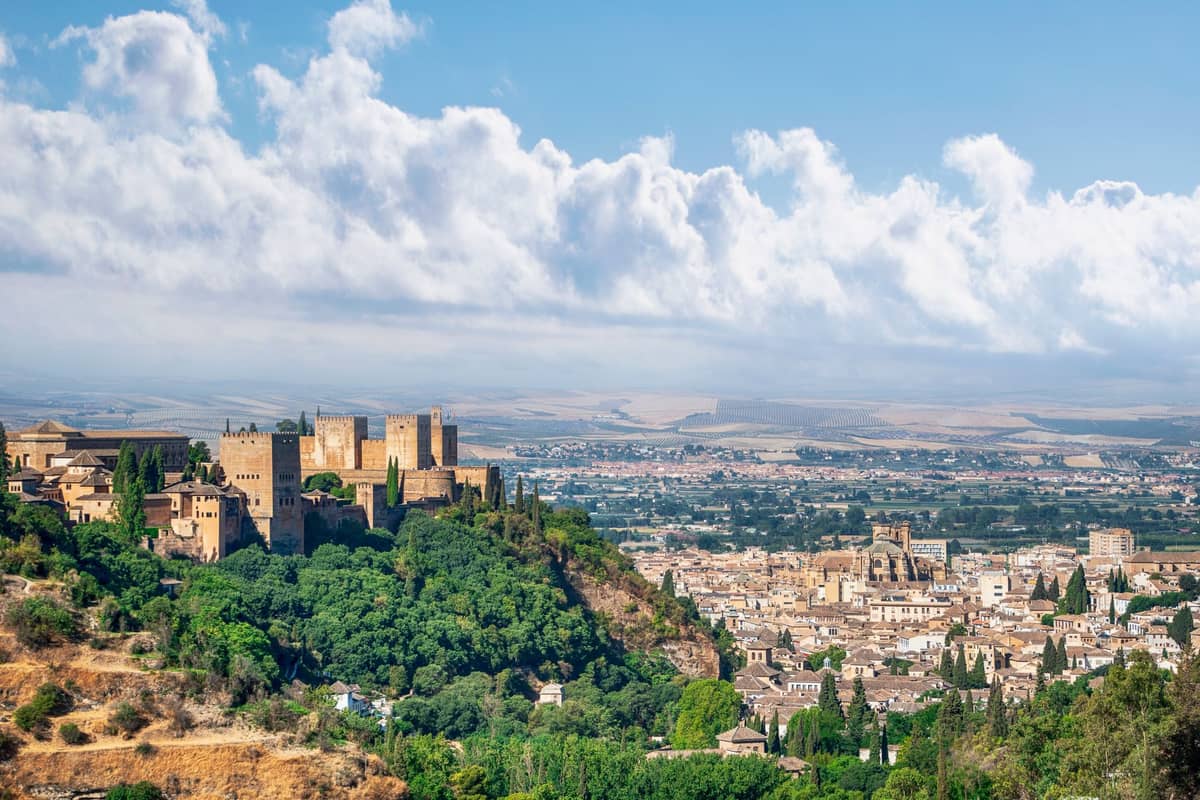
Granada, Spain packs an extraordinary range of experiences into a city of just 230,000 people: a UNESCO-listed palace complex, a medieval Moorish quarter, cave flamenco, and a tapas culture where every drink comes with free food. This guide cuts through the noise and tells you exactly what to do, when to go, and what to skip.
Tickets & tours
Live prices and dates from our booking partner. If you book, we may earn a commission at no extra cost to you.
TL;DR
- Book Alhambra tickets on the official site at tickets.alhambra-patronato.es — they sell out up to 90 days in advance and include a fixed timed entry for the Nasrid Palaces.
- Granada's free tapas culture is real: order any drink in most bars and a plate of food arrives with it, at no extra charge.
- The Mirador de San Nicolás in the Albaicín is free, open 24 hours, and offers the definitive view of the Alhambra — arrive at dusk for the best light.
- Spring (April–May) and autumn (September–October) offer the most comfortable temperatures, around 22–27°C, with far smaller crowds than July and August.
- Two full days covers the major highlights; three days lets you explore Sacromonte, day trips, and the Sierra Nevada.
The Alhambra: What You Actually Need to Know
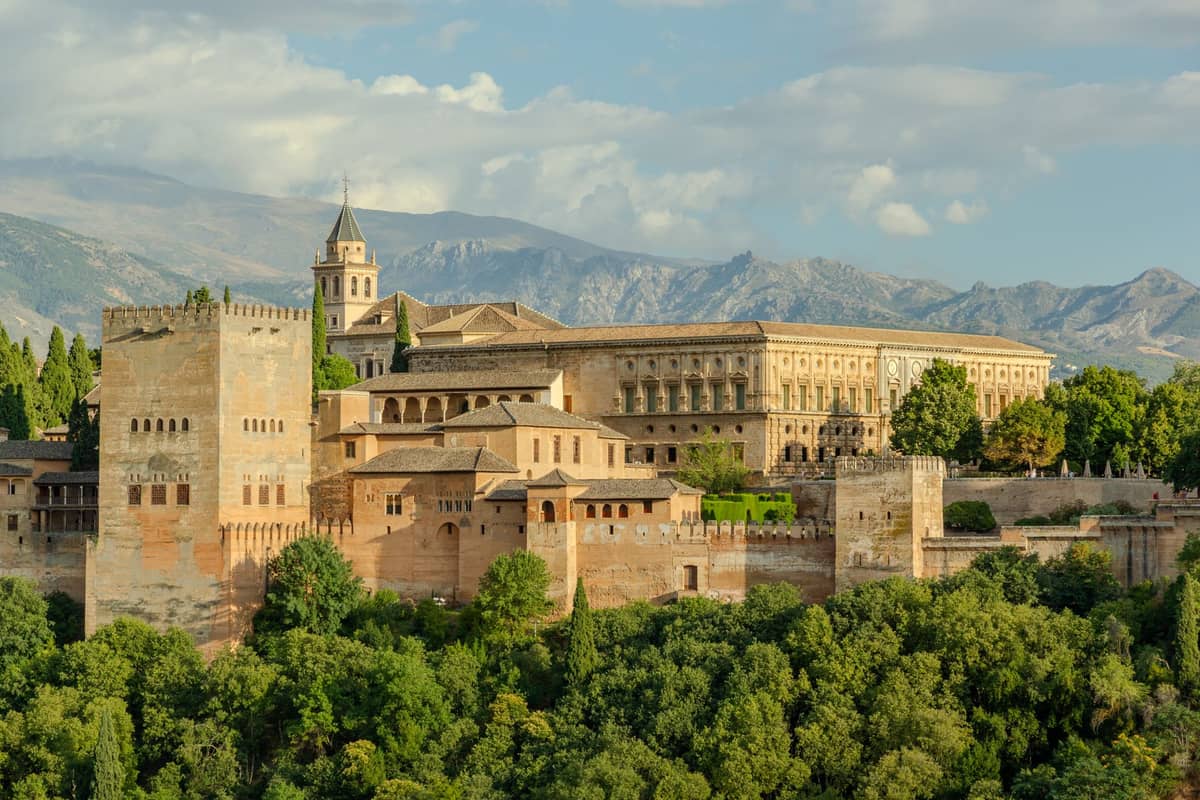
No single attraction in Andalusia generates more logistical confusion than the Alhambra. The basics: tickets open roughly 90 days in advance on the official Patronato portal, and for peak months (March through October) they genuinely sell out weeks ahead. Do not wait until you arrive in Granada.
⚠️ What to skip
Only tickets.alhambra-patronato.es is the official ticketing portal. Third-party reseller sites charge premiums of €5–20 per ticket for the same access. Always verify the URL before purchasing.
The complex breaks into distinct zones: the Nasrid Palaces, the Alcazaba fortress, the Generalife gardens, and the Palacio de Carlos V. Your Nasrid Palaces entry carries a fixed 30-minute timed window — miss that slot and you lose access to the most spectacular part of the site, regardless of what else your ticket covers. Plan to arrive at the Alhambra gates at least an hour before your Nasrid slot.
The Alcazaba, the oldest section of the complex, rewards early arrivals. Climb the Torre de la Vela by 9am and you will often have the battlements nearly to yourself, with clear views south toward the Sierra Nevada and north over the Albaicín. By 11am the main paths fill significantly. The Generalife gardens are at their best in May and June, when the rose beds and cypress hedges are in full growth and the water channels reflect the morning light.
✨ Pro tip
Night visits to the Nasrid Palaces (available on select evenings, separate tickets) offer the halls with far fewer people and dramatic uplighting. These tickets also sell out quickly but are worth checking for on the Patronato site.
The Albaicín and Sacromonte: Granada's Hillside Quarters
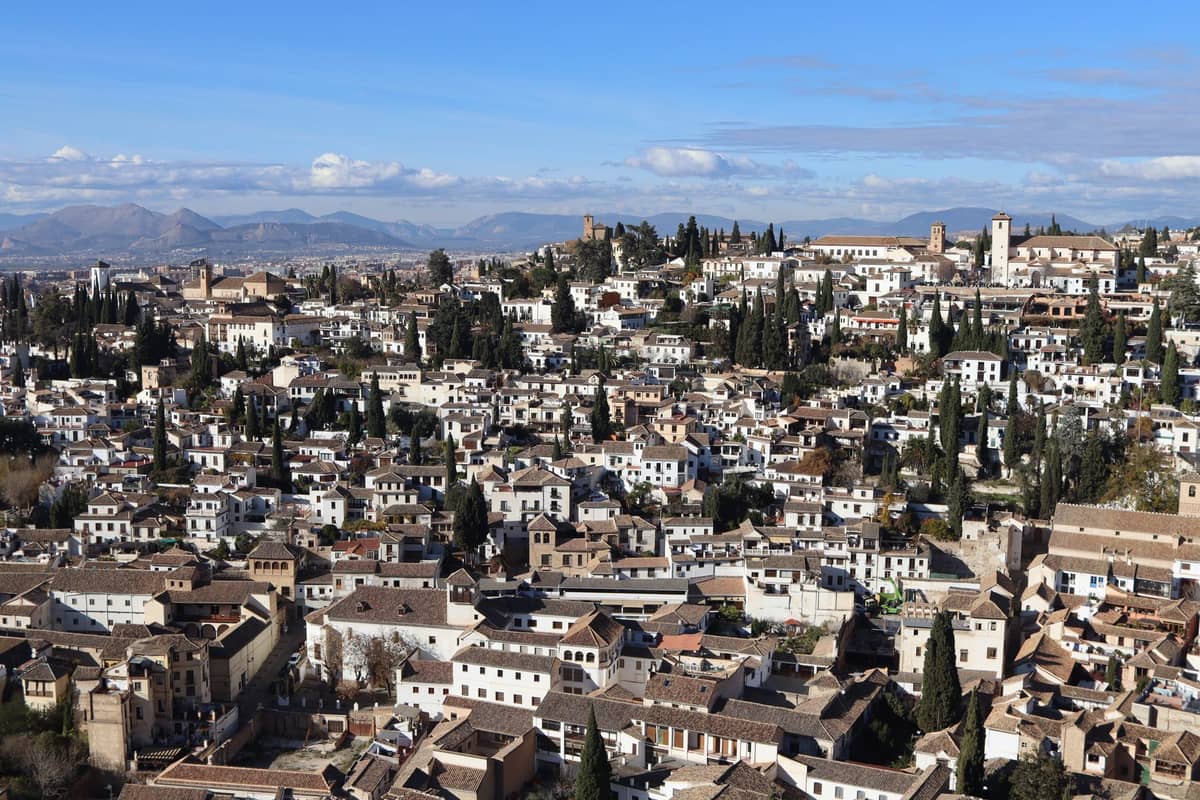
The Albaicín (officially Albayzín) is Granada's medieval Moorish quarter and a UNESCO World Heritage Site in its own right. It sits on the hill directly across the Darro river gorge from the Alhambra, and its narrow whitewashed lanes, Carmen gardens, and Arab-era baths represent a completely different texture of the city. Start at the Bañuelo Arab Baths at the bottom of the quarter — one of the best-preserved 11th-century hammams in Spain — then work uphill.
The Mirador de San Nicolás is the obvious destination and it earns its reputation: the panorama of the Alhambra against the Sierra Nevada backdrop is genuinely extraordinary. It is a public square with free 24-hour access and no booking required. For a quieter alternative with nearly the same view, the Mirador de San Miguel Alto sits further uphill and draws a fraction of the crowds, particularly on weekday mornings.
Adjacent to the Albaicín, the Sacromonte district occupies the slopes above the Darro and is historically associated with Granada's Romani community and the development of zambra, a local variant of flamenco performed in cave venues cut into the hillside. The Museo del Sacromonte provides the historical context before you explore; the Abadía del Sacromonte above it offers sweeping valley views and a surprisingly rich religious art collection.
💡 Local tip
Walk down from the Albaicín via the Carrera del Darro rather than the bus route. This riverside path passes the Bañuelo, several Nasrid-era tower foundations, and the Casa de Castril archaeological museum — all within 700 metres of easy walking.
Historic Centre: Cathedrals, Markets, and the Realejo
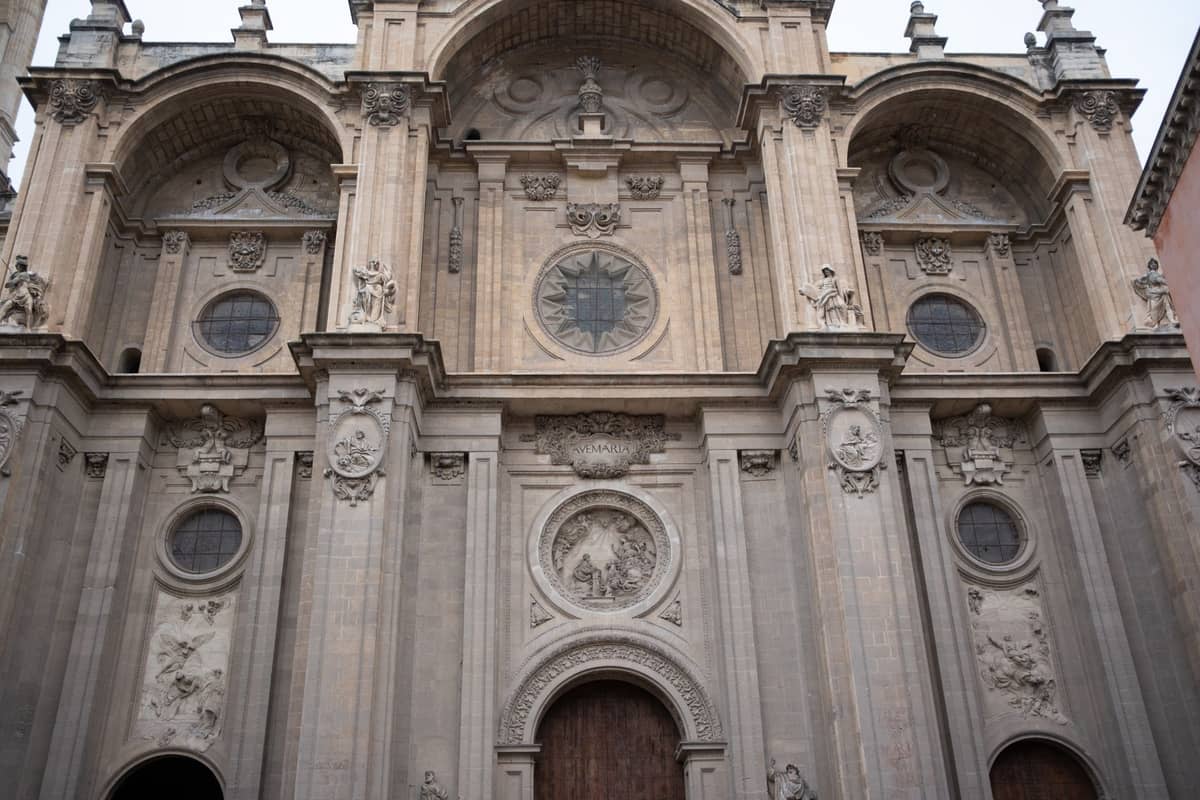
Granada's historic centre is denser with significant monuments than most Spanish cities of its size. The Granada Cathedral is one of the largest Renaissance churches in Spain, begun in 1523 on the site of the city's main mosque. Standard visiting hours run Monday to Saturday 10:00–18:15 and Sunday 15:00–18:15, though these shift around major liturgical dates. Entry is around €7 for individuals, with children under 12 admitted free; confirm current prices and hours at catedraldegranada.com before visiting.
Attached to the Cathedral but sold separately, the Capilla Real holds the tombs of Ferdinand and Isabella, the monarchs whose conquest of Granada in 1492 ended the last Emirate on the Iberian peninsula. The original funerary sculpture and the royal collection of Flemish paintings make it worth the separate entry. Immediately north, the Alcaicería is the reconstructed silk market — worth a glance for the architecture, less so for the souvenir shopping, which is almost entirely tourist-oriented.
The Realejo, Granada's former Jewish quarter south of the Cathedral, is significantly more relaxed than the tourist-heavy streets around the Alcaicería. The Campo del Príncipe square is where locals actually sit in the evenings. The neighbourhood also contains the Fundación Rodríguez-Acosta, a Carmen garden and studio complex built by the early 20th-century painter, which remains one of Granada's more overlooked quality experiences.
Free Tapas, Food Culture, and Where to Eat
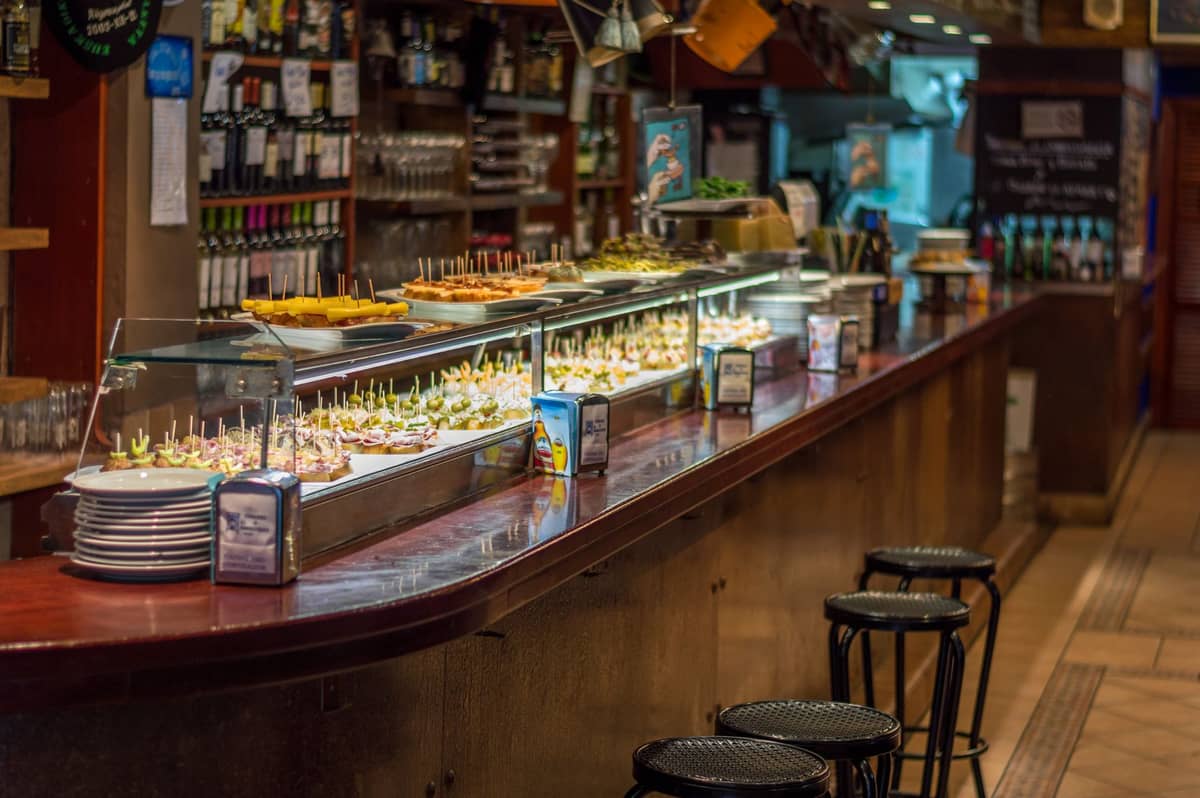
Granada is one of a handful of Spanish cities where the free tapas tradition holds firm: order a beer, wine, or soft drink in most bars outside the tourist-concentrated streets and a plate of food will arrive with it at no extra charge. The portions are real food, not a few olives. This system works best in the Realejo, around the university district near Gran Vía, and in local bars on Calle Navas and Calle Elvira. For a full breakdown of how to navigate the system, see the free tapas guide for Granada.
Beyond tapas bars, Granada's food scene covers a wide range. The Mercado de San Agustín near the Cathedral is the main municipal market, better for food shopping and a quick breakfast than for tourist dining. Moroccan-influenced teahouses (teterías) cluster in the Calderería Nueva, a short lane connecting the Cathedral area to the lower Albaicín, and serve mint tea and pastries in a setting that feels very different from the surrounding city. For a curated list of where to eat across different budgets, the where to eat in Granada guide covers everything from market breakfasts to restaurant dinners.
Flamenco, Nightlife, and Live Culture

Granada's flamenco tradition is rooted specifically in the Sacromonte caves, where zambra developed as a distinct local form. Cave flamenco shows at venues like the Cuevas del Sacromonte are a legitimate cultural experience, not merely a tourist performance — though they are also clearly staged for visitors. Prices typically run €20–35 per person including a drink, and booking ahead is advisable in peak season. The more complete picture of what to see and how to book is in the flamenco in Granada guide.
Granada also has a student-driven nightlife that has nothing to do with flamenco. The city's university, founded in 1531, enrolls around 60,000 students, and the bar scene around Pedro Antonio de Alarcón and the Realejo reflects that. Things start late by any international standard: dinner at 9:30pm, bars filling from 11pm, clubs from 1am. For context on where the local crowd actually goes, the Granada nightlife guide is more useful than asking at your hotel.
Day Trips, Outdoor Activities, and Beyond the City
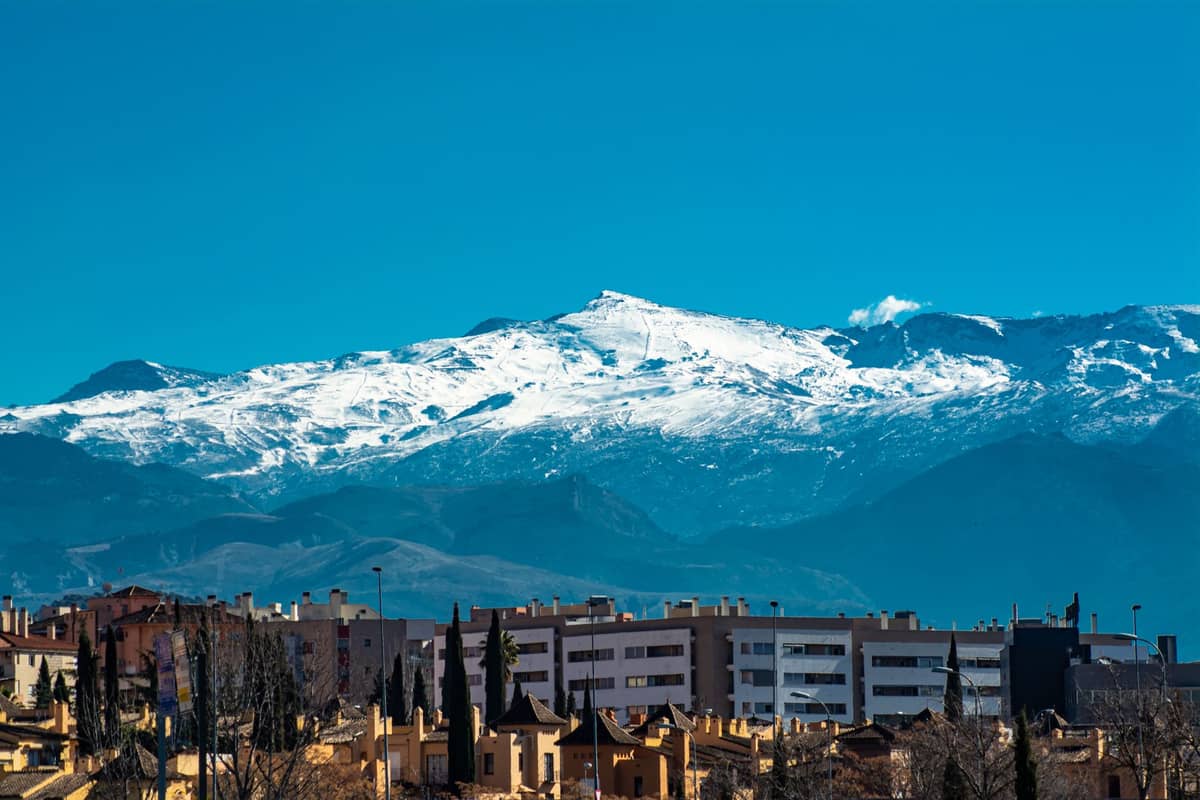
Granada's location makes it an unusually strong base for day trips. The Sierra Nevada is the highest mountain range in mainland Spain and sits roughly 30km southeast of the city. In winter, the Sierra Nevada ski resort operates from around December through April at altitudes between 2,100m and 3,300m. In summer, the same terrain shifts to hiking, mountain biking, and high-altitude walking. The Los Cahorros de Monachil gorge trail, 14km east of the city, is one of the most accessible and rewarding half-day hikes in the region — a narrow canyon with hanging bridges and a river crossing that works well from March through October.
To the south, the Las Alpujarras villages string along the southern slopes of the Sierra Nevada and offer a dramatically different landscape from the city: white Berber-influenced architecture, terraced agriculture, and a pace that slows considerably. Villages like Pampaneira, Bubión, and Capileira are reachable in under an hour by car. The Las Alpujarras day trip guide covers the logistics in detail, including which villages to prioritise and how long to allow.
- Best for first-timers Alhambra + Generalife (full day), Albaicín walk with Mirador de San Nicolás (afternoon/evening), free tapas bar crawl in Realejo (evening)
- Best for outdoor focus Los Cahorros de Monachil gorge hike (half day), Sierra Nevada day trip for skiing or summer walking, Alpujarras villages drive
- Best for culture depth Capilla Real and Cathedral (morning), Museo del Sacromonte (afternoon), cave flamenco show in Sacromonte (evening)
- Best free experiences Mirador de San Nicolás at dusk, Carrera del Darro riverside walk, free tapas culture at local bars, Realejo neighbourhood strolling
Planning Logistics: When to Go, Getting Around, Staying
Granada sits at 738m elevation, which moderates summer heat compared to Seville or Córdoba but also means genuinely cold winters. July and August see daytime highs regularly above 35°C — still dry and manageable for cultural visits early in the day, but exhausting for hill walks in the Albaicín by midday. April, May, September, and October offer the most comfortable conditions for combining sightseeing with outdoor activity. For a detailed seasonal breakdown including festival timing, the best time to visit Granada guide is the most complete reference.
The city centre, Albaicín, and Realejo are all walkable from each other, but the Albaicín's steep lanes mean uphill sections are a real physical commitment. City bus lines (operated by Transportes Rober) include a small minibus route — the C31 and C32 — that navigates the narrow streets of the Albaicín and saves significant climbing. The Metro de Granada connects outlying neighbourhoods and the bus station but is less useful for visitors focused on the historic centre. Taxis and Cabify both operate reliably across the city. For a full transport breakdown, see getting around Granada.
On accommodation: the historic centre and Albaicín put you closest to the main sights, but the Albaicín's lanes are largely inaccessible by car, which matters if you are arriving with luggage. The Realejo and centro areas offer the most practical mix of access, restaurant density, and proximity. Budget travellers should know that Granada prices are noticeably lower than Seville or Madrid, with decent mid-range hotel rooms available for €60–100 per night outside peak season. The where to stay in Granada guide covers specific neighbourhood trade-offs and price tiers.
ℹ️ Good to know
Granada uses the Euro (EUR). Tap water is safe to drink throughout the city. Standard voltage is 230V with Type C and Type F plugs. Emergency number: 112. The city operates on Central European Time (CET/UTC+1, summer CEST/UTC+2).
FAQ
How far in advance do I need to book Alhambra tickets?
For visits between March and October, book as far ahead as possible — ideally 6–8 weeks out, since the daily ticket allocation sells out completely. Tickets become available roughly 90 days before the visit date on the official Patronato portal. Off-season (November through February) you can often find availability a week or two ahead, but same-day tickets are rarely available even in winter.
Is Granada in Spain or Nicaragua?
This guide covers Granada, Spain — a city in Andalusia in southern Spain, not Granada, Nicaragua (which is a separate city in Central America, and note that the Caribbean island nation is spelled Grenada, not Granada). Granada, Spain has a population of around 233,500 and sits at 738m above sea level, roughly 2.5 hours by train from Seville.
How many days do I need in Granada?
Two full days covers the Alhambra, the Albaicín, the Cathedral quarter, and evening tapas. Three days adds Sacromonte properly, a half-day in the Sierra Nevada or Alpujarras, and time to slow down in the Realejo. Four or more days is worth it if you plan to hike or want to explore the city without rushing.
What are the best free things to do in Granada?
The Mirador de San Nicolás (24-hour free access), the Carrera del Darro riverside walk, the exterior of the Alhambra hill, the Realejo neighbourhood, and the free tapas bar culture are the core free experiences. Several churches and the exterior of major monuments can be enjoyed without paying. See the full guide to free things to do in Granada for a comprehensive list.
Is Granada safe for tourists?
Granada is considered a safe city for visitors. Standard urban precautions apply: watch for pickpocketing around the Mirador de San Nicolás and on crowded tourist streets, particularly at peak times. The Albaicín and Sacromonte are both fine to walk at night, though the steep unlit lanes of the upper Sacromonte warrant care after dark. Emergency services: dial 112 for any emergency in Spain.
Tickets & tours
Live prices and dates from our booking partner. If you book, we may earn a commission at no extra cost to you.
Planning a trip? Discover personalized activities with the Nomado app.