Sierra Nevada is the high-mountain massif rising southeast of Granada, home to mainland Spain's southernmost ski resort and a vast national park that rewards visitors year-round. At roughly 30 kilometres from the city centre by road, it offers a striking contrast to Granada's Moorish monuments and warm valleys below.
Sierra Nevada is the snow-capped spine visible from almost every rooftop terrace in Granada, a massif that tops out above 3,400 metres and contains one of the southernmost ski resorts on the Iberian Peninsula. It functions simultaneously as a winter sports destination, a summer hiking territory, and the natural backdrop that gives Granada much of its visual drama. No other city in southern Spain can claim a ski run within an hour of its cathedral.
Orientation
Sierra Nevada sits southeast of Granada city, rising steeply from the Genil river valley. The massif forms the southeastern boundary of the Granada metropolitan area and stretches into the province of Almería to the east. The ski resort village of Pradollano, the main hub for winter visitors, sits at approximately 2,100 metres above sea level. From central Granada, the road climbs sharply through the outer residential districts, passes the Palacio de Congresos, and then winds up through pine forest before breaking into open snowfields.
Administratively, Sierra Nevada falls within the municipality of Monachil and several others, though Granada city effectively serves as the base camp for all visitors. The area is protected under dual status: the Parque Natural Sierra Nevada covers a large buffer zone, while the inner high-altitude core holds Parque Nacional status, making it one of Spain's most significant natural reserves. The national park designation protects ecosystems that range from Mediterranean scrubland at the lower elevations to alpine tundra near the summits.
The resort's internal geography is organized around the Pradollano base area, which contains hotels, restaurants, equipment rental shops, and the main cable car and chairlift terminals. From Pradollano, the slopes fan out across the upper mountain, reaching the Borreguiles plateau. The highest accessible point for most visitors is the area around Hoya de la Mora, a high-altitude lake basin that serves as a trailhead in summer and a reference point for advanced skiers in winter.
Character & Atmosphere
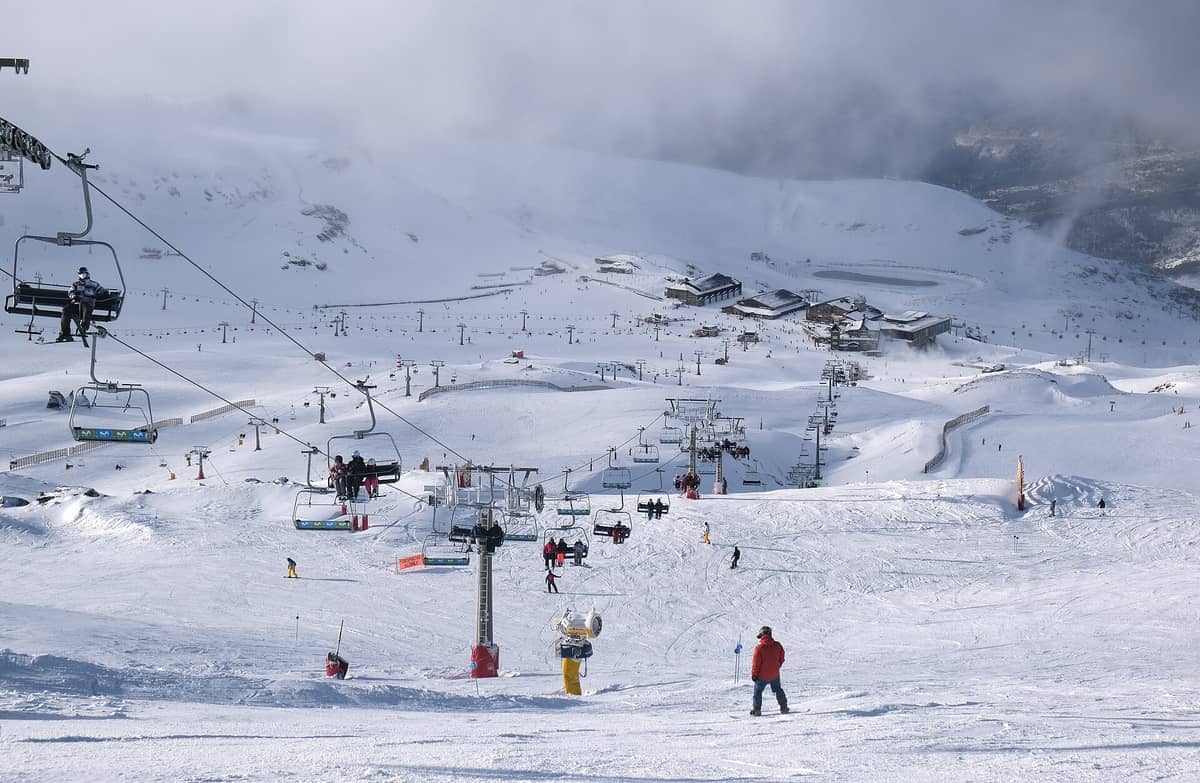
The Sierra Nevada experience shifts completely between seasons, and understanding that rhythm is essential before you go. In winter, roughly December through April depending on snowfall, Pradollano is an active ski station with the infrastructure and crowd patterns of a mid-sized European resort. Weekends bring large numbers of Spanish day-trippers from Granada, Málaga, and Almería. The base area fills with ski boots clattering on pavement, the hiss of snow cannons working overnight, and the particular energy of people moving between rental shops and chairlift queues. By midweek, the place is considerably quieter.
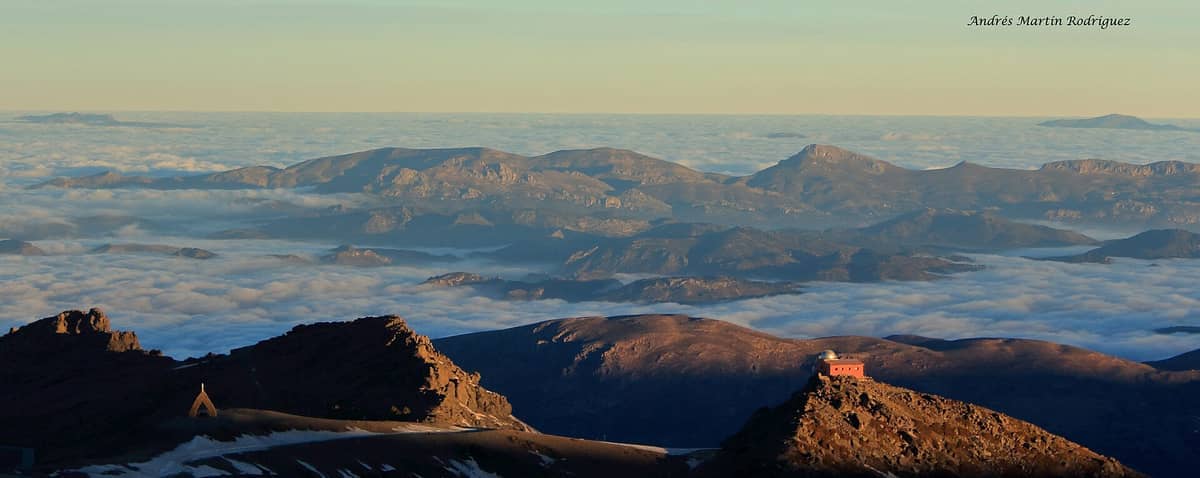
The light in the Sierra Nevada is one of its most underappreciated qualities. At this altitude and latitude, winter days are short but extraordinarily clear. On a calm February morning, the snow reflects a hard blue-white light that makes the distant peaks look closer than they are. By early afternoon the sun is already dropping toward the western ridgeline, softening into amber tones across the snow. Skiers who stay for last runs catch a golden hour that no photograph quite captures honestly.
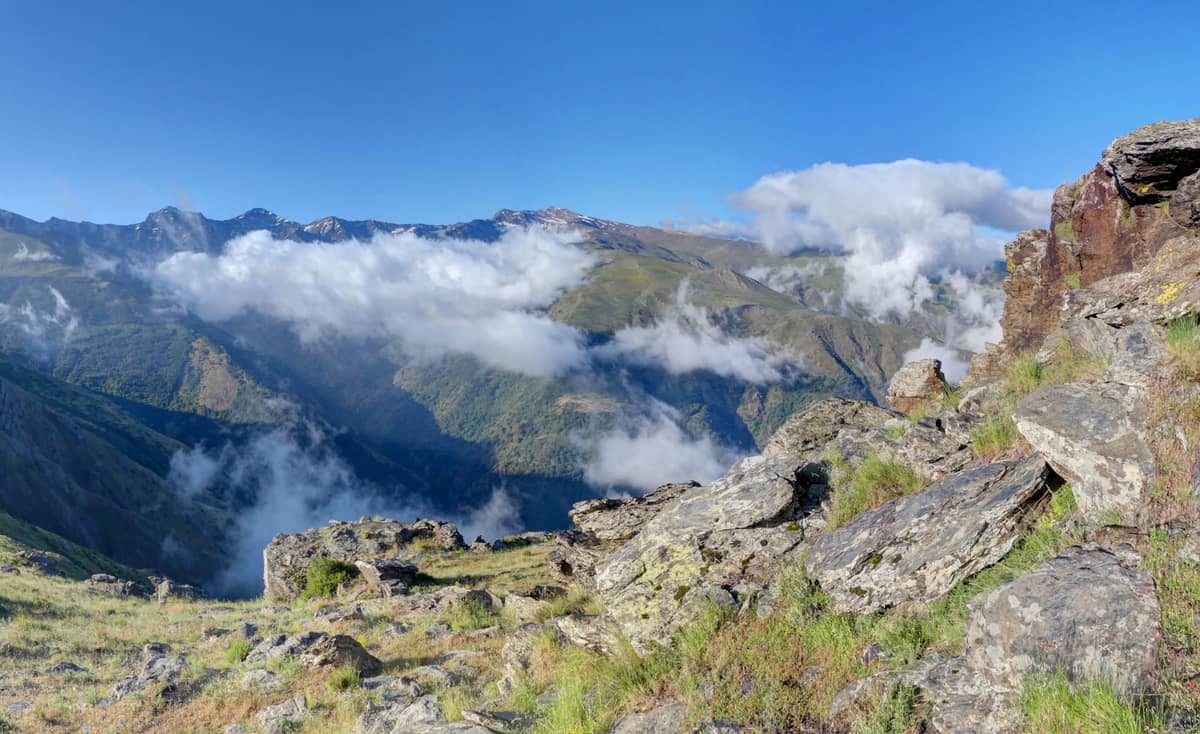
Summer is a different place entirely. The ski infrastructure largely hibernates, but summer sightseeing and hiking lifts typically still operate, and the mountain opens to hikers, trail runners, and mountain bikers. The air at 2,500 metres is noticeably cool even in July, when Granada city below is dealing with temperatures above 35°C. The relative silence above the treeline, broken only by wind and distant cowbells, is a genuine contrast to the city's busier quarters. Wildflowers colonize the slopes from late May onward, and the high trails draw serious trekkers aiming for Mulhacén (3,479 m), the highest peak on the Iberian Peninsula, and Veleta (3,398 m), the second-highest summit in the Sierra Nevada and the third-highest on the peninsula. Aneto, in the Pyrenees, is the highest mountain in Spain.
ℹ️ Good to know
Altitude matters here. Pradollano sits at around 2,100 metres and the upper slopes exceed 3,000 metres. Even visitors who do not ski should be prepared for reduced oxygen levels, stronger UV radiation, and rapid weather changes. Sunscreen, sunglasses, and a windproof layer are essential year-round.
What to See & Do
Winter sport is the primary draw from December through April, and the Sierra Nevada resort offers one of Spain's most comprehensive ski areas. The piste network covers a significant vertical drop from the summit areas down to Pradollano, with runs calibrated for beginners through experts. Snowboarding, cross-country skiing, and snow-shoe routes provide alternatives to downhill skiing. The resort's ski school caters heavily to families and first-timers, and equipment rental is available throughout the base village.
Beyond the pistes, the broader national park territory offers year-round appeal. The Sierra Nevada ski resort publishes trail maps for summer hiking routes, including paths to the summit of Veleta, which is accessible by a high-altitude track from the Hoya de la Mora area. Mulhacén requires a full-day commitment and solid fitness. For something less demanding, the trails through the pine forests below Pradollano are well-marked and can be walked in ordinary hiking shoes during summer and autumn.
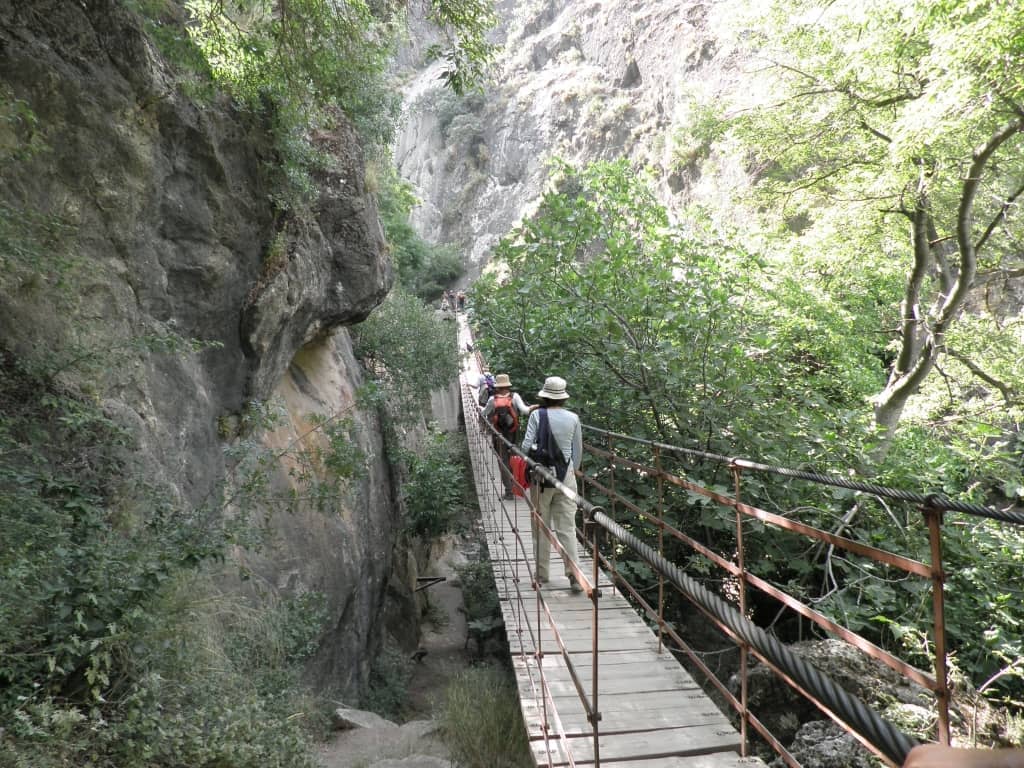
On the Granada side of the mountains, the village of Monachil is the starting point for the Cahorros gorge walk, one of the most dramatic low-altitude hikes in the region. The route follows the Monachil river through a narrow limestone canyon equipped with hanging bridges and chains. It takes roughly two to three hours at a relaxed pace and is suitable for confident walkers. See the full guide to Los Cahorros de Monachil for trail details and access information.
Downhill skiing and snowboarding on around 100 kilometres of marked pistes (winter season)
Snowshoeing and cross-country routes through the upper plateau
Summer trekking to Veleta (3,398 m) via the Hoya de la Mora trailhead
Multi-day traverse to Mulhacén (3,479 m), the highest point in mainland Spain
Mountain biking on dedicated summer trails through the resort area
Los Cahorros gorge walk from Monachil village (year-round, conditions permitting)
Wildlife observation: the Sierra Nevada hosts endemic species including the Spanish ibex
💡 Local tip
For skiing, book your lift passes in advance through the official Sierra Nevada resort website, especially for weekends in January and February when Spanish school holidays coincide with peak snowfall. Queues for the main Pradollano gondola can be long on Saturday mornings.
Eating & Drinking
The eating options in Pradollano are split between resort-style mountain restaurants on the slopes and a handful of more permanent establishments in the base village. Mountain refugios and slope-side cafeterias serve the standard repertoire of ski-resort food: bocadillos (filled rolls), platos combinados, hot chocolate, and soup. Prices are higher than in Granada city, as you would expect at altitude with limited competition and heavy logistics costs.
The base village has a more varied offering, with restaurants serving full menús del día at lunchtime and a few bars that stay open in the evening during the ski season. The cuisine leans toward hearty Andalusian mountain food: migas (fried breadcrumbs with pork), choto al ajillo (garlic kid goat), and warming stews. These are the kinds of dishes that make sense after a day in cold air. Do not expect Granada's famous free tapas culture to extend to the mountain; at this altitude, food economics work differently.
Outside of the ski season, most of the village's restaurants and bars close or operate on reduced schedules. Summer hikers using Pradollano as a base will find fewer options and should carry provisions for mountain days. There are no food facilities above the treeline in summer.
⚠️ What to skip
Do not count on finding food or water on the high mountain trails in summer. Carry at least two litres of water per person and pack food before leaving Pradollano. Mountain streams exist but require treatment or filtration before drinking.
Getting There & Around
The main connection between Granada city and the Sierra Nevada resort is a dedicated bus service that runs from central Granada to Pradollano via Camino de Ronda and the Palacio de Congresos corridor. Buses depart from a stop near the Palacio de Congresos, making an intermediate call at that point on the way up the mountain. Journey time from central Granada is approximately 45 minutes to one hour depending on road conditions and season. During the ski season, frequency increases to meet demand, especially on weekends. Services are operated by a concession holder serving the Granada–Sierra Nevada route, and timetables should be verified against the operator's current schedule before travel, as they change between seasons.
Within Granada city, reaching the bus departure point is straightforward. The nearest metro station cited for the Sierra Nevada transport corridor is Alcázar Genil, roughly seven minutes on foot from the Camino de Ronda bus stops. Urban bus lines 11, 5, and U3 also serve stops along Camino de Ronda. For general navigation around Granada before and after your mountain day, the getting around Granada guide covers the metro, urban buses, and taxi options in full detail.
Driving is a practical alternative if you have access to a car. The A-395 road climbs from Granada directly to Pradollano and is generally well-maintained. In winter, chains or snow tyres are mandatory when conditions require it, and the resort publishes road state information. Parking at Pradollano is organized across several designated car parks, including Parking 1 Pradollano and the Los Peñones area, with fees applying during the ski season. Arriving by 8:30 on busy weekends is advisable to secure a space near the base lifts.
Visitors arriving in Granada from outside the city have several access options. Federico García Lorca Granada-Jaén Airport (GRX) sits about 15 to 18 kilometres by road west of the city and connects to the centre by airport bus and taxi. From there, transferring to the Sierra Nevada bus requires reaching the Palacio de Congresos departure point. Long-distance travellers can also reach Granada by RENFE train from Madrid and other major cities, arriving at Granada railway station in the southern part of the city centre. Full transport arrival options are covered in the getting to Granada guide.
Where to Stay
Accommodation at the resort itself is concentrated in and around Pradollano. Several hotels operate directly in the base village, including the Hotel Meliá Sierra Nevada, which is one of the more prominent properties and sits within easy walking distance of the main lift access. Staying on the mountain makes sense if you plan to ski across multiple days and want to be first on the slopes in the morning. The trade-off is higher room prices, limited restaurant variety, and the particular quiet of an out-of-season resort village if you arrive at the wrong time of year.
Most visitors, particularly those combining the mountain with broader Granada sightseeing, choose to stay in the city and make day trips to the resort. This approach is more economical and gives access to Granada's full range of accommodation, from budget hostels in the Albaicín to boutique hotels in the Realejo and the historic centre. The where to stay in Granada guide covers all the city's main neighbourhoods with recommendations for different budgets and travel styles.
For skiing families or groups planning four or more days on the mountain, the resort's apartment complexes and chalets in the Residential Pradollano area offer more space and self-catering options. Booking well in advance is essential for the peak weeks of late January through mid-February, when Spanish school holiday periods drive high occupancy across all accommodation types.
Planning Your Visit: Seasons & Practicalities
Timing your Sierra Nevada visit requires knowing what the mountain offers at different points of the year. The ski season typically runs from late November or early December through late April or early May, though this varies significantly with annual snowfall. The Sierra Nevada skiing guide goes into depth on season timing, piste quality, and what to expect across the winter months.
Summer hiking is best from late June through September, when the high routes are snow-free and the weather is stable. The contrast with the city below is striking: while Granada bakes in July heat with daytime temperatures frequently above 35°C, the ridge at 3,000 metres sits in cool, thin air with overnight temperatures dropping near freezing. This makes the mountain an excellent escape from midsummer city heat. For the broader question of when to visit the Granada area, see the guide on the best time to visit Granada.
The Sierra Nevada is also a strong complement to other outdoor activities in the region. The Las Alpujarras villages on the southern slopes of the massif are accessible as a day trip and offer a completely different perspective on the same mountain range. The white villages of the Alpujarras have their own distinct culture, architecture, and food traditions shaped by centuries of Moorish and post-Reconquest history. The Las Alpujarras day trip guide covers the route, key villages, and practical logistics.
Visitors interested in hiking throughout the wider Granada province will find the hiking near Granada guide useful for comparing Sierra Nevada routes with other options such as the Cahorros gorge and the high valleys south of the city.
Is Sierra Nevada Worth It?
Sierra Nevada is not a neighbourhood in the urban sense. It does not have the layered history of the Albaicín, the cafe culture of the city centre, or the flamenco heritage of Sacromonte. What it offers is something fundamentally different: scale, altitude, and the particular clarity that comes from being above the treeline. For skiers making a trip to Andalusia, the combination of Granada's monuments and a week on the slopes is genuinely unusual in European travel. For summer hikers, reaching the highest point in mainland Spain from a city with the Alhambra visible in the valley below is a logistical privilege that few mountain experiences can match.
The drawbacks are real. Pradollano as a resort village is functional rather than charming. Weekend crowds in ski season are considerable. Prices for food and accommodation on the mountain are higher than in the city. The bus service is the only public transport option, and services stop running in the late afternoon, so day-trippers need to watch their return time carefully. None of these things significantly diminish the mountain itself, but they are worth knowing before you plan.
Travellers visiting Granada primarily for the Alhambra and the historic city can reasonably skip a dedicated mountain excursion, particularly in summer when other day trips compete for time. But anyone with an active travel style, an interest in high-altitude landscapes, or a ski trip as part of their itinerary will find Sierra Nevada earns its journey time decisively.
TL;DR
Sierra Nevada is mainland Spain's highest mountain range, rising to 3,479 metres southeast of Granada, with a full-service ski resort at Pradollano (2,100 m) and extensive summer hiking trails.
Best for: skiers, serious hikers, and anyone wanting to combine high-altitude outdoor activity with a major Andalusian city.
The bus from central Granada to Pradollano takes roughly 45 to 60 minutes; the nearest city metro stop is Alcázar Genil. Driving is the most flexible option and requires snow equipment in winter.
Most visitors stay in Granada city and make day trips; on-mountain hotels make sense for multi-day ski stays but cost significantly more than city accommodation.
The experience changes completely between seasons: ski resort in winter (December to April), alpine hiking and wildflower meadows in summer. Off-season, most resort facilities close and the village feels very quiet.
A practical note: Pradollano itself is functional rather than scenic, and weekend crowds plus elevated prices are genuine factors. The mountain landscape, however, is extraordinary.
Two days in Granada, Spain is enough to cover the Alhambra, the Albaicín, the cathedral quarter, flamenco in Sacromonte, and the city's legendary free tapas culture — if you plan correctly. This guide gives you a day-by-day structure, realistic timing estimates, and the booking details that most itineraries leave out.
Walk Granada's UNESCO-listed Albaicín quarter at your own pace. This guide covers the full route from Plaza Nueva to Mirador de San Nicolás, every key stop along the way, seasonal timing advice, and the practical details most visitors only find out when they arrive.
Buying Alhambra tickets is the single most important logistical task before visiting Granada. This guide covers official prices, every ticket type, the timed entry system for the Nasrid Palaces, and how to avoid the most common booking mistakes.
Granada's climate swings from near-freezing January nights to 36°C July days, and its tourist calendar is shaped by everything from Semana Santa processions to Alhambra ticket availability. This guide breaks down every month so you can match your trip to your priorities, whether that's perfect weather, low prices, or catching a specific festival.
Granada sits at one of Spain's most rewarding crossroads, with the Sierra Nevada, white mountain villages, Mediterranean coast, and great Andalusian cities all within reach. These are the best day trips you can do from Granada, with advice on how to get there and what to see.
Granada is one of Spain's most important cities for flamenco, with nightly performances ranging from intimate cave shows in Sacromonte to polished tablao productions near the historic centre. This guide covers the best venues, price ranges, booking strategies, and what first-timers need to know before they go.
Granada is one of the few places left in Spain where ordering a drink automatically earns you a free plate of food. This guide explains the rules, the best neighborhoods, drink prices, timing, and the common myths that catch tourists off guard.
Granada rewards budget travellers generously. From UNESCO-listed Moorish streets and hilltop viewpoints to free-entry monuments and river walks beneath the Alhambra, the city has more genuinely free experiences than almost anywhere in Andalusia.
Everything you need to navigate Granada Spain, from airport transfers and the Metro to the dedicated mini-buses for the Alhambra. Includes current fares, seasonal schedules, and the one booking mistake that locks visitors out of the Nasrid Palaces.
Getting to Granada is easier than most travellers expect. This guide covers every realistic option: flying into GRX, taking the high-speed AVE from Madrid, catching a bus from Málaga Airport, and everything in between, with current prices, journey times, and practical planning notes on which route suits your trip.
Granada rewards curious travelers who look beyond the Alhambra queues. From a free 13th-century royal pavilion buried in a municipal building to a panoramic hilltop hermitage above the cave district, these are the places that most visitors walk straight past.
December is one of Granada's most rewarding months to visit. The city fills with Christmas lights and markets while Sierra Nevada, just 30 km away, opens its ski slopes. Crowds at the Alhambra thin out, hotel prices drop, and the tapas bars are as good as ever. Here is everything you need to plan a winter trip.
Granada rewards those who plan carefully and spend wisely. This guide covers the finest hotels near the Alhambra, the best Michelin-recognized restaurants in the city, private cultural experiences, and the practical logistics that separate a smooth luxury trip from an expensive disappointment.
Most visitors spend their entire time in Granada fixated on the Alhambra and never realize the city holds a dozen other Moorish monuments within walking distance. This guide covers the essential sites, ticket combinations, walking routes, and practical details you need to explore Granada's full Islamic heritage.
Granada's nightlife runs later than almost anywhere else in Spain, fueled by a large student population and a culture that treats midnight as a warm-up. This guide covers the best neighborhoods for drinks, which clubs deliver, what things actually cost, and how to avoid the classic tourist mistakes.
Granada is one of the most affordable cities in Spain — if you know how the system works. This guide breaks down free tapas, Alhambra ticket pricing, tourist passes, free attractions, and the best times to visit for lower costs and smaller crowds.
Semana Santa in Granada is one of Andalusia's most atmospheric Holy Week celebrations, with daily processions from Palm Sunday to Easter Sunday winding through medieval streets. This guide covers routes, schedules, seating, crowd tips, and everything a visitor needs to experience it properly.
Granada rewards those who look up, and those who climb. This guide covers every significant mirador and panoramic viewpoint in the city, from the famous terrace at San Nicolás to the high-altitude plateau of the Sierra Nevada, with practical advice on timing, access, and what you'll actually see from each spot.
Granada rewards families who plan ahead. From timed-entry Alhambra tickets to the hands-on Parque de las Ciencias and snow-capped Sierra Nevada day trips, this guide covers every family-friendly activity in Granada, Spain, with practical advice on crowds, costs, and seasonal timing.
Granada sits at the foot of the highest mountain range in mainland Spain, putting serious alpine terrain within an hour of the city centre. This guide covers the best hikes near Granada, from accessible gorge walks to high-altitude summit routes, with practical advice on getting there.
Granada is one of Spain's most historically layered cities, but it comes with real trade-offs: intense summer heat, Alhambra ticket logistics, and crowds that can frustrate the underprepared. This guide gives you the full picture so you can decide if it belongs on your itinerary.
Las Alpujarras is one of the most rewarding day trips from Granada — a chain of Moorish-era whitewashed villages clinging to the southern slopes of the Sierra Nevada. This guide covers how to get there by bus or car, which villages to prioritize, what to eat, and how to make the most of a single day in the mountains.
Granada, Spain is one of Europe's most atmospheric cities for couples. Moorish palaces, candlelit flamenco caves, ancient bathhouses, and hilltop sunsets combine to create something genuinely difficult to replicate anywhere else. This guide covers the best romantic experiences, practical planning details, and practical planning notes on what actually lives up to the hype.
Sierra Nevada is Spain's highest skiable and southernmost major ski resort, sitting just 40 km from Granada city. This guide covers the full picture: season dates, lift pass pricing, how to get there, what the slopes are actually like, and what most first-timers get wrong.
Granada, Spain packs an extraordinary range of experiences into a city of just 230,000 people: a UNESCO-listed palace complex, a medieval Moorish quarter, cave flamenco, and a tapas culture where every drink comes with free food. This guide cuts through the noise and tells you exactly what to do, when to go, and what to skip.
Granada's food culture runs much deeper than free tapas. This guide covers the city's signature dishes, seasonal specialties, best markets, and practical tips for eating well in one of Andalusia's most distinctive culinary cities.
Granada, Spain has one of Europe's most distinctive food cultures: order a drink and a free tapa arrives automatically. This guide covers the free tapas system in full, the best neighborhoods to eat, what dishes to prioritize, and the restaurants worth booking in advance.
Choosing where to stay in Granada Spain shapes your entire trip. This guide breaks down the four main neighbourhoods for visitors, with a clear look at terrain, atmosphere, hotel options, and price ranges to help you book with confidence.