Hoya de la Mora: Sierra Nevada's High-Altitude Gateway Above Granada
Hoya de la Mora is a high-altitude parking and staging area in the Sierra Nevada, sitting at roughly 2,500 metres above sea level above the ski resort of Pradollano. Free to access as a viewpoint when the access road is open, it serves as a dramatic viewpoint, a trailhead for summit hikes, and a place where the scale of Andalusia's mountain landscape becomes suddenly, almost shockingly clear.
Quick Facts
- Location
- Above Pradollano ski resort, municipality of Monachil, Granada, Andalusia, Spain. Approx. 2,500 m altitude.
- Getting There
- By car via the A-395 road from Granada city (approx. 36–38 km). Seasonal bus services from Granada to Pradollano exist; verify current routes before travel.
- Time Needed
- 1–2 hours for the viewpoint and surroundings; half to full day if combining with hiking toward Pico Veleta.
- Cost
- Free to access the parking area and viewpoint. Ski lifts or guided mountain transport, if used, are charged separately by the Sierra Nevada resort.
- Best for
- Hikers, photographers, day-trippers from Granada, skiers in winter, and anyone wanting high-altitude scenery without technical climbing.
- Official website
- sierranevada.es/es
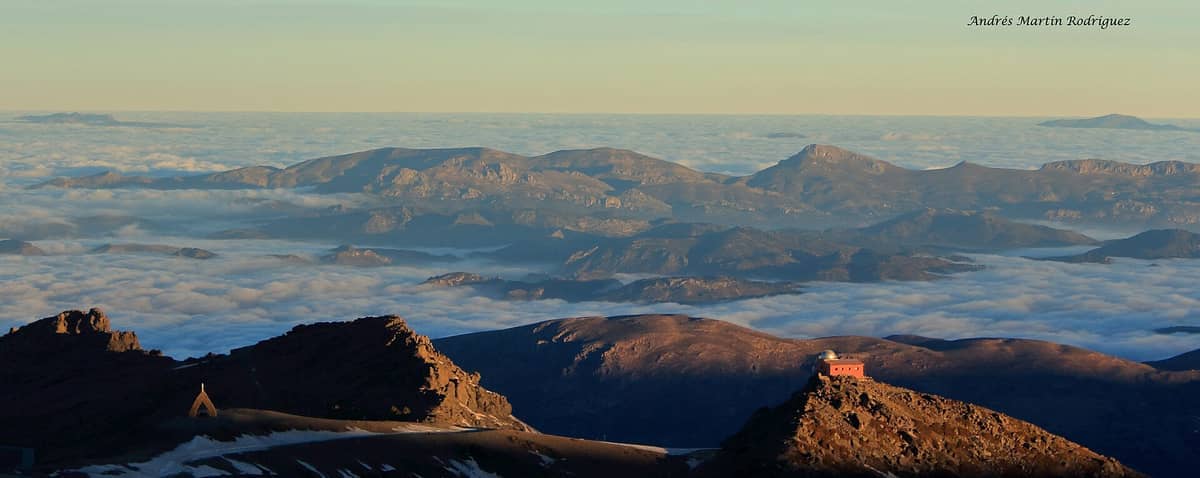
What Is Hoya de la Mora?
Hoya de la Mora is the end of the main paved public access road in the Sierra Nevada: a wide, open parking and staging area at approximately 2,500 metres above sea level, positioned above the Pradollano ski resort in the municipality of Monachil. The road that brings you here, the A-395, climbs from Granada city through pine forest and scrub, past the chalets and cable cars of the ski station, and then continues upward until it simply stops. Beyond the parking area, the road becomes restricted to authorized vehicles only, which makes Hoya de la Mora the natural starting point for anyone heading higher on foot.
The site is not a formal attraction with ticket booths or guided tours. It is a high mountain platform with a large parking area, a university mountain hostel (the Albergue Universitario), a Guardia Civil post, and a handful of kiosk-style facilities. What draws people here is the combination of easy access, extraordinary altitude, and the sudden sense of standing on the roof of peninsular Spain.
The Sierra Nevada forms the backbone of the landscape visible from Granada's city center and the Mirador de San Nicolás. At Hoya de la Mora, you have crossed from observer to participant: the city is now a pale shimmer far below, and the summit of Pico Veleta, at 3,396 metres, is close enough to feel reachable.
The Approach: Driving One of Europe's Highest Public Roads
The drive to Hoya de la Mora on the A-395 is itself part of the experience. The road is a high-altitude paved public route in the Sierra Nevada, and the ascent from Granada city of around 36–38 km involves a significant elevation gain. From the city centre at roughly 738 metres, you climb to 2,500 metres, passing through distinct ecological zones in a single journey.
The lower slopes feature dry Andalusian scrub. Above about 1,000 metres, pine plantations take over, planted during reforestation programmes in the twentieth century. Higher still, the trees thin and disappear entirely, replaced by the sparse, wind-sculpted plants of the high mountain zone: broom, thistles, and the tough low-growing species that characterise the Sierra Nevada's unique flora, which includes a number of endemic plant species found nowhere else on earth.
⚠️ What to skip
Road conditions at altitude change rapidly. Snow and ice can close or restrict the upper section of the A-395 at any point from October through May, and sometimes later. Always check current road status via the Sierra Nevada resort website or the Junta de Andalucía's traffic information before driving up, especially outside summer.
The final stretch above Pradollano, after you have passed the ski resort infrastructure, is the most dramatic. The road narrows, the barriers are often snow-dusted even in late spring, and the views out across the southern slopes toward the Mediterranean coast open up intermittently between curves. When you pull into the Hoya de la Mora parking area (also known as the Parking de los Peñones), the sudden stillness after the winding ascent is striking.
Tickets & tours
Live prices and dates from our booking partner. If you book, we may earn a commission at no extra cost to you.
Alhambra guided tour in Italian
From 49 €Instant confirmationFree cancellationAlhambra guided group tour with Nasrid Palaces and Generalife Palace
From 40 €Alhambra guided tour with Carlos V Palace, Generalife and Alcazaba
From 35 €Alhambra and Generalife skip-the-line private tour
From 65 €Instant confirmation
At the Top: What You Actually See and Feel
The air at 2,500 metres is noticeably thinner and cooler than in Granada city, even on a hot July day when temperatures in the city regularly exceed 35°C. At Hoya de la Mora, summer daytime temperatures are typically pleasant rather than hot, often in the 15–20°C range, with a constant breeze. Sunscreen is not optional: at this altitude, UV exposure is significantly higher than at sea level, and the open terrain offers no shade.
The panorama from the parking area encompasses several directions. To the north and west, on clear days, Granada city is visible in the valley far below, and beyond it the undulating hills of the Vega. To the south, the terrain drops toward the Alpujarras valleys, and on exceptionally clear days the Mediterranean is a thin silver line on the horizon. Above you, the rounded, rocky summits of the Sierra Nevada fill the skyline, with the slopes of Pico Veleta dominating the view directly ahead.
In winter, when the ski resort is operational, Hoya de la Mora can be busy with skiers and snowboarders moving between the upper pistes. Outside of ski season, particularly on summer weekday mornings, the parking area can be almost empty. The quality of silence at these moments is unusual: no traffic noise, no urban hum, just wind and the occasional call of a bird. Alpine choughs, with their yellow beaks and acrobatic flight, are commonly seen circling the rocky outcrops above the parking area.
💡 Local tip
Arrive early on summer weekends. By mid-morning, the parking area fills quickly with day-trippers and hikers from Granada. Arriving before 9am gives you the best light for photography and the best chance of quiet. The Veleta summit is also clearer of cloud in the morning before afternoon thermal activity builds.
Hiking from Hoya de la Mora: The Route to Pico Veleta
Hoya de la Mora is the standard starting point for non-technical hikes toward Pico Veleta, the second-highest peak in the Sierra Nevada at 3,396 metres. The route follows the restricted road beyond the parking barrier, climbing steadily along a surfaced track. Because the gradient is controlled by the road alignment, the ascent is strenuous but does not require scrambling or technical skills, which makes it accessible to fit walkers without specialist mountaineering experience.
The return hike from Hoya de la Mora to the Veleta summit and back typically takes between four and five hours, depending on pace and conditions. The terrain above the parking area is largely open and exposed, with no shelter from weather. Temperature drops and wind speed increase significantly with altitude. Even in August, snow can persist in north-facing gullies near the summit, and afternoon thunderstorms are not uncommon in summer. Sturdy footwear, warm layers, and sufficient water are all necessary, not optional.
For those interested in a guided approach to Sierra Nevada hiking, or in exploring the trails of the broader natural park, the hiking near Granada guide covers route options, difficulty levels, and logistical details in more depth.
⚠️ What to skip
Altitude sickness is a real consideration for some visitors. At 2,500 metres, those arriving directly from sea level without acclimatisation may notice headaches, fatigue, or breathlessness. This is more likely to affect people attempting the hike to Veleta than those simply visiting the viewpoint. Drink water, ascend at a steady pace, and descend immediately if symptoms worsen.
Seasonal Differences: When to Go and What to Expect
Each season at Hoya de la Mora offers a substantially different experience. In winter (December through March), the area is integrated into the Sierra Nevada ski resort operations. The upper road may be closed to private vehicles on certain days, access is managed by the resort, and the landscape is heavily snow-covered. The light on a clear winter morning, with the snowfields reflecting sun and the sky a deep Andalusian blue, is genuinely spectacular. However, winter visits require checking resort conditions, road closures, and potential restrictions carefully before setting off.
Spring (April to early June) is arguably the most visually dynamic season. The snowline retreats gradually, leaving patches of white against dark rock and the early-season flowers of the Sierra Nevada. Many endemic species bloom at these altitudes in May and June. The road may still have restricted sections in April depending on snowpack, so verification is essential.
Summer (late June through August) is the most popular period. The road is fully open, the parking area is accessible, and the hiking season is at its peak. Temperatures are comfortable at altitude even when Granada city is at its hottest. This is also when the Sierra Nevada ski resort transitions into its summer mountain activities programme. Autumn (September to October) brings quieter conditions, lower visitor numbers, and the beginning of the season's colour changes in the lower slopes.
For a broader understanding of how season affects a visit to Granada and the surrounding Sierra Nevada, the best time to visit Granada guide provides context on climate, events, and crowd patterns across the year.
Photography, Practical Notes, and Accessibility
Hoya de la Mora is a strong location for landscape photography. The openness of the terrain means that foreground, mid-ground, and background are all available from a single position. The best light for photography of the mountain slopes is in the first two hours after sunrise, when side-lighting picks out texture in the rock and snow. Late afternoon light on the southern-facing slopes can also be warm and directional, though afternoon cloud cover is more likely in summer.
On the practical side: the parking area at Hoya de la Mora is paved and accessible by standard vehicles, though a vehicle with reasonable ground clearance and good tyres is advisable in winter or after snow. The facilities at the site include the mountain hostel, which provides basic services and food, and a small number of kiosks that operate seasonally. There are no petrol stations at this altitude; fill up in Granada or Pradollano before ascending.
Wheelchair accessibility is limited by the terrain. The parking area itself is flat and paved, and the views from the immediate surroundings of the parking area are available to anyone who can reach the site by vehicle. However, the hiking routes above are on uneven mountain terrain and are not accessible by wheelchair. Visitors with limited mobility can still experience the panorama and the high-altitude atmosphere from the parking area itself, which is a worthwhile visit in its own right.
If you are planning to ski rather than hike, the Sierra Nevada skiing guide covers resort layout, lift passes, and seasonal conditions in detail.
Who Should Not Make This Trip
Hoya de la Mora is not for everyone, and it is worth being honest about that. If you are visiting Granada primarily for its Moorish architecture, tapas culture, and urban atmosphere, a drive to a high mountain parking area at 2,500 metres may not rank highly against the many other things competing for your time. The cultural and historical layers that make the Alhambra or the Albaicín so rich are absent here; this is a nature and landscape destination, not a heritage one.
Those with a strong sensitivity to altitude, or with cardiac or respiratory conditions, should approach with caution and take medical advice before visiting. The road itself is a mountain road with sharp bends and significant drop-offs on one side; anyone who is uncomfortable with mountain driving may find the approach stressful. And in winter, without appropriate conditions or experience, the upper road section should not be attempted.
If you are weighing up how Hoya de la Mora fits into a broader Granada itinerary, the things to do in Granada guide can help you prioritise across the city's many different types of experience.
Insider Tips
- If you are planning to hike to Veleta, start the drive from Granada by 7am at the latest in summer. The summit often clouds over by early afternoon, and the parking area can be full by 10am on weekends.
- The university mountain hostel at Hoya de la Mora (Albergue Universitario) sometimes provides meals to non-residents; it is worth checking directly before your visit, as a hot meal at altitude is a genuine comfort after a long hike.
- Bring a wind layer even in July. The exposed nature of the site means the wind chill can drop perceived temperature by 8–10 degrees compared to the air temperature, and shade is essentially nonexistent.
- For a different perspective on the Sierra Nevada without the drive, consider the cable car from Pradollano. From Hoya de la Mora itself, however, the restricted-access road beyond the barrier offers the best walking surface for reaching higher elevations.
- The view south from Hoya de la Mora toward the Alpujarras is one of the most overlooked aspects of the visit. Looking north toward Granada gets most of the attention, but the terraced valleys dropping toward the Mediterranean coast on the southern side are equally dramatic.
Who Is Hoya de la Mora For?
- Hikers targeting Pico Veleta or other Sierra Nevada high-altitude routes
- Photographers seeking dramatic mountain landscape compositions at altitude
- Day-trippers from Granada wanting a contrast to the city's urban heat in summer
- Skiers and snowboarders during the Sierra Nevada winter season
- Nature lovers interested in Sierra Nevada's endemic high-altitude flora and resident birdlife
Nearby Attractions
Other things to see while in Sierra Nevada:
- Los Cahorros de Monachil
Los Cahorros de Monachil is a free hiking route through a narrow limestone gorge carved by the Río Monachil, located just outside Granada in the Sierra Nevada foothills. The trail crosses suspension bridges, squeezes through rock passages, and passes cold, clear pools — all within an approximately 7–8 km round trip from the village of Monachil.
- Sierra Nevada Ski Resort (Pradollano)
The Estación de Esquí y Montaña Sierra Nevada is one of the most accessible ski resorts in Europe, perched above Granada in the Sierra Nevada mountains. Whether you're here in winter for the slopes or in summer for high-altitude trails and gondola rides, this guide covers everything you need to plan a smart visit.
Planning a trip? Discover personalized activities with the Nomado app.