Mercado de San Agustín: Granada's Everyday Food Market
A working neighbourhood market a short walk from Granada Cathedral, Mercado de San Agustín is where locals shop for fresh produce, meat, and fish on weekday mornings. Free to enter, unpretentious, and far quieter than the souvenir strip nearby.
Quick Facts
- Location
- Plaza de San Agustín, 2, 18001 Granada (Centro Sagrario)
- Getting There
- 5–10-minute walk from most central accommodation; nearest urban bus stops are on Calle Reyes Católicos
- Time Needed
- 20–45 minutes for a browse; longer if you stop at the bar area
- Cost
- Free entry; purchases at stall prices
- Best for
- Self-caterers, food lovers, travellers curious about daily Granadan life
- Official website
- http://www.rinconesdegranada.com/mercado-san-agustin
What the Mercado de San Agustín Actually Is
Mercado de San Agustín is Granada's central municipal food market, occupying a covered hall on Plaza de San Agustín, a short walk from Granada Cathedral and the Alcaicería silk market. Unlike the tourist-facing stalls of the surrounding streets, this is an everyday working market where local households come to buy vegetables by the kilo, fresh fish packed in ice, and cuts of meat from vendors who have often known their customers for years.
It is free to enter, open Monday to Saturday from 09:00 to 15:00, and closed on Sundays. Those hours matter: this is a morning market, at its fullest between 09:00 and 12:00, and visibly winding down after 13:00 as stall holders pack away unsold stock. If you arrive expecting an afternoon market, you will find a largely empty hall.
⚠️ What to skip
Opening hours listed here (Mon–Sat, 09:00–15:00) are the most consistently reported, but individual stalls may close earlier. The gourmet and bar section operates on different hours — verify on-site or contact the market directly before planning a specific visit.
The Atmosphere at Different Times of Day
Arrive before 10:00 and the market is at peak energy. The air inside carries the clean, slightly saline smell of fresh fish mixed with the earthier notes of root vegetables and cut herbs. Vendors call out to regulars, and the sound of conversation competes with the clatter of scales and the crunch of produce being shifted between crates. At this hour, the market belongs entirely to locals: older residents with wheeled shopping bags, restaurant buyers working through a list, the occasional young family.
By 11:30, foot traffic slows slightly and the atmosphere becomes easier to absorb without feeling in the way. This is arguably the best time to visit as a traveller: active enough to be interesting, calm enough to look around without blocking someone's grocery run. The produce stalls show Granada's seasonal rhythm clearly. Spring brings broad beans and artichokes; summer sees tomatoes and peppers piled deep; autumn brings quince, persimmons, and the first chestnuts.
After 13:00, the picture changes quickly. Stall covers go on, cleaned-down counters signal the day is over, and the hall empties. There is nothing left to browse in any meaningful sense after about 14:30.
Tickets & tours
Live prices and dates from our booking partner. If you book, we may earn a commission at no extra cost to you.
Alhambra guided tour in Italian
From 49 €Instant confirmationFree cancellationAlhambra guided group tour with Nasrid Palaces and Generalife Palace
From 40 €Alhambra guided tour with Carlos V Palace, Generalife and Alcazaba
From 35 €Alhambra and Generalife skip-the-line private tour
From 65 €Instant confirmation
What You Will Find Inside
The market is organised around a central covered hall with stalls arranged in rows and along the perimeter. The offer follows the standard pattern of a Spanish municipal market: fruit and vegetables from local and regional growers, fresh meat (including pork, chicken, and lamb), fresh and cured fish, olives and pickled goods, and a handful of stalls selling eggs, dairy, and dried pulses.
The selection of cured products is worth a particular look. Granada province produces its own jamón serrano from the mountains to the east, and some stalls stock legs and vacuum-packed cuts that are significantly cheaper than what you will find in the tourist-facing delicatessens near the Alcaicería. If you are self-catering or want to take something home, this is a practical place to buy.
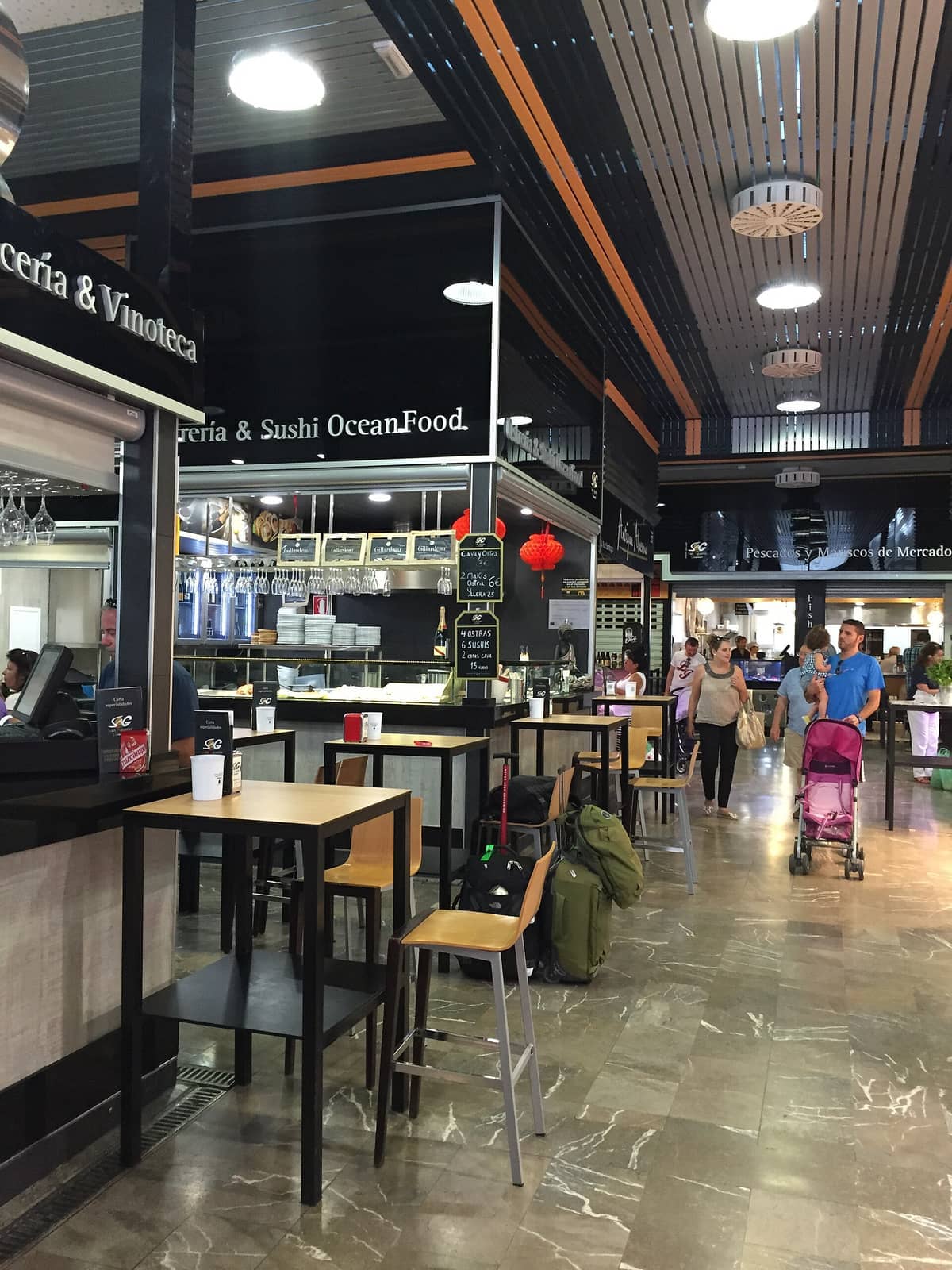
There is also a separate gourmet and bar area within the market building that operates on different hours to the main stalls. This section, aimed partly at a lunchtime crowd, offers a more relaxed setting for a coffee or a small plate. The exact hours vary and should be confirmed on-site. It is a convenient stop if you are already in the area mid-morning.
Location and Getting There
The market sits in the Centro Sagrario neighbourhood, the commercial and civic heart of Granada. It is genuinely walkable from most central visitor accommodation. The Granada Cathedral is roughly two minutes on foot; the Alcaicería bazaar is immediately adjacent. From the Gran Vía de Colón, the main commercial artery, the market is a five-minute walk south.
Urban buses serving Calle Reyes Católicos and Calle Mesones stop within comfortable walking distance. If you are arriving from the Albaicín or Albaicín neighbourhood, walking downhill from the Carrera del Darro brings you into the centre in around 15 minutes. The market is generally flat at street level and easy to enter, but formal accessibility details for people with reduced mobility are not specified in the Junta de Andalucía’s official tourism records.
💡 Local tip
The market is roughly halfway between the Cathedral and the Realejo neighbourhood. If you are combining a morning at the market with a wider walk through the city centre, it slots naturally into a route that takes in the Cathedral, the Corral del Carbón, and then continues south toward the Realejo.
Cultural Context: Why Markets Like This Still Matter in Granada
Granada's food culture is built around fresh ingredients bought daily rather than weekly. This is not a romantic generalisation: it reflects the practical reality of a city where many households, particularly older ones, maintain shopping routines centred on the mercado. Understanding that context changes how you experience a visit. You are not a passive observer at a display; you are moving through a functional institution. The same dynamic plays out across Granada's food neighbourhoods, from the tapas bars of Centro Sagrario to the family restaurants of the Realejo.
Granada is also one of the few remaining Spanish cities where ordering a drink at a bar still brings a free tapa, a tradition that reflects the city's relationship with food as something communal rather than purely commercial. For more on that culture, the free tapas guide for Granada gives a useful overview of how to navigate it.
Photography and Practical Notes
The interior of the market is well-lit and compact enough that a smartphone produces perfectly usable photographs. The most photogenic moments are at the produce stalls in the first hour of opening, when stock is freshest and the arrangement is most orderly. Vendors are generally tolerant of visitors with cameras, but brief acknowledgement before photographing a stall directly is both courteous and tends to get better reactions.
There is no coat or bag storage. The aisles between stalls are narrow when the market is busy, so large backpacks can become awkward. Bring a shopping bag if you intend to buy: most stall holders provide basic bags, but having your own is standard practice among regular shoppers and noticeably reduces plastic waste.
For visitors planning a fuller day in the area, the market pairs well with a morning that continues toward the Corral del Carbón, Granada's 14th-century Nasrid caravanserai, which is a four-minute walk away and free to enter.
Who Should Consider Skipping It
If your time in Granada is limited to one or two days and your priority is major monuments, the Mercado de San Agustín is not a top-tier use of that time. It is a good local market, not a remarkable architectural space or a landmark with deep historical layers. Travellers whose itinerary centres on the Alhambra, the Albaicín, and the Cathedral will find those attractions more than sufficient to fill a short visit.
Similarly, if you are visiting on a Sunday, or arriving after 13:00 on any day, the experience will be limited. This is not a market that has evening hours or weekend trading. For those interested in exploring Granada more broadly, the full guide to things to do in Granada gives a more complete picture of how to allocate your time.
Insider Tips
- Get there before 09:30 on a weekday if you want to see the market at its most active. By 11:00 it is still worth visiting, but the energy is noticeably different and some stalls begin selling down remaining stock at reduced prices.
- The bar and gourmet section inside the market building is a quieter alternative to the cathedral-area cafés for a mid-morning coffee. It tends to attract a local crowd rather than tourists, which keeps the atmosphere relaxed.
- If you are buying cured meats or cheeses to take home, compare prices here with what you see in the tourist shops near the Alcaicería before committing. The difference can be substantial for equivalent products.
- The market's location on Plaza de San Agustín means it is easy to combine with a visit to the Cathedral without backtracking. Walk to the Cathedral first when it opens, then come to the market as it hits its stride around 09:30.
- Bring exact or small-denomination euro notes. Most stalls accept cash; card acceptance varies and is not guaranteed at every vendor. Do not assume contactless payment will work across the board.
Who Is Mercado de San Agustín For?
- Self-catering travellers staying in an apartment near the city centre
- Food-focused visitors who want to understand Granada's everyday culinary culture
- Early risers looking for a local experience before the main sights get busy
- Travellers wanting to buy quality local produce or cured meats at non-tourist prices
- Anyone curious about the social rhythms of a working Andalusian neighbourhood market
Nearby Attractions
Other things to see while in Centro-Sagrario (City Centre):
- Alcaicería (Arab Bazaar)
The Alcaicería is Granada's reconstructed Arab silk market, a tight labyrinth of narrow lanes packed with craft and souvenir shops steps from the cathedral. Free to enter and open most days, it offers one of the most atmospheric walking experiences in the city centre, though visitors should know its history before they arrive.
- Basílica de San Juan de Dios
The Basílica de San Juan de Dios is Granada's most extravagantly decorated Baroque church, a 18th-century pilgrimage site housing the relics of the saint who founded the Brothers Hospitallers. Most visitors walk past its understated facade without a second glance — which makes the gold-drenched interior all the more astonishing when you step inside.
- Capilla Real de Granada (Royal Chapel)
The Capilla Real de Granada is the funerary chapel commissioned by the Catholic Monarchs to house their remains in the city where they completed the Reconquista. Inside, behind an extraordinary wrought-iron screen, lie the tombs of Isabella I, Ferdinand II, Juana la Loca, and Felipe el Hermoso, alongside a small but remarkable collection of royal art and personal relics.
- Corral del Carbón
The Corral del Carbón is a 14th-century Nasrid alhóndiga — a combined grain warehouse and merchant inn — standing in Granada's historic centre. It is the last surviving Nasrid alhóndiga in the city, admission is free, and most visitors spend around 30 minutes exploring its layered courtyard architecture before continuing to the nearby Alcaicería or Cathedral.
Planning a trip? Discover personalized activities with the Nomado app.