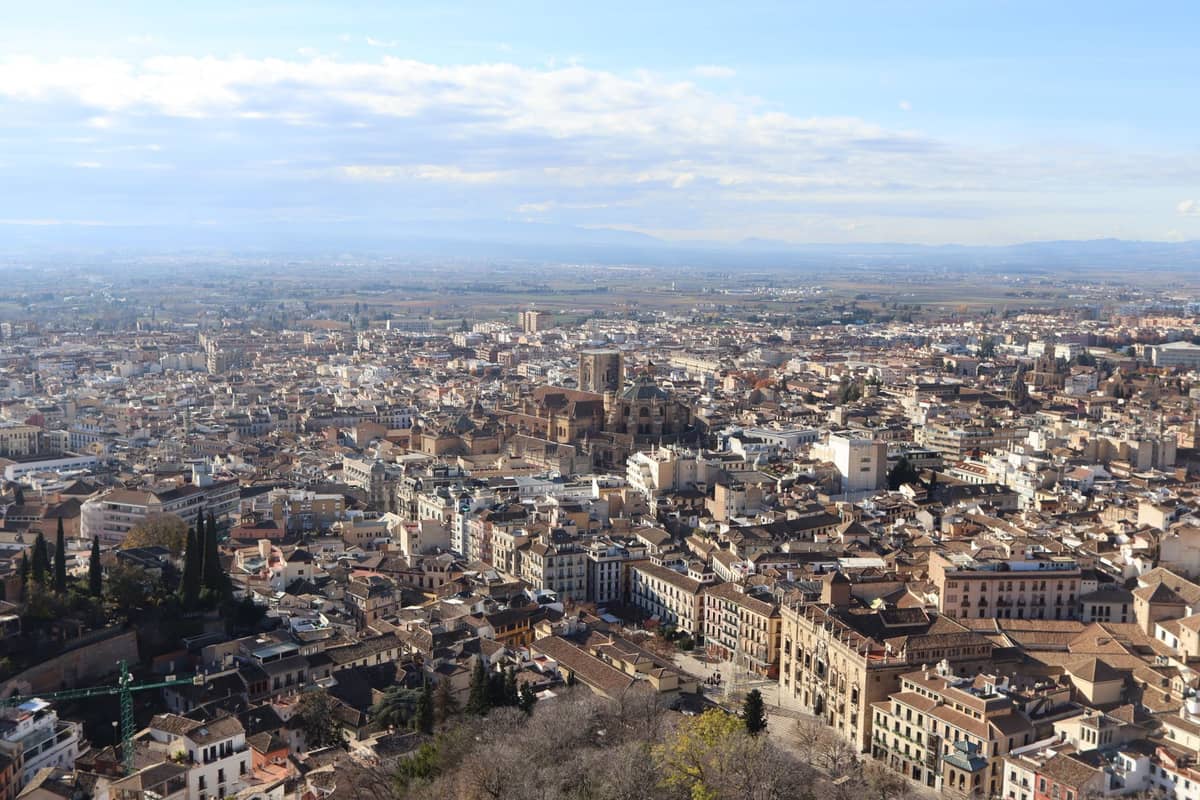
Centro-Sagrario is the beating core of Granada, where the Cathedral, the Royal Chapel, and the old Islamic bazaar streets converge with modern shopping avenues and some of the city's best tapas bars. Flat, walkable, and centrally positioned, it works as both a base and a destination in its own right.
Centro-Sagrario is Granada's city centre in the fullest sense: a layered place where a medieval Islamic medina was overlaid by Christian monuments, then wrapped in 19th-century commercial streets, and is now threaded through by locals doing their daily shopping alongside visitors trying to find the Cathedral. It is the most practical and the most historically dense neighborhood in the city, and understanding it means understanding Granada itself.
Orientation
Centro-Sagrario sits at the heart of Granada's Distrito Centro, the administrative division that covers the city's historic core. Its boundaries are defined by living urban geography as much as by official lines: it forms the central, flat core of the Centro district, lying between the Albaicín to the northeast, Realejo-San Matías to the southwest, and the Camino de Ronda corridor in the adjacent Ronda district to the west. In practical terms, this places Centro-Sagrario squarely in the middle of everything.
The neighborhood's spine is formed by two axes that cross near Plaza Isabel la Católica: the Gran Vía de Colón running roughly east-west, and the Reyes Católicos avenue heading southeast toward Puerta Real and the Acera del Darro. These are Granada's main commercial arteries, and nearly every visitor to the city will walk them. The Granada Cathedral and the adjoining Capilla Real stand roughly in the geographic center of the neighborhood, which gives you a useful anchor point when navigating on foot.
The ground is largely flat here, which distinguishes Centro-Sagrario immediately from the hillside neighborhoods surrounding it. You can walk the length of Gran Vía de Colón in under ten minutes without gaining significant elevation. This flatness made it the commercial and civic center during both the Nasrid and post-Reconquista periods, and it continues to define its character today.
ℹ️ Good to know
The name 'Sagrario' refers to the parish church of El Sagrario, which is directly attached to the Cathedral. The barrio takes its name from this church, and the two words are often used interchangeably in local contexts: Centro, Centro-Sagrario, and simply 'el centro' all mean the same place to most granadinos.
Character & Atmosphere
Early mornings in Centro-Sagrario belong to the city. By 7:30 on a weekday, the bakeries on Calle Mesones have their shutters up, the smell of fresh bread mixing with exhaust from delivery vans unloading on Gran Vía. Street cleaners work the pedestrian lanes around the Cathedral quarter while the bars set out their chairs. It feels like a real city waking up, not a tourist zone being prepared for the day.
By mid-morning, the dynamic shifts. The area around the Cathedral, the Alcaicería bazaar lanes, and Reyes Católicos fills quickly with visitors, particularly in spring and autumn. The narrow streets that run behind the Cathedral toward the Alcaicería can get genuinely congested between 10am and 1pm. The light in this part of the city is striking in the morning hours: low sun angles cut between the cathedral's south facade and the surrounding buildings, throwing the stonework into sharp relief.
The siesta period, roughly 2pm to 5pm, transforms the commercial streets noticeably. Many of the smaller independent shops close, foot traffic drops, and the bars fill with locals having lunch. This is when Centro-Sagrario most clearly reveals its dual identity: tourist monument zone and functioning residential neighborhood with around 16,000 residents. Calle Recogidas, a major shopping street running south toward San Matías, continues operating through the afternoon as it anchors a large catchment of local shoppers.
After dark, the character shifts again. The area around Puerta Real and the Acera del Darro is active well into the night, with bars and tapas spots drawing a mix of students, locals, and visitors. Gran Vía itself quietens after shops close, but the side streets behind the Cathedral see steady foot traffic heading toward the Realejo and the university areas. This is not a neighborhood that empties out at night, but it is also not primarily a nightlife destination.
What to See & Do
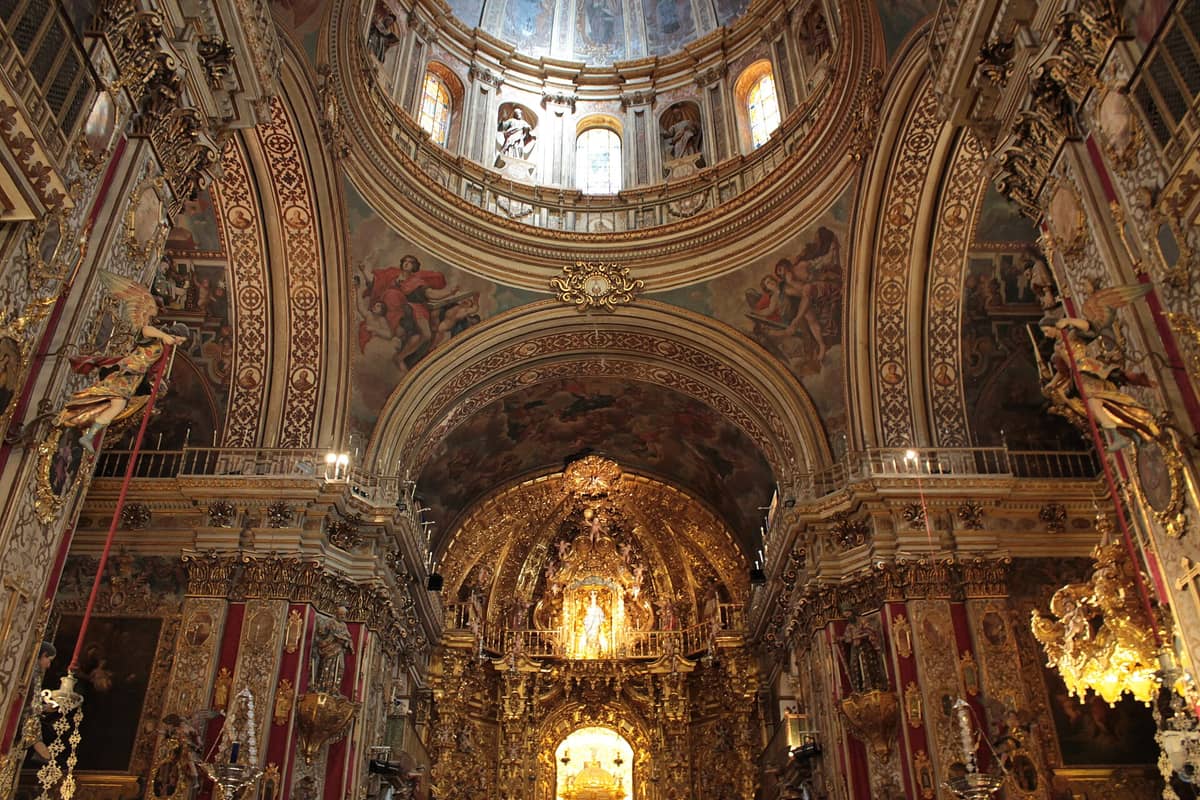
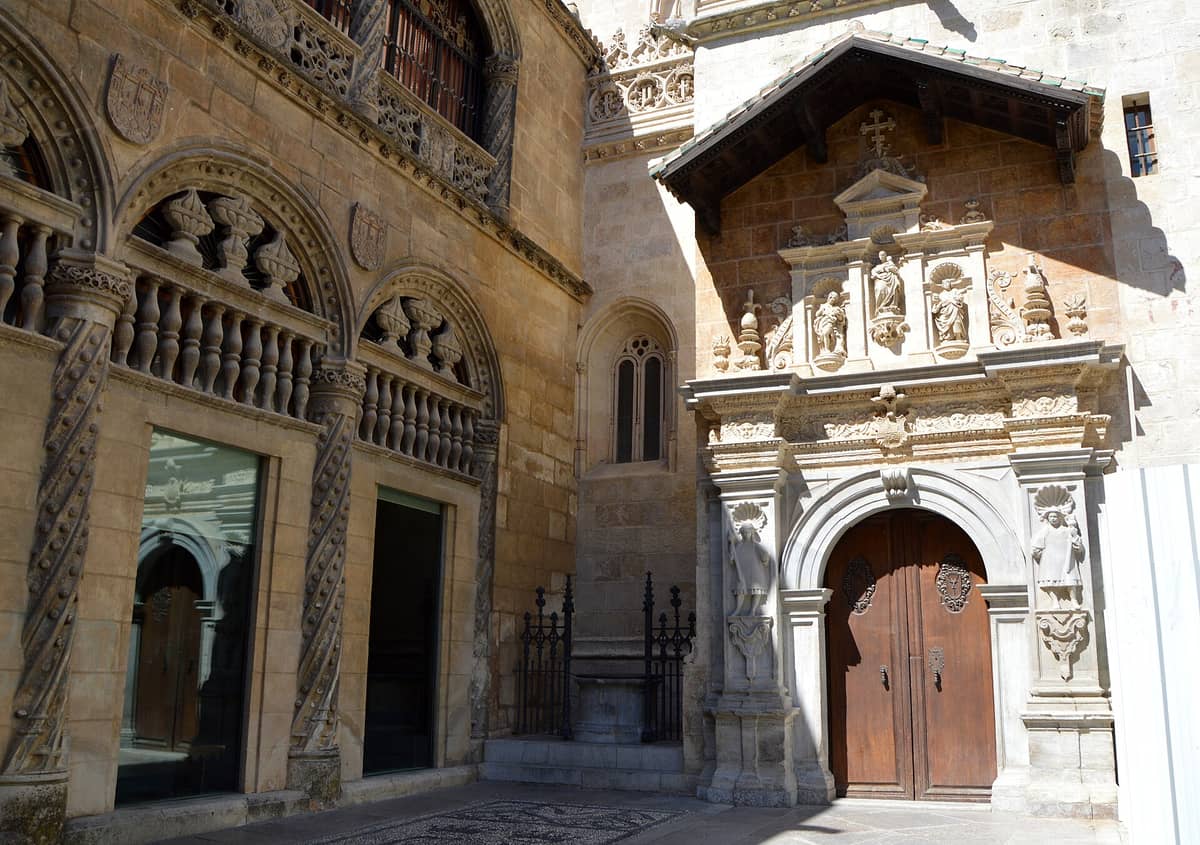
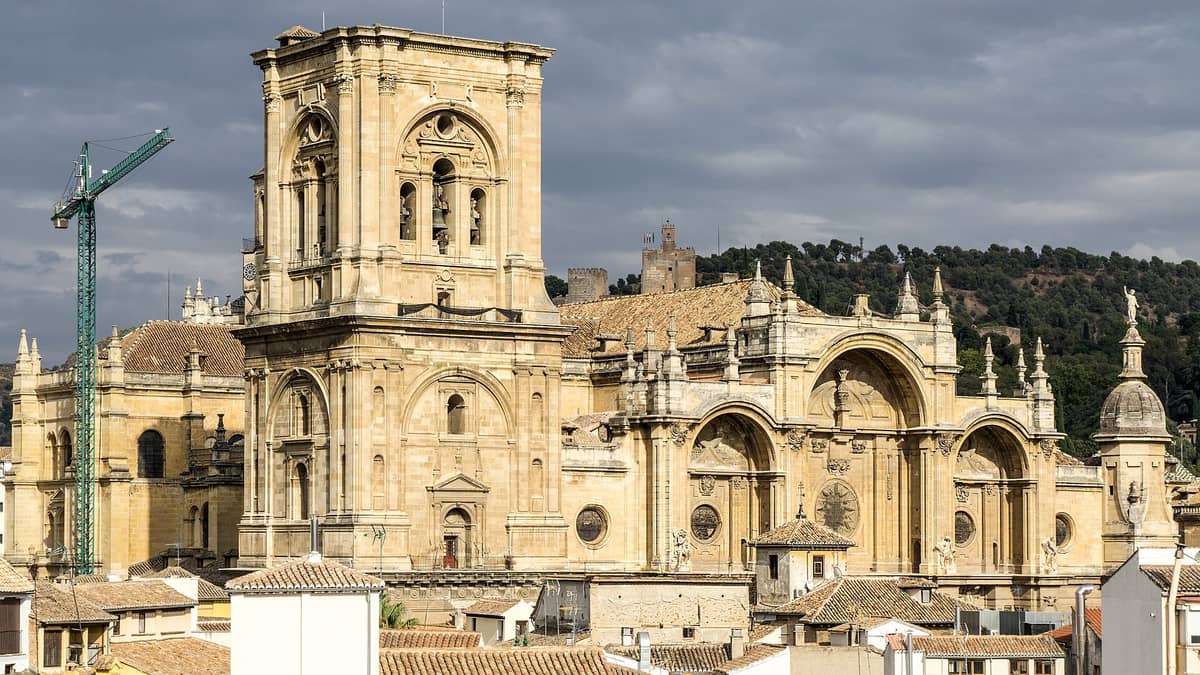
The Cathedral is the obvious starting point, and it earns its status. The building took over 180 years to complete, spanning late Gothic and early Renaissance styles, and the interior is vast and detailed in a way that photographs rarely convey. The Capilla Real, the Royal Chapel attached to the Cathedral complex, contains the tombs of Fernando and Isabel, the monarchs who commissioned the conquest of Granada and funded Columbus's voyage. It is one of the most significant dynastic burial sites in Spain.
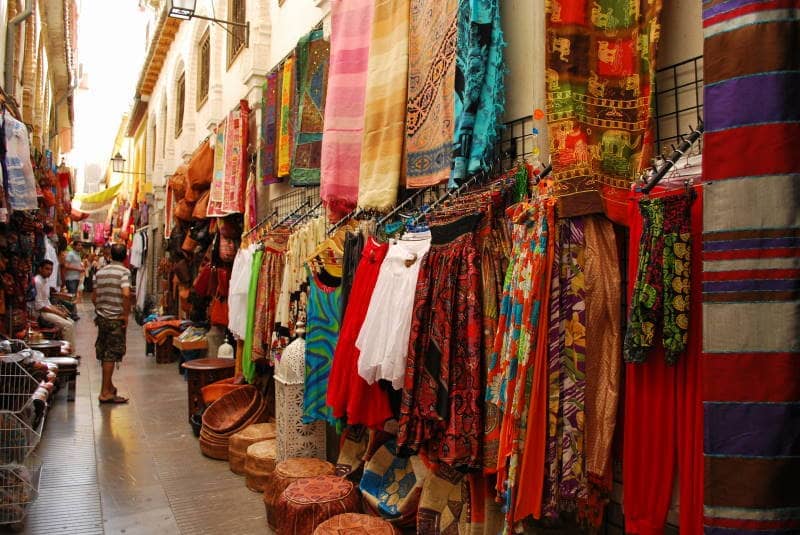
Immediately south of the Cathedral, the Alcaicería occupies the footprint of the old Islamic silk market. The current buildings are 19th-century reconstructions after a fire, but the narrow lanes and the density of craft stalls give a genuine sense of how bazaar commerce worked in the Nasrid city. It is unabashedly touristy, but it is also where you can find quality ceramics, leather goods, and marquetry work if you look past the souvenir tat.
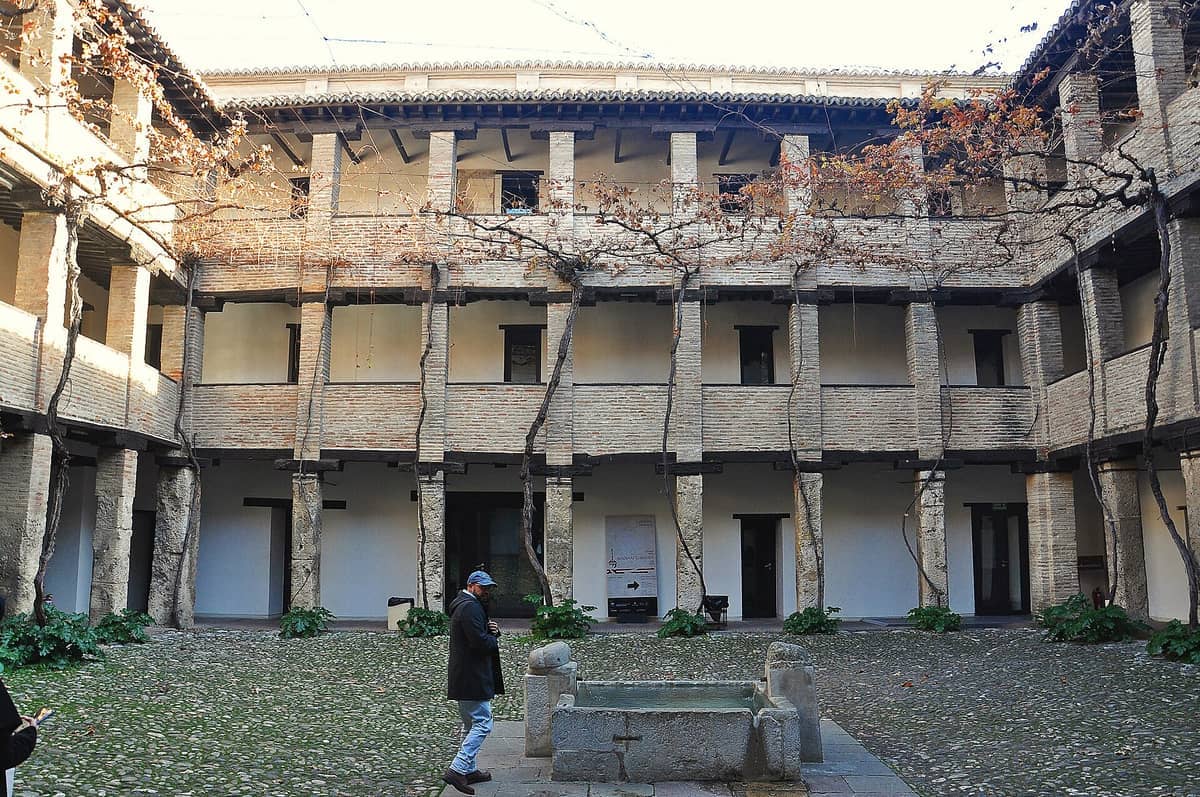
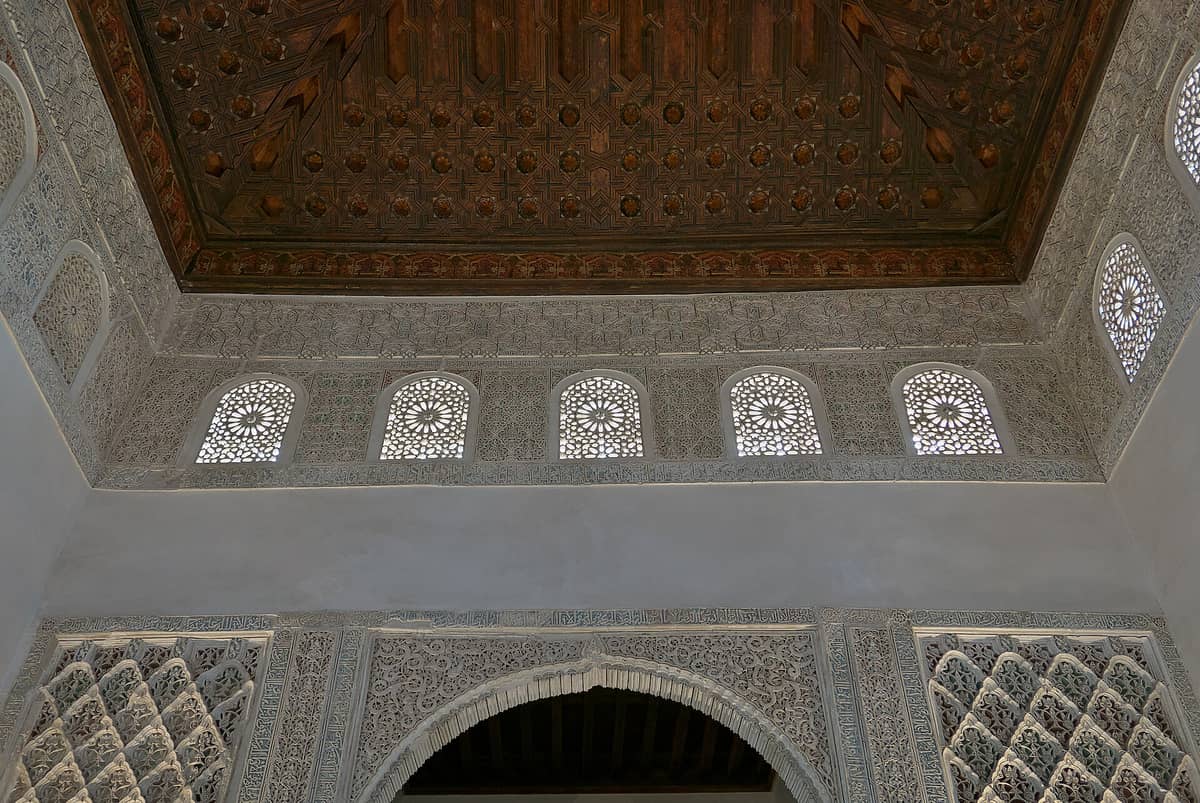
A short walk west along Calle de los Reyes Católicos brings you to the Corral del Carbón, the oldest surviving example of a Nasrid caravanserai in the Iberian Peninsula. Its horseshoe arch entry and triple-galleried courtyard are genuinely impressive, and entry is free. It now houses a cultural office and small craft vendors, but the architecture is the reason to visit.
Granada Cathedral: one of the largest Renaissance cathedrals in Spain, with its unfinished tower adding a distinctive asymmetry to the skyline
Capilla Real: royal mausoleum with original art collection and the processional cross of Fernando and Isabel
Alcaicería: reconstructed Islamic silk market lanes, good for ceramics and local crafts
Corral del Carbón: free-entry 14th-century caravanserai, one of the best-preserved Nasrid commercial buildings in the city
Gran Vía de Colón: the main boulevard, worth walking for its early 20th-century architecture and central banks and civic buildings
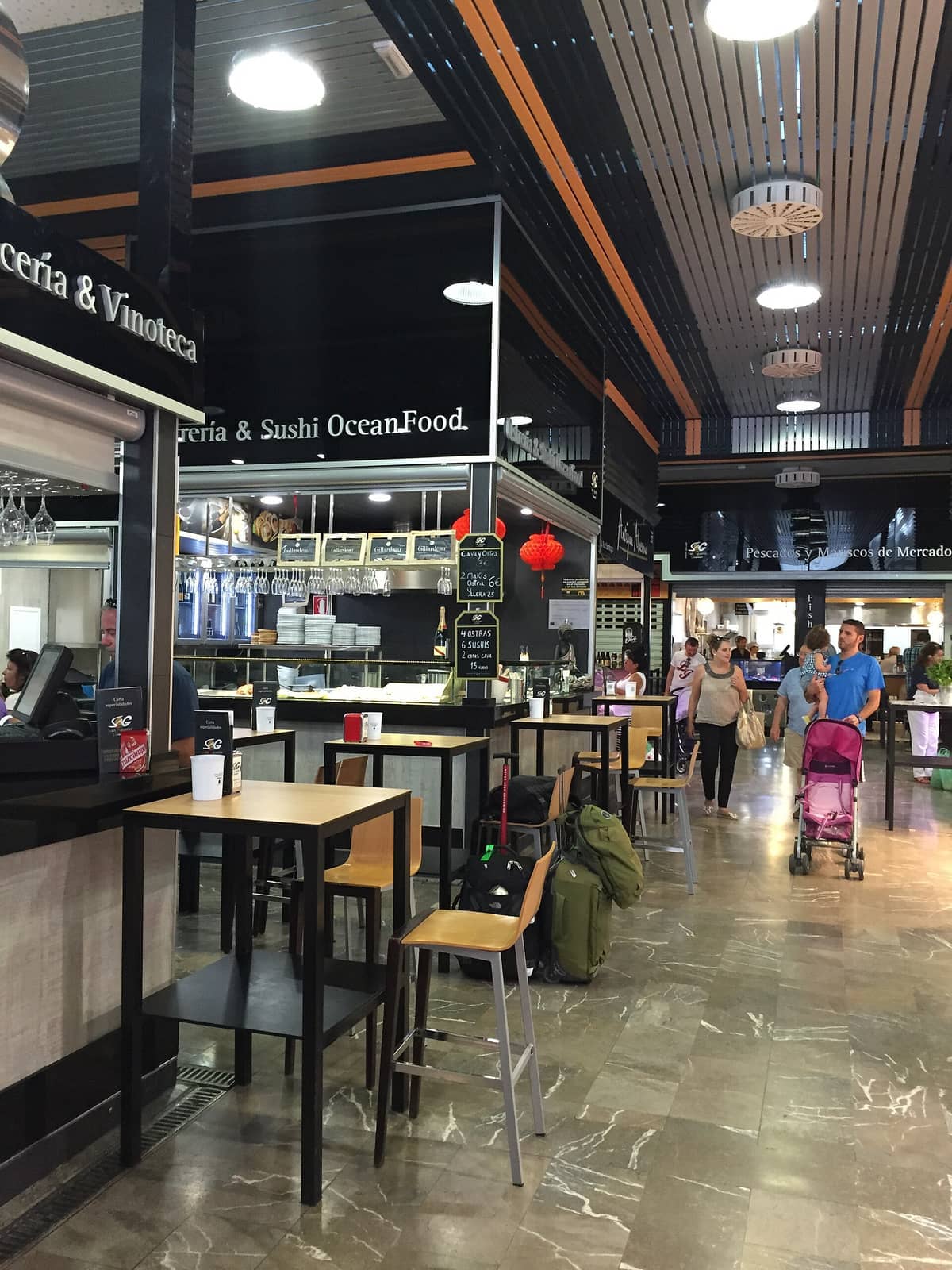
Mercado de San Agustín: the covered market just north of the Cathedral, good for fresh produce and everyday city life
Centro-Sagrario is also the practical base for planning visits to sites in other neighborhoods. The Alhambra sits above the city to the east, reachable on foot or by bus from Gran Vía. The Alhambra tickets guide is essential reading before you arrive, since timed entries sell out weeks or months in advance and cannot be purchased at the gate.
💡 Local tip
The Mercado de San Agustín, just north of the Cathedral on Calle Cristo de Burgos, is where local residents do much of their grocery shopping. The traditional produce stalls open in the mornings and close early afternoon, while the gourmet bar area stays open into the evening. It is a better place to get a feel for everyday Granada than any tapas bar on the tourist circuit.
Eating & Drinking
Granada is one of the last major Spanish cities where bars still serve a free tapa with every drink, and Centro-Sagrario is the most accessible place to experience this. The tradition holds across price points: a beer or glass of wine typically comes with a small plate of food, chosen by the bar. For visitors used to paying separately for everything, it takes some adjustment. The free tapas guide for Granada covers the etiquette and the best streets in detail.
The area around Puerta Real and the streets feeding into it (Calle Navas is the most cited, though the whole cluster rewards exploration) concentrates a high density of tapas bars. These range from very old, tile-walled places that have been operating since the mid-20th century to newer spots with more contemporary food. The old spots tend to lean toward fried fish, jamón, and braised meats; the newer places incorporate more vegetables and international influences. Both are legitimate.
For coffee and breakfast, the bars on Gran Vía and the streets immediately behind the Cathedral do a brisk trade from 7:30am onward. A café con leche and a tostada with tomato and olive oil is the standard morning combination. Churrerías appear in the cooler months near the main pedestrian areas. Lunch menus (menú del día) are available at most sit-down restaurants between roughly 1pm and 3:30pm, typically offering two or three courses plus bread and a drink for a fixed price that represents significantly better value than ordering à la carte.
For a broader overview of what and where to eat across Granada, the guide to Granada's food covers regional specialities including the Moorish-influenced pastries, the local wines from nearby Contraviesa-Alpujarras, and the cold-weather tradition of eating tortilla de Sacromonte.
⚠️ What to skip
Restaurants directly facing the Cathedral and along the main pedestrian arteries charge a premium and are generally not where locals eat. Moving one or two streets off the main axes will get you significantly better value and food quality. Calle Mesones, Calle Alhóndiga, and the streets around Plaza de la Trinidad are all within easy walking distance and serve a predominantly local clientele.
Getting There & Around
From Granada's main RENFE train station on Avenida de Andaluces, urban bus lines 3 and 33 serve the city centre. The ride takes around 10-15 minutes depending on traffic, and both routes stop on or near Gran Vía de Colón. The Metro de Granada, a light rail system serving the wider metropolitan area, connects at Caleta station and other points, though the metro's coverage is more useful for trips beyond the central neighborhoods. For full information on navigating the city, the guide to getting around Granada covers all modes of transport with current route information.
Once you are in Centro-Sagrario, the neighborhood is almost entirely walkable. The flat terrain means that moving between the Cathedral, the Alcaicería, Corral del Carbón, and Puerta Real involves nothing more strenuous than short urban walks on pedestrianized or semi-pedestrianized streets. Most of the area has been cleared of through traffic, which makes navigation on foot straightforward.
From the city centre, the Albaicín is accessible on foot by walking northeast up from Plaza Nueva, a journey of about 15 minutes to the lower streets of the quarter, or longer if you are heading to the upper miradores. Bus C31 runs a circular route through the Albaicín from Plaza Nueva. Sacromonte lies further east along the Darro river valley, roughly 25-30 minutes on foot from Plaza Nueva, or by neighborhood buses such as C34 from the centre. The Alhambra is accessible via a steep uphill walk from Plaza Nueva (about 20-25 minutes), or by buses C30 and C32 that link the Alhambra with Plaza Isabel la Católica and the central area.
Taxis and ride-hailing apps (Uber and Cabify both operate in Granada) are useful for reaching the train station, the airport bus connection points, or for getting back to the centre late at night. Fares within the city are reasonable by Spanish urban standards, though exact tariffs are subject to municipal regulation and should be confirmed before travel.
Where to Stay
Centro-Sagrario is the most practical base in Granada for first-time visitors and for anyone who wants to minimize transit time to the city's major monuments. The flat topography means no steep climbs to your hotel after a long day, and virtually every landmark in the city is reachable on foot or by a short bus ride. For a full comparison of accommodation options across all neighborhoods, the Granada accommodation guide covers the tradeoffs between staying in the centre, the Albaicín, and the Realejo.
Hotels in Centro-Sagrario range from budget hostels on the streets around the university area to upscale properties on Gran Vía and the streets immediately around the Cathedral. Mid-range options are concentrated in the blocks between Gran Vía and Reyes Católicos, where you get convenient locations without paying for a direct Cathedral view. Apartment rentals are also widely available, which suits travelers who want to shop at the Mercado de San Agustín and cook their own meals.
The main tradeoff for staying in Centro-Sagrario is noise. Gran Vía and Reyes Católicos carry significant foot traffic and some vehicle noise through much of the day and evening. Rooms on interior courtyards or on upper floors facing quieter streets will sleep substantially better than those on the main thoroughfares. It is worth asking specifically about noise exposure when booking, particularly if you are sensitive to early-morning street activity.
Travelers seeking a quieter, more residential atmosphere might consider the Realejo immediately to the south, which retains many of the practical advantages of a central location while sitting slightly outside the main tourist circulation routes.
Practical Notes
Centro-Sagrario is walkable year-round, but the experience changes significantly by season. Summer temperatures in Granada regularly exceed 35°C in July and August, and the Cathedral area bakes in direct sun for most of the afternoon. Plan sightseeing for early morning or evening in high summer, and use the long afternoons for shaded tapas bars or air-conditioned museums. The best time to visit Granada breaks down the seasonal tradeoffs in detail, including the advantages of visiting in spring or early autumn when temperatures are in the 22-27°C range.
The neighborhood has an active residents' association (Asociación de Vecinos Sagrario-Centro, based on Calle Mariana Pineda) that engages with local planning and quality-of-life issues. This is a reminder that Centro-Sagrario is a functioning residential community, not just a tourist zone. Treat it accordingly: keep noise down in residential streets at night, and be aware that locals use the same tapas bars and cafés that visitors enjoy.
Standard urban precautions apply in any busy city centre: be aware of your belongings in crowded areas, particularly around the Alcaicería and along Reyes Católicos at peak times. There are no specific safety warnings attached to Centro-Sagrario in municipal or tourism sources. For broader context on navigating Granada, the Granada things to do guide includes practical orientation tips for first-time visitors.
💡 Local tip
If you are visiting the Cathedral or Capilla Real, check opening hours in advance and verify current entrance fees on the official sites before arriving, as these change periodically and midday closures still apply on some days. Queues form quickly after tour groups arrive mid-morning.
TL;DR
Centro-Sagrario is Granada's historic and commercial core: flat, walkable, and containing the Cathedral, Capilla Real, Alcaicería bazaar, and Corral del Carbón within a compact area.
Best for: first-time visitors who want proximity to major monuments; travelers who prefer a central base with good transit links to every other neighborhood.
The free tapas tradition is alive and well here, particularly around Puerta Real and the streets feeding into it — but move one block off the main tourist axes for better value and more local atmosphere.
Main drawbacks: noise from Gran Vía and Reyes Católicos; high tourist density around the Cathedral from mid-morning; premium pricing at restaurants on the main pedestrian routes.
For a quieter stay with similar convenience, consider the adjacent Realejo to the south; for more character and elevation, the Albaicín is a 15-minute walk uphill to the northeast.
Two days in Granada, Spain is enough to cover the Alhambra, the Albaicín, the cathedral quarter, flamenco in Sacromonte, and the city's legendary free tapas culture — if you plan correctly. This guide gives you a day-by-day structure, realistic timing estimates, and the booking details that most itineraries leave out.
Walk Granada's UNESCO-listed Albaicín quarter at your own pace. This guide covers the full route from Plaza Nueva to Mirador de San Nicolás, every key stop along the way, seasonal timing advice, and the practical details most visitors only find out when they arrive.
Buying Alhambra tickets is the single most important logistical task before visiting Granada. This guide covers official prices, every ticket type, the timed entry system for the Nasrid Palaces, and how to avoid the most common booking mistakes.
Granada's climate swings from near-freezing January nights to 36°C July days, and its tourist calendar is shaped by everything from Semana Santa processions to Alhambra ticket availability. This guide breaks down every month so you can match your trip to your priorities, whether that's perfect weather, low prices, or catching a specific festival.
Granada sits at one of Spain's most rewarding crossroads, with the Sierra Nevada, white mountain villages, Mediterranean coast, and great Andalusian cities all within reach. These are the best day trips you can do from Granada, with advice on how to get there and what to see.
Granada is one of Spain's most important cities for flamenco, with nightly performances ranging from intimate cave shows in Sacromonte to polished tablao productions near the historic centre. This guide covers the best venues, price ranges, booking strategies, and what first-timers need to know before they go.
Granada is one of the few places left in Spain where ordering a drink automatically earns you a free plate of food. This guide explains the rules, the best neighborhoods, drink prices, timing, and the common myths that catch tourists off guard.
Granada rewards budget travellers generously. From UNESCO-listed Moorish streets and hilltop viewpoints to free-entry monuments and river walks beneath the Alhambra, the city has more genuinely free experiences than almost anywhere in Andalusia.
Everything you need to navigate Granada Spain, from airport transfers and the Metro to the dedicated mini-buses for the Alhambra. Includes current fares, seasonal schedules, and the one booking mistake that locks visitors out of the Nasrid Palaces.
Getting to Granada is easier than most travellers expect. This guide covers every realistic option: flying into GRX, taking the high-speed AVE from Madrid, catching a bus from Málaga Airport, and everything in between, with current prices, journey times, and practical planning notes on which route suits your trip.
Granada rewards curious travelers who look beyond the Alhambra queues. From a free 13th-century royal pavilion buried in a municipal building to a panoramic hilltop hermitage above the cave district, these are the places that most visitors walk straight past.
December is one of Granada's most rewarding months to visit. The city fills with Christmas lights and markets while Sierra Nevada, just 30 km away, opens its ski slopes. Crowds at the Alhambra thin out, hotel prices drop, and the tapas bars are as good as ever. Here is everything you need to plan a winter trip.
Granada rewards those who plan carefully and spend wisely. This guide covers the finest hotels near the Alhambra, the best Michelin-recognized restaurants in the city, private cultural experiences, and the practical logistics that separate a smooth luxury trip from an expensive disappointment.
Most visitors spend their entire time in Granada fixated on the Alhambra and never realize the city holds a dozen other Moorish monuments within walking distance. This guide covers the essential sites, ticket combinations, walking routes, and practical details you need to explore Granada's full Islamic heritage.
Granada's nightlife runs later than almost anywhere else in Spain, fueled by a large student population and a culture that treats midnight as a warm-up. This guide covers the best neighborhoods for drinks, which clubs deliver, what things actually cost, and how to avoid the classic tourist mistakes.
Granada is one of the most affordable cities in Spain — if you know how the system works. This guide breaks down free tapas, Alhambra ticket pricing, tourist passes, free attractions, and the best times to visit for lower costs and smaller crowds.
Semana Santa in Granada is one of Andalusia's most atmospheric Holy Week celebrations, with daily processions from Palm Sunday to Easter Sunday winding through medieval streets. This guide covers routes, schedules, seating, crowd tips, and everything a visitor needs to experience it properly.
Granada rewards those who look up, and those who climb. This guide covers every significant mirador and panoramic viewpoint in the city, from the famous terrace at San Nicolás to the high-altitude plateau of the Sierra Nevada, with practical advice on timing, access, and what you'll actually see from each spot.
Granada rewards families who plan ahead. From timed-entry Alhambra tickets to the hands-on Parque de las Ciencias and snow-capped Sierra Nevada day trips, this guide covers every family-friendly activity in Granada, Spain, with practical advice on crowds, costs, and seasonal timing.
Granada sits at the foot of the highest mountain range in mainland Spain, putting serious alpine terrain within an hour of the city centre. This guide covers the best hikes near Granada, from accessible gorge walks to high-altitude summit routes, with practical advice on getting there.
Granada is one of Spain's most historically layered cities, but it comes with real trade-offs: intense summer heat, Alhambra ticket logistics, and crowds that can frustrate the underprepared. This guide gives you the full picture so you can decide if it belongs on your itinerary.
Las Alpujarras is one of the most rewarding day trips from Granada — a chain of Moorish-era whitewashed villages clinging to the southern slopes of the Sierra Nevada. This guide covers how to get there by bus or car, which villages to prioritize, what to eat, and how to make the most of a single day in the mountains.
Granada, Spain is one of Europe's most atmospheric cities for couples. Moorish palaces, candlelit flamenco caves, ancient bathhouses, and hilltop sunsets combine to create something genuinely difficult to replicate anywhere else. This guide covers the best romantic experiences, practical planning details, and practical planning notes on what actually lives up to the hype.
Sierra Nevada is Spain's highest skiable and southernmost major ski resort, sitting just 40 km from Granada city. This guide covers the full picture: season dates, lift pass pricing, how to get there, what the slopes are actually like, and what most first-timers get wrong.
Granada, Spain packs an extraordinary range of experiences into a city of just 230,000 people: a UNESCO-listed palace complex, a medieval Moorish quarter, cave flamenco, and a tapas culture where every drink comes with free food. This guide cuts through the noise and tells you exactly what to do, when to go, and what to skip.
Granada's food culture runs much deeper than free tapas. This guide covers the city's signature dishes, seasonal specialties, best markets, and practical tips for eating well in one of Andalusia's most distinctive culinary cities.
Granada, Spain has one of Europe's most distinctive food cultures: order a drink and a free tapa arrives automatically. This guide covers the free tapas system in full, the best neighborhoods to eat, what dishes to prioritize, and the restaurants worth booking in advance.
Choosing where to stay in Granada Spain shapes your entire trip. This guide breaks down the four main neighbourhoods for visitors, with a clear look at terrain, atmosphere, hotel options, and price ranges to help you book with confidence.