Monasterio de la Cartuja: Granada's Baroque Masterpiece
The Monasterio de la Cartuja is Granada's most architecturally overwhelming religious monument, where Baroque decoration reaches a pitch found almost nowhere else in Spain. This guide covers what to see, when to go, how to get there, and whether it belongs on your itinerary.
Quick Facts
- Location
- Paseo de la Cartuja, s/n, 18011 Granada (northern Granada / Beiro area)
- Getting There
- Urban bus stop 'Paseo de Cartuja' or 'Ciencia de la Educacion' — verify current routes with Transportes Rober before visiting
- Time Needed
- 60–90 minutes is enough for most visitors; allow 2 hours if you read every panel
- Cost
- €7 general (with audioguide); €5 students under 25 and visitors with disability accreditation; free for children under 12 with family
- Best for
- Architecture lovers, Baroque art enthusiasts, visitors seeking a counterpoint to Moorish Granada
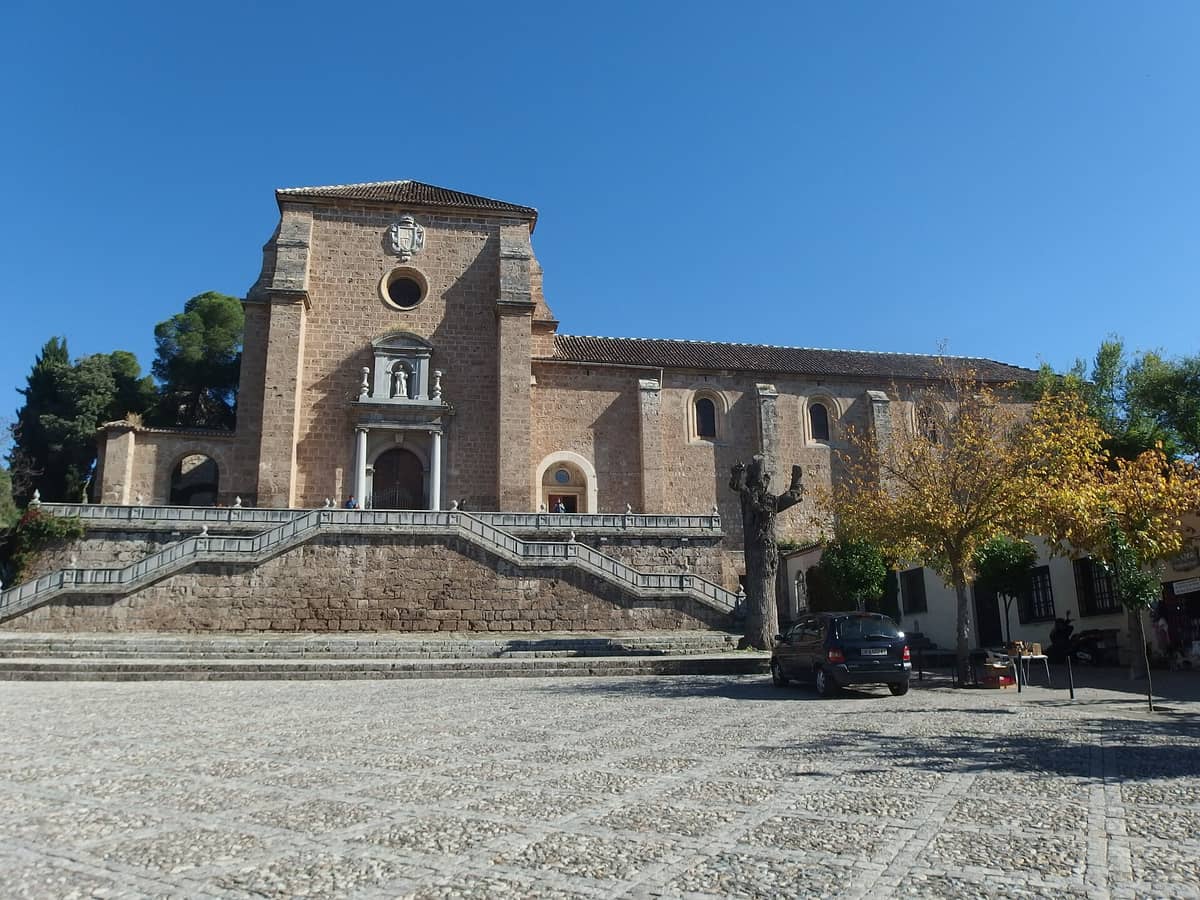
What Is the Monasterio de la Cartuja?
The Monasterio de la Cartuja — full official name Monasterio de Nuestra Señora de la Asunción 'La Cartuja' — is a former Carthusian monastery located on Paseo de la Cartuja in the northern part of Granada, Spain. It is widely considered one of the most extreme expressions of Spanish Baroque architecture in existence. Where the Alhambra overwhelms through geometric intricacy and the play of water and light, the Cartuja overwhelms through sheer accumulated ornament: gilded plasterwork, polychrome marble inlays, frescoed ceilings, and a sacristy that appears to be trying to occupy every square centimetre of wall and ceiling simultaneously.
This is not a ruin or a shell. The monastery is largely intact, and visitors move through a sequence of spaces that shift dramatically in scale and mood, from the austere early cloister to the explosive theatricality of the Sagrario chapel. For visitors who have spent days absorbing the cool rationalism of Nasrid decoration, the Cartuja can feel like a deliberate provocation. That contrast is part of what makes it worth the detour.
ℹ️ Good to know
Opening hours: Sunday to Friday 10:00–18:30; Saturdays 10:00–12:15 and 15:00–17:30. Closed 25 December and 1 January. Early closure at 14:00 on 24 and 31 December. Verify hours before visiting, as schedules can change.
Historical Context: From Reconquista Grant to Baroque Excess
The monastery's origins trace to the aftermath of the Christian conquest of Granada in 1492, when land was granted to the Carthusian order — one of the most cloistered and austere of Catholic religious communities. The founding intention was deeply ascetic: Carthusian monks live in near-total silence, each in a separate cell with its own small garden, gathering only for communal prayer. The architecture of monastic life was meant to strip away distraction.
What happened over the following two centuries was a slow architectural contradiction. As patronage grew and successive campaigns of construction and decoration unfolded through the 17th and into the 18th century, craftsmen layered onto the original structure a density of Baroque ornamentation that would have struck the order's founder, Saint Bruno, as borderline scandalous. The sacristy, generally dated to the first half of the 18th century, is the culmination of this process: a space so densely worked in stucco, marble, and paint that it reads almost as anti-architecture, the surfaces dissolving into texture.
Understanding this tension between Carthusian restraint and Baroque exuberance is the key to reading the Cartuja intelligently. It helps to arrive with some background on Spanish religious art. If you are planning a broader itinerary through Granada's Moorish and Christian heritage, the Granada Moorish heritage guide provides useful context for placing the Cartuja within the city's longer history.
Tickets & tours
Live prices and dates from our booking partner. If you book, we may earn a commission at no extra cost to you.
Alhambra guided tour in Italian
From 49 €Instant confirmationFree cancellationAlhambra guided group tour with Nasrid Palaces and Generalife Palace
From 40 €Alhambra guided tour with Carlos V Palace, Generalife and Alcazaba
From 35 €Alhambra and Generalife skip-the-line private tour
From 65 €Instant confirmation
What You Will Actually See: A Room-by-Room Walkthrough
Visitors enter through a courtyard and progress through a sequence of spaces that tell the story of the monastery's construction in layers. The early cloister is the most austere section: stone arcades, a garden at the centre, the silence of a place that was designed to suppress sound. The proportions are calm, and the decoration relatively minimal. This is intentional Carthusian restraint, and it acts as a kind of visual reset before what follows.
The church interior represents the Baroque register fully engaged: gilded altarpieces, painted vaulting, carved wooden choir stalls with fine marquetry detail. The polychrome marble floor is worth crouching down to examine — the geometric patterning is precise and technically demanding, laid in contrasting stones that were likely quarried from the Sierra Nevada foothills. Light enters at angles that shift depending on the time of day, and morning visits, when sunlight falls directly through the south-facing windows, illuminate the gilded surfaces with a warmth that afternoon visits do not deliver.
The sacristy is the room that draws gasps. Designed in the Churrigueresque style — the most extreme strain of Spanish Baroque, named after the architect José Benito de Churriguera — the walls and ceiling are worked in white stucco to a depth and complexity that creates an almost three-dimensional lace effect. There is no blank surface. Pilasters dissolve into foliage, foliage dissolves into figures, figures dissolve into more foliage. The Sagrario (tabernacle chapel) adjacent to the sacristy pushes this further still, combining marble, jasper, tortoiseshell, silver, and gilded bronze in an ensemble that is either a masterpiece or an act of aesthetic aggression, depending on your tolerance for maximalism.
💡 Local tip
Photography is generally permitted in the public areas, but flash photography disturbs other visitors and can be damaging over time. The sacristy is dim — bring a camera that handles low light well, or simply accept that no photograph captures the room as the eye experiences it.
Best Time to Visit and How It Changes Through the Day
The Cartuja receives far fewer visitors than the Alhambra, and on most weekday mornings it is genuinely quiet. Opening time at 10:00 on weekdays is the most peaceful window: the courtyards are cool, the light in the church is at its most flattering, and you can stand in the sacristy without negotiating around tour groups. By 11:30 on weekends, organized groups begin to arrive and the space becomes noisier.
Saturday hours are split, with a midday closure from 12:15 to 15:00. This is worth planning around: arriving just before 10:00 on a Saturday gives you roughly two uninterrupted hours in the morning session, which is usually sufficient. The afternoon Saturday session (15:00–17:30) is the quietest of the week for this day, as many visitors have moved on to other activities.
If you are planning your broader Granada itinerary around crowd levels and seasonal temperatures, the best time to visit Granada guide covers how summer heat (frequently above 35°C in July and August) affects sightseeing comfort across the city. The Cartuja is fully interior, so heat is less of a factor here than at open-air sites, but the walk from the city centre in midsummer is worth preparing for.
Getting to the Monasterio de la Cartuja
The monastery sits on Paseo de la Cartuja in the Beiro district, roughly 2 kilometres north of Granada's historic centre. It is not within easy walking distance of the Cathedral or the Albaicín for most visitors, though the walk is straightforward and takes around 25–30 minutes on flat ground. The Paseo de la Cartuja is a wide, tree-lined boulevard, which makes the approach pleasant in spring and autumn.
City buses stop near the monastery at the 'Paseo de Cartuja' and 'Ciencia de la Educacion' stops. Granada's urban bus network is operated by Transportes Rober — verify current route numbers and fares on their website before visiting, as services change periodically. Taxis and ride-hailing apps (Uber and Cabify both operate in Granada, subject to availability) are a straightforward alternative if you are combining the Cartuja with other northern-city sites like the University of Granada's Cartuja campus.
⚠️ What to skip
There is limited parking near the monastery on weekday mornings. If arriving by car, allow extra time. Public transport or taxi is the more practical option for most visitors staying in the city centre.
Practical Details: What to Wear, Bring, and Expect
As an active religious site managed as a monument, modest dress is appropriate: covered shoulders and knees. The monastery is largely indoors, so it works in most weather, but the entrance courtyard and early cloister are open-air. In winter, when Granada temperatures can drop to around 0°C at night and stay below 10°C in the morning, a layer is sensible even for an interior visit.
The floors are largely stone and polished marble — comfortable shoes with good grip are worth wearing, especially if the courtyards are damp after rain. Audioguides may be available on-site, but verify this before arriving. The interpretive signage inside includes Spanish and usually English text, covering the key artistic and historical points without requiring a guided tour.
Accessibility within the monastery is constrained by the historic fabric of the building. The ground floor is largely level, but some threshold steps exist between rooms. Guide dogs are explicitly permitted. Visitors with specific mobility needs should contact the site directly before visiting, as no comprehensive accessibility audit is included in available official materials.
Is It Worth Your Time?
The Monasterio de la Cartuja is not overrated — it is undervisited, which is a different thing. Most visitors to Granada spend their limited time at the Alhambra and the Granada Cathedral, and the Cartuja gets passed over because it is slightly out of the way. This is a genuine omission for anyone interested in Baroque art or Spanish architectural history.
That said, it is not for everyone. If you are visiting Granada primarily for its Moorish heritage and have limited time, the Alhambra, the Albaicín, and the Bañuelo Arab Baths will engage you more directly. The Cartuja rewards visitors who find pleasure in close observation of craftsmanship — the kind of traveller who will spend twenty minutes in the sacristy working out how the stucco was built up in layers, rather than someone looking for a quick cultural tick.
For travellers with two days or more in the city, the Cartuja fits naturally into a second day that also takes in the northern city and university area. The 2 days in Granada itinerary offers a practical framework for combining it with other sites.
Insider Tips
- The sacristy is the climax of the visit — resist the temptation to rush through the cloister and church to get there quickly. The sequential build-up from austerity to excess is part of how the space works on you.
- Weekday mornings between 10:00 and 11:00 are consistently the quietest period. Arriving at opening time on a Tuesday or Wednesday gives you stretches of the sacristy almost entirely to yourself.
- The polychrome marble floor in the church is easy to miss because visitors are looking up. Take a moment to crouch down and examine the inlay work — the precision of the stone cutting is remarkable and rarely photographed.
- On Saturdays, the midday closure is strictly observed. Do not plan to arrive at 12:00 expecting entry — staff begin clearing visitors before 12:15.
- The walk from the city centre along Paseo de la Cartuja passes the University of Granada's Cartuja campus, which has some pleasant gardens. Building in 30 minutes for this stretch makes the journey feel less like a transit slog.
Who Is Monasterio de la Cartuja For?
- Architecture enthusiasts who want to understand how Spanish Baroque differs from Italian or French Baroque
- Visitors on a second or third day in Granada looking beyond the standard Alhambra circuit
- Art historians and students of religious iconography — the decorative programme is dense and legible
- Travellers seeking an interior site that works regardless of weather
- Those who appreciate the contrast between Moorish minimalism and Christian maximalism as a way of reading Granada's history
Nearby Attractions
Other things to see while in Centro-Sagrario (City Centre):
- Alcaicería (Arab Bazaar)
The Alcaicería is Granada's reconstructed Arab silk market, a tight labyrinth of narrow lanes packed with craft and souvenir shops steps from the cathedral. Free to enter and open most days, it offers one of the most atmospheric walking experiences in the city centre, though visitors should know its history before they arrive.
- Basílica de San Juan de Dios
The Basílica de San Juan de Dios is Granada's most extravagantly decorated Baroque church, a 18th-century pilgrimage site housing the relics of the saint who founded the Brothers Hospitallers. Most visitors walk past its understated facade without a second glance — which makes the gold-drenched interior all the more astonishing when you step inside.
- Capilla Real de Granada (Royal Chapel)
The Capilla Real de Granada is the funerary chapel commissioned by the Catholic Monarchs to house their remains in the city where they completed the Reconquista. Inside, behind an extraordinary wrought-iron screen, lie the tombs of Isabella I, Ferdinand II, Juana la Loca, and Felipe el Hermoso, alongside a small but remarkable collection of royal art and personal relics.
- Corral del Carbón
The Corral del Carbón is a 14th-century Nasrid alhóndiga — a combined grain warehouse and merchant inn — standing in Granada's historic centre. It is the last surviving Nasrid alhóndiga in the city, admission is free, and most visitors spend around 30 minutes exploring its layered courtyard architecture before continuing to the nearby Alcaicería or Cathedral.
Planning a trip? Discover personalized activities with the Nomado app.