Tlatelolco, Tepito, and Santa María la Ribera occupy the northwest edge of central Mexico City, where pre-Hispanic archaeology, colonial history, 19th-century residential planning, and one of the capital's most famous barrios sit within a short walk of one another. Together they form one of the city's most layered and least tourist-filtered corners, worth a half-day at minimum and easily paired with visits to the historic center.
Tlatelolco, Tepito, and Santa María la Ribera sit just northwest of Mexico City's historic center, occupying a stretch of the Cuauhtémoc borough where the city's deepest history meets its first modern residential planning and one of its most storied working-class barrios. The Plaza de las Tres Culturas anchors Tlatelolco with an almost overwhelming density of meaning, Tepito adds a dense commercial street culture few tourists see, and Santa María la Ribera unfolds as a quiet grid of Porfirian townhouses and local institutions.
Orientation
Both neighborhoods sit inside the Cuauhtémoc borough, roughly three kilometers northwest of the Zócalo. Tlatelolco occupies the eastern portion of this pairing, running along Eje Central Lázaro Cárdenas and the Ricardo Flores Magón corridor, anchored by the enormous social housing complex built in the 1960s and the Plaza de las Tres Culturas at its heart. Santa María la Ribera lies immediately to the west and southwest, bounded on the north by Avenida Ricardo Flores Magón, on the south by Avenida Ribera de San Cosme, on the east by the Insurgentes-Buenavista axis, and on the west by Circuito Interior near Casco de Santo Tomás.
The mental map is straightforward: Tlatelolco is dense, institutional, and historically monumental, while Santa María la Ribera is a residential grid with a parklike core. Walking between the two takes under fifteen minutes. To the south, Avenida Ribera de San Cosme connects to Colonia San Rafael and eventually to the Roma-Condesa axis. To the east, crossing Insurgentes Norte puts you at the Buenavista commuter rail hub and within reach of the historic center. The neighborhoods are not isolated: they form a continuous urban fabric with the rest of central Mexico City, but they feel set apart by their particular pace and the absence of the tourist infrastructure that defines neighborhoods further south.
For a broader orientation to Mexico City's geography and how these neighborhoods fit into a longer visit, the where to stay in Mexico City guide provides a useful neighborhood-by-neighborhood comparison, and the guide to getting around Mexico City explains the metro, Metrobús, and bus options in practical detail.
Character & Atmosphere
On a weekday morning in Santa María la Ribera, the streets between Avenida San Cosme and the central park feel local in a way that parts of Roma or Coyoacán have largely lost. Vendors push carts of elotes and esquites along the sidewalks. The coffee shops and corner fondas fill with UNAM students and office workers rather than remote-working foreigners. The architecture does much of the work here: Porfirian-era townhouses line the streets in various states of careful preservation and gentle decay, their ornate facades in faded ochre, terracotta, and pale green forming one of the most coherent 19th-century streetscapes in the city.
The Alameda de Santa María, the neighborhood's central park, changes character by the hour. In the morning it belongs to dog walkers and retirees reading newspapers on the benches. By midday families and students spill out of the nearby schools and the UNAM-affiliated institutions. On weekend afternoons the park fills more, with children on the play areas and couples sitting in the shade of the trees framing the Kiosco Morisco at the center. At night, the park is quieter but not empty: the surrounding streets remain active with restaurants and street stalls, and the neighborhood's residential density keeps it from feeling deserted.
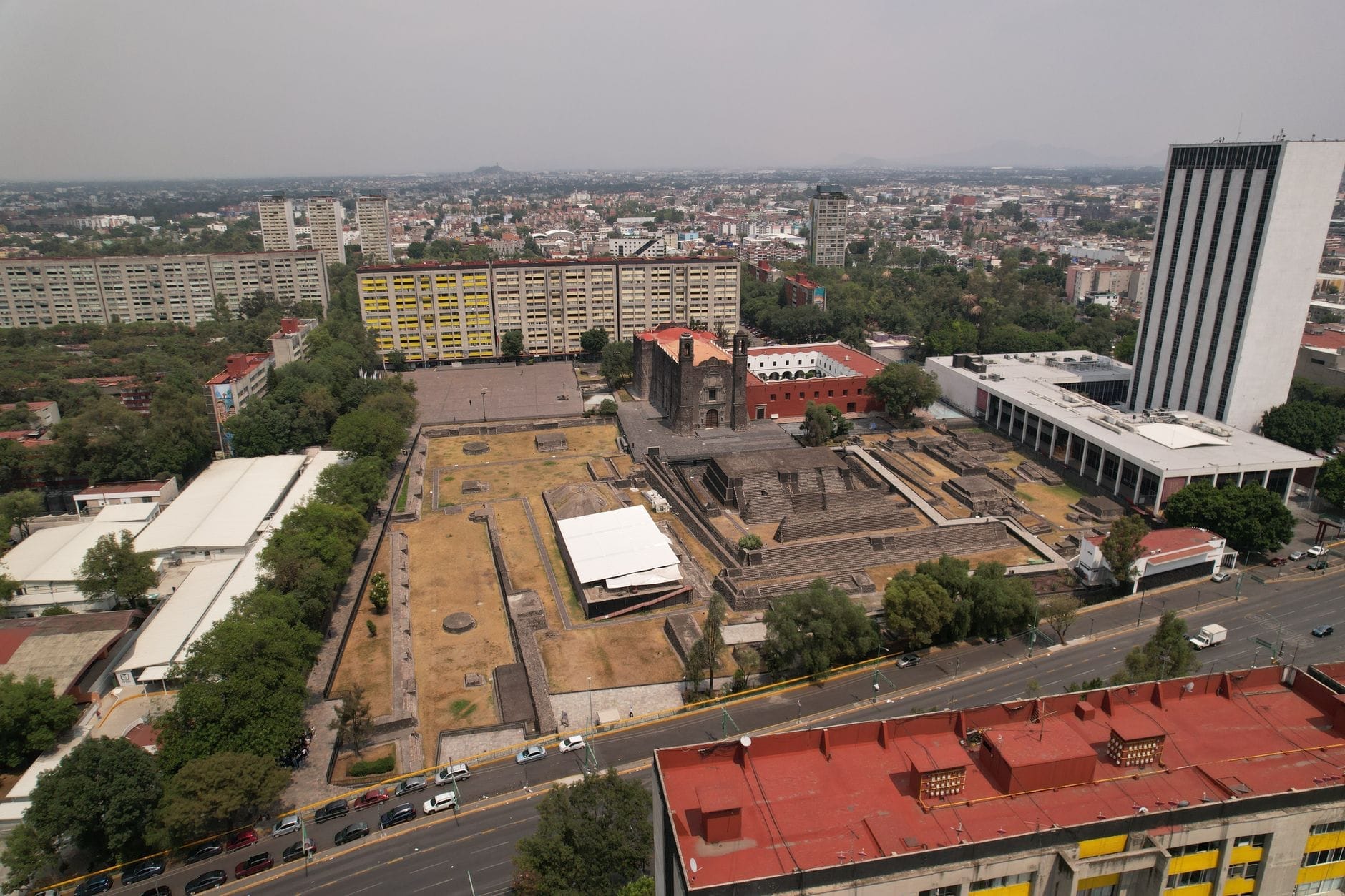
Tlatelolco proper reads differently. The 1960s housing complex, Conjunto Habitacional Nonoalco-Tlatelolco, is one of Latin America's most ambitious mid-century social housing projects, and walking its internal plazas gives a vivid sense of both the ambition and the contradictions of that era. The scale is enormous. The buildings cast long shadows in the afternoon, and the open spaces between them feel expansive compared to the tight colonial streets closer to the Zócalo. The Plaza de las Tres Culturas sits at the complex's south end, where the weight of Mexican history is almost physical: Aztec pyramid bases, a colonial church built from their stones, and a 20th-century apartment block marking the site of the 1968 student massacre.
ℹ️ Good to know
Santa María la Ribera is one of the oldest planned residential subdivisions in Mexico City, developed in the late 19th century as the city began expanding beyond its colonial core. It was designed from the start with a central park, church, market, and school — an urban planning model that was novel for Mexico at the time.
What to See & Do
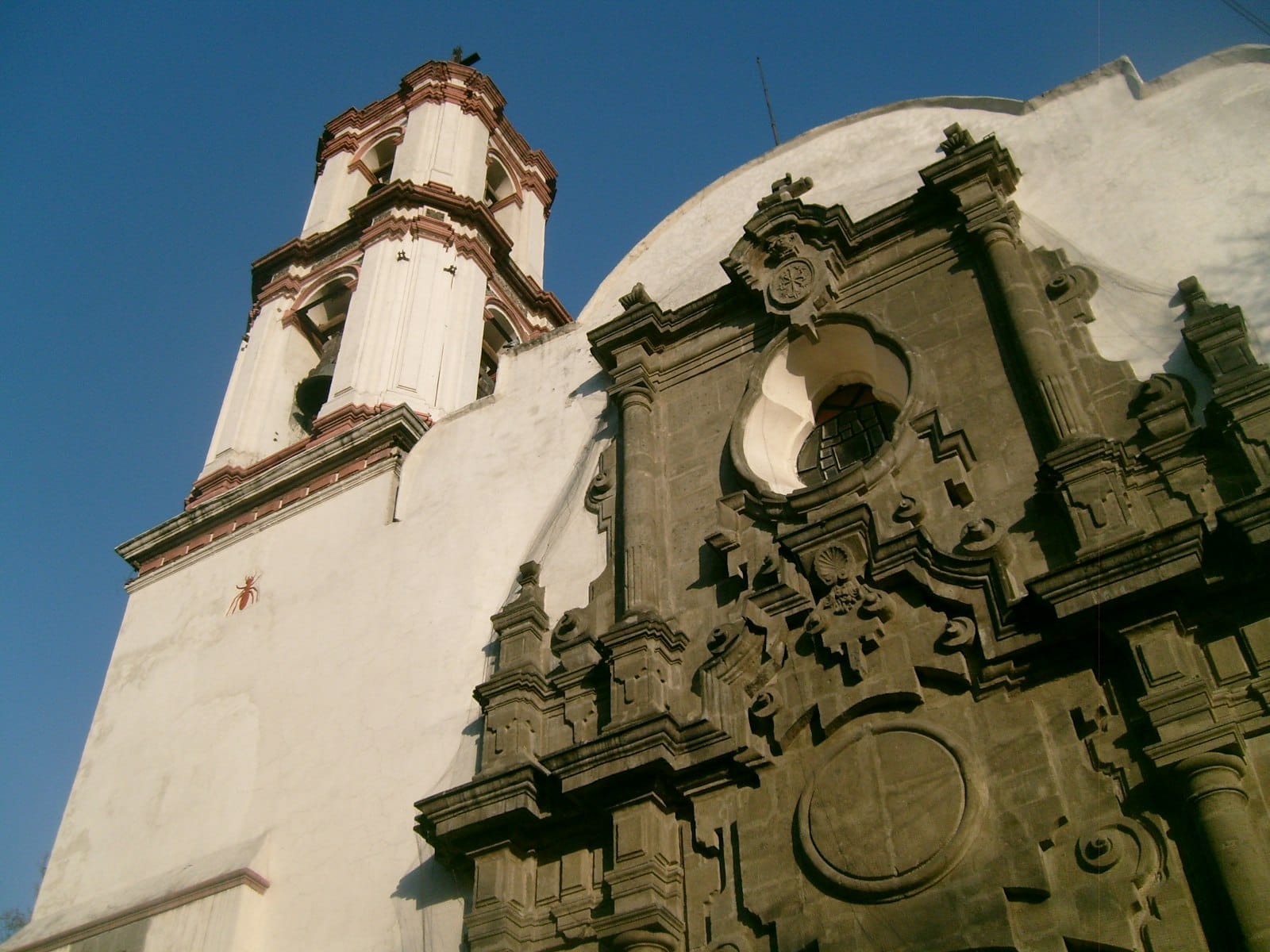
The Plaza de las Tres Culturas is the single most important site in this part of the city and deserves unhurried time. The archaeological zone preserves the remains of the Aztec market city of Tlatelolco, the largest commercial center in pre-Hispanic Mesoamerica and a rival to the Aztec capital of Tenochtitlan. The adjacent Santiago de Tlatelolco church, completed in the 16th century using stones from dismantled Aztec temples, represents the colonial layering that defines so much of central Mexico. The modern Secretaría de Relaciones Exteriores building closes the square and houses a small museum focused on the 1968 Tlatelolco massacre, in which student protesters were killed and many more injured or disappeared by government forces just days before the Mexico City Olympics.
A few blocks east of Tlatelolco, Tepito is one of Mexico City's oldest and most densely commercial barrios — a grid of narrow streets where everything from clothing and electronics to street food is sold from stalls, shops, and informal vendors. It is not a curated tourist market; it is a working neighborhood with a long reputation for self-reliance and street commerce. Most visitors who come here do so with a specific purpose (often to browse the tianguis-style stalls around Eje 1 Norte) rather than for sightseeing. Tepito sits about 15 minutes on foot from Plaza de las Tres Culturas and connects easily via Metro Tlatelolco (Line 3). Exercise the same street awareness you would in any busy central neighborhood: stay alert, keep valuables out of sight, and visit during daylight hours if you are unfamiliar with the area.
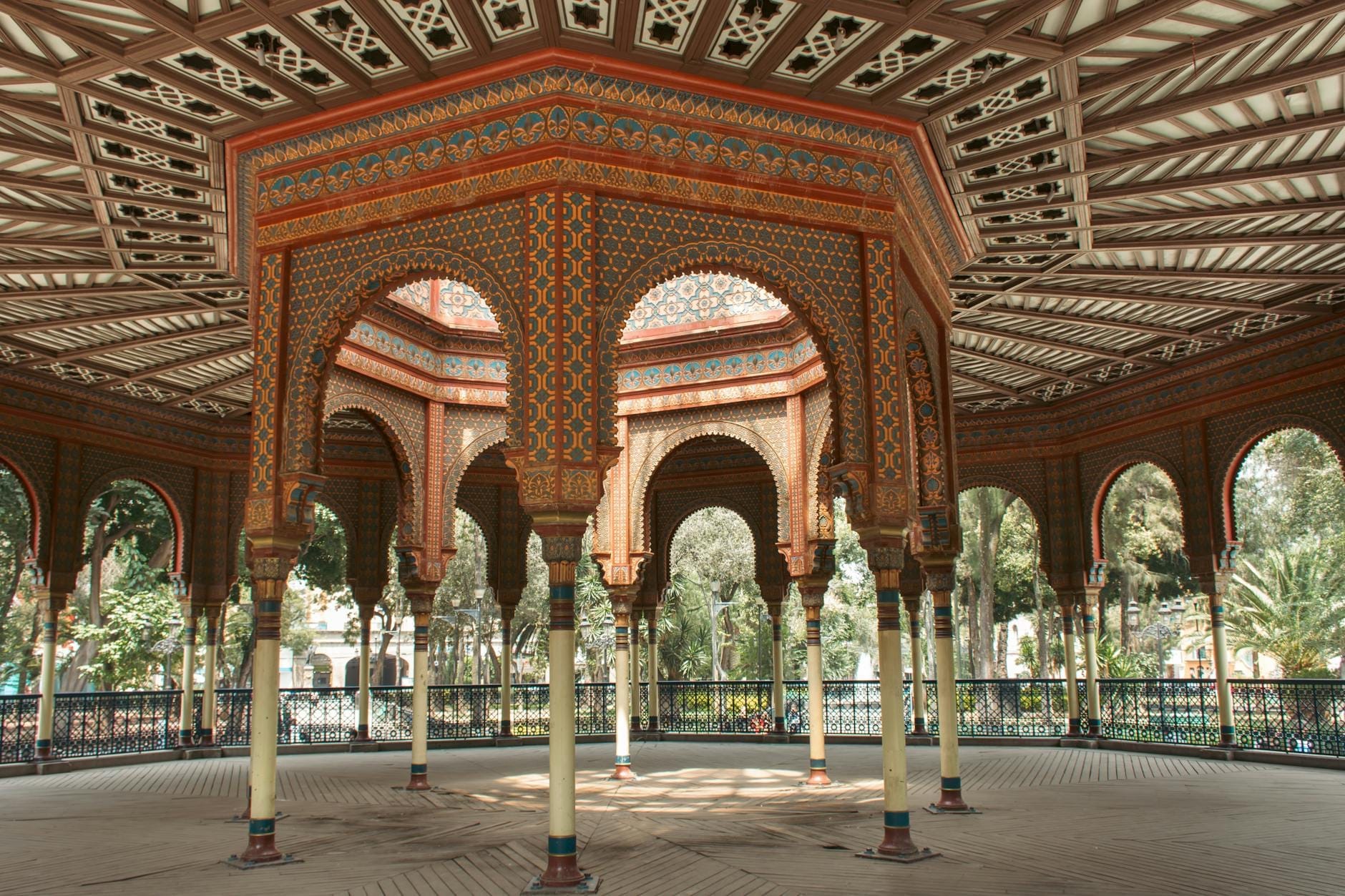
In Santa María la Ribera, the Kiosco Morisco is the neighborhood's most photographed landmark, a Moorish-revival iron pavilion that was originally built for the 1884 New Orleans World Exposition before being relocated to this park. It is an odd, beautiful object: ornate cast-iron latticework topped with a gilt dome, surrounded by the ordinary rhythms of a neighborhood park. The juxtaposition is part of the charm.
The Museo de Geología de la UNAM, housed in a Porfirian-era building on Avenida Dr. Enrique González Martínez, is a particularly interesting institution that most visitors overlook. Its collection covers Mexican geology and paleontology with specimens including large fossil skeletons, displayed in a beautifully preserved early 20th-century building with ornate wooden display cases and tiled floors that have barely changed since the museum opened in 1906. Entry requires a modest admission fee (verify current pricing at the museum before visiting). The Museo del Chopo, also UNAM-affiliated and nearby, focuses on contemporary art and alternative culture, with a strong history of supporting experimental and underground art scenes.
Plaza de las Tres Culturas: Aztec ruins, colonial church, and the memorial to the 1968 massacre — plan at least an hour
Kiosco Morisco in the Alameda de Santa María: best in morning or late-afternoon light
Museo de Geología de la UNAM: modest admission fee, extraordinary building, almost no crowds
Museo del Chopo: contemporary and alternative art, check current exhibition schedule before visiting
Casa de los Mascarones: colonial baroque palace on Ribera de San Cosme, now a UNAM language facility — the exterior facade is worth stopping for
💡 Local tip
The Plaza de las Tres Culturas archaeological zone is managed by INAH (Instituto Nacional de Antropología e Historia). Check current opening hours and admission fees on the INAH website before visiting, as these are updated periodically.
Eating & Drinking
Santa María la Ribera has a food scene calibrated entirely to local tastes and budgets, which is either its strongest appeal or its limitation depending on what you are looking for. There are no destination restaurants in the international sense, no cocktail bars with carefully curated mezcal lists, no brunch spots designed for social media. What you do find is consistently good, home-style cooking at prices that seem almost improbable compared to Roma Norte a few kilometers south.
The streets around the Alameda de Santa María have the densest concentration of options. Fondas serving comida corrida — the traditional fixed-price weekday lunch of soup, main course, and agua fresca — operate out of small storefronts and converted ground floors throughout the neighborhood. Lunch is the main event here, typically served between 1:00 and 4:00 PM, and a full meal rarely costs more than a few dollars. Tacos and quesadillas from street stands appear reliably near the park in the evenings and on weekends, with griddle setups that have occupied the same corners for years.
For coffee, a small number of cafés have opened in recent years, attracting students from the nearby UNAM facilities. The overall café scene is far less developed than in Condesa or Roma, but that means the few that exist tend to be straightforward and uncrowded. There is no meaningful bar scene in the tourist sense, though cantinas scattered through the neighborhood serve the neighborhood's long-term residents in the traditional way.
Visitors wanting to understand Mexico City's street food culture more broadly will find the Mexico City street food guide useful context for reading the food options in neighborhoods like this one, where the eating is entirely local and menus are rarely written in English.
Getting There & Around
Metro Line 2 serves Tlatelolco directly with the Tlatelolco station, which deposits you close to the Plaza de las Tres Culturas. For Santa María la Ribera, Metro Line 2's San Cosme station on Avenida Ribera de San Cosme sits at the neighborhood's southern edge and is the most convenient option for most visitors arriving from the historic center or the Roma-Condesa direction. The Buenavista station, served by Metro Line B and the Tren Suburbano commuter rail that connects to Cuautitlán in the north, sits at the eastern boundary of the area near Insurgentes Norte.
Metrobús Line 1 runs along Insurgentes, with stops accessible from the eastern edge of Santa María la Ribera. Multiple RTP bus routes cross Avenida Ribera de San Cosme and Ricardo Flores Magón. Ride-hailing apps including Uber, Didi, and Cabify all operate in this area without difficulty, and the neighborhood's central location makes ride times from most parts of the city reasonably short. Taxis are common on the main avenues.
On foot, the walk from the San Cosme metro station to the Kiosco Morisco in the Alameda de Santa María takes about ten minutes heading north through the residential streets. From the Tlatelolco metro station to the Plaza de las Tres Culturas takes around five minutes on foot. The walk between the two neighborhood centers — from the Alameda de Santa María to the Plaza de las Tres Culturas — is approximately twenty minutes through streets that are flat, straightforward, and interesting throughout.
💡 Local tip
The San Cosme metro station is on Line 2 (the dark blue line), which runs directly from the historic center stations including Bellas Artes and Zócalo. From Zócalo station, San Cosme is four stops west with a transfer at Hidalgo, making a combined visit to the historic center and Santa María la Ribera very practical in a single day.
Where to Stay
Neither Tlatelolco nor Santa María la Ribera has a significant hotel offer. There are a small number of guesthouses and budget options, but this is not a neighborhood where most travelers will be choosing accommodation. The main reason to consider staying here is price: the proximity to the metro means you can reach the historic center, Chapultepec, or the Roma-Condesa corridor in fifteen to twenty minutes, and nightly rates in this area run considerably lower than in those neighborhoods.
For travelers whose priority is being within walking distance of major sights and having a range of accommodation types, the Centro Histórico or the Roma-Condesa area will serve better. Tlatelolco and Santa María la Ribera are most useful as day-visit destinations or as a base for budget-focused travelers who prioritize transit access over neighborhood amenity.
Safety & Practical Notes
Santa María la Ribera, Tlatelolco, and Tepito are everyday working neighborhoods, not areas set apart by any exceptional safety profile in either direction. The standard precautions that apply across central Mexico City — staying attentive to your surroundings, keeping valuables out of sight, using official or app-based taxis rather than unmarked cabs — are the right approach here. For a broader framing of safety across the city's neighborhoods, the guide to safety in Mexico City provides useful context without overstating risks.
The main avenues — Ricardo Flores Magón, Ribera de San Cosme, and Insurgentes Norte — carry heavy traffic and can be loud, particularly during morning and evening rush hours. The interior streets of Santa María la Ribera are quieter. The Tlatelolco housing complex is large and its internal circulation can feel confusing on a first visit; arriving at the Tlatelolco metro station and following signage toward the Plaza de las Tres Culturas is the most straightforward approach.
English is spoken less reliably here than in the more internationally visited neighborhoods of the city. Basic Spanish or a translation app will be useful, particularly in the fondas and smaller shops. Mexico City's elevation of approximately 2,240 meters above sea level affects some visitors with fatigue or breathlessness on arrival; the altitude guide covers this in detail if you have concerns.
⚠️ What to skip
The Plaza de las Tres Culturas and the surrounding Tlatelolco complex are large and not all of them are well-maintained or well-lit at night. The archaeological zone and the memorial museum are best visited during daylight hours, both for practical navigation and because the site deserves your full attention.
Combining With Nearby Neighborhoods
The most natural pairing is with the Centro Histórico. From the Zócalo, Tlatelolco is directly north: the two were the twin capitals of the Aztec world, Tenochtitlan and Tlatelolco, separated by a causeway across the lake. Visiting both on the same day — the Templo Mayor and then the Plaza de las Tres Culturas — creates a coherent arc through pre-Hispanic and colonial history that no single neighborhood can provide alone.
Santa María la Ribera pairs well with a late-afternoon or evening visit to the Paseo de la Reforma corridor, which is accessible by a short taxi or Metrobús ride to the southeast. The three-day Mexico City itinerary offers a suggested sequence that shows how these neighborhoods can be threaded into a coherent visit alongside the city's bigger draws.
TL;DR
Tlatelolco's Plaza de las Tres Culturas is one of the most historically significant sites in Mexico City and rewards visitors who give it serious time — the pre-Hispanic ruins, colonial church, and 1968 massacre memorial together cover 600 years of Mexican history in a single public square.
Santa María la Ribera is one of Mexico City's oldest planned residential neighborhoods, with beautifully preserved Porfirian-era architecture and a central park anchored by the Kiosco Morisco — worth a morning walk even if you don't enter a single museum.
The food and café scene is entirely local, with excellent-value comida corrida at lunch and street food around the Alameda park in the evenings; this is not where you come for destination dining or cocktail bars.
Both neighborhoods are well connected by Metro Line 2 (San Cosme and Tlatelolco stations), making them easy to combine with a historic center visit without needing a taxi.
Best for: travelers interested in Mexican history beyond the colonial surface, architecture enthusiasts, and anyone who wants to see a functioning central neighborhood that hasn't been recalibrated for tourism.
Top Attractions in Tlatelolco, Tepito & Santa María la Ribera
Mexico City ranks among the top museum cities on earth, with over 150 institutions spanning pre-Columbian archaeology, muralism, folk art, contemporary art, and colonial history. This guide cuts through the noise and tells you exactly which museums are worth your time, where they are, and what makes each one well worth the trip.
Mexico City is a genuine year-round destination, but timing your visit around weather patterns, local festivals, and price cycles makes a real difference. This guide breaks down every season so you can decide when to go based on what actually matters to you.
Mexico City transforms every late October and early November into one of the world's great cultural spectacles. This guide covers the grand parade, neighborhood celebrations, ofrenda traditions, and everything practical you need to experience Día de Muertos properly.
Mexico City sits at the centre of one of the most rewarding regions in the Americas for day trips. Whether you want ancient pyramids, colonial cities, forested national parks, or floating gardens, each of these excursions can be done in a single day from CDMX and back.
Mexico City is one of the world's great bargain destinations. From world-class museums with no entry fee to sprawling parks, ancient ruins, and monumental public art, you can fill days of extraordinary sightseeing without spending a single peso on admission.
Mexico City's transport network is one of the largest in the world, covering 12 Metro lines, 7 Metrobús corridors, bike share, and rideshare apps. This guide breaks down every option with real costs, practical routes, and practical warnings so you can move through CDMX efficiently and safely.
Mexico City carries an outsized reputation for danger that doesn't match the reality most tourists experience. This guide breaks down official advisories, neighborhood safety, common crime patterns, and practical precautions so you can make an informed decision about visiting CDMX.
Lucha libre is one of the most electric live experiences in Mexico City. This guide covers the two main venues, weekly schedules, ticket prices, how to buy safely, and what to expect inside the arena so you can skip the guesswork and enjoy the spectacle.
Mexico City International Airport (IATA: MEX) is one of the busiest airports in Latin America and your gateway to one of the world's great cities. This guide covers terminals, ground transport, airlines, facilities, and practical tips to make your arrival or departure as smooth as possible.
At 2,240 metres (7,350 feet) above sea level, Mexico City is one of the highest major capitals in the world. This guide covers altitude sickness symptoms, acclimatisation strategies, climate effects, and common misconceptions so you can plan your trip with confidence.
Mexico City has become one of Latin America's top remote work destinations, combining fast fiber internet, affordable living costs, and a rich urban culture. This guide covers everything from the best neighborhoods for nomads to visa logistics, coworking costs, and daily life practicalities.
Mexico City rewards those who look beyond the obvious. This guide reveals the museums, markets, archaeological sites, and neighbourhoods that locals love but most visitors miss, from a volcanic-stone pyramid in the south to a 19th-century Moorish kiosk that once travelled to New Orleans.
Three days in Mexico City covers the highlights, but only if you plan smart. This guide breaks down exactly where to go, in what order, and what to skip — with logistics, pricing, and local context built in.
Mexico City (CDMX) rivals much larger capitals in the luxury travel market. This guide covers where to stay, where to eat, and what to do at the high end, with clear advice on pricing, neighborhoods, and how to avoid wasting money on the wrong choices.
Mexico City is the best place outside Oaxaca to explore mezcal seriously. This guide covers the top mezcalerías in Roma, Polanco, and Centro, where to buy quality bottles to take home, and the essential knowledge to taste confidently without getting burned by tourist-trap pours.
Mexico City's nightlife runs deep and late, spanning cantinas, cocktail bars, electronic clubs, live mariachi, and lucha libre events across a dozen distinct neighborhoods. This guide breaks down where to go, what to expect, and how to do it safely across CDMX's best after-dark districts.
Mexico City (CDMX) is one of the best-value major cities in North America. This guide breaks down realistic daily budgets, the cheapest ways to get around, free and low-cost attractions, and where to eat well without overspending — whether you have 3 days or 3 weeks.
Mexico City sits atop one of the ancient world's great civilizations. This guide covers every pyramid and archaeological site worth your time, from the colossal monuments at Teotihuacán to the Aztec ruins buried beneath the modern city center.
Mexico City is one of Latin America's great shopping destinations, with a range that stretches from centuries-old craft markets to high-end international boutiques. This guide breaks down the best areas by shopping style, with practical notes on prices, hours, and where the tourist traps hide.
Solo travel in Mexico City (CDMX) is more straightforward than most people expect. This guide covers the best neighborhoods to base yourself, how to get around on a budget, which attractions to prioritize, and straightforward safety advice so you can make the most of one of the world's great capitals.
Mexico City is one of the world's great street food capitals, with thousands of stands serving everything from tacos al pastor to tamales and tlacoyos at prices that rarely exceed MXN 100 for a full meal. This guide covers the essential dishes, neighborhood-by-neighborhood breakdown, timing, pricing, food safety, and how to get the most out of eating on the streets of CDMX.
Mexico City rewards those who look up, down, and out. This guide covers the best places to see the city from above, from the classic observation deck of Torre Latinoamericana to the hilltop drama of Chapultepec Castle and the wide valley views at Teotihuacán.
Mexico City rewards walkers like few capitals on earth. From Aztec ruins and colonial palaces to Art Deco parks and bohemian barrios, these are the routes and guided tours worth lacing up your shoes for.
Mexico City is one of Latin America's most rewarding family destinations, with a free world-class zoo, hands-on children's museums, canal boat rides, and ancient pyramids. This guide covers the best kid-friendly attractions, practical logistics, and straightforward tips to help families make the most of CDMX.
Teotihuacán is one of the great ancient cities of the world, and it sits just 50 km northeast of Mexico City. This guide covers every practical detail: how to get there independently, whether a guided tour is worth it, when to arrive, what the ticket situation actually looks like, and the climbing ban that catches many visitors off guard.
Mexico City (CDMX) packs pre-Hispanic ruins, landmark museums, colonial architecture, and one of the world's great food scenes into a metro area of over 21 million people. This guide covers the top things to do in Mexico City by category, with practical timing advice and logistics to help you plan a smarter trip.
Mexico City (CDMX) is a metropolis of over 21 million people, and choosing the right neighborhood to stay in makes a genuine difference to your trip. This guide breaks down the best areas by budget, travel style, and transit access — with straightforward assessments of what each zone actually delivers.