Mexico City International Airport: The Complete Guide to MEX
Mexico City International Airport (IATA: MEX) is one of the busiest airports in Latin America and your gateway to one of the world's great cities. This guide covers terminals, ground transport, airlines, facilities, and practical tips to make your arrival or departure as smooth as possible.
Tickets & tours
Live prices and dates from our booking partner. If you book, we may earn a commission at no extra cost to you.
TL;DR
- Mexico City International Airport (MEX), officially Aeropuerto Internacional Benito Juárez, handles around 44.6 million passengers per year and is published as operating H24.
- The airport has two terminals (T1 and T2) connected by a free Airtrain for ticketed passengers and shuttle buses for arrivals.
- The Mexico City airport code is MEX. It is located in Venustiano Carranza borough, about 5–10 km east of the Historic Center, and is not the same as Felipe Ángeles Airport (NLU).
- Ground transport options include the Metro (Line 5), authorized airport taxis, and ride-hailing apps. Travel time to central neighborhoods ranges from 30 to 60 minutes depending on traffic.
- Arrive 3 hours before international departures and 2 hours before domestic flights. Traffic congestion around the airport is a genuine concern, especially during morning and evening rush hours.
Key Facts: What You Need to Know Before You Land
The official name is Aeropuerto Internacional de la Ciudad de México 'Benito Juárez,' but you will see it referred to simply as AICM (its Spanish acronym) or MEX (its IATA code). It sits in the Peñón de los Baños area of the Venustiano Carranza borough, roughly 5 km from the Zócalo by the most direct route and closer to 10 km depending on your destination. The airport is open 24 hours a day, seven days a week, and sits at an elevation of 2,230 m (7,316 ft) above sea level. That altitude matters: it affects aircraft performance and can contribute to mild altitude sickness for first-time visitors arriving from sea level.
- IATA Code MEX
- ICAO Code MMMX
- Official Name Aeropuerto Internacional Benito Juárez (AICM)
- Address Av. Capitán Carlos León S/N, Peñón de los Baños, Venustiano Carranza, 15620, CDMX
- Operating Hours 24 hours, 365 days
- Elevation 2,230 m / 7,316 ft
- Annual Passengers Around 44.6 million (making it the busiest airport in Mexico)
- Skytrax Rating 3-Star Airport
- Contact (T1) +52 55 2482 2424
- Contact (T2) +52 55 2598 7000
⚠️ What to skip
Do not confuse MEX with Felipe Ángeles International Airport (NLU), located about 45 km north of central Mexico City in Zumpango, State of Mexico. Some budget airlines and charter routes use NLU. Always double-check which airport your flight departs from or arrives at before booking ground transport.
Terminal Layout: T1 vs T2
Mexico City International Airport has two passenger terminals that are physically separate but operationally linked. Terminal 1 (T1) is the larger, older terminal and handles a mix of domestic and international flights. Terminal 2 (T2) was purpose-built for Aeroméxico and its SkyTeam partners, as well as certain other carriers, and today handles a large share of Aeroméxico’s operations along with additional airlines. If you are flying with Aeroméxico, Delta, Air France, or KLM on a SkyTeam-operated flight, you will almost certainly be in T2.
For ticketed passengers, the two terminals are connected by a free Airtrain (called the Aerotrén) that runs on a fixed schedule between them. For those who have already collected their bags or are not traveling, shuttle buses run between T1 and T2 on the landside. Allow at least 30 minutes when connecting between terminals, and more during busy periods. The inter-terminal transfer is a genuine source of missed connections at MEX, so build in buffer time if your itinerary requires a terminal change.
💡 Local tip
If your connecting flight is in a different terminal, confirm with your airline whether your baggage will be transferred automatically or whether you need to collect and re-check it. On some itineraries involving different carriers, you will need to go through the full check-in and security process again in the second terminal.
Getting to and from the City: Ground Transport Options
This is where most first-time visitors make mistakes. Mexico City's road network gets heavily congested throughout the day, and the airport is particularly susceptible to gridlock on the access roads. Your best strategy depends on your budget, luggage, and final destination. For a broader overview of moving around the city once you've settled in, the getting around Mexico City guide covers the Metro, Metrobús, and taxi systems in full detail.
- Metro Line 5 (cheapest option) Terminal Aérea station on Line 5 connects directly near T1. The Metro fare is a flat, very low rate per trip. It is the fastest option during rush hours when roads are at a standstill. Drawbacks: it gets extremely crowded during peak hours and is not ideal with large luggage. Keep valuables secure. Line 5 connects to the rest of the Metro network at key interchange stations like La Raza and Pantitlán.
- Authorized Airport Taxis (most common for tourists) Prepaid taxi booths are located inside both terminals. Fares are fixed by zone, calculated at the booth before you travel. This is the safest taxi option because the driver and fare are registered before you leave the terminal. Avoid accepting offers from anyone approaching you inside the terminal — only use the official booths. Prices vary by zone and vehicle type; check the current tariff board at the booth.
- Ride-Hailing: Uber, DiDi, Cabify All three major platforms operate at MEX from designated pickup zones. Pricing is dynamic and often competitive with authorized taxis for central destinations. However, pickup zones can be confusing, and wait times vary. In heavy traffic, a ride-hailing trip from the airport to Roma Norte or Condesa can take 45 to 75 minutes or more.
- Private Transfer or Hotel Shuttle Many hotels offer airport pickup for a fixed fee or complimentary for higher-tier bookings. Private transfer services can be pre-booked online. This is the most comfortable option for travelers with heavy luggage or those arriving late at night.
Travel time is the wildcard at MEX. During off-peak hours (late evening, early morning), you can reach central neighborhoods like Roma or Condesa in 20 to 30 minutes by taxi. During weekday rush hours (roughly 7–9 am and 5–8 pm), the same trip can take 60 to 90 minutes. If you have a fixed departure time, factor this in aggressively.
✨ Pro tip
For early morning departures, the Metro is your most reliable option if you can manage your bags. Roads near the airport become congested surprisingly early on weekdays. If you must take a taxi or ride-hailing car, add an extra 30 minutes to whatever the app estimates.
Airlines, Routes, and Where MEX Sits Globally
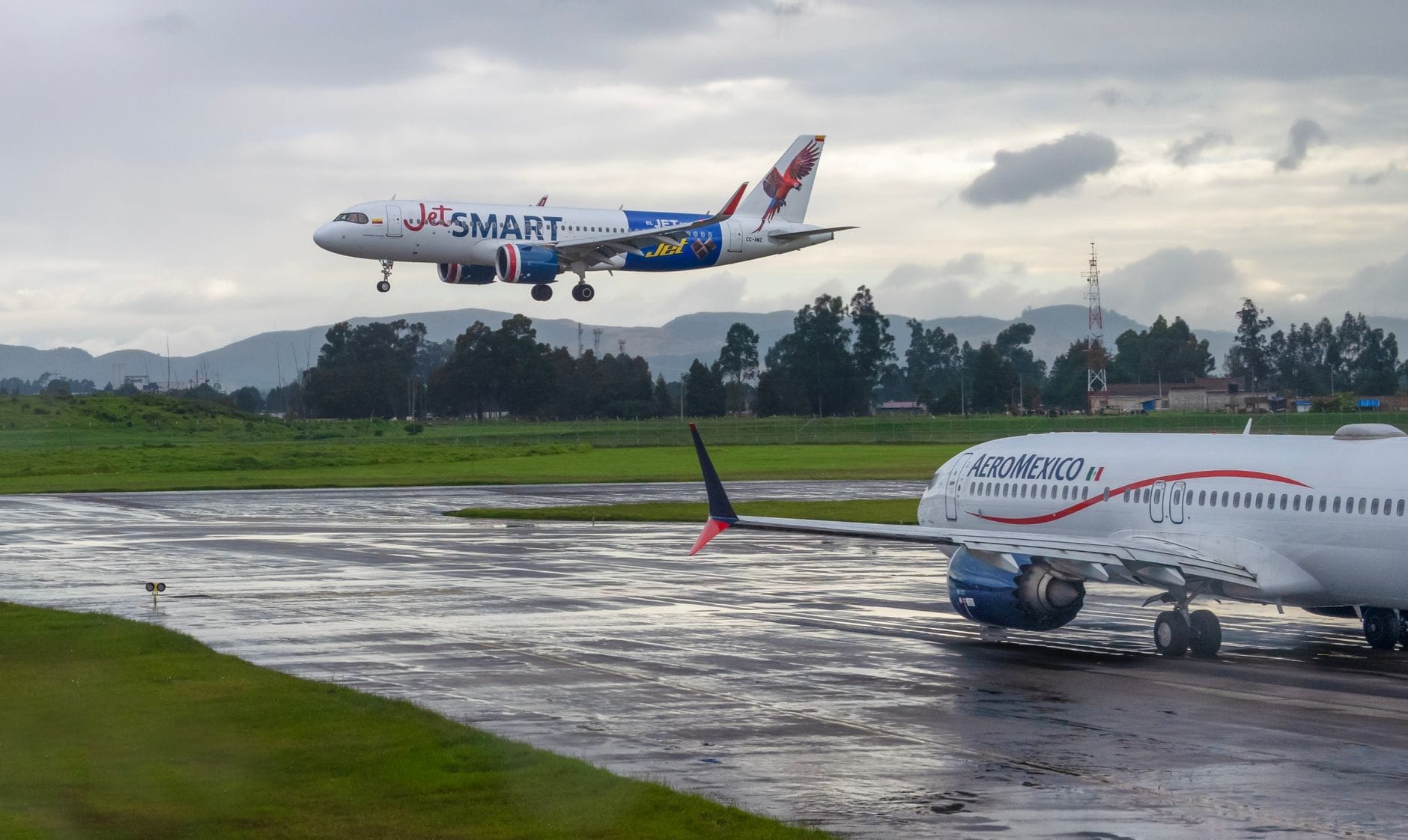
Aeroméxico is the primary hub carrier at MEX and operates the bulk of its flights from T2. Beyond Aeroméxico, the airport serves over 25 airlines connecting to more than 100 destinations across North America, Central and South America, Europe, the Middle East, and Asia. Key international carriers include Air Canada, American Airlines, Delta, United, Lufthansa, Iberia, Air France, KLM, Turkish Airlines, and LATAM. Direct transatlantic and transpacific services are available, making MEX a genuine intercontinental hub rather than just a regional gateway.
For domestic routes, the airport connects Mexico City to virtually every major Mexican city. Competition on domestic routes between Aeroméxico and budget carriers keeps fares relatively accessible. Worth noting: some ultra-low-cost carriers (like VivaAerobus and Volaris) increasingly route traffic through Felipe Ángeles (NLU) rather than MEX, so verify this when booking discount domestic flights.
Facilities, Services, and What to Expect Inside
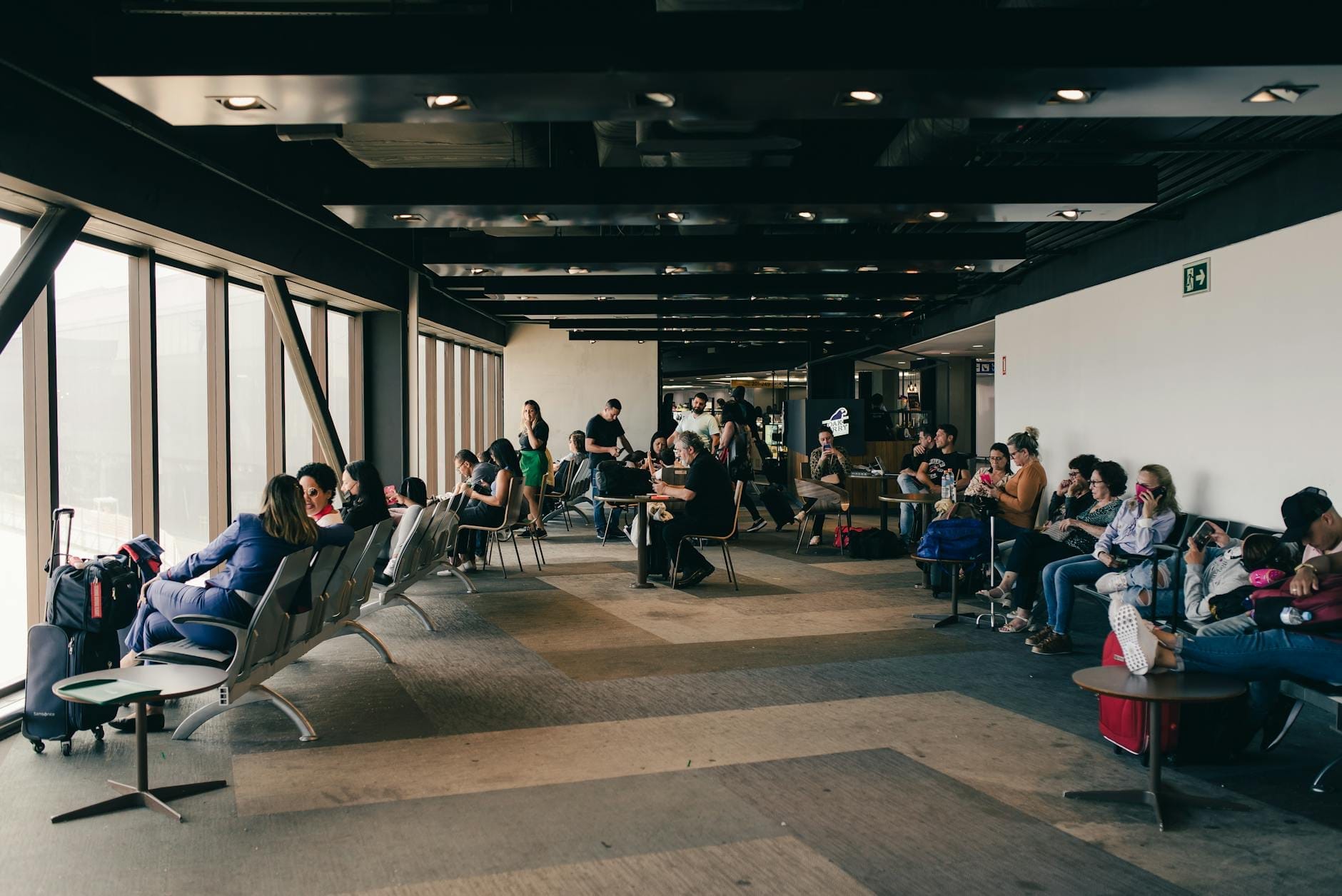
As of recent Skytrax assessments, MEX has held a 3-Star rating, which puts it in respectable but not elite territory. Facilities are functional and cover the basics well, but do not expect the polish of Singapore Changi or Dubai. Free Wi-Fi is available throughout both terminals. ATMs from major Mexican banks (Santander, Scotiabank, Banamex, Banorte, CI Banco) are located in both terminals, and currency exchange booths (casas de cambio) are available, though airport exchange rates are typically less favorable than those in the city. Withdraw pesos in the city if possible, or use the ATMs for cash at reasonable rates.
Food and beverage options include both international chains (Starbucks, McDonald's, Burger King, KFC, Carl's Jr.) and local Mexican options. For a real meal before or after a long flight, the local restaurant options inside the terminals serve decent food. Prices are airport-level, naturally. Luggage storage is available 24/7 in both terminals, and services such as Bounce can also be used if you prefer app-based storage options. Both terminals have elevators, ramps, and accessibility assistance for travelers who need them. There is also a dedicated smoking lounge (SMK) for those who require it.
- Free Wi-Fi in T1 and T2
- ATMs from Santander, Scotiabank, Banamex, Banorte, CI Banco, and currency exchange providers such as Globo Cambio
- 24/7 luggage storage via Bounce
- Pharmacies for over-the-counter medications and travel essentials
- Multiple duty-free shops in international departure areas
- Accessibility support: elevators, ramps, and dedicated assistance in both terminals
- Smoking lounge (SMK) available
- International and domestic food chains plus local restaurant options
Practical Tips for a Smoother Transit
The airport's altitude of 2,230 m is worth keeping in mind, particularly if you are flying in from sea level and plan to jump straight into activity. Light-headedness and fatigue on arrival are common. Read up on the Mexico City altitude guide before your trip if you have any cardiovascular concerns or plan to be physically active on your first day.
Tap water in Mexico City is not recommended for drinking, and this applies at the airport too. Stick to bottled water, which is widely available throughout both terminals. Once you reach your accommodation, check whether the hotel provides purified water. In terms of safety, the airport itself has enhanced security protocols and is a controlled environment. For broader context on navigating the city once you arrive, the Mexico City safety guide provides a grounded, neighborhood-by-neighborhood perspective.
If you are arriving for the first time and have a few days, a structured plan helps enormously in a city this size. The 3-day Mexico City itinerary is a solid starting point that routes you logically between neighborhoods without unnecessary backtracking. And if your budget is flexible, where to stay in Mexico City breaks down the best neighborhoods for different travel styles, from the historic core to the tree-lined streets of Condesa.
ℹ️ Good to know
Mexico City operates on Central Standard Time (CST, UTC-6) year-round; since 2023, Mexico City no longer observes daylight saving time clock changes. Double-check your arrival and departure times against local CDMX time, not U.S. or European time zones, to avoid confusion.
FAQ
What is the Mexico City airport code?
The IATA airport code for Mexico City International Airport is MEX. The ICAO code is MMMX. This applies specifically to Aeropuerto Internacional Benito Juárez in Venustiano Carranza. Felipe Ángeles International Airport, the secondary airport serving the metro area, uses the IATA code NLU.
How far is Mexico City airport from the city center?
The airport is approximately 5 km from the Zócalo (historic center) by the most direct route, though road distances to other central neighborhoods like Polanco or Condesa can be 10–15 km. Travel time ranges from 20–30 minutes in off-peak hours to 60–90 minutes during rush hour traffic.
What is the best way to get from Mexico City airport to the city?
It depends on your budget and situation. The Metro (Line 5 to Terminal Aérea station) is the cheapest and most congestion-proof option but is not ideal with heavy luggage during busy hours. Authorized airport taxis (prepaid at booths inside the terminals) are the safest taxi option. Ride-hailing apps like Uber, DiDi, and Cabify operate from designated pickup zones and are competitive on price. Private transfers or hotel shuttles offer the most comfort.
Is Mexico City airport safe?
The airport itself operates with enhanced security protocols and is a controlled environment. The most common issues are opportunistic scams such as unofficial taxi touts inside the terminal. Stick to authorized taxi booths or pre-arranged rides, and do not accept transport offers from strangers inside the building.
How early should I arrive at Mexico City International Airport?
For international flights, allow 3 hours before departure. For domestic flights, 2 hours is generally sufficient, though security lines can be long during busy morning departure windows. Factor in significant additional time for road traffic if traveling by taxi or ride-hailing service during weekday rush hours.
Tickets & tours
Live prices and dates from our booking partner. If you book, we may earn a commission at no extra cost to you.
Planning a trip? Discover personalized activities with the Nomado app.