Getting Around Mexico City: Metro, Taxis, Buses & More
Mexico City's transport network is one of the largest in the world, covering 12 Metro lines, 7 Metrobús corridors, bike share, and rideshare apps. This guide breaks down every option with real costs, practical routes, and practical warnings so you can move through CDMX efficiently and safely.
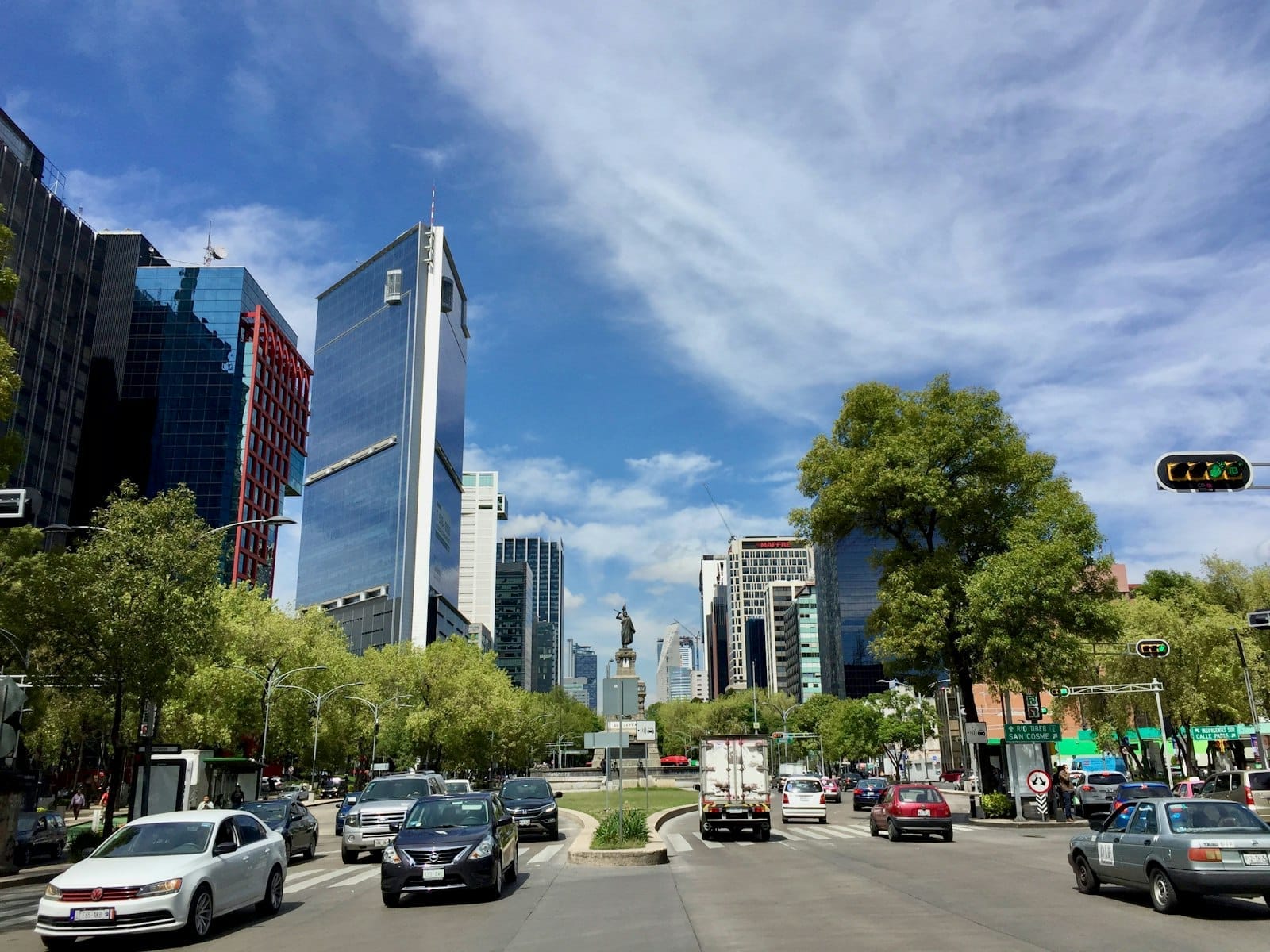
Tickets & tours
Live prices and dates from our booking partner. If you book, we may earn a commission at no extra cost to you.
TL;DR
- The Metro is the fastest and cheapest way to cross the city, with 12 lines and 195 stations — avoid it during peak hours (7-9am, 6-8pm) if you're carrying luggage.
- Get a Tarjeta de Movilidad Integrada (MI Card) on arrival — it works across Metro, Metrobús, trolleybuses, and more. See what to do once you land in our Mexico City airport guide.
- Never hail a random street taxi. Use Uber, DiDi, Cabify, or the city's Mi Taxi app for safe, trackable rides.
- Metrobús Line 4 connects both airport terminals directly to the Historic Center — it's the easiest and cheapest airport transfer option.
- The 'Hoy No Circula' driving restriction affects rental cars by plate number and emissions rating, so check before renting.
The Mexico City Metro: Your Best Tool for Crossing the City
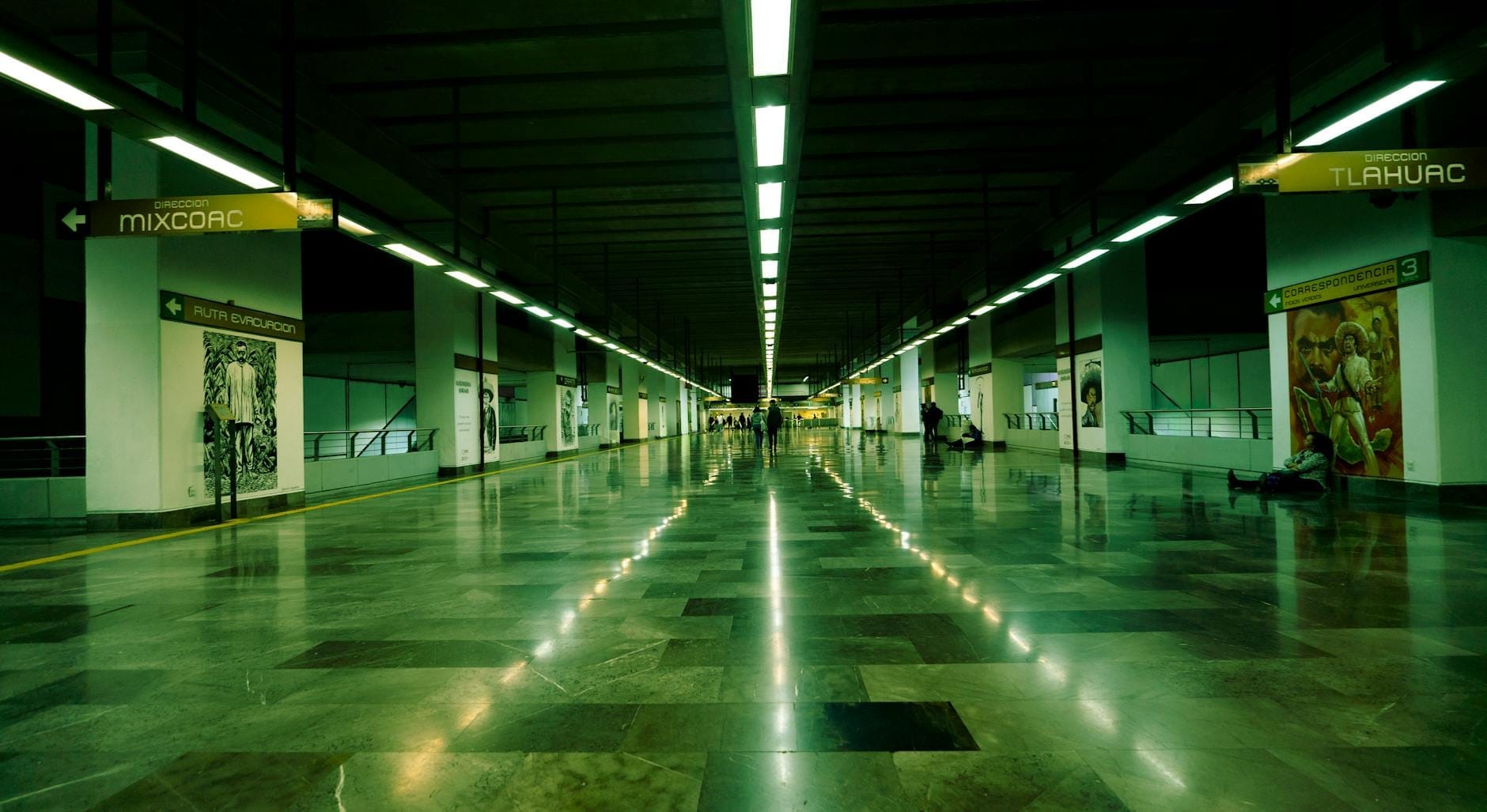
The Sistema de Transporte Colectivo (STC) Metro is the backbone of getting around Mexico City. With 12 color-coded lines and 195 stations, it covers most of the central urban area and connects key neighborhoods from Centro Histórico to Chapultepec and Polanco to the southern reaches near Xochimilco via Tren Ligero. Fares are among the lowest of any major global metro system — verify current pricing at metro.cdmx.gob.mx, but costs have historically been well under MXN $10 per ride.
The trade-off is density. During peak commute hours — roughly 7:00 to 9:30am and 5:30 to 8:00pm on weekdays — trains on central lines like Line 1, 2, and 3 become overwhelming. Platforms are packed, boarding is physical, and pickpocketing risk increases significantly. For sightseeing trips mid-morning or early afternoon, the Metro is excellent. With a large backpack during rush hour, it's a different experience entirely.
💡 Local tip
Lines are identified by number and color, and each station has a unique pictogram logo — useful since not every passenger is reading signs. Download the STC Metro map before arriving, as station names can be confusing and Wi-Fi inside stations is limited. The first car is reserved for women and children at most times of day.
The Tren Ligero (light rail) runs from Tasqueña station on Line 2 down to Xochimilco in the south, making it a practical connection for visitors heading to the canal network without switching to taxis. It uses the same MI Card as the Metro.
Metrobús, Trolleybuses & City Buses: Filling the Gaps
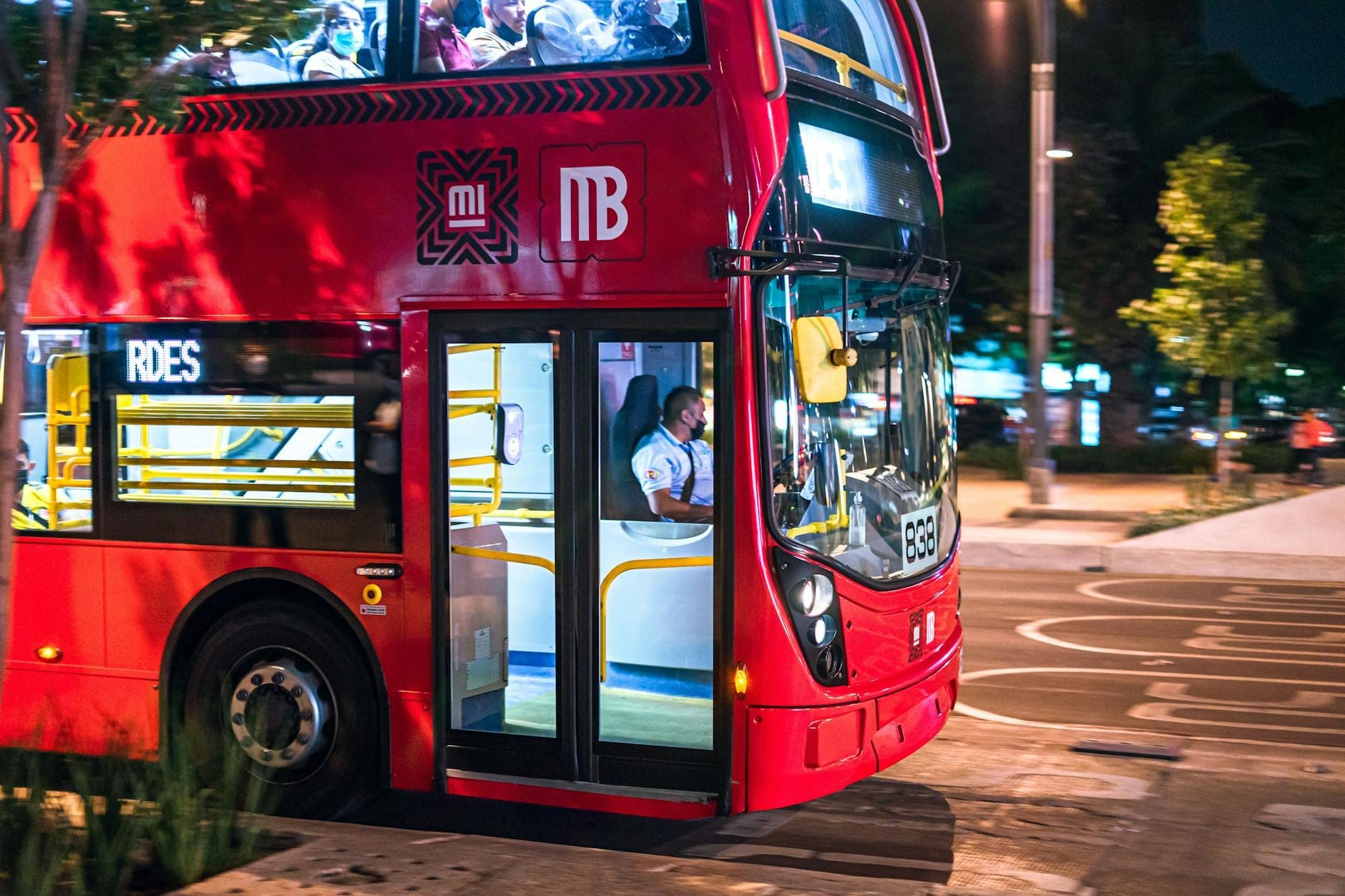
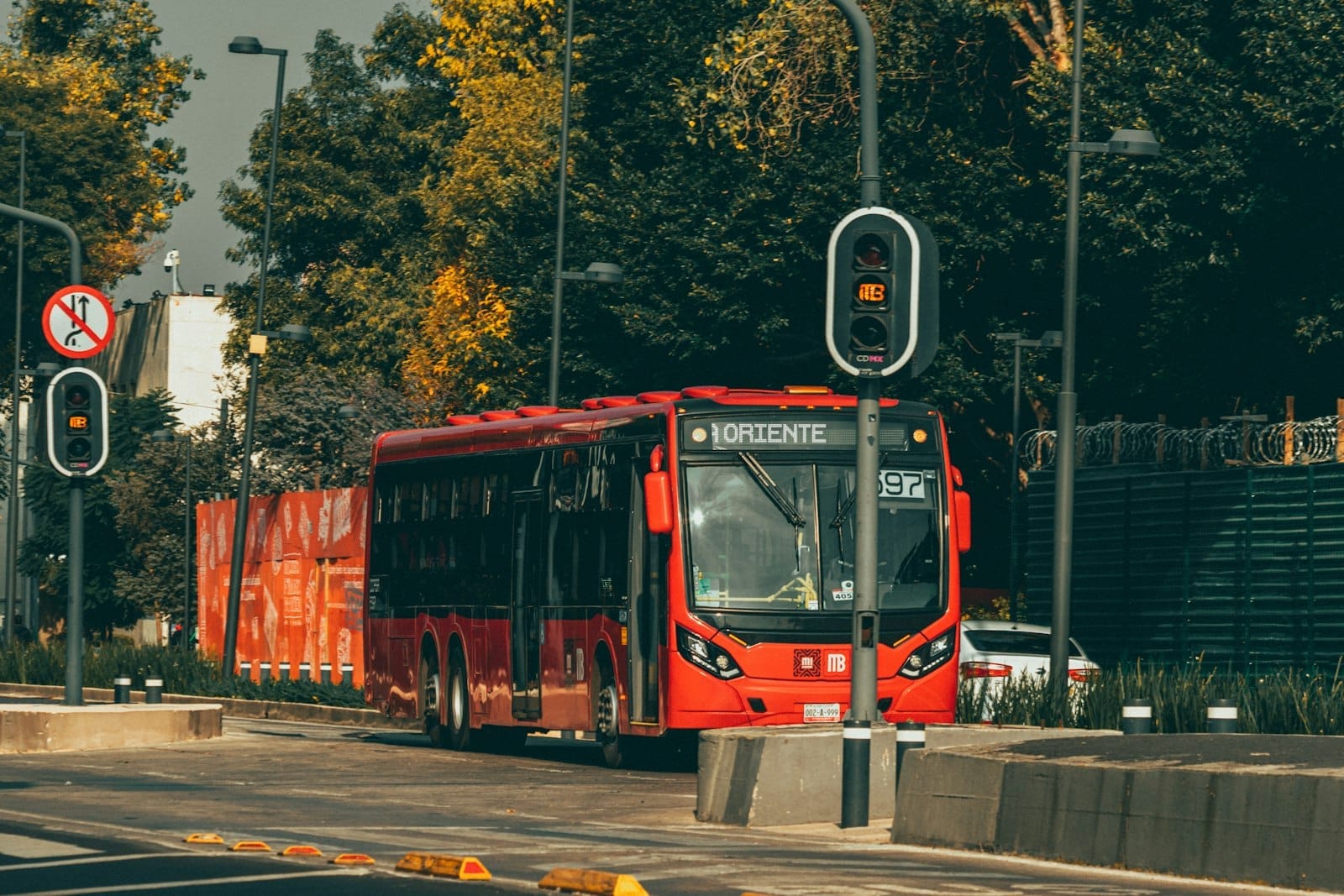
The Metrobús is a bus rapid transit (BRT) system operating on dedicated lanes along major corridors. Seven lines currently cover routes the Metro doesn't reach, including Line 1 along Insurgentes (the city's longest avenue) and Line 7 along Paseo de la Reforma, where double-decker buses offer an unexpectedly good view of the city's main boulevard.
Critically, Metrobús Line 4 runs directly between Terminals 1 and 2 at Mexico City International Airport (MEX) and the Historic Center. It's the cheapest airport transfer available, requires an MI Card (you can get one at the terminal stop), and avoids taxi pricing entirely. Journey time varies with traffic, but the dedicated bus lane means it's often faster than a taxi during peak hours.
- Metrobús Line 1 Runs the full length of Insurgentes from north to south, connecting Indios Verdes to El Caminero near UNAM. Most useful for Roma, Condesa, and Coyoacán.
- Metrobús Line 4 Direct airport connection from Terminals 1 and 2 to the Historic Center. Buy or load an MI Card at the terminal station (the same card works across Metro, Metrobús, and integrated services).
- Metrobús Line 7 Follows Reforma, with stops near the Angel of Independence, Chapultepec, and Polanco.
- Trolleybuses (STE) Electric trolleybuses running on fixed overhead wires, useful for north-south routes. Operate until around 23:30 on most lines, later than many buses.
- RTP Buses City-run conventional bus network extending coverage to outer boroughs. Useful for reaching areas Metro and Metrobús don't cover, but routes require local knowledge.
⚠️ What to skip
Avoid the informal 'peseros' (green minibuses) unless you know the city well. Routes are not clearly signed, payment is cash-only, and they have a poor safety record compared to formal systems. They're cheap and used by millions of locals, but not the right choice for visitors unfamiliar with the city layout.
Taxis and Rideshare Apps: What's Safe and What Isn't
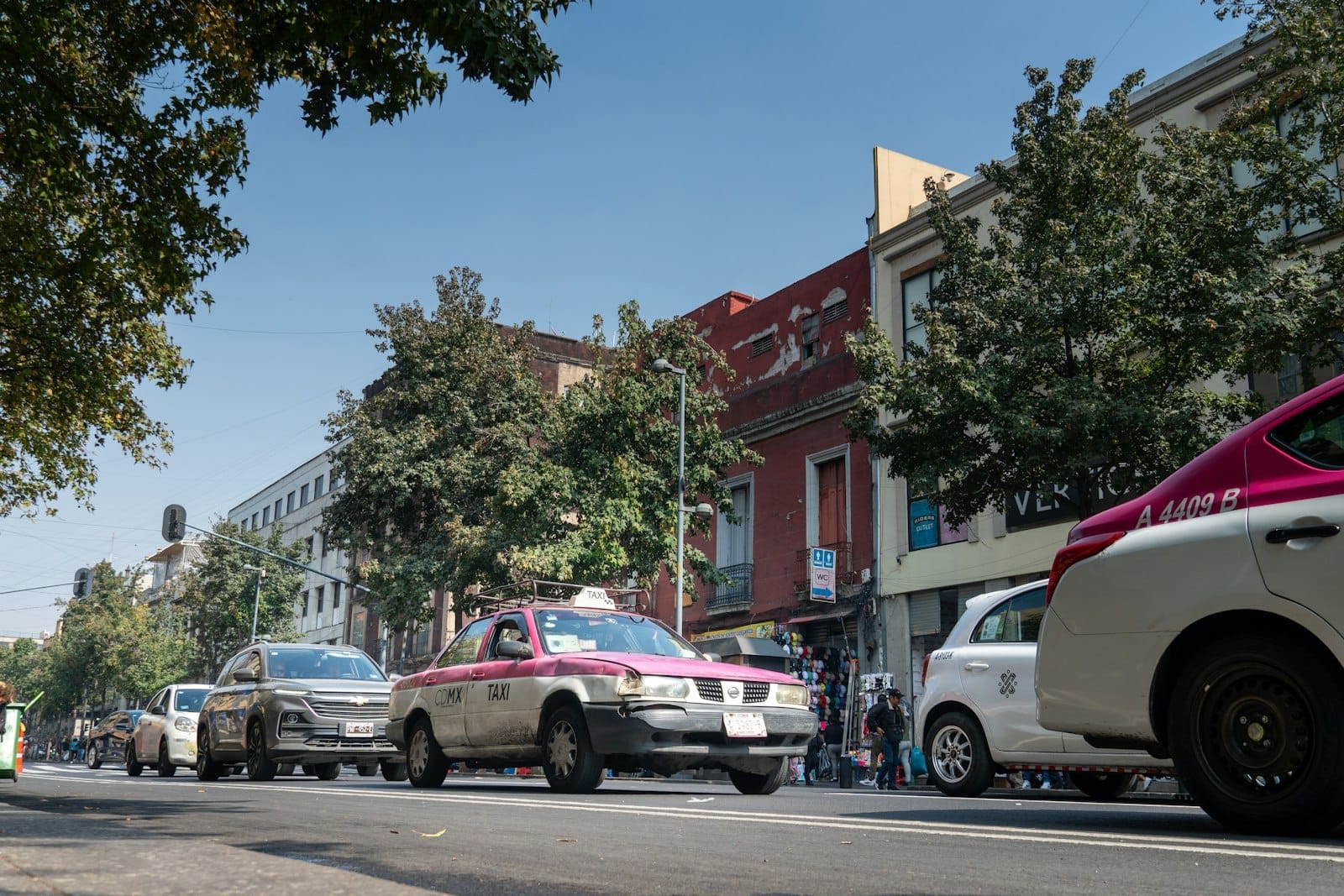
This is probably the most important safety topic in CDMX transport. Hailing a random taxi off the street is not recommended. While most street taxi drivers are legitimate, enough incidents have occurred over the years that both the Mexico City government and travel advisories consistently warn against it. The risk isn't worth it when better options exist.
Uber, DiDi, and Cabify all operate legally and citywide. Prices are shown in-app before booking, drivers are registered and identifiable, and you have a digital record of your trip. DiDi tends to be the cheapest of the three for short city trips; Uber has the widest driver availability. Cabify leans slightly more upmarket. All three allow app-based pickup at the airport in designated zones outside the terminal exits.
If you want to use a physical taxi rather than an app, the city government's Mi Taxi platform lets you verify that a pink-and-white street cab is officially registered, share your trip location in real time, and access an emergency panic button linked to police. This is the responsible alternative to blindly flagging down any cab.
✨ Pro tip
At Mexico City International Airport (MEX), only use taxis booked at the official prepaid booths inside the terminal. These are licensed operators with fixed zone-based fares printed on a receipt. Ignore anyone approaching you in the arrivals hall offering a 'taxi' — this includes drivers claiming to work for hotels unless your hotel has specifically arranged pickup and given you a confirmation.
The MI Card: One Card for Almost Everything
The Tarjeta de Movilidad Integrada, universally called the MI Card, is a reloadable contactless smart card that works across the Metro, Metrobús (most lines), STE trolleybuses, RTP buses, Cablebús (urban cable car), and several suburban rail connections. The card itself costs around MXN $30 to purchase. You top it up with credit at station machines, and some Metrobús terminal kiosks.
Picking one up should be your first task after landing. The Metrobús Line 4 terminal at the airport sells the card. Without it, you'll need cash for many systems or will be paying premium taxi rates for every journey. Note that the Line 4 airport Metrobús uses the same MI Card as the rest of the system — station staff at the airport stop can clarify current payment options at the time of purchase.
Cycling, Walking, and Other Ways to Get Around

Ecobici is Mexico City's public bike-share scheme, with hundreds of docking stations concentrated in the central boroughs covering Roma, Condesa, Polanco, Reforma, and parts of Coyoacán. Short-term tourist passes are available via the Ecobici app and kiosks in the service area. The city has expanded its protected cycling infrastructure significantly in recent years, including the long Tlalpan bike lane running north-south through the city.
Walking is viable within neighborhoods, but not between them. Roma to Condesa is a comfortable 15-20 minute walk. Centro Histórico to Chapultepec is over 5km. The city's layout and traffic patterns mean that for cross-city travel, walking is best reserved for exploring specific areas rather than commuting between attractions. Sidewalk quality varies enormously by neighborhood — great in Polanco and Roma, uneven in outer areas.
- Ecobici membership is good value for multi-day visitors — unlocks are included for trips up to 45 minutes, covering most intra-neighborhood rides.
- Sunday mornings on Reforma: the entire avenue closes to traffic from 8am-2pm for cyclists, joggers, and pedestrians. This is the best time to experience Reforma without exhaust.
- Electric scooter rentals (various private operators) are available in central neighborhoods but operate in a loosely regulated space — use at your own discretion.
- Private driver services are worth considering for day trips to Teotihuacán or other destinations outside the city where public transport logistics are complex.
Driving in Mexico City: Hoy No Circula and Why It Matters
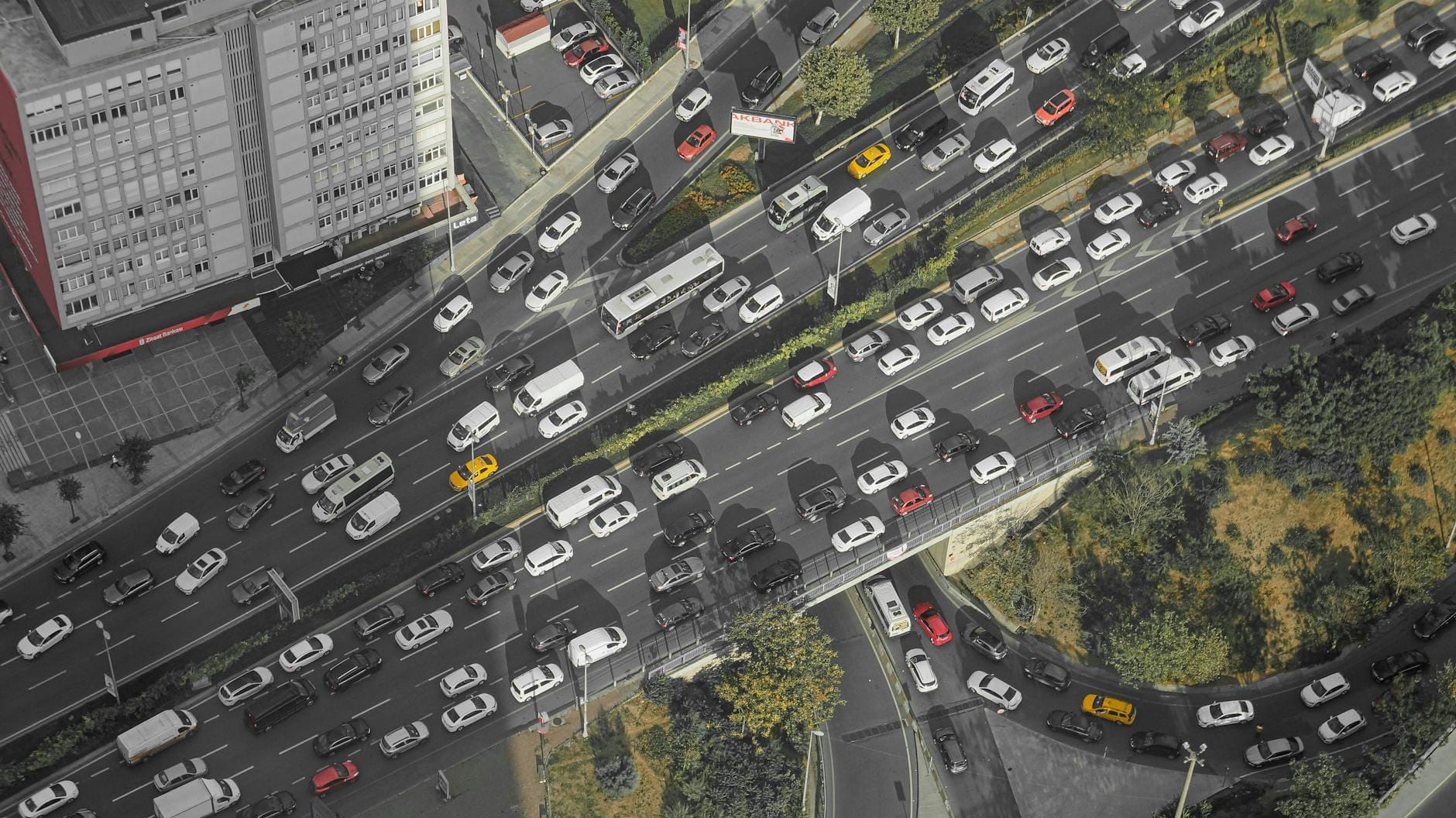
Unless you have a specific reason to drive, most visitors should not rent a car for use within Mexico City itself. Traffic congestion is severe across most of the working day. The city's street layout, aggressive local driving culture, and genuine difficulty finding parking in central neighborhoods all make driving more stressful than any time it might save.
More critically, Mexico City enforces the 'Hoy No Circula' (today it doesn't circulate) vehicle restriction program. Vehicles, including rental cars, are banned from roads on specific weekdays based on the last digit of the license plate and the vehicle's emissions sticker (hologram). Foreign-plated vehicles and newer cars with clean emissions ratings may qualify for exemptions, but the rules are detailed and enforcement is real. Check the current Hoy No Circula calendar at sedema.cdmx.gob.mx before making any decision about renting. Driving is more practical for day trips heading out of the city, such as to the Teotihuacán pyramids or the Desierto de los Leones.
ℹ️ Good to know
Felipe Ángeles International Airport (NLU), the secondary airport serving the metropolitan area, is located over 40km north of the city center in the State of Mexico. If your flight arrives at NLU rather than MEX, factor in significantly longer transfer times — budget at least 1.5 to 2 hours for ground transport to central neighborhoods, and research current transport links before you travel as services from NLU continue to evolve.
FAQ
What is the cheapest way to get from Mexico City airport to the city center?
Metrobús Line 4 is the cheapest option, running directly from Terminals 1 and 2 to the Historic Center. You'll need an MI Card, available at the airport terminal stop. The Metro (Line 5 from Terminal Aérea station near Terminal 1) is also cheap but requires navigating transfers with luggage. Rideshare apps (Uber, DiDi) are moderate cost, while official prepaid airport taxis are the most expensive but most convenient option door-to-door.
Is the Mexico City Metro safe for tourists?
Yes, with some awareness. The Metro is used by millions of people daily and is generally safe. The main concerns are pickpocketing during crowded peak hours (7-9:30am and 5:30-8pm weekdays), particularly on central lines. Keep valuables in a front bag or inner pocket, avoid peak hours when possible, and be especially careful in very crowded stations like Balderas or Insurgentes. The Metro is well-lit and staffed.
Can I use a contactless bank card on Mexico City's public transport?
The system is transitioning but as of now, the MI Card (Tarjeta de Movilidad Integrada) remains the standard payment method across Metro, Metrobús, and other integrated services. Some digital wallet integrations are being rolled out, but the most reliable approach is to purchase and load an MI Card on arrival rather than counting on tap-to-pay with a foreign bank card.
How do I avoid traffic in Mexico City?
Use the Metro or Metrobús rather than taxis or rideshare apps during rush hours (roughly 7:30-10am and 5:30-8pm weekdays). If you need a taxi or Uber, mid-morning (10am-12pm) and mid-afternoon (2-4pm) tend to be significantly less congested. Saturday afternoons and Sundays are the best times for surface transport. The Reforma Sunday ciclovía (8am-2pm) also makes cycling the fastest option on that corridor.
Is it safe to take an Uber or DiDi in Mexico City?
Yes. Uber, DiDi, and Cabify are legal, widely used, and considered safe in Mexico City. The in-app tracking, driver identification, and digital payment trail make them significantly safer than hailing a random street taxi. Always verify the plate number and driver photo before getting in. At the airport, rideshare pickups are in designated zones outside terminal exits — the app will direct you to the correct location.
Tickets & tours
Live prices and dates from our booking partner. If you book, we may earn a commission at no extra cost to you.
Planning a trip? Discover personalized activities with the Nomado app.