Mexico City Street Food Guide: What to Eat, Where to Go, and What to Pay
Mexico City is one of the world's great street food capitals, with thousands of stands serving everything from tacos al pastor to tamales and tlacoyos at prices that rarely exceed MXN 100 for a full meal. This guide covers the essential dishes, neighborhood-by-neighborhood breakdown, timing, pricing, food safety, and how to get the most out of eating on the streets of CDMX.
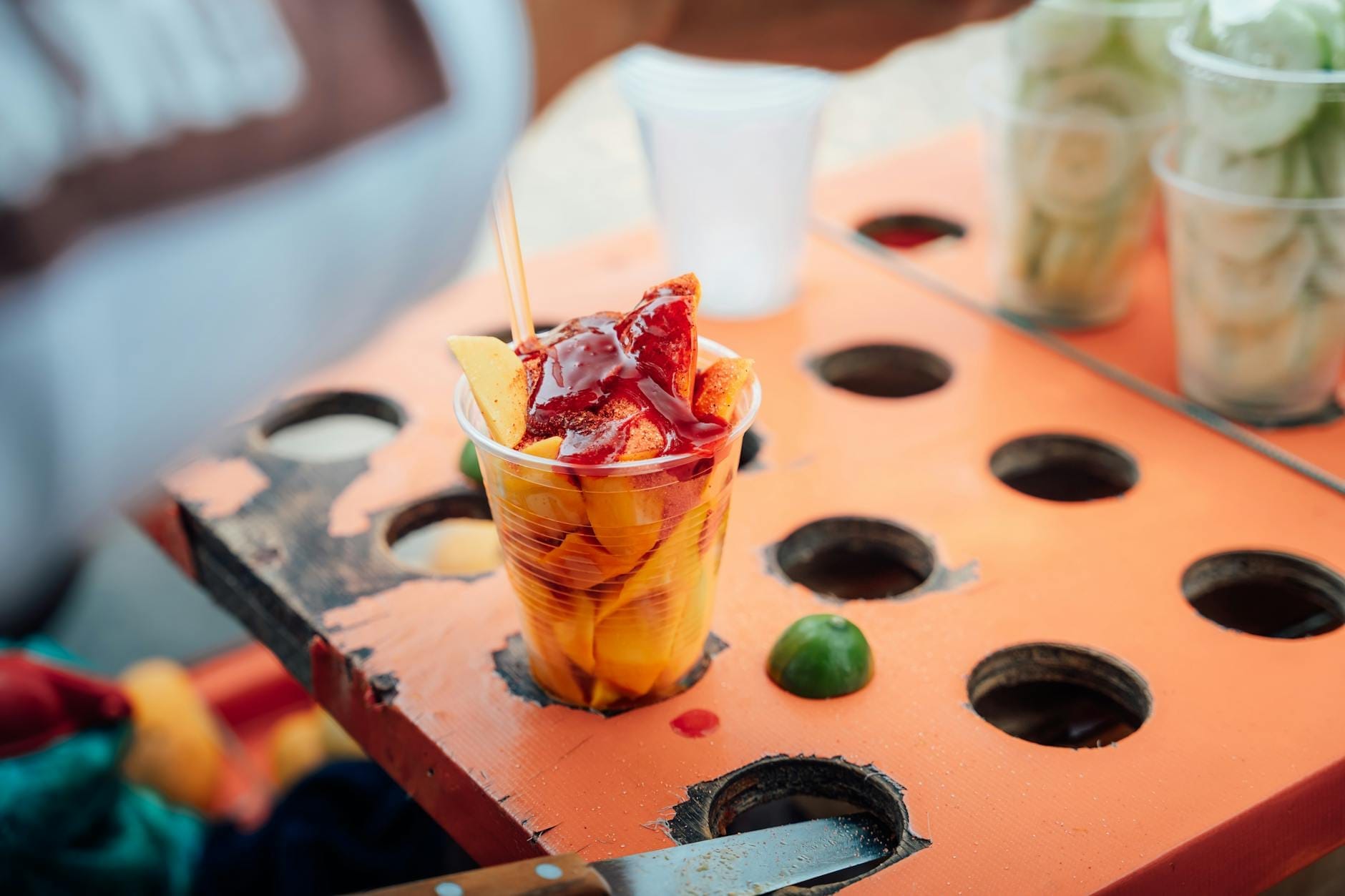
Tickets & tours
Live prices and dates from our booking partner. If you book, we may earn a commission at no extra cost to you.
TL;DR
- Street food in Mexico City ranges from MXN 10–20 per taco at most stands; a full day of eating rarely costs more than MXN 350.
- Timing matters: breakfast stands (tamales, atole) open around 6 am and close by mid-morning; late-night taco spots run from 8 pm to 3–6 am.
- The best street food neighborhoods are Roma and Condesa, Centro Histórico, and Narvarte — each with a distinct rhythm and specialty.
- Quesadillas in Mexico City do not always contain cheese — this is one of several local rules worth knowing before you order.
- Food safety is less about avoiding street food and more about choosing high-turnover stands with visible prep and fast-moving queues.
Why Mexico City Is a Street Food Capital
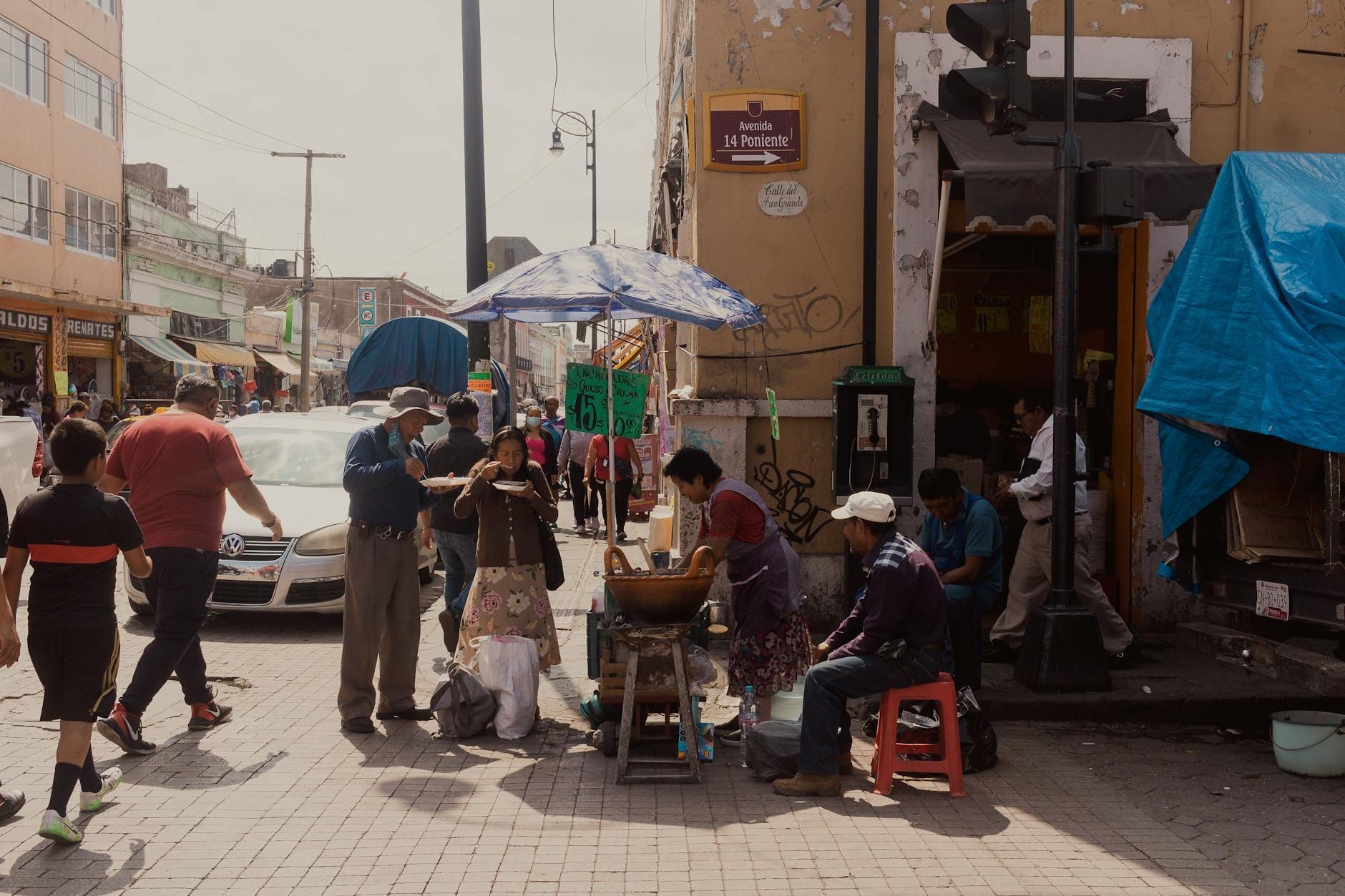
Mexico City (Ciudad de México, officially abbreviated CDMX) sits at about 2,240 meters above sea level in the Valley of Mexico, with over 9 million residents in the city proper and more than 21 million in the metro area. That density translates directly into one of the most concentrated, competitive, and diverse street food ecosystems on the planet. Street food here is not a tourist attraction or a novelty — it is how millions of chilangos (Mexico City residents) eat every single day.
The range runs from pre-Hispanic staples like tlacoyos and tamales to dishes with strong immigrant influence, most famously tacos al pastor, which evolved from shawarma-style spits brought by Lebanese immigrants in the early 20th century. That layering of indigenous, colonial, and immigrant food traditions makes CDMX street food unlike anything else in Latin America. Knowing what to order, where to find it, and when to show up is what separates a MXN 50 breakfast from a mediocre tourist experience.
The Essential Dishes: What to Order and Why
Not all street food is equal in Mexico City. Some dishes are ubiquitous but vary wildly in quality; others are neighborhood-specific or strictly seasonal. Below is a practical breakdown of what actually matters.
- Tacos al Pastor The flagship of Mexico City street food. Thinly sliced pork marinated in achiote and dried chiles, cooked on a vertical spit (trompo) topped with a pineapple. A skilled taquero shaves the meat directly onto a small corn tortilla. Expect to pay MXN 15–22 per taco at a serious stand. The best spots are typically open late — from around 8 pm to well past midnight.
- Tamales One of the safest and oldest street foods in the city. Masa (corn dough) filled with pork, chicken, rajas (poblano strips), or mole, wrapped in corn husks or banana leaves and steamed. Sold from large pots at commuter stands from around 6 am; a standard portion of three tamales runs MXN 40–55. Always paired with atole (a warm corn-based drink) or café de olla.
- Tlacoyos Oval-shaped blue corn masa cakes stuffed with black beans, habas (fava beans), or requesón, then griddled and topped with nopales (cactus), salsa, and crumbled cheese. Deeply pre-Hispanic, rarely found outside Mexico City and the surrounding region, and typically MXN 20–35 each. Look for them at morning markets and near Metro stations.
- Torta de Chilaquiles A bolillo roll stuffed with crispy tortilla chips simmered in salsa roja or verde, often with egg, cream, and cheese. A full torta costs MXN 40–55 and works as a serious breakfast. Popular near office areas in Roma and Centro from about 8–11 am.
- Elotes and Esquites Elote is a whole corn on the cob slathered with mayonnaise, lime juice, chile powder, and cotija cheese — about MXN 20–30. Esquites is the same preparation in a cup. Both are sold from wheeled carts from mid-afternoon onward, especially in parks and near markets.
- Pambazos A bread roll dipped in guajillo chile sauce, then griddled until the outside is crispy, and filled with chorizo and potato or frijoles. Striking red color, distinctive texture, MXN 30–50 each. Underrated by most visitors and worth seeking out.
- Birria Slow-braised goat or beef in a rich dried-chile broth, served in tacos or as a stew with the broth (consomé) on the side for dipping. Originally from Jalisco but now firmly embedded in CDMX street food culture. Three birria tacos with consomé: MXN 80–120 depending on the stand.
ℹ️ Good to know
The quesadilla debate is real: in Mexico City, a quesadilla is a folded or pressed corn tortilla filled with your choice of ingredient — and cheese (queso) is optional, not default. If you want cheese, say 'con queso.' Fillings like huitlacoche (corn fungus), flor de calabaza (squash blossom), or mushrooms are standard options at comal stands, and they often cost the same as or less than the meat options.
Neighborhood by Neighborhood: Where to Eat
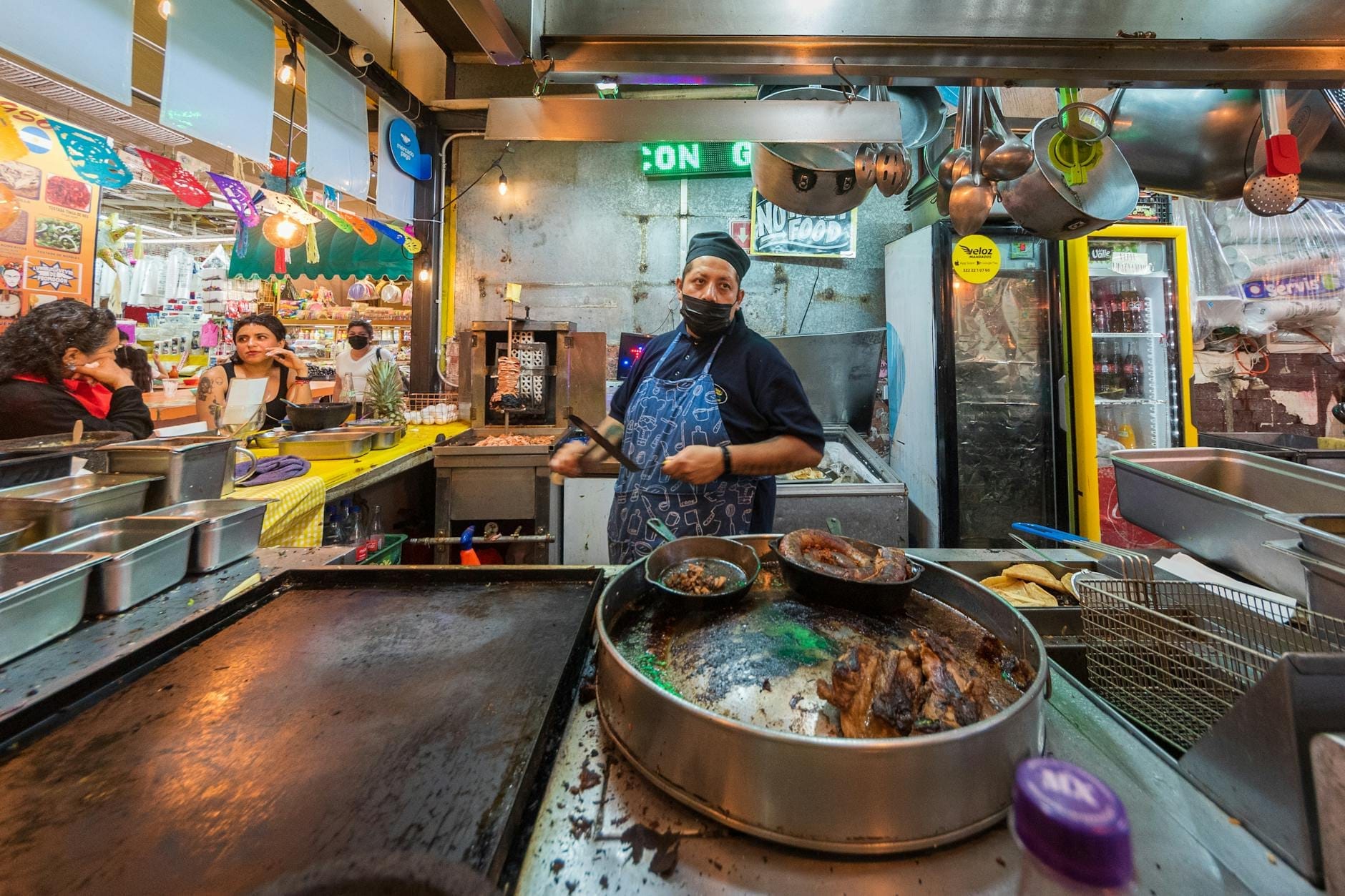
Each neighborhood in Mexico City has a distinct street food character. Roma and Condesa are the most visitor-friendly, with well-lit stands, English-speaking vendors at some spots, and a density of tacos al pastor and quesadilla carts after dark. Prices here run slightly higher than working-class neighborhoods — MXN 18–25 per taco vs. MXN 12–18 in Narvarte — but the quality ceiling is also higher.
Centro Histórico is where street food density is highest and prices are lowest. Around Mercado de San Juan and the streets near Templo Mayor, you can eat a full breakfast for MXN 50–80. The Centro operates at a relentless pace from early morning through late afternoon, then thins out significantly after 8 pm — it is not a late-night street food destination.
Coyoacán leans toward market-based street food rather than sidewalk stands. The Mercado de Coyoacán is the anchor — tostadas, quesadillas, and memelas are the specialties here. The neighborhood draws weekend crowds, and the best stalls fill up by noon on Saturdays and Sundays. Arrive before 11 am or after 2 pm to avoid the longest waits.
Narvarte, just south of Roma, is arguably the best neighborhood for authentic day-to-day street food at local prices. It is primarily residential, so the clientele is local and the competition keeps quality high. The stretch around Parroquia street has some of the city's most respected taco stands — suadero (slow-cooked brisket), longaniza, and campechano (mixed meats) are the things to order here.
⚠️ What to skip
Plaza Garibaldi and the immediate tourist perimeter around the Zócalo have street food, but it is priced for visitors who do not know local rates. You will pay MXN 30–40 for a taco that costs MXN 15 four blocks away. The food is not worse, but the value gap is significant. Walk two or three streets away from any major tourist landmark and prices normalize immediately.
Timing Your Street Food Day
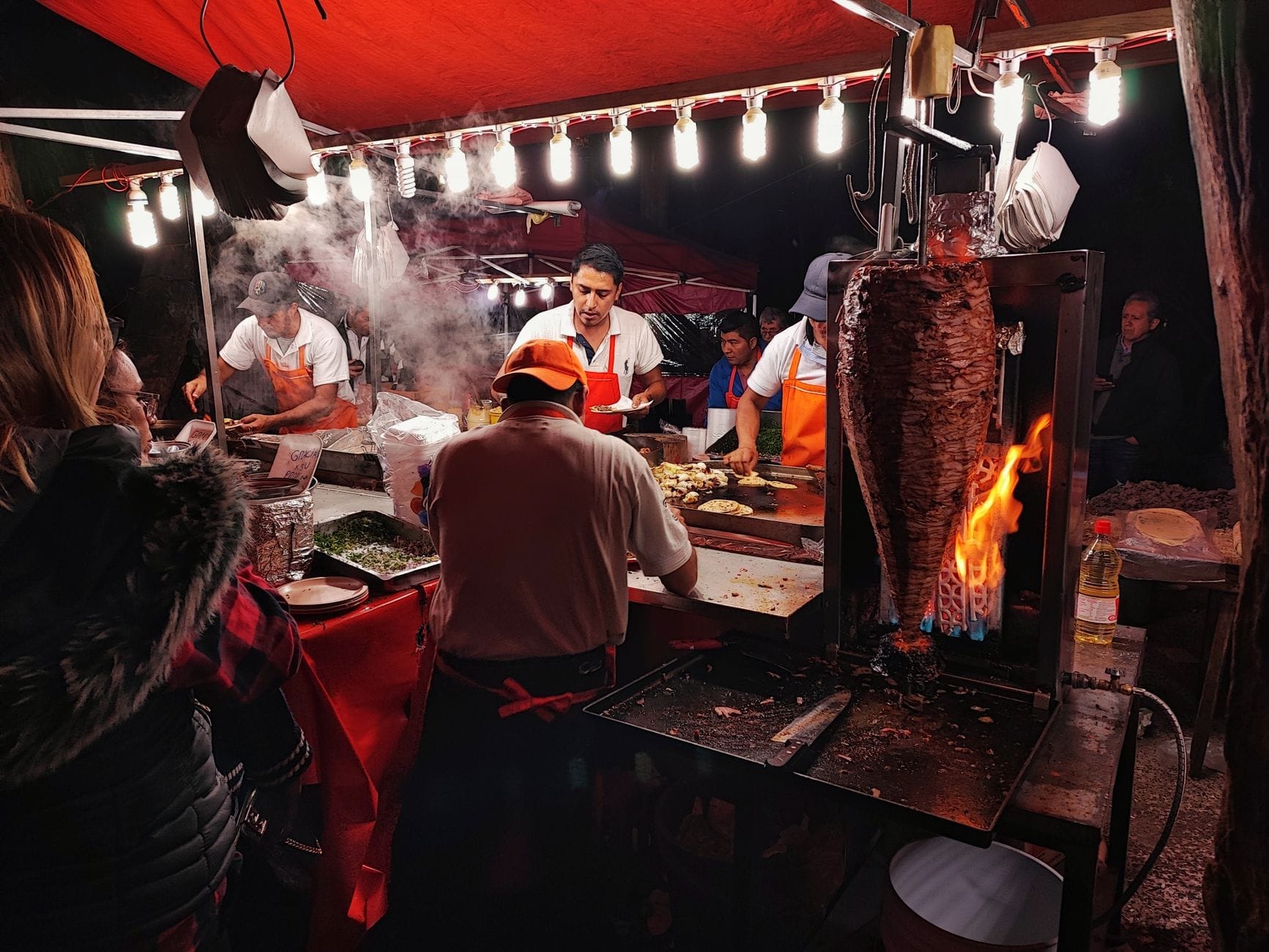
Mexico City street food operates in distinct time blocks, and most stands specialize in one or two of them. Showing up at the wrong time often means the stand is closed, sold out, or not yet ready — which is how visitors end up eating mediocre food simply because they did not know the schedule.
- 6:00–10:00 am (Breakfast Shift) Tamales, atole, gorditas, and tortas de chilaquiles dominate. Stands are concentrated near Metro exits and bus stops serving commuter traffic. Many close once they sell out — typically by 9–10 am. This is also when market stalls in La Merced and Mercado Jamaica open.
- 11:00 am–4:00 pm (Lunch Shift) Guisado tacos (cooked stews served in tortillas), tlacoyos, memelas, and quesadillas at comal stands. Markets are at peak activity. This is the largest meal window in Mexico and the easiest time to eat well cheaply.
- 4:00–7:00 pm (Snack Shift) Elotes, esquites, churros, and fruit carts. Street activity between the lunch and dinner windows. Good for grazing but not full meals from most stands.
- 8:00 pm–3:00 am (Late Night Shift) Tacos al pastor, birria, suadero, and campechano tacos. The best trompos (pastor spits) are not fully loaded until 9–10 pm — the meat needs time to cook through. Thursday through Saturday sees the most activity; some stands do not open at all on Monday or Tuesday nights.
Seasonal variations are real and worth noting. In late October through early November, pan de muerto (a sweet, anise-flavored bread decorated with bone-shaped dough) appears everywhere. Squash blossom quesadillas are most common in summer, when the flowers are in season. Certain mole preparations and atole flavors shift with the calendar. If you visit during Día de Muertos, the street food landscape changes noticeably.
Food Safety: The Practical Reality
The standard advice to 'avoid street food' in Mexico is wrong and outdated. The more useful framework is choosing correctly. High turnover is the single most reliable indicator of a safe stand: if 20 people are eating ahead of you, the food is being cooked and consumed fast enough that nothing is sitting out. A quiet stand with pre-cooked food in a lukewarm container is a different situation.
Tamales are among the lowest-risk items because they are sealed in corn husks or banana leaves during cooking and stay contained until served. Tacos al pastor cooked on a properly maintained hot spit are also generally lower risk because the exterior of the meat is continuously exposed to heat. The riskier category is cut fruit, raw garnishes, and any preparation involving standing salsas that have been out for hours — the condiments are where the risk concentrates, not the main protein.
Tap water in Mexico City is not recommended for drinking. All reputable street food stands use purified or bottled water for salsas, cooking liquids, and drinks. If you are at a stand that visibly uses a tap water hose to rinse produce or glasses without any purification step, that is a signal to move on. Bottled water and aguas frescas from sealed containers are widely available at every market and most stands.
✨ Pro tip
Your digestive system adjusts to local bacteria over several days. If you are newly arrived, start with cooked items — tacos, tamales, griddled quesadillas — before diving into raw salsas and uncooked garnishes. By day three or four, most visitors have no issues eating everything on offer. Probiotic supplements before your trip can help, but the bigger factor is gradual exposure rather than total avoidance.
Prices, Payment, and Street Food Tours
Almost all street stands in Mexico City are cash-only. Prices are usually posted or chalked up somewhere visible, and you typically pay after eating rather than upfront. The currency is Mexican pesos (MXN). As of recent reports, a realistic budget for a full day of street eating across three 'meals' runs approximately MXN 300–400 — roughly USD 15–20 at current exchange rates. A single taco ranges from around MXN 12–15 at the cheapest working-class stands to MXN 25–30 at premium evening spots in Roma. A three-tamale breakfast with atole: MXN 40–55. A full torta or pambazo lunch: MXN 45–70.
If you want structured introduction to street food with context and logistics handled, organized tours are worth considering. Eat Mexico runs a well-regarded 'Street Food: A Beginner's Guide' tour priced at around USD 90 per adult (about MXN 1,800), with private options at approximately USD 110 per adult. The meeting point is at Paseo de la Reforma 347, at the corner with Río Tíber. For broader context on what else to do while navigating the city, the Mexico City walking tours guide covers additional options across different neighborhoods and themes.
For travelers trying to keep costs low, street food is one of the clearest advantages CDMX offers. The Mexico City on a budget guide goes deeper into how to combine street food with free attractions and affordable transport. Similarly, if you want to explore indoor market food halls that blend street food accessibility with some shelter from rain or heat, Mercado Roma in the Roma Norte neighborhood is a reliable option — though it skews slightly upscale compared to sidewalk stands.
💡 Local tip
Bring small bills. MXN 20 and 50 peso notes are ideal for most street food transactions. Vendors at busy stands rarely have change for MXN 500 notes, and asking for change during a rush will not make you popular. Withdraw cash from an ATM in MXN before heading out for a street food session, and keep a mix of denominations.
For those exploring beyond street food into the broader culinary landscape, including markets, mezcal bars, and neighborhood restaurants, the things to do in Mexico City guide provides a full orientation, and the Mexico City mezcal guide covers what to drink alongside your tacos.
FAQ
Is street food in Mexico City safe to eat?
Yes, if you choose carefully. Prioritize busy stands with fast turnover, visibly hot cooking surfaces, and fresh ingredients. Cooked-to-order items like tacos al pastor and tamales carry lower risk than pre-cooked food sitting in open containers. Avoid tap water directly, but purified water used at reputable stands is generally fine. Most long-term residents and experienced travelers eat street food daily without issues.
How much does street food cost in Mexico City?
Budget MXN 10–25 per taco, MXN 40–55 for three tamales with atole, and MXN 45–70 for a torta or pambazo. A full day of eating across breakfast, lunch, and a late-night taco run typically costs MXN 300–400 total — roughly USD 15–20. Prices are slightly higher in Roma, Condesa, and Polanco compared to Centro, Narvarte, or market neighborhoods.
What is the best street food in Mexico City for first-time visitors?
Start with tacos al pastor from an evening stand with a visible trompo spit, a tamale breakfast from a commuter-area vendor, and quesadillas from a comal stand at lunch. These three cover the range of Mexico City street food styles and are all available for under MXN 25 per item. Once you have those, try tlacoyos, pambazos, and birria tacos.
What time do street food stands open and close in Mexico City?
It depends on the type. Tamale and breakfast stands open around 6 am and often close by 10 am when they sell out. Lunch-focused comal stands run from about 11 am to 4 pm. Late-night taco stands — particularly al pastor — open around 8 pm and run until 3–6 am, most actively Thursday through Saturday. Trying to eat al pastor at noon or tamales at midnight will not work at most stands.
Do I need to speak Spanish to eat street food in Mexico City?
Basic Spanish phrases help significantly, but most transactions can be navigated by pointing, holding up fingers for quantity, and knowing a few words: 'uno' (one), 'con todo' (with everything), 'sin queso' (without cheese), and 'cuánto cuesta' (how much does it cost). In tourist-heavy neighborhoods like Roma and Condesa, some vendors speak basic English. In markets and working-class neighborhoods, English is rarely spoken, but gestures and numbers get you far.
Tickets & tours
Live prices and dates from our booking partner. If you book, we may earn a commission at no extra cost to you.
Planning a trip? Discover personalized activities with the Nomado app.