Mercado Roma: The Gourmet Food Hall That Defined Roma Norte
Opened in 2014, Mercado Roma transformed the concept of a traditional Mexican market into a multi-level gourmet destination. With free entry, dozens of independent food stalls, craft cocktail bars, and a rooftop terrace, it sits at the center of Roma Norte's culinary identity.
Quick Facts
- Location
- Querétaro 225, Roma Norte, Cuauhtémoc, Mexico City
- Getting There
- Metro Hospital General (Line 3) or Centro Médico (Lines 3 & 9), then a short taxi or ride-share to the market
- Time Needed
- 1 to 2.5 hours depending on how long you linger over food and drinks
- Cost
- Free entry; food and drinks paid separately in MXN
- Best for
- Food explorers, casual lunches, weekend brunches, evening drinks with a crowd
- Official website
- mercadoroma.com
What Mercado Roma Is
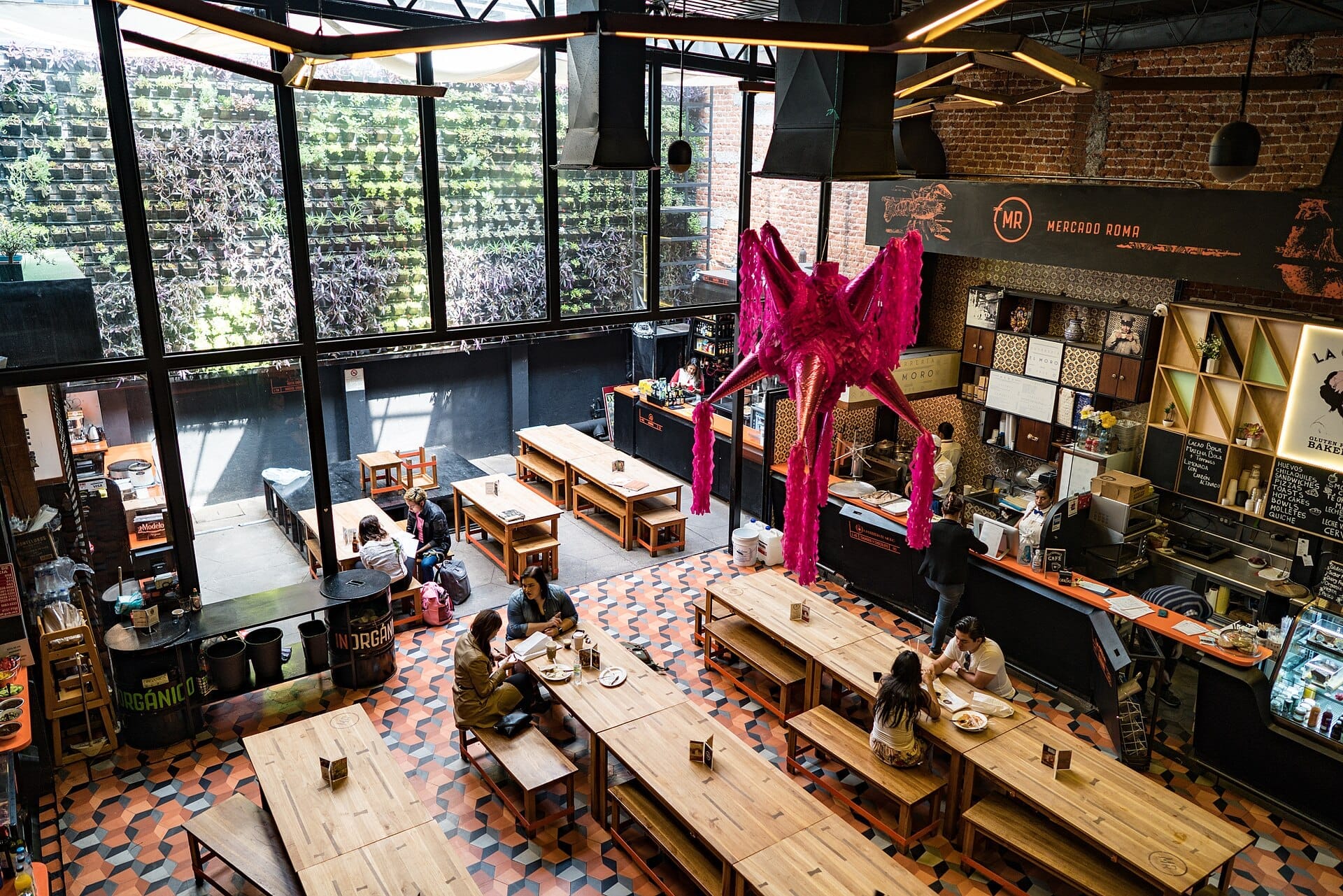
Mercado Roma is not a traditional market in any meaningful sense. There are no raw ingredients stacked in pyramids, no vendors calling out prices, no sprawling stalls of dry goods. What opened here in May 2014 was something more deliberate: a three-story gourmet food hall, designed with architectural intention, positioned to serve a neighborhood that was rapidly becoming one of Mexico City's most food-conscious districts.
The concept drew direct inspiration from traditional Mexican mercados, particularly their communal eating culture, but applied it to a curated selection of independent producers, artisan food vendors, and specialty drink purveyors. The result sits at Querétaro 225, between Medellín and Monterrey streets, in a converted space that spans a ground floor market area, a mezzanine level, and a first-floor terrace and bar zone that stays open until 2:00 AM on most nights.
ℹ️ Good to know
Opening hours vary by floor: ground floor open 09:00–21:00; mezzanine 10:00–19:00; first-floor restaurants, terrace and bars 13:00–02:00. The official site notes that weekend hours extend later. Always check mercadoroma.com for current schedules.
The Space: Three Floors, Three Different Experiences
Walking in from Calle Querétaro, the ground floor hits you first with the smell of fresh bread, roasting coffee, and the general warmth of a space that keeps a lot of people fed simultaneously. The layout is open-plan but not chaotic. Stalls line the perimeter and cluster toward the center, and there is enough natural light filtering through the upper levels to make it feel less like an indoor hall and more like a covered courtyard.
The mezzanine level operates at a quieter register. It suits people looking for a sit-down lunch rather than a quick snack, and the smaller footprint means you are rarely competing with large groups for a table. By contrast, the first floor opens into a terrace and bar area that shifts personality entirely after 1:00 PM. This is where Mercado Roma earns its late-night reputation. The terrace catches the afternoon sun and fills progressively through the evening, with a sound level that rises accordingly.
The architectural design reflects the Roma Norte aesthetic: clean lines, exposed materials, considered use of space. It does not feel improvised. This was built with a specific customer in mind, and that customer tends to be educated, design-aware, and willing to pay a premium for quality sourcing. That is not a criticism, but it does tell you what kind of market this is.
Tickets & tours
Live prices and dates from our booking partner. If you book, we may earn a commission at no extra cost to you.
Condesa and Roma foodie adventure
From 223 €Instant confirmationFree cancellationMexico City's Colonia Roma Neighborhood Culinary Tour
From 82 €Instant confirmationFree cancellationPuebla and Cholula guided tour from Mexico City with optional lunch
From 43 €Instant confirmationFree cancellationXochimilco, Coyoacan and Frida Kahlo Museum with skip-the-line tickets
From 63 €Instant confirmationFree cancellation
Morning to Midnight: How the Crowd Changes
Early mornings, roughly 9:00 to 11:00 AM, belong to neighborhood regulars. You will find people stopping for coffee and pastries before work, a few tables of laptop users, and the relative calm that makes this the easiest time to actually look at what each stall is offering without being jostled. The light on the ground floor at this hour is soft and the ambient noise level is low enough to hear yourself think.
Midday through early afternoon is when the market reaches its most functional peak. Office workers, couples, and visiting tourists fill the space from around noon onward. Tables turn quickly at the ground floor stalls, and the mezzanine becomes the better option for anyone wanting a more relaxed pace. Weekend lunches are considerably more crowded than weekdays, and finding seating can require patience.
By evening, particularly from 7:00 PM onward, the crowd skews younger and the emphasis shifts from food to drinks. The terrace bars animate considerably, and the overall atmosphere moves toward social gathering rather than eating. If you come primarily to eat, arrive before 7:00 PM. If you come for a drink and the scene, arrive after 8:00 PM and expect to stand at some point.
💡 Local tip
The best window for a relaxed visit combining food, browsing, and a drink without the full evening crowd is a weekday between 12:30 and 3:00 PM. You get the full market operating at capacity without the noise level of weekend evenings.
What to Eat and Drink
The food offering spans a range that is wide without being incoherent. Mexican street food staples appear alongside Japanese-inspired dishes, wood-fired pizzas, craft tacos, fresh seafood preparations, and artisan cheeses. The quality bar is notably higher than a traditional street market, and pricing reflects that. Expect to pay more here than you would at a neighborhood taqueria, but you are paying for sourcing transparency and consistency.
On the drinks side, Mercado Roma has become a reliable address for craft beer, natural wine, and mezcal-forward cocktails. Several vendors specialize exclusively in drinks, and the bar area on the upper floor has a cocktail program that takes itself seriously.
If mezcal is a priority on your Mexico City itinerary, Roma Norte offers a broader circuit worth exploring alongside the market. The Mexico City mezcal guide covers the neighborhood bars and specialist shops that complement what you will find at Mercado Roma's vendors.
Mercado Roma in the Context of Roma Norte
It is worth understanding Mercado Roma's role in the neighborhood before you visit. Roma Norte, a neighborhood in Cuauhtémoc, was already developing its culinary reputation before the market opened in 2014. But Mercado Roma gave the neighborhood a physical anchor, a reference point that made it easier for visitors to orient themselves and understand what Roma Norte is about as an eating and drinking district.
The market sits within walking distance of Parque México and the eclectic early-20th-century streetscape that defines the area. A visit works well as part of a broader afternoon in the Roma and Condesa neighborhoods, which share a sensibility even if they have distinct characters.
One note: Mercado Roma is neither an authentic traditional market nor a local institution in the way that older neighborhood markets are. It was conceived as a contemporary gourmet space from the start, and it serves primarily middle and upper-middle class residents and tourists. If you come expecting the texture and energy of a traditional Mexican mercado, you will be disappointed. If you come for well-executed food in a well-designed space in one of the city's most interesting neighborhoods, it delivers.
Getting There and Practical Logistics
The address is Querétaro 225, Roma Norte. The nearest Metro stations are Hospital General on Line 3 and Centro Médico on Lines 3 and 9, both of which leave you a 10 to 15 minute walk away depending on your pace, or a short ride-share trip. Ride-hailing apps including Uber, DiDi, and Cabify all operate in this area and are typically the most straightforward option if you are coming from a different neighborhood.
If you are orienting your day around the market, the surrounding streets offer good walking. Roma Norte is one of the better areas in Mexico City for pedestrian exploration. See the broader guide to getting around Mexico City for transit options across the city.
Entry is free at all times. Purchases are in Mexican pesos. Most vendors at Mercado Roma accept card payments, but carrying some cash is sensible for smaller transactions. The market operates across multiple levels, and visitors with significant mobility limitations should note that specific accessibility details are not published on the official site. Contact the market directly at mercadoroma.com for current accessibility information before visiting.
⚠️ What to skip
Parking in Roma Norte is tight, especially on weekend evenings. If driving, allow extra time or plan to use ride-hailing to avoid the neighborhood parking frustration entirely.
Photography and Atmosphere Notes
The market photographs well at multiple times of day. Morning light from above creates clean, diffused conditions on the ground floor. The terrace is best in late afternoon when warm directional light hits it before sunset. Evening shots on the upper floor capture the energy of the bar crowd but require comfort with indoor, mixed-light conditions.
For visitors building a broader itinerary, Mercado Roma pairs naturally with a walk to Parque México a few blocks north, or an evening that extends into the restaurant and bar strip along Avenida Álvaro Obregón.
Insider Tips
- Arrive on a weekday at opening time (9:00 AM) if you want to see what each stall actually offers without competing for space. Weekend mornings are noticeably more crowded by 10:30 AM.
- The upper terrace bar area is the market's best-kept advantage in the evening: it has a view over the Roma Norte roofscape that most visitors miss because they stay on the ground floor.
- Some vendors rotate or run limited quantities of specialty items. If something catches your eye early in your visit, do not assume it will still be there an hour later.
- Prices at Mercado Roma are higher than most neighborhood alternatives. If budget is a concern, use the market for coffee or a snack and explore nearby side streets for full meals.
- Weekend evenings between 8:00 PM and 10:00 PM are consistently crowded. If you prefer a calmer visit, the ground floor mezzanine on a Friday lunchtime hits a practical sweet spot.
Who Is Mercado Roma For?
- Travelers who want a structured, comfortable introduction to Mexico City's food scene without navigating a traditional market
- Groups with mixed tastes: the variety of stalls means different people can eat different things at the same table
- Evening social visits for craft cocktails and mezcal on the upper terrace
- Weekend brunch seekers in Roma Norte looking for a neighborhood anchor
- Food writers and culinary tourists tracking Mexico City's contemporary gastronomy scene
Nearby Attractions
Other things to see while in Roma & Condesa:
- Museo del Objeto del Objeto (MODO)
Housed in a restored 1906 Art Nouveau mansion on Calle Colima, the Museo del Objeto del Objeto (MODO) is Mexico's first museum dedicated entirely to design, advertising, and material culture. Its collection of over 100,000 everyday objects reframes the things you ignore every day as evidence of how Mexican society thinks, sells, and remembers.
- Parque España
Inaugurated in 1921 on the former access road to the old Hipódromo de la Condesa racetrack, Parque España is a semicircular green space between Roma Norte and Condesa. Free, open around the clock, and consistently busy without ever feeling overwhelming, it offers a clear window into everyday neighborhood life in one of Mexico City's most architecturally interesting districts.
- Parque México
Officially named Parque General San Martín, Parque México is a 3.65-hectare art deco park at the center of the Condesa neighborhood. Free to enter and open around the clock, it draws everyone from morning joggers to weekend families, and sits surrounded by some of the most architecturally striking streets in Mexico City.
Planning a trip? Discover personalized activities with the Nomado app.