Museo del Objeto del Objeto (MODO): Mexico City's Design Museum
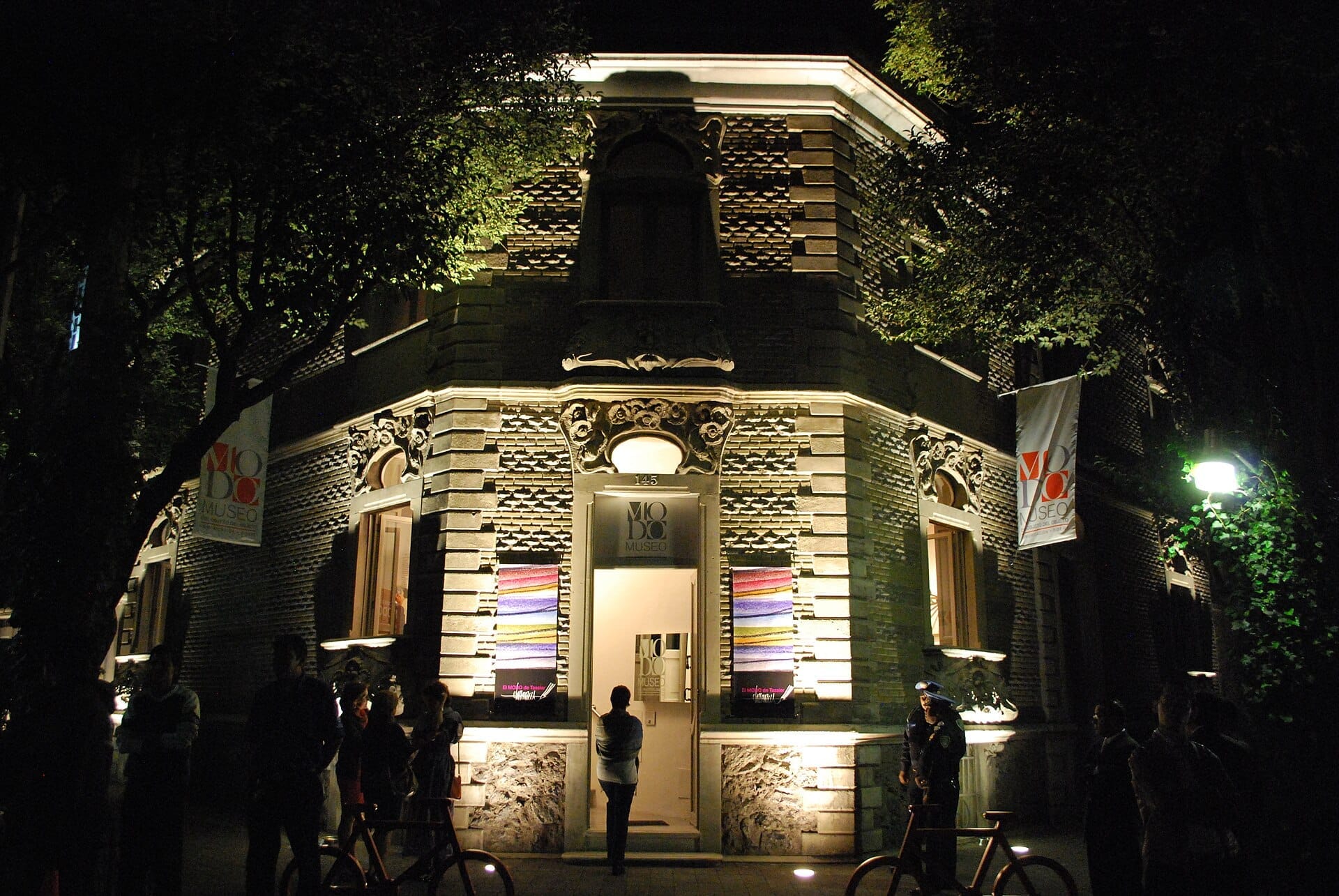
Housed in a restored 1906 Art Nouveau mansion on Calle Colima, the Museo del Objeto del Objeto (MODO) is Mexico's first museum dedicated entirely to design, advertising, and material culture. Its collection of over 100,000 everyday objects reframes the things you ignore every day as evidence of how Mexican society thinks, sells, and remembers.
Quick Facts
- Location
- Calle Colima 145, Roma Norte, Cuauhtémoc, Mexico City
- Getting There
- Metro Insurgentes (Line 1) or Metro Cuauhtémoc (Line 1), both within walking distance
- Time Needed
- 1.5 to 2.5 hours
- Cost
- Verify current admission at elmodo.mx before visiting
- Best for
- Design lovers, photographers, culturally curious travelers, rainy-day museum seekers
- Official website
- http://elmodo.mx
What Is MODO, and Why Does It Exist?
The Museo del Objeto del Objeto, known universally as MODO, opened in October 2010 with a premise that sounds almost too simple: everyday objects tell the truth about a culture in ways that fine art rarely does. A soap wrapper, a political campaign button, a branded matchbox from a 1970s cantina, a television set from the year Mexico City hosted the Olympics. These things were made to be used and forgotten, which is precisely what makes them worth examining.
MODO holds a collection of over 100,000 objects, making it not just Mexico's first museum dedicated to design and visual communications, but one of the largest archives of Mexican material culture anywhere. The museum's founders built the collection around the idea that graphic design, advertising, packaging, and industrial objects are primary historical documents, not secondary ones.
This philosophy puts MODO in interesting company globally alongside institutions like the Cooper Hewitt in New York or the Design Museum in London. But MODO's focus is distinctly local. If you want to understand how Mexico sold itself to itself across the 20th century, this collection is more instructive than most history textbooks. Pair the visit with a walk through Roma Norte, one of the city's most architecturally coherent neighborhoods, and the museum feels like a natural extension of the streets outside.
The Building: A 1906 Art Nouveau Mansion Worth Noticing
Before you look at a single object inside, look at the building itself. The museum occupies a 1906 Art Nouveau residence on Calle Colima, a tree-lined street that has held its architectural character better than most in this city. The facade has the sinuous ironwork details and organic ornamentation typical of the European Art Nouveau movement that wealthy Mexican families imported during the Porfiriato period, the long modernizing presidency of Porfirio Díaz that ended in 1910.
The irony is deliberate and appropriate: a building designed as an elite private home during an era of intense social inequality now houses objects that tracked the aspirations of ordinary Mexican consumers across the following century. The courtyard at the center of the building is a good place to notice this contrast. The proportions are domestic and intimate, which makes the museum feel more like exploring someone's very well-curated house than moving through a conventional gallery space.
💡 Local tip
Photograph the facade from across Calle Colima before you enter. Morning light hits the front of the building well. The ironwork details and the street's tree canopy together make for one of the better architectural photographs in Roma Norte.
Tickets & tours
Live prices and dates from our booking partner. If you book, we may earn a commission at no extra cost to you.
Xochimilco, Coyoacan and Frida Kahlo Museum with skip-the-line tickets
From 63 €Instant confirmationFree cancellationFrida Kahlo and Diego Rivera legacy visit to three museums with skip-the-line tickets
From 67 €Instant confirmationFree cancellationSix Flags Amusement Park tickets and transportation
From 87 €Instant confirmationFree cancellationMexico City National Museum of Anthropology guided tour
From 57 €Instant confirmationFree cancellation
What You Will Actually See Inside
MODO rotates its temporary exhibitions regularly, so the specific galleries you encounter will depend on when you visit. The permanent collection underpins everything, but the curators consistently find new ways to frame familiar material. Exhibitions have organized objects by color, by decade, by the emotion an advertisement was designed to provoke, and by the social class a product was aimed at. This thematic flexibility keeps return visits from feeling repetitive.
The objects themselves range from the mundane to the surprising. Vintage Mexican advertising posters display the graphic styles that shifted from European-influenced illustration in the early 20th century toward bold, flat, Pop-influenced design by the 1960s and 1970s. Packaging design for household products reveals which foreign brands were adapted for Mexican markets and which domestic brands invented their own visual language. Toys, appliances, political ephemera, and pharmaceutical packaging all appear alongside one another, organized not by category but by the cultural argument the curators are making at any given moment.
The scale of the collection means that even a well-funded permanent display can only show a fraction of what is stored here. What you see on any visit is curated, not simply piled up. Visitors with a background in design or visual culture will find layers of reference in the exhibition texts that casual visitors might skim past, but the objects themselves communicate without requiring specialist knowledge.
ℹ️ Good to know
Exhibition texts are primarily in Spanish. Some labels include English translations, but do not assume full bilingual coverage. If your Spanish is limited, the visual nature of most objects means you can still engage meaningfully with the collection, though you will miss curatorial context in the explanatory panels.
When to Visit: Time of Day and Day of Week
MODO is open Tuesday through Sunday from 10:00 AM to 6:00 PM and is closed on Mondays. The museum draws a mix of local visitors, architecture students, and international travelers interested in design and cultural history. It is not a high-volume tourist attraction by Mexico City standards, which is part of its appeal. Weekday mornings, particularly Tuesday through Thursday between 10:00 AM and noon, are when the building feels most quiet and the experience most considered.
Weekend afternoons bring more visitors, including local families and groups of architecture and design students from UNAM and other city universities. The museum does not feel crowded even then, but the atmosphere shifts noticeably. If you prefer to linger at individual objects and read exhibition texts at your own pace, a weekday morning is the better choice. Weekend visits have their own energy: the conversations happening around you in the galleries are often as interesting as the objects themselves.
⚠️ What to skip
Verify current opening hours and any temporary closures on the official website at elmodo.mx before visiting. Mexican museums occasionally close for exhibition changeovers or national holidays without extensive advance notice on third-party platforms.
Getting There and the Roma Norte Context
The museum sits at Calle Colima 145 in Roma Norte. The two most practical Metro options are Insurgentes on Line 1 and Cuauhtémoc on Line 1, both reachable from major transfer points across the city. From either station, the walk to the museum is manageable on foot through streets that are worth walking for their own architectural merit. Ride-hailing apps including Uber, Didi, and Cabify all operate in this area and represent a straightforward alternative if you are coming from a distant part of the city.
Roma Norte has enough to justify a half-day or full-day visit built around MODO. Calle Álvaro Obregón a few blocks away is lined with bookshops, galleries, and coffee places. Parque México is a short walk into Condesa if you want green space before or after the museum. The neighborhood's restaurant density is high enough that you can find a good meal within five minutes in almost any direction.
If you are planning a broader museum day, Museo de Arte Moderno in Chapultepec offers a natural thematic counterpoint: one institution examines what Mexican artists made intentionally as art, the other examines what the culture made without thinking of it as art at all.
Photography, Practical Details, and Who Should Skip This
Photography for personal use is generally permitted inside MODO, though policies can change with specific temporary exhibitions. The interior rooms photograph well because the domestic scale of the building keeps natural light close to the objects. The courtyard, with its tiled floor and staircase details, is often more visually interesting than any single gallery wall.
The building's multi-level layout involves stairs, and accessibility for visitors with mobility limitations may be constrained by the historic structure. This is worth verifying directly with the museum before visiting if it is a concern.
MODO is not the right choice for visitors whose primary interest is pre-Columbian archaeology, colonial religious art, or Diego Rivera murals. If that is where your limited time is going, Museo Nacional de Antropología or the National Palace will serve you better. MODO rewards visitors who are interested in how a society represents itself to itself through commercial and industrial design, and who are willing to read exhibition texts rather than simply scan objects. Visitors expecting a conventional fine art museum experience may find the curatorial approach unconventional enough to require some recalibration.
For travelers working through a broader cultural itinerary, the best museums in Mexico City guide puts MODO in context alongside the city's larger and better-known institutions.
Insider Tips
- Check the museum's social media or website for current temporary exhibitions before you go. MODO's rotating shows vary dramatically in subject matter, and knowing what is currently installed helps you decide how long to budget.
- The museum shop, if open during your visit, carries design-focused publications and objects that are harder to find elsewhere in the city. It is worth a few minutes even if you do not intend to buy anything.
- Calle Colima on a weekday morning is one of the quieter streets in Roma Norte. Arriving slightly before the museum opens at 10:00 AM lets you photograph the facade without pedestrian traffic in the frame and puts you among the first inside when doors open.
- If you read Spanish, the exhibition texts at MODO are unusually well-written for a mid-size museum. The curatorial voice is opinionated and specific rather than neutral and encyclopedic, which makes the arguments being made worth following.
- Combine the visit with Mercado Roma, about a ten-minute walk away, for a meal afterward. The market itself is an interesting design object: a contemporary food hall that self-consciously references the graphic and architectural vocabulary MODO has been archiving.
Who Is Museo del Objeto del Objeto (MODO) For?
- Designers, architects, and visual artists looking for Mexico-specific reference material
- Travelers interested in 20th-century Mexican social and commercial history beyond politics and muralism
- Photography-focused visitors wanting a photogenic interior with strong light and unusual objects
- Anyone with a free morning in Roma Norte who wants substance alongside the neighborhood's cafe and restaurant appeal
- Return visitors to Mexico City looking for something beyond the major archeological and fine art institutions
Nearby Attractions
Other things to see while in Roma & Condesa:
- Mercado Roma
Opened in 2014, Mercado Roma transformed the concept of a traditional Mexican market into a multi-level gourmet destination. With free entry, dozens of independent food stalls, craft cocktail bars, and a rooftop terrace, it sits at the center of Roma Norte's culinary identity.
- Parque España
Inaugurated in 1921 on the former access road to the old Hipódromo de la Condesa racetrack, Parque España is a semicircular green space between Roma Norte and Condesa. Free, open around the clock, and consistently busy without ever feeling overwhelming, it offers a clear window into everyday neighborhood life in one of Mexico City's most architecturally interesting districts.
- Parque México
Officially named Parque General San Martín, Parque México is a 3.65-hectare art deco park at the center of the Condesa neighborhood. Free to enter and open around the clock, it draws everyone from morning joggers to weekend families, and sits surrounded by some of the most architecturally striking streets in Mexico City.
Planning a trip? Discover personalized activities with the Nomado app.