National Palace, Mexico City: The Murals, the History, and What It Actually Takes to Get Inside
The National Palace (Palacio Nacional) anchors the east side of the Zócalo and holds one of the greatest mural cycles in the Americas. Admission is free, but access is by guided tour only, and the crowds can be relentless. Here is what to know before you go.
Quick Facts
- Location
- Plaza de la Constitución S/N, Centro Histórico, Cuauhtémoc, Mexico City
- Getting There
- Metro Zócalo/Tenochtitlan (Line 2) — exits directly onto the main square
- Time Needed
- 1.5 to 2.5 hours for a thorough guided visit
- Cost
- Free admission (verify on site; ID or passport may be held at entry)
- Best for
- History enthusiasts, art lovers, first-time visitors to Mexico City
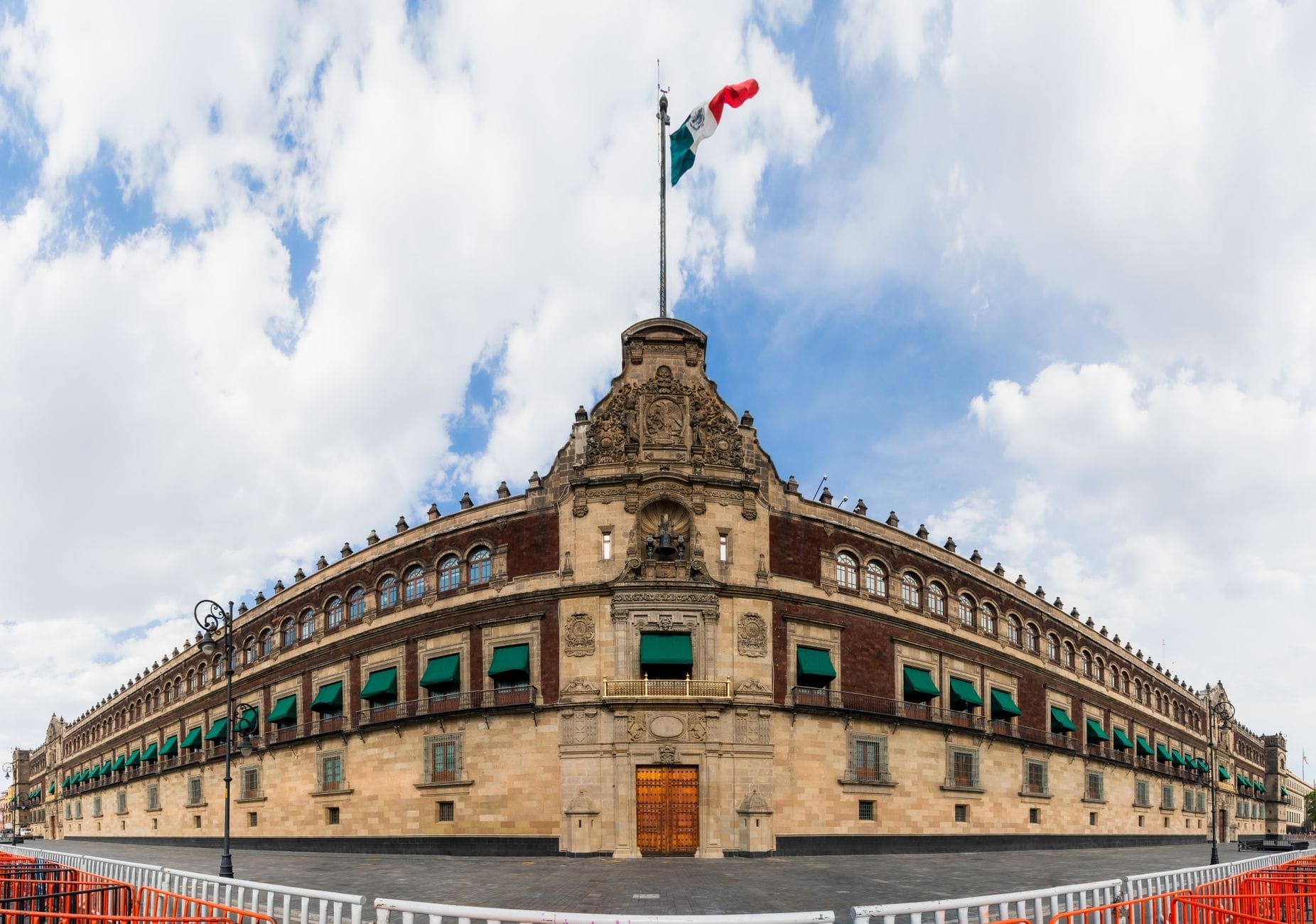
What the National Palace Is
The Palacio Nacional is not a museum in the conventional sense. It is a fully functioning seat of Mexico's federal executive branch, and its east facade stretches the full length of the Zócalo, the country's main public square. That context matters: you are not just touring a historic building but walking through the administrative and symbolic heart of a republic that began here long before the Spanish arrived.
The site itself has housed rulers for centuries. The current complex began construction in 1522, when Hernán Cortés ordered a residence built partly over the palace of Aztec emperor Moctezuma II. Over the following five centuries, the building was expanded, damaged, burned, and rebuilt. What stands today covers roughly 23,500–40,000 square meters according to varying estimates, making it one of the larger government complexes in Latin America. It forms part of the Historic Centre of Mexico City and Xochimilco, inscribed as a UNESCO World Heritage Site in 1987.
The palace sits on the eastern edge of the Zócalo (Plaza de la Constitución), giving it an almost theatrical setting: stand in the center of the square at midday and the building's red volcanic stone facade, three stories tall and crowned with the Mexican flag, commands the entire skyline. The square itself, and the colonial architecture that rings it, is part of the same Centro Histórico experience, so the National Palace is rarely a standalone destination for travelers who spend a morning in this neighborhood.
ℹ️ Good to know
Access is by guided tour only, arranged through the Ministry of Finance's museum entrance. Prior reservation by email is recommended, though walk-in tours are sometimes possible. Confirm availability before making it the centerpiece of your day.
The Diego Rivera Murals: Why People Come
The primary draw for most visitors is the mural cycle Diego Rivera painted on the main staircase and surrounding walls between 1929 and 1935, titled 'History of Mexico' (La Historia de México). This is not a minor decorative commission. The work spans hundreds of square meters and attempts nothing less than a visual chronicle of Mexican civilization from the pre-Columbian Aztec world through the Spanish conquest, colonial era, independence movement, Reform War, revolution, and into the 20th century.
Rivera painted with unmistakable ideological intent. Aztec markets pulse with commerce and color; the Spanish conquest is rendered in brutal detail; Mexico's revolutionary heroes stand tall while reactionaries and clergy are depicted with sharp satirical weight. The scale is overwhelming in person in a way that reproductions never fully capture. The central staircase wall, which is the first thing you see as you climb from the courtyard, stretches several stories and compresses five centuries into a single glance. Give yourself time to stand still and read it.
Rivera also painted a separate, celebrated mural depicting the Aztec city of Tenochtitlan in the second-floor corridor. If you have been to Templo Mayor, just a two-minute walk from the palace, the Rivera rendering of the ceremonial center offers a useful imaginative counterpart to the archaeological ruins. The two sites reward being visited on the same morning.
💡 Local tip
Photography of the murals is permitted. For the main staircase, the best natural light enters in the mid-morning when the courtyard doors are open and indirect sun reaches the upper walls. Bring a wide-angle lens or accept that no single frame will capture the full composition.
Tickets & tours
Live prices and dates from our booking partner. If you book, we may earn a commission at no extra cost to you.
Puebla and Cholula guided tour from Mexico City with optional lunch
From 43 €Instant confirmationFree cancellationXochimilco, Coyoacan and Frida Kahlo Museum with skip-the-line tickets
From 63 €Instant confirmationFree cancellationMexico City exploration game and tour in Chimalistac
From 10 €Instant confirmationFree cancellationCuernavaca and Taxco Guided Tour with Optional Lunch
From 40 €Instant confirmationFree cancellation
Getting In: Practical Walkthrough
The entry process here is stricter than at most Mexico City museums. The National Palace is a working government building, and security reflects that. Visitors report leaving a national ID card or passport with guards at the entrance, receiving a visitor lanyard in exchange. This is a common practice but not officially confirmed on the palace's published materials, so treat it as likely but not guaranteed. Do not leave home without photo ID.
Guided tours are the only way to see the interior, and these are organized through the entrance associated with the Ministry of Finance's museum (Museo de la Secretaría de Hacienda y Crédito Público), which occupies part of the complex. Walk-in visits are sometimes possible during quieter periods, but the official guidance is to reserve in advance. Public visiting hours for the museum spaces are generally Tuesday through Sunday during daytime hours, with closures on Mondays, but specific tour times for the palace interiors vary and must be confirmed in advance. Hours can change for state events or national holidays, so confirming the day before is worth the effort.
The nearest Metro station is Zócalo/Tenochtitlan on Line 2 (the blue line), which deposits you directly onto the plaza within a two-minute walk of the palace entrance. This is the easiest public transit connection in the historic center. If you are arriving from Roma or Condesa, the ride is straightforward with one line and no transfers.
How the Experience Changes by Time of Day
Arrive as close to 09:00 as possible. By 10:30 on weekends, school groups from across the country fill the courtyards, and the echoing stone corridors amplify crowd noise significantly. The murals become harder to appreciate when 60 students are shuffling past while a guide shouts over the noise. On weekday mornings, the atmosphere is noticeably calmer, and the scale of the architecture reads more clearly when the courtyards are not shoulder-to-shoulder.
The interior courtyard in morning light has a particular quality: the stone walls, worn smooth over centuries, catch a warm orange tint from the low sun, and the fountain at the center creates an almost incongruous sense of calm given the city outside. By early afternoon, the light flattens, the temperature rises inside the corridors, and the combination of heat at Mexico City's altitude of roughly 2,240 meters and close crowds can become tiring quickly.
Late afternoon visits, after 15:00, see crowd numbers drop but leave little time before closing. If the morning slot is not possible, a Tuesday or Wednesday afternoon is generally the quietest mid-week window.
Beyond the Murals: The Rest of the Palace
The building contains more than the mural staircase. The Museum of the Treasury (Museo de la SHCP) occupies parts of the complex and houses rotating exhibitions of colonial and modern Mexican art alongside the permanent collection. Some visitors focus exclusively on Rivera and miss this entirely. If your guide leads you through the colonial-era galleries, the shift in tone from Rivera's charged political imagery to quieter religious painting from the viceregal period is especially interesting.
The ceremonial spaces, including the Hall of Ambassadors and various reception rooms, carry the full weight of Mexican state history. Official portraits line the walls. Busts and plaques reference moments and figures from independence to revolution. It is dense with historical reference, and a guide who speaks your language makes an enormous difference to the experience. If Spanish is not your first language, ask specifically about English-speaking tour availability when you reserve.
Visitors with a strong interest in Mexican muralism should consider pairing this visit with the Museo Mural Diego Rivera near Alameda Central, where Rivera's Dream of a Sunday Afternoon in Alameda Park is displayed in a purpose-built, climate-controlled space that allows much closer viewing than the staircase here.
Practical Considerations and Who Should Think Twice
Mobility access is unclear from official published sources. The palace has older stone architecture, uneven floors, and the main staircase is central to the most important content. Visitors with mobility limitations should contact the palace directly before visiting to confirm what is accessible and whether adapted tours are available.
Dress modestly: this is both a working government building and a site that many Mexicans visit with genuine patriotic and historical feeling. Sleeveless tops are not an issue, but overly casual beach-style clothing feels incongruous with the setting and occasionally prompts comments from guards.
Travelers who are primarily interested in pre-Columbian history rather than colonial or revolutionary Mexico will find the Museo Nacional de Antropología in Chapultepec more rewarding as a half-day commitment. The National Palace serves its best purpose as an emotional and historical anchor for the city's post-conquest story, particularly when combined with a Zócalo walk and visits to the Metropolitan Cathedral and Templo Mayor in the same morning.
⚠️ What to skip
The palace closes unexpectedly for state ceremonies, official visits, and national commemorations. If your timing coincides with September 15 (Independence Day eve) or significant national events, verify access well in advance. The Zócalo area becomes extremely crowded during these periods.
Combining the National Palace with the Surrounding Area
The historic center rewards a full morning of walking. After the National Palace, the Metropolitan Cathedral is directly across the Zócalo, and Templo Mayor is accessible from the cathedral's north side. Calle Madero, a pedestrianized colonial street leading west from the square, connects to the Torre Latinoamericana and the Palacio de Bellas Artes within a 15-minute walk. This corridor is one of the densest concentrations of significant architecture in Latin America and requires almost no transport between sites.
For a structured approach to the area, the Mexico City walking tours guide covers several routes that center on the Zócalo and include the National Palace as a key stop. This is particularly useful for first-time visitors trying to orient themselves in the historic core.
Insider Tips
- Reserve your tour by email at least a few days ahead, especially for weekends. Walk-in access on busy days is possible but not guaranteed, and the frustration of a closed gate after making the trip is worth avoiding.
- Visitors report that leaving your passport at security is common practice. Carry a photocopy of your passport as backup, and note that this means you should not schedule a same-day activity that requires your passport, such as picking up event tickets or checking into a hotel.
- The best position for photographing the main Rivera staircase mural is from the second-floor balcony overlooking the central flight of stairs, not from the staircase itself. Ask your guide to allow time at this vantage point before moving on.
- If your tour guide speaks only Spanish and your Spanish is limited, the experience will be significantly thinner. Some third-party walking tour operators include the National Palace in English-language historic center tours and can provide far better context than a solo walk-in visit.
- The palace sits at altitude: Mexico City is at roughly 2,240 meters above sea level. If you arrived recently and are adjusting, the combination of crowds, heat, and a packed morning of sightseeing in the historic center can be more tiring than expected. Plan a slower pace and hydrate.
Who Is National Palace For?
- First-time visitors wanting to understand Mexico's political and cultural history in a single, powerful context
- Art lovers focused on Diego Rivera's muralism and the Latin American mural tradition
- Travelers spending a full day in Centro Histórico who want to anchor the Zócalo area with depth
- History enthusiasts interested in the overlap between Aztec, colonial, and modern Mexican civilization on a single site
- Travelers on a tight budget seeking free, high-quality cultural content in the historic center
Nearby Attractions
Other things to see while in Centro Histórico:
- Alameda Central
Founded in 1592, Alameda Central is the oldest public park in the Americas and the green centerpiece of Mexico City's historic center. Flanked by the Palacio de Bellas Artes and a ring of colonial-era institutions, it offers free entry, shaded walkways, and a front-row seat to everyday city life.
- Calle Madero
Avenida Francisco I. Madero connects the Zócalo to the Torre Latinoamericana along one of the oldest streets in the Americas. Free to walk at any hour, it layers colonial architecture, street performance, and everyday city life into a single corridor that doubles as an open-air history lesson.
- Casa de los Azulejos
Casa de los Azulejos is one of the most photographed facades in Mexico City, its exterior wrapped in blue-and-white Talavera tiles from Puebla. With documented origins in the 16th century and operating as a Sanborns restaurant since 1919, it offers free entry and a rare chance to step inside a baroque palace that has survived centuries of history.
- La Ciudadela Artisan Market
The Mercado de Artesanías de La Ciudadela is one of Mexico City's largest and best-known handicraft markets, with more than 350 vendors selling handmade goods from across 22 states. Entry is free, quality ranges from tourist trinkets to serious collector pieces, and knowing how to navigate the stalls makes all the difference.
Planning a trip? Discover personalized activities with the Nomado app.