La Ciudadela Artisan Market: Where Mexican Folk Art Gets Serious
The Mercado de Artesanías de La Ciudadela is one of Mexico City's largest and best-known handicraft markets, with more than 350 vendors selling handmade goods from across 22 states. Entry is free, quality ranges from tourist trinkets to serious collector pieces, and knowing how to navigate the stalls makes all the difference.
Quick Facts
- Location
- Balderas esq. Emilio Donde, Colonia Centro, Cuauhtémoc — southwest edge of the Historic Center
- Getting There
- Metro Balderas (Lines 1 & 3) — 3-minute walk. Metro Juárez also within walking distance.
- Time Needed
- 1.5 to 3 hours for a thorough visit; serious shoppers often spend longer
- Cost
- Free entry. Individual purchases in Mexican pesos (MXN); bring cash for best prices.
- Best for
- Craft collectors, souvenir shoppers, anyone curious about Mexican regional folk art
What La Ciudadela Is
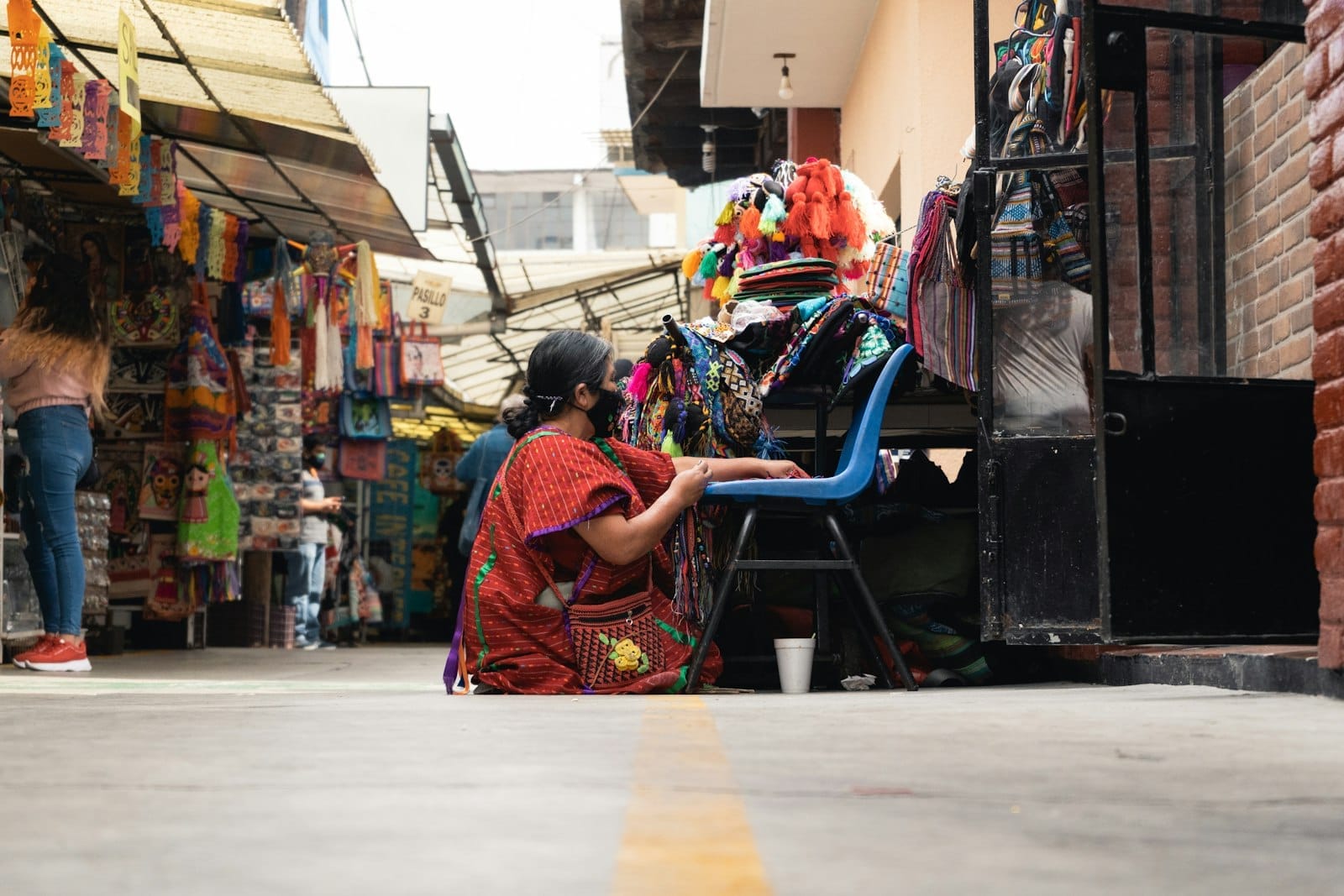
The Mercado de Artesanías de La Ciudadela is not a souvenir bazaar. It was established just before the 1968 Summer Olympics specifically to give Mexico's artisan tradition a permanent, dignified home for international visitors, and that founding purpose still shapes how the market operates today. On a 1.6-hectare site along the north edge of Plaza de la Ciudadela, about 350 permanent stalls represent craftspeople from across Mexico. The range is really national: you'll find Oaxacan black clay pottery sharing a corridor with Michoacán copper work, Huichol bead art from Nayarit, Talavera-style ceramics from Puebla, and amate bark paintings from the Sierra Norte.
This is not a rotating weekend pop-up or a street stall situation. Many vendors have occupied their stalls for years, and many are selling work made by their own families. That continuity matters for buyers. If a piece catches your eye, the person at the counter can usually tell you where it was made, what technique was used, and whether the price has room to move.
💡 Local tip
Bring cash in Mexican pesos. While some stalls accept cards, the best prices come through negotiation, and cash gives you leverage. ATMs are available near Metro Balderas before you arrive.
How the Market Is Laid Out
The market occupies a single-story structure arranged in long parallel corridors with connecting cross-aisles. It is shaded and partially covered, so heat is rarely a problem, and light rain won't cut your visit short. The layout is dense enough that first-time visitors often feel slightly turned around after the first few turns, which is actually useful: slow wandering is how you find the stalls worth revisiting.
There is no strict zoning by craft type, so textiles appear next to woodwork, which appears next to silver jewelry. This means you need to walk the full market at least once before committing to a purchase. Stall 47 might have a better version of the embroidered tablecloth you saw in the first corridor, at a lower price. Experienced shoppers do a full loop first, note what they want, then return to negotiate.
The outer perimeter of the plaza surrounding the market is also worth attention. The plaza itself functions as a neighborhood gathering point with its own low-key energy separate from the shopping interior.
Tickets & tours
Live prices and dates from our booking partner. If you book, we may earn a commission at no extra cost to you.
Puebla and Cholula guided tour from Mexico City with optional lunch
From 43 €Instant confirmationFree cancellationXochimilco, Coyoacan and Frida Kahlo Museum with skip-the-line tickets
From 63 €Instant confirmationFree cancellationMexico City exploration game and tour in Chimalistac
From 10 €Instant confirmationFree cancellationCuernavaca and Taxco Guided Tour with Optional Lunch
From 40 €Instant confirmationFree cancellation
Time of Day: How the Experience Shifts
Morning arrivals, roughly 10:00 to 11:30, offer the clearest advantage for serious buyers. Stalls are freshly stocked, vendors are unhurried, and the interior corridors are cool enough to browse comfortably. Negotiation is generally more relaxed before midday, before vendors have had a string of tourist interactions that can make the interaction feel transactional.
By early afternoon, 12:00 to 14:00, tour groups begin arriving. The corridors narrow perceptibly as organized groups move through together. If you have mobility considerations or simply prefer space, the morning window is worth planning around. That said, the afternoon energy has its own character: vendors are doing brisk business, the hum of multiple conversations in Spanish (and some English) fills the aisles, and the whole place feels like a functioning economic ecosystem rather than a staged experience.
Late afternoon, from around 16:00 onward, is quieter again. Some stalls begin packing up ahead of closing, so selection thins slightly, but prices can become more flexible as vendors prefer a sale to restocking. The market officially closes around 18:00, though individual stall hours vary.
ℹ️ Good to know
The market is reported to be open daily, with closing time around 18:00. Some platforms list Sunday hours as slightly shorter. Confirm specific stall hours on arrival, as individual vendors set their own schedules.
What to Buy and What to Avoid
La Ciudadela spans the quality spectrum. At the lower end, you'll find mass-produced items that look handmade but aren't: uniformly painted ceramics with no variation between pieces, synthetic 'wool' rugs, and silver-plated jewelry sold as solid silver. These aren't unique to this market and appear in craft markets across Latin America. The tell is consistency: real handwork shows slight imperfections, variation in glaze depth, uneven stitching, tool marks on wood.
At the upper end, the market has stalls selling museum-quality pieces: intricate Oaxacan alebrijes (carved and painted wooden figures), fine silver work from Taxco, and hand-woven textiles using natural dyes. These pieces are priced accordingly, but they are still typically cheaper than equivalent work in gallery settings in Polanco or Roma Norte. If you're looking for a serious purchase, ask the vendor directly where the piece was made and by whom. The answer tells you a lot.
For straightforward, good-value purchases, embroidered textiles, talavera-style decorative tiles, hand-blown glassware, and woven baskets represent good middle-ground options. These are handmade, competitively priced, and practical to transport. Larger items like pottery and furniture can often be arranged for shipping, though you'd negotiate that directly with the vendor.
⚠️ What to skip
Negotiating is standard practice, but stay reasonable. Vendors have real costs and make modest margins. Aggressive bargaining for small-ticket items is not a useful strategy and often sours the interaction. A 10-20% reduction on a clearly marked price is a fair starting point for larger purchases.
Getting There and the Surrounding Area
Metro Balderas, served by Lines 1 (pink) and 3 (olive green), places you within a 3-minute walk of the market entrance. From the Zócalo, it's roughly a 15-minute walk west along pedestrianized streets, passing through the Alameda Central park on the way, which is worth a short detour. Calle Madero, one of the main pedestrian axes of the Centro Histórico, connects easily to this part of the district.
The surrounding neighborhood feels distinctly less touristed than the blocks immediately around the Zócalo. Plaza de la Ciudadela itself is a working neighborhood square: locals play chess on permanent concrete tables, skateboarders use the open pavement, and small taco stands do a steady lunch trade. This mix gives the area a texture that the more overtly historic streets nearby don't always have.
If you're planning a full day in the center, La Ciudadela pairs well with the cultural institutions nearby. The Museo Franz Mayer is a short walk northeast and houses one of Mexico's finest collections of decorative arts and applied crafts, offering useful context for what you'll see in the market stalls. The Museo Mural Diego Rivera is also within easy walking distance and takes under an hour to visit.
Photography and Practical Notes
Photography inside the market is generally tolerated and vendors rarely object to photos of their merchandise. If you want to photograph a vendor or their workspace closely, it's a matter of basic courtesy to ask first. In the covered interior, natural light is supplemented by overhead fluorescent lighting, which makes accurate color rendering tricky with phone cameras. Carrying a small portable light or shooting near the open-air sections helps if you're trying to document textiles or detailed craftwork accurately.
Wear comfortable shoes: the market covers a lot of ground and the floor surface is uneven in sections. The site is single-story and largely flat, which makes it physically accessible, but no official documentation confirms the availability of step-free access routes, accessible restrooms, or other specific facilities. Visitors with specific accessibility needs should contact the market directly before visiting: +52 55 5510 1828.
Weather rarely affects a visit here since the market is largely covered, but Mexico City's afternoon rainstorms from May through October can make walking between transit and the market uncomfortable without a light jacket or compact umbrella. For broader city planning around weather, the best time to visit Mexico City guide covers seasonal patterns in detail.
Worth Your Time?: Is It Worth Your Time?
La Ciudadela is Mexico City's most comprehensive single-site artisan market. That scale is both its strength and its limitation. The sheer number of stalls means that quality varies considerably, and without some knowledge of what to look for, it's easy to spend money on goods that don't justify the price or the journey home. But for anyone willing to walk the full market before buying and ask a few questions at the stalls that interest them, the depth of what's available is impressive.
It's worth noting that this is not the only place to buy Mexican crafts in the city. Neighborhood markets like the Mercado de Coyoacán carry regional products in a very different atmosphere, and the Museo de Arte Popular a short walk away in the Historic Center displays museum-grade folk art and can help calibrate your sense of what quality work looks like before you spend money. For anyone building a serious understanding of Mexican craft traditions, that museum visit first and La Ciudadela second is a logical sequence.
Who should skip it: travelers with no interest in shopping or crafts will find limited value here. The market is not a scenic destination or a cultural performance space. It is a place to buy things, and if that's not on your agenda, the time is better spent at nearby historic monuments or museums.
Insider Tips
- Do a full loop of all corridors before making any purchase. The market has no logical layout by craft type, and what looks unique in the first aisle is often available at better quality or lower price deeper in the market.
- Ask vendors to explain the origin of a piece directly. Legitimate artisan sellers almost always know which region or family produced the work. Vague or inconsistent answers are a useful signal about authenticity.
- Morning visits on weekdays are noticeably calmer than weekends or post-noon on any day. If you want unhurried conversation with vendors and space to think, arrive before 11:00.
- The plaza outside the market has permanent chess tables where locals play for small stakes most afternoons. It's worth pausing here before or after shopping — it gives you a grounded sense of the neighborhood that the market interior doesn't provide.
- If you're buying multiple items from the same vendor, consolidating your purchases gives you more negotiating room than haggling over single items. A vendor willing to hold firm on one piece is often more flexible when the total sale is larger.
Who Is La Ciudadela Artisan Market For?
- Shoppers looking for authentic Mexican handcrafts across multiple regional traditions in one location
- Travelers wanting to bring home something more considered than airport gift-shop souvenirs
- Craft collectors or designers sourcing textiles, ceramics, or decorative objects
- Visitors pairing a shopping stop with nearby cultural museums in the Historic Center
- Budget travelers: free entry, no ticket required, and price points range from a few pesos to several thousand
Nearby Attractions
Other things to see while in Centro Histórico:
- Alameda Central
Founded in 1592, Alameda Central is the oldest public park in the Americas and the green centerpiece of Mexico City's historic center. Flanked by the Palacio de Bellas Artes and a ring of colonial-era institutions, it offers free entry, shaded walkways, and a front-row seat to everyday city life.
- Calle Madero
Avenida Francisco I. Madero connects the Zócalo to the Torre Latinoamericana along one of the oldest streets in the Americas. Free to walk at any hour, it layers colonial architecture, street performance, and everyday city life into a single corridor that doubles as an open-air history lesson.
- Casa de los Azulejos
Casa de los Azulejos is one of the most photographed facades in Mexico City, its exterior wrapped in blue-and-white Talavera tiles from Puebla. With documented origins in the 16th century and operating as a Sanborns restaurant since 1919, it offers free entry and a rare chance to step inside a baroque palace that has survived centuries of history.
- Mercado de San Juan
Mercado de San Juan, formally known as Mercado de San Juan Ernesto Pugibet, is a specialty food market in the heart of Centro Histórico where vendors sell imported cheeses, exotic meats, fresh seafood, Japanese ingredients, and hard-to-find spices alongside traditional Mexican produce. It operates as a public municipal market with no admission fee, making it one of the most accessible gourmet destinations in the city.
Planning a trip? Discover personalized activities with the Nomado app.