Casa de los Azulejos: Inside Mexico City's Legendary House of Tiles
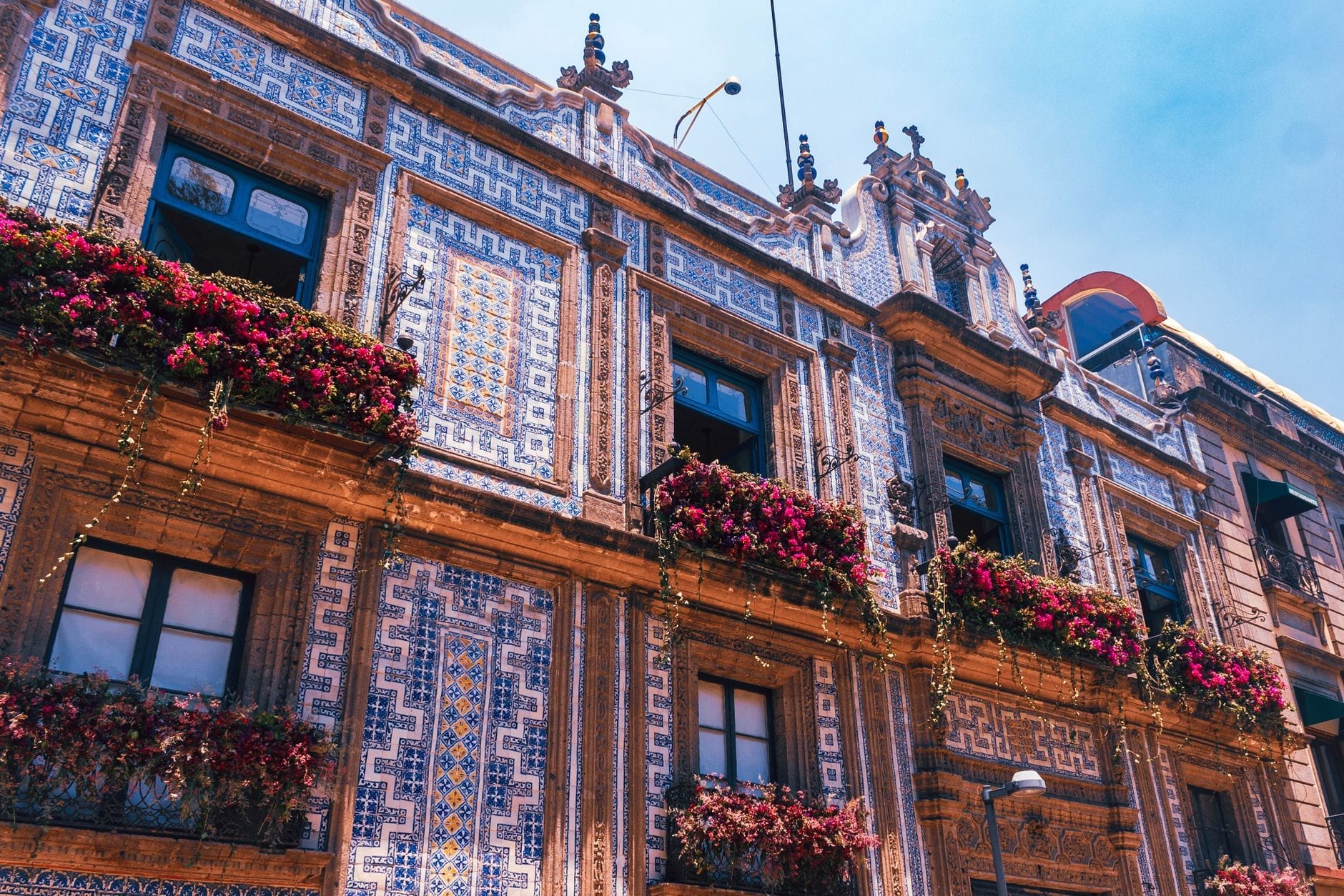
Casa de los Azulejos is one of the most photographed facades in Mexico City, its exterior wrapped in blue-and-white Talavera tiles from Puebla. With documented origins in the 16th century and operating as a Sanborns restaurant since 1919, it offers free entry and a rare chance to step inside a baroque palace that has survived centuries of history.
Quick Facts
- Location
- Av. Francisco I. Madero 4, Centro Histórico, CDMX
- Getting There
- Bellas Artes (Lines 2 & 8) or Allende (Line 2), 5-minute walk
- Time Needed
- 20–45 minutes to see the interior; longer if you eat
- Cost
- Free entry; pay only for food or purchases at Sanborns
- Best for
- Architecture lovers, history enthusiasts, photography, a classic breakfast stop
- Official website
- mexicocity.cdmx.gob.mx/venues/la-casa-de-los-azulejos
What Is the Casa de los Azulejos?
The Casa de los Azulejos, officially the Palacio de los Condes del Valle de Orizaba, is a baroque civil palace on Avenida Madero in the Centro Histórico of Mexico City. Its walls are covered almost entirely in blue-and-white Talavera tiles fired in Puebla, making it one of the most visually arresting buildings in the entire historic center. The name translates simply as House of Tiles, and once you see it, the reason is obvious.
Documentary references to the property date to the mid‑16th century, making it one of the oldest known residential sites in Mexico City, though the current structure is largely 18th‑century. The current palace configuration was developed in the late 18th century, and the Talavera tile cladding transformed what was an aristocratic manor into a landmark of New Spain's late-baroque aesthetic. Since 1919, it has housed the flagship location of Sanborns, a Mexican department store and restaurant chain, which means the building functions as a working commercial space rather than a museum. Entry is free; you simply walk in off Madero Street.
💡 Local tip
You don't need to buy anything to enter. Walk in, look up at the tiled courtyard, and take in the frescoes. If you do sit down for breakfast or coffee, the interior patio is the place to be — not the ground-floor dining room.
The Architecture: What You're Actually Looking At
The exterior is the first thing that stops people on Madero Street. The Talavera tiles cover the full facade in geometric patterns of cobalt blue, white, and ochre, a style deeply rooted in the Spanish and Moorish craft traditions that were transplanted to Puebla during the colonial period. Talavera pottery and tilework became one of colonial Mexico's great art forms, and the Casa de los Azulejos remains its most spectacular architectural application in the capital.
Step inside and the scale of the original palace becomes apparent. The central courtyard rises two stories with arched galleries on each level, the stonework carved in the churrigueresque manner common to New Spain's late baroque. The wrought-iron railings, the stone columns, and the ornate staircase all date from the 18th century and remain largely intact. On the upper staircase landing, a mural by José Clemente Orozco painted in 1925 depicts Omnisciencia, a large allegorical composition that is easy to miss if you walk straight to the restaurant tables without looking up.
The Orozco mural is a significant work. Orozco was one of the three great muralists of post-revolutionary Mexico alongside Diego Rivera and David Alfaro Siqueiros, and his contributions appear throughout the city. If you want to see his murals alongside Rivera's, the Palacio de Bellas Artes a few blocks west holds major works by all three artists.
Tickets & tours
Live prices and dates from our booking partner. If you book, we may earn a commission at no extra cost to you.
Chapultepec Castle guided tour after closing
From 40 €Instant confirmationFree cancellationPuebla and Cholula guided tour from Mexico City with optional lunch
From 43 €Instant confirmationFree cancellationXochimilco, Coyoacan and Frida Kahlo Museum with skip-the-line tickets
From 63 €Instant confirmationFree cancellationMexico City exploration game and tour in Chimalistac
From 10 €Instant confirmationFree cancellation
How the Visit Feels at Different Times of Day
Madero Street is a pedestrian thoroughfare and one of the busiest walking routes in Latin America during midday hours. Between 11am and 2pm, the exterior of the Casa de los Azulejos is crowded with tourists photographing the facade, street vendors working the sidewalk, and office workers cutting through on lunch. If your primary goal is photography, arrive before 9am when the light hits the tiles cleanly from the east and the street is quieter.
The restaurant and store open at 7am, which makes the Casa de los Azulejos a good spot for breakfast on a walking day in the historic center. At that hour, the courtyard is calm, the staff are attentive, and you can sit in the tiled patio with coffee and look up at the stone arches without competing with tour groups. By 10am the atmosphere shifts considerably as organized groups begin arriving.
Evening visits, closer to the 1am closing time, are much quieter. The restaurant stays open late by Mexican historic-center standards, and the courtyard takes on a different quality under interior lighting. The tile patterns reflect differently at night, and the crowds thin to local diners rather than tourists. This makes it a useful stop during a broader night walk through the Centro.
ℹ️ Good to know
Opening hours: Daily 07:00 to 01:00. No admission charge. The building is a functioning Sanborns restaurant and store, so expect commercial activity alongside the architecture.
Getting There and Moving Around the Area
The Casa de los Azulejos sits on Avenida Madero 4, which is the pedestrian spine connecting the Zócalo to the Alameda Central. The nearest Metro stations are Bellas Artes (Lines 2 and 8) and Allende (Line 2), both within a five-minute walk. From Bellas Artes, walk east along Madero and you will see the tiled facade on your left within minutes. From the Zócalo, walk west on Madero and it appears on your right. This route is also covered in the Calle Madero walking corridor, one of the best pedestrian stretches in the city.
The building anchors a dense cluster of significant architecture. The Palacio de Correos, the Torre Latinoamericana, and the Palacio de Bellas Artes are all within three minutes on foot. The whole area rewards slow walking, and a morning covering Madero from the Zócalo to Alameda Central can incorporate five or six historically significant buildings without rushing.
Historical Context: From Aristocratic Palace to Department Store
The palace passed through several noble families during the colonial period before the Counts of the Valley of Orizaba gave it its aristocratic name. The tile-covered transformation is attributed to the 18th century, when the building was extensively remodeled to its current baroque configuration. During the Reform War and later the Revolution, the building survived when many colonial structures in the center did not.
In 1919, the Sanborns brothers, Walter and Frank, acquired the property and established their restaurant here, which became a gathering place for intellectuals and artists during the post-revolutionary cultural boom. The same era that produced the Orozco mural also saw the building become part of a broader renewal of the Centro Histórico, a neighborhood whose colonial layers can be traced throughout the area today. For a deeper understanding of the indigenous history beneath the Spanish city, the Templo Mayor archaeological site is ten minutes east on foot.
Photography, Practical Details, and Limitations
For photography, the exterior works best in morning light before the street crowds build. The facade faces roughly south, so morning light from the east catches the tiles at an angle that emphasizes the texture. Midday produces flat, harsh light. A wide-angle lens is useful for capturing the full facade without stepping into moving pedestrian traffic.
Inside, the tiled courtyard is available for photography without restriction, though the restaurant tables are occupied most hours and waiting for a clean shot of the columns and arches takes patience. The Orozco mural on the upper staircase is in a slightly dark space; a camera that handles low light performs better than a phone camera there.
Accessibility details for mobility-impaired visitors are not confirmed in official venue information. The building is a commercial establishment so street-level access exists, but the courtyard staircase and upper galleries may present challenges. Contact Sanborns directly before visiting if this is a concern.
⚠️ What to skip
The Casa de los Azulejos is not a quiet architectural experience during peak tourist hours. If you are expecting a serene, museum-like atmosphere, you will find a busy restaurant and store instead. Adjust expectations accordingly, or visit early in the morning.
Is It Worth Your Time?
Yes, but with realistic expectations. The Casa de los Azulejos is not a destination that requires an hour of your time. It is a ten-minute architectural detour that rewards anyone walking the Madero corridor anyway. The exterior facade alone justifies the pause. The interior courtyard is especially beautiful and most visitors spend fifteen to twenty minutes inside before moving on. If you combine it with a breakfast stop at 7am or 8am, it becomes something more: a quiet start to a long day in the Centro Histórico before the crowds arrive.
Visitors who find themselves in the Centro Histórico for the first time should plan a walking route that takes in Madero from end to end. The Mexico City walking tours available for the historic center almost universally include a stop here, which reflects how central the building is to the area's architectural identity.
Insider Tips
- Arrive at or before 8am for breakfast. The courtyard is calm, the service is attentive, and you can photograph the Orozco mural without anyone standing in your frame.
- Look up at the staircase landing before you sit down. Most visitors walk straight to the restaurant and miss the Orozco fresco entirely — it's on the upper landing and is one of his earlier muralist works in the city.
- The ground-floor dining room is busy and lacks architectural character. Ask to be seated in the interior courtyard patio where the colonial stonework and tile walls are visible.
- The building closes at 1am, which makes it a rare historic-center landmark accessible on a late evening. If you're doing a night walk through Centro, it's one of the few colonial interiors still open.
- The Talavera tiles are from Puebla, not Mexico City, and reflect a distinct regional craft tradition. If the tilework interests you, the Museo Franz Mayer nearby has an extensive collection of colonial decorative arts including Talavera ceramics.
Who Is Casa de los Azulejos For?
- Architecture and design enthusiasts who want to see Talavera tilework at its grandest scale
- First-time visitors to Mexico City doing a Centro Histórico walking day along Madero
- Early risers wanting a beautiful, calm breakfast spot before the historic center fills up
- Photography-focused travelers seeking one of the most distinctive facades in Latin America
- Anyone interested in post-revolutionary Mexican muralism and the work of José Clemente Orozco
Nearby Attractions
Other things to see while in Centro Histórico:
- Alameda Central
Founded in 1592, Alameda Central is the oldest public park in the Americas and the green centerpiece of Mexico City's historic center. Flanked by the Palacio de Bellas Artes and a ring of colonial-era institutions, it offers free entry, shaded walkways, and a front-row seat to everyday city life.
- Calle Madero
Avenida Francisco I. Madero connects the Zócalo to the Torre Latinoamericana along one of the oldest streets in the Americas. Free to walk at any hour, it layers colonial architecture, street performance, and everyday city life into a single corridor that doubles as an open-air history lesson.
- La Ciudadela Artisan Market
The Mercado de Artesanías de La Ciudadela is one of Mexico City's largest and best-known handicraft markets, with more than 350 vendors selling handmade goods from across 22 states. Entry is free, quality ranges from tourist trinkets to serious collector pieces, and knowing how to navigate the stalls makes all the difference.
- Mercado de San Juan
Mercado de San Juan, formally known as Mercado de San Juan Ernesto Pugibet, is a specialty food market in the heart of Centro Histórico where vendors sell imported cheeses, exotic meats, fresh seafood, Japanese ingredients, and hard-to-find spices alongside traditional Mexican produce. It operates as a public municipal market with no admission fee, making it one of the most accessible gourmet destinations in the city.
Planning a trip? Discover personalized activities with the Nomado app.