Mercado de San Juan: Mexico City's Premier Specialty Food Market
Mercado de San Juan, formally known as Mercado de San Juan Ernesto Pugibet, is a specialty food market in the heart of Centro Histórico where vendors sell imported cheeses, exotic meats, fresh seafood, Japanese ingredients, and hard-to-find spices alongside traditional Mexican produce. It operates as a public municipal market with no admission fee, making it one of the most accessible gourmet destinations in the city.
Quick Facts
- Location
- Ernesto Pugibet 21, Colonia Centro, Cuauhtémoc, CDMX
- Getting There
- Salto de Agua (Line 1 / Line 8), approx. 10-minute walk
- Time Needed
- 45 minutes to 2 hours depending on browsing and eating
- Cost
- Free entry; food and products priced by individual vendors in MXN
- Best for
- Food lovers, chefs, curious eaters, and anyone craving imported specialties
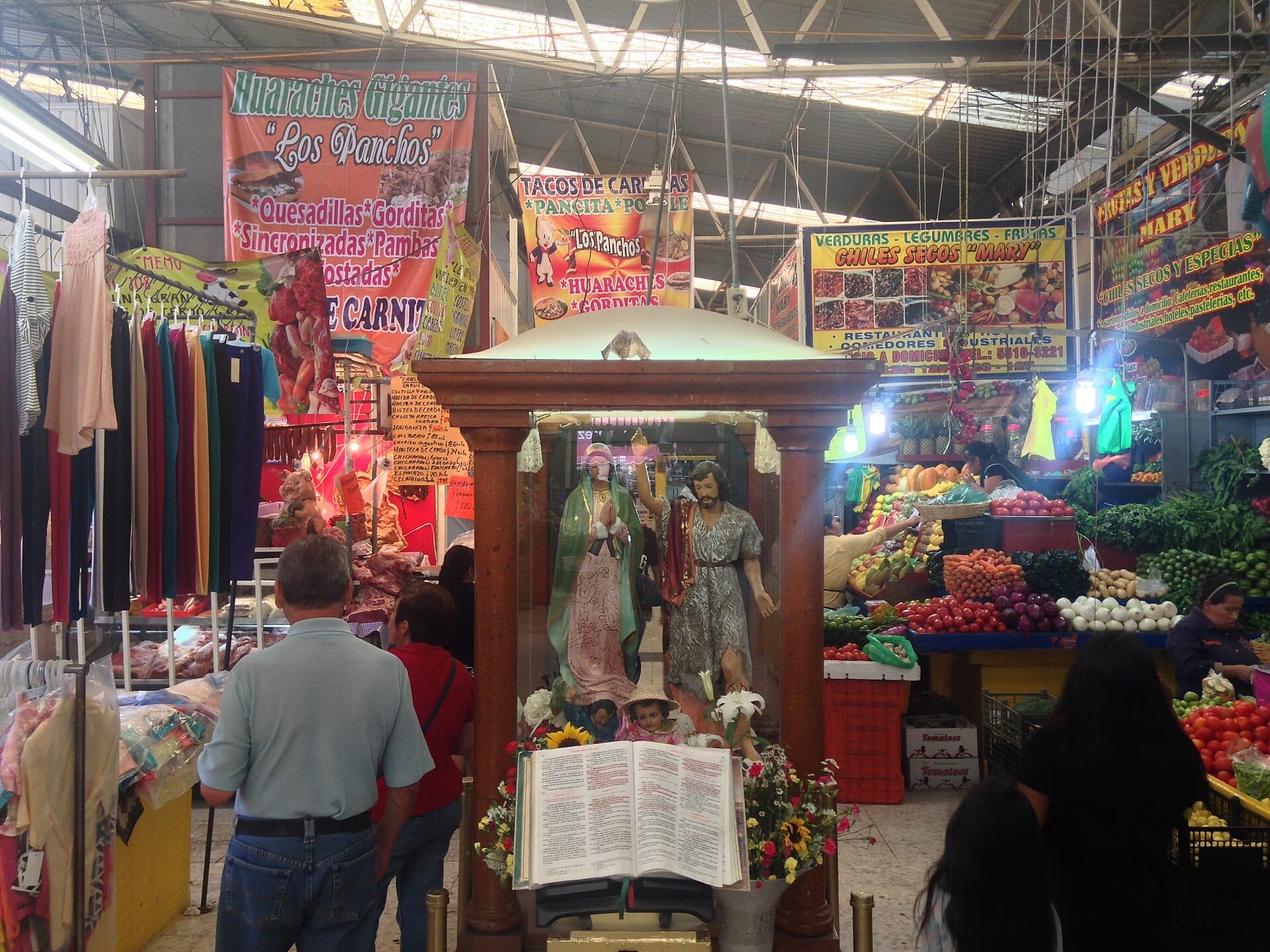
What Makes San Juan Market Different
Most markets in Mexico City reward you with local abundance: fresh chiles, regional cheeses, tortillas still warm from the comal. Mercado de San Juan does something else. This is the market where Mexico City's professional chefs and foreign-born residents come to track down aged Manchego, smoked salmon, wagyu cuts, imported truffle products, grasshoppers sold by the kilo, and sashimi-grade tuna laid out on beds of crushed ice. It sits in a compact, single-story municipal building on Calle Ernesto Pugibet in the historic center, a short walk southwest of the Zócalo (main square), and it operates as a self-contained world of culinary curiosity.
The market formally bears the name Mercado de San Juan Ernesto Pugibet, a nod to the street address. The Pugibet name also connects to local history: the building was constructed in 1955 on the former site of a Buen Tono cigarette warehouse. Before that, food vendors were already active in the nearby San Juan Plaza area from the early 1900s, and the current market traces its roots to those earlier trading activities. The neighborhood itself is even older. The surrounding barrio sits within what was historically called San Juan Moyotlan, one of the four main divisions of the Aztec capital Tenochtitlan. In Nahuatl, Moyotlan means place of mosquitos, a rather unglamorous origin for one of the city's most refined food destinations.
💡 Local tip
Arrive between 10am and noon on a weekday for the best combination of fully stocked stalls, unhurried vendors, and enough breathing room to actually browse. Weekends draw larger crowds and the narrow aisles fill up quickly.
The Layout and What You Will Find
The building is organized along a grid of interior corridors, each narrow enough that two people walking side by side will brush shoulders with vendors' displays. The ceiling is high and the light is functional rather than atmospheric, which suits the place: this is a working market, not a styled food hall. What catches your eye first are the cheese counters, which appear almost immediately after you enter. Whole wheels of European-origin cheeses sit stacked beside Mexican varieties, and vendors typically offer samples without being asked.
Move deeper and you reach the butchers, who stock cuts that would be difficult to source anywhere else in the city: ostrich, venison, wild boar, rabbit, and various offal preparations. Nearby stalls carry cured meats, paté, and charcuterie alongside imported Spanish jamón. The seafood section is a separate sensory chapter, identifiable by the cold air and the smell of brine. Vendors display octopus, sea urchin, oysters, and whole fish on ice, and a handful of spots will prepare ceviche or sushi-style bites to order right at the counter.
Toward the center of the market you will find the more eclectic stalls: dried insects including chapulines and escamoles (ant larvae), specialty honeys, imported sauces and condiments, Japanese pantry staples, and an impressive variety of dried chiles, herbs, and spices in quantities suited to professional cooking. There are also a few produce vendors who supply high-quality fruits and vegetables, often including varieties unavailable in standard supermarkets.
Tickets & tours
Live prices and dates from our booking partner. If you book, we may earn a commission at no extra cost to you.
Puebla and Cholula guided tour from Mexico City with optional lunch
From 43 €Instant confirmationFree cancellationXochimilco, Coyoacan and Frida Kahlo Museum with skip-the-line tickets
From 63 €Instant confirmationFree cancellationMexico City exploration game and tour in Chimalistac
From 10 €Instant confirmationFree cancellationCuernavaca and Taxco Guided Tour with Optional Lunch
From 40 €Instant confirmationFree cancellation
How the Market Changes Through the Day
San Juan Market opens in the morning and most stalls wind down in the mid-to-late afternoon, typically by around 5 pm, though this varies by vendor. Early mornings, particularly before 9am, can find some stalls not yet fully set up. The liveliest period is mid-morning, when professional buyers make their rounds alongside curious tourists and neighborhood regulars.
Lunchtime introduces a different rhythm. Several stalls transition into serving prepared food, and the ready-to-eat counters fill with people eating standing up or perched on stools. This is when the market feels most socially alive, with conversations overlapping, vendors calling out, and the smell of cooked seafood mixing with cheese and fresh herbs. If you plan to eat here, arriving for lunch between noon and 2pm gives you the fullest selection of prepared options.
Afternoons past 3pm can be quieter, and some vendors begin clearing away or reducing their displays. Visiting late in the afternoon risks finding certain specialty items sold out, particularly the raw seafood counters, which typically exhaust their premium stock by early afternoon.
⚠️ What to skip
The interior aisles are narrow. During weekend afternoons, foot traffic becomes dense enough to make browsing uncomfortable, and photography becomes difficult without blocking other visitors. Weekday mornings offer far more space.
Eating at the Market: What to Order
San Juan Market is as much about eating as shopping. Several counters function as informal restaurants, offering dishes that combine the market's specialty ingredients with cooking done on the spot. The Japanese-influenced seafood stalls are particularly well regarded, serving tostadas with tuna tartare, salmon nigiri, and mixed ceviche that draws on the fresh inventory a few meters away. Vendors here have adapted their menus to a market setting, which means portions are snack-sized and priced to allow multiple stops rather than one large meal.
Cheese vendors will often assemble a small board of samples on request, and buying even a modest amount tends to come with generous tasting. The charcuterie stalls operate similarly. If you are visiting with genuine purchasing intent rather than just snacking, bringing a small cooler bag makes transporting cheese and cured meats comfortable on a warm afternoon.
For travelers following the broader food scene in Centro Histórico, the market pairs well with a visit to Calle Madero and its surrounding streets, where traditional street food contrasts sharply with the market's imported specialties. If you want context for Mexico City's wider market culture, the Mexico City street food guide covers the full spectrum from neighborhood fondas to destination spots like San Juan.
Getting There and Getting Around
The most practical metro option is Salto de Agua station, served by both Line 1 (pink) and Line 8 (green), which intersect there. From the station, walk north along Calle López for a few minutes, then turn west on Ernesto Pugibet. The walk takes roughly 8 to 12 minutes depending on your pace and the pedestrian traffic on the streets. The route passes through a busy but manageable section of the historic center.
Ride-hailing apps including Uber, DiDi, and Cabify all operate in this area and can drop you directly in front of the market on Ernesto Pugibet. Traffic in the surrounding streets during morning rush hours can add time if you are coming from a distant neighborhood. The market has no dedicated parking, and driving in Centro Histórico is generally not recommended for visitors unfamiliar with the area's one-way street system.
If you are spending a half-day in the historic center, San Juan Market combines naturally with a visit to the Metropolitan Cathedral and the Templo Mayor archaeological site, both of which are within walking distance to the northeast. For a broader orientation to the area, the Centro Histórico neighborhood guide covers the full district in detail.
Practical Notes for Visitors
Entry is free. The market operates as a public municipal facility and there is no admission charge at any entrance. Individual vendor prices vary and are set independently, so bargaining expectations differ from stall to stall. Most vendors accept cash in Mexican pesos; card acceptance is inconsistent and should not be assumed, particularly at smaller specialty stalls. Bringing cash in smaller denominations is strongly recommended.
The building is single-story, which removes stair-related accessibility barriers. However, the interior aisles are narrow and can become difficult to navigate with a wheelchair or stroller during busy periods. Visitors with mobility needs may find an early weekday morning visit the most manageable option.
Photography is generally tolerated throughout the market, but asking vendors before photographing their stalls and products is considered standard courtesy. Many vendors are used to visitors taking photos and will often arrange a display more attractively if they see you reaching for a camera. Close-up food photography works well under the market's overhead lighting, but the narrow aisles make wide-angle or environmental shots challenging when the market is busy.
ℹ️ Good to know
Tap water in Mexico City is not recommended for drinking. Bottled water is available inside the market and from vendors on nearby streets. During warm months, the interior of the market can feel noticeably warm, particularly in the packed central sections.
Worth Your Time?: Who This Market Is and Is Not For
San Juan Market occupies a specific niche and it delivers that niche well. If you are a food-focused traveler, a chef, or someone who gets genuine satisfaction from exploring specialty ingredients, the market is one of the more rewarding stops in the entire city. The concentration of imported, exotic, and unusual products in a relatively compact space is difficult to replicate elsewhere in CDMX.
If you are looking for a traditional, folkloric market experience with colorful produce pyramids and the full sensory overwhelm of a Mexican street market, San Juan will feel underwhelming by comparison. It lacks the photogenic chaos of a neighborhood tianguis or the sheer scale of a larger public market. Travelers who want that experience should instead seek out markets in other parts of the city.
Travelers exploring beyond the historic center who want to compare Mexico City's different market personalities might also visit the Mercado de Coyoacán for a more traditional local experience, or browse the Mercado Roma in Colonia Roma for a more design-conscious take on the specialty food hall concept.
Insider Tips
- The Japanese-influenced sushi and ceviche counters in the seafood section often run out of premium cuts by early afternoon. If that is your main reason for visiting, arriving by 11am gives you the fullest selection.
- Vendors are used to professional buyers and will generally speak frankly about product quality, provenance, and preparation methods if you ask directly. Engaging in conversation rather than just pointing tends to result in better samples and better service.
- Several stalls sell dried insects including chapulines and escamoles at prices significantly lower than what trendy restaurants charge for the same ingredients. If you want to try them as a snack rather than a composed dish, this is the most economical option in the city.
- The market sells specialty chiles and dried herbs that are difficult to source in Mexican supermarkets. If you have access to a kitchen, stocking up here costs a fraction of what equivalent imports would cost abroad.
- Arriving on a Tuesday or Wednesday morning, rather than the weekend, gives you access to vendors who are fully restocked and unhurried. Saturday visits are popular with out-of-town Mexican visitors and the market becomes noticeably more crowded than on weekdays.
Who Is Mercado de San Juan For?
- Food-obsessed travelers and home cooks looking for specialty ingredients unavailable elsewhere in Mexico City
- Chefs and culinary professionals sourcing imported or exotic produce
- Travelers who want a sit-down-free lunch of high-quality prepared seafood and charcuterie
- Curious eaters who want to try insects, exotic meats, or Japanese-style preparations in an informal setting
- Visitors pairing a food stop with a broader walking tour of Centro Histórico
Nearby Attractions
Other things to see while in Centro Histórico:
- Alameda Central
Founded in 1592, Alameda Central is the oldest public park in the Americas and the green centerpiece of Mexico City's historic center. Flanked by the Palacio de Bellas Artes and a ring of colonial-era institutions, it offers free entry, shaded walkways, and a front-row seat to everyday city life.
- Calle Madero
Avenida Francisco I. Madero connects the Zócalo to the Torre Latinoamericana along one of the oldest streets in the Americas. Free to walk at any hour, it layers colonial architecture, street performance, and everyday city life into a single corridor that doubles as an open-air history lesson.
- Casa de los Azulejos
Casa de los Azulejos is one of the most photographed facades in Mexico City, its exterior wrapped in blue-and-white Talavera tiles from Puebla. With documented origins in the 16th century and operating as a Sanborns restaurant since 1919, it offers free entry and a rare chance to step inside a baroque palace that has survived centuries of history.
- La Ciudadela Artisan Market
The Mercado de Artesanías de La Ciudadela is one of Mexico City's largest and best-known handicraft markets, with more than 350 vendors selling handmade goods from across 22 states. Entry is free, quality ranges from tourist trinkets to serious collector pieces, and knowing how to navigate the stalls makes all the difference.
Planning a trip? Discover personalized activities with the Nomado app.