Mercado de Coyoacán: Food, Craft, and Everyday Life in Mexico City's Most Storied Market
Mercado de Coyoacán (officially Mercado Público No. 89 'Coyoacán') is a free public market open daily from 9am to 6pm, with 489 stalls selling fresh produce, prepared food, handicrafts, and more. Located steps from the Frida Kahlo Museum in one of Mexico City's most distinctive southern neighborhoods, it offers one of the most genuine market experiences in the capital.
Quick Facts
- Location
- Ignacio Allende s/n, entre Xicoténcatl y Malitzin, Col. Del Carmen, Coyoacán, CDMX
- Getting There
- Metro Viveros/Derechos Humanos (Line 3), then ~15 min walk; or Metro Coyoacán (Line 3) and taxi/ride-hail
- Time Needed
- 45 minutes to 2 hours depending on appetite and shopping
- Cost
- Free entry; pay only for food and goods (prices in MXN, vary by stall)
- Best for
- Street food lovers, neighborhood explorers, families, and market photography
What Is the Mercado de Coyoacán?
The Mercado de Coyoacán, officially registered as Mercado Público No. 89 'Coyoacán', is a mid-20th-century public market that has been feeding and clothing the residents of Coyoacán since the mid-1950s, with operations beginning in 1956. It was inaugurated as part of a federal modernization initiative under President Adolfo Ruiz Cortines, designed with high ceilings and natural skylighting to create airy, well-lit spaces for perishable goods. Nearly seven decades later, the structure still functions exactly as intended: a working neighborhood market where locals shop alongside curious visitors.
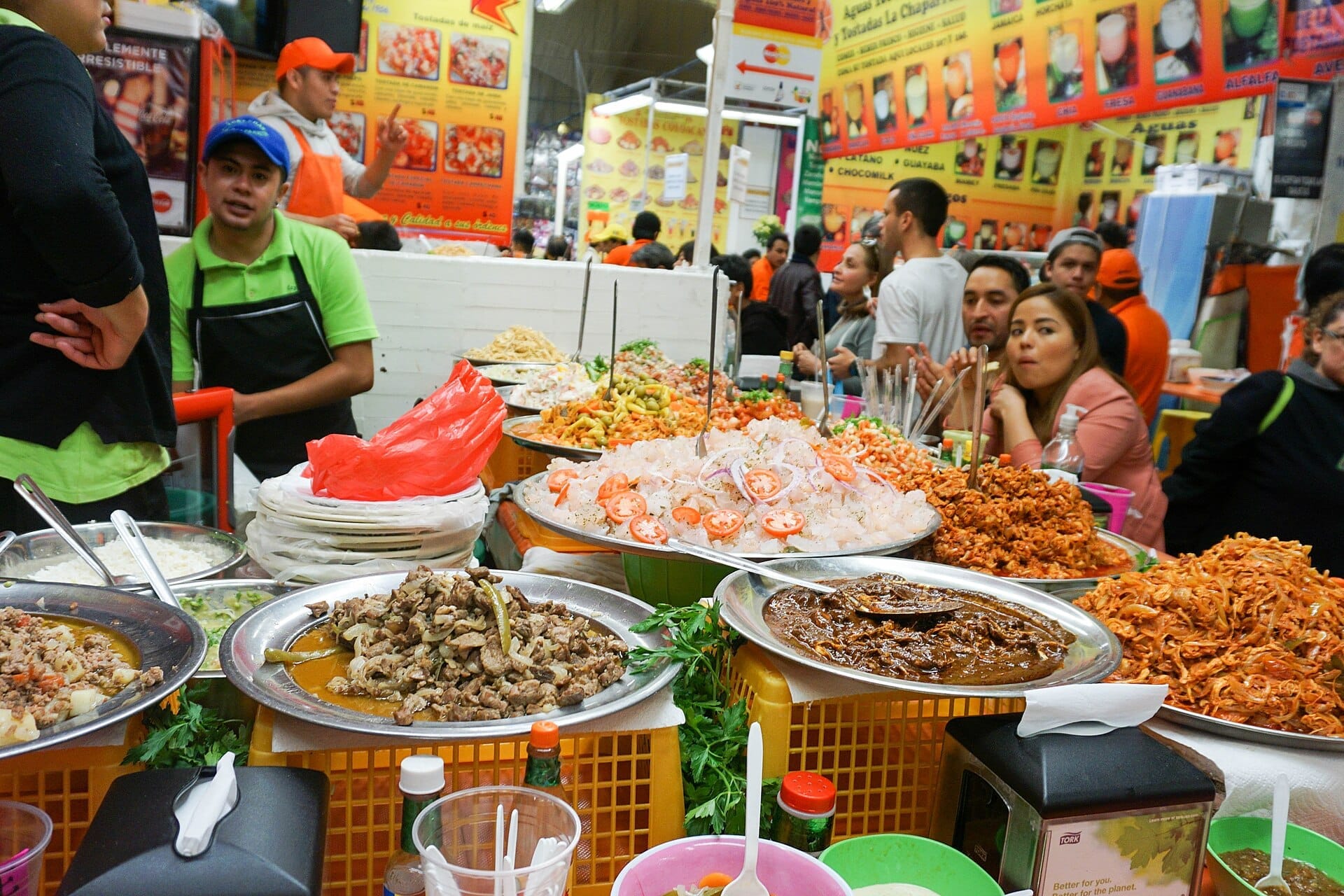
With 489 commercial units and 419 vendors, this is not a boutique artisan market or a sanitized food hall. It is a real public mercado, noisy and fragrant, where fish vendors call out to passersby, cheese rounds sit stacked beside dried chiles, and tostada counters operate at full pace from the moment the doors open. Daily footfall is estimated at 1,500 to 2,000 people, making it one of the more active markets in the southern city.
Its location between Calle Xicoténcatl and Malitzin in Colonia Del Carmen puts it within easy walking distance of the Frida Kahlo Museum (Casa Azul) and the wider Coyoacán historic center, which makes it a natural stop on any Coyoacán itinerary. But visitors who treat it only as an add-on to the Kahlo museum will miss the point. The market is worth time on its own terms.
The Physical Space: What to Expect When You Walk In
The building's mid-century design philosophy is evident from the entrance: broad interior corridors, high corrugated rooflines, and clerestory windows that flood the central passages with diffuse natural light. Unlike some of Mexico City's more labyrinthine markets, Mercado de Coyoacán is relatively navigable, with identifiable sections for produce, meat and fish, dairy, prepared food, and handicrafts.
The sensory experience shifts block by block. Near the entrances, you smell fresh herbs and cut flowers — marigold bundles piled deep, particularly in the weeks around Día de Muertos. Move inward and the scent changes to grilled meat and warming chile sauces. The food stalls cluster toward the center, where plastic-topped counters line both sides of the aisle and stools fill quickly at peak hours. The sound is layered: the crack of a molcajete, a radio playing cumbia at a vegetable stand, the high-pitched whistle of a pressure cooker somewhere out of sight.
💡 Local tip
Arrive between 9am and 11am on a weekday for the most comfortable experience. Stalls are well-stocked, the prepared food sections are at full operation, and crowds are manageable. Weekend midday visits can get congested around the tostada counters.
Tickets & tours
Live prices and dates from our booking partner. If you book, we may earn a commission at no extra cost to you.
Xochimilco, Coyoacan and Frida Kahlo Museum with skip-the-line tickets
From 63 €Instant confirmationFree cancellationBlue House, Coyoacan and Xochimilco tour with transportation
From 68 €Instant confirmationFree cancellationXochimilco, Coyoacan and Frida Kahlo Museum private tour
From 356 €Instant confirmationFree cancellationShared Tour to Xochimilco, Coyoacan and UNAM Murals
From 32 €Instant confirmationFree cancellation
Food: The Main Reason Most Visitors Come
The prepared food section is the market's main draw for tourists, and the reputation is deserved. Tostadas are the signature item: crisp fried tortillas piled with tinga (shredded chipotle chicken), ceviche, octopus, or tinned seafood, depending on the stall. The competition between neighboring vendors is visible in the towers of toppings they pile on — more a measure of pride than portion size. Prices are among the most reasonable you'll find anywhere in Mexico City for this quality of ingredient.
Beyond tostadas, the market offers quesadillas made to order on a comal, memelas, enfrijoladas, and pozole at a handful of deeper stalls. The produce section supplies much of what's sold around it: avocados sorted by ripeness, dried chiles from mulato to pasilla, and cactus paddles pre-cut and ready to cook. If you're staying somewhere with a kitchen, this is a practical shopping stop, not just a spectacle.
If you want to understand how Coyoacán's local food culture connects to the broader city, the market is worth pairing with a walk through the neighborhood afterward. The Coyoacán neighborhood has a concentration of cafes, traditional restaurants, and street food vendors on its plazas — the market is the anchor of that food identity, not an isolated attraction.
⚠️ What to skip
Prepared food stalls at the market are cash-only. Bring Mexican pesos; card readers are uncommon at market counters. ATMs are available on the nearby streets, including along Avenida Francisco Sosa.
Handicrafts, Textiles, and Artisan Goods
A section of the market sells handicrafts, textiles, and souvenirs aimed at visitors. The quality and authenticity of goods varies considerably. You'll find embroidered blouses, hand-painted ceramics, Oaxacan rugs, and leather goods sitting alongside mass-produced tourist items. Neither category is inherently bad, but knowing the difference matters if you're shopping with purpose.
For higher-end or more carefully curated crafts, the Saturday Artisan Market in nearby San Ángel is the better destination. The Mercado de Coyoacán craft section is better suited to practical purchases: kitchen items, colorful oilcloth tablecloths, day-of-the-dead figures, or a few small gifts at market prices.
If artisan craft shopping is a priority during your visit, complement this stop with a trip to the San Ángel Saturday Market (Bazaar del Sábado), which operates on Saturday mornings and features higher-end curated work by established Mexican artisans.
How the Market Changes Through the Day
Opening hours are listed as 9am to 6pm daily, but the character of the market shifts significantly across those hours. Early morning (8am to 10am) belongs to the neighborhood: local residents buy fresh produce, vendors arrange their displays, and the food stalls are just getting their first pots going. If you want to observe market life without the tourist layer, this is the window for it.
By late morning, tourists start arriving in waves, usually after visits to the Frida Kahlo Museum, which opens at 10am. The lunch rush peaks between noon and 2pm, when the tostada counters have no empty stools and ordering requires confidence. By 4pm, the energy begins to drop off: some produce vendors wrap up, and the food stalls start consolidating what's left on the comals. By 5:30pm, the market is winding down noticeably.
ℹ️ Good to know
The market is open every day of the week including weekends and most public holidays, though individual vendors may close for personal occasions. There are no announced seasonal closures, but hours may shift during major holidays. Verify on-site during Semana Santa and the Christmas period.
Getting There and Practical Logistics
The nearest Metro station is Viveros/Derechos Humanos on Line 3 (the olive-green line), from which the market is roughly a 15-minute walk through pleasant residential streets. The walk is flat and straightforward, passing along Calle Francisco Sosa, one of the more attractive pedestrian routes in the southern city. Alternatively, Metro Coyoacán (also Line 3) is slightly farther by foot but more directly served by ride-hailing apps dropping off near the market.
Coyoacán is located in the south of Mexico City and takes 30 to 45 minutes from the historic center by Metro, depending on your starting point. For general orientation on getting around the city efficiently, the guide to getting around Mexico City covers Metro routes, Metrobús, and ride-hailing options in detail.
Parking in Coyoacán on weekends is notoriously difficult. If you're driving, arriving before 10am on a Saturday gives you a reasonable chance of finding street parking within a few blocks. On Sunday afternoons, when the plazas fill with weekend visitors and the market draws its largest crowds, finding parking by car is more effort than it's worth.
On accessibility: the market's wide interior aisles and high-roof design favor circulation, and the ground-level entrances avoid major steps at the main access points. That said, no official accessible facilities documentation is publicly available from the municipal authority. Visitors with specific mobility needs should verify conditions on-site, as market floors can be uneven in older sections and crowded aisles can be difficult to navigate in a wheelchair during peak hours.
Photography and Atmosphere
The Mercado de Coyoacán photographs well because the light is good. The clerestory skylights create a soft, even quality that doesn't blow out whites or sink shadows the way direct sun or artificial market lighting tends to. The produce sections in particular, with their ordered stacks of chiles, citrus, and herbs, reward close composition.
The general atmosphere here is one of working tolerance rather than tourist performance. Vendors are not posing for cameras and may prefer you ask before photographing them directly. Pointing a lens at someone's tostada or a display of dried flowers is unlikely to cause friction. Photographing people working at close range without acknowledgment is not. A small nod and a smile goes a long way, and often results in better photographs anyway.
For travelers interested in exploring more of Mexico City's market scene, the capital has a rich range of public mercados across different neighborhoods. The Mexico City street food guide covers the broader food landscape, from market tostada counters to late-night taco stands across the city.
Who Should Skip This, and Why
Mercado de Coyoacán is not the right destination for travelers seeking a curated gourmet food experience. The food is good and genuine, but the setting is a functional public market: shared counters, plastic stools, no menus in English, and service that assumes you know what you want. Visitors expecting an Instagram-optimized food hall will find the reality messier and louder than expected, which is either its appeal or its drawback depending on the traveler.
Travelers on very tight schedules who are primarily visiting the Frida Kahlo Museum may find the market a slightly repetitive stop if they've already visited Mercado de la Ciudadela or Mercado Jamaica earlier in their trip. It is excellent for what it is, but it does not offer something radically different from other large Mexico City markets. If markets are already checked off your list and time is limited, the Coyoacán plazas and garden areas around the neighborhood may offer more variety.
Insider Tips
- The tostada stalls in the central aisle are the most photographed, but the smaller counter near the back of the seafood section tends to have shorter lines and equally good quality. Look for the one with the hand-painted price board.
- Visit on a Tuesday or Wednesday morning to see the market at its most local. Weekends draw a noticeably higher proportion of tourists and weekend-outing families, which makes the food lines longer and the craft section more crowded.
- The flower vendors near the side entrance on Calle Malitzin stock seasonal blooms at significantly lower prices than what you'll find in Roma or Polanco. If you're staying somewhere with a vase, buying flowers here makes practical sense.
- If you're visiting Coyoacán during late October or early November, the market's marigold displays during Día de Muertos preparations are remarkable. The volume of cempasúchil (marigold) sold in the days before November 1st transforms the market's color and scent entirely.
- Combine the market with a walk east along Calle Higuera toward the Plaza Hidalgo afterward. The route passes several traditional torta shops and small cafes that don't show up in most travel lists but are solidly good.
Who Is Mercado de Coyoacán For?
- Food travelers who want to eat tostadas and prepared Mexican food at local prices
- Travelers building a full-day Coyoacán itinerary that includes the Frida Kahlo Museum and the historic plazas
- Families looking for a practical, non-ticketed stop with varied food options for different preferences
- Photographers drawn to market light, texture, and color at a natural pace
- Visitors interested in everyday Mexico City life rather than curated tourist experiences
Nearby Attractions
Other things to see while in Coyoacán:
- Museo Anahuacalli
Conceived by Diego Rivera in 1933 and built from volcanic rock quarried near Coyoacán, the Museo Anahuacalli is part museum, part monument, and part personal mythology. It holds Rivera's collection of over 50,000 pre-Columbian artifacts and feels unlike any other cultural space in Mexico City.
- Museo Nacional de Culturas Populares
Founded in 1982 by anthropologist Guillermo Bonfil Batalla, the Museo Nacional de Culturas Populares in Coyoacán is one of Mexico City's most underrated cultural institutions. Dedicated entirely to temporary exhibitions on indigenous crafts, regional traditions, and living popular culture, it offers something different every visit — all for a nominal fee of about 22 MXN, or nothing at all on Sundays.
- Museo Frida Kahlo (Casa Azul)
The Frida Kahlo Museum, known as La Casa Azul, is one of Mexico City's most-visited cultural sites. Located in the tree-lined streets of Coyoacán, this cobalt-blue house is where Kahlo was born, lived most of her life, and died. The rooms preserve her belongings, her studio, and an extraordinary collection of pre-Columbian artifacts as if time stopped in 1954.
Planning a trip? Discover personalized activities with the Nomado app.