Museo Anahuacalli: Inside Diego Rivera's Pre-Hispanic Temple of Stone
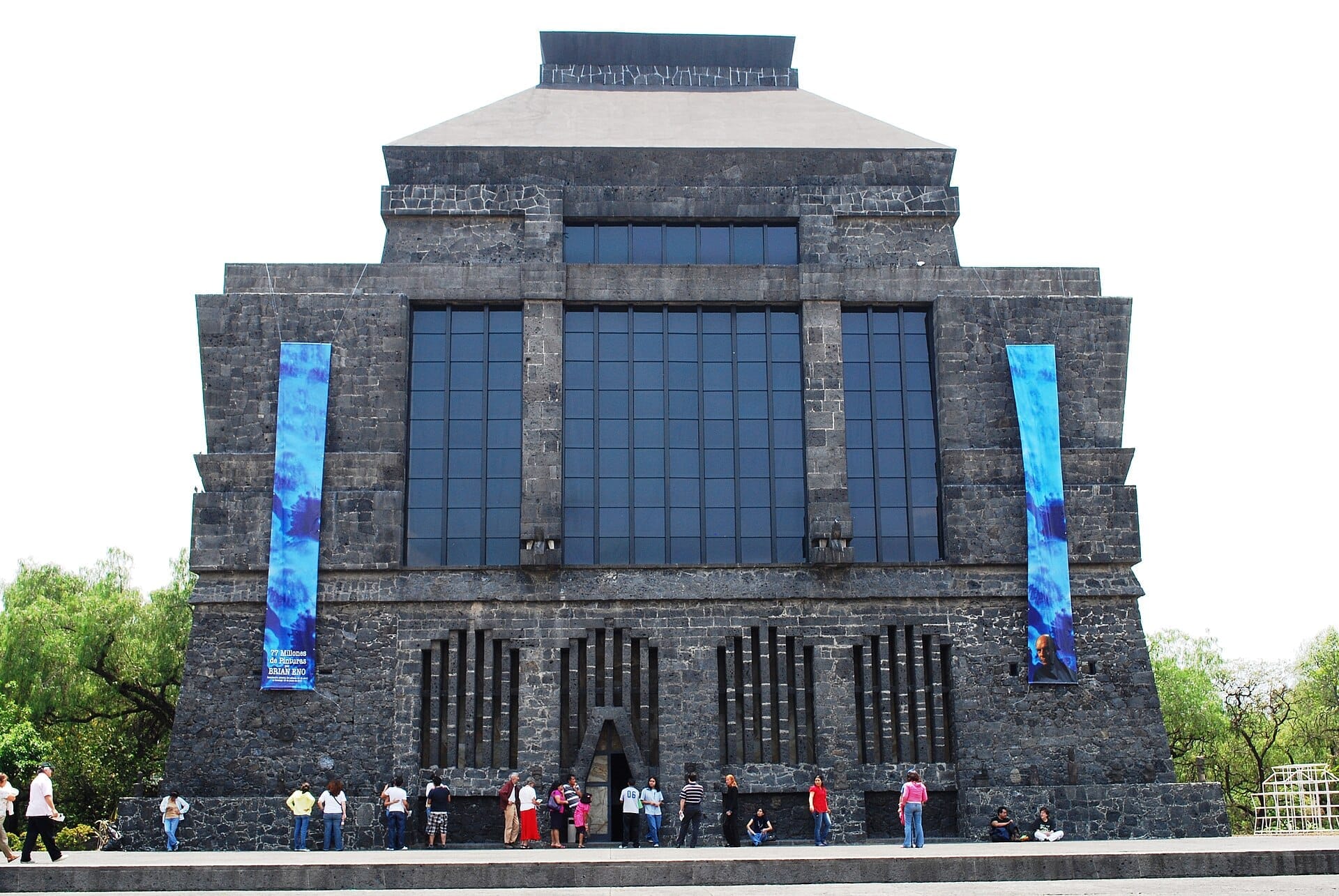
Conceived by Diego Rivera in 1933 and built from volcanic rock quarried near Coyoacán, the Museo Anahuacalli is part museum, part monument, and part personal mythology. It holds Rivera's collection of over 50,000 pre-Columbian artifacts and feels unlike any other cultural space in Mexico City.
Quick Facts
- Location
- Calle Museo 150, San Pablo Tepetlapa, Coyoacán, CDMX
- Getting There
- Tren Ligero: Nezahualpilli station (~15-min walk) or Registro Federal station (~20-min walk)
- Time Needed
- 1.5 to 2.5 hours
- Cost
- General ~100 MXN; discounts for Mexican students, teachers, and seniors with valid ID; under 6 free. Photo permit ~30 MXN. Verify current rates.
- Best for
- Architecture lovers, pre-Hispanic art, Diego Rivera fans, serious culture travelers
- Official website
- http://www.museoanahuacalli.org.mx
What Is the Museo Anahuacalli?
The Museo Anahuacalli is one of the most architecturally singular buildings in all of Mexico City. Diego Rivera began designing it in 1933 as a personal temple to house his obsessive collection of pre-Columbian artifacts — a collection that eventually grew to over 50,000 pieces. Rivera did not live to see its completion. He died in 1957, and the museum opened to the public in 1964, completed by architect Ruth Rivera Marín in collaboration with architect Juan O’Gorman and the Mexican government.
The name itself tells you something about Rivera's intentions. 'Anahuacalli' comes from Nahuatl: 'Anahuac,' the ancient name for the Valley of Mexico, and 'calli,' meaning house. This was meant to be the house of the valley — a personal bridge between Rivera's own artistic identity and the deep pre-Hispanic roots he spent his career referencing and revering.
The museum sits in the southern Coyoacán neighborhood of San Pablo Tepetlapa, not far from the Frida Kahlo Museum (Casa Azul) that draws the bulk of tourist attention to the area. But Anahuacalli is quieter, more contemplative, and in many ways more architecturally rewarding. If you are already planning a visit to the Frida Kahlo Museum, consider making Anahuacalli your first stop of the morning before the neighborhood fills with tour groups.
The Architecture: A Building That Feels Like a Ruin
Nothing about the Museo Anahuacalli looks accidental. Rivera designed the structure using dark volcanic basalt (tezontle and similar local stone) quarried from the Pedregal lava fields — the same terrain that would later be used to build the UNAM campus to the west. The result is a building that appears ancient on first approach, as though it has always been there. Its massing is stepped and pyramidal, referencing Mesoamerican temple forms without literally copying any single style. From a distance, it reads as monolithic and slightly forbidding.
Up close, the surface texture rewards attention. The rough-cut stone is irregular and tactile, absorbing rather than reflecting light. On overcast mornings, the whole structure takes on a deep charcoal tone. When afternoon sun hits the western facade, the stone warms noticeably, picking up amber and rust undertones that shift the building's character entirely. Visiting at two different times of day would give you what feel like two different buildings.
The interior corridors are deliberately dim, lit by narrow apertures and filtered skylights. Temperature drops noticeably once you move inside — the thick stone walls hold cool air even in the warmest months. Floors are uneven in places. Ceilings in some galleries are low. The spatial experience is intentional: Rivera wanted visitors to feel they were entering a sacred, subterranean space rather than a conventional exhibition hall.
⚠️ What to skip
The museum is not wheelchair accessible or stroller-friendly due to its multi-level design, uneven stone floors, and narrow interior passages. Plan accordingly if visiting with young children or mobility considerations.
Tickets & tours
Live prices and dates from our booking partner. If you book, we may earn a commission at no extra cost to you.
Xochimilco, Coyoacan and Frida Kahlo Museum with skip-the-line tickets
From 63 €Instant confirmationFree cancellationFrida Kahlo and Diego Rivera legacy visit to three museums with skip-the-line tickets
From 67 €Instant confirmationFree cancellationSix Flags Amusement Park tickets and transportation
From 87 €Instant confirmationFree cancellationMexico City National Museum of Anthropology guided tour
From 57 €Instant confirmationFree cancellation
The Collection: 50,000 Artifacts in Historical Context
Rivera accumulated pre-Columbian objects throughout his adult life — figurines, masks, ritual vessels, deity representations, and everyday objects spanning multiple cultures and time periods. The collection covers pieces from the Aztec (Mexica), Maya, Toltec, Olmec, Zapotec, and other traditions. Rivera was not a trained archaeologist, and he acquired objects through purchase and trade at a time when the legal and ethical frameworks around cultural patrimony were different from today. What you see here is a deeply personal collection shaped by aesthetic preference and ideological meaning as much as scholarly systematics.
The display cases are older in style — the kind of dense, taxonomic arrangements that major national museums have largely moved away from. Objects are grouped by culture and type rather than narrative. This approach may frustrate visitors expecting modern interpretive signage, but it suits the space: Anahuacalli is not trying to teach pre-Hispanic history in the way that the Museo Nacional de Antropología does. It is showing you how Rivera saw and organized these objects, which is itself a window into his artistic worldview.
If you want deeper interpretive context for the cultures represented in the collection, the Museo Nacional de Antropología in Chapultepec provides precisely that, at a very different scale. Anahuacalli and Antropología complement each other well across a two-day cultural itinerary.
Rivera's Studio and the Personal Layer
One of the building's upper levels contains Rivera's personal studio, preserved with some of his working materials and sketches. This space makes the museum feel less like an institution and more like an intimate encounter with someone's private world. The studio overlooks the surrounding lava landscape through narrow windows, and the light there in the late morning is remarkably still.
There are unfinished murals in parts of the building — sections Rivera planned but never completed before his death. Rather than being filled in by another artist, these blank areas were left as they are, which gives the space an unresolved quality that is oddly moving. The building is both finished and permanently incomplete.
Visitors with a strong interest in Rivera's life and work often pair Anahuacalli with the Museo Casa Estudio Diego Rivera in San Ángel, where Rivera and Kahlo's interconnected studio houses are preserved. The two sites together offer a comprehensive portrait of Rivera's domestic and creative world across different periods of his life.
When to Visit and How to Get There
The museum is generally open Tuesday through Sunday, from 11:00 to 18:00, and is closed on Mondays and often on Wednesdays. Opening hours have varied across different sources — one listing indicates closure on Wednesdays as well — so checking the official site or calling ahead before making a special trip is strongly recommended, particularly around public holidays.
Arriving shortly after opening on a weekday gives you the best chance of having the galleries largely to yourself. The museum rarely reaches the crowd levels of nearby Coyoacán's main plaza, but weekend afternoons can bring organized school groups that make the narrow interior corridors feel congested. The building's dim interior is particularly atmospheric on bright days, when the contrast between outdoor glare and interior shadow is most pronounced.
The nearest public transit access is via the Tren Ligero light rail. Nezahualpilli station is approximately a 15-minute walk from the museum entrance, while Registro Federal is around 20 minutes away on foot. The walk passes through a quiet residential stretch; the route is straightforward but not particularly scenic. Ride-hailing apps (Uber, DiDi, Cabify) are a practical alternative and are widely available in this part of the city. If you are already in central Coyoacán, the museum is about a 20-minute walk south from the main plaza area.
💡 Local tip
Buy your photography permit at the entrance desk — the roughly 30 MXN fee allows stills throughout the museum. The interior light is challenging: slow your shutter speed and embrace the grain. Tripods are not permitted in the galleries.
Practical Considerations: Weather, Wear, and Altitude
Mexico City sits at approximately 2,240 meters above sea level, and first-time visitors sometimes underestimate the effect of altitude on physical comfort, particularly when walking longer distances between sites. Coyoacán's southern location and relatively open streetscape mean more sun exposure than the shaded colonial corridors of the historic center.
The dry season (roughly November through April) offers more reliable conditions for a full day of Coyoacán exploration. During the rainy season (May through October), afternoon downpours are common but usually brief. Because much of Anahuacalli's appeal involves the outdoor approach to the building and the surrounding lava landscape, a dry morning visit is preferable. For broader timing guidance on visiting Mexico City, see the best time to visit Mexico City guide.
Wear flat, closed-toe shoes. The interior floors are uneven volcanic stone, and some passages involve steps with inconsistent heights. Light layers are useful: the exterior can feel warm in afternoon sun, while the interior stays noticeably cool year-round.
Is It Worth the Trip?
For travelers with a serious interest in pre-Hispanic Mexico, Diego Rivera, or ambitious 20th-century architecture, Anahuacalli is one of the most rewarding single sites in Mexico City. The experience is markedly different from anything in the historic center or Polanco's museum corridor. The building thinks of itself as a monument, and it has the weight and intentionality to back that up.
If your Mexico City time is limited and you are primarily interested in muralism, Rivera's output at the National Palace or the Palacio de Bellas Artes will give you more immediately legible work in locations you are already likely visiting. Anahuacalli rewards patience and curiosity rather than quick, high-impact visits.
Travelers working through a broader Coyoacán cultural day — combining the Frida Kahlo Museum, the Mercado de Coyoacán, and the neighborhood's central plazas — can fit Anahuacalli into the itinerary if they start early. It pairs naturally with the southern end of a Coyoacán walking day.
Insider Tips
- The rooftop terrace, accessible from the upper levels, offers an unexpected view over the surrounding lava landscape and the middle-distance skyline of southern CDMX — worth finding before you leave.
- Photography inside requires a permit purchased at the entrance (~30 MXN). The stained-glass mosaic elements Rivera incorporated near the upper studio repay close attention and photograph well in morning light.
- The museum's surrounding grounds include the remnants of the original Pedregal lava field. Arriving 10–15 minutes early lets you take in the exterior and approach path without rushing, which sets up the interior experience considerably better.
- Signage is primarily in Spanish. If you want deeper context for specific artifacts, download a translation app before arriving rather than relying on finding English-speaking staff.
- Weekday mornings between opening (11:00) and 13:00 are consistently the quietest. Weekend afternoons regularly see organized school visits that change the acoustic environment of the narrow galleries substantially.
Who Is Museo Anahuacalli For?
- Architecture enthusiasts drawn to the intersection of modernist and pre-Columbian design
- Diego Rivera scholars and serious fans wanting to understand his personal mythology beyond the murals
- Travelers with prior interest in pre-Hispanic cultures looking for an intimate collection experience
- Photographers interested in dramatic, naturally lit stone interiors
- Visitors combining a full cultural day across southern Mexico City and Coyoacán
Nearby Attractions
Other things to see while in Coyoacán:
- Mercado de Coyoacán
Mercado de Coyoacán (officially Mercado Público No. 89 'Coyoacán') is a free public market open daily from 9am to 6pm, with 489 stalls selling fresh produce, prepared food, handicrafts, and more. Located steps from the Frida Kahlo Museum in one of Mexico City's most distinctive southern neighborhoods, it offers one of the most genuine market experiences in the capital.
- Museo Nacional de Culturas Populares
Founded in 1982 by anthropologist Guillermo Bonfil Batalla, the Museo Nacional de Culturas Populares in Coyoacán is one of Mexico City's most underrated cultural institutions. Dedicated entirely to temporary exhibitions on indigenous crafts, regional traditions, and living popular culture, it offers something different every visit — all for a nominal fee of about 22 MXN, or nothing at all on Sundays.
- Museo Frida Kahlo (Casa Azul)
The Frida Kahlo Museum, known as La Casa Azul, is one of Mexico City's most-visited cultural sites. Located in the tree-lined streets of Coyoacán, this cobalt-blue house is where Kahlo was born, lived most of her life, and died. The rooms preserve her belongings, her studio, and an extraordinary collection of pre-Columbian artifacts as if time stopped in 1954.
Planning a trip? Discover personalized activities with the Nomado app.