Museo Franz Mayer: Mexico City's Definitive Decorative Arts Museum
Housed in a beautifully restored 18th-century hospital just off Alameda Central, the Museo Franz Mayer holds one of Latin America's most significant collections of applied arts and decorative objects. From colonial-era silverware to Talavera ceramics, it rewards visitors who look closely and linger long.
Quick Facts
- Location
- Av. Hidalgo 45, Centro Histórico, Mexico City
- Getting There
- Turibus Historic Center Circuit stops directly outside on Av. Hidalgo; Juárez Hemicycle stop (eastbound) is a 5-min walk across Alameda Central
- Time Needed
- 1.5 to 2.5 hours
- Cost
- Admission charged; verify current prices at boletos.franzmayer.org.mx before visiting
- Best for
- Design and craft lovers, architecture enthusiasts, anyone wanting a quieter museum experience in Centro Histórico
- Official website
- franzmayer.org.mx
What Is the Museo Franz Mayer?
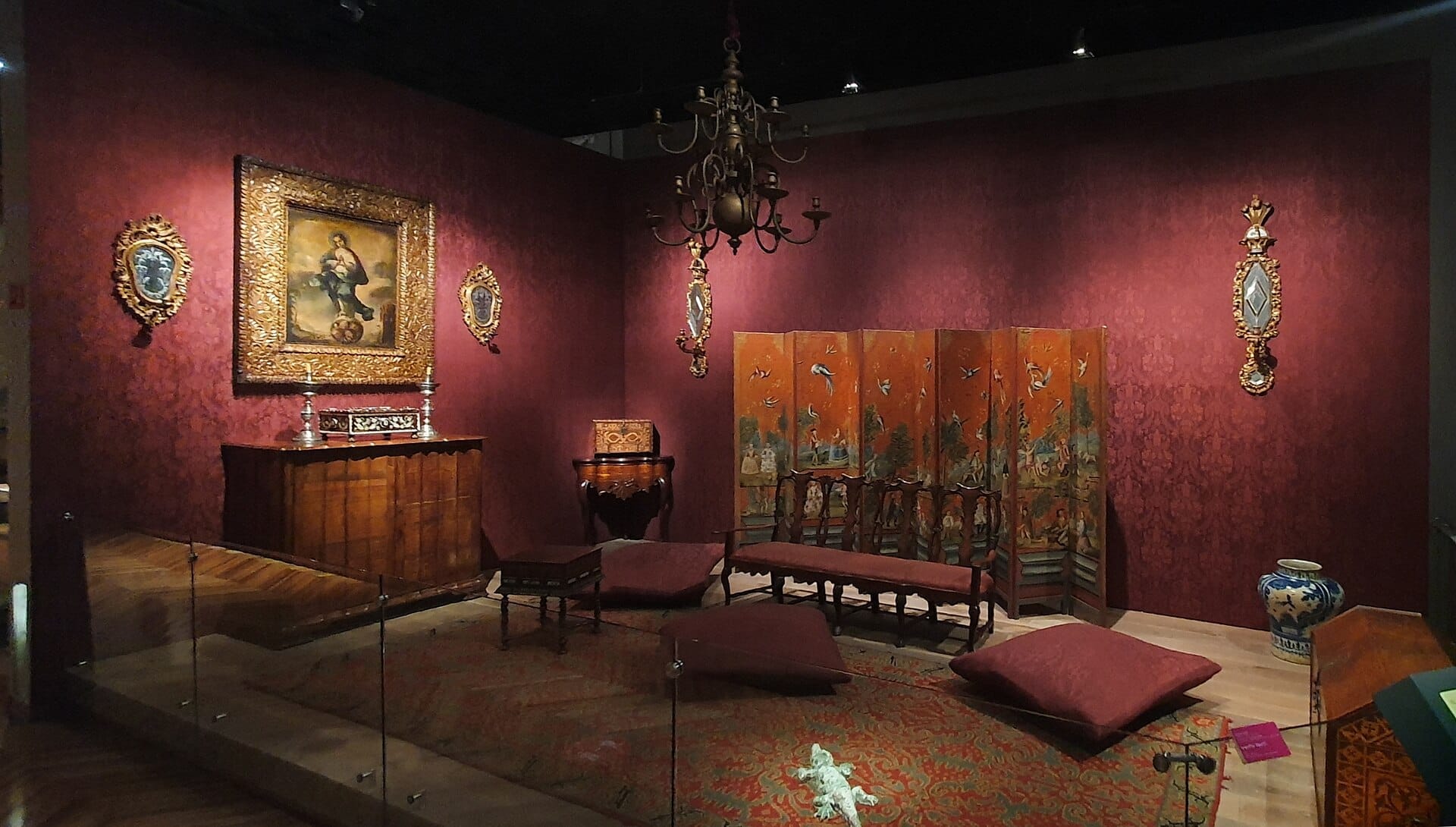
The Museo Franz Mayer is a decorative arts and design museum occupying an 18th-century former hospital complex on the north side of Alameda Central, Mexico City's oldest public park. The collection spans roughly four centuries of applied arts: colonial-era silverware, Talavera pottery, furniture, textiles, clocks, lacquerware, and European and Asian objects that arrived in New Spain via trade routes. What sets it apart from the city's bigger institutions is specificity. This is not a survey of all Mexican history; it is a deep, curated look at how craft and design evolved across cultures and centuries.
The museum project began in 1981 when the former Hospital de San Juan de Dios building was handed over for restoration and eventual use as a cultural institution, and it opened to the public in 1986. It sits directly across Avenida Hidalgo from the Alameda Central, which means you can easily combine both in a single morning. The building itself is reason enough to visit: a colonial cloister arranged around a central courtyard, with arcaded walkways, stone fountains, and a planted garden that provides unexpected quiet in one of the city's most trafficked districts.
💡 Local tip
Ticket prices are not displayed on all third-party listings. Always verify the current admission fee directly at boletos.franzmayer.org.mx before you go, as prices are subject to change.
The Collection: What You Actually See
The permanent collection is divided across galleries that ring the cloister on multiple levels. The Talavera ceramics section is among the most comprehensive in Mexico: tiles, plates, urns, and decorative pieces produced in Puebla from the 17th century onward, their distinctive blue-on-white and polychrome designs reflecting the fusion of Spanish, Moorish, Chinese, and indigenous visual traditions. Running your eyes across an entire wall of these pieces, you start to see how styles shifted across generations.
Colonial-era furniture fills several rooms: heavy carved wooden pieces, inlaid chests, and lacquered screens (biombos) that reflect the influence of Asian trade goods arriving through the Manila Galleon. Clocks from Europe sit alongside Mexican silverwork. The collection is not arranged to impress with scale; it is arranged to be read, piece by piece. Descriptive panels are available in Spanish, and some areas provide English translations, though the museum is not fully bilingual throughout.
The library on site is one of the more specialized resources in the country for researchers interested in decorative arts, though general visitors do not typically access the stacks. Temporary exhibitions occupy additional gallery space and rotate regularly, covering graphic design, photography, and contemporary craft. These can be well worthwhile, particularly when they place historical objects in dialogue with current makers.
Tickets & tours
Live prices and dates from our booking partner. If you book, we may earn a commission at no extra cost to you.
Xochimilco, Coyoacan and Frida Kahlo Museum with skip-the-line tickets
From 63 €Instant confirmationFree cancellationFrida Kahlo and Diego Rivera legacy visit to three museums with skip-the-line tickets
From 67 €Instant confirmationFree cancellationSix Flags Amusement Park tickets and transportation
From 87 €Instant confirmationFree cancellationMexico City National Museum of Anthropology guided tour
From 57 €Instant confirmationFree cancellation
The Building: A 16th-Century Hospital Transformed
The former Hospital de San Juan de Dios complex dates to the colonial period and was substantially rebuilt in the 18th century, and its bones are evident throughout the museum. The central courtyard is the architectural heart of the visit: a double-arcaded space with stone columns, terracotta floor tiles, and a garden of mature plants that filters afternoon light into the surrounding galleries. The walls show the textural contrast of old stonework and later restorations, which is not a flaw but a record of the building's long life.
Walking the arcaded corridors, you pass from room to room with the courtyard always visible through open archways, which gives the visit a rhythm that large open-plan museums lack. The spatial layout encourages slowness. This is not the Museo Nacional de Antropología with its vast, sweeping halls — it is a more intimate institution, and it rewards visitors who are willing to stop and look at individual objects rather than move through galleries at pace.
When to Visit: Time of Day and Seasonal Considerations
The museum opens Tuesday through Sunday from 10:00 a.m. to 5:00 p.m. It is closed on Mondays. Weekday mornings, particularly Tuesday through Thursday, tend to be the least crowded. Weekend afternoons draw more visitors, especially local families, and the courtyard cafe sees heavier use.
Morning light enters the courtyard from the east and gradually shifts over the day, making the 10:00 a.m. to noon window particularly pleasant for photographing the architectural details. By mid-afternoon in the rainy season (roughly May through October), brief heavy showers are common across Centro Histórico. The museum provides shelter and is an excellent place to wait out a downpour, but keep this in mind when planning your route through the neighborhood.
ℹ️ Good to know
Mexico City sits at approximately 2,240 meters above sea level. If you have recently arrived, pace yourself on any day of sightseeing — fatigue sets in faster than expected at altitude, and a museum visit is a good low-exertion activity while you acclimatize.
Getting There and Practical Logistics
The museum's address is Av. Hidalgo 45, Centro Histórico. The Turibus Historic Center Circuit stops directly in front of the building on Avenida Hidalgo, making it accessible without navigating metro transfers. If you are arriving by metro, the nearest practical route involves walking from nearby stations on Lines 2 or 8; the walk through Centro Histórico passes other points of interest and takes roughly 10 to 15 minutes depending on your starting point. The Juárez Hemicycle bus stop on the east side of the Alameda is about a 5-minute walk across the park.
Ride-hailing apps including Uber, DiDi, and Cabify operate in Mexico City and can drop you directly on Avenida Hidalgo, though traffic in Centro Histórico is congested during weekday peak hours. If you are coming from Roma, Condesa, or Polanco, a taxi or app-based ride is often the most practical option.
Accessibility details are not explicitly published in official sources reviewed at time of writing. Contact the museum directly before visiting if you have specific mobility requirements, as the colonial building involves uneven stone surfaces and multi-level gallery access.
⚠️ What to skip
The museum is closed on Mondays. Many travelers arriving after a weekend trip to surrounding sites lose a morning by not checking this in advance. Confirm current opening hours at franzmayer.org.mx before planning your day.
Photography, the Cafe, and What Else is Nearby
Photography is generally permitted in the permanent collection without flash. The courtyard is the most photogenic space in the building: shoot from the arcaded corridor looking inward, or position yourself in the garden looking up at the stone arches. The light is best between 10:00 a.m. and noon. In temporary exhibitions, photography rules may vary, so check the signage at each gallery entrance.
The museum has a cafe in the courtyard that serves coffee, light meals, and pastries. It is a legitimate reason to extend your visit, particularly if you are combining the Franz Mayer with the Museo Mural Diego Rivera across the Alameda, which houses Diego Rivera's famous panoramic mural 'Sueño de una Tarde Dominical en la Alameda Central.' Both museums occupy opposite sides of the park and fit naturally into the same half-day.
Further into Centro Histórico, the Palacio de Bellas Artes is a short walk east along Avenida Hidalgo. If you are interested in colonial religious art and Mexican history more broadly, the Metropolitan Cathedral and the National Palace at the Zócalo are reachable on foot in under 20 minutes.
Who Will Appreciate This Museum Most — and Who Might Not
The Museo Franz Mayer rewards visitors who are interested in craft, material culture, and design history. If you find yourself drawn to the question of how everyday objects looked and functioned in colonial-era Mexico, this collection will hold your attention for two hours or more. It is also a strong choice for travelers suffering from the particular exhaustion of large general museums, where the scale overwhelms before the content can connect.
If your priority is pre-Hispanic archaeology, dramatic murals, or contemporary art, this is not where you should spend your limited time in Mexico City. The collection is specialized and requires some patience with decorative arts as a category. Children may find the gallery-based format less engaging than the city's more interactive institutions, though the courtyard space itself tends to appeal broadly.
For travelers on a tight schedule, a practical three-day itinerary of Mexico City's major cultural sites would typically prioritize the Museo Nacional de Antropología and the Palacio de Bellas Artes first. The Franz Mayer fits well into a second or third day of exploration in Centro Histórico. See our 3-day Mexico City itinerary for a suggested sequencing.
Insider Tips
- The courtyard cafe is quietest on weekday mornings and provides an unusually calm setting for coffee in a neighborhood that is otherwise relentlessly busy at street level. It is worth factoring into your visit rather than treating it as optional.
- The museum's temporary exhibitions often receive less attention than the permanent collection but can be the more thought-provoking part of the visit. Check the current program on the official website before you go.
- Combine the Franz Mayer with the Museo Mural Diego Rivera directly across Alameda Central. Both are within a short walk of each other and the combined visit gives a strong contrast: applied arts and decorative objects on one side, monumental painted history on the other.
- If you are arriving by ride-hailing app, ask to be dropped specifically on Avenida Hidalgo rather than a broader address. The area around Alameda Central has several pedestrian restrictions that can cause drop-offs to land further away than expected.
- Weekday afternoons in the rainy season (May through October) bring reliable short downpours, typically between 2:00 p.m. and 5:00 p.m. The museum is a good place to be inside during these, so scheduling your visit to arrive at midday and exit after the rain passes is a practical strategy.
Who Is Museo Franz Mayer For?
- Design, craft, and decorative arts enthusiasts who want depth over breadth
- Architecture lovers drawn to colonial buildings repurposed as cultural spaces
- Travelers looking for a quieter, less overwhelming alternative to the city's larger museums
- Anyone combining a morning walk through Alameda Central with a focused cultural visit
- Photographers interested in colonial courtyard architecture and natural interior light
Nearby Attractions
Other things to see while in Centro Histórico:
- Alameda Central
Founded in 1592, Alameda Central is the oldest public park in the Americas and the green centerpiece of Mexico City's historic center. Flanked by the Palacio de Bellas Artes and a ring of colonial-era institutions, it offers free entry, shaded walkways, and a front-row seat to everyday city life.
- Calle Madero
Avenida Francisco I. Madero connects the Zócalo to the Torre Latinoamericana along one of the oldest streets in the Americas. Free to walk at any hour, it layers colonial architecture, street performance, and everyday city life into a single corridor that doubles as an open-air history lesson.
- Casa de los Azulejos
Casa de los Azulejos is one of the most photographed facades in Mexico City, its exterior wrapped in blue-and-white Talavera tiles from Puebla. With documented origins in the 16th century and operating as a Sanborns restaurant since 1919, it offers free entry and a rare chance to step inside a baroque palace that has survived centuries of history.
- La Ciudadela Artisan Market
The Mercado de Artesanías de La Ciudadela is one of Mexico City's largest and best-known handicraft markets, with more than 350 vendors selling handmade goods from across 22 states. Entry is free, quality ranges from tourist trinkets to serious collector pieces, and knowing how to navigate the stalls makes all the difference.
Planning a trip? Discover personalized activities with the Nomado app.