Museo de Arte Moderno: Mexico City's Circular Gallery in the Forest
The Museo de Arte Moderno (MAM) occupies two striking circular buildings inside Chapultepec Park, housing some of the finest 20th-century Mexican painting and sculpture in the country. With free admission on Sundays and a sculpture garden connecting the two structures, it rewards both art lovers and casual visitors who happen to be exploring the park.
Quick Facts
- Location
- Paseo de la Reforma y Gandhi s/n, Bosque de Chapultepec, Alcaldía Miguel Hidalgo, CDMX
- Getting There
- Metro Chapultepec (Line 1) or Auditorio (Line 7); Metrobús Gandhi (Line 7)
- Time Needed
- 1.5 to 2.5 hours
- Cost
- 95 MXN general admission; free Sundays and for students, teachers, INAPAM cardholders, and people with disabilities (valid ID required)
- Best for
- Mexican modernist art, architecture fans, Sunday free visits, combining with a Chapultepec Park walk
- Official website
- mam.inba.gob.mx
What the Museo de Arte Moderno Is
The Museo de Arte Moderno, known widely as MAM, was founded in 1964 as Mexico City's dedicated gallery for modern art. It sits inside the first section of Bosque de Chapultepec, the city's largest park, along Paseo de la Reforma near the Gandhi intersection. The museum is administered by the Instituto Nacional de Bellas Artes y Literatura (INBAL), placing it in the same federal cultural orbit as the Palacio de Bellas Artes.
The collection focuses on Mexican art from the early twentieth century onward, with particular strength in muralism-adjacent painting, abstract work, and figurative Mexican modernism. This is where you will find Frida Kahlo's 'Las Dos Fridas,' arguably the most reproduced work in the entire collection, alongside paintings by Diego Rivera, David Alfaro Siqueiros, Rufino Tamayo, and Gunther Gerzso. For anyone building a serious itinerary around Mexican modern art, MAM belongs on the list alongside the Museo Tamayo and the Museo Nacional de Arte.
💡 Local tip
General admission is free on Sundays. If your schedule allows, this is the easiest way to visit without paying the 95 MXN weekday rate. Arrive before 11:00 to beat the mid-morning crowd that filters in after breakfast.
The Architecture: Two Circles in the Forest
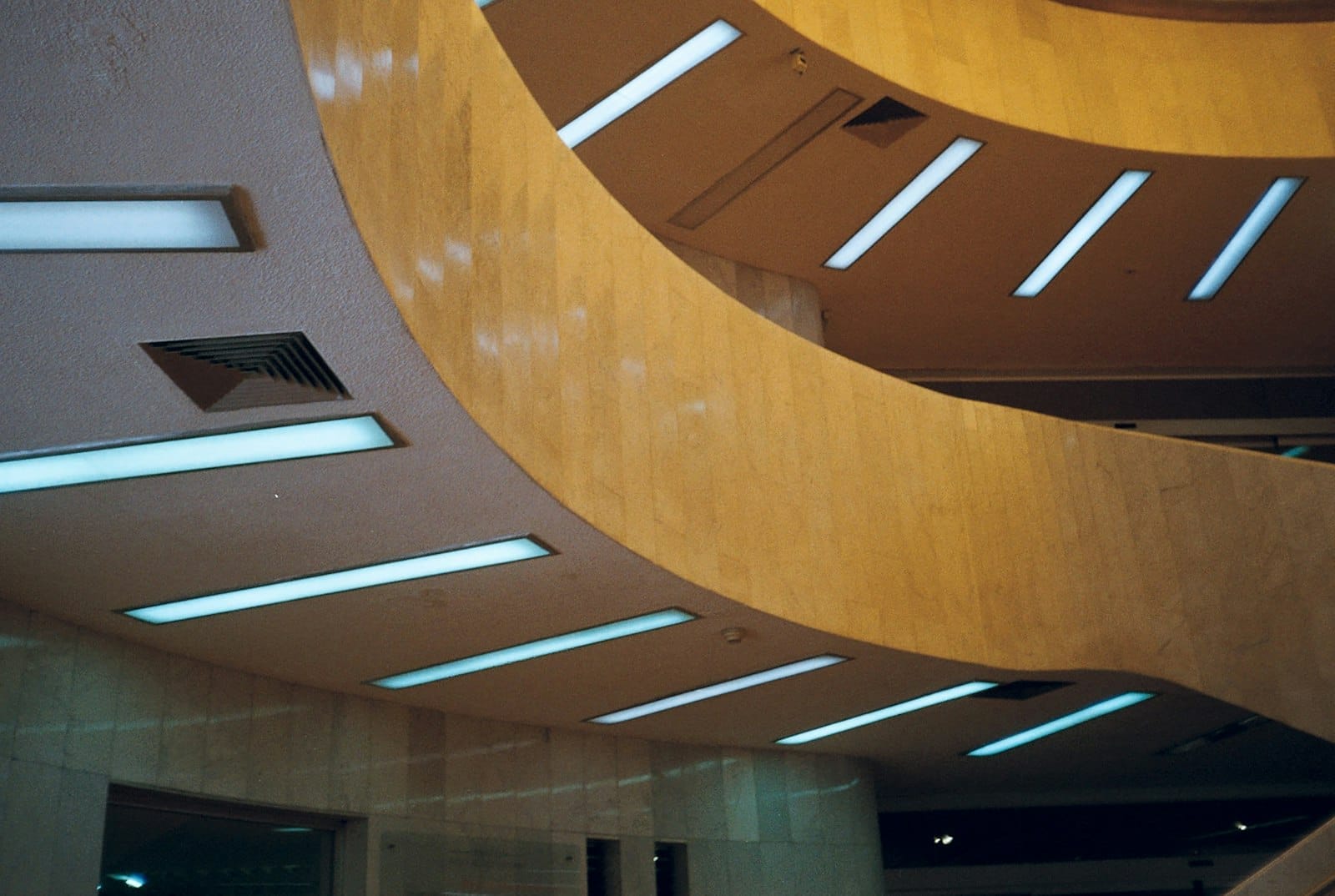
The buildings themselves are worth pausing over. Architects Pedro Ramírez Vázquez and Carlos A. Cazares Salcido designed two circular structures, each with two floors, divided into four halls and a gallery. Ramírez Vázquez was one of the most consequential Mexican architects of the twentieth century, also responsible for the Museo Nacional de Antropología and the original Estadio Azteca, and his touch here is characteristically confident: the rounded forms feel deliberate rather than decorative, sitting low in the landscape rather than competing with the tree canopy above.
The two buildings are connected by a sculpture garden that functions as a transitional space between the interior galleries and the surrounding park. On clear mornings, light filters through the trees and falls across the outdoor sculptures in ways that make the garden feel well integrated into the forest rather than tacked on. The exterior walls feature large glass panels that bring in natural light without exposing artwork to direct sun, a practical solution that also makes the interiors feel warmer and less clinical than many modernist museum buildings.
The museum sits a short walk from other cultural institutions clustered in this section of Chapultepec Park, including the Museo Nacional de Antropología and Museo Tamayo nearby. The proximity makes it easy to combine visits, though doing all three in a single day is ambitious unless you move quickly through each one.
Tickets & tours
Live prices and dates from our booking partner. If you book, we may earn a commission at no extra cost to you.
Xochimilco, Coyoacan and Frida Kahlo Museum with skip-the-line tickets
From 63 €Instant confirmationFree cancellationFrida Kahlo and Diego Rivera legacy visit to three museums with skip-the-line tickets
From 67 €Instant confirmationFree cancellationSix Flags Amusement Park tickets and transportation
From 87 €Instant confirmationFree cancellationMexico City National Museum of Anthropology guided tour
From 57 €Instant confirmationFree cancellation
The Collection: What You Will Actually See
The permanent collection runs across four halls and covers Mexican modernism with real depth. The strongest holdings are in mid-twentieth-century painting, the period when Mexican artists were either working within or consciously pushing back against the mural tradition that dominated the postrevolutionary decades. You will find works that grapple with Mexican identity, indigenous imagery, and political memory, alongside more formally abstract pieces that reflect international currents of the same era.
'Las Dos Fridas' (1939) by Frida Kahlo is the anchor of the collection and the painting most visitors come specifically to see. The scale, about 173 by 173 centimeters, surprises many people who only know it from reproductions. The two joined figures, one in European dress and one in Tehuana costume, sit against a turbulent sky. It is worth arriving at the room that houses it before the peak afternoon hours, when school groups and tour parties tend to congregate in front of it.
The temporary exhibition program cycles through several shows per year, covering both Mexican and international modern and contemporary work. The quality is consistently high, partly because INBAL's institutional reach allows access to significant loans. Check the official website before visiting to see what is currently on, since the temporary galleries sometimes house work that outshines the permanent collection on any given visit.
ℹ️ Good to know
Photography is generally permitted in the permanent collection galleries without flash. Rules for temporary exhibitions vary and are posted at the entrance to each room. When in doubt, ask a gallery attendant rather than assuming.
How the Experience Changes by Time of Day
MAM opens at 10:15 Tuesday through Sunday. The first hour tends to be quiet, particularly on weekdays, when the galleries hold only a handful of other visitors. The light in the main circular halls is at its most flattering in the morning, with softer illumination through the glass panels before midday sun sharpens shadows. If you want the experience of standing alone in front of 'Las Dos Fridas,' a Tuesday or Wednesday morning is your best opportunity.
By early afternoon, especially on weekends, the museum fills with a mix of families, students from local schools and universities, and tourists combining MAM with a broader Chapultepec visit. This is not unpleasant, but the galleries do feel noticeably more crowded between roughly 12:00 and 15:00. The sculpture garden, however, rarely feels overwhelmed regardless of internal crowd levels, and retreating there mid-visit is a practical way to reset.
The museum closes at 17:45. Arriving after 17:00 is not recommended since you will not have enough time to see the permanent collection meaningfully. The surrounding park starts to transition in the late afternoon as families head out and the light turns golden through the trees, which makes the walk back toward the metro pleasant if you time your exit around 17:00.
Getting There and Practical Logistics
The most straightforward route from central Mexico City is Metro Line 1 to Chapultepec station. From the station exit, the museum is a short walk through the park. Alternatively, Metro Line 7 to Auditorio station and Metrobús Line 7 to the Gandhi stop both place you close to the museum's Reforma-side entrance. If you are coming from Roma or Condesa, ride-hailing apps are often the fastest option and arrive directly at the museum entrance road.
Admission is 95 MXN for general visitors. Free admission applies on Sundays and to students, teachers, INAPAM (senior) cardholders, and people with disabilities, all with valid identification. The ticket office accepts cash, debit cards, and credit cards. Prices are subject to change; verify on the official site before visiting.
The museum sits at roughly 2,240 meters above sea level, typical for Mexico City. Visitors not yet acclimatized to the altitude may find even the moderate walking involved more tiring than expected. The park paths around the museum are paved and generally flat.
⚠️ What to skip
MAM is closed on Mondays. This is a common oversight for visitors combining it with a Chapultepec Castle visit, which has different closure days. Plan accordingly to avoid a wasted trip.
The Sculpture Garden and Surrounding Area
The outdoor sculpture garden between the two buildings is an underused part of the visit. It contains a rotating selection of large-scale works placed among mature trees, and the combination of natural shade and stone or bronze sculpture gives it a quieter, more contemplative atmosphere than the interior galleries. On weekday mornings it is often nearly empty. The textures here are worth noting: rough volcanic stone, weathered bronze, and the coarse-barked trunks of the park's old ahuehuete trees create a sensory contrast with the smooth glass and white interiors of the museum buildings.
Beyond the museum boundaries, the surrounding first section of Chapultepec Park holds enough to fill an entire morning or afternoon. Chapultepec Castle sits on the hill above and requires a separate ticket. The Chapultepec Zoo is free and draws large weekend crowds. Pairing MAM with one of these in a half-day itinerary is realistic; attempting all three is not.
Who Should Think Twice
Visitors whose primary interest is pre-Hispanic or colonial Mexican history will find the collection only tangentially relevant to those interests. MAM's strength is the twentieth century, not the deep past. For indigenous cultural material, the Museo Nacional de Antropología, a five-minute walk away, is an entirely different and much larger institution.
Travelers on very tight schedules should also weigh whether MAM is the right museum for their limited time. If you have only one museum slot and a broad interest in Mexican culture generally, the Museo Nacional de Antropología covers more historical range. But if modern Mexican painting specifically interests you, MAM is the most focused collection in the city.
Families with young children may find the gallery format less engaging for kids than, say, the Papalote Museo del Niño or the zoo. The sculpture garden can hold children's attention briefly, but the indoor collection requires patience.
Insider Tips
- The Tuesday-to-Thursday morning window, particularly in the dry season months of February through April, offers the least crowded conditions and the best natural light in the main circular galleries.
- If 'Las Dos Fridas' is the main reason you are visiting, head directly to it when the museum opens rather than working through the collection in order. Guided tours and school groups tend to converge on it by mid-morning.
- The museum shop near the entrance stocks a well-edited selection of art books focused on Mexican modernism, often with titles not easily found in general bookshops. Worth a look on the way out even if you are not buying.
- Combining MAM with Museo Tamayo on the same day is feasible since both are in the same section of Chapultepec Park and the walk between them takes a short walk. Together they give you a strong overview of how Mexican artists engaged with twentieth-century international movements.
- On rainy afternoons during the May-to-October wet season, the museum becomes a natural refuge for park visitors.
Who Is Museo de Arte Moderno For?
- Art enthusiasts focused on twentieth-century Mexican painting and sculpture
- Architecture followers interested in Pedro Ramírez Vázquez's modernist buildings
- Budget travelers visiting on Sundays when admission is free
- Visitors pairing a gallery visit with a broader afternoon in Chapultepec Park
- Solo travelers who want a reflective, walkable museum experience without the scale of the Anthropology museum
Nearby Attractions
Other things to see while in Chapultepec & Polanco:
- Avenida Presidente Masaryk
Avenida Presidente Masaryk is Polanco's main commercial artery, a roughly 2.8-kilometer stretch of luxury flagships, design showrooms, and terrace restaurants. Free to walk, open around the clock, and easily reached by Metro Line 7.
- Chapultepec Castle
Chapultepec Castle sits atop Cerro del Chapulín, the only royal castle in continental North America still standing in its original location. Once home to emperors and presidents, it now houses the Museo Nacional de Historia, with sweeping views over Mexico City and rooms preserved from the era of Maximilian I.
- Bosque de Chapultepec
Covering roughly 686 hectares in the heart of Mexico City, Bosque de Chapultepec is far more than a city park. It holds world-class museums, a hilltop castle dating to 1785, a free zoo, and lakes where families rent rowboats on weekends. Entry to the park itself is free, and the depth of what's inside rewards as many hours as you can give it.
- Chapultepec Zoo
The Zoológico de Chapultepec sits inside Bosque de Chapultepec and admits visitors free of charge Tuesday through Sunday. With roughly 2,000 animals across 250-plus species, it draws large local crowds on weekends and offers a well worthwhile morning for families and curious travelers alike.
Planning a trip? Discover personalized activities with the Nomado app.