Avenida Presidente Masaryk: Polanco's Grand Boulevard Explained
Avenida Presidente Masaryk is Polanco's main commercial artery, a roughly 2.8-kilometer stretch of luxury flagships, design showrooms, and terrace restaurants. Free to walk, open around the clock, and easily reached by Metro Line 7.
Quick Facts
- Location
- Polanco, Miguel Hidalgo, Mexico City
- Getting There
- Metro Polanco (Line 7), short walk north
- Time Needed
- 1–3 hours depending on stops
- Cost
- Free to walk; individual shops and restaurants vary
- Best for
- Luxury shopping, people-watching, architecture buffs, fine dining
- Official website
- mexicocity.cdmx.gob.mx/venues/avenida-masaryk/?lang=en
What Is Avenida Presidente Masaryk?
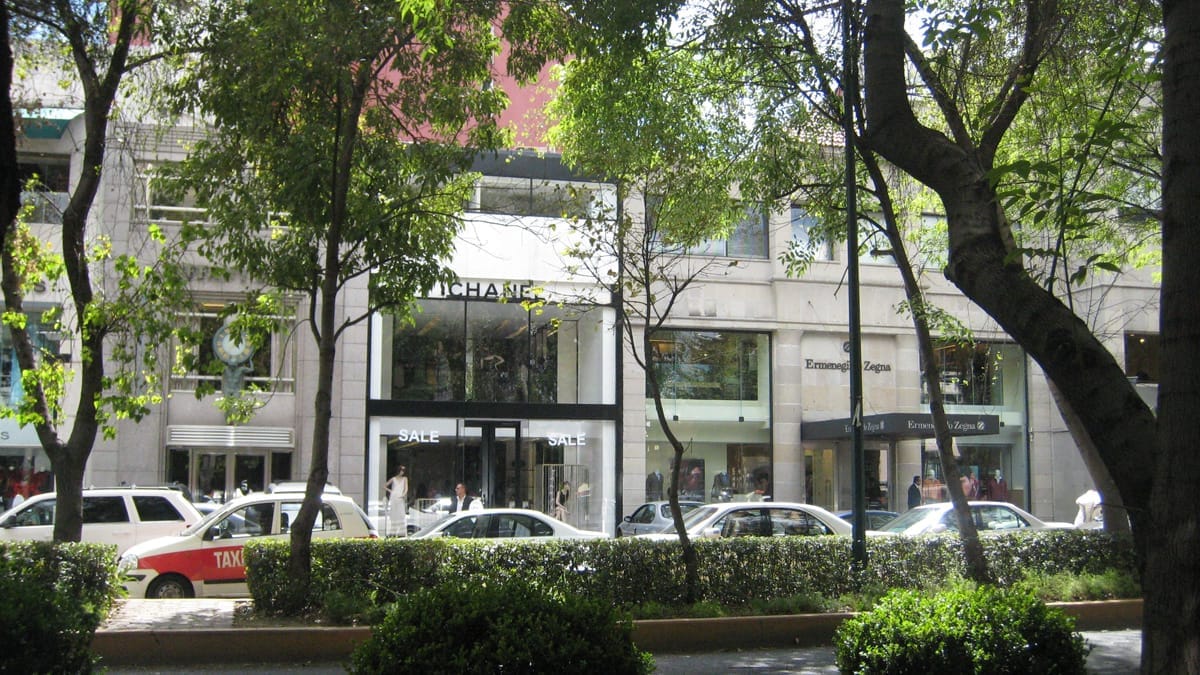
Avenida Presidente Masaryk is Polanco's defining street and one of the most recognized luxury retail corridors in Latin America. Stretching 2.83 kilometers east to west through the Miguel Hidalgo borough, it runs from Calzada General Mariano Escobedo to Avenida Ferrocarril de Cuernavaca, skirting the edge of Parque Lincoln and the quieter Polanquito sub-neighborhood. The sidewalks are wide, the trees are generous, and on any given weekday morning, you'll share the pavement with personal shoppers carrying branded bags, restaurant managers arriving for prep, and office workers on their way to the embassies and corporate towers just off the main drag.
The avenue is a public street with no entry fee and no closing time. What you spend here depends entirely on whether you stop inside the boutiques. If window-shopping and people-watching are enough, Masaryk costs nothing. If you sit down for lunch at one of the terrace restaurants, budget accordingly: this is one of Mexico City's pricier dining strips. For context on how Polanco fits into the wider city, the neighborhood overview at Chapultepec and Polanco is a useful starting point.
💡 Local tip
Shops along Masaryk typically open between 10:00 and 11:00 and close between 19:00 and 21:00. Restaurants run later. Plan a midmorning arrival to walk the full length before crowds peak.
A Brief History: From Hacienda to Flagship Stores
The street dates to the 1920s and was laid out from land that once formed part of the Hacienda de los Morales, a colonial estate whose name survives today in one of Polanco's most celebrated traditional restaurants just off the avenue. The broader Polanco grid was developed in that same decade as Mexico City's upper-middle classes pushed west out of the historic center, building European-influenced residential blocks on what had been agricultural land.
The avenue was renamed in honor of Tomáš Garrigue Masaryk, the founding president of Czechoslovakia, during the administration of Lázaro Cárdenas after Masaryk’s death in 1937. The renaming came under President Lázaro Cárdenas, whose administration also welcomed a significant number of European refugees to Mexico, reflecting a moment of genuine diplomatic solidarity. The commercial character of the street was sealed a year later with the opening of Pasaje Polanco in 1938, which drew retailers and helped concentrate foot traffic. By the 1990s and into the 2000s, international luxury brands had recognized the avenue as Mexico City's natural equivalent of the Champs-Élysées or Rodeo Drive, and the street's identity as a luxury corridor became firmly fixed.
A major urban renovation completed around 2015 widened the sidewalks considerably, added street furniture, and improved pedestrian crossings. That investment transformed the experience significantly: where the avenue once felt car-dominated, it now reads as a walkable boulevard where the pavement is the attraction as much as what lies behind the glass storefronts.
Tickets & tours
Live prices and dates from our booking partner. If you book, we may earn a commission at no extra cost to you.
Puebla and Cholula guided tour from Mexico City with optional lunch
From 43 €Instant confirmationFree cancellationXochimilco, Coyoacan and Frida Kahlo Museum with skip-the-line tickets
From 63 €Instant confirmationFree cancellationMexico City exploration game and tour in Chimalistac
From 10 €Instant confirmationFree cancellationCuernavaca and Taxco Guided Tour with Optional Lunch
From 40 €Instant confirmationFree cancellation
What You'll Actually See Walking the Avenue
The flagship stores here cover virtually every major luxury brand: Hermès, Louis Vuitton, Cartier, Prada, and several dozen more are arranged in low-rise or purpose-built units with restrained facades that lean toward understated modernism rather than flashy display. The architecture varies from early-20th-century residential conversions to contemporary glass-and-stone commercial builds, and the mix gives the street a layered rather than uniform appearance.
Interspersed between the boutiques are terrace cafes, wine bars, and established restaurants that spill onto the wide sidewalks from late morning onward. The scent of espresso and fresh bread is common in the earlier hours; by early afternoon the smell of grilled meat and food presentation reaches the pavement from the open-fronted lunch spots. At street level, the texture is polished stone, manicured planters, and shade from mature Jacaranda trees that, in late winter and early spring, shed purple blossoms onto the pavement.
At the western end of the avenue, the proximity to Museo Soumaya and Museo Jumex makes it straightforward to combine a walk along Masaryk with serious cultural stops. Both museums are within easy walking distance of the avenue's western stretch and offer a pronounced contrast: free-entry world-class collections housed in architecturally striking buildings, immediately next to one of the city's most commercial corridors.
How the Avenue Changes Through the Day
Early morning, before 9:00, Masaryk is calm enough that you can appreciate the architecture without distraction. Delivery trucks access the service areas behind storefronts, florists arrange window displays, and the few people on the pavement are mostly locals: dog walkers from the surrounding residential blocks, joggers using the wide sidewalk as an urban running route. The light is at its cleanest at this hour, and if photography is a priority, the long east-facing stretch rewards early arrival.
Between 11:00 and 14:00 the avenue reaches its peak operational rhythm. Shoppers circulate between boutiques, lunch tables fill quickly at the better-known restaurants, and rideshare cars double-park in a continuous relay along the curb. This is the hour when Masaryk most resembles its reputation. It can feel hectic, and for those sensitive to the pressure of high-end retail environments, the midday period is the least relaxed time to visit.
By late afternoon, around 17:00 to 18:00, the shopping crowd thins and the restaurant and bar crowd builds. This transition hour, when the boutiques are still open but the purchase pressure has eased, is arguably the most comfortable time to stroll without agenda. The light softens, the street noise drops slightly, and the avenue takes on a more social character.
ℹ️ Good to know
On weekends, Masaryk is considerably busier throughout the day. Saturday afternoon in particular draws families and visitors from across the city. If a peaceful walk is the priority, a Tuesday or Wednesday morning is noticeably quieter.
Getting There and Getting Around
The most straightforward public transit approach is Metro Line 7 to Polanco station, located a short walk south of the avenue. From the station it is a short walk north to reach Presidente Masaryk, making orientation immediate. The Metro is inexpensive and reliable during standard operating hours, and the Line 7 corridor connects Polanco to several other key areas of the city without requiring a transfer.
The Turibus hop-on hop-off service includes multiple stops along the Polanco Circuit on the avenue itself, specifically at Punto México, Seguros Monterrey/Carajillo, Alejandro Dumas, and Palacio de los Palacios at Moliere. For visitors using the Turibus to combine Masaryk with Chapultepec, this is a practical option. Uber, DiDi, and Cabify all operate in this neighborhood and drop-off on or near the avenue is straightforward; pickup can take a few extra minutes given parking restrictions. For a broader look at navigating Mexico City's transport options, see getting around Mexico City.
Driving and parking here independently is not recommended for first-time visitors. Street parking is scarce, enforcement is active, and the surrounding blocks are among the most congested in the city during peak hours. The valet services at individual restaurants are an option if you must arrive by car, but the cost adds up quickly.
Is It Worth Your Time? Worth Your Time?
Avenida Presidente Masaryk is especially interesting as an urban experience, but it is not a cultural destination in the conventional sense. There are no archaeological sites, no murals, no museums on the street itself. What it offers is a window into a specific and significant layer of contemporary Mexico City: the cosmopolitan, design-conscious, internationally connected Polanco that coexists with the more widely documented street-food and colonial heritage of the city.
For visitors on a tight schedule whose primary interests are history, pre-Hispanic culture, or Mexican folk art, Masaryk should probably be treated as a brief detour rather than a standalone destination. Those visitors will find far more substance at Museo Nacional de Antropología a short distance away in Chapultepec, or at the Museo de Arte Popular in the city center. However, for anyone interested in contemporary urban life, architecture, luxury retail, or simply an excellent meal in comfortable surroundings, Masaryk delivers with consistency.
Budget travelers should also calibrate expectations realistically: the street is free to walk, but the atmosphere is oriented toward spending. Sitting in the free public seating areas along the boulevard is perfectly comfortable, but you will be surrounded by clientele and settings designed around higher price points. There is no particular social pressure to spend, but visitors accustomed to finding affordable food in every corner of the city will notice that Masaryk operates in a different register.
⚠️ What to skip
Weather matters here. During the rainy season (roughly May through October), afternoon thunderstorms arrive quickly and the uncovered sections of the sidewalk offer limited shelter. If you visit between June and September, plan your walk for morning or carry a compact rain layer.
Pairing Masaryk With the Surrounding Neighborhood
The avenue works well as the backbone of a half-day Polanco itinerary. Walk the length of Masaryk east to west in the morning, then cut north a few blocks to Parque Lincoln, Polanco's tree-lined neighborhood park, where weekend markets and a small aviary provide a calmer counterpoint to the commercial boulevard. From the western end of Masaryk, the walk to Soumaya and Jumex is ten to fifteen minutes on foot, and Chapultepec Park is reachable in a similar timeframe heading south.
The blocks immediately north of Masaryk, collectively known as Polanquito, contain smaller and often more interesting restaurants and independent design shops with lower price points than the flagship strip. Worth exploring if the main avenue feels too corporate, and a good place to find a quieter table for coffee before the morning shopping crowd arrives.
Insider Tips
- The best Jacaranda viewing is along the central stretch of the avenue between late January and early March, when the trees are in full bloom. Timing a visit during this window adds a visual layer that photographs can't fully convey.
- Polanquito, the quieter residential blocks north of Masaryk between Dumas and Horacio streets, has a denser cluster of independent restaurants and bars. These tend to have shorter waits, lower prices, and a more local crowd than the terrace spots directly on the main avenue.
- If you need to make a phone call or check directions, the stretch near Alejandro Dumas has several coffee shops where it is socially normal to sit and work for an hour without pressure to order constantly.
- Metro Polanco (Line 7) sits just south of Masaryk near the eastern end, a short walk away rather than directly on the avenue. Arrive from this end and walk westward toward the museums if you want to structure the walk with a cultural payoff at the finish.
- Valet parking at the larger restaurants along Masaryk typically opens at 13:00 and fills quickly by 14:00 on Friday and Saturday. If you plan a weekend lunch, make a reservation and confirm the valet situation in advance or arrive by transit.
Who Is Avenida Presidente Masaryk For?
- Luxury shoppers looking for flagship international brands in a walkable outdoor setting
- Food and restaurant enthusiasts seeking upscale Mexican and international cuisine with terrace seating
- Architecture and urban design observers interested in how affluent Latin American cities have reshaped their commercial corridors
- Museum-goers using the avenue as a connector between Chapultepec and the Soumaya and Jumex museums
- Travelers wanting a contrast to the city's historic and street-level districts who appreciate contemporary cosmopolitan urbanism
Nearby Attractions
Other things to see while in Chapultepec & Polanco:
- Chapultepec Castle
Chapultepec Castle sits atop Cerro del Chapulín, the only royal castle in continental North America still standing in its original location. Once home to emperors and presidents, it now houses the Museo Nacional de Historia, with sweeping views over Mexico City and rooms preserved from the era of Maximilian I.
- Bosque de Chapultepec
Covering roughly 686 hectares in the heart of Mexico City, Bosque de Chapultepec is far more than a city park. It holds world-class museums, a hilltop castle dating to 1785, a free zoo, and lakes where families rent rowboats on weekends. Entry to the park itself is free, and the depth of what's inside rewards as many hours as you can give it.
- Chapultepec Zoo
The Zoológico de Chapultepec sits inside Bosque de Chapultepec and admits visitors free of charge Tuesday through Sunday. With roughly 2,000 animals across 250-plus species, it draws large local crowds on weekends and offers a well worthwhile morning for families and curious travelers alike.
- Museo de Arte Moderno
The Museo de Arte Moderno (MAM) occupies two striking circular buildings inside Chapultepec Park, housing some of the finest 20th-century Mexican painting and sculpture in the country. With free admission on Sundays and a sculpture garden connecting the two structures, it rewards both art lovers and casual visitors who happen to be exploring the park.
Planning a trip? Discover personalized activities with the Nomado app.