Bosque de Chapultepec: The Park That Holds Mexico City Together
Covering roughly 686 hectares in the heart of Mexico City, Bosque de Chapultepec is far more than a city park. It holds world-class museums, a hilltop castle dating to 1785, a free zoo, and lakes where families rent rowboats on weekends. Entry to the park itself is free, and the depth of what's inside rewards as many hours as you can give it.
Quick Facts
- Location
- Miguel Hidalgo, Mexico City — approx. 4.5 km west of the Zócalo
- Getting There
- Metro Chapultepec (Line 1, pink line); also served by Turibús tourist buses
- Time Needed
- 2 hours minimum for a walk; a full day if visiting museums and the castle
- Cost
- Park entry is free. Zoo is free. Museums charge separate fees in MXN — verify each venue before visiting
- Best for
- Families, history seekers, museum lovers, joggers, and anyone needing open sky in a dense city
- Official website
- www.chapultepec.org.mx/chapultepec-park
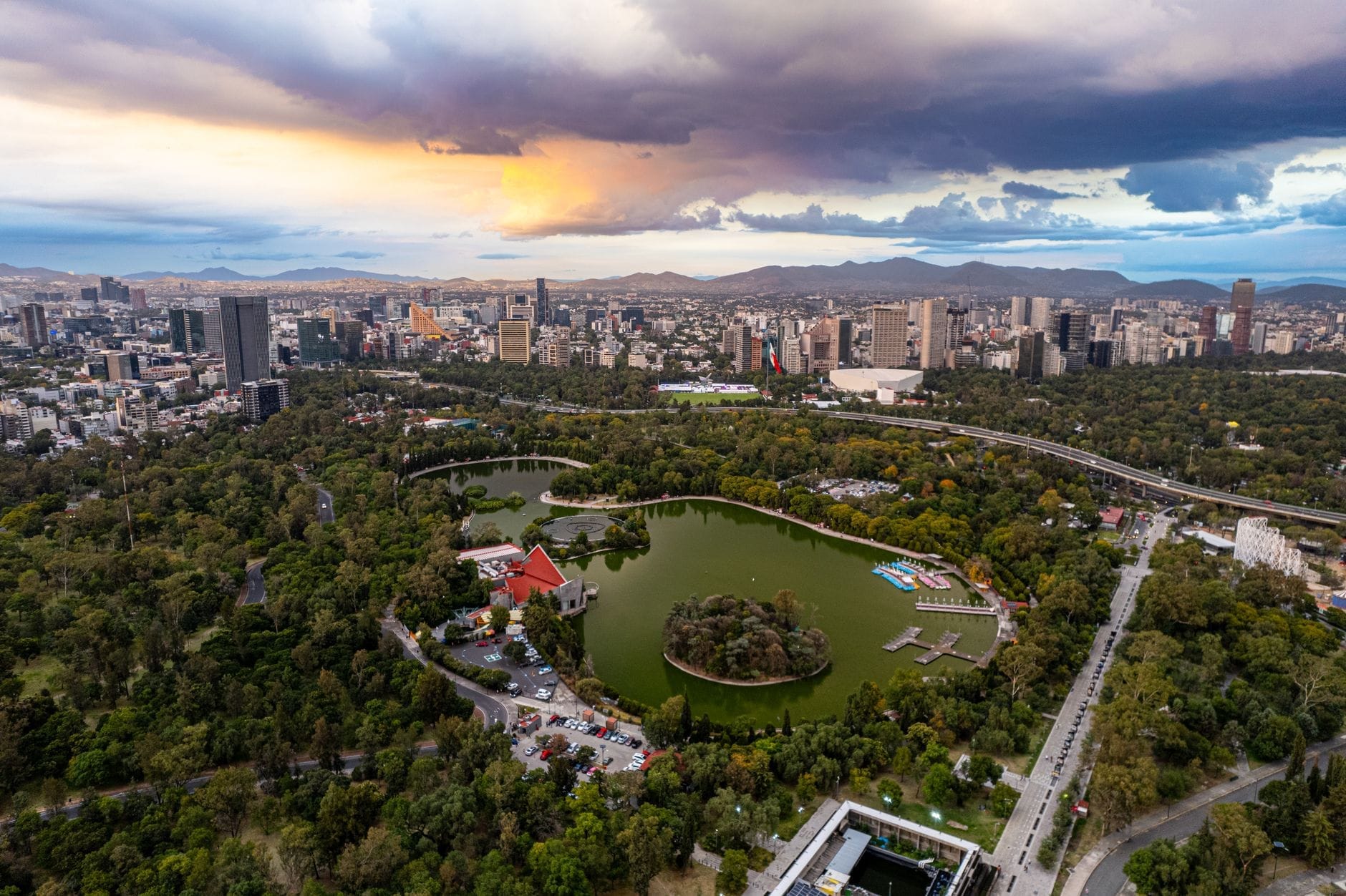
What Bosque de Chapultepec Is
Bosque de Chapultepec is one of the largest urban parks in Latin America, stretching across roughly 686 hectares in four sections. Most visitors focus on Section I, the oldest and most developed part, which is closed Mondays for maintenance and open Tuesday through Sunday from approximately 05:00 to 20:00 during Daylight Saving Time (05:00 to 19:00 the rest of the year). Sections II, III, and IV are open 24 hours a day.
The name itself is Nahuatl: 'chapul' meaning grasshopper, 'tepec' meaning hill. This is not a colonial invention but a place with roughly 3,000 years of continuous human significance. Long before the Aztec empire, the springs here fed aqueducts that supplied the island city of Tenochtitlan. Mexica rulers used the hill as a refuge and ritual site. What you walk through today is layered history compressed into parkland.
ℹ️ Good to know
Section I (the main section with the castle, zoo, and major museums) is closed every Monday. Plan accordingly — arriving on a Tuesday morning is often the quietest weekday experience.
The Park at Different Hours
Early mornings in Bosque de Chapultepec belong to the locals. From 05:30 onward, joggers circle the lakes at a steady clip, couples walk dogs along the shaded allées of ahuehuete cypress trees, and the air carries the faint smell of damp soil and eucalyptus before the exhaust from Paseo de la Reforma drifts in. At this hour, with mist sometimes sitting over the main lake, the park feels separate from the city surrounding it.
By 10:00 on weekends, the dynamic shifts completely. Families claim picnic spots along the lake's edge. Vendors push carts selling elotes, churros, and fresh fruit cups with chili and lime. Children carry inflatable toys toward the rowboat rental docks. The sound level climbs noticeably — it is lively and communal in the best sense, but this is not the hour for quiet contemplation.
Weekday afternoons hit a pleasant middle ground. Museum-goers move between the Museo Nacional de Antropología and the Museo de Arte Moderno at a measured pace. School groups pass through with clipboards. Benches under the old trees fill with people reading or eating lunch. The park doesn't empty until well past 18:00 in summer months.
Tickets & tours
Live prices and dates from our booking partner. If you book, we may earn a commission at no extra cost to you.
Chapultepec Castle: The Hill Worth Climbing
Construction of Chapultepec Castle began in 1785 on the crest of the volcanic rock hill that gives the park its name. Over the following century it served as a military academy, an imperial residence under Maximilian I of Mexico, and eventually the official presidential residence before becoming the Museo Nacional de Historia in 1940. That layered function shows in the architecture: Spanish colonial foundations, French Second Empire flourishes added under Maximilian, and later republican additions.
The climb up the hill is gradual but real — roughly 80 vertical meters on paved paths with handrails. From the castle terraces, you get one of the clearest views of Paseo de la Reforma stretching toward the historic center. On clear days (most likely November through February), the volcanic peaks of Popocatépetl and Iztaccíhuatl are visible on the southeastern horizon. For a broader guide to vantage points across the city, see the Mexico City viewpoints guide.
The museum inside holds murals by Juan O'Gorman and a collection of Mexican historical artifacts spanning the colonial period through the Revolution. Admission fees for the Museo Nacional de Historia are set separately from the park itself and are charged in MXN — verify current prices at the INAH website before visiting, as these are updated periodically.
💡 Local tip
Photography tip: The castle's western terrace catches the best light in the late afternoon, roughly 16:00 to 17:30. Mornings are sharper for skyline shots looking toward the center, before haze builds.
The Museums Inside the Park
Section I contains a concentration of major cultural institutions that would anchor a full city neighborhood anywhere else. The Museo Nacional de Antropología is the dominant draw: a purpose-built 1964 structure by architect Pedro Ramírez Vázquez housing the most comprehensive collection of pre-Columbian artifacts in the world, including the famous Aztec Sun Stone. Admission is charged in MXN; free on Sundays for Mexican nationals. Foreigners pay a standard fee that should be confirmed on the INAH website before your visit.
A short walk away, the Museo de Arte Moderno holds an important collection of 20th-century Mexican painting, including works by Frida Kahlo and David Alfaro Siqueiros. Its circular main gallery and sculpture garden are often less crowded than the Anthropology Museum even on the same morning. The Museo Tamayo rounds out the trio with international contemporary art in a striking concrete building from 1981.
Attempting all three major museums in a single day is technically possible but not particularly satisfying. The Anthropology Museum alone warrants two to three hours if you move thoughtfully through it. A reasonable approach is to dedicate one visit to the museums and a separate visit to the park's natural and recreational elements.
The Zoo, the Lakes, and Getting Around
The Chapultepec Zoo occupies the northwestern corner of Section I and charges no admission, which makes it one of the entirely free family destinations in the city. It is open Tuesday through Sunday from 09:00 to 17:00, closed Mondays, January 1, and December 25. The zoo is best visited in the morning when animals are most active and the paths are less congested.
The main lake in Section I is central to the weekend experience. Rowboats can be rented by the hour. The surrounding path is flat and accessible, making it one of the more wheelchair-friendly parts of the park. A tourist train (tren del bosque) runs circuits through Section I and is a practical option for visitors who want an overview without walking the full area.
Sections II and III are quieter and less visited, offering more forest cover, additional lakes, and the Parque Urbano Aztlán amusement park (separate admission). These sections feel like a genuine forest escape rather than a managed park. Cyclists and serious joggers tend to prefer them on weekdays. Reaching Section III on foot from the main entrance is a 30-plus-minute walk, so most visitors use a bike rental or arrive via a different entrance.
⚠️ What to skip
Weather note: Chapultepec is fully exposed to afternoon thunderstorms during the rainy season (May to October). These can arrive quickly and are often heavy. If you're visiting in summer, start early and carry a waterproof layer or compact umbrella.
Getting There and Moving Around
The most direct transit option is Metro Chapultepec on Line 1 (the pink line), which deposits you at the park's main eastern entrance near the Anthropology Museum. From there you can walk directly into Section I. The Turibús tourist circuit also stops at Chapultepec, which is useful if you're combining it with stops on Paseo de la Reforma. Ride-hailing apps (Uber, DiDi, Cabify) can drop you at specific entrances, which is worth doing if you're heading directly to the castle or Section II.
Bike-sharing via the city's Ecobici system (requires registration) is available at stations around the park perimeter. Sunday mornings are particularly good for cycling, when a section of Paseo de la Reforma is closed to cars under the Muévete en Bici program, allowing cyclists to ride car-free from the historic center to the park entrance.
Parking exists at several entrances but fills quickly on weekends. Driving is not recommended if you're visiting on a Saturday or Sunday. Weekday parking before 10:00 is more manageable, but the park is easy to reach by transit, making a car unnecessary for most visitors.
Who Should Reconsider
Visitors looking for manicured quiet and curated calm may find weekend Chapultepec overwhelming. When 50,000 people share the same park on a Sunday, the lakeside paths are often crowded and the noise from vendors, music, and children is constant. This is not a criticism of the park — it is the park functioning exactly as intended, as public commons for a city of 9 million. But if your priority is contemplative nature, a weekday visit or early-morning arrival changes the experience substantially.
The climb to the castle involves a real ascent at about 2,325 meters above sea level. Mexico City's altitude can surprise visitors who haven't acclimatized. If you've just arrived and feel short of breath walking flat ground, give yourself a day before tackling the hill. The hike up is not strenuous by mountain standards, but at altitude it is enough to slow some visitors significantly.
For context on altitude effects across the city, the Mexico City altitude guide has practical advice on acclimatization and what to expect in your first 48 hours.
Insider Tips
- The Anthropology Museum is free on Sundays for Mexican nationals, which makes it very busy. If you're visiting on a Sunday, arrive within the first 30 minutes of opening (09:00) or accept that you'll be moving through crowds. Tuesdays are the least congested weekday option.
- The small café terrace on the upper level of the Anthropology Museum has a view over the park canopy that most visitors miss entirely. It's worth a coffee stop even if you're not hungry.
- Section II has a small Japanese garden that sees a fraction of the visitors that the main lake area attracts. It's one of the noticeably quieter spots in the park and requires only a short walk from the Section I boundary.
- Cyclists arriving via the Sunday car-free Reforma corridor can enter the park directly from the boulevard without dismounting, connecting to the park's internal bike paths. It's the most pleasant way to arrive and avoids the congested pedestrian main entrance entirely.
- Museum bag policies are consistent and enforced: large backpacks must be checked at the entrance cloakroom at the Anthropology Museum and the castle. This is free but adds 5 to 10 minutes on busy days. Use a smaller daypack if you want to move through quickly.
Who Is Bosque de Chapultepec For?
- Families with children who want free, varied activities across a full day
- History and archaeology enthusiasts combining the castle and the Anthropology Museum
- Joggers and cyclists looking for car-free routes and scale not available in smaller city parks
- Travelers on a tight budget — the park, zoo, and lake walks cost nothing
- Weekend cultural visitors using the park as an anchor and exploring Polanco on the same day
Nearby Attractions
Other things to see while in Chapultepec & Polanco:
- Avenida Presidente Masaryk
Avenida Presidente Masaryk is Polanco's main commercial artery, a roughly 2.8-kilometer stretch of luxury flagships, design showrooms, and terrace restaurants. Free to walk, open around the clock, and easily reached by Metro Line 7.
- Chapultepec Castle
Chapultepec Castle sits atop Cerro del Chapulín, the only royal castle in continental North America still standing in its original location. Once home to emperors and presidents, it now houses the Museo Nacional de Historia, with sweeping views over Mexico City and rooms preserved from the era of Maximilian I.
- Chapultepec Zoo
The Zoológico de Chapultepec sits inside Bosque de Chapultepec and admits visitors free of charge Tuesday through Sunday. With roughly 2,000 animals across 250-plus species, it draws large local crowds on weekends and offers a well worthwhile morning for families and curious travelers alike.
- Museo de Arte Moderno
The Museo de Arte Moderno (MAM) occupies two striking circular buildings inside Chapultepec Park, housing some of the finest 20th-century Mexican painting and sculpture in the country. With free admission on Sundays and a sculpture garden connecting the two structures, it rewards both art lovers and casual visitors who happen to be exploring the park.
Planning a trip? Discover personalized activities with the Nomado app.