Museo Tamayo Arte Contemporáneo: A Serious Art Museum Hidden in Plain Sight
Opened in 1981 to house the personal collection of Oaxacan master Rufino Tamayo, Museo Tamayo Arte Contemporáneo sits inside Chapultepec Park along Paseo de la Reforma. The building itself is a landmark of Mexican modernist architecture, and the rotating international exhibitions consistently deliver strong value at an admission price of 95 MXN.
Quick Facts
- Location
- Paseo de la Reforma 51, Bosque de Chapultepec, Miguel Hidalgo, Mexico City
- Getting There
- Chapultepec (Line 1, pink) — 5-minute walk along Reforma
- Time Needed
- 1.5 to 2 hours depending on current exhibition
- Cost
- 95 MXN general admission (cash only). Check official site for free-entry days.
- Best for
- Contemporary art lovers, architecture enthusiasts, solo travelers, and anyone wanting a quieter cultural stop than the Anthropology Museum
- Official website
- www.museotamayo.org
What Is Museo Tamayo and Why Does It Matter?
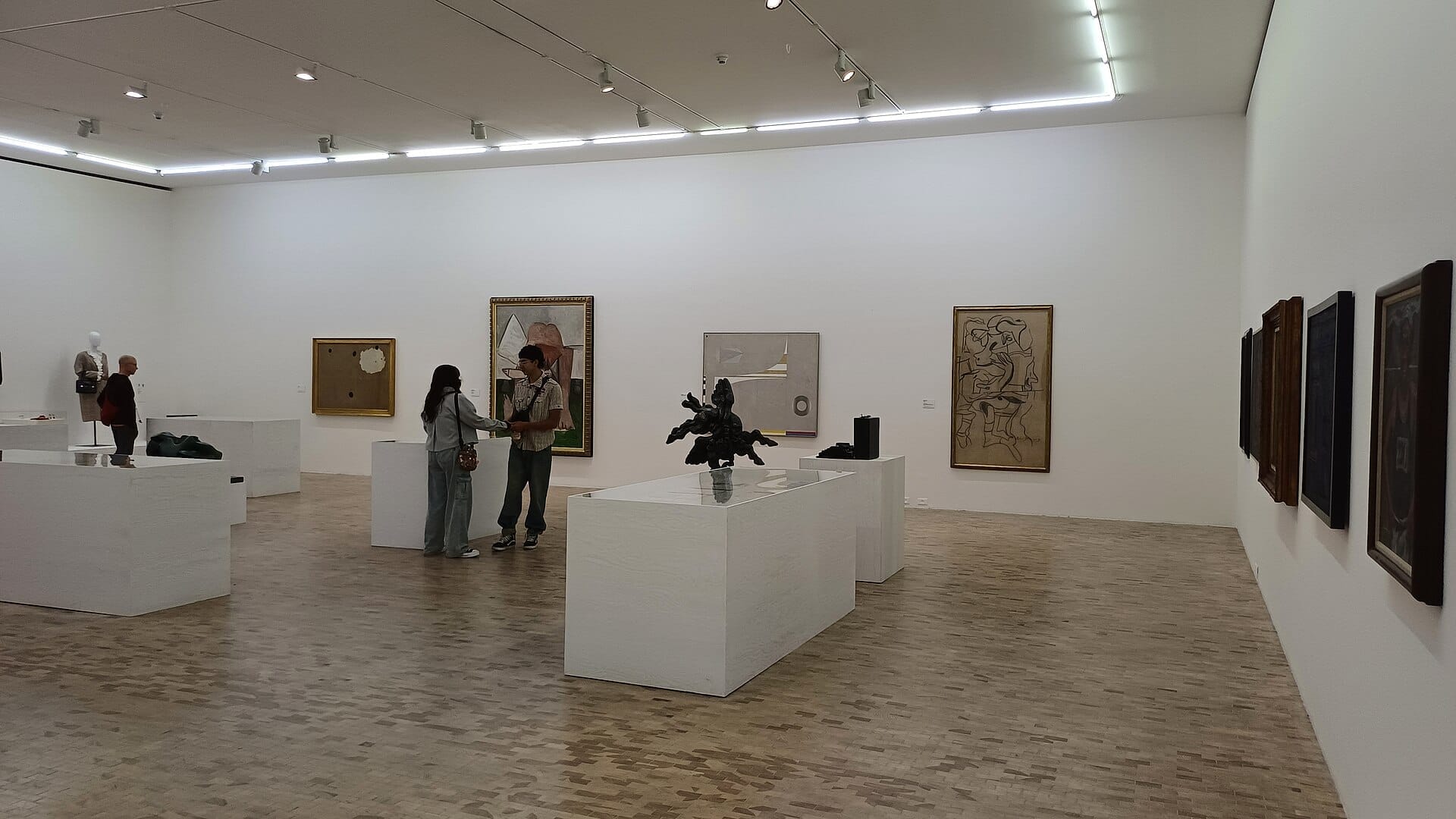
Museo Tamayo Arte Contemporáneo is one of Mexico City's most important contemporary art institutions, yet it receives a fraction of the foot traffic of the nearby Museo Nacional de Antropología. That contrast is, depending on your priorities, either a limitation or a selling point. On most weekday mornings, you can walk through world-class exhibitions with almost no one else around. The light inside the building is extraordinary, filtered through skylights and terraced volumes that soften the midday sun into something almost cinematic.
The museum was established on 29 May 1981, created specifically to house the personal collection of Rufino Tamayo, the Oaxacan painter who is considered one of the central figures of 20th-century Latin American art. Tamayo and his wife Olga donated their extensive private collection of international contemporary art to the Mexican state, and this building was created to receive it. Today the museum operates under the Instituto Nacional de Bellas Artes y Literatura (INBAL) and functions both as a permanent collection space and a venue for major international temporary exhibitions.
ℹ️ Good to know
Admission is 95 MXN, cash only. INBAL occasionally offers free or reduced-entry days; confirm on the official site (museotamayo.org) before your visit, as policies can change.
The Building: Modernist Architecture Worth Noticing
The structure itself deserves attention before you even enter. Designed in the late 1970s by architects Teodoro González de León and Abraham Zabludovsky — the same pair responsible for the Mexican Foreign Ministry building — the Museo Tamayo is a low, angular composition of exposed concrete and geometric volumes that seems to grow out of the hillside terrain of Chapultepec Park rather than sit on top of it. The design deliberately avoids the monumental verticality of many civic buildings of its era. Instead it spreads horizontally, using terraced levels, sunken courtyards, and wide ramps to create a sense of transition between the park and the interior galleries.
The concrete surfaces have aged to a warm grey that contrasts well against the tree canopy surrounding the building. In the early morning, when the light comes in at a low angle through the surrounding ahuehuete trees, the facade takes on a texture that is worth photographing from the Reforma-side path. Architecture enthusiasts visiting Mexico City to see the work of González de León and Zabludovsky should note that the Foreign Ministry (Secretaría de Relaciones Exteriores) in Tlatelolco is the other major example of their civic-scale work.
Tickets & tours
Live prices and dates from our booking partner. If you book, we may earn a commission at no extra cost to you.
Xochimilco, Coyoacan and Frida Kahlo Museum with skip-the-line tickets
From 63 €Instant confirmationFree cancellationFrida Kahlo and Diego Rivera legacy visit to three museums with skip-the-line tickets
From 67 €Instant confirmationFree cancellationSix Flags Amusement Park tickets and transportation
From 87 €Instant confirmationFree cancellationMexico City National Museum of Anthropology guided tour
From 57 €Instant confirmationFree cancellation
The Collection and Exhibition Program
The permanent collection spans international modern and contemporary art that Rufino Tamayo accumulated over decades. It includes works by figures central to 20th-century Western modernism alongside pieces from Latin America. Tamayo's own work appears in the collection, providing context for understanding the visual language he was responding to and departing from. His work sits at an interesting intersection: it draws on Mesoamerican color sensibilities and pre-Columbian formal references while operating entirely within the vocabulary of international modernism.
Beyond the permanent holdings, the museum runs a serious rotating exhibition program that has included major retrospectives and international loans. The quality of the temporary shows varies year to year, but the programming tends toward substantial, research-backed exhibitions rather than crowd-pleasing spectacles. Check the museum's website before your visit; if a major exhibition is on, budget extra time. If you're arriving between shows, the permanent collection alone justifies the entrance fee and the walk from the Metro.
Visitors who want to understand Tamayo's place in Mexican art history might consider pairing this visit with the Museo Mural Diego Rivera in Alameda Central, which shows a different strand of 20th-century Mexican painting. The contrast between the social muralism of Rivera and the more internationalist, abstract approach of Tamayo reveals a genuine ideological fault line in Mexican art history.
How the Experience Changes by Time of Day
The museum opens at 10:00 Tuesday through Sunday and closes at 18:00, remaining closed on Mondays. Arriving within the first hour after opening on a weekday is the most reliable way to have the galleries largely to yourself. The building is cool inside regardless of outdoor temperature, which matters more than you might expect given Mexico City's elevation of approximately 2,240 meters: even on warm March and April days, the concrete and the tree cover keep the immediate surroundings of the museum comfortable.
Weekend afternoons between noon and 15:00 see the most visitor density, partly because families and groups from the wider Chapultepec Park area drift in. The museum never approaches the crowd levels of the Anthropology Museum next door, but if you want contemplative gallery time, weekday mornings are clearly superior. Late afternoons, especially in the rainy season (May through October), can bring sudden downpours that actually drive people inside from the park, briefly increasing foot traffic around 16:00 to 17:00.
💡 Local tip
If you're visiting during the rainy season, carry a light jacket or compact umbrella. The walk from the Chapultepec Metro station takes you along Reforma and then into the park — both stretches are exposed to afternoon rain. The museum itself makes an excellent refuge if a storm arrives unexpectedly.
Getting There: Practical Directions
The most straightforward route is the Metro Line 1 (pink line) to Chapultepec station. From the exit, walk west along Paseo de la Reforma for approximately five minutes until you see the museum's entrance set back from the road inside the park boundary. The walk is flat, shaded by the tree cover of Chapultepec Park, and well-marked. On Sundays, the Reforma cycling route closes the avenue to cars, making the approach particularly pleasant on foot or bicycle.
Ride-hailing apps (Uber, DiDi, Cabify) can drop you directly at the museum entrance from Reforma. If you're combining this visit with Chapultepec Castle or the Anthropology Museum, build in walking time: all three are within the same park, but the distances between them are longer than maps suggest, and the Castle involves a significant uphill climb.
For travelers staying in Polanco, the museum is walkable from the neighborhood's southern edge in around 15 minutes, making it a natural addition to a morning that also includes the nearby Museo Soumaya or Museo Jumex, both of which are free to enter.
Photography, Accessibility, and Practical Notes
Photography policies inside the museum vary by exhibition. The permanent collection areas generally permit non-flash personal photography, but temporary exhibitions may restrict this depending on loan agreements. Check with staff at the entrance on the day of your visit. The exterior of the building, including the courtyard spaces and the Reforma-facing facade, is always fair game and rewards careful composition.
The building's ramp-based circulation makes it one of the more accessible museums in this part of the city for visitors with mobility considerations. Wide, gradual ramps connect the different gallery levels, and the low-slung architecture avoids the stairs-heavy design common to many Mexican civic buildings of earlier eras. For specific information about wheelchair access or other accessibility services, contact the museum directly through the official site, as on-site provisions can change.
There is no large café inside the museum, though a small refreshment area may be available depending on the period of your visit. The surrounding park has several food stalls and vendors, and the Polanco neighborhood just north of the park has a dense concentration of restaurants at every price point. Plan your visit accordingly if you are arriving hungry.
⚠️ What to skip
Admission is cash only at 95 MXN. There are no ATMs inside the museum. The nearest reliable cash machines are at the Chapultepec Metro station or on Avenida Presidente Masaryk in Polanco. Sort this out before walking into the park.
Worth Your Time?: Is It Worth Your Time?
For visitors primarily interested in pre-Columbian archaeology or Mexican muralism, the Museo Tamayo is not the priority stop. Those interests are better served by the Museo Nacional de Antropología, a few hundred meters away in the same park, or by the Palacio de Bellas Artes downtown. The Tamayo museum operates in a different register: its strength is international contemporary art and the specific intersection of Tamayo's personal taste with 20th-century modernism.
For visitors who follow contemporary art, who are interested in modernist architecture, or who want a quieter, more contemplative museum experience alongside a visit to the Anthropology Museum, the Tamayo is worth the hour and a half. At 95 MXN, the price-to-experience ratio is strong regardless of what is showing. The building alone earns the entrance fee.
Insider Tips
- The museum's exterior courtyard, partially shaded by mature trees, offers a quieter spot to sit and decompress between the intensity of larger Chapultepec attractions. It is often completely empty on weekday mornings.
- If you are visiting on a Sunday, the Reforma cycling route creates a car-free corridor from the city center all the way to the park entrance. Renting a bicycle from one of the EcoBici docking stations near Roma or Condesa and riding to the museum is a practical and enjoyable option.
- The museum's programming calendar is published in advance on museotamayo.org. Major international exhibitions occasionally include ticketed opening events and artist talks; if your visit overlaps with one, the atmosphere inside the museum is significantly different from a standard public opening day.
- Unlike the Anthropology Museum, there is no dedicated bag storage system at the entrance, and large backpacks may need to be managed at the admissions desk. Travel light or carry a smaller bag if possible.
- If you are visiting with the goal of understanding Rufino Tamayo's work in context, the permanent collection labels are available in both Spanish and English, and the museum periodically offers guided tours in English — confirm availability via the official site before your visit.
Who Is Museo Tamayo For?
- Contemporary art enthusiasts who want gallery quality without the crowds of major institutions
- Architecture followers interested in the work of González de León and Zabludovsky
- Solo travelers who want a reflective, self-paced museum experience
- Visitors already planning a day in Chapultepec Park who want a cultural stop alongside the castle or the zoo
- Travelers on a moderate budget: at 95 MXN, this is one of the best-value serious art museums in the city
Nearby Attractions
Other things to see while in Chapultepec & Polanco:
- Avenida Presidente Masaryk
Avenida Presidente Masaryk is Polanco's main commercial artery, a roughly 2.8-kilometer stretch of luxury flagships, design showrooms, and terrace restaurants. Free to walk, open around the clock, and easily reached by Metro Line 7.
- Chapultepec Castle
Chapultepec Castle sits atop Cerro del Chapulín, the only royal castle in continental North America still standing in its original location. Once home to emperors and presidents, it now houses the Museo Nacional de Historia, with sweeping views over Mexico City and rooms preserved from the era of Maximilian I.
- Bosque de Chapultepec
Covering roughly 686 hectares in the heart of Mexico City, Bosque de Chapultepec is far more than a city park. It holds world-class museums, a hilltop castle dating to 1785, a free zoo, and lakes where families rent rowboats on weekends. Entry to the park itself is free, and the depth of what's inside rewards as many hours as you can give it.
- Chapultepec Zoo
The Zoológico de Chapultepec sits inside Bosque de Chapultepec and admits visitors free of charge Tuesday through Sunday. With roughly 2,000 animals across 250-plus species, it draws large local crowds on weekends and offers a well worthwhile morning for families and curious travelers alike.
Planning a trip? Discover personalized activities with the Nomado app.