Museo Soumaya: Mexico City's Free Art Museum That Actually Delivers
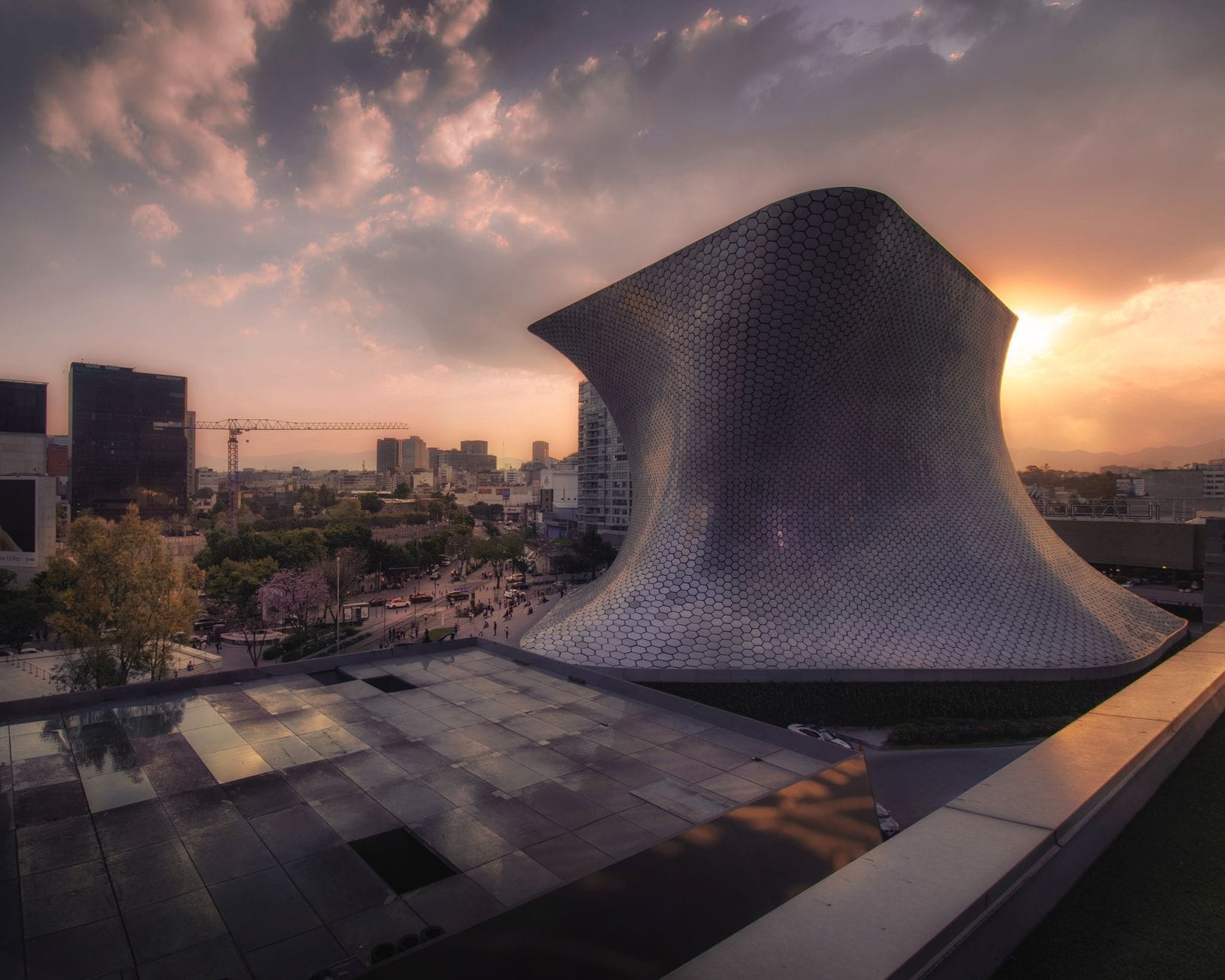
Housed in one of Latin America's most recognizable buildings, Museo Soumaya offers free admission to a staggering collection spanning five centuries of Western and Mexican art. The Plaza Carso location in the Polanco-adjacent Granada neighborhood is the one worth your time.
Quick Facts
- Location
- Bulevar Cervantes Saavedra esq. Presa Falcón, Ampliación Granada, Miguel Hidalgo, CDMX
- Getting There
- Metrobús Line 7, Río San Joaquín stop; or Metro Line 7, San Joaquín station (15 min walk)
- Time Needed
- 1.5 to 3 hours depending on your pace
- Cost
- Free admission, no reservation required
- Best for
- Art lovers, architecture enthusiasts, budget travelers, first-time visitors to CDMX
- Official website
- www.museosoumaya.org
What Is Museo Soumaya?
Museo Soumaya is a private art museum funded by Carlos Slim, one of the world's wealthiest individuals, and named in memory of his late wife, Soumaya Domit. The Plaza Carso location, which opened in 2011, is the flagship: a six-floor, irregularly shaped tower clad in 16,000 hexagonal aluminum tiles that shimmer and shift color depending on the light and weather. Architect Fernando Romero designed it with no right angles on its exterior, making it one of the more architecturally daring buildings in Mexico City.
The collection runs to over 66,000 objects: European Old Masters, pre-Columbian artifacts, colonial religious art, 19th-century Mexican painting, and the world's largest collection of Auguste Rodin sculptures outside France. The combination of a landmark building, a serious collection, and zero admission cost makes this one of the most compelling stops in the city.
ℹ️ Good to know
There are two Museo Soumaya locations in Mexico City. The Plaza Carso building in Granada (Miguel Hidalgo) is the main one covered here. The second, smaller branch is at Plaza Loreto in San Ángel. If you're planning to visit, confirm you're headed to Plaza Carso.
The Architecture: Why the Building Matters
From a distance, the building reads almost like a sculpture itself: a slightly flared column that widens as it rises, then curves inward at the crown. On overcast mornings, the aluminum skin turns a flat pewter gray. In direct afternoon sun, it fires back bright white, almost blinding against the blue sky. At dusk, when the surrounding Polanco towers catch warm light, the facade picks up a faint bronze cast.
The design is intentionally theatrical, and it works. The building sits at the edge of Plaza Carso alongside Museo Jumex, the contemporary art space designed by David Chipperfield. The two museums create an unlikely but effective cultural district in what was until recently a post-industrial stretch along the Periférico. Arriving from the street, you cross a broad plaza before entering through the ground-floor lobby, where the scale of the interior first becomes apparent.
Architecture fans visiting the area often combine Soumaya with a stop at Museo Jumex directly across the plaza, and then walk south into Polanco for the afternoon.
Tickets & tours
Hand-picked options from our booking partner. Prices are indicative; availability and final rates are confirmed when you complete your booking.
Xochimilco, Coyoacan and Frida Kahlo Museum with skip-the-line tickets
From 63 €Instant confirmationFree cancellationFrida Kahlo and Diego Rivera legacy visit to three museums with skip-the-line tickets
From 67 €Instant confirmationFree cancellationSix Flags Amusement Park tickets and transportation
From 87 €Instant confirmationFree cancellationMexico City National Museum of Anthropology guided tour
From 57 €Instant confirmationFree cancellation
What's Inside: Collection Highlights Floor by Floor
The collection is arranged across six floors connected by a continuous ramp that spirals upward around the perimeter. This layout means there are no elevators between galleries, only the ramp, which is gentle but long. Most visitors start at the ground floor and work their way up; the upper floors tend to be quieter, with better natural light filtering in from the skylight crown.
The lower floors house pre-Columbian ceramics and artifacts, colonial-era religious paintings, and large-format 19th-century Mexican canvases. The mid-floors shift toward European art, with works by Tintoretto, El Greco, Rubens, and several Flemish masters. The Rodin collection is the single most impressive holding: bronzes, plasters, and marbles including multiple casts of The Thinker, The Kiss, and fragments from The Gates of Hell. These are displayed with enough space to walk around them, which is rarer than it sounds in most museums.
The top floor is dedicated to rotating exhibitions and usually features 20th-century works including pieces by Salvador Dalí and a small but well-curated group of Impressionist paintings. The skylight floods this space with diffuse natural light that makes it one of the better gallery environments in the city for looking at paintings carefully.
💡 Local tip
Head directly to the upper floors when you arrive. Most visitors drift upward slowly and the top level is nearly empty in the first 45 minutes after opening. You'll have the Impressionists and rotating exhibitions almost to yourself.
When to Visit and What to Expect by Time of Day
The museum opens daily at 10:30 and closes at 18:30, with no variation noted for holidays or seasons. Weekday mornings between 10:30 and noon are the quietest period. Weekends from noon onward bring families and school groups that can make the ramp corridors feel tight, particularly on the lower floors where the pre-Columbian and colonial collections are housed.
Tuesday and Wednesday mornings are consistently the least crowded. If you have flexibility, arriving at opening on either of those days gives you a markedly different experience than a Saturday afternoon: cooler air (the building's climate control is effective but tested by crowds), less noise, and the ability to linger in front of individual works without the pressure of a queue moving behind you.
Photography is permitted throughout the permanent collection without flash, and the Rodin room in particular rewards slower, deliberate photography. The natural light from the upper floors is generally better than the artificial lighting on the lower levels, so plan your photography accordingly. The exterior is worth photographing at multiple times of day given how dramatically the aluminum facade changes.
Getting There: Transit and Navigation
Plaza Carso sits along Bulevar Cervantes Saavedra at the corner of Presa Falcón, in the Ampliación Granada section of Miguel Hidalgo borough. It is not technically in Polanco, though it borders that neighborhood and most visitors treat it as part of the same trip.
The most direct public transit option is Metrobús Line 7, alighting at Río San Joaquín, from which the building is a short walk away. Metro Line 7's San Joaquín station is a workable alternative at roughly a 15-minute walk, passing through a quiet residential zone. Ride-hailing apps including Uber, Didi, and Cabify all serve this address reliably given the area's upscale surroundings. Traffic on Periférico and Cervantes Saavedra can be severe during morning and evening rush hours, so if you're coming from further afield, mid-morning or early afternoon is a better window.
If you're combining Soumaya with other major stops, Museo Nacional de Antropología in Chapultepec Park is about 3 kilometers south and makes for a logical full-day pairing, though it's a very different type of experience in terms of pace and subject matter.
Accessibility and Practical Details
Museo Soumaya has made accessibility a strong priority rather than an afterthought. The museum offers wheelchair access throughout, audio guides, tactile tours for blind and visually impaired visitors, guide-dog access, sign-language interpreters, and specialized tours for visitors on the autism spectrum. This level of provision is unusual among major Mexico City museums and worth noting for travelers planning around specific needs.
The ramp-based internal circulation means most of the building is navigable without stairs, though the slope is continuous and the full six-floor circuit requires a reasonable amount of walking. If mobility is a concern, focus on two or three floors rather than attempting the full circuit.
There is no admission fee and no advance reservation is required. A bag check and security screening are standard at the entrance. The ground-floor lobby includes a small café and a well-stocked museum shop with art books, prints, and design objects. The shop is worth a few minutes even if you're not buying; the curation reflects the collection well.
⚠️ What to skip
The ramp circuit is the only way between floors. If you have limited mobility or are visiting with a stroller, plan your route in advance and allow extra time. The full ascent to the top floor and back down is roughly equivalent to climbing six stories.
Worth Your Time?: Is It Worth It?
The free admission makes it easy to recommend without reservation, and the Rodin collection alone would justify a visit even at paid admission rates comparable to other major museums. The pre-Columbian and colonial sections are less exceptional relative to what you'll see at dedicated institutions in the city, but they provide useful context if you haven't yet explored those periods elsewhere.
Where Soumaya is sometimes overhyped is in the European Old Masters section: the works are authentic and historically significant, but the installation can feel dense and the lighting is uneven on the lower floors. Visitors with serious interest in Spanish colonial or European Baroque painting may find the Museo Nacional de Arte in the Centro Histórico a more immersive experience for those specific periods.
Travelers who are not especially interested in art but want a sense of the city's architectural ambition and cultural investment will still find the exterior and building experience worthwhile. The surrounding Plaza Carso development, with its public square, restaurants, and the adjacent Jumex, makes the visit easy to integrate into a half-day in this part of the city.
For context on how Soumaya fits into Mexico City's broader museum landscape, the guide to the best museums in Mexico City covers the full range of options across neighborhoods and budgets.
Insider Tips
- The exterior is best photographed in the hour before sunset, when the low-angle light creates strong geometric shadows across the hexagonal tiles. The west-facing side catches the most dramatic color.
- Pick up the free printed floor guide at the entrance desk, not just the digital version. The ramp layout can be disorienting and the printed map is easier to reference while moving.
- If you're visiting with children, the lower floors with pre-Columbian ceramics and the Rodin bronzes tend to hold attention far better than the painting galleries. Plan your route accordingly.
- The museum shop carries well-priced art books in both Spanish and English, including serious catalogs on the Rodin collection. These are harder to find elsewhere in the city at the same quality.
- Museo Jumex across the plaza is also free and often has strong contemporary exhibitions. Pairing the two in the same visit gives you a full art morning without spending anything beyond transport.
Who Is Museo Soumaya For?
- Art enthusiasts who want serious European and Mexican art without an admission fee
- Architecture travelers drawn to contemporary landmark buildings
- Budget travelers looking for a culturally substantive experience at no cost
- Visitors combining a cultural morning with an afternoon in Polanco's restaurants and shops
- Travelers with accessibility needs who require comprehensive museum facilities
Nearby Attractions
Other things to see while in Chapultepec & Polanco:
- Avenida Presidente Masaryk
Avenida Presidente Masaryk is Polanco's main commercial artery, a roughly 2.8-kilometer stretch of luxury flagships, design showrooms, and terrace restaurants. Free to walk, open around the clock, and easily reached by Metro Line 7.
- Chapultepec Castle
Chapultepec Castle sits atop Cerro del Chapulín, the only royal castle in continental North America still standing in its original location. Once home to emperors and presidents, it now houses the Museo Nacional de Historia, with sweeping views over Mexico City and rooms preserved from the era of Maximilian I.
- Bosque de Chapultepec
Covering roughly 686 hectares in the heart of Mexico City, Bosque de Chapultepec is far more than a city park. It holds world-class museums, a hilltop castle dating to 1785, a free zoo, and lakes where families rent rowboats on weekends. Entry to the park itself is free, and the depth of what's inside rewards as many hours as you can give it.
- Chapultepec Zoo
The Zoológico de Chapultepec sits inside Bosque de Chapultepec and admits visitors free of charge Tuesday through Sunday. With roughly 2,000 animals across 250-plus species, it draws large local crowds on weekends and offers a well worthwhile morning for families and curious travelers alike.