Museo Nacional de Arte (MUNAL): Mexico City's Grand Chronicle in Paint and Stone
The Museo Nacional de Arte (MUNAL) traces the full arc of Mexican visual culture across more than 3,000 works, spanning the mid-16th century to the mid-20th century. Housed in the former Palace of Communications, an early 20th-century neoclassical building on Plaza Manuel Tolsá in Centro Histórico, it is one of the most important art museums in Latin America and one of the most undervisited major collections in Mexico City.
Quick Facts
- Location
- Tacuba 8, Plaza Manuel Tolsá, Centro Histórico, CDMX
- Getting There
- Bellas Artes (Lines 2 & 8) or Allende (Line 2), both within a short walk
- Time Needed
- 1.5 to 3 hours depending on pace
- Cost
- 95 MXN general; free for children under 13, people with disabilities, students, teachers, and seniors (valid ID required for nationals). Photography permit 5 MXN.
- Best for
- Art lovers, history enthusiasts, architecture admirers, solo travelers, rainy-day refuge
- Official website
- munal.mx/en
What MUNAL Is (and Why It Gets Overlooked)
The Museo Nacional de Arte, universally known as MUNAL, holds the most comprehensive surveys of Mexican art in the country. Its collection of over 3,000 works covers roughly four centuries, from colonial-era religious painting to muralism and early 20th-century modernism. Yet travelers rushing between the Zócalo and Palacio de Bellas Artes often walk right past it.
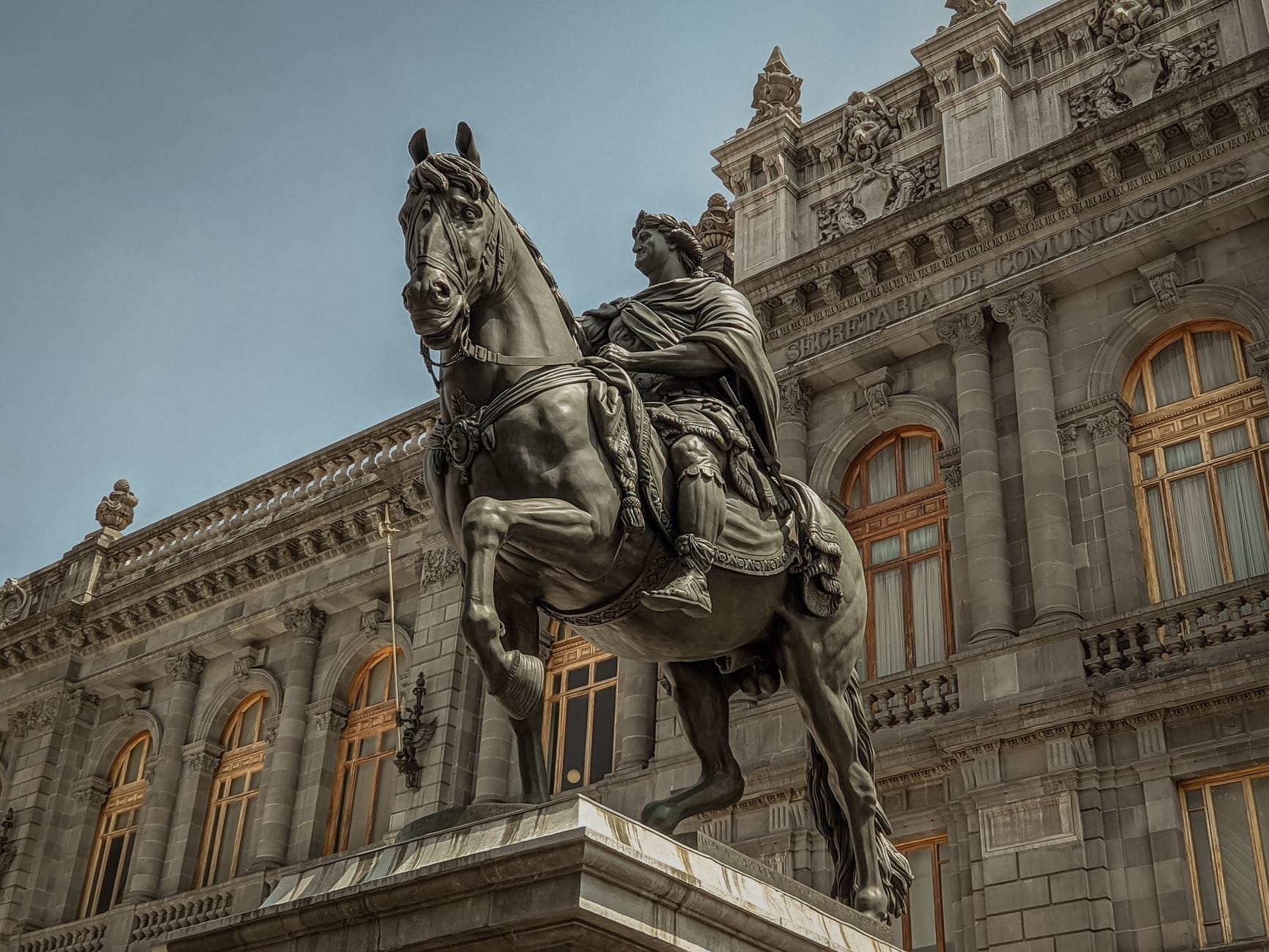
Part of the reason is the building itself. MUNAL occupies the former Palace of Communications, completed in the early 20th century to a design by Italian architect Silvio Contri. Its neoclassical facade, all granite columns and restrained ornament, does not announce itself loudly on Centro Histórico's skyline the way Bellas Artes does. But step through the entrance onto Plaza Manuel Tolsá, notice the equestrian bronze of Charles IV on the square, and the scale of what you are entering starts to register.
The museum opened in this building in 1982. The equestrian statue of Charles IV (El Caballito) was placed on Plaza Manuel Tolsá in 1979. Its 5,500 square metres of exhibition space are organized chronologically and thematically, making it one of the few places in the country where you can read Mexican visual history as a coherent narrative rather than a series of isolated highlights.
💡 Local tip
Last admission is at 17:30, thirty minutes before closing. The museum closes on Mondays, January 1, and December 25. Arrive by 15:00 if you want unhurried time with the permanent collection.
The Building: Architecture Worth Slowing Down For
Before you reach the galleries, the building itself demands attention. Silvio Contri's design belongs to the eclecticismo modernista current that swept Mexican official architecture in the Porfiriato era, blending Beaux-Arts proportions with Italian Renaissance detailing. The grand interior staircase, topped by a glass and iron skylight, floods the central atrium with natural light that shifts from cool grey on overcast mornings to warm amber on clear afternoons.
The staircase balustrades are cast iron, intricate enough to photograph at close range without looking decorative in a generic way. The stone floors throughout the building have the slightly uneven quality of a century of use, and the ceilings in the main halls rise high enough that the rooms feel truly monumental rather than merely large. This is not a white-box gallery space. The architecture adds weight to the works hanging in it.
Photography is permitted with a 5 MXN permit, without flash or tripod. The atrium staircase is the most photographed element, and rightly so, but the light is most flattering in the two to three hours before closing on clear days when afternoon sun filters through the upper skylights.
Tickets & tours
Live prices and dates from our booking partner. If you book, we may earn a commission at no extra cost to you.
Xochimilco, Coyoacan and Frida Kahlo Museum with skip-the-line tickets
From 63 €Instant confirmationFree cancellationFrida Kahlo and Diego Rivera legacy visit to three museums with skip-the-line tickets
From 67 €Instant confirmationFree cancellationSix Flags Amusement Park tickets and transportation
From 87 €Instant confirmationFree cancellationMexico City National Museum of Anthropology guided tour
From 57 €Instant confirmationFree cancellation
The Collection: Four Centuries of Mexican Visual Culture
MUNAL's permanent collection spans the mid-16th century to roughly the mid-20th century. The colonial-era rooms hold viceregal religious paintings, an entire tradition that shaped Mexican visual language for two hundred years and which is rarely taken seriously by visitors in a hurry. Spend time here. The scale of some devotional canvases, six or seven metres tall, and the layered gold-leaf ornamentation of altarpiece studies, reveals a level of technical ambition that challenges any assumption that colonial art was merely derivative.
The 19th-century rooms are where the collection begins to feel distinctly Mexican rather than simply Latin American. Landscape painters like José María Velasco documented the Valley of Mexico with near-geological precision: the volcanoes in his panoramas are not romanticized backdrops but scientifically observed landforms. Alongside them, academic portraiture and allegorical painting trace the decades-long project of constructing a national identity after independence.
The early 20th-century galleries bridge the academic tradition and the explosion of muralism that would define Mexico's global artistic reputation. If you want to understand how Diego Rivera's generation arrived at their aesthetic and political convictions, MUNAL is one of the places to look. For the murals themselves, the National Palace and the Museo Mural Diego Rivera nearby provide the monumental counterpart to MUNAL's more intimate works on canvas.
ℹ️ Good to know
MUNAL also runs temporary exhibitions alongside the permanent collection. Check munal.mx before visiting, as major temporary shows can change what rooms are accessible and add considerably to the time you will want to spend.
How the Experience Changes by Time of Day
Weekday mornings between 10:00 and 12:00 are quietest. The galleries are cool, the building is still settling into the day, and school groups, if any, are usually contained to specific wings. The natural light in the upper rooms at this hour is even and diffuse, which is actually ideal for looking at paintings without glare.
Weekend afternoons from 13:00 onward see the highest foot traffic, particularly the atrium and the first rooms of the permanent collection nearest the entrance. The deeper historical galleries, the colonial and 19th-century rooms, remain relatively uncrowded even when the museum is busiest. If you visit on a weekend, move quickly through the entry rooms and spend your first thirty minutes in the quieter back sections.
The museum is closed on Mondays, which is worth noting because many travelers plan Centro Histórico days for the beginning of the week when other sites are also shuttered. Tuesday reopenings tend to be quiet. Sunday afternoons bring families and couples, and the atmosphere becomes less solitary but not unpleasantly crowded.
Getting There and Navigating the Surrounding Area
MUNAL sits on Plaza Manuel Tolsá at Tacuba 8, roughly equidistant between two Metro stations. Bellas Artes station (Lines 2 and 8) puts you on the museum's western side, about a 7-minute walk. Zócalo/Tenochtitlan station (Line 2) approaches from the east, roughly 10 minutes. Either route takes you through the historic center's pedestrian streets, past colonial facades and street food stalls. For a full overview of moving around the city, the Mexico City transit guide covers Metro, Metrobús, and ride-hailing options in detail.
The museum is a natural anchor for a Centro Histórico walking day. The Palacio de Bellas Artes is three minutes on foot to the west. The Templo Mayor and the Zócalo are a 10-minute walk east. The logical sequence, if energy allows, is to start at MUNAL when it opens, then move east through the historic center over the rest of the day.
Ride-hailing apps including Uber and DiDi work reliably in this part of the city and are a sensible option if you are arriving from Condesa, Roma, or Polanco and want a direct route. Taxis hailed from the street in Centro Histórico carry slightly higher risk of pricing disputes; authorized taxi apps or Metro are the more consistent choices.
⚠️ What to skip
The streets immediately around MUNAL and Plaza Manuel Tolsá are pedestrian-friendly during the day, but be alert to pickpocketing in crowded street-level areas, particularly near Metro entrances. Keep bags zipped and facing forward.
Practical Notes: What to Bring, Who Gets In Free, Accessibility
General admission is 95 MXN. Free entry applies to children under 13, people with disabilities, students, teachers, and seniors, but the free categories require valid Mexican ID. International visitors in these categories should expect to pay the general admission rate. ICOM cardholders receive a 50% discount.
If you plan to photograph the collection, purchase the 5 MXN photography permit at the ticket desk. No flash, no tripod, and no organized photo sessions are permitted. Video is available for 30 MXN under similar restrictions. These fees are modest and worth paying rather than risking a request to stop shooting mid-gallery.
The museum's official site lists an information desk, cloakroom, museum shop, and library among on-site services. A detailed accessibility statement covering ramps, lifts, and mobility provisions is not prominently published; visitors with specific accessibility needs should contact the museum directly before visiting to confirm current provisions.
The interior is cool year-round, appropriate for the altitude of 2,240 metres. A light layer is useful even in warmer months. The museum is a particularly good option on rainy afternoons from May to October, when afternoon thunderstorms can make outdoor exploration uncomfortable.
Who Might Not Enjoy This
Travelers with no interest in fine art and no patience for 16th-to-20th-century painting will find MUNAL slow. The collection is deep, chronological, and rewards attention, but it does not deliver instant spectacle the way a large mural or archaeological site does. Children under ten are generally better served elsewhere, though the building's grand staircase tends to produce genuine wonder in kids who notice architecture.
Visitors primarily interested in pre-Hispanic history should prioritize the Museo Nacional de Antropología in Chapultepec, which covers a fundamentally different period and cultural scope. MUNAL's collection begins where that one effectively ends.
Insider Tips
- The museum shop stocks a well-curated selection of art history books on Mexican painting, including several bilingual editions. If you are serious about the collection, browse it before you leave: the books are priced below what you would pay at specialty bookshops.
- Plaza Manuel Tolsá, directly in front of MUNAL, is one of the more composed public spaces in Centro Histórico. The equestrian statue of Charles IV known as 'El Caballito' was placed here in 1979 and is worth a few minutes on its own terms before you enter the museum.
- The chronological hang means the colonial rooms are deepest in the building and furthest from the entrance. Most casual visitors turn back before reaching them. If you go straight to the colonial galleries first, before fatigue sets in, you will see some of the most technically ambitious work in the collection in near-solitude.
- On clear winter mornings (December to February), the light through the atrium skylight is at its most dramatic between 10:30 and 11:30. The angle is steep and direct, casting precise shadows down the staircase that make for strong architectural photographs.
- Combine MUNAL with the Museo Franz Mayer, roughly five minutes on foot toward Alameda Central. The two collections complement each other well: MUNAL covers fine art; Franz Mayer covers applied and decorative arts from a similar historical period.
Who Is Museo Nacional de Arte (MUNAL) For?
- Art and art-history travelers who want a serious, chronological survey of Mexican painting
- Architecture enthusiasts drawn to early-20th-century neoclassical and modernista buildings
- Solo travelers who want several quiet hours with a world-class collection without the crowds of more famous institutions
- Visitors on a rainy day in Centro Histórico looking for an absorbing indoor alternative
- Anyone building a multi-stop walking day through Centro Histórico and wanting a cultural anchor
Nearby Attractions
Other things to see while in Centro Histórico:
- Alameda Central
Founded in 1592, Alameda Central is the oldest public park in the Americas and the green centerpiece of Mexico City's historic center. Flanked by the Palacio de Bellas Artes and a ring of colonial-era institutions, it offers free entry, shaded walkways, and a front-row seat to everyday city life.
- Calle Madero
Avenida Francisco I. Madero connects the Zócalo to the Torre Latinoamericana along one of the oldest streets in the Americas. Free to walk at any hour, it layers colonial architecture, street performance, and everyday city life into a single corridor that doubles as an open-air history lesson.
- Casa de los Azulejos
Casa de los Azulejos is one of the most photographed facades in Mexico City, its exterior wrapped in blue-and-white Talavera tiles from Puebla. With documented origins in the 16th century and operating as a Sanborns restaurant since 1919, it offers free entry and a rare chance to step inside a baroque palace that has survived centuries of history.
- La Ciudadela Artisan Market
The Mercado de Artesanías de La Ciudadela is one of Mexico City's largest and best-known handicraft markets, with more than 350 vendors selling handmade goods from across 22 states. Entry is free, quality ranges from tourist trinkets to serious collector pieces, and knowing how to navigate the stalls makes all the difference.
Planning a trip? Discover personalized activities with the Nomado app.