Papalote Museo del Niño: Mexico City's Interactive Children's Museum
Designed by architect Ricardo Legorreta and opened in 1993, Papalote Museo del Niño sits in the 2nd Section of Bosque de Chapultepec and offers over 288 hands-on exhibits across five themed areas, plus an IMAX cinema and an outdoor Mayan garden. It is one of the most thoughtfully designed science and discovery museums in Latin America.
Quick Facts
- Location
- Av. Constituyentes 268, 2nd Section of Bosque de Chapultepec, Miguel Hidalgo, Mexico City
- Getting There
- Ride-share or taxi from Polanco or Condesa (10–15 min); Capital Bus tourist route stops at the museum
- Time Needed
- 3–5 hours (full day with IMAX and garden)
- Cost
- Base admission approx. USD 10–13 per person; packages with IMAX or planetarium cost more. Check papalote.org.mx for current MXN prices and timed tickets.
- Best for
- Families with children ages 3–12, science-curious travelers, rainy-day alternatives
- Official website
- www.papalote.org.mx
What Papalote Museo del Niño Is
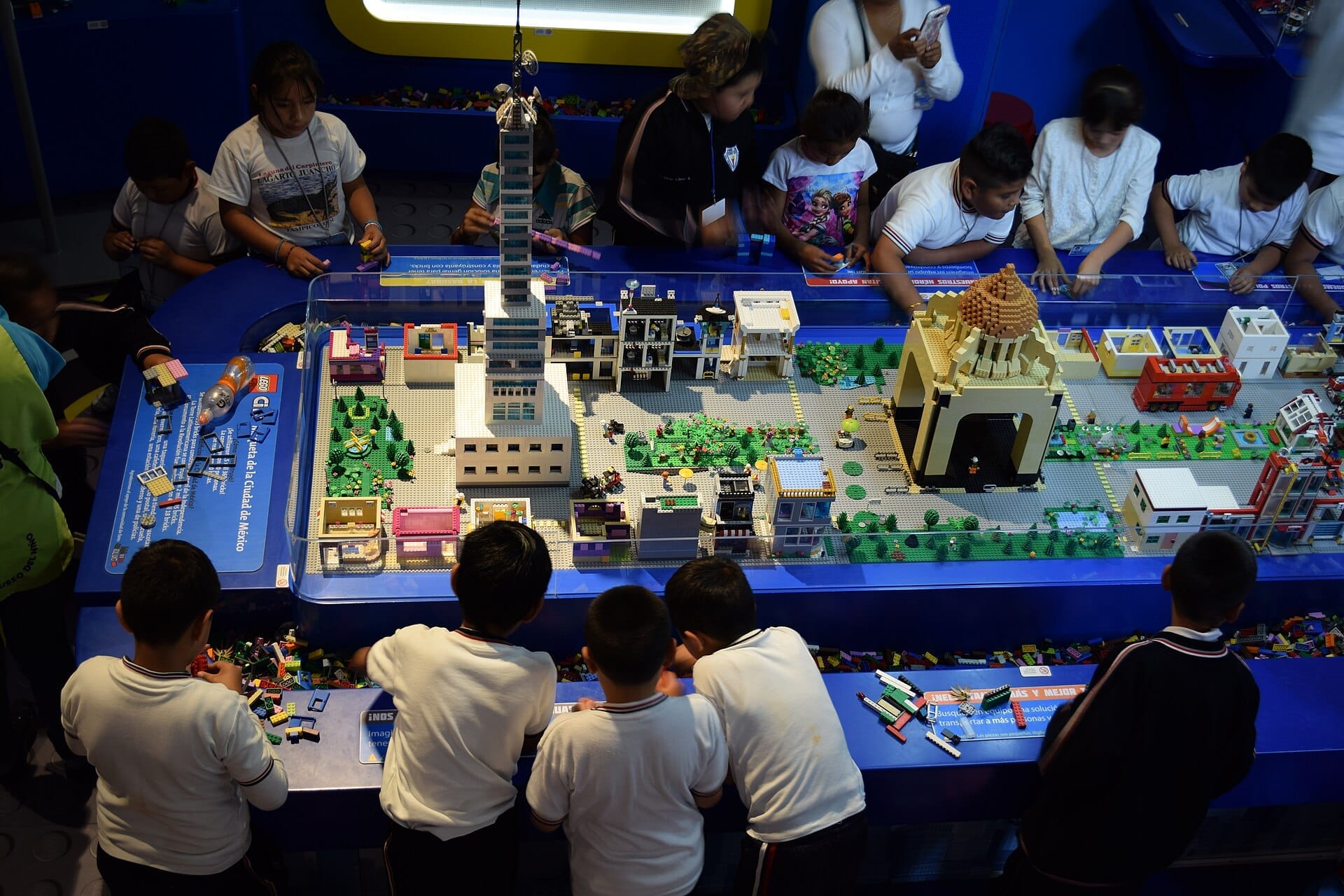
Papalote Museo del Niño is not a traditional museum where you walk quietly past exhibits behind glass. It is a large, purpose-built interactive science and discovery center where children are expected to touch, climb, press, and experiment with almost everything on display. Opened in 1993, it was designed from the ground up to make learning physical and participatory, and that ethos is visible the moment you walk through the entrance.
The building itself makes a statement before you reach the first exhibit. Architect Ricardo Legorreta, one of Mexico's most celebrated modernist architects, designed the structure using his signature vocabulary of bold geometric volumes and vivid color. The exterior is clad in blue ceramic tiles that catch the afternoon light in a way that feels deliberate, and the interior circulation uses wide ramps and open volumes to keep children oriented and energized rather than contained.
The museum sits in the 2nd Section of Bosque de Chapultepec, a part of the park that sees fewer casual visitors than the section around the castle and zoo. That relative quiet makes the approach to Papalote feel like a destination visit rather than a spontaneous drop-in, which is appropriate: the museum rewards planning.
💡 Local tip
Book timed tickets in advance on papalote.org.mx, especially for weekends and school holidays. Walk-in availability is limited during peak periods, and IMAX screenings sell out independently of general admission.
The Five Thematic Areas: What to Expect Inside
The museum organizes its more than 288 interactive exhibits into five broad thematic areas covering the human body, technology, science, expression, and the natural world. These zones are not rigidly separated; they flow into one another, which means children tend to migrate organically based on what catches their attention rather than following a prescribed route.
The body-themed area is consistently the most popular with younger children. Oversized anatomical models, exhibits on senses and movement, and physical challenges that demonstrate concepts like balance and coordination make this section loud and active. Expect to share space with school groups on weekday mornings. By early afternoon the composition shifts toward family groups, which tend to move at a slightly more relaxed pace.
The science and technology zones draw older children and curious adults. Exhibits here address topics like energy, engineering principles, and digital communication. The quality of explanation varies, with some stations offering more depth than others, but the emphasis on experimentation over passive reading keeps engagement high.
The expression area, which covers art, music, and communication, is often quieter than the science sections and worth seeking out. It includes hands-on stations for creating sound and image, and the lower noise level makes it a useful place to regroup mid-visit.
Tickets & tours
Live prices and dates from our booking partner. If you book, we may earn a commission at no extra cost to you.
Xochimilco, Coyoacan and Frida Kahlo Museum with skip-the-line tickets
From 63 €Instant confirmationFree cancellationFrida Kahlo and Diego Rivera legacy visit to three museums with skip-the-line tickets
From 67 €Instant confirmationFree cancellationSix Flags Amusement Park tickets and transportation
From 87 €Instant confirmationFree cancellationMexico City National Museum of Anthropology guided tour
From 57 €Instant confirmationFree cancellation
The IMAX Cinema and Planetarium
Papalote's IMAX screen is one of the largest in Mexico and seats more than 333 people. The programming rotates between educational films on natural history, science, and geography, with titles shown in Spanish. If your children do not speak Spanish, the visual spectacle is still impressive, particularly for nature documentaries, but the narrative content will be largely inaccessible without the language.
The planetarium runs separate ticketed sessions and is worth factoring into your planning if you are visiting with older children who have an interest in astronomy. Capacity is limited per session, so check the day's schedule when you arrive or purchase a package ticket in advance.
ℹ️ Good to know
IMAX and planetarium tickets are sold separately from general admission. If you want both, look for combination packages on the official site, which are typically better value than buying individually at the door.
The Jardín Maya: The Outdoor Section Worth Your Time
One of the most distinctive elements of Papalote is its outdoor Jardín Maya, an archaeological-themed garden that includes a pyramid structure children can climb. The space draws on pre-Hispanic architectural forms as a framework for outdoor play and exploration, which distinguishes it from a conventional museum garden.
The garden works best on clear mornings. By midday in the dry season (roughly November to April), the open areas can become warm, and younger children tire quickly in direct sun at Mexico City's altitude of around 2,240 meters. The garden is noticeably cooler and more pleasant in the hour before the museum closes on weekday afternoons. Bring water and sunscreen regardless of the season.
The outdoor space also provides a natural transition point if you want to extend the day into the wider park. The 2nd Section of Chapultepec is less developed than the 1st Section but offers trails and open lawns that are good for decompression after several hours of sensory stimulation. Families spending a full day in the area sometimes combine Papalote with a visit to the Chapultepec Zoo, though that requires moving to the 1st Section and adds significant walking.
Practical Walkthrough: Timing, Crowds, and Getting There
The museum is closed on Mondays. Tuesday through Friday hours are 10:00 to 18:00; Saturday and Sunday 10:00 to 19:00. Hours can vary by season and for special events, so confirm on the official website before your visit. Midweek mornings are the quietest windows, with school group activity typically concentrated between 10:00 and 12:30.
Getting to the museum requires either a taxi, ride-share, or the Capital Bus tourist route that stops nearby. The nearest Metro stations do not provide a direct, walkable connection to the 2nd Section of Chapultepec without crossing significant distances through the park, so most visitors with children opt for a direct vehicle. From Polanco or Condesa, expect a ride of 10 to 15 minutes outside peak traffic hours. From Centro Histórico, allow more time.
If you are planning a broader itinerary in the Chapultepec area, the Chapultepec-Polanco neighborhood guide covers logistics, dining, and nearby attractions in detail. The area has enough to justify a full day, particularly for families.
⚠️ What to skip
Papalote sits at altitude. Mexico City's elevation of roughly 2,250 meters affects young children and adults who are not acclimatized, particularly during physical activity. Build in rest time and keep hydrated throughout the visit.
Worth Your Time?: Who This Museum Is For, and Who Should Skip It
Papalote is well-designed for children between roughly three and twelve years old. The exhibits are durable, the space is generous, and the combination of indoor and outdoor elements sustains energy over a half-day visit without the exhaustion of a conventional museum circuit. For families traveling with children in that age range, it is one of the more rewarding options in Mexico City.
For adults traveling without children, the calculus is different. The exhibits are calibrated for younger visitors, and while the building and the Legorreta architecture are interesting in their own right, there is limited programming aimed at adult engagement. Adults with a strong interest in contemporary Mexican architecture will find the building worth seeing. Everyone else should probably spend the time at the Museo Nacional de Antropología or another institution with a broader appeal.
Travelers planning a broader museum itinerary in Mexico City can consult the guide to the best museums in Mexico City to compare Papalote against other options by audience and interest type.
Budget travelers should note that the base admission is not prohibitive, but add-ons for IMAX and the planetarium push the cost for a family of four into territory that warrants comparison against other free or low-cost family options in the city. Chapultepec Park itself, including its free walking areas and the zoo (which does not currently charge general admission but may have fees for some services), provides outdoor alternatives that younger children often find equally engaging.
Photography and Accessibility Notes
Photography is generally permitted throughout the museum, and the Legorreta exterior offers strong architectural shots, particularly in morning light when the blue tiles read most clearly against the sky. Inside, the lighting in the exhibit halls is functional rather than atmospheric, so photographs work best in the areas with natural light from skylights or near the outdoor garden.
The museum is designed as a family-inclusive space with wide circulation areas and ramps throughout. Specific wheelchair access details and services for visitors with disabilities are not fully documented in public listings; contact the museum directly at papalote.org.mx to confirm arrangements before visiting if accessibility is a requirement.
Insider Tips
- Arrive at opening time on a weekday if you want the exhibit halls to yourself before school groups take over. By 11:00 on most weekday mornings, group visits dominate the most popular sections.
- The Jardín Maya pyramid is best experienced mid-morning before the sun reaches its highest point. Children can climb freely, but the structure sits in open sun and heats up quickly from late morning onward.
- If you are visiting with children of different ages, use the expression and arts area as a base for the youngest while older siblings explore the science and technology zones independently. The layout makes it feasible to keep loose track of multiple ages without constant supervision.
- Combination ticket packages (museum plus IMAX, or museum plus planetarium) purchased in advance on the official site tend to offer better value than buying components separately at the admissions desk.
- The museum's café and food options are limited and priced above street-food norms. Pack snacks for younger children, and consider eating before or after at one of the casual restaurants near the Polanco end of the park rather than relying on in-museum dining.
Who Is Papalote Museo del Niño For?
- Families with children aged 3–12 looking for a structured, engaging half-day or full-day activity
- Rainy-day or hot-season visits when outdoor options in Chapultepec are less comfortable
- Travelers with an interest in Mexican modernist architecture wanting to see Ricardo Legorreta's work in context
- Parents who want an educational experience that does not require fluent Spanish to engage with
- Groups combining Papalote with a broader Chapultepec day that includes the park, castle, or zoo
Nearby Attractions
Other things to see while in Chapultepec & Polanco:
- Avenida Presidente Masaryk
Avenida Presidente Masaryk is Polanco's main commercial artery, a roughly 2.8-kilometer stretch of luxury flagships, design showrooms, and terrace restaurants. Free to walk, open around the clock, and easily reached by Metro Line 7.
- Chapultepec Castle
Chapultepec Castle sits atop Cerro del Chapulín, the only royal castle in continental North America still standing in its original location. Once home to emperors and presidents, it now houses the Museo Nacional de Historia, with sweeping views over Mexico City and rooms preserved from the era of Maximilian I.
- Bosque de Chapultepec
Covering roughly 686 hectares in the heart of Mexico City, Bosque de Chapultepec is far more than a city park. It holds world-class museums, a hilltop castle dating to 1785, a free zoo, and lakes where families rent rowboats on weekends. Entry to the park itself is free, and the depth of what's inside rewards as many hours as you can give it.
- Chapultepec Zoo
The Zoológico de Chapultepec sits inside Bosque de Chapultepec and admits visitors free of charge Tuesday through Sunday. With roughly 2,000 animals across 250-plus species, it draws large local crowds on weekends and offers a well worthwhile morning for families and curious travelers alike.
Planning a trip? Discover personalized activities with the Nomado app.