Parque México: The Heart of Condesa
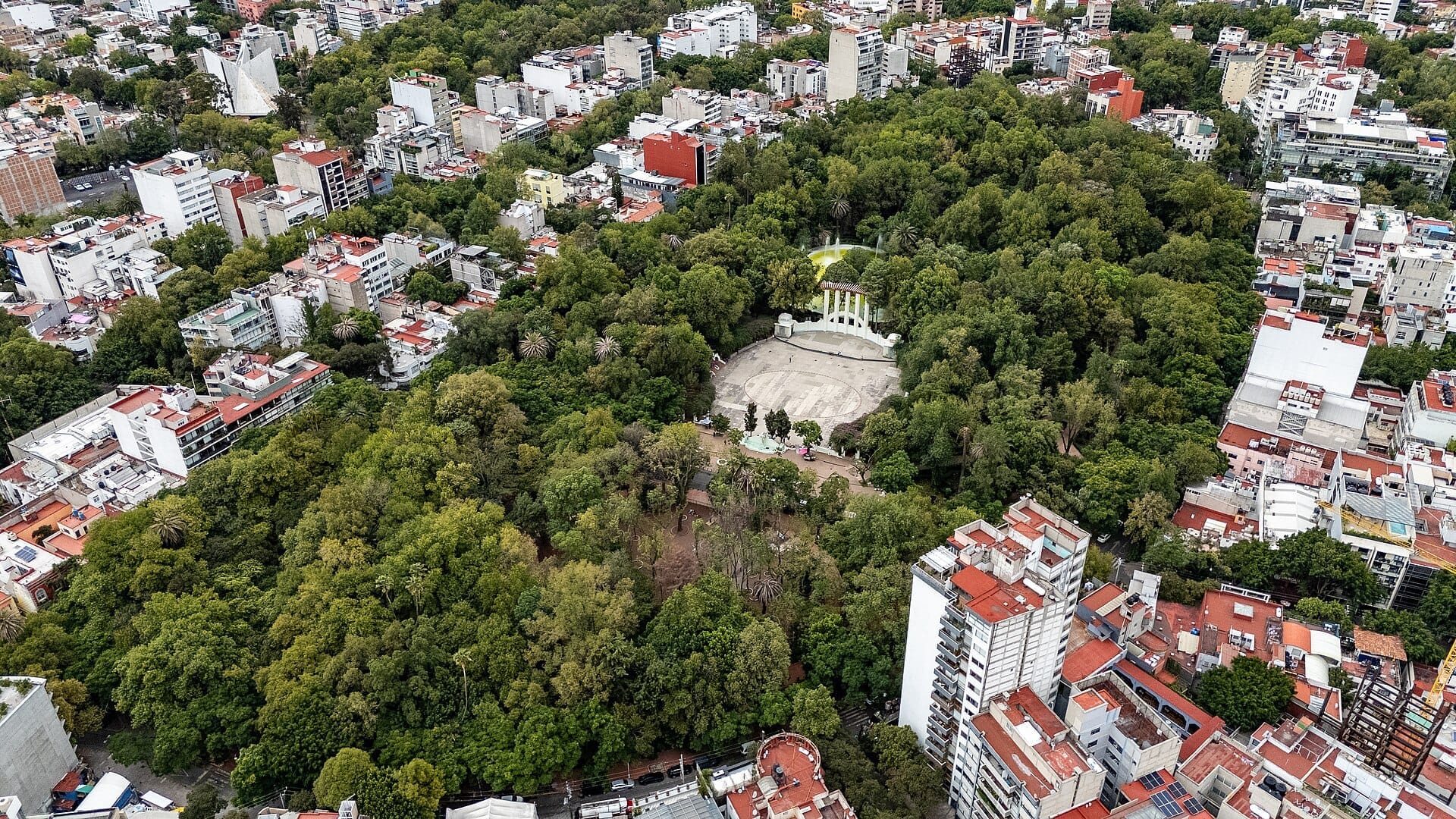
Officially named Parque General San Martín, Parque México is a 3.65-hectare art deco park at the center of the Condesa neighborhood. Free to enter and open around the clock, it draws everyone from morning joggers to weekend families, and sits surrounded by some of the most architecturally striking streets in Mexico City.
Quick Facts
- Location
- Av. México s/n, Colonia Hipódromo, Condesa, Cuauhtémoc, CDMX
- Getting There
- Metro Chilpancingo (Line 9), approx. 7-minute walk
- Time Needed
- 45 minutes to 2 hours depending on pace
- Cost
- Free – no entrance fee
- Best for
- Morning walks, people-watching, weekend leisure, architecture lovers
What Parque México Is
Parque México is not a grand monument or a tourist attraction in the conventional sense. It is a working public park: 36,500 square meters of tree canopy, paved oval paths, a duck pond, outdoor sculptures, and enough bench space for everyone from retirees reading the newspaper to couples eating tacos out of paper bags. Its official name, Parque General San Martín, appears on municipal signage, but no one in the neighborhood calls it that. To residents of Condesa, it is simply Parque México.
The park sits inside the Hipódromo sub-district of Condesa, and its elliptical layout is no accident. The land was literally carved out of a horse racing track that occupied this site in the early 20th century. The park was inaugurated in 1927 on land carved out of the former racetrack that occupied this site in the early 20th century. The oval geometry of the original track shaped the park's perimeter paths, which remain today.
ℹ️ Good to know
The park is reported to be open 24 hours a day, every day of the year. There is no entrance gate or ticketing system. You simply walk in from any of the access points along Avenida México.
The Architecture Around the Park
The park itself is pleasant, but the streets encircling it are what make the whole area worth a deliberate visit. The blocks of Avenida México and Avenida Ámsterdam that wrap around Parque México are lined with art deco and early modernist apartment buildings dating from the 1930s and 1940s. Many have curved corners, decorative ironwork balconies, and facades in muted terracotta, cream, and pale green. Walking the perimeter of the park means walking past some of the best-preserved early 20th-century residential architecture in Latin America.
Condesa developed rapidly after the racetrack was removed, with the neighborhood laid out around the new park. The circular street pattern, combined with the diagonal Avenida Ámsterdam that traces the outer track oval, gives the area a distinctly European feel that is unusual in Mexico City's mostly grid-based street plan. If you are spending time in the Roma-Condesa area, the park is the natural anchor point for a longer architectural walk through these streets.
Tickets & tours
Live prices and dates from our booking partner. If you book, we may earn a commission at no extra cost to you.
Puebla and Cholula guided tour from Mexico City with optional lunch
From 43 €Instant confirmationFree cancellationMexico City exploration game and tour in Chimalistac
From 10 €Instant confirmationFree cancellationFolkloric ballet of Mexico skip-the-line VIP tickets with transportation
From 109 €Instant confirmationFree cancellationLuggage Storage in Mexico City
From 7 €Instant confirmationFree cancellation
How the Park Changes Through the Day
Early mornings, from roughly 6:30 to 9:00, belong to the joggers and dog walkers. The paved oval path that rings the park's interior fills with people running in the same counter-clockwise direction, a kind of unofficial traffic pattern that locals follow without signs. The air is cool at this altitude (Mexico City sits at around 2,240–2,250 meters above sea level), and the large ahuehuete and ficus trees hold the morning light in a particular way that makes this one of the more atmospheric times to visit.
By mid-morning, fitness classes begin appearing on the grass. Small groups gather around instructors for yoga, pilates, and circuit training. The duck pond in the park's center draws children, and the benches along the central axis start filling with people who have clearly nowhere particular to be. This is peak people-watching time: Condesa has one of the highest concentrations of freelancers, creative professionals, and long-term expatriates in the city, and Parque México is where many of them decompress mid-week.
Weekends transform the park completely. Saturday and Sunday afternoons bring extended families with strollers, vendors selling elote and aguas frescas near the entrances, and informal musicians occupying the small bandstand. The park gets often crowded between 11:00 and 16:00 on weekends, and finding a bench in the shade requires some patience. If you prefer the park at its quietest and most photogenic, a weekday morning is the right choice.
💡 Local tip
For photography: the park's central fountain and tree-lined main path photograph best in the morning, when light filters through the canopy from the east. Midday sun is harsh and flat. Late afternoon in the dry season (roughly November to April) can produce warm golden light along the western path.
Inside the Park: What to Look For
The interior of the park is organized around a central axis with a fountain at the midpoint. The duck pond sits in the northern section and is surrounded by low hedges and iron railings. Several outdoor sculptures are placed throughout the park, though they are easy to miss if you are moving quickly. The most notable is a bronze monument related to the park's dedication to José de San Martín, the Argentine independence hero after whom the park is formally named.
The tree canopy is one of the park's most underappreciated features. Several of the mature trees are decades old and create a strong sense of enclosure that is rare in a city of this density. On overcast days, the park takes on a slightly melancholy, quiet atmosphere that locals seem to appreciate for its contrast with the surrounding noise. On clear days, the canopy dapples the paths with moving shadow.
There is an outdoor amphitheater-style space used for occasional community events and small performances, particularly on weekends. Check local listings if you happen to be visiting during a weekend, as free cultural events sometimes take place here without much advance publicity.
The Surrounding Neighborhood: What to Do Before or After
Parque México is at the center of one of Mexico City's most walkable and food-dense neighborhoods. Within a five-minute walk of the park, you will find independent coffee shops, bakeries, and a high concentration of restaurants that represent some of the city's best mid-range dining. The neighborhood is also close to Parque España, a smaller and less formal green space about ten minutes to the north on foot, which gives you a useful comparison point for how different Condesa's two main parks feel.
If you are building a broader itinerary around this part of the city, consider pairing the park with the Mercado Roma, a food market roughly 15 minutes on foot into Roma Norte that anchors the neighborhood's reputation for food culture. Together, a morning in the park followed by lunch at the market makes for a low-effort but especially rewarding half-day.
For those interested in design and urban architecture, the walk from Parque México north along Avenida Ámsterdam connects naturally to the broader Condesa and Roma street grid. A self-guided walking tour of the area is one of the more satisfying ways to spend a few hours without spending money.
Practical Notes: Getting There, Weather, and What to Bring
The closest Metro station is Chilpancingo on Line 9, approximately a seven-minute walk from the park's southern edge. The walk from Chilpancingo takes you through unremarkable streets before the neighborhood architecture improves noticeably as you approach the park. Alternatively, ride-hailing apps (Uber, DiDi, Cabify all operate in Mexico City) drop you directly on Avenida México at the park's perimeter, which is more convenient if you are coming from a different part of the city.
There are no facilities inside the park beyond a few kiosks near the entrances that sell drinks and snacks on weekends. Bring water, especially if you are visiting during the dry season warm months of March to May when afternoon temperatures can reach the mid-20s Celsius. The park is shaded enough that it remains comfortable in most conditions, but Mexico City's altitude means even mild sun can be more intense than expected.
During the rainy season (roughly May to October), afternoon thunderstorms are common and can arrive quickly. If you are planning to spend time in the park, mornings are more reliable. For a broader sense of how weather affects outdoor plans in the city, the best time to visit Mexico City guide covers seasonal patterns in detail.
⚠️ What to skip
The park is generally calm and well-used by locals at most hours, but like any large urban park, exercise normal awareness late at night. Most visitors use it during daylight hours, and it is busiest and most lively in the mornings and on weekend afternoons.
Who Might Not Enjoy This
If you are visiting Mexico City on a short trip focused on pre-Hispanic history, colonial architecture, or major museum collections, Parque México will likely feel like a detour that does not justify the travel time. It is a residential neighborhood park, and the experience it offers is essentially the same as sitting in any well-maintained urban green space: pleasant, calm, unremarkable in isolation. Its value is almost entirely contextual, tied to the neighborhood around it and the quality of time you choose to spend there.
Travelers expecting grand design statements or historic monuments will not find them here. The park's art deco elements are understated, and the monuments inside are modest. It is not a substitute for Chapultepec Park if you want scale, nature trails, or major museums.
Insider Tips
- The oval path that rings the park's interior has an unofficial direction: nearly everyone runs and walks counter-clockwise. Going the other way is technically fine but will earn you some confused looks from regulars.
- The small kiosks near the Avenida México entrances sell decent coffee on weekend mornings, starting as early as 7:00. It is much cheaper than the cafes on the surrounding streets and the quality is perfectly acceptable.
- The park's formal name, Parque General San Martín, appears on official signage and maps but will confuse taxi drivers and locals alike. Always say 'Parque México' or reference Avenida México in Condesa.
- On clear winter mornings (December through February), the snow-capped cone of Popocatépetl volcano is occasionally visible above the city's eastern horizon. The park's open central section can provide an unobstructed sightline in this part of the city when conditions allow.
- Weekday mornings between 7:30 and 9:00 offer the park at its most atmospheric: runners, dogs, dappled light through the canopy, and almost no tourists. It is the version of the park that residents actually use.
Who Is Parque México For?
- Morning runners and walkers looking for a scenic, shaded route
- Architecture enthusiasts pairing the park with a walk along Avenida Ámsterdam
- Travelers spending multiple days in Mexico City who want to experience a neighborhood at its own rhythm
- Families with young children who need outdoor space without paying entrance fees
- Digital nomads and slow travelers based in Condesa or Roma who want a daily outdoor anchor
Nearby Attractions
Other things to see while in Roma & Condesa:
- Mercado Roma
Opened in 2014, Mercado Roma transformed the concept of a traditional Mexican market into a multi-level gourmet destination. With free entry, dozens of independent food stalls, craft cocktail bars, and a rooftop terrace, it sits at the center of Roma Norte's culinary identity.
- Museo del Objeto del Objeto (MODO)
Housed in a restored 1906 Art Nouveau mansion on Calle Colima, the Museo del Objeto del Objeto (MODO) is Mexico's first museum dedicated entirely to design, advertising, and material culture. Its collection of over 100,000 everyday objects reframes the things you ignore every day as evidence of how Mexican society thinks, sells, and remembers.
- Parque España
Inaugurated in 1921 on the former access road to the old Hipódromo de la Condesa racetrack, Parque España is a semicircular green space between Roma Norte and Condesa. Free, open around the clock, and consistently busy without ever feeling overwhelming, it offers a clear window into everyday neighborhood life in one of Mexico City's most architecturally interesting districts.
Planning a trip? Discover personalized activities with the Nomado app.