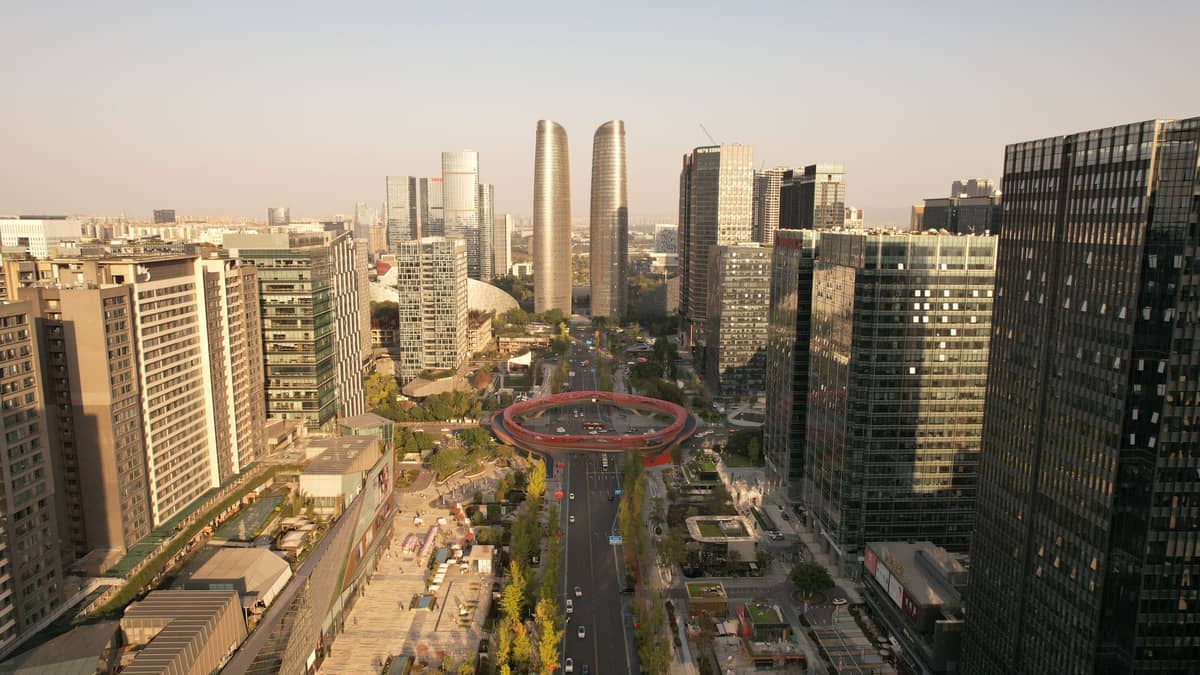
Tianfu New Area is Chengdu's planned southern district, built around technology parks, exhibition centers, and ecological corridors along lakes and wetlands. It sits far from the historic core but offers a striking contrast: ultra-modern architecture beside calm lakeside paths, and a pace of life that feels genuinely different from the old city.
Tianfu New Area is where Chengdu is building its future, literally. Stretching south and southeast from the city's established urban core, this large planned district combines innovation campuses, financial towers, and exhibition venues with parks, lakes, and deliberately designed green corridors. It is not the Chengdu of teahouses and ancient lanes, but it tells an equally important story about what the city is becoming.
Orientation: Where Tianfu New Area Fits in Chengdu
Tianfu New Area begins roughly where the established southern districts of Chengdu start to loosen into newer development, southeast of the traditional urban core. Its planning scope is enormous: it formally encompasses parts of the Chengdu High-tech Zone (southern section), portions of Longquanyi District, Shuangliu, Xinjin, Jianyang, and even extends into parts of Meishan municipality to the south, including Pengshan and Renshou counties. For most visitors, however, the relevant zone is the northern urban portion of the new area, focused around Xinglong Lake, Tianfu Park, and the major commercial and exhibition precincts that line the southern Metro Line 1 corridor.
The ecological backbone of the wider zone is its 'two lakes, one mountain' framework: Longquan Lake, Sancha Lake, and Longquan Mountain. These natural and semi-natural assets were built into the planning framework from the start, which is why the southern end of the new area feels notably greener than most comparable development zones in Chinese cities. The Minjiang River is not part of the core ‘two lakes, one mountain’ framework described in the planning documents.
Getting your bearings is straightforward if you think of Metro Line 1 as the spine. Starting from Tianfu Square in the historic center, which is the main interchange for Lines 1 and 2, the metro runs south through stations including Century City, Jincheng Plaza, Incubation Park, Financial City, Tianfu 3rd Street, Tianfu 5th Street, Huafu Avenue, Sihe, Guangdu, and Wugensong. Each station represents a distinct zone within the new area, and the character shifts noticeably as you travel further south.
Character and Atmosphere
Arriving in the central portion of Tianfu New Area from the older city is a mild form of architectural shock. The streets are wide, the sidewalks are broad and clean, and the buildings are new enough that their facades still look sharp. There is none of the organic density you find around Chunxi Road or the lanes near Wenshu Monastery. Instead, the grid is deliberate, the setbacks are generous, and the public spaces are designed to be used, not just passed through.
Mornings around Xinglong Lake are genuinely pleasant. Joggers and early walkers circle the water before the workday begins, and there is a calm that feels earned rather than manufactured. The light falls flat and silver on overcast days, which in Chengdu is most of the year, but on the occasional clear morning in autumn the lake reflects the tower blocks on the eastern shore in ways that are worth stopping for. By mid-morning, the area fills with office workers, and the rhythms of a business district take over.
Evenings shift the mood again. Around Tianfu Park and the commercial zones near Century City, food courts and outdoor restaurants become active after 18:00, and the area's younger professional population tends to congregate around the lake promenades and the better-designed mixed-use blocks. It is not a nightlife destination in the way that Jinjiang District is, but it has a certain calm cosmopolitan energy that some travelers will prefer. The streets feel safe and well-lit, and the crowds are manageable.
ℹ️ Good to know
Tianfu New Area is primarily a place for business visitors, families, and travelers with a specific interest in contemporary Chinese urbanism. It is not the right base if your main goal is historic Chengdu. Think of it as a separate chapter of the city, worth a day trip rather than a multi-night stay for most first-timers.
What to See and Do
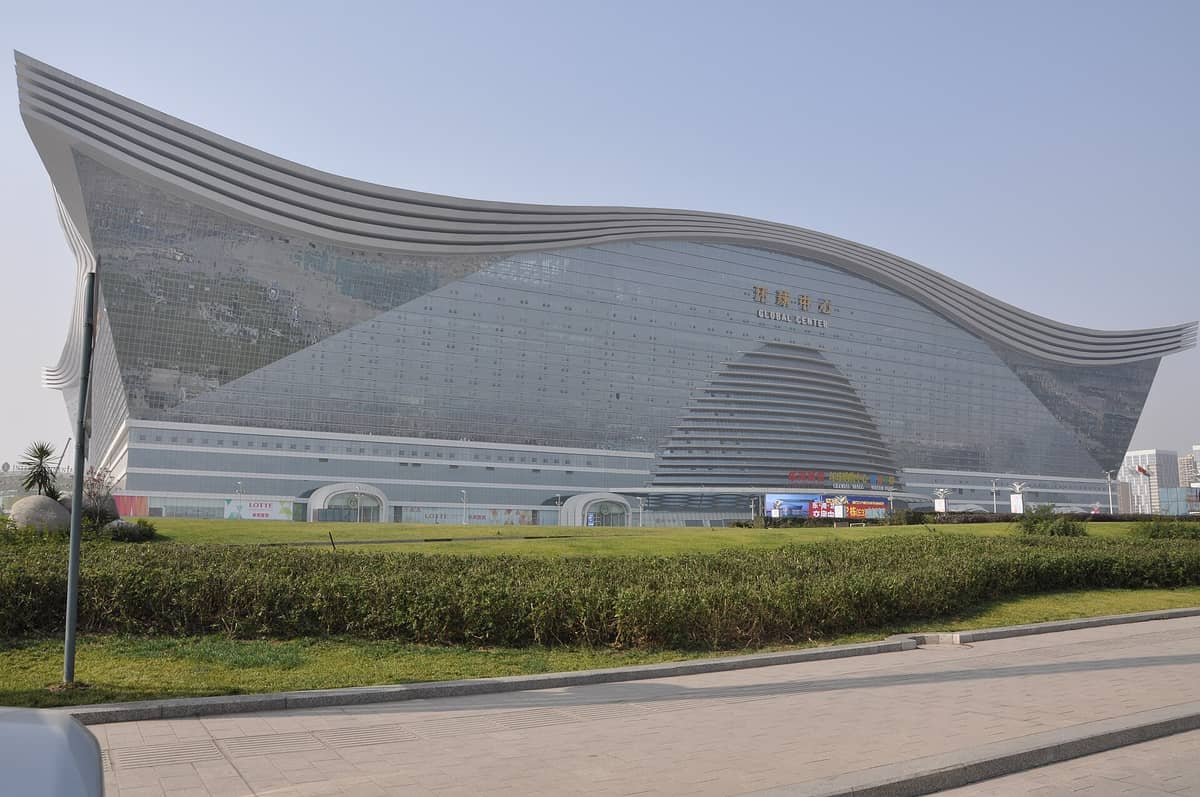
The single most visited attraction in the zone is the New Century Global Center, near the Century City metro station. Completed in 2013, it holds the record as one of the world's largest buildings by floor area, containing a shopping mall, hotels, an indoor artificial beach, a cinema complex, an ice rink, and an ocean-themed water park. Visitors come partly to experience the sheer scale, which is disorienting in a way that photographs do not fully capture. Even if you have no intention of visiting the attached attractions, walking through the building gives a vivid sense of the ambition that defines Tianfu New Area.
Chengdu Haichang Polar Ocean Park, located in the new area, is a large marine and polar-animal theme park aimed primarily at families and domestic tourists. It houses beluga whales, polar bears, penguins, and a range of other marine animals alongside water rides and stage shows. Expect significant crowds on weekends and public holidays, and be aware that opening hours and pricing change seasonally.
Xinglong Lake is the most accessible piece of genuine open space in the northern new area. The lakeside paths are well-maintained, and the surrounding park incorporates wetland sections, planted embankments, and rest areas. It is worth a slow walk in the late afternoon, particularly in spring when the plantings along the southern bank are in flower. Hongshi Park and Tianfu Park provide similar green-space experiences at different points along the corridor.
Western China International Expo City is a major convention and exhibition venue. Unless you have a specific event to attend, it is not a traveler destination in itself, but it explains much of the supporting infrastructure around it, including the concentration of business hotels and the density of mid-range restaurant options in that precinct.
New Century Global Center: scale, spectacle, indoor beach, ice rink, shopping
Xinglong Lake park and promenade: morning walks, evening strolls, city views
Tianfu Park and Hongshi Park: quieter green spaces, local recreation
Western China International Expo City: conference visitors and event-specific attendance
💡 Local tip
If you are visiting Haichang Polar Ocean Park or the New Century Global Center with children, go on a weekday. Weekend crowds at both venues are substantial, and the lines for popular attractions inside the Global Center can stretch well beyond an hour.
Eating and Drinking
The food scene in Tianfu New Area is a reflection of its population: mostly young professionals, business travelers, and families who expect good food but are eating on a schedule. The strongest concentration of options sits around Century City, Financial City, and the Xinglong Lake commercial blocks. Here you will find the full range of contemporary Chinese urban dining: Sichuan hotpot restaurants, Cantonese congee shops, Japanese ramen chains, Korean barbecue, and the kind of fast-casual options that cater to office lunch crowds.
Sichuan hotpot remains the dominant social eating format. Several well-regarded local chains have branches in the new area, and the quality is generally high even at mid-range prices. If you want a broader sense of Chengdu's food culture before visiting, the Chengdu hot pot guide covers what to expect and how to order. Street-level snack stalls and small noodle shops are less common here than in central Chengdu, but they exist around the residential blocks between metro stations, particularly toward Huafu Avenue and Sihe.
Cafes are well-distributed across the commercial zones. Several Chinese specialty coffee brands have established outlets in the new area, and the standard of espresso has improved markedly over recent years. Evenings bring out a bar and drinks scene around the lakeside commercial blocks, oriented toward craft beer and cocktails rather than the traditional teahouse culture found closer to the city center.
Travelers who want to experience Chengdu's famous street food should not expect to find it concentrated here. The Chengdu street food guide will direct you toward the better areas for that, which lie mostly in Jinjiang, Wuhou, and Qingyang districts. The new area is more about polished food-court dining and branded restaurant chains than independent or family-run operations.
Getting There and Around
Metro Line 1 is the most practical way to reach and navigate the new area from central Chengdu. From Tianfu Square, the journey to the southern districts varies by destination and service conditions; check the current Chengdu Metro journey planner for exact travel times. The metro runs frequently during peak hours and the fares are low by international standards. Trains are clean, air-conditioned, and well-signed in both Mandarin and English.
For visitors arriving directly at Chengdu Tianfu International Airport (TFU), Metro Line 18 runs through Century City and Western China International Expo City before reaching the airport, making the new area relatively accessible without using the road network. This is worth knowing for travelers whose first priority is visiting the New Century Global Center or attending an event at the Expo City. The older Chengdu Shuangliu Airport (CTU) is closer to the urban core and connects via its own metro line. More detail on navigating between the two airports and the city is in the getting around Chengdu guide.
Within the new area, walking is practical between attractions that fall on the same lakeside corridor, but the distances between metro stations are larger than in the historic center. Didi ride-hailing covers the full zone and is the best option for reaching Haichang Polar Ocean Park, the outlying lake areas, or sites that sit between metro stations. Bus services connect many neighborhoods within the new area but routes and schedules are best confirmed locally or through a current transit app.
⚠️ What to skip
Some of the ecological attractions in the wider Tianfu New Area, particularly around Sancha Lake and Longquan Lake, are not directly served by metro. Budget time for bus or taxi connections to these sites, and confirm access arrangements before setting out, especially on weekdays when shuttle schedules may be limited.
Where to Stay
The new area has a strong supply of business hotels, particularly in the Century City and Financial City precincts. International brands are well-represented, and the standard of service is generally high. Rooms tend to be larger and newer than equivalently priced options in the historic center, and the surrounding streets are quieter at night, which matters if noise is a factor in your sleep quality.
For most first-time visitors to Chengdu, staying in Tianfu New Area is not the obvious choice. The main cultural and historic attractions, including Wuhou Shrine, Kuanzhai Alley, and Wenshu Monastery, are all 20 to 40 minutes away by metro, which is manageable but adds up over multiple days. The where to stay in Chengdu guide compares all the major neighborhoods and is worth reading before committing.
Travelers attending conferences at Western China International Expo City, or those whose primary goal is the New Century Global Center and Haichang Park, will find accommodation here both convenient and competitively priced relative to city-center options of similar quality. Families with young children may also appreciate the lower street noise and the easy access to Xinglong Lake's walking paths.
How Tianfu New Area Fits Into a Wider Chengdu Trip
For travelers following a standard Chengdu itinerary, the new area typically earns half a day to a full day rather than forming the base of the visit. The most logical pairing is an afternoon at the New Century Global Center followed by a walk around Xinglong Lake. Those traveling with children might add Haichang Polar Ocean Park as a separate day. The 3 days in Chengdu itinerary positions the new area as one option on a day when you are also moving south, rather than a standalone destination.
The new area is also a useful transit point. Travelers heading to or from Tianfu International Airport pass through or near its southern reaches, and it is possible to combine an airport-direction journey with a stop at the Global Center without significant backtracking. If you are planning day trips from Chengdu, the day trips from Chengdu guide covers connections to sites like Leshan and Emeishan, which are more easily reached from the southern metro and rail network than from the historic city center.
Honest assessment: Tianfu New Area rewards travelers who are curious about how contemporary Chinese cities are being designed and built, or who have specific attractions on their list. It will disappoint anyone expecting the textured, layered city experience of older Chengdu neighborhoods. It is worth your time if you approach it on its own terms. For everything that makes Chengdu itself distinct, the older districts covered in the Chengdu first-timer guide remain the better starting point.
TL;DR
Tianfu New Area is Chengdu's planned southern expansion: technology parks, exhibition venues, lakeside parks, and the massive New Century Global Center.
Best visited as a half-day or full-day excursion from central Chengdu, not as a base for first-time visitors focused on culture and history.
Metro Line 1 connects the area efficiently to the city center; some outlying sites require buses or ride-hailing via Didi.
Strong accommodation options for business travelers and conference attendees, with quieter streets and newer facilities than the historic center.
Worth including if you have children (Haichang Polar Ocean Park), an interest in large-scale contemporary urbanism, or a conference commitment — less essential for short-stay cultural visits.
Three days is enough time to cover Chengdu's essential experiences without rushing. This itinerary balances the panda base, historic streets, Sichuan cuisine, cultural landmarks, and a day trip option, with practical notes on logistics, timing, and what to skip.
Chengdu's museum scene spans 4,500 years of Sichuan history, from mysterious Bronze Age civilizations to Tang Dynasty poets and dinosaur fossils. This guide covers the standout institutions, what to expect inside each one, and how to plan your visits efficiently.
Chengdu's temple scene spans 1,400 years of Buddhist and Taoist history, from incense-filled city monasteries to sacred peaks rising above the clouds. This guide covers the best temples in Chengdu and beyond, with honest advice on what to expect at each one.
Chengdu rewards visitors year-round, but the timing of your trip makes a real difference. This guide breaks down every season by weather, crowd levels, panda activity, and practical logistics so you can choose the window that actually suits your plans.
Chengdu is surrounded by ancient towns that most visitors completely overlook. This guide covers the five best options — Huanglongxi, Luodai, Jiezi, Anren, and Pingle — with real transport details, honest assessments, and seasonal advice to help you choose the right one for your trip.
Chinese New Year transforms Chengdu into one of China's most atmospheric festival cities, with temple fairs, lantern displays, and Sichuan folk performances across the city. But the season also brings peak crowds, tight transport, and some genuine planning challenges. This guide tells you exactly what to expect and how to prepare.
Chengdu is the capital of Sichuan Province, home to 21 million people, giant pandas, and some of the most distinctive food in China. This guide covers the practical details that actually matter for a first visit: which airport you land at, when to go, what to eat, where to stay, and how to get around without confusion.
Chengdu has a slower, more sensory side that makes it genuinely rewarding for couples. This guide covers the most romantic experiences in the city — from dawn panda visits and teahouse afternoons to Sichuan opera nights and scenic day trips — with a clear take on what's worth your time.
Hot pot is not just a meal in Chengdu — it is the social ritual that defines the city's food culture. This guide covers the best restaurants for Sichuan hot pot, exactly how to order, what to expect on the bill, and how to handle the heat without ruining your evening.
Chengdu's after-dark scene runs deeper than the typical tourist circuit. This guide breaks down the city's main nightlife districts, what each one actually offers, realistic price ranges, and how to get around after the metro stops running.
Chengdu is one of China's most rewarding cities for budget travelers. From free parks and temples to street food that costs less than a coffee back home, here's how to experience the best of Chengdu without overspending.
Chengdu is the world's foremost destination for seeing giant pandas in a conservation setting. This guide covers the Chengdu Research Base of Giant Panda Breeding in detail, how to book tickets, the best time to arrive, how to get there, and what the experience is actually like — including what most visitors get wrong.
Chengdu rewards those who step outside. This guide covers the city's best parks, gardens, riverside walks, and natural escapes, from the teahouse-dotted paths of People's Park to the forested peaks of Mount Qingcheng, an hour from the city center.
Chengdu is one of China's safest major cities for visitors, but that doesn't mean you can skip due diligence. From airport taxi scams to tea house traps, here's everything you need to stay safe, avoid getting ripped off, and travel with confidence.
Chengdu is one of southwestern China's best cities for shopping, whether you're after luxury brands, handmade Shu brocade, panda merchandise, or bulk spices for your hotpot. This guide covers the top malls, local markets, souvenir picks, and practical advice to help you spend wisely.
Chengdu is a UNESCO Creative City of Gastronomy and one of the most rewarding cities in Asia for eating on foot. This guide covers the essential Sichuan dishes, the best street food districts, practical navigation tips, and honest notes on what lives up to the hype.
Tea houses are central to daily life in Chengdu in a way that few cities can claim. This guide covers the history, etiquette, best venues, what things cost, and exactly what to expect when you sit down for tea in one of China's most relaxed cities.
The Chengdu to Chongqing route is one of southwestern China's most popular day trips or short breaks. This guide covers every transport option, station logistics, fare breakdowns, and how to make the most of your time in both cities.
Two of southwestern China's most compelling cities, separated by roughly 300 km and connected by high-speed rail. This guide breaks down what each city does best, who each suits, and whether you should bother visiting both.
Chengdu's historic core is genuinely walkable, but only if you know which clusters of sights sit close together and which require transport. This guide maps out three practical self-guided walking routes, breaks down entry costs, and flags the common mistakes that turn a pleasant city walk into an exhausting detour.
Chengdu is one of China's most family-friendly cities, pairing iconic wildlife encounters with hands-on cultural experiences, open parks, and food kids actually enjoy. This guide covers the top activities for families, practical logistics, and practical notes on what works best with children in tow.
Chengdu sits at the center of one of China's richest regions for day-trip travel. Within two hours by rail or road, you can stand before a 71-meter Tang Dynasty Buddha, hike Taoist mountain trails, and explore a 2,300-year-old irrigation system still in use today. This guide covers the best day trips from Chengdu, organized by theme.
Chengdu has two airports, an expanding metro network, and a ride-hailing app that works well once you set it up. This guide covers every transport option with real fares, practical route advice, and honest warnings about what to avoid.
Chengdu is the capital of Sichuan Province and home to giant pandas, world-class spicy food, ancient heritage, and one of China's most livable urban cultures. This guide cuts through the hype to tell you exactly what to expect, what to skip, and whether Chengdu deserves a spot on your itinerary.
Sichuan Opera is one of Chengdu's most distinctive cultural experiences, but knowing where to go, what to expect, and how to book makes a real difference. This guide covers the top venues, ticket tiers, the truth about face-changing, and practical logistics to help you plan a show worth attending.
Chengdu is one of China's most rewarding cities to explore, with a lineup that runs from giant panda encounters and 2,300-year-old irrigation systems to fiery hot pot dinners and late-night tea houses. This guide covers the best things to do in Chengdu with specific advice on timing, tickets, transport, and what to skip.
Chengdu is one of China's great eating cities, and Sichuan cuisine is far more complex than its reputation for chili heat suggests. This guide covers the essential dishes, street snacks, hot pot etiquette, price ranges, and where to actually find the best food across the city.
Choosing where to stay in Chengdu is straightforward once you understand the city's layout and metro network. This guide breaks down the top neighbourhoods by location, price range, and what kind of trip they suit best, so you can book with confidence.