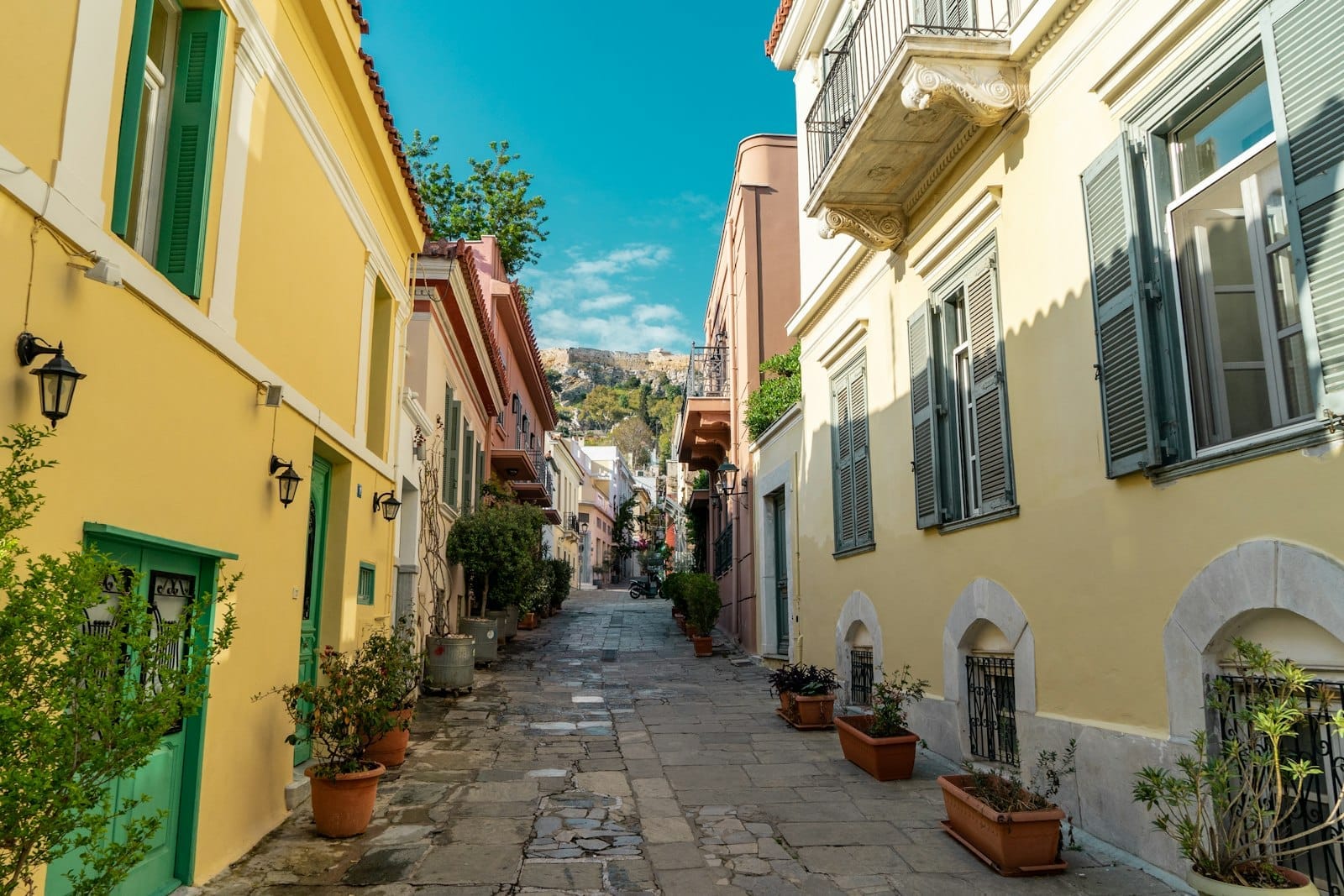
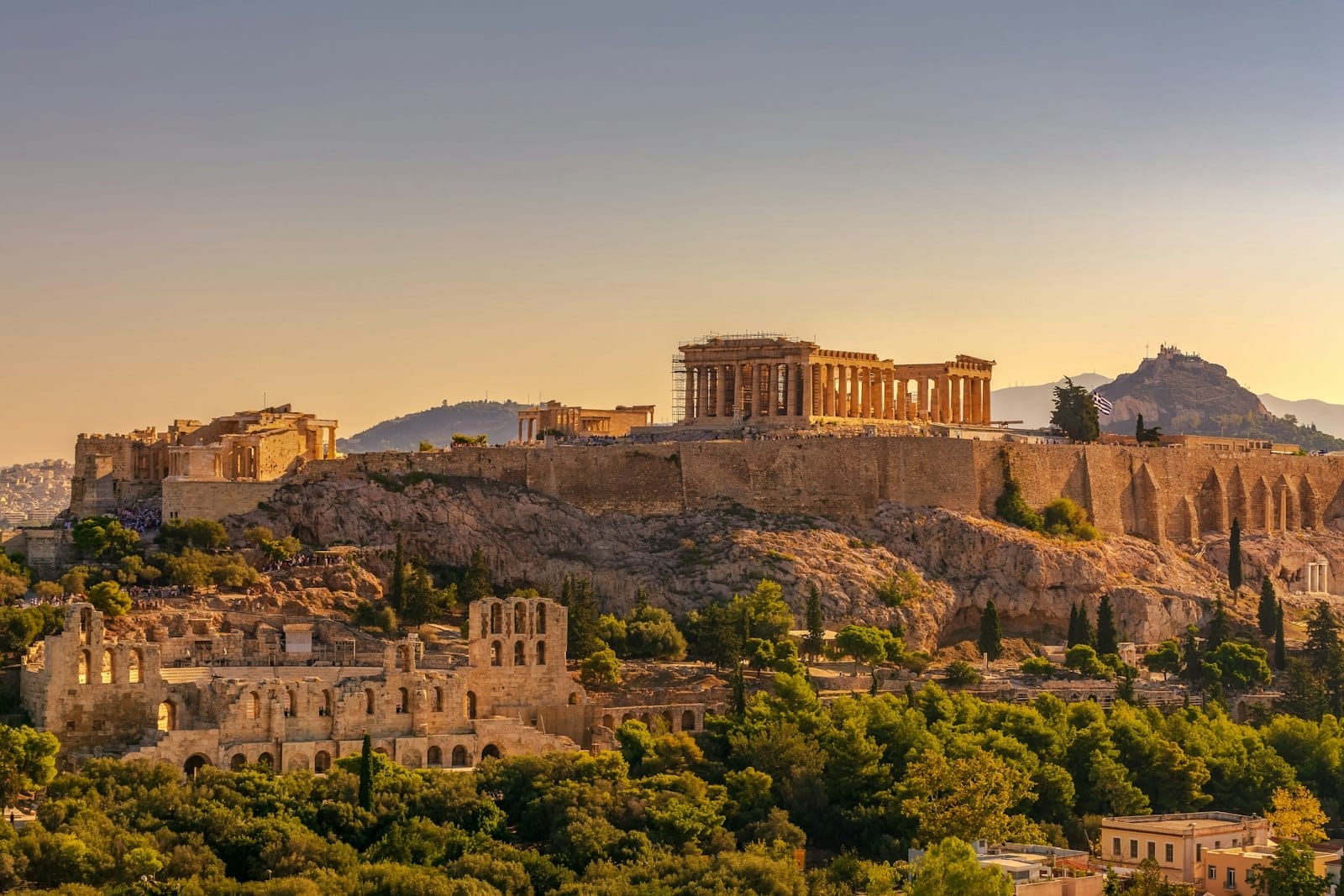
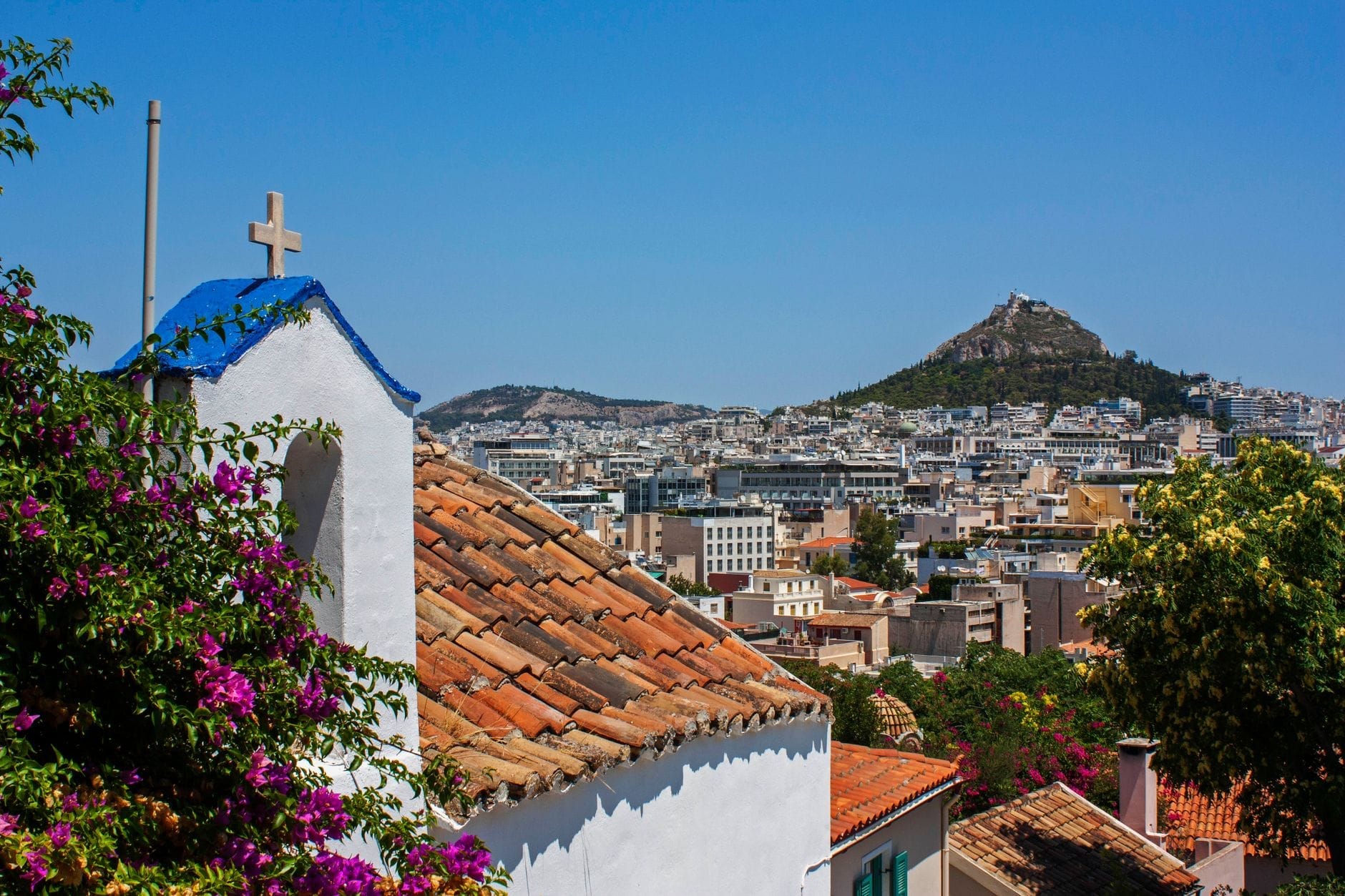
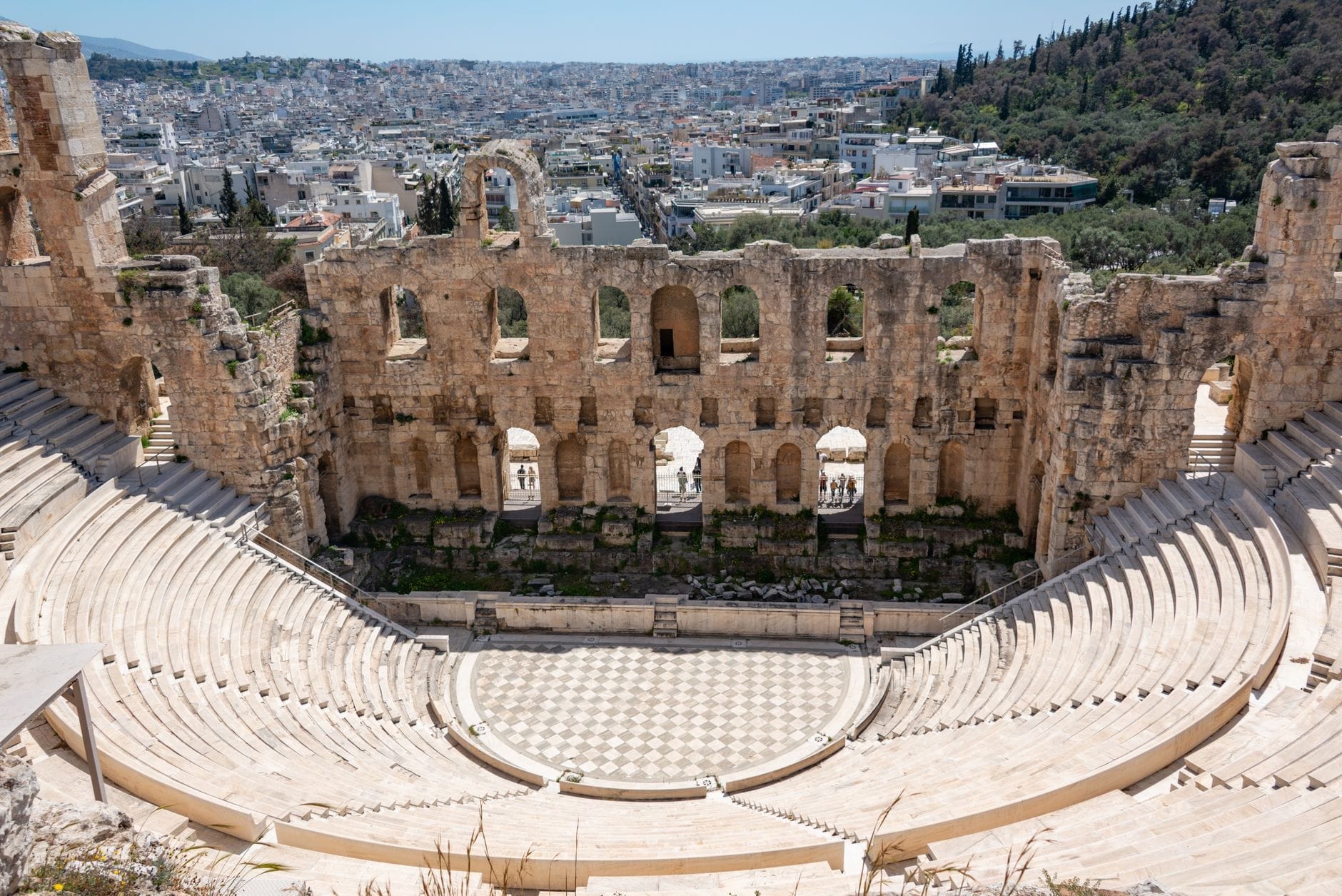
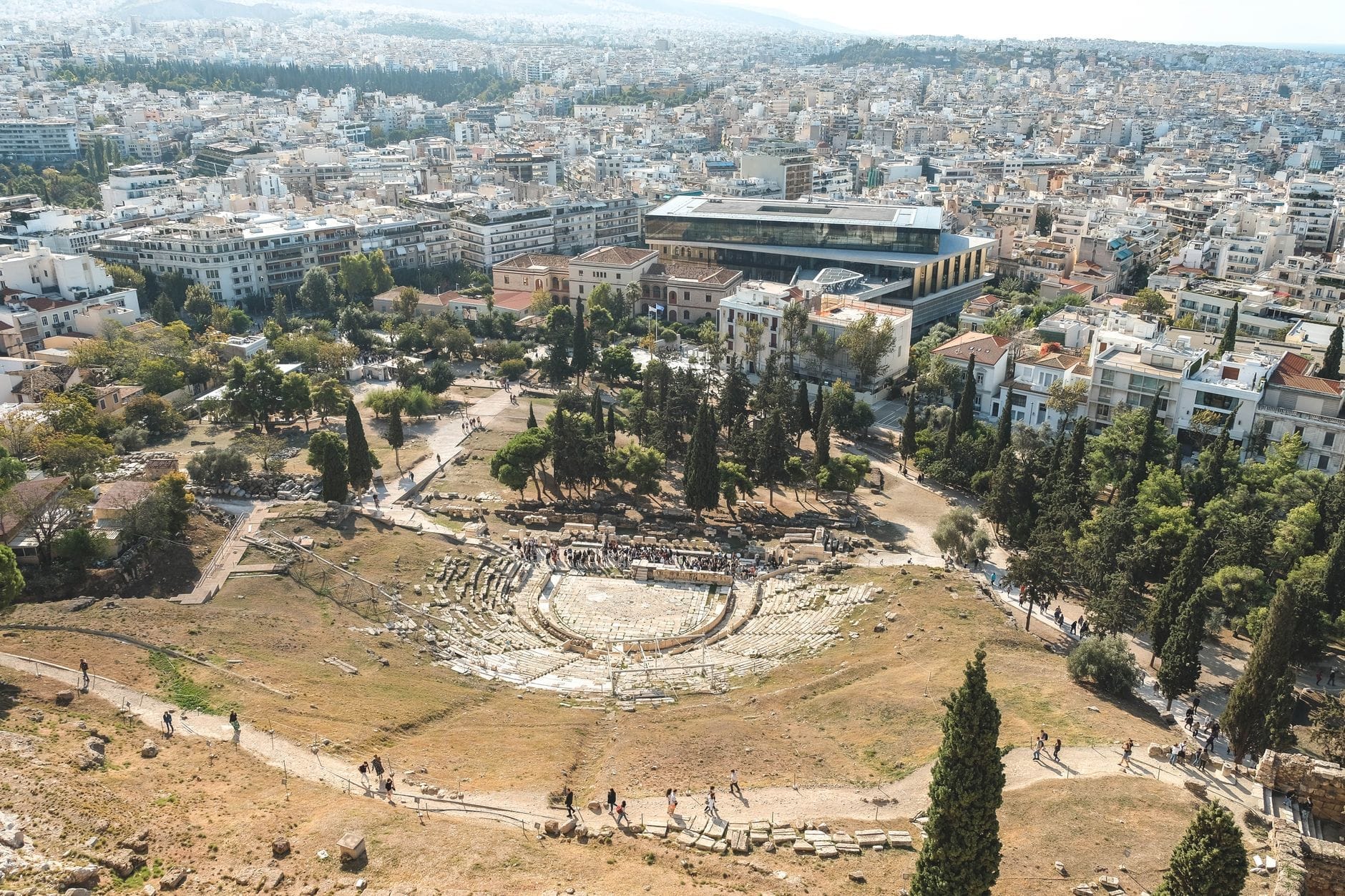
Plaka is Athens' oldest continuously inhabited neighborhood, draped across the northern and eastern slopes of the Acropolis. With ancient ruins, Byzantine churches, neoclassical townhouses, and a dense network of pedestrian lanes, it sits at the geographic and historical center of the city.
Plaka is where Athens folds its entire history into a single walkable district. Perched on the slopes of the Acropolis and spreading toward Syntagma and Monastiraki, it is the oldest continuously inhabited neighborhood in the city, layering ancient, Roman, Byzantine, and Ottoman remains beneath a surface of cobblestone lanes and neoclassical facades. No other area in Athens puts you so close to so much, so quickly.
Orientation
Plaka occupies the northern and eastern slopes of the Acropolis hill, forming a rough crescent that curves from the edge of Monastiraki in the northwest to within a block of Syntagma Square in the northeast. To the south, its upper streets push toward the rock face of the Acropolis itself. To the southeast, it borders Makrygianni, the quieter residential district where the Acropolis Museum stands.
The two streets that define its internal geography are Adrianou and Kydathineon. Adrianou runs from Monastiraki Square past the Roman Agora and Hadrian's Library, cutting through the heart of the neighborhood in an east-west arc. Kydathineon starts near Nikis Street, one block south of Syntagma, and heads southwest toward the center of Plaka, where the two streets intersect near a small square that functions as a de facto meeting point. From that junction, Panos Street climbs steeply toward Anafiotika and the upper slopes of the hill.
Understanding Plaka's position relative to its neighbors is important for navigation. Monastiraki lies immediately to the west, separated by the mass of Hadrian's Library. Syntagma is a five-minute walk northeast along Nikis or Mitropoleos Street. The Acropolis itself rises directly above the neighborhood's southern edge, and the pedestrianized Dionysiou Areopagitou street forms Plaka's southern boundary before heading toward Thisio.
Character & Atmosphere
Plaka's reputation as Athens' most tourist-heavy neighborhood is entirely accurate, and anyone who tells you otherwise is selling something. But that reputation can obscure what the district genuinely offers. The streets are old, the architecture is layered across two millennia, and the human scale of the neighborhood, where most lanes are too narrow for cars, gives it a pace that central Athens rarely achieves.
Mornings are the best time to see Plaka clearly. Before 9am, the souvenir shops are still shuttered and the light comes low and golden over the Acropolis, catching the pale stone of the neoclassical houses. The smell of coffee drifts from the few cafes already open, and you can hear your own footsteps on the cobblestones. This is when the neighborhood shows its residential face: old men reading newspapers on doorsteps, cats stationed on warm ledges, and the occasional delivery motorcycle threading its way through the lanes.
By midday, particularly in summer, Plaka's main arteries, particularly Adrianou and the stretch of Kydathineon toward the square, are dense with visitors. Taverna touts position themselves at restaurant entrances. The souvenir density on some blocks rivals any Mediterranean resort town. The afternoon heat compounds this: in July and August, the stone streets radiate warmth and there is limited shade on exposed sections.
The neighborhood changes register again after 8pm. Dinner crowds replace the afternoon foot traffic, and the restaurants along Kydathineon fill with a mix of tourists and Athenians who come specifically for an evening out. The upper streets near Anafiotika become almost quiet, and the Acropolis illuminated against a dark blue sky is the backdrop for a short stretch of some of the most atmospheric walking in Athens. Noise from the busier restaurant zones can carry late into the night, which matters if you are staying in the neighborhood.
💡 Local tip
Visit Anafiotika early in the morning or at dusk. The whitewashed island-style houses on the upper slope of the Acropolis feel completely separate from the tourist activity below, and the light at those hours makes the climb worthwhile.
What to See & Do
The most significant attraction adjacent to Plaka, though it technically rises above it, is the Acropolis. The main entrance is on the southwest side of the hill, accessed from Dionysiou Areopagitou. From Plaka's upper streets you can reach the base of the hill on foot in fifteen minutes, climbing through Anafiotika and along the footpaths that skirt the rock. Book tickets in advance, especially in summer, as queues at the gate can be substantial.
Within the neighborhood itself, the Roman Agora and Hadrian's Library sit at Plaka's western edge where Adrianou Street meets the boundary with Monastiraki. These two sites are often overlooked by visitors rushing toward the Acropolis, but they are accessible, well-preserved, and rarely crowded compared to the hill above. The Tower of the Winds inside the Roman Agora is one of the best-preserved ancient structures in Greece.
The sub-neighborhood of Anafiotika deserves a dedicated visit. Built in the mid-19th century by craftsmen from the Cycladic island of Anafi who came to Athens to construct the new royal palace, its whitewashed cubic houses with blue shutters feel transplanted directly from the Aegean. It is the only part of Plaka where the tourist layer genuinely peels away. Follow Panos Street uphill from the center of Plaka and the lanes narrow to shoulder width before opening onto small terraces with unobstructed Acropolis views.
The Choragic Monument of Lysicrates, a well-preserved circular marble monument from 335 BC, stands on Lysicratous Street near the southeastern edge of the neighborhood. It is one of the oldest surviving examples of the Corinthian architectural order and easily missed by visitors who stick to Adrianou and Kydathineon. The Benizelos Mansion on Adrianou, dating from the early 18th century, is considered the oldest surviving private house in Athens and gives a rare glimpse of what the neighborhood looked like before its 19th-century neoclassical overlay.
Acropolis and its entrance via Dionysiou Areopagitou (15-minute walk from Plaka's center)
Roman Agora and Tower of the Winds (western edge of Plaka, Adrianou Street)
Hadrian's Library (border of Plaka and Monastiraki)
Anafiotika (upper slopes, follow Panos Street from the neighborhood center)
Choragic Monument of Lysicrates (Lysicratous Street, southeast Plaka)
Byzantine churches scattered throughout the streets, including the Church of the Holy Trinity near Kydathineon
Benizelos Mansion on Adrianou Street
ℹ️ Good to know
The Acropolis Museum is not technically within Plaka but is a short walk south on Dionysiou Areopagitou Street into the Makrygianni district. Plan to visit it separately from the Acropolis itself, as the collection covers different material and requires a couple of hours on its own.
Eating & Drinking
Plaka's food scene divides cleanly into two categories: the tavernas aimed at tourists along the main streets, and the smaller, less decorated places tucked into side lanes and upper slopes that serve a genuine local clientele. The difference in both price and quality between these two categories can be significant.
Kydathineon Street and its immediate surroundings carry the highest density of restaurants, most of which display photographs of dishes and have staff positioned at the entrance. These places are convenient, acceptably priced by central European standards, and consistently serve standard Greek taverna fare: moussaka, souvlaki, grilled fish, Greek salad. They are not the best versions of these dishes in Athens, but they are rarely bad, and the setting, tables spilling onto cobblestone lanes with the Acropolis visible above, is genuinely pleasant in the evening.
For better food, move away from the main pedestrian strips. The streets closer to Adrianou and the lanes running parallel to Kydathineon tend to have smaller places with shorter menus and fewer tourist-facing cues. Look for spots where the menu is handwritten or where the specials board is only in Greek. Mezze-style eating works well in this neighborhood: order several small plates rather than one large main, which is closer to how Athenians actually eat.
Plaka has no significant nightlife compared to Psyrri or Exarchia. The bars that exist here close earlier and cater mainly to tourists. For coffee, the picture is more straightforward: several good cafes operate near the Lysicrates monument and on the quieter streets south of Adrianou, and the standard of Greek coffee in this city means even a middling cafe will serve a decent espresso or traditional Greek coffee.
⚠️ What to skip
Restaurants on Adrianou Street directly facing the Roman Agora or on the main tourist drag of Kydathineon often charge a premium for the view and location. Check that prices on the menu outside match what appears on your bill, and be aware that some restaurants add a bread or cover charge that is legal but not always mentioned upfront.
Getting There & Around
Plaka is served by three Athens Metro stations within comfortable walking distance. Monastiraki station (Lines 1 and 3) sits at the western edge of the neighborhood, roughly three minutes on foot from the start of Adrianou Street. Syntagma station (Lines 2 and 3) is at the northeastern corner, five to seven minutes from Plaka's center via Nikis Street. Akropoli station (Line 2) is on the southern boundary, approximately seven minutes from the neighborhood's center via Dionysiou Areopagitou. For most visitors, Monastiraki is the most useful arrival point, since it puts you directly into the neighborhood. For those coming from Koukaki or the Acropolis Museum area, Akropoli station makes more sense.
Once inside Plaka, navigation is almost entirely on foot. The majority of the neighborhood's streets are pedestrianized or too narrow for regular car traffic. This is one of the neighborhood's genuine strengths: you can walk across its entire width in under twenty minutes and never need to worry about traffic. The exception is delivery motorcycles, which still move through some lanes at speed. Watch for them particularly on Adrianou and at lane intersections.
The slopes are not trivial. Plaka's streets are flat near Monastiraki and Syntagma but climb sharply as you move south toward the Acropolis. Anafiotika involves genuine staircases and uneven stone surfaces. Anyone with mobility limitations should be aware of this before planning their route. For a full overview of how to move around the broader city, the getting around Athens guide covers metro lines, bus networks, and taxi options in detail.
From Athens International Airport, the Metro Line 3 runs directly to Monastiraki station, with the journey from the airport taking approximately 40 minutes to Syntagma and a further two stops to Monastiraki. Airport express bus X95 also runs to Syntagma Square. Both options put you within easy reach of Plaka without a taxi.
Where to Stay
Plaka is one of the most popular places to stay in Athens, and for understandable reasons: the location is central, most ancient sites are within walking distance, and the neighborhood is pedestrian-friendly. For a broader comparison of Athens neighborhoods for accommodation, the where to stay in Athens guide covers the full range of options across the city.
Within Plaka, hotels on or near Kydathineon and Adrianou offer the most atmospheric stays but also the most noise. Restaurants along these streets operate until midnight or later, and summer evenings in particular can be loud. If you are a light sleeper, look for accommodation on the upper lanes near Anafiotika or on the quieter streets closer to Lysicratous, where the restaurant density drops significantly.
The neighborhood suits couples, solo travelers, and anyone whose primary purpose is visiting the ancient sites. Families with young children will find the pedestrian streets manageable during the day, though the heat in July and August can make the slopes uncomfortable. Travelers looking for nightlife or a more locally-oriented scene would be better placed in Exarchia, Psyrri, or Gazi, each within fifteen to twenty minutes by metro or on foot.
Budget travelers are not excluded from Plaka, though it is not the cheapest part of Athens. Several small guesthouses and mid-range hotels operate here, and the proximity to major sites means you spend less on transport. For budget strategies across the city, see the Athens on a budget guide.
Practical Notes
Plaka is the logical starting point for any itinerary built around Athens' ancient sites. The Ancient Agora is a fifteen-minute walk west through Monastiraki, and the Acropolis Museum is ten minutes south. Planning these visits before 10am or after 4pm in summer reduces both heat and crowd exposure significantly.
Plaka is generally safe at all hours, but as with any high-traffic tourist district, awareness of personal belongings in crowded areas is sensible. The Athens safety tips guide covers this in more detail. The tourist police number in Athens is 171 for non-emergency assistance.
Dress codes apply at some religious sites within and around the neighborhood: covered shoulders and knees are required at certain Byzantine churches. Most sites post requirements at the entrance. The summer heat makes this a planning consideration since lightweight layers that can be added work better than heavy items carried for this purpose alone.
TL;DR
Plaka is Athens' oldest neighborhood, on the slopes of the Acropolis, and the most convenient base for visiting the city's major ancient sites.
The main streets (Adrianou, Kydathineon) are heavily touristy during the day; early mornings and evenings reveal a more genuine character.
Anafiotika, the Roman Agora, Hadrian's Library, and the Choragic Monument of Lysicrates are the standout attractions within the district itself.
Three Metro stations (Monastiraki, Syntagma, Akropoli) put the neighborhood within easy reach of every part of Athens; the streets inside are almost entirely pedestrian.
Best suited to travelers prioritizing ancient sites, central location, and atmospheric surroundings over nightlife or local off-the-beaten-track experience.
Three full days is the right amount of time to cover Athens at a comfortable pace, from the Acropolis and its world-class museum to the ancient Agora, Monastiraki, Kolonaki, and beyond. This guide breaks it all down day by day, with booking tips, honest crowd warnings, and the practical details most itineraries skip.
Twenty-four hours in Athens is enough to cover the Acropolis, the Acropolis Museum, the historic neighborhoods of Plaka and Monastiraki, and a spectacular sunset viewpoint. This itinerary is built around realistic walking distances, smart timing, and clear guidance on what to skip when time is short.
Athens holds one of the densest concentrations of ancient history on earth. This guide covers the city's major archaeological sites and museums, from the Acropolis and Ancient Agora to lesser-known gems like Kerameikos, with practical tips on tickets, timing, and what to expect at each.
Athens is one of the best cities in Europe to eat well without spending much. This guide covers the essential dishes, where to find them, realistic prices for 2026, and how to avoid the tourist traps that line the most photographed streets in the city.
Athens rewards those who wander beyond the obvious. From a Cycladic island village clinging to the Acropolis rock to a thermal lake on the coast, these are the experiences that make the city feel like yours. This guide covers the lesser-known sites, quiet hills, and local haunts that most visitors walk straight past.
Summer in Athens means intense heat, peak crowds, and some of the longest days in Europe. This guide breaks down what each month actually looks like, how to handle the heat, and how to get the most out of your visit in June, July, or August.
Athens nightlife runs on its own schedule, with dinners starting at 10pm and clubs peaking between 3 and 5am. This guide covers every major district, the best bars and clubs, what things cost, how to dress, and how to navigate the city after dark like a local.
Athens is one of Europe's most affordable capitals, with free archaeological sites, cheap street food, and an excellent public transport network. This guide breaks down exactly what things cost, when to go for the best deals, and how to stretch every euro without missing anything important.
Athens is generally a safe city for tourists, but petty theft, taxi scams, and a few neighborhood considerations are worth knowing before you arrive. This guide covers the real risks, the overhyped ones, and exactly how to stay out of trouble.
Athens rewards shoppers who know where to look. This guide breaks down the city's best markets, shopping streets, and neighborhoods by type, with practical advice on timing, pricing, and what's actually worth buying versus what to skip.
Athens is one of Europe's most walkable capitals, with millennia of history packed into a compact city center. This guide covers the best guided walking tours, self-guided routes, practical logistics, and clear advice on timing, pricing, and what to avoid.
Athens is far more family-friendly than most travelers expect. From interactive museum programs and funicular rides to free outdoor ceremonies and canal kayaking, this guide covers the best activities for children of all ages, honest pricing breakdowns, and practical logistics for navigating Athens with kids.
Athens holds one of the densest concentrations of world-class museums anywhere in Europe. This guide covers every major collection, from the Acropolis Museum's Parthenon sculptures to the Benaki's sweep of Greek history, with practical advice on what to prioritise and when to go.
Athens rewards visitors year-round, but the experience changes dramatically by season. This guide breaks down every month by weather, crowd levels, and cost so you can plan around what actually matters to you.
Athens rewards those who look up, and out. The city's hills, ancient rock outcrops, rooftop bars, and clifftop temples frame the Parthenon, the Saronic Gulf, and the sprawling Attic basin from every angle. This guide covers the best viewpoints in Athens, from completely free hilltop climbs to spectacular paid experiences.
Athens sits at the center of one of Europe's richest regions for day tripping. Within a few hours you can stand at the Oracle of Delphi, swim off a car-free Saronic island, or walk through a Bronze Age citadel. This guide covers the best day trips from Athens, organized by type and travel time.
Athens is one of Europe's most rewarding cities on a tight budget. From ancient hilltop views and marble stadiums to flea markets and ceremonial guards, this guide covers the best free experiences in the Greek capital, plus the specific days when even major paid sites open their gates for nothing.
Athens has one of the most affordable and well-connected urban transport networks in Southern Europe. This guide covers everything from metro fares and airport express buses to taxi flat rates, tram routes, and the ticketing mistakes that catch most first-time visitors off guard.
Athens rewards visitors who go beyond the obvious. This guide covers the best things to do in Athens Greece, from ancient sites and world-class museums to rooftop bars, coastal escapes, and neighborhood walks, with practical advice on tickets, timing, and what to skip.
Choosing where to stay in Athens shapes your entire trip. This guide breaks down every major neighbourhood by walkability, noise level, price range, and proximity to the sights that matter, so you can book with confidence rather than guesswork.