Koukaki and Makrygianni sit directly south of the Acropolis, offering travelers an unusual combination: world-class ancient sites at the doorstep and genuinely residential streets a few blocks away. This is where many Athenians choose to live when they want to be central without being in the tourist core.
Koukaki and Makrygianni occupy the quiet slope between the Acropolis and Syngrou Avenue, close enough to the ancient city that you can see the Parthenon from certain rooftops, yet residential enough that locals still outnumber tourists on most streets. The two neighborhoods are often treated as one zone, but they have distinct personalities: Makrygianni is more polished and museum-facing, while Koukaki runs deeper into everyday Athenian life.
Orientation: Where Koukaki and Makrygianni Sit in Athens
These two neighborhoods form a compact wedge just south of the Acropolis hill, bounded to the north by Dionysiou Areopagitou, the wide pedestrian avenue that runs along the base of the archaeological site. To the south, the busy four-lane Andrea Syngrou Avenue marks the edge of the district and connects central Athens to the coast. Filopappou Hill rises to the west, and the neighborhoods of Neos Kosmos and Kallithea begin on the eastern side of Syngrou.
Makrygianni is the northern slice, pressed up against the ancient sites and named after the Greek general Ioannis Makrygiannis, whose house still stands at the junction of Makrygianni Street and Dionysiou Areopagitou. The Acropolis Museum sits on this street, and the area feels curated and orderly, with wide pavements, good cafés, and a steady flow of visitors between museums and monuments. Koukaki begins a few blocks south, where Veikou Street and Dimitrakopoulou Street form the local grid, and continues down to Koudourioti Square and the pedestrian lanes of Georgaki Olympiou and Drakou.
Geographically, Koukaki and Makrygianni are well-positioned for exploring the wider city. Plaka is directly to the northeast, reachable on foot in under ten minutes through the Dionysiou Areopagitou promenade. Thisio lies to the northwest, and Syntagma Square is about a 20-minute walk along Amalias Avenue. This puts Koukaki and Makrygianni within walking distance of most of central Athens while remaining clearly separate from the tourist core.
Character and Atmosphere
Early mornings in Koukaki feel distinctly local. Residents pick up coffee from corner cafés on Veikou Street, shopkeepers roll up metal shutters, and the streets carry the low hum of a neighborhood waking up rather than a tourist area performing for an audience. The light falls at a sharp angle in the morning, cutting between low apartment buildings and catching the marble dust and yellow stone of older facades. You hear Greek spoken everywhere, motorbikes idling, the occasional clatter of a delivery trolley.
By midday, Makrygianni shifts into a different register. The Acropolis Museum opens its doors, tour groups gather on Dionysiou Areopagitou, and the café terraces fill with people working through guidebooks. The street itself is one of the best urban promenades in Athens, lined with shade trees and overlooked by the rock of the Acropolis. In summer, the heat builds quickly in the exposed stretches, so most visitors drift between shaded museum interiors and tree-covered café seats.
The gap between the two neighborhoods widens in the evening. Makrygianni quiets down after the museums close, and the evening crowd thins out. Koukaki, by contrast, gets busier. The pedestrian streets around Drakou and Georgaki Olympiou fill with people eating and drinking from around 8pm until well past midnight. These are genuinely sociable streets, not a manufactured bar district, and the mix of locals and visitors feels more natural than in Monastiraki or Plaka. Tavernas stay open late, conversations spill from tables onto pavements, and the area has a warm, low-key energy that suits Athens at its best.
ℹ️ Good to know
Koukaki's pedestrian lanes around Drakou Street are relatively quiet on Monday and Tuesday evenings but get significantly livelier from Wednesday through Sunday. If you want a calm dinner, mid-week works well. If you want to see the neighborhood at full pace, come on a Thursday or Saturday night.
One thing to know before booking here: Koukaki has seen intense short-term rental activity over the past decade, which has shifted parts of the neighborhood toward a more transient character. Long-term residents have mixed feelings about this, and some streets near the Acropolis Museum feel more hotel-corridor than residential. The further south you go toward Koudourioti Square, the more the neighborhood reverts to its original rhythm.
What to See and Do
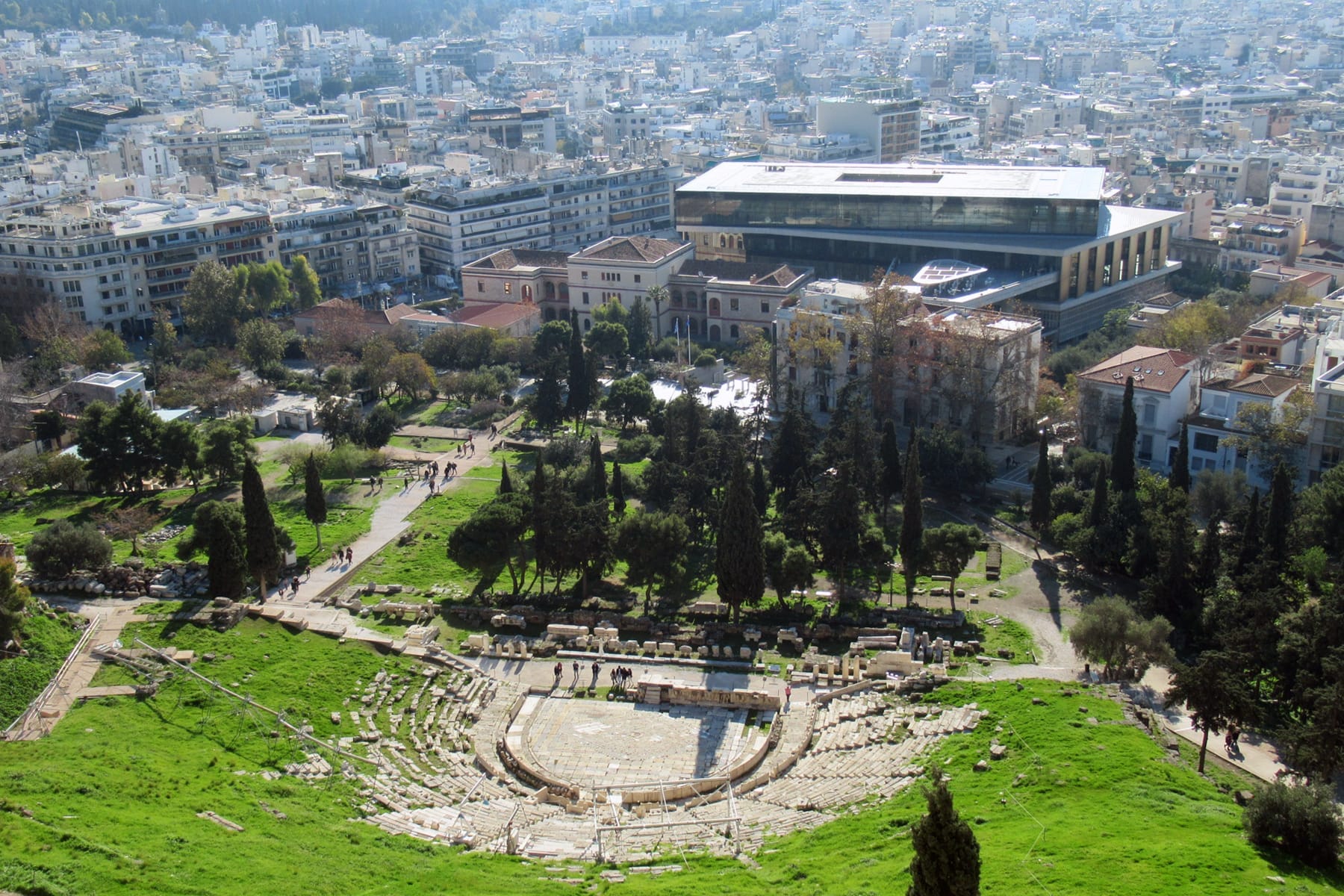
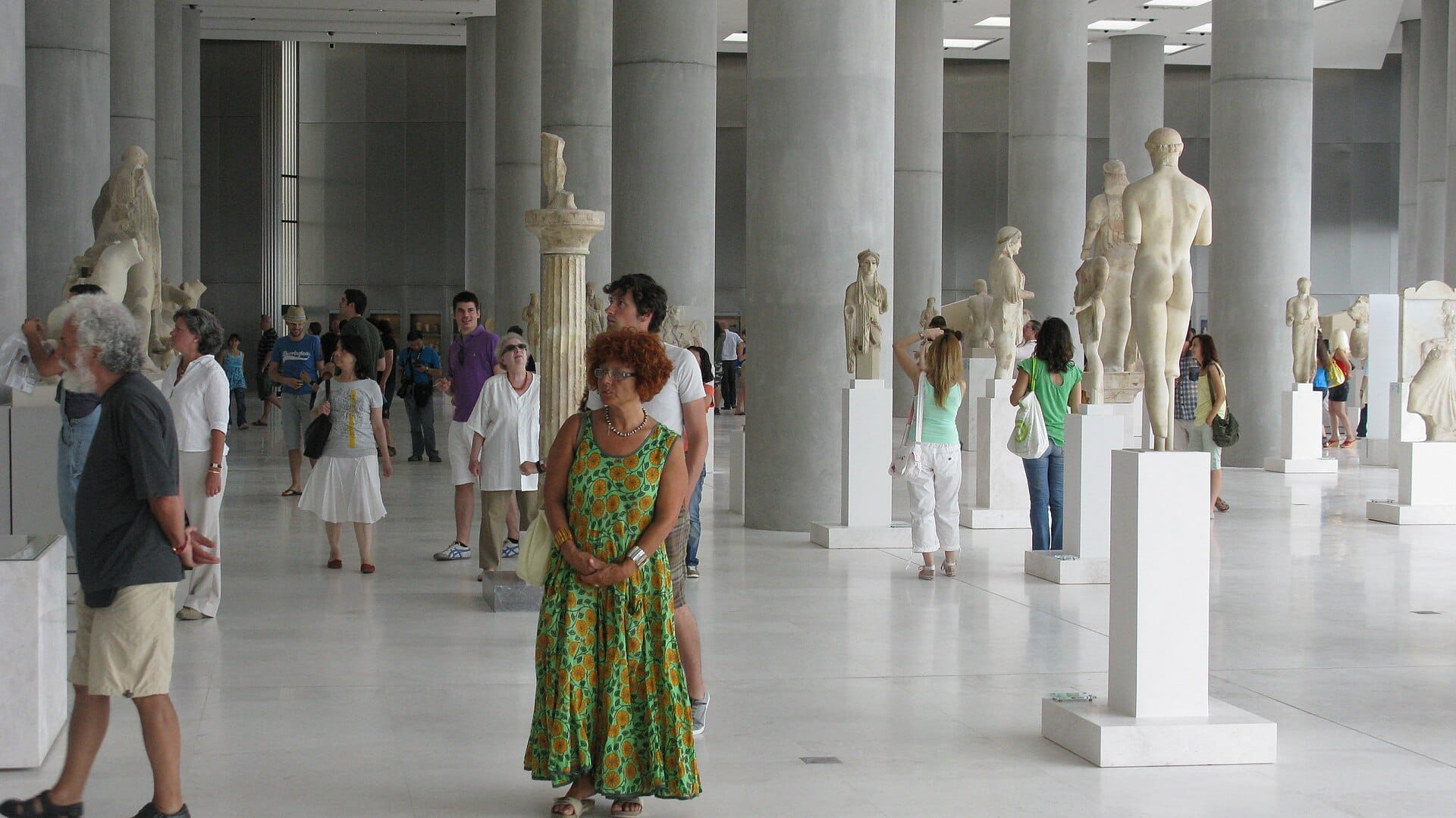
The dominant reason people come to this area is the Acropolis and everything around it. The Acropolis Museum on Dionysiou Areopagitou is one of the finest archaeological museums in Europe, purpose-built to house the sculptures, friezes, and objects found on the Acropolis hill. The building itself is worth attention: its glass floor reveals an excavated ancient settlement beneath your feet as you walk through the entrance hall. Plan at least two hours, more if you want to absorb the Parthenon Gallery properly.
The Acropolis of Athens is accessed from the northern side of Makrygianni via the Dionysiou Areopagitou promenade. The main entrance gate is a short walk west from the Akropoli metro station. Most visits take two to three hours, and going early in the morning or late afternoon significantly reduces both the crowds and the heat in summer. The Theatre of Dionysus is included in the Acropolis ticket and sits on the southern slope, directly above Makrygianni Street.
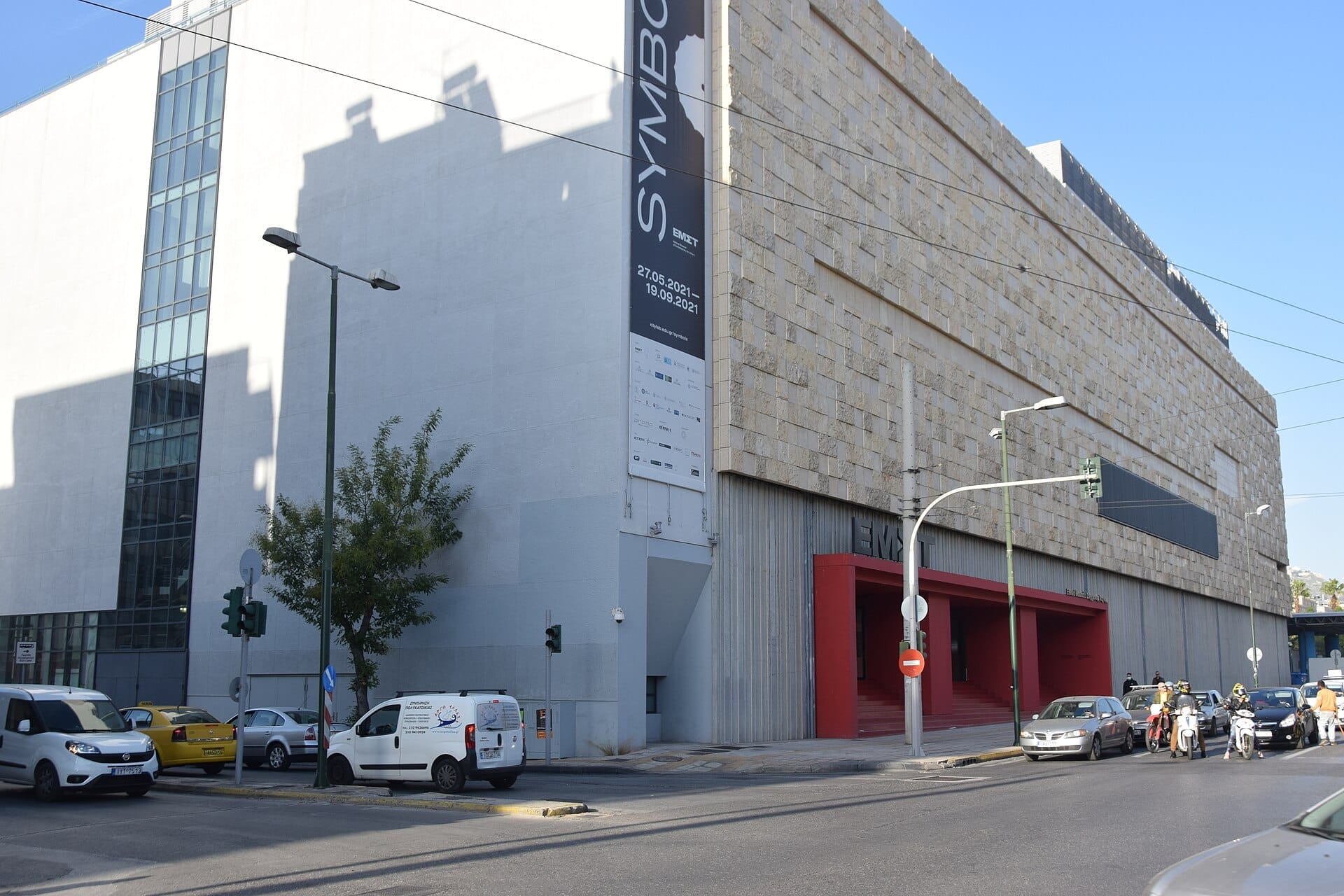
Just east of Makrygianni, across the wide boulevard of Vasilissis Olgas, stands the Temple of Olympian Zeus, one of the largest temple complexes in the ancient world. The surviving columns are visible from several streets in the neighborhood and make for a striking silhouette at dusk. The National Museum of Contemporary Art (EMST) is housed in the former Fix brewery building on Andrea Syngrou Avenue, right at the southern edge of Koukaki near the Syngrou-Fix metro station. It is Athens's primary venue for modern and contemporary art and hosts rotating international exhibitions alongside its permanent collection.
Acropolis Museum: world-class archaeological collection, glass floor over ancient ruins
Acropolis hill: Parthenon, Erechtheion, Propylaea, Theatre of Dionysus
Temple of Olympian Zeus: visible from streets, includes Hadrian's Arch
EMST (National Museum of Contemporary Art): in the old Fix brewery on Syngrou
Filopappou Hill: quiet green hill to the west, good walking paths and Acropolis views
Dionysiou Areopagitou promenade: one of the best urban walks in Athens
Odeon of Herodes Atticus: ancient theatre on the Acropolis slopes, used for summer concerts
The Odeon of Herodes Atticus is accessible via the Acropolis ticket and also operates as a live performance venue in summer under the Athens Epidaurus Festival. If you are visiting between June and September, check the program: performances here under the floodlit Acropolis are genuinely memorable.
💡 Local tip
The Acropolis Museum and the Acropolis site both sell timed entry tickets online. Book ahead in peak season (April to October), especially for weekend mornings. The Acropolis Museum is open late on Friday evenings, which can be a good option for avoiding daytime crowds.
Eating and Drinking
The food landscape in Koukaki and Makrygianni covers a wide range, from tourist-facing tavernas with English-only menus near the Acropolis Museum to genuinely local neighbourhood restaurants further south. The pedestrian streets around Drakou and Georgaki Olympiou form the social eating strip of Koukaki, with tables spilling into the lanes most evenings. Cuisine here leans toward contemporary Greek cooking, mezedes, and grilled fish, with a handful of international options mixed in.
Prices in Makrygianni, especially on or near Dionysiou Areopagitou, reflect the tourist foot traffic. A meal with wine at a restaurant directly facing the Acropolis will cost significantly more than the same quality food two streets south in Koukaki. The closer you are to the museum, the more you pay for the view. For better value and a more authentic experience, walk south along Veikou Street or Dimitrakopoulou Street and look for smaller places without laminated photo menus outside.
Coffee culture is strong across both neighborhoods. Athenian café habits run long: people sit over a single freddo espresso for an hour or more, and the café terraces on Drakou and in the squares around Koukaki are good places to settle in and watch the neighborhood pass by. Many cafés also serve food from late morning through the afternoon, bridging the gap between the Greek lunch hour (which runs late, often starting at 2pm) and dinner (rarely before 9pm for locals).
For late-night options, the Koukaki pedestrian lanes stay lively until 1am or later on weekends, with wine bars and small tavernas accounting for most of the traffic. The area does not have the intense bar-crawl energy of Gazi or Psyrri, but that is part of the appeal for travelers who want to eat and drink well without the noise levels of those neighborhoods.
Getting There and Around
Koukaki and Makrygianni are exceptionally well-served by metro. The Akropoli station on Line 2 (the red line) sits just off Dionysiou Areopagitou on Makrygianni Street, adjacent to the Acropolis Museum, and is the natural arrival point for most visitors. From Syntagma, it is one stop south on Line 2, a journey of about four minutes. The Syngrou-Fix station, also on Line 2, is located at the southern edge of Koukaki near the EMST and the Drakou pedestrian street, making it the better stop for accessing the neighborhood's eating and drinking strip.
The tram does not run along Andrea Syngrou Avenue; the nearest tram stops are further east on major avenues, so Syngrou-Fix is primarily a metro access point for Koukaki rather than a tram hub. This is useful if you are coming from or going to the coastal areas along the Athenian Riviera, though the tram runs slowly through central Athens. Multiple bus routes operate along Syngrou Avenue, including the 040 and 126, connecting the area to Piraeus, Syntagma, and other central points. Bus schedules and fares are managed by OASA; verify current information on their website before travel.
On foot, Koukaki and Makrygianni are well-connected to neighboring areas. The Dionysiou Areopagitou promenade links directly to Thisio to the west and to the entrance of Plaka to the east, making it possible to walk a continuous archaeological corridor from the Ancient Agora all the way past the Acropolis Museum without touching a road with heavy traffic. This pedestrianized route is one of Athens's great urban achievements and makes the area unusually walkable for a major city. Allow 15 to 20 minutes on foot to reach Monastiraki, 15 to 20 minutes to Syntagma, and about 10 minutes to reach Thissio or Plaka.
⚠️ What to skip
Andrea Syngrou Avenue is a fast, heavily trafficked road and can feel like a barrier at the southern edge of the neighborhood. Pedestrian crossings are available but crossings with the light are essential. The noise from Syngrou is noticeable in accommodation along the avenue, so if you are sensitive to traffic noise, choose a hotel or apartment on a side street.
Where to Stay
Koukaki and Makrygianni have become one of the most popular accommodation zones in Athens, and for clear reasons: the location is excellent, the streets are relatively calm, and the transport links are strong. The area suits a wide range of travelers, from couples visiting for the ancient sites to families who want a central base with some residential character. For a broader comparison of options across the city, the where to stay in Athens guide covers all major neighborhoods.
The Makrygianni section, close to Dionysiou Areopagitou and the Acropolis Museum, has several upscale boutique hotels that command a premium for their views and location. These suit travelers who want to step directly from their hotel into the ancient city. The trade-off is that this strip is more tourist-facing and less immersed in everyday Athens life.
The central and southern sections of Koukaki, especially around the Drakou and Georgaki Olympiou pedestrian streets and near Koudourioti Square, tend to have smaller, independently owned hotels, guesthouses, and apartments. Prices are generally lower than in Makrygianni, the neighborhood feels more lived-in, and you are better positioned for the evening eating and drinking scene. The Syngrou-Fix metro stop makes the commute to other parts of the city straightforward.
One honest drawback for accommodation near Syngrou Avenue itself: the road noise. Rooms facing the avenue on lower floors can be significantly louder than those on back streets. Short-term rental listings have multiplied across Koukaki since the mid-2010s, so apartment options are plentiful, but availability fluctuates with season and demand. Book well in advance for visits between April and October.
Practical Tips and Context
Koukaki and Makrygianni are well-suited to first-time visitors to Athens who want proximity to the major sites without paying Plaka prices or dealing with Plaka's tourist density. The neighborhood gives easy access to the ancient sites of Athens while still feeling connected to a functional city. Residents, local businesses, and tourists coexist without too much friction, which is not something you can say about every neighborhood at this proximity to the Acropolis.
Safety in Koukaki and Makrygianni follows the general pattern of central Athens residential neighborhoods. There are no specific crime advisories for the area beyond standard urban precautions: watch your belongings in crowded spots near the Acropolis Museum and on busy pedestrian routes, and follow the general advice in the Athens safety tips guide. The area is well-lit at night and has consistent foot traffic in the evenings, which contributes to a reasonable sense of security.
In summer, the heat in this part of Athens is significant. Temperatures regularly exceed 35°C in July and August, and the exposed stretches of Dionysiou Areopagitou and the Acropolis hill offer limited shade. Carry water, start outdoor sightseeing early in the morning or after 5pm, and use the Acropolis Museum's air-conditioned interior as a midday refuge. For more on managing the heat and timing your visit, the Athens in summer guide has practical detail.
💡 Local tip
The stretch of Dionysiou Areopagitou between the Akropoli metro station and the Thisio area is one of the best evening walks in Athens. The Acropolis is lit dramatically after dark, the promenade is wide and calm, and the cafés along the route are a good place to stop. This route also connects naturally to Filopappou Hill, where the walking paths are quiet after 7pm.
TL;DR
Ideal base for travelers who want to be close to the Acropolis and Acropolis Museum without staying in the heavily tourist-facing streets of Plaka or Monastiraki.
Makrygianni suits those who want a polished, upscale experience near the ancient sites; Koukaki suits those who want lower prices, local cafés, and a more residential rhythm.
Two metro stations (Akropoli and Syngrou-Fix on Line 2) give fast, convenient access to the rest of the city.
The pedestrian street network, especially Dionysiou Areopagitou and the lanes around Drakou, makes the area very walkable and pleasant in the evenings.
Not ideal for travelers who want nightlife intensity or complete escape from tourists: the area is popular and prices have risen considerably in recent years, particularly near the Acropolis Museum.
Three full days is the right amount of time to cover Athens at a comfortable pace, from the Acropolis and its world-class museum to the ancient Agora, Monastiraki, Kolonaki, and beyond. This guide breaks it all down day by day, with booking tips, honest crowd warnings, and the practical details most itineraries skip.
Twenty-four hours in Athens is enough to cover the Acropolis, the Acropolis Museum, the historic neighborhoods of Plaka and Monastiraki, and a spectacular sunset viewpoint. This itinerary is built around realistic walking distances, smart timing, and clear guidance on what to skip when time is short.
Athens holds one of the densest concentrations of ancient history on earth. This guide covers the city's major archaeological sites and museums, from the Acropolis and Ancient Agora to lesser-known gems like Kerameikos, with practical tips on tickets, timing, and what to expect at each.
Athens is one of the best cities in Europe to eat well without spending much. This guide covers the essential dishes, where to find them, realistic prices for 2026, and how to avoid the tourist traps that line the most photographed streets in the city.
Athens rewards those who wander beyond the obvious. From a Cycladic island village clinging to the Acropolis rock to a thermal lake on the coast, these are the experiences that make the city feel like yours. This guide covers the lesser-known sites, quiet hills, and local haunts that most visitors walk straight past.
Summer in Athens means intense heat, peak crowds, and some of the longest days in Europe. This guide breaks down what each month actually looks like, how to handle the heat, and how to get the most out of your visit in June, July, or August.
Athens nightlife runs on its own schedule, with dinners starting at 10pm and clubs peaking between 3 and 5am. This guide covers every major district, the best bars and clubs, what things cost, how to dress, and how to navigate the city after dark like a local.
Athens is one of Europe's most affordable capitals, with free archaeological sites, cheap street food, and an excellent public transport network. This guide breaks down exactly what things cost, when to go for the best deals, and how to stretch every euro without missing anything important.
Athens is generally a safe city for tourists, but petty theft, taxi scams, and a few neighborhood considerations are worth knowing before you arrive. This guide covers the real risks, the overhyped ones, and exactly how to stay out of trouble.
Athens rewards shoppers who know where to look. This guide breaks down the city's best markets, shopping streets, and neighborhoods by type, with practical advice on timing, pricing, and what's actually worth buying versus what to skip.
Athens is one of Europe's most walkable capitals, with millennia of history packed into a compact city center. This guide covers the best guided walking tours, self-guided routes, practical logistics, and clear advice on timing, pricing, and what to avoid.
Athens is far more family-friendly than most travelers expect. From interactive museum programs and funicular rides to free outdoor ceremonies and canal kayaking, this guide covers the best activities for children of all ages, honest pricing breakdowns, and practical logistics for navigating Athens with kids.
Athens holds one of the densest concentrations of world-class museums anywhere in Europe. This guide covers every major collection, from the Acropolis Museum's Parthenon sculptures to the Benaki's sweep of Greek history, with practical advice on what to prioritise and when to go.
Athens rewards visitors year-round, but the experience changes dramatically by season. This guide breaks down every month by weather, crowd levels, and cost so you can plan around what actually matters to you.
Athens rewards those who look up, and out. The city's hills, ancient rock outcrops, rooftop bars, and clifftop temples frame the Parthenon, the Saronic Gulf, and the sprawling Attic basin from every angle. This guide covers the best viewpoints in Athens, from completely free hilltop climbs to spectacular paid experiences.
Athens sits at the center of one of Europe's richest regions for day tripping. Within a few hours you can stand at the Oracle of Delphi, swim off a car-free Saronic island, or walk through a Bronze Age citadel. This guide covers the best day trips from Athens, organized by type and travel time.
Athens is one of Europe's most rewarding cities on a tight budget. From ancient hilltop views and marble stadiums to flea markets and ceremonial guards, this guide covers the best free experiences in the Greek capital, plus the specific days when even major paid sites open their gates for nothing.
Athens has one of the most affordable and well-connected urban transport networks in Southern Europe. This guide covers everything from metro fares and airport express buses to taxi flat rates, tram routes, and the ticketing mistakes that catch most first-time visitors off guard.
Athens rewards visitors who go beyond the obvious. This guide covers the best things to do in Athens Greece, from ancient sites and world-class museums to rooftop bars, coastal escapes, and neighborhood walks, with practical advice on tickets, timing, and what to skip.
Choosing where to stay in Athens shapes your entire trip. This guide breaks down every major neighbourhood by walkability, noise level, price range, and proximity to the sights that matter, so you can book with confidence rather than guesswork.