Best Walking Tours & Self-Guided Walks in Athens
Athens is one of Europe's most walkable capitals, with millennia of history packed into a compact city center. This guide covers the best guided walking tours, self-guided routes, practical logistics, and clear advice on timing, pricing, and what to avoid.
Plan and book this trip
Tools from our partner Travelpayouts help you compare flights and hotels. If you book through them, we may earn a commission at no extra cost to you.
Flights
Hotels map
TL;DR
- Athens walking tours range from free pay-what-you-wish options to specialist guided walks costing €35–€80 per person, typically lasting 2–4 hours.
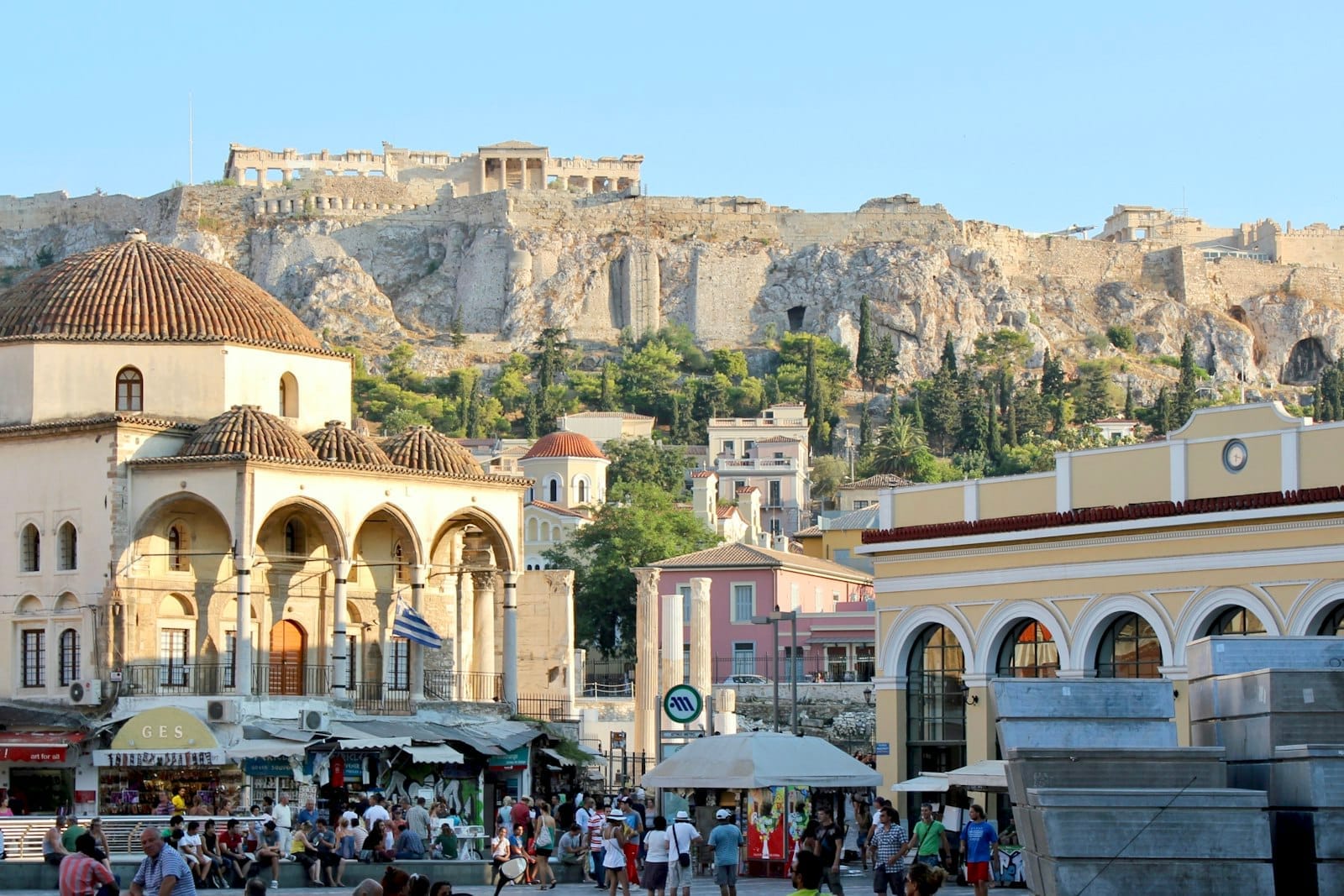
- The main tour hubs are Syntagma Square and Monastiraki — most tours depart from one of these two points.
- Spring (April–June) and autumn (September–October) offer the most comfortable walking conditions; summer heat above 35°C makes morning or evening tours essential.
- Not all 'free' tours are truly free — most operate on a tip or pay-what-you-wish model. Budget at least €10–15 per person as a fair tip.
- Tours cover far more than ancient ruins — food walks, street art routes, neighborhood strolls through Exarchia or Psyrri are increasingly popular and often more memorable.
Why Athens Rewards Walking More Than Most Capitals
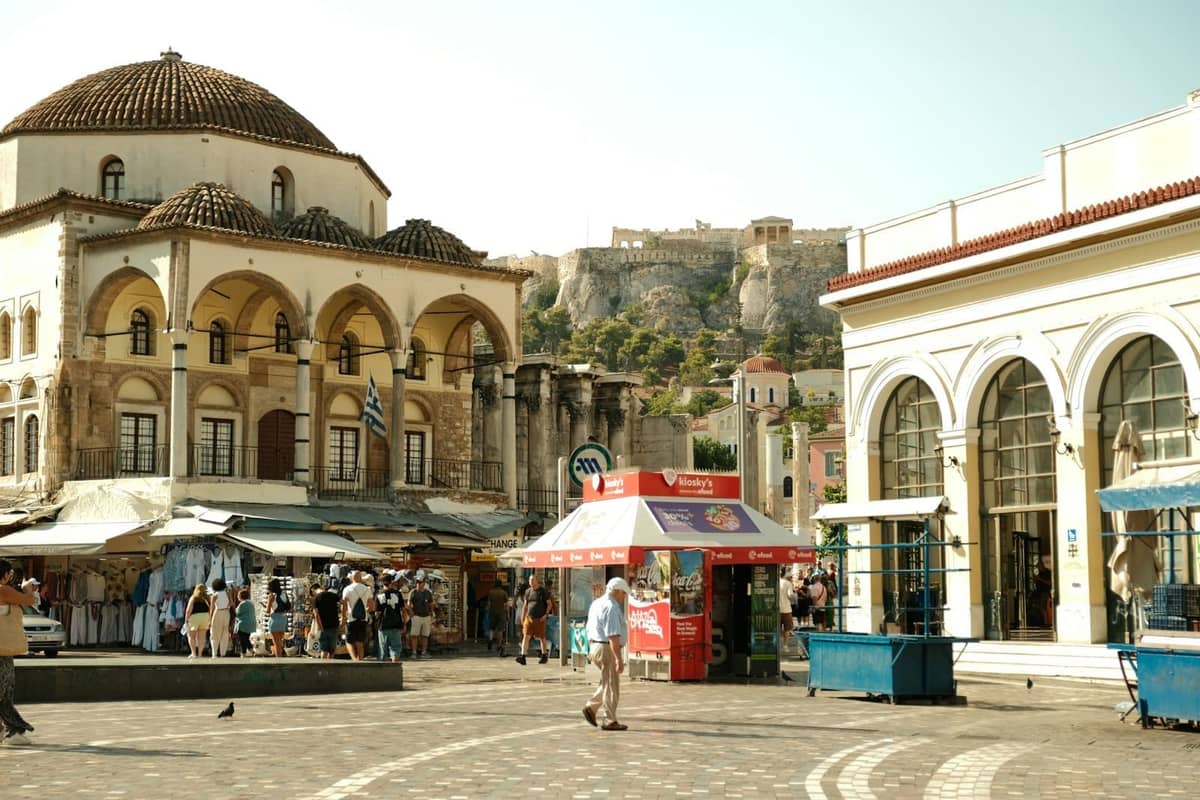
Athens is unusually dense with significant sites. The Acropolis, the Ancient Agora, the Roman Agora, and the Temple of Olympian Zeus all sit within roughly a 15-minute walk of each other. No other European capital compresses so much history into such a navigable area.
The city's terrain is also part of the appeal. Athens sits in a basin surrounded by hills, and walking between neighborhoods means frequent elevation changes and viewpoints that reveal different angles of the same monuments. The pedestrianized Dionysiou Areopagitou street, which runs along the southern base of the Acropolis, is one of the finest urban promenades in Europe, connecting archaeological sites, cafes, and street musicians in a single uninterrupted stretch.
There is, however, a real caveat: Athens is not flat and not always shaded. Cobblestone alleys in Plaka and the steep approach to Anafiotika can be challenging in summer heat. Anyone planning a self-guided walk between June and August should start before 9:30 am or after 5:00 pm. Guided tour operators generally structure their departure times around this reality.
Guided Walking Tours: What's Available and What It Costs
The guided walking tour market in Athens is large and competitive, which works in the visitor's favor. You can spend nothing (beyond a tip), or invest in a small-group specialist tour led by an archaeologist or historian. Understanding the tiers helps you pick the right option.
- Free / Pay-What-You-Wish Tours Operators including Free Tours by Foot and Walkative run daily departures — common slots include 9:30 am, 10:15 am, and 3:30 pm (not Saturdays for some operators). Routes cover the historic center, Plaka, and the Acropolis surroundings. No upfront cost, but guides work for tips: €10–15 per person is standard, €20+ for an excellent guide. Group sizes can reach 20–30 people, which limits depth.
- Standard Paid Group Tours Typically €35–€55 per person for 2–3 hour routes. Smaller groups (8–15 people), more structured commentary, and usually includes access coordination for ticketed sites. GuruWalk and GetYourGuide list dozens of options with verified reviews. Best value for travelers who want context but don't need a specialist.
- Small-Group Specialist Tours €60–€80+ per person, led by licensed guides with archaeology, history, or food expertise. Context Travel operates these in Athens with a maximum of 6 people per guide. Worth it for first-time visitors who want to actually understand what they're looking at, rather than simply photograph it.
- Evening and Themed Tours Street art walks (departing around 6:00 pm), sunset tours, mythology-focused routes, and food walks are increasingly popular. Evening slots (6:00–9:00 pm) are particularly pleasant in summer when temperatures drop and the city becomes more sociable. Prices vary widely: €20–€60 depending on format and inclusions.
⚠️ What to skip
Pay-what-you-wish does not mean free. Guides on these tours are self-employed and earn only from tips. If you book a 3-hour tour and tip €2, you are significantly underpaying. Factor at least €10–15 per person into your budget when booking these tours.
The Most Popular Walking Tour Routes in Athens
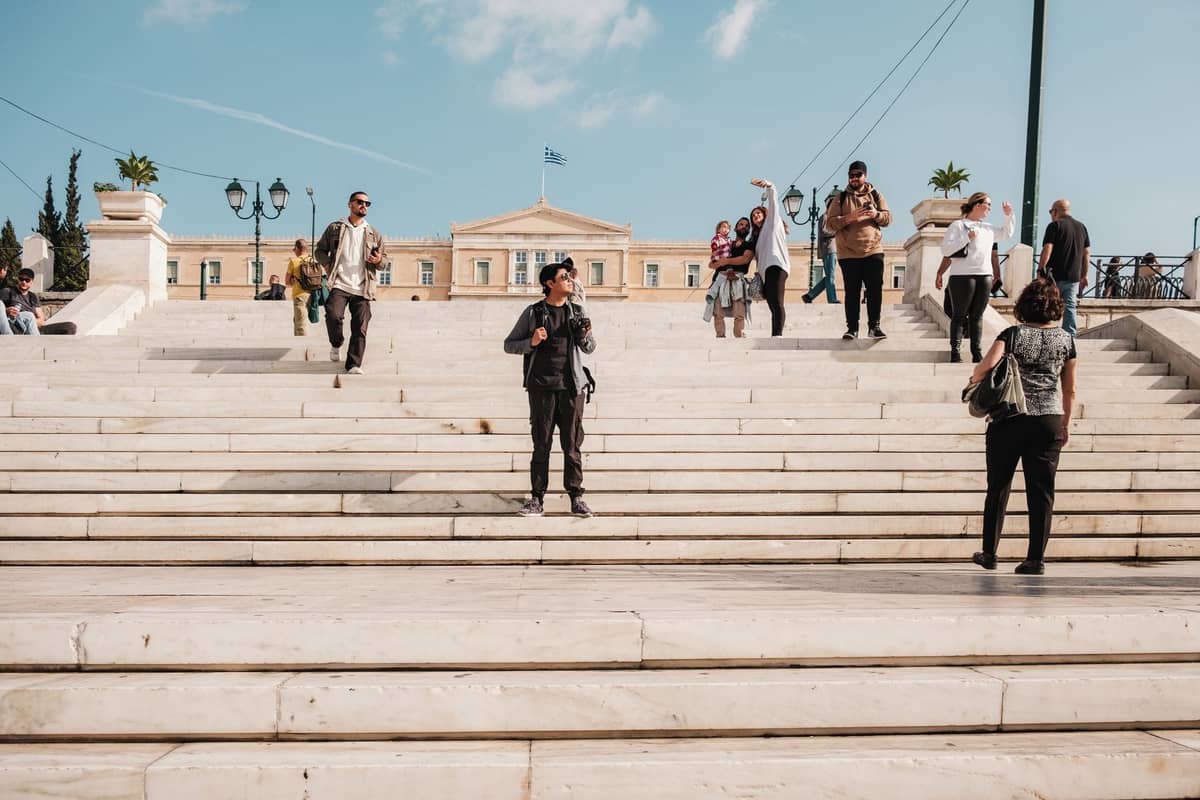
The classic Athens walking tour circuit runs from Syntagma Square southwest through Plaka to the Acropolis slopes, then continues west along Dionysiou Areopagitou to the Ancient Agora and Monastiraki. This 4–5 km loop passes the Library of Hadrian, the Theatre of Dionysus, and the Acropolis Museum — all without entering a single paid site.
- Acropolis & Ancient Athens The most-booked route. Covers the Acropolis hill, Parthenon, Erechtheion, and Propylaea, with most tours also including the Ancient Agora and Temple of Hephaestus. Expect 2.5–3.5 hours. Note that Acropolis entry (€30 year-round) is separate from the tour fee unless explicitly bundled.
- Plaka & Anafiotika Focuses on the oldest surviving neighborhood in Athens — the 19th-century Cycladic village of Anafiotika tucked into the north slope of the Acropolis. Narrow whitewashed alleys, cats on doorsteps, and almost no tourist infrastructure. Best explored with a guide who can explain why Cycladic workers built this island-style enclave inside the capital.
- Street Art & Alternative Athens Routes through Psyrri, Exarchia, and Gazi, covering one of Europe's most concentrated street art scenes. Athens has commissioned murals covering entire building facades, and the context (social, political, historical) makes the difference between seeing paint and understanding the city. Evening departures recommended.
- Food & Market Walk Typically starts at the Athens Central Market (Varvakios Agora) and moves through Monastiraki to Psyrri, sampling mezedes, local cheese, olives, and loukoumades. 2–3 hours with tastings included usually runs €45–€65. Genuinely useful for understanding Greek food culture beyond souvlaki.
- Mythology & Religion Route Connects the Areopagus Hill (where Paul preached to the Athenians), the Kerameikos Cemetery, and the Temple of Olympian Zeus through a narrative about ancient Athenian religious life. Niche but well-suited to travelers with a specific interest in classical history or early Christianity.
💡 Local tip
If you're visiting the Acropolis independently on the same day as a walking tour, book your Acropolis timed-entry ticket in advance at hhticket.gr. Walk-up queues in peak season (June–August) can exceed 90 minutes.
Self-Guided Walks: Three Routes Worth Your Time
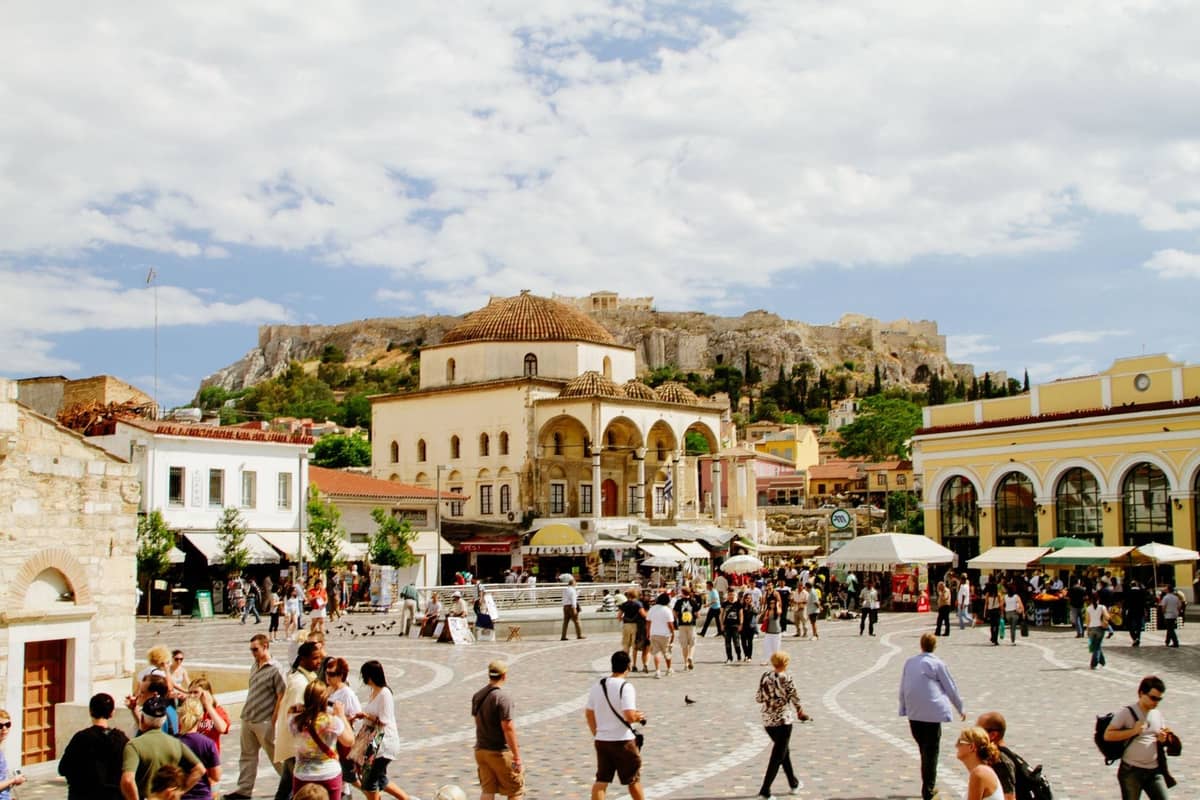
Athens is one of the easier European capitals to navigate on foot without a guide, as long as you're working from a clear route. The National Garden to Syntagma to Monastiraki corridor is well-signed and hard to get lost on. The following three self-guided walks are structured to avoid the worst of the tourist congestion while still covering the essential sites.
Route 1: The Archaeological Promenade. Start at the Panathenaic Stadium in the morning, walk west along Dionysiou Areopagitou past the Acropolis Museum, continue to the Theatre of Dionysus, then descend to the Ancient Agora. Finish at Monastiraki for coffee. Total distance: approximately 3.5 km. Duration: 2–3 hours at a relaxed pace, not including site entry. This is the route most walking tour operators use as their backbone, which tells you how well it works.
Route 2: Hills and Views. From Monastiraki, climb Areopagus Hill (10-minute walk, free entry) for panoramic views over the Agora, then descend to Philopappos Hill via the Pnyx. Return through Thisio and finish at Thisio's cafe strip on Apostolou Pavlou Street. Total distance: around 4 km, with around 80m of elevation gain. Allows you to see the Acropolis from three completely different angles without entering it.
Route 3: Neighborhood Contrast Loop. Start in upscale Kolonaki, walk south through Syntagma to Plaka, then continue west into Psyrri for lunch. Finish at Monastiraki's flea market. This route shows the economic and social range of central Athens more clearly than any single-theme tour. About 4 km, 2 hours of walking, with natural stops for food and shopping built in.
✨ Pro tip
Download the Athens urban map on Google Maps or Maps.me before your walk — mobile data on Greek networks works well, but having an offline backup helps in the dense alleys of Anafiotika where GPS occasionally drifts. The Athens city council also publishes free printed maps at the Tourist Information Centre on Dionysiou Areopagitou Street.
Timing, Seasons, and Practical Logistics
Season has a significant effect on your walking tour experience in Athens. For a full breakdown of what each season looks like on the ground, the best time to visit Athens covers climate data and crowd patterns in detail. The short version: April–June and September–October are the most comfortable months for multi-hour walks, with temperatures typically between 18–26°C and manageable crowds.
Summer (July–August) is not impossible for walking tours, but it requires adjustment. Central Athens regularly reaches 35–38°C in peak summer, and the marble and stone surfaces of archaeological sites amplify radiated heat significantly. Morning tours starting at 8:00–9:30 am or evening tours from 6:00 pm onward are the practical options. Midday walking between noon and 4:00 pm in July is genuinely uncomfortable and potentially dangerous for older visitors or those with health conditions.
Winter walking tours (December–February) are largely overlooked by visitors, which is exactly why they can be excellent. Crowds at the Acropolis drop significantly, guides have more time for individual questions, and the city's café culture comes into full effect. Temperatures average 13–15°C during the day — cool but comfortable for walking. Rain is more likely than in summer, so check forecasts and carry a light layer. Several operators run reduced schedules in winter; verify availability before booking.
On the logistics side: wear flat, closed-toe shoes with grip. The marble cobblestones of Plaka become genuinely slippery when wet, and Acropolis rock surfaces are polished smooth by millions of visitors. This is not a minor point. Sandals and flip-flops are responsible for a significant share of visitor injuries on the Acropolis hill. For more practical planning advice, the getting around Athens guide covers transport connections between walking zones.
What to Look for (and Avoid) When Booking
The Athens guided tour market has genuine quality variation. A few things separate a worthwhile tour from a forgettable one: group size matters enormously (under 12 people is noticeably better than 25+), and the guide's background matters more than their personality. An archaeologist or classicist explaining the Acropolis will give you information you cannot get from a guidebook. A generalist who memorized a script will give you exactly what the guidebook says.
- Prioritize tours where the guide's qualifications are stated (look for 'licensed guide' or specific academic backgrounds)
- Check whether Acropolis entry is included or extra — this significantly changes the effective price comparison between operators
- Read recent reviews specifically for the guide named on your departure, not just the company's overall rating
- Avoid tours that promise to cover every major sight in under 2 hours — depth is sacrificed for pace
- For food tours, check whether tastings are substantive (sit-down portions, multiple stops) or token (single sample per stop)
If you want to go deeper into Athens's archaeology specifically, consider pairing a walking tour with a visit to the National Archaeological Museum before your walk. Seeing the actual artifacts first and then the sites where they were found reverses the typical tourist sequence and makes the outdoor experience significantly more meaningful. The museum is about 1.5 km south of Syntagma Square — walkable from most central neighborhoods.
FAQ
Are free walking tours in Athens actually free?
Most 'free' walking tours in Athens operate on a pay-what-you-wish or tip-based model. There is no upfront charge, but the guides work exclusively for tips. A fair tip is €10–15 per person for a standard 2–3 hour tour. Budget this in when comparing free versus paid options — a tipped free tour often costs the same as an entry-level paid tour, with larger group sizes.
How long do Athens walking tours typically last?
Most standard Athens walking tours run 2–3 hours. Food and specialty tours often run 3–4 hours due to stops. Self-guided walks of the main archaeological promenade take 2–3 hours at a relaxed pace not including time inside any sites. Add 1–1.5 hours if you plan to enter and explore the Acropolis or Ancient Agora.
Where do Athens walking tours depart from?
The majority of Athens walking tours depart from either Syntagma Square or Monastiraki Square. Both are major metro stops on Line 3 (Blue Line), making them easy to reach from most neighborhoods and from the airport. Check your specific tour's meeting point carefully — some tours meet at nearby landmarks like Hadrian's Arch or the Acropolis Museum entrance.
Is Athens walkable without a guide?
Yes. Athens's historic center is compact and well-connected by pedestrianized streets. The main archaeological promenade along Dionysiou Areopagitou is flat, clearly signed, and connects most major sites without crossing busy roads. A basic map and a few hours are enough for a self-guided walk between Syntagma and Monastiraki. Navigation becomes trickier in Anafiotika and the upper Plaka alleys, but getting slightly lost there is part of the appeal.
What should I wear for a walking tour in Athens?
Flat, closed-toe shoes with rubber soles are essential — preferably walking shoes or trainers. The marble surfaces on the Acropolis and in Plaka become slippery when wet, and sandals significantly increase the risk of slipping. In summer, wear light, breathable clothing, bring a hat and sunscreen, and carry at least 500ml of water. In spring and autumn, add a light layer for early morning departures when temperatures can still be cool.