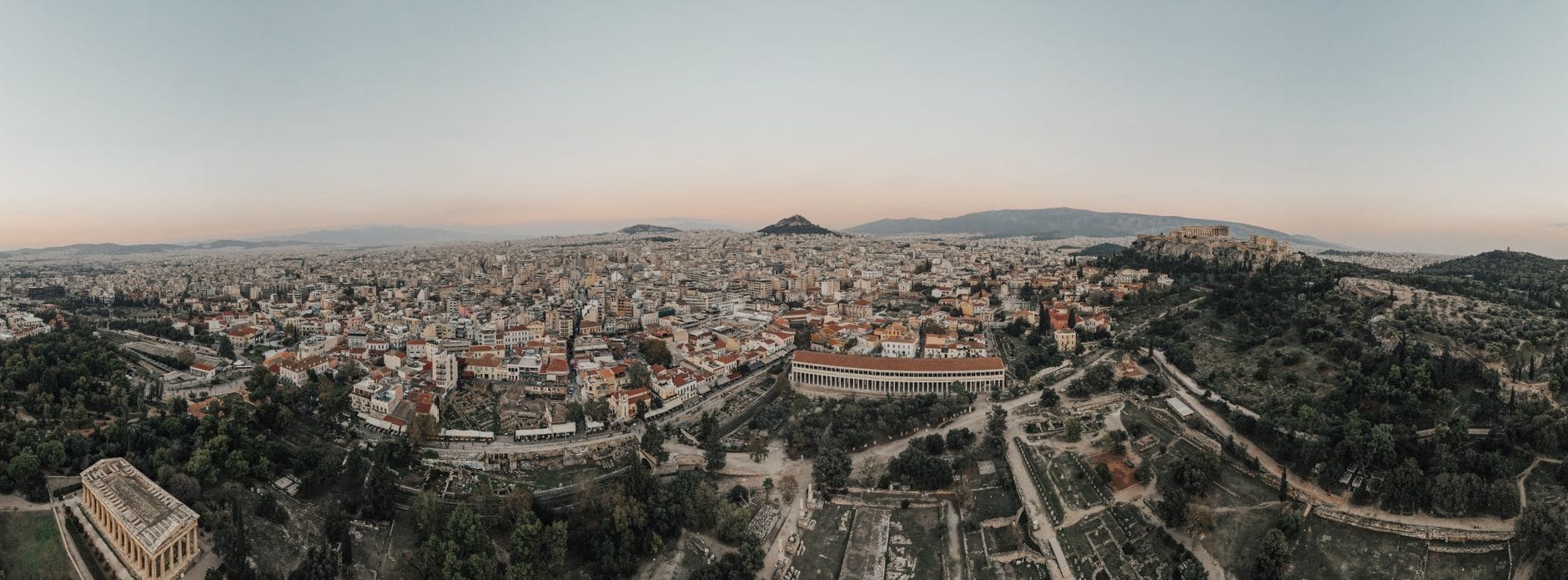
Thisio is a historic neighborhood in central Athens, positioned northwest of the Acropolis between the Ancient Agora and Kerameikos archaeological sites. Known for its pedestrianized streets, low-rise neoclassical buildings, and unobstructed views of the Parthenon, it offers a slower pace than the tourist-heavy streets of Plaka and Monastiraki nearby.
Thisio occupies one of Athens' most privileged positions: a quiet, low-rise neighborhood sitting directly alongside the Ancient Agora, with the Acropolis rising visibly to the east and the archaeological park of Kerameikos just to the north. It's neither the city's most fashionable address nor its most visited, which is precisely what makes it worth knowing.
Orientation
Thisio (also spelled Thiseio, from the Greek Θησείο) sits in the western arc of central Athens, occupying the zone between the ancient archaeological core and the residential streets that stretch toward Gazi and Kerameikos. The neighborhood is defined by a cluster of streets converging on a small square where Nileos, Irakleidon, Akamantos, and Apostolou Pavlou meet. This is the practical heart of Thisio: a few hundred square meters from which the whole area fans out.
To the east, the Ancient Agora forms a direct boundary. Apostolou Pavlou, the wide pedestrianized promenade that rings the base of the Acropolis hill, runs along the southern and eastern edge of the neighborhood. Walking south along Apostolou Pavlou takes you toward Philopappos Hill and the Hill of the Nymphs, where the National Observatory of Athens stands. Walking northeast from Thisio, you reach Monastiraki Square in about ten minutes on foot. Plaka and the Acropolis Museum entrance are fifteen to twenty minutes east by foot.
The neighborhood's relationship to its neighbors is important for understanding where it fits. Monastiraki is the nearest commercial hub, louder and considerably more crowded. Psyrri sits just north of Monastiraki and brings a different energy altogether, with late-night bars and a grittier street texture. Thisio, by contrast, has kept its character as a neighborhood of low buildings, wide pavements, and a pace that slows visibly once you cross Apostolou Pavlou and leave the archaeological perimeter behind.
Character & Atmosphere
Mornings in Thisio start quietly. The pedestrian streets that were filled with café tables the night before are empty except for delivery workers and the occasional dog walker. The light falls across the low neoclassical facades in long horizontal stripes, and from almost any elevated vantage point on Apostolou Pavlou, the Parthenon is already glowing on the ridge above. The air is cooler here than in the enclosed streets of Plaka, partly because the open archaeological sites allow wind to move through unobstructed.
By mid-morning, the cafés along Irakleidon Street and around the central square start filling. This is not a tourist crowd in the way that Plaka draws one. The people sitting over Greek coffee and a pastry tend to be residents, locals working remotely, and the kind of independent traveler who has already done the main sites and wants somewhere to sit without being handed a laminated menu. The atmosphere is relaxed in a way that feels earned rather than performed.
Afternoons shift the balance. Visitors walking the Apostolou Pavlou pedestrian promenade from the Acropolis toward Kerameikos pass through the neighborhood's edge, and the cafés with Acropolis views fill up as the afternoon light starts to warm the stone. In summer, the heat is real and direct: Thisio lacks the shade of Plaka's narrow alleys, so the open pedestrian esplanade can be punishing between noon and four. Bring water, or find a shaded table and stay put.
Evenings transform the neighborhood entirely. As the sun drops behind Philopappos Hill, Apostolou Pavlou takes on the quality that makes it one of the more atmospheric streets in all of Athens. The Acropolis is lit from below, and the tables along the promenade fill with people who have come specifically for this view. The interior streets around Irakleidon become more local and sociable, with groups moving between bars and restaurants in no particular hurry. This is genuinely one of the best places in the city center to spend a warm evening.
💡 Local tip
For the best Acropolis views along Apostolou Pavlou, position yourself on the stretch between the Thisio metro station and the Heraion café area around sunset. The angle here frames the Parthenon cleanly above the Ancient Agora's Temple of Hephaestus, with both illuminated after dark.
What to See & Do
The most significant site directly bordering Thisio is the Ancient Agora of Athens, the civic and commercial heart of the ancient city. The entrance is a short walk from the metro station. Inside, the remarkably well-preserved Temple of Hephaestus stands on a rise above the excavation site, often less crowded than the Acropolis despite being equally impressive as a surviving ancient structure. Allow at least ninety minutes for the Agora if you want to see both the archaeological site and the Stoa of Attalos museum inside it.
To the north of Thisio, a fifteen-minute walk along the edge of the archaeological zone reaches the Kerameikos Archaeological Site, the ancient cemetery and potters' quarter of Athens. It's quieter than most major sites in the city center, which makes the quality of the finds in its on-site museum even more surprising. The site includes the Sacred Gate and remains of the ancient city walls.
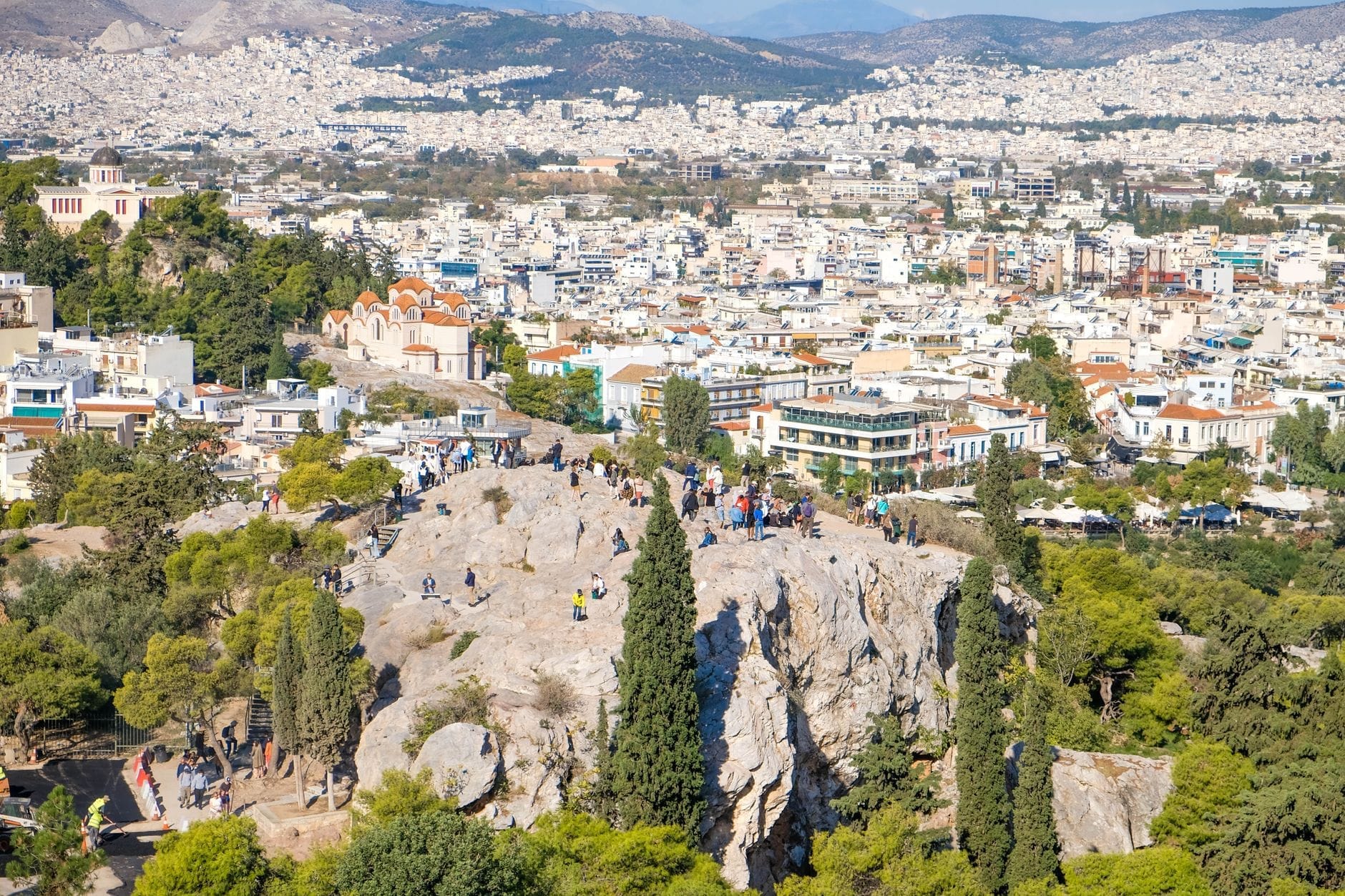
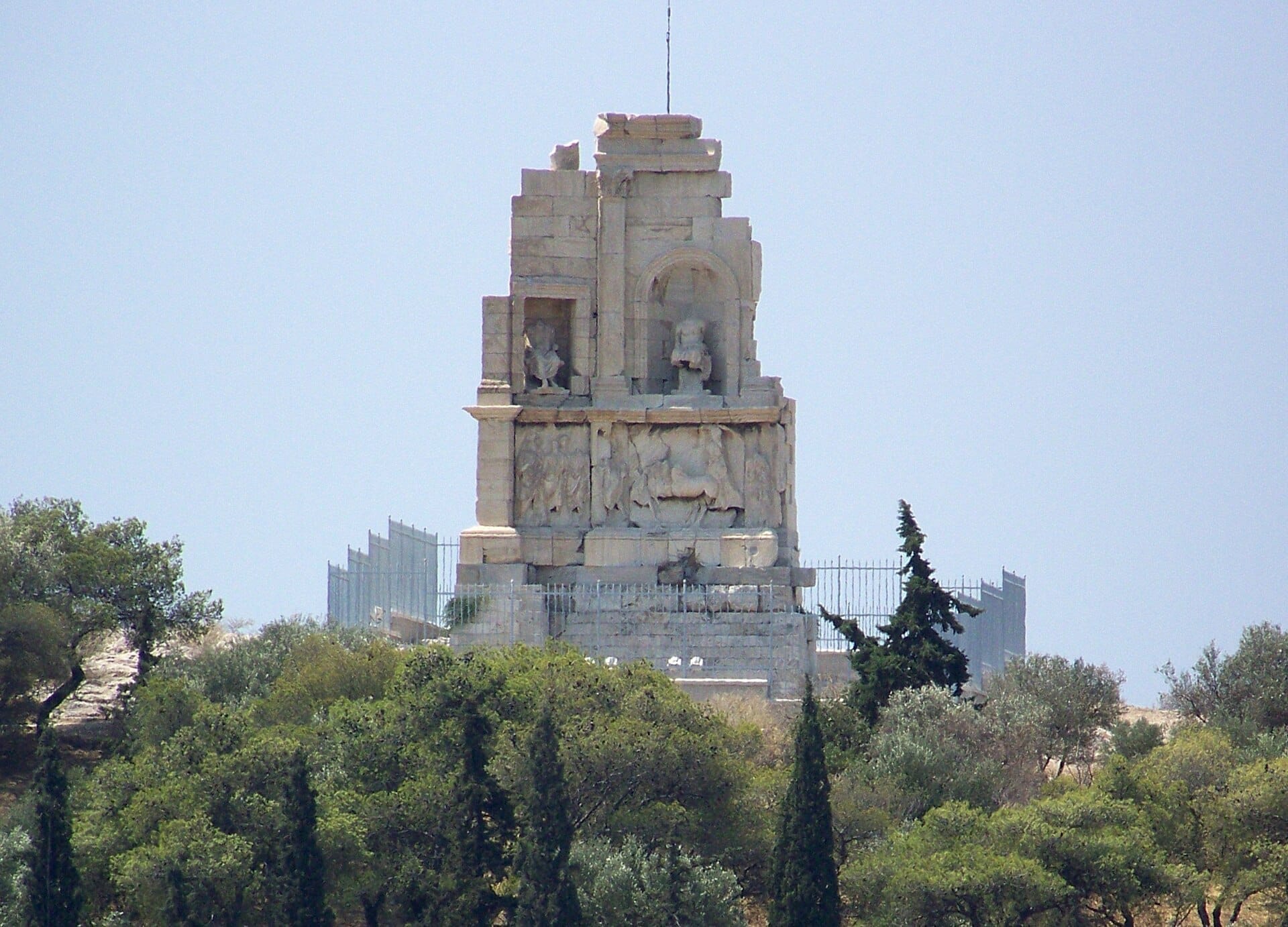
South along Apostolou Pavlou, the path continues toward Philopappos Hill, a green hill with walking trails and panoramic views over the Acropolis and the city. The Hill of the Nymphs, just west of Philopappos, is where the National Observatory sits. Both are accessible on foot from the Thisio neighborhood, making this area a useful base for a half-day walking circuit of the ancient sites.
Ancient Agora and Temple of Hephaestus (directly adjacent, main entrance off Adrianou Street near the metro)
Kerameikos Archaeological Site (15-minute walk north along the archaeological park boundary)
Apostolou Pavlou pedestrian promenade (the main artery connecting Thisio to the wider Acropolis circuit)
Philopappos Hill (20-minute walk south along Apostolou Pavlou)
Irakleidon Museum (small museum on Irakleidon Street, worth checking current exhibitions before visiting)
National Observatory of Athens on the Hill of the Nymphs (visible from the neighborhood, accessible on foot)
ℹ️ Good to know
The Apostolou Pavlou promenade is part of the Grand Promenade of Athens, a pedestrianized route connecting Thisio to Monastiraki, Plaka, and the Acropolis Museum. Walking the full circuit takes around 90 minutes at a relaxed pace and is one of the more rewarding urban walks in the city.
Eating & Drinking
Thisio's food scene is anchored around two axes: the cafés and restaurants along Apostolou Pavlou with their Acropolis-facing terraces, and the more local-oriented bars and tavernas on Irakleidon Street and the streets behind it. The first category draws visitors specifically for the setting and charges accordingly. The second is quieter, less photogenic, and generally better value.
Along Apostolou Pavlou, the dominant offering is café culture: Greek coffee, freddos, fresh juices, and light food at café-bar prices. Several of the larger spots here have become institutions on the Acropolis view circuit. Expect to pay more for the location than for anything on the plate. That said, the experience of sitting on this promenade with the Acropolis above you at dusk justifies the surcharge at least once.
Moving into the residential streets, the offer becomes more diverse. Irakleidon Street and the blocks around the central square have restaurants serving traditional Greek food at reasonable mid-range prices, along with a few bars that fill up from around ten in the evening and stay busy until well after midnight. The clientele here skews younger and more local than on the main promenade. For those looking to eat well without the view premium, this is where to spend time.
For a broader sense of the Athens food scene, the Athens food guide covers everything from street-food staples in Monastiraki to sit-down tavernas across the center. Thisio is particularly good for a pre-dinner drink before heading elsewhere, and the neighborhood stays active through the week rather than only on weekends.
⚠️ What to skip
Restaurants along Apostolou Pavlou with prominent Acropolis views tend to price their menus accordingly. A coffee here can cost three times what you'd pay two streets back. If you are watching your budget, use the promenade for walking and save eating for the interior streets of Thisio or nearby Monastiraki.
Getting There & Around
Thisio Metro Station sits right in the heart of the neighborhood. It is served by Line 1, the Green Line (the oldest metro line in Athens, formerly known as ISAP), which runs from Kifisia in the north to Piraeus in the south. From central Syntagma Square, Thisio is two stops west via Monastiraki. The station itself is surface-level and opens directly onto Apostolou Pavlou and the neighborhood square, making it one of the more pleasant metro arrivals in the city center.
Several bus lines stop near Thisio, connecting the neighborhood to wider Athens. For those walking from the city center, Monastiraki Square is roughly a ten-minute walk east along Adrianou Street. The getting around Athens guide covers transit options across the city in detail, including ticket types, metro hours, and connections to the airport.
On foot, Thisio connects naturally into the Acropolis walking circuit. From the metro station, Apostolou Pavlou heads south toward Philopappos Hill and east toward the Acropolis entrance at Dionysiou Areopagitou. Continuing east along the base of the Acropolis brings you to the Acropolis Museum in roughly twenty minutes. The entire area is pedestrianized or low-traffic, making this one of the most walkable parts of Athens.
Metro: Line 1 (Green Line), Thissio station, direct connections to Monastiraki and Piraeus, with easy interchange to Syntagma via Line 3 at Monastiraki
Walking to Monastiraki: 10 minutes east along Adrianou Street
Walking to the Acropolis Museum entrance: 20 minutes via Apostolou Pavlou and Dionysiou Areopagitou
Walking to Kerameikos Archaeological Site: 15 minutes north
Walking to Plaka: 15-20 minutes east
Taxis and ride-hailing apps (verify current availability) are also viable for onward connections
Where to Stay
Thisio is not a neighborhood heavy with hotels; most accommodation in this part of Athens is in apartments and smaller guesthouses rather than large hotel blocks. That pattern suits the neighborhood's character. For a full overview of accommodation options across Athens, the where to stay in Athens guide maps out which neighborhoods suit which types of traveler.
For visitors who prioritize walking access to the ancient sites over nightlife convenience, Thisio is a strong choice. You wake up minutes from the Ancient Agora and can be on the Acropolis well before the main crowds arrive from other parts of the city. The neighborhood is quiet at night compared to Monastiraki or Psyrri, which means earlier, better sleep, but also less choice if you want to stay out late without walking or taking the metro.
The best-positioned accommodation sits close to the metro station or along the streets branching off Irakleidon, within a few minutes of both the pedestrian promenade and the main café strip. Avoid the assumption that proximity to the Apostolou Pavlou promenade means quiet: the open-air cafés here stay busy until well after midnight in summer, and sound carries on a warm night.
Practical Notes & Safety
Thisio is considered one of the safer areas of central Athens for visitors. The archaeological park boundary creates a natural buffer on the south and east sides, and the neighborhood sees a steady flow of both tourists and locals throughout the day. The standard urban precautions apply: keep an eye on bags in crowded spots, particularly near the Monastiraki Flea Market on Sundays, when the area draws large numbers of visitors. For broader safety context, the Athens safety tips guide covers the city in more detail.
The neighborhood is best in spring (April to June) and autumn (September and October), when temperatures are moderate and the light on the ancient stones is at its most photogenic. Summer visits are entirely viable but require adjusting your pace: mornings and evenings are ideal for walking the archaeological sites and the promenade, while the middle of the day calls for shade and a cold drink. The wide open Apostolou Pavlou offers little shade and reflects heat from the stone paving, so plan outdoor time accordingly.
Thisio makes for a natural anchor point on any itinerary built around the ancient center. If you are planning a first full day in Athens, the neighborhood fits well into a loop that takes in the Acropolis and the Acropolis Museum, the Ancient Agora, and an evening walk along Apostolou Pavlou. The Athens one-day itinerary outlines exactly that kind of route.
TL;DR
Thisio sits directly alongside the Ancient Agora, with easy walking access to the Acropolis, Kerameikos, and Philopappos Hill.
The neighborhood is quieter and less commercial than adjacent Monastiraki and Plaka, with a more local café and bar culture centered on Irakleidon Street.
Apostolou Pavlou is one of Athens' great pedestrian promenades, particularly impressive at sunset and after dark when the Acropolis is lit.
Served by Thissio station on Metro Line 1, two stops from Monastiraki and directly connected to Syntagma and Piraeus.
Best suited to travelers who want walkable access to the main archaeological sites, a quieter base than central Monastiraki, and a neighborhood atmosphere over a hotel-district one. Less suited to those prioritizing nightlife or upscale dining without willingness to walk to other areas.
Three full days is the right amount of time to cover Athens at a comfortable pace, from the Acropolis and its world-class museum to the ancient Agora, Monastiraki, Kolonaki, and beyond. This guide breaks it all down day by day, with booking tips, honest crowd warnings, and the practical details most itineraries skip.
Twenty-four hours in Athens is enough to cover the Acropolis, the Acropolis Museum, the historic neighborhoods of Plaka and Monastiraki, and a spectacular sunset viewpoint. This itinerary is built around realistic walking distances, smart timing, and clear guidance on what to skip when time is short.
Athens holds one of the densest concentrations of ancient history on earth. This guide covers the city's major archaeological sites and museums, from the Acropolis and Ancient Agora to lesser-known gems like Kerameikos, with practical tips on tickets, timing, and what to expect at each.
Athens is one of the best cities in Europe to eat well without spending much. This guide covers the essential dishes, where to find them, realistic prices for 2026, and how to avoid the tourist traps that line the most photographed streets in the city.
Athens rewards those who wander beyond the obvious. From a Cycladic island village clinging to the Acropolis rock to a thermal lake on the coast, these are the experiences that make the city feel like yours. This guide covers the lesser-known sites, quiet hills, and local haunts that most visitors walk straight past.
Summer in Athens means intense heat, peak crowds, and some of the longest days in Europe. This guide breaks down what each month actually looks like, how to handle the heat, and how to get the most out of your visit in June, July, or August.
Athens nightlife runs on its own schedule, with dinners starting at 10pm and clubs peaking between 3 and 5am. This guide covers every major district, the best bars and clubs, what things cost, how to dress, and how to navigate the city after dark like a local.
Athens is one of Europe's most affordable capitals, with free archaeological sites, cheap street food, and an excellent public transport network. This guide breaks down exactly what things cost, when to go for the best deals, and how to stretch every euro without missing anything important.
Athens is generally a safe city for tourists, but petty theft, taxi scams, and a few neighborhood considerations are worth knowing before you arrive. This guide covers the real risks, the overhyped ones, and exactly how to stay out of trouble.
Athens rewards shoppers who know where to look. This guide breaks down the city's best markets, shopping streets, and neighborhoods by type, with practical advice on timing, pricing, and what's actually worth buying versus what to skip.
Athens is one of Europe's most walkable capitals, with millennia of history packed into a compact city center. This guide covers the best guided walking tours, self-guided routes, practical logistics, and clear advice on timing, pricing, and what to avoid.
Athens is far more family-friendly than most travelers expect. From interactive museum programs and funicular rides to free outdoor ceremonies and canal kayaking, this guide covers the best activities for children of all ages, honest pricing breakdowns, and practical logistics for navigating Athens with kids.
Athens holds one of the densest concentrations of world-class museums anywhere in Europe. This guide covers every major collection, from the Acropolis Museum's Parthenon sculptures to the Benaki's sweep of Greek history, with practical advice on what to prioritise and when to go.
Athens rewards visitors year-round, but the experience changes dramatically by season. This guide breaks down every month by weather, crowd levels, and cost so you can plan around what actually matters to you.
Athens rewards those who look up, and out. The city's hills, ancient rock outcrops, rooftop bars, and clifftop temples frame the Parthenon, the Saronic Gulf, and the sprawling Attic basin from every angle. This guide covers the best viewpoints in Athens, from completely free hilltop climbs to spectacular paid experiences.
Athens sits at the center of one of Europe's richest regions for day tripping. Within a few hours you can stand at the Oracle of Delphi, swim off a car-free Saronic island, or walk through a Bronze Age citadel. This guide covers the best day trips from Athens, organized by type and travel time.
Athens is one of Europe's most rewarding cities on a tight budget. From ancient hilltop views and marble stadiums to flea markets and ceremonial guards, this guide covers the best free experiences in the Greek capital, plus the specific days when even major paid sites open their gates for nothing.
Athens has one of the most affordable and well-connected urban transport networks in Southern Europe. This guide covers everything from metro fares and airport express buses to taxi flat rates, tram routes, and the ticketing mistakes that catch most first-time visitors off guard.
Athens rewards visitors who go beyond the obvious. This guide covers the best things to do in Athens Greece, from ancient sites and world-class museums to rooftop bars, coastal escapes, and neighborhood walks, with practical advice on tickets, timing, and what to skip.
Choosing where to stay in Athens shapes your entire trip. This guide breaks down every major neighbourhood by walkability, noise level, price range, and proximity to the sights that matter, so you can book with confidence rather than guesswork.