One Day in Athens: The Perfect 24-Hour Itinerary
Twenty-four hours in Athens is enough to cover the Acropolis, the Acropolis Museum, the historic neighborhoods of Plaka and Monastiraki, and a spectacular sunset viewpoint. This itinerary is built around realistic walking distances, smart timing, and clear guidance on what to skip when time is short.
Plan and book this trip
Tools from our partner Travelpayouts help you compare flights and hotels. If you book through them, we may earn a commission at no extra cost to you.
Flights
Hotels map
TL;DR
- Start at the Acropolis by 8:00 AM to beat crowds and midday heat — this is non-negotiable in summer.
- The Acropolis Museum is not optional — it provides context that the hill itself cannot, and deserves 1.5–2 hours.
- Most major sights — Acropolis, Plaka, Monastiraki, Syntagma — are walkable. Use the metro only for longer hops like Mount Lycabettus.
- Acropolis tickets cost €30 year-round (reduced €15) — book in advance, as timed slots sell out.
- Spring (April–June) and autumn (September–October) offer the best conditions for a one-day visit. See the best time to visit Athens guide for full seasonal breakdowns.
Before You Go: Timing, Tickets, and Realistic Expectations
Athens rewards visitors who plan ahead, especially those with only 24 hours. The city's core archaeological sites are concentrated within roughly 2 km of each other, which makes a focused one-day itinerary genuinely achievable. What kills most one-day attempts is poor timing: arriving at the Acropolis at 11:00 AM in July, getting stuck in lunch-hour queues, or discovering the Acropolis Museum is sold out. Thirty minutes of preparation eliminates all of these problems.
⚠️ What to skip
Acropolis timed entry slots sell out days — sometimes weeks — in advance during peak season (June–August). Book your ticket online through the official Hellenic Ministry of Culture portal or a verified platform before you arrive. Showing up without a ticket on a summer morning is a gamble you will likely lose.
A combined multi-site archaeological ticket was discontinued in 2025. The Acropolis & Slopes ticket (€30) covers the hill and south slope monuments. Other sites such as the Ancient Agora, the Roman Agora, the Temple of Olympian Zeus, and several other sites each require their own admission. Check current per-site pricing at hhticket.gr before you travel.
On the question of seasons: Athens in April, May, September, and October is generally pleasant, with long daylight hours and manageable crowds. Summer (June–August) brings intense heat and strong sun — the Acropolis plateau is fully exposed limestone with zero shade. Winter (December–February) is mild and far quieter, with shorter opening hours and scheduled free-admission Sundays. Every season has a valid case, but the heat calculus in summer is real and should shape your planning.
Morning: The Acropolis and Its Slopes (8:00 AM – 12:30 PM)
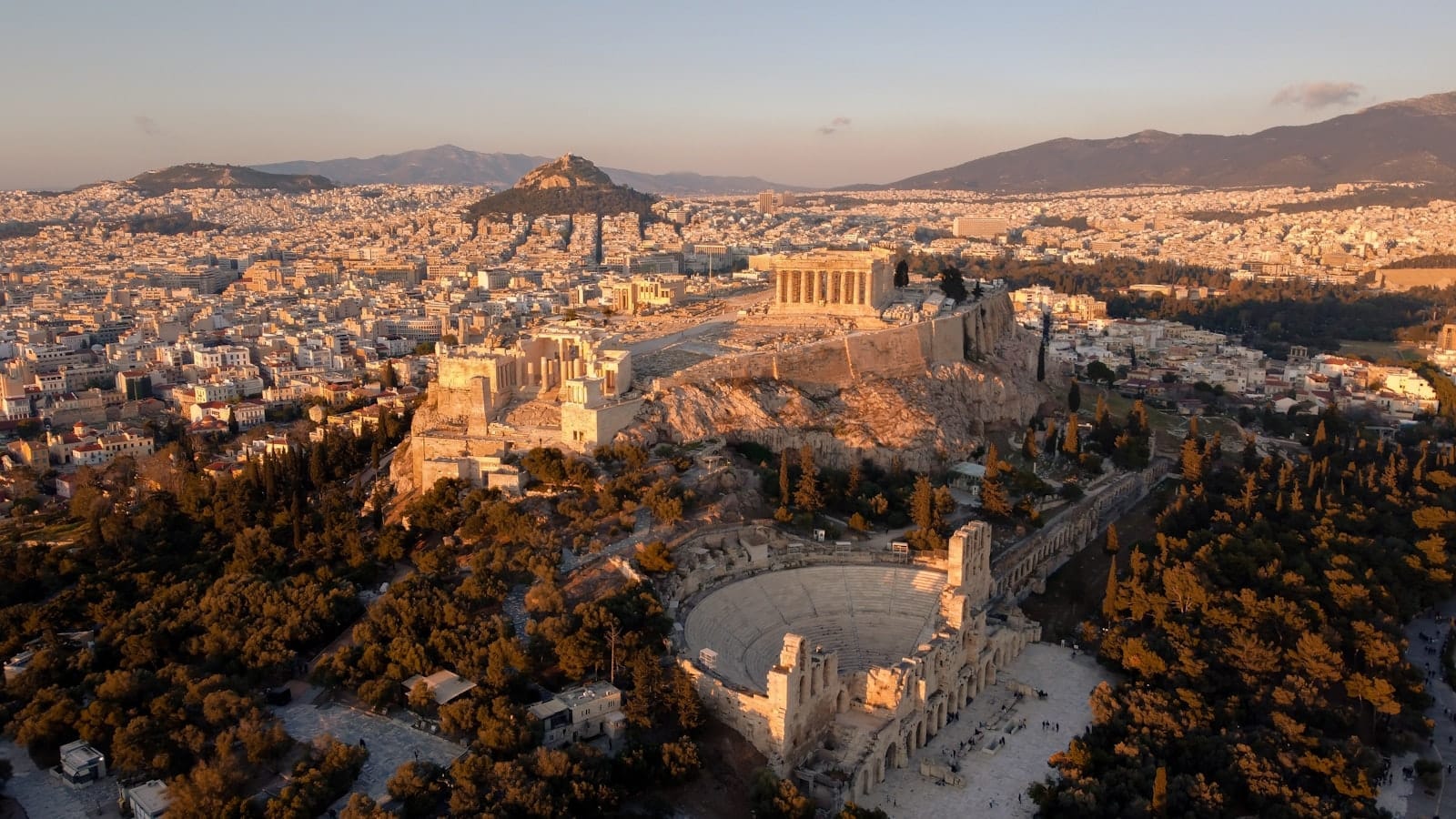
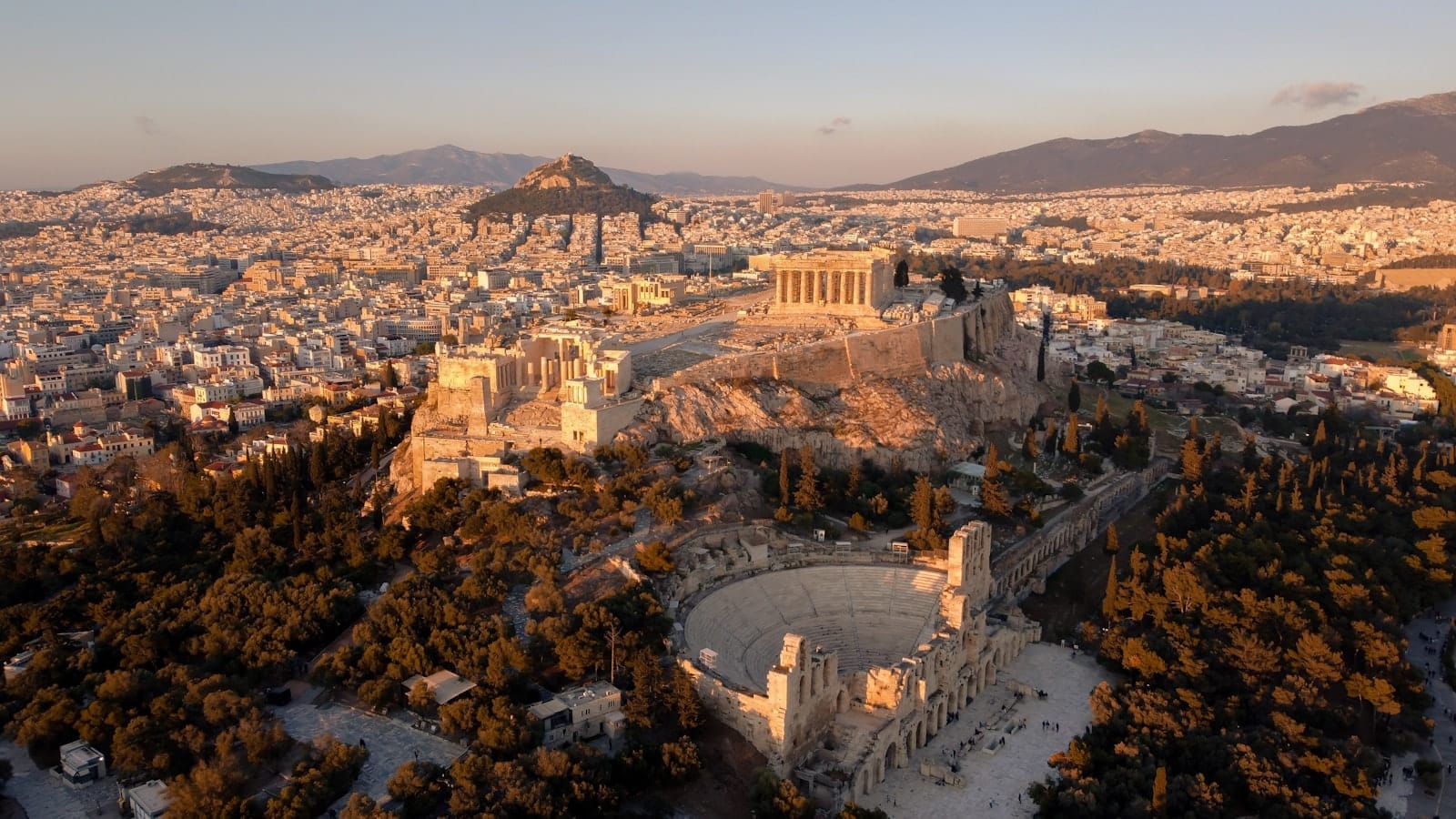
The Acropolis of Athens opens at 8:00 AM, and that first hour is when it belongs almost entirely to early risers. The light is soft, the stones glow gold, and the tour groups are still finishing breakfast. Aim to be at the main entrance on Dionysiou Areopagitou street no later than 7:50 AM. You will need 1.5 to 2 hours to walk the site properly — the Propylaea, the Parthenon, the Erechtheion, and the lesser-visited south slope with the Theatre of Dionysus and the Odeon of Herodes Atticus visible below.
- Wear proper shoes The ancient marble surfaces are polished smooth and become slippery. Sandals with no grip are a genuine hazard, especially on the Propylaea ramp.
- Bring water and sun protection There is no shade on the plateau and no drinking water facilities inside. Carry at least 1 litre per person in summer.
- Go counterclockwise Most visitors turn right immediately toward the Parthenon. Going left first toward the Beule Gate area gives you cleaner photographs before the crowd fills in.
- The Areopagus rock is free The rocky outcrop of Areopagus Hill sits just below the Acropolis entrance and requires no ticket. It offers one of the best unobstructed views of the Acropolis and the Ancient Agora below — worth 15 minutes of your morning.
After descending, walk five minutes south along Dionysiou Areopagitou to the Acropolis Museum. This is the most important museum in Athens for understanding what you just saw on the hill. The building is purpose-built and houses the original Caryatids from the Erechtheion, sculptural fragments from the Parthenon frieze, and exhibits on the successive layers of settlement on the Acropolis going back to the Neolithic period. Plan for 1.5 to 2 hours. Skip it and you have seen the packaging without reading what was inside.
💡 Local tip
The Acropolis Museum café on the second floor has glass floors looking down onto excavated ruins beneath the building. It is a legitimately good place for a mid-morning coffee break and costs nothing to access beyond your museum entry.
Midday: Plaka, Monastiraki, and the Ancient Agora (12:30 PM – 3:30 PM)
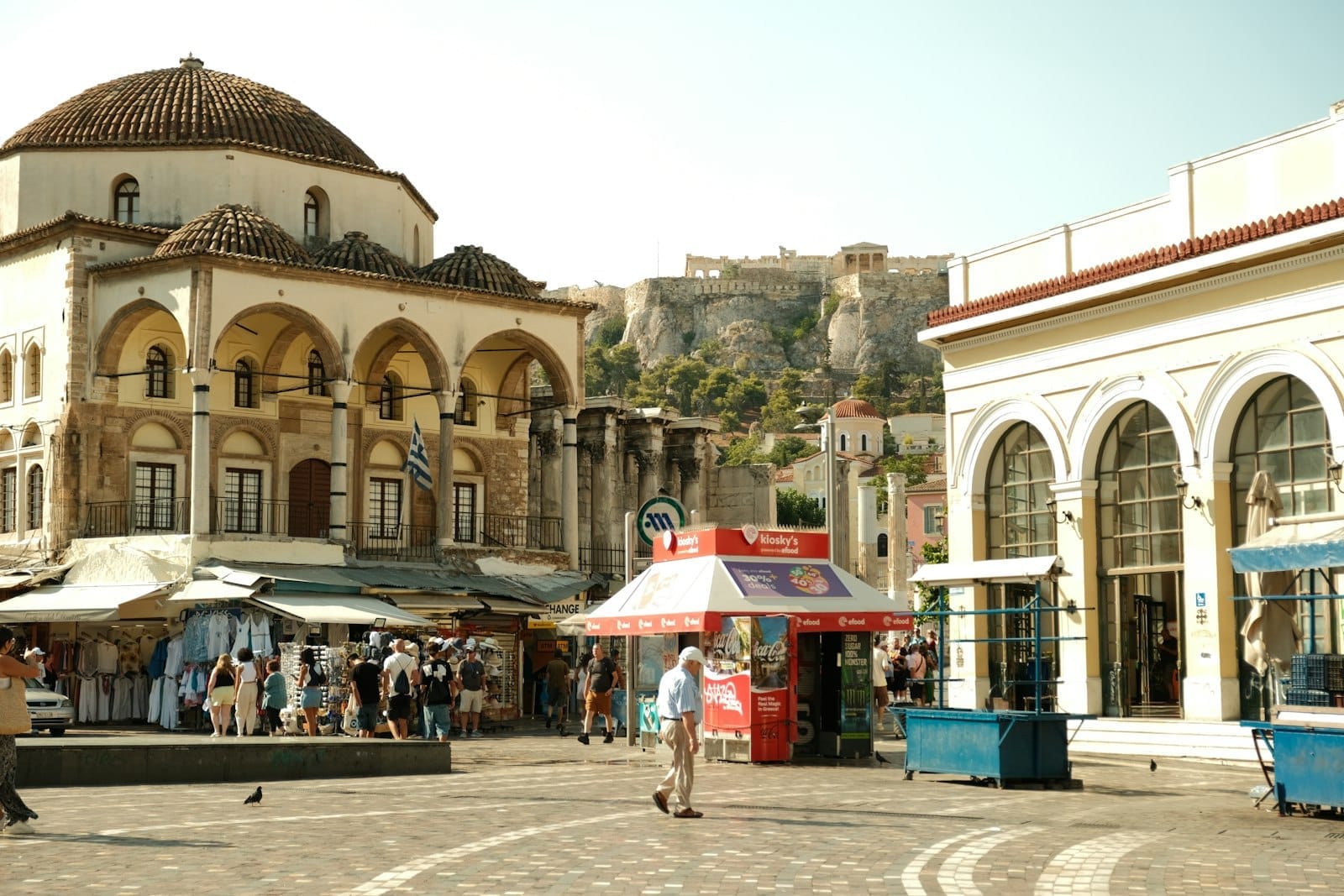
From the museum, head north into Plaka, the oldest continuously inhabited neighborhood in Athens. The streets here are narrow, mostly pedestrianized, and lined with neoclassical buildings, tavernas, and small shops. Plaka is genuinely pleasant for a slow lunch — ignore the most aggressively tourist-facing restaurants on the main drag (Kidathineon Street) and duck one block east or west for better value and quality.
After lunch, walk northwest through Monastiraki Square and take 45 minutes to an hour at the Ancient Agora. This was the civic heart of classical Athens — where democracy was debated, Socrates walked, and the courts of law operated. The Temple of Hephaestus standing at its edge is one of the best-preserved ancient Greek temples anywhere, and far fewer tourists stop here than at the Acropolis. Entry requires a separate Ancient Agora ticket (verify at hhticket.gr).
✨ Pro tip
The Monastiraki Flea Market is liveliest on Sunday mornings, but even on weekdays the streets around Ifestou and Avyssinias Square have antique dealers, second-hand bookshops, and cheap street food worth exploring. Budget 20–30 minutes for a wander if you have it.
Afternoon: Syntagma, the National Garden, and a Recharge (3:30 PM – 6:00 PM)
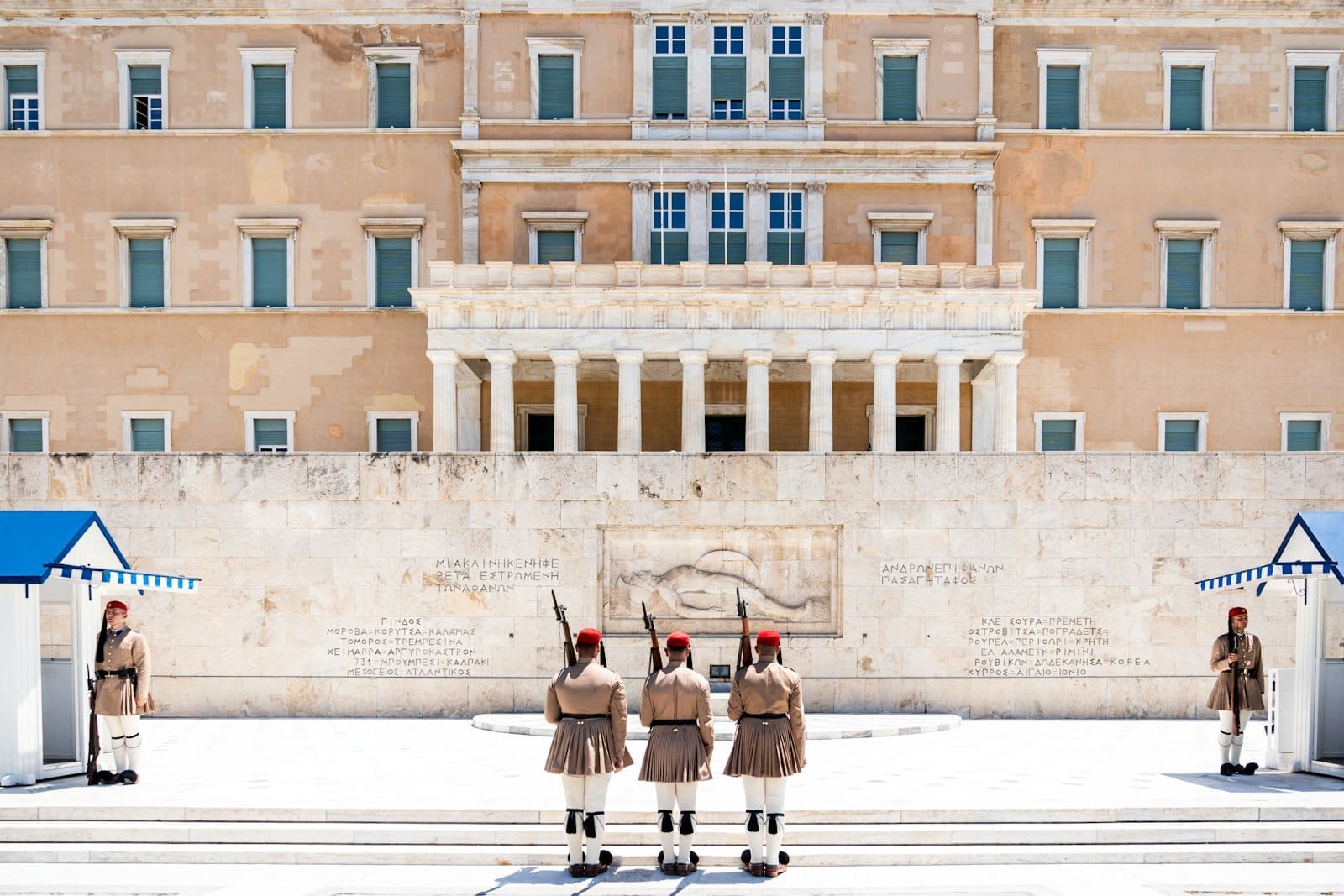
By early afternoon, the heat and walking accumulate. A 15-minute walk east from Monastiraki brings you to Syntagma Square, where the Hellenic Parliament and the Evzone guards provide one of Athens' most photographed scenes. The changing of the guard happens on the hour every hour, with an elaborate extended ceremony on Sundays at 11:00 AM — if you happened to be up early enough, the Sunday morning ceremony is worth timing your day around.
Behind the Parliament building, the National Garden of Athens is a shaded 15-hectare park that feels genuinely removed from the city noise. It is the best midday refuge in central Athens, and admission is free. Spend 20–30 minutes here before continuing. The Panathenaic Stadium is a short walk southeast — the only major stadium in the world built entirely of white marble, and the site of the first modern Olympic Games in 1896. Entry costs around €12 (reduced €6) and includes an audio guide; it takes about 30–40 minutes.
Evening: Sunset Views and Dinner (6:00 PM Onwards)

For sunset, Athens offers two genuinely excellent viewpoints at opposite ends of the effort spectrum. Mount LycabettusFor sunset, Athens offers two genuinely excellent viewpoints at opposite ends of the effort spectrum. Mount Lycabettus at 277 metres is the highest point in central Athens and offers a 360-degree panorama that includes the Acropolis, the Aegean Sea on clear days, and the full sprawl of the metro area. You can take the funicular from Kolonaki (verify current times before visiting) or walk up in about 20–25 minutes via the path from Kolonaki. The funicular costs a few euros each way.
The easier alternative is Philopappos Hill, a 10-minute walk from the Acropolis Museum. It requires no funicular, no ticket, and delivers an uninterrupted west-facing view of the Acropolis catching the last light of day. Many Athenians prefer it precisely because it is less infrastructured and more contemplative. For a one-day visit, Philopappos is the more time-efficient choice; Lycabettus is better if you want the widest possible panorama and are staying in the Kolonaki area.
For dinner, head to Psyrri or the streets around Monastiraki for a broad range of tavernas, mezedopoleia (small-plates restaurants), and souvlaki spots at reasonable prices. Psyrri in particular has a density of good-value restaurants within a few blocks. Avoid the overlit tourist tavernas on the Acropolis-facing side of Plaka, where the view markup is steep and the food unremarkable. A full mezze spread for two with wine at a good Psyrri taverna runs roughly €35–55.
Practical Logistics for a One-Day Athens Visit
Athens International Airport (IATA: ATH), officially named Eleftherios Venizelos, sits about 30–35 km east of central Athens in Spata. Metro Line 3 (Blue Line) connects the airport to Syntagma in roughly 40 minutes. The X95 express bus runs 24 hours to Syntagma and takes 40–60 minutes depending on traffic. Official flat-rate taxis operate from the airport to the city centre — the airport publishes current day and night fares on its website, as these are set by law and updated periodically.
- Getting around centrally The Acropolis, Acropolis Museum, Plaka, Monastiraki, Ancient Agora, and Syntagma are all within a 30-minute walk of each other. You do not need transport for this core loop.
- Metro for outlying stops Use Metro Lines 1, 2, or 3 for Lycabettus (alight at Evangelismos on Line 3, then walk or take a cab to the funicular) or the Panathenaic Stadium (Syntagma on Line 2 or 3, then a 10-minute walk).
- Taxis and ride-hailing Licensed taxis are widely available. Beat is the most commonly used ride-hailing app in Athens. Fares for short city-centre hops are generally low — expect €4–8 for most intra-central rides.
- Hop-on hop-off buses Useful if you want to cover more ground with minimal walking, particularly in summer heat. They hit the Acropolis, Panathenaic Stadium, National Garden, and Monastiraki on their main loop. Tickets are sold through major booking platforms.
ℹ️ Good to know
Athens uses Type C and Type F (Europlug/Schuko) electrical sockets at 230V/50Hz. The currency is the Euro (EUR). Tap water in Athens is safe to drink. Emergency number: 112. Tourist police: 171. English is widely spoken across central Athens, particularly in tourist areas and restaurants.
If one day leaves you wanting more, the logical next step is a three-day Athens itinerary that adds the National Archaeological Museum, Kolonaki, Piraeus, and day trips. Athens also rewards deeper neighbourhood exploration — Exarchia and Koukaki both offer a less curated, more lived-in version of the city that 24-hour visitors rarely reach.
FAQ
Is one day enough to see Athens?
One day is enough to see the main highlights: the Acropolis, the Acropolis Museum, the Ancient Agora, the historic neighbourhoods of Plaka and Monastiraki, and a sunset viewpoint. You will not cover everything — the National Archaeological Museum, Kolonaki, Piraeus, and most neighbourhood exploration require more time — but a focused 24 hours delivers a genuinely meaningful visit.
How much does the Acropolis cost to enter?
Acropolis entry costs €30 year-round (reduced €15 for eligible visitors). The Ministry discontinued the multi-site combo pass in 2025, so sites like the Ancient Agora and Temple of Olympian Zeus each require their own ticket. Verify current pricing at hhticket.gr before your visit.
What is the best time of day to visit the Acropolis?
Opening time (8:00 AM) is the best time to visit the Acropolis, for two reasons: the light is better for photographs, and the crowds are significantly smaller than from 10:00 AM onwards. In summer, the midday heat on the exposed plateau is severe — visiting early also means finishing before the worst of it. Late afternoon (after 5:00 PM) is a reasonable second choice.
Do I need to book Acropolis tickets in advance?
Yes, especially in peak season (June–August). Timed entry slots sell out days or weeks in advance during summer. Book through the official Hellenic Ministry of Culture portal or a verified platform. In winter and shoulder seasons, advance booking is less critical but still recommended to avoid queuing.
How do I get from Athens airport to the city centre?
Metro Line 3 runs directly from Athens International Airport (ATH) to Syntagma and Monastiraki in about 40 minutes. The X95 express bus runs 24 hours between the airport and Syntagma Square in 40–60 minutes depending on traffic. Official flat-rate taxis are available outside arrivals — current day and night fares are published on the airport's website. Always verify current fares and metro ticket prices on official sources before travel, as these change periodically.