Psyrri
Psyrri is a compact, historically layered neighborhood in central Athens, wedged between Monastiraki and the Kerameikos archaeological zone. Once a district of craftsmen and workshops, it has evolved into Athens' most concentrated after-dark destination, where graffiti-covered neoclassical buildings shelter everything from traditional rebetiko venues to rooftop cocktail bars.
Located in Athens
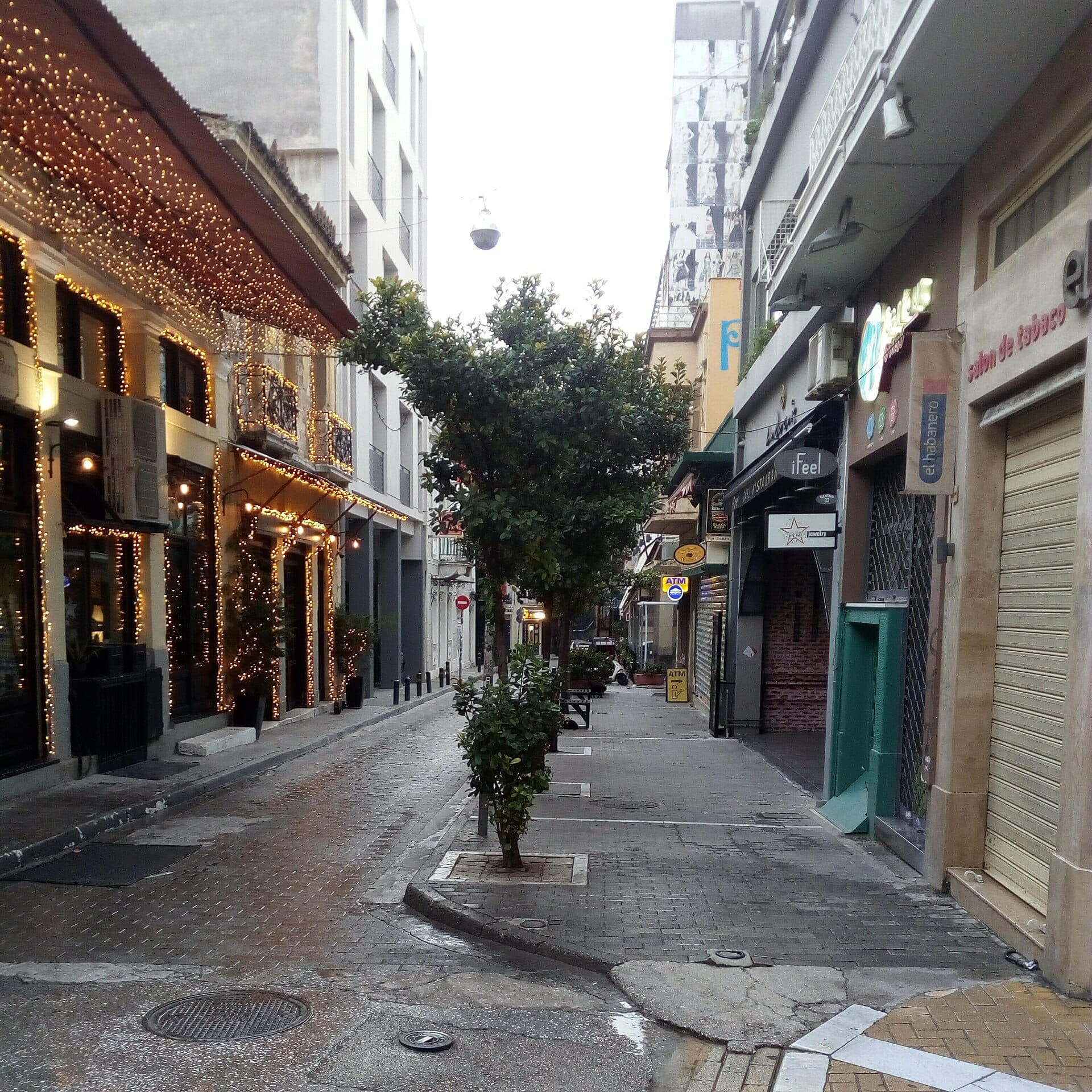
Overview
Psyrri occupies a few square blocks in the heart of Athens yet manages to contain centuries of history alongside one of the city's densest concentrations of tavernas, bars, and live music. It is the neighborhood that reveals Athens after dark: raw, sociable, and a little unpolished in the best possible way.
Orientation: Where Psyrri Sits in Athens
Psyrri is a small neighborhood in the historic center of Athens, positioned immediately northwest of Monastiraki and just east of the district of Gazi. Its boundaries are defined by four major streets: Evripidou to the north, Athinas to the east, Ermou to the south, and Agion Asomaton and Pireos to the west. That box is perhaps ten or twelve blocks across at its widest, making Psyrri one of the more intimate quarters in central Athens.
The southeastern corner of Psyrri blends almost seamlessly into Monastiraki, and the transition is invisible on foot: one moment you are passing souvlaki stalls and tourist stalls around the square, the next you are in a quieter lane of Psyrri with a mural-covered wall on one side and a century-old workshop on the other. To the west, the neighborhood abuts the Kerameikos archaeological site, one of Athens' most undervisited ancient sites. Walking northwest from Psyrri's main square, Plateia Iroon, you reach Kerameikos in under ten minutes.
To the south, Ermou Street connects Psyrri to Thissio and the pedestrianized walkway along Dionysiou Areopagitou. To the north, Evripidou Street leads toward the Athens Central Market on Athinas Street, one of the city's most sensory-rich commercial corridors. Psyrri is therefore surrounded by some of the most visited terrain in Athens, yet its interior streets remain noticeably quieter during the day.
ℹ️ Good to know
Psyrri is spelled several ways in English: Psiri, Psirri, and Psyrri are all used interchangeably in signage and online resources. On the Athens Metro network and official municipal maps, the area is referenced via the Monastiraki station, which sits on its southeastern edge.
Character and Atmosphere
Psyrri is a neighborhood that changes register completely depending on the hour. In the morning, it runs at a low frequency: a few older residents crossing toward the market on Athinas, a café opening its shutters on Plateia Iroon, cats arranged in patches of sun on the steps of buildings that look simultaneously ancient and decrepit. The streets smell faintly of last night and more faintly of bakery from somewhere around the corner.
By afternoon the light falls hard on whitewashed walls covered in murals: political slogans, large-scale portraits, abstract pieces, and tags accumulated over decades. Street art is not an afterthought here; it is the wallpaper. Psyrri has been a canvas for Athenian graffiti culture since at least the 1990s, and the density of it on certain lanes gives the neighborhood a gallery-without-walls quality, even as the imagery ranges from genuinely skilled to pure territorial tagging.
The social center of Psyrri is Plateia Iroon, the neighborhood's main square. By early evening this square fills with people who have come to eat and drink: families at early hours, younger crowds from around 10pm, and a late-night wave that rolls in after midnight when bars elsewhere have begun to wind down. The surrounding streets, particularly Sarri, Karaiskaki, and Agion Asomaton, are the nervous system of the nightlife district, lined with tavernas, mezedopolia, and bars that keep going well past 2am on weekends.
It is worth noting that Psyrri is not uniformly busy or uniformly polished. Some blocks are rough around the edges, and the transition between a smart restaurant terrace and a derelict building can happen in twenty meters. That contrast is part of what gives the area its texture. Visitors expecting a curated pedestrian zone will be surprised; those who enjoy authentic urban messiness alongside good food and drink will feel at home immediately.
History: From Workshops to Nightlife District
Psyrri is among the oldest continuously inhabited quarters in Athens. Through the 19th and much of the 20th century it was a working district, home to craftsmen, small manufacturers, and the kinds of trades that required space and tolerance for noise: metalworkers, tanners, cobblers, cabinetmakers. The workshop culture gave the neighborhood both its physical character, since the buildings are low and utilitarian, and its social one, since the clientele of nearby tavernas was drawn from tradespeople rather than merchants.
By the mid-20th century, Psyrri had developed a secondary identity as a rebetiko district, associated with the blues-inflected Greek music style that flourished among working-class and refugee communities after the population exchanges of the 1920s. Tavernas here hosted live music in a context that was low-key and local rather than performed for tourists. That musical tradition is still present, though diluted.
The 1990s brought significant change. Gentrification arrived earlier in Psyrri than in most of central Athens, partly because the neighborhood's proximity to Monastiraki made it attractive to investors in the restaurant and bar sector. Workshops gradually gave way to dining rooms. The population shifted. By the 2000s, Psyrri had a reputation as the city's most concentrated nightlife zone, drawing a mixed crowd of Athenians and visitors. The financial crisis of 2010-2018 hit the area hard, closing many venues and stalling development, but the neighborhood has since recovered much of its energy.
What to See and Do
Psyrri is not primarily a sightseeing neighborhood in the conventional sense: there is no single major attraction drawing visitors to its streets. What it offers instead is atmosphere, street-level culture, and proximity to some of Athens' most important archaeological and historical sites.
The street art is genuinely worth a slow walk. Take Sarri Street from Plateia Iroon toward Kerameikos and you will pass some of the largest and most accomplished murals in central Athens. The concentration increases closer to the Gazi border. For the ancient Athens experience, the Kerameikos archaeological site is Psyrri's most significant neighbor: the ancient cemetery and city walls of Athens, far less crowded than the Acropolis, with a good on-site museum. Entry is from Ermou Street at the western edge of the neighborhood.
Walking east from Psyrri for five minutes brings you to the Monastiraki Flea Market on Ifestou Street and Avyssinia Square, where antique furniture, vinyl records, and general bric-a-brac pile up every weekend. The Ancient Agora is also within a ten-minute walk south, along with the Temple of Hephaestus, one of the best-preserved ancient Greek temples in the world. These sites are technically in adjacent neighborhoods but are easily combined with a morning or afternoon in Psyrri.
- Street art walk along Sarri and Karaiskaki streets
- Plateia Iroon: the neighborhood square, best visited at dusk when the terraces fill
- Kerameikos Archaeological Site: ancient cemetery and city walls, accessible on foot from western Psyrri
- Monastiraki Flea Market: five minutes east, particularly lively on Sunday mornings
- Live rebetiko and Greek folk music at traditional tavernas around Plateia Iroon on weekend evenings
💡 Local tip
If you want to see the street art at its best, walk through on a weekday morning before 10am, when the streets are quiet and the light on the murals is clean. The same streets in the evening are too busy to stop and look properly.
Eating and Drinking
Food is the main daytime and evening currency of Psyrri, and the neighborhood offers a range that covers most needs and price points. The primary format is the mezedopoleio, a restaurant structured around small shared plates: grilled octopus, fried cheese, taramasalata, marinated anchovies, various dips, and the kind of lamb or pork preparations that Athens does better than almost anywhere. These are social, unhurried meals meant to anchor an evening rather than rush through it.
The streets around Plateia Iroon have the highest concentration of restaurants, and the quality is variable. Some tavernas here have been trading for decades and maintain genuine standards; others have opened in the past five years primarily for tourist traffic and show it. A simple test: look for a menu that is short, changes with the season, and is written primarily in Greek with a translated version rather than a laminated multi-page tourist menu with photographs.
For drinking, Psyrri ranges from straightforward wine bars pouring Greek varieties by the glass to cocktail bars with full service and DJs after midnight. On weekends the bars on Karaiskaki and in the alleyways off Plateia Iroon stay active until 3am or later. The music tends toward Greek pop and electronic in the more commercial venues; the smaller places around the square lean toward live acoustic music or recorded Greek rock and rebetiko.
For a broader overview of what to eat and where to find it across the city center, the Athens food guide covers the full spectrum from street souvlaki to upscale modern Greek cuisine.
⚠️ What to skip
Psyrri gets very loud on Friday and Saturday nights. If you are staying in the neighborhood for those nights, check that your accommodation has double-glazed windows or is set back from the main square and bar streets. Noise from terraces and sound systems can persist until 3 or 4am.
Getting There and Around
Psyrri is straightforward to reach from anywhere in central Athens on foot, metro, or bus. The Monastiraki metro station, served by both Line 1 (Green Line, connecting Piraeus to Kifisia) and Line 3 (Blue Line, connecting the airport to Egaleo), sits on the southeastern corner of the neighborhood and is about a two-minute walk from Plateia Iroon. Thissio station on Line 1 provides a second access point from the west, roughly a five-minute walk from Psyrri's interior.
From Syntagma Square, the central hub of the Athens Metro, Monastiraki is one stop on Line 3 and about a twelve-minute walk along Ermou Street. From the Acropolis Museum area in Makrygianni, Monastiraki is walkable in around fifteen minutes along Dionysiou Areopagitou and then Apostolou Pavlou, or reachable in a single metro stop from Akropoli station. Bus routes 025, 026, and 027 pass through or around the neighborhood and connect it to other central districts, though given Psyrri's size, the metro is almost always the more practical option.
Within the neighborhood itself, everything is on foot. Psyrri's interior streets are too narrow and irregular for vehicles to be useful, and much of the nightlife concentration around Plateia Iroon is effectively pedestrianized in practice if not always by formal designation. Taxis and ride-hailing apps can pick up and drop off on the boundary streets: Athinas, Ermou, and Agion Asomaton are all accessible by car. Note that ride-hailing apps including Beat operate across central Athens and are useful for late-night returns to hotels outside walking distance.
For a full breakdown of public transport options across Athens, including ticket types and fares, see the getting around Athens guide.
Where to Stay in Psyrri
Psyrri has a small but growing accommodation offer, ranging from boutique hotels in converted neoclassical buildings to serviced apartments aimed at longer stays. The neighborhood's central location makes it genuinely convenient for visiting most of Athens' main attractions on foot: the Acropolis is about fifteen minutes by foot heading south, Monastiraki and the Ancient Agora are practically adjacent, and the Athens Central Market is five minutes north.
The best rooms in Psyrri are those positioned on the neighborhood's quieter residential streets, away from Plateia Iroon and the main bar strips. Buildings that face onto Sarri, Miaouli, or the lanes running north from Ermou tend to be significantly quieter after midnight than those overlooking the square. If you prioritize easy access to nightlife and do not need quiet evenings, staying directly on or near Plateia Iroon is fine; you will walk out of the door into the middle of where things happen.
Psyrri suits travelers who want to be in the center of Athens without paying Kolonaki prices or navigating the more tourist-saturated streets of Plaka. It also works well as a base for nightlife-focused trips, given that most of the bars and music venues you will want to visit are either in Psyrri itself or a short taxi ride away in Gazi. For broader accommodation advice across the city, the where to stay in Athens guide covers all the main neighborhoods with comparative detail.
💡 Local tip
If you are visiting Athens primarily for ancient history and museums rather than nightlife, Psyrri is still a solid base, but consider whether the late-night noise on weekends fits your schedule. Koukaki, south of the Acropolis, offers similarly central access to the main sites in a noticeably quieter setting.
Practical Notes and Honest Assessment
Psyrri is not the neighborhood for everyone. It is best understood as Athens' most concentrated evening and nightlife district, with all the benefits and costs that implies. The daytime character is genuinely interesting, the street art is worth the walk, and the proximity to Kerameikos, Monastiraki, and the Ancient Agora makes it easy to fill a morning with serious archaeology before retreating for lunch in the neighborhood.
The main drawback, beyond the weekend noise already noted, is that parts of the neighborhood can feel rundown. Buildings that need repair sit alongside renovated restaurants; some blocks feel transitional rather than settled. This is changing gradually, but Psyrri is not Kolonaki and does not aspire to be. Safety in and around the neighborhood is broadly similar to other central Athens districts: standard city precautions apply, particularly for late-night movement, but the area is actively busy with people most evenings, which in itself provides a degree of ambient security.
For safety context across Athens more broadly, the Athens safety tips guide provides practical, balanced guidance without hyperbole. For planning around the evening side of Athens more widely, the Athens nightlife guide covers Psyrri alongside Gazi, Kolonaki, and Monastiraki in comparative detail.
TL;DR
- Psyrri is Athens' most concentrated nightlife and dining neighborhood, centered on Plateia Iroon and the surrounding streets of Sarri and Karaiskaki.
- The neighborhood is bordered by Monastiraki to the southeast and Kerameikos to the west, making it an excellent base for combining ancient site visits with evening dining.
- Monastiraki Metro station (Lines 1 and 3) is a two-minute walk from the neighborhood's center, giving excellent connections to the rest of the city.
- Best suited to travelers who enjoy urban texture, street art, late-night tavernas, and live music; less suited to those prioritizing quiet evenings or a polished hotel-district atmosphere.
- Weekend noise from bars and music venues around the main square can be significant late at night: choose accommodation on quieter side streets if sleep is a priority.
Related Travel Guides
- 3 Days in Athens: The Perfect Itinerary
Three full days is the right amount of time to cover Athens at a comfortable pace, from the Acropolis and its world-class museum to the ancient Agora, Monastiraki, Kolonaki, and beyond. This guide breaks it all down day by day, with booking tips, honest crowd warnings, and the practical details most itineraries skip.
- One Day in Athens: The Perfect 24-Hour Itinerary
Twenty-four hours in Athens is enough to cover the Acropolis, the Acropolis Museum, the historic neighborhoods of Plaka and Monastiraki, and a spectacular sunset viewpoint. This itinerary is built around realistic walking distances, smart timing, and clear guidance on what to skip when time is short.
- Ancient Athens: A Complete Guide to the Archaeological Sites
Athens holds one of the densest concentrations of ancient history on earth. This guide covers the city's major archaeological sites and museums, from the Acropolis and Ancient Agora to lesser-known gems like Kerameikos, with practical tips on tickets, timing, and what to expect at each.
- What to Eat in Athens: A Complete Guide to Greek Food & Cuisine
Athens is one of the best cities in Europe to eat well without spending much. This guide covers the essential dishes, where to find them, realistic prices for 2026, and how to avoid the tourist traps that line the most photographed streets in the city.
- Hidden Gems in Athens: 18 Off the Beaten Path Experiences You'll Actually Remember
Athens rewards those who wander beyond the obvious. From a Cycladic island village clinging to the Acropolis rock to a thermal lake on the coast, these are the experiences that make the city feel like yours. This guide covers the lesser-known sites, quiet hills, and local haunts that most visitors walk straight past.
- Athens in Summer: What to Expect in June, July & August
Summer in Athens means intense heat, peak crowds, and some of the longest days in Europe. This guide breaks down what each month actually looks like, how to handle the heat, and how to get the most out of your visit in June, July, or August.
- Athens Nightlife: Best Bars, Clubs & Evening Entertainment
Athens nightlife runs on its own schedule, with dinners starting at 10pm and clubs peaking between 3 and 5am. This guide covers every major district, the best bars and clubs, what things cost, how to dress, and how to navigate the city after dark like a local.
- Athens on a Budget: How to Visit for Less
Athens is one of Europe's most affordable capitals, with free archaeological sites, cheap street food, and an excellent public transport network. This guide breaks down exactly what things cost, when to go for the best deals, and how to stretch every euro without missing anything important.
- Is Athens Safe? The Honest Guide to Scams, Safety & Smart Travel
Athens is generally a safe city for tourists, but petty theft, taxi scams, and a few neighborhood considerations are worth knowing before you arrive. This guide covers the real risks, the overhyped ones, and exactly how to stay out of trouble.
- Shopping in Athens: Markets, Streets & What to Buy
Athens rewards shoppers who know where to look. This guide breaks down the city's best markets, shopping streets, and neighborhoods by type, with practical advice on timing, pricing, and what's actually worth buying versus what to skip.
- Best Walking Tours & Self-Guided Walks in Athens
Athens is one of Europe's most walkable capitals, with millennia of history packed into a compact city center. This guide covers the best guided walking tours, self-guided routes, practical logistics, and clear advice on timing, pricing, and what to avoid.
- Athens with Kids: The Complete Family Guide to Activities, Tips & What to Skip
Athens is far more family-friendly than most travelers expect. From interactive museum programs and funicular rides to free outdoor ceremonies and canal kayaking, this guide covers the best activities for children of all ages, honest pricing breakdowns, and practical logistics for navigating Athens with kids.
- Best Museums in Athens: A Complete Guide to the City's Greatest Collections
Athens holds one of the densest concentrations of world-class museums anywhere in Europe. This guide covers every major collection, from the Acropolis Museum's Parthenon sculptures to the Benaki's sweep of Greek history, with practical advice on what to prioritise and when to go.
- Best Time to Visit Athens: A Month-by-Month Guide for Every Traveler
Athens rewards visitors year-round, but the experience changes dramatically by season. This guide breaks down every month by weather, crowd levels, and cost so you can plan around what actually matters to you.
- The Best Views & Viewpoints in Athens: Hills, Rooftops & Ancient Vantage Points
Athens rewards those who look up, and out. The city's hills, ancient rock outcrops, rooftop bars, and clifftop temples frame the Parthenon, the Saronic Gulf, and the sprawling Attic basin from every angle. This guide covers the best viewpoints in Athens, from completely free hilltop climbs to spectacular paid experiences.
- Best Day Trips from Athens: Islands, Ancient Sites & Coastal Escapes
Athens sits at the center of one of Europe's richest regions for day tripping. Within a few hours you can stand at the Oracle of Delphi, swim off a car-free Saronic island, or walk through a Bronze Age citadel. This guide covers the best day trips from Athens, organized by type and travel time.
- Free Things to Do in Athens: 20 Ways to Explore the City Without Spending a Euro
Athens is one of Europe's most rewarding cities on a tight budget. From ancient hilltop views and marble stadiums to flea markets and ceremonial guards, this guide covers the best free experiences in the Greek capital, plus the specific days when even major paid sites open their gates for nothing.
- Getting Around Athens: Metro, Buses & Airport Transfers
Athens has one of the most affordable and well-connected urban transport networks in Southern Europe. This guide covers everything from metro fares and airport express buses to taxi flat rates, tram routes, and the ticketing mistakes that catch most first-time visitors off guard.
- Best Things to Do in Athens, Greece: The Definitive Guide
Athens rewards visitors who go beyond the obvious. This guide covers the best things to do in Athens Greece, from ancient sites and world-class museums to rooftop bars, coastal escapes, and neighborhood walks, with practical advice on tickets, timing, and what to skip.
- Where to Stay in Athens: Best Neighbourhoods & Hotels
Choosing where to stay in Athens shapes your entire trip. This guide breaks down every major neighbourhood by walkability, noise level, price range, and proximity to the sights that matter, so you can book with confidence rather than guesswork.