Best Time to Visit Athens: A Month-by-Month Guide for Every Traveler
Athens rewards visitors year-round, but the experience changes dramatically by season. This guide breaks down every month by weather, crowd levels, and cost so you can plan around what actually matters to you.
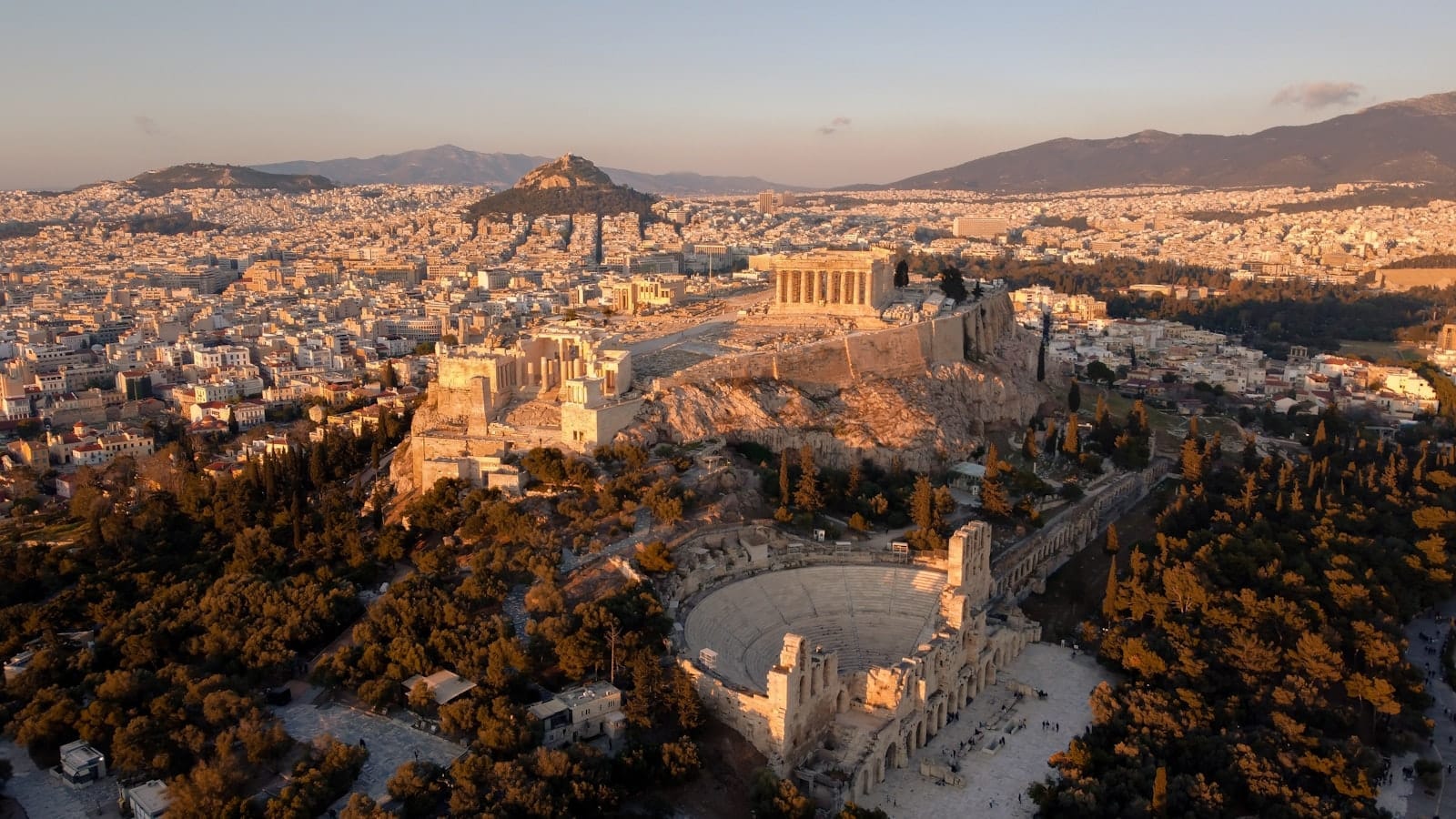
Plan and book this trip
Tools from our partner Travelpayouts help you compare flights and hotels. If you book through them, we may earn a commission at no extra cost to you.
Flights
Hotels map
TL;DR
- Spring (April to early June) and early autumn (September to October) offer the best balance of comfortable temperatures, manageable crowds, and reasonable prices — the clearest answer to when is the best time to visit Athens.
- July and August are the hottest and most expensive months, with midday temperatures regularly hitting 35°C (95°F) — plan outdoor sightseeing for early morning or evening if you visit then.
- Winter (November through February) is the cheapest season by far, with hotel and flight prices dropping up to 50%, and Athens absolutely does not shut down — museums, restaurants, and most major sites stay open.
- Ferry connections from Piraeus to the Greek islands run most frequently May through September; off-season routes operate with reduced schedules, so check current timetables if you plan to combine Athens with island-hopping.
- See our Athens on a budget guide for more on keeping costs down, and our things to do in Athens guide for a full breakdown of attractions by season.
Athens Climate at a Glance
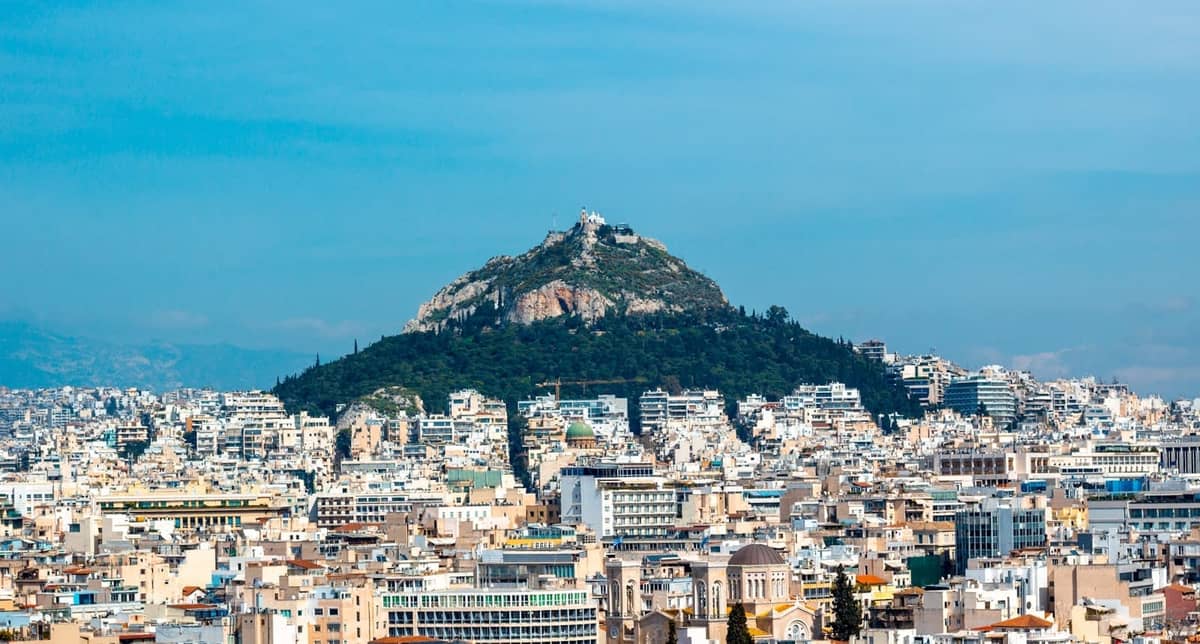
Athens has a hot-summer Mediterranean climate (Köppen classification Csa): hot, almost rainless summers and mild, wetter winters. The city sits in the Attica basin at around 70–80 metres above sea level, surrounded by mountains on three sides and open to the Aegean Sea roughly 8 km to the south via the port of Piraeus. That geography means heat accumulates in summer and coastal breezes offer only partial relief in central districts.
Rainfall is sharply seasonal. June, July, and August are essentially dry months, while November through February account for the bulk of the annual precipitation. Athens is not a rainy city even in winter — average monthly rainfall in December sits around 40 mm — but the contrast with the bone-dry summer is stark. For most visitors, the practical question is not whether it will rain, but how much heat they can tolerate.
- Winter (December–February) Daytime highs of 13–15°C (55–59°F), occasional rain, very few crowds. Nights can dip below 10°C, so pack a layer.
- Spring (March–May) Temperatures climb from around 17°C in March to 25°C by May. The Acropolis and ancient sites look spectacular against clear skies and fresh air.
- Early Summer (June) Highs push toward 30°C. Crowds build but haven't peaked yet. Prices rise noticeably from mid-June onward.
- Peak Summer (July–August) Average highs above 35°C, heatwaves exceeding 40°C are documented. Busiest and most expensive period. Not ideal for extensive outdoor touring without careful timing.
- Autumn (September–October) Highs ease back to 28°C in September and 22°C by late October. Still warm, far less crowded than August, and often cheaper.
- Late Autumn (November) First rains arrive, temperatures drop to around 18°C. Transitional month — a good value window if you catch a dry stretch.
⚠️ What to skip
Athens urban heat is not a minor inconvenience in July and August. The city's concrete and stone amplify ambient temperatures, and heatwaves above 40°C occur with increasing frequency. The Acropolis site has no shade once you're on the rock. If you visit in peak summer, start at 8 AM when the gates open, finish by 11 AM, and plan all afternoon activity indoors or near the coast.
Month-by-Month Breakdown: What to Expect
January and February are Athens at its quietest and cheapest. Temperatures hover between 6°C and 14°C, which is genuinely mild by European standards — comparable to London in October. These are the wettest months, but Athens rarely sees sustained rain for days on end; brief showers are more typical. If your priority is museums, archaeology, and Athenian food culture without fighting crowds at every turn, mid-winter is underrated. Hotel rates and flight prices can be 40–50% lower than June prices.
March marks the shift. Average highs climb toward 16°C and the city starts to feel livelier, especially around Greek Independence Day on March 25, when a military parade passes through central Syntagma Square and the Hellenic Parliament. It is one of the better times to observe local public life rather than purely tourist Athens.
April and May are, for most travelers, the clearest answer to when is the best time to visit Athens. Highs of 20–25°C, almost no rain, long daylight hours, and crowds that are present but not overwhelming. The Acropolis and the Acropolis Museum are fully accessible without the brutal summer queues. Orthodox Easter, which falls in April or May depending on the year, is the biggest cultural event in the Greek calendar — expect heightened atmosphere, some closures on Good Friday and Easter Sunday, and significantly elevated hotel prices in the days immediately around the holiday.
June sits in a transitional zone. Early June still feels like shoulder season: temperatures are in the high 20s, prices haven't fully peaked, and the city has energy without August-level congestion. By the final week of June, school holidays across Europe kick in and you can feel the shift. If you're flexible, the first two weeks of June are arguably the single best window of the year.
July and August are when Athens gets the highest footfall, but also when the experience can be most testing. Average highs sit at 33–35°C, with heatwaves pushing well above 38°C. Crowds at the Ancient Agora and other open sites can make the heat worse. That said, summer has genuine advantages: the Odeon of Herodes Atticus hosts its summer festival with performances most nights, and the long evenings make for excellent outdoor dining in Psyrri and around Monastiraki. If you visit in summer, use the coast: the Athens Riviera is easily reached by tram.
September is the month most frequently recommended by people who know Athens well. The heat has broken to a more manageable 28–30°C, the summer crowds have thinned noticeably after the first week, and accommodation prices drop. October continues the trend — highs around 22°C, the occasional shower, and a palpable sense of the city returning to its own rhythms after the tourist peak. Both months work well for combining Athens with a short island trip before ferry schedules reduce for winter.
November is the point where Athens transitions to its quieter mode. Temperatures fall to around 17–18°C and rainfall increases. It remains comfortable for walking around ancient sites and neighborhoods, and the city's museum circuit is at its most unhurried. December brings Christmas decorations to Syntagma Square and a mild festive atmosphere, though Athens is not heavily oriented toward Christmas tourism in the way some northern European capitals are.
Crowds, Costs, and Booking Logistics
Pricing for flights and accommodation follows a predictable curve. Peak prices run from late June through August, with July and August the most expensive weeks. The shoulder seasons of April, May, September, and October offer meaningful savings — often 20–35% less than peak — while still providing comfortable conditions. Winter is the genuine budget window, with prices 40–50% below peak for many hotels and on popular flight routes into Athens International Airport (ATH, code Eleftherios Venizelos, located in Spata, approximately 30–35 km east of central Athens).
✨ Pro tip
Many state-run archaeological sites and museums in Athens offer scheduled free-admission Sundays from November through March (typically the first and third Sundays — verify on odysseus.culture.gr). The Acropolis ticket is €30 year-round with no seasonal discount. Current pricing and seasonal hours are listed on hhticket.gr.
Timed entry tickets for the Acropolis have been mandatory in recent years and slots fill up weeks in advance in summer. If you're visiting July or August, book tickets as soon as your travel dates are confirmed. In April, May, September, and October, you can generally secure tickets a week or two out, but don't leave it until the day before. Winter visits give you the most flexibility. For a broader look at what's worth booking ahead, see our Athens ancient sites guide.
- Peak season (July–August): book flights 2–3 months out, accommodation as early as possible, Acropolis tickets weeks ahead
- Shoulder season (April–June, September–October): book flights 4–6 weeks out, accommodation 1–2 weeks out works in most cases, Acropolis tickets 1–2 weeks out
- Winter (November–March): flexible booking usually viable, with last-minute deals available on both flights and hotels
- Orthodox Easter week: hotel prices spike sharply regardless of the calendar month — treat it like peak season for accommodation costs
Combining Athens with the Greek Islands

Many travelers to Greece use Athens as a gateway to the islands, departing from Piraeus, the port city integrated into the Athens urban area and reachable by Metro Line 1 from central Athens. If combining city and islands is your plan, the timing question becomes more complex.
High-frequency ferry services to destinations like Hydra, Aegina, and the Cyclades run most consistently from May through September. Outside those months, many routes operate on reduced schedules, and some connections to smaller islands can be limited to two or three departures per week in winter. If you're planning an autumn or winter trip and want to include an island, always verify current ferry timetables through an aggregator before booking — schedules change seasonally and between operators.
💡 Local tip
For a quick island escape within striking distance of Athens, Aegina is reachable in around 35–40 minutes by high-speed ferry from Piraeus and runs year-round with reasonable frequency. It's a practical option even in winter when other island routes have reduced schedules.
What to Do in Athens by Season
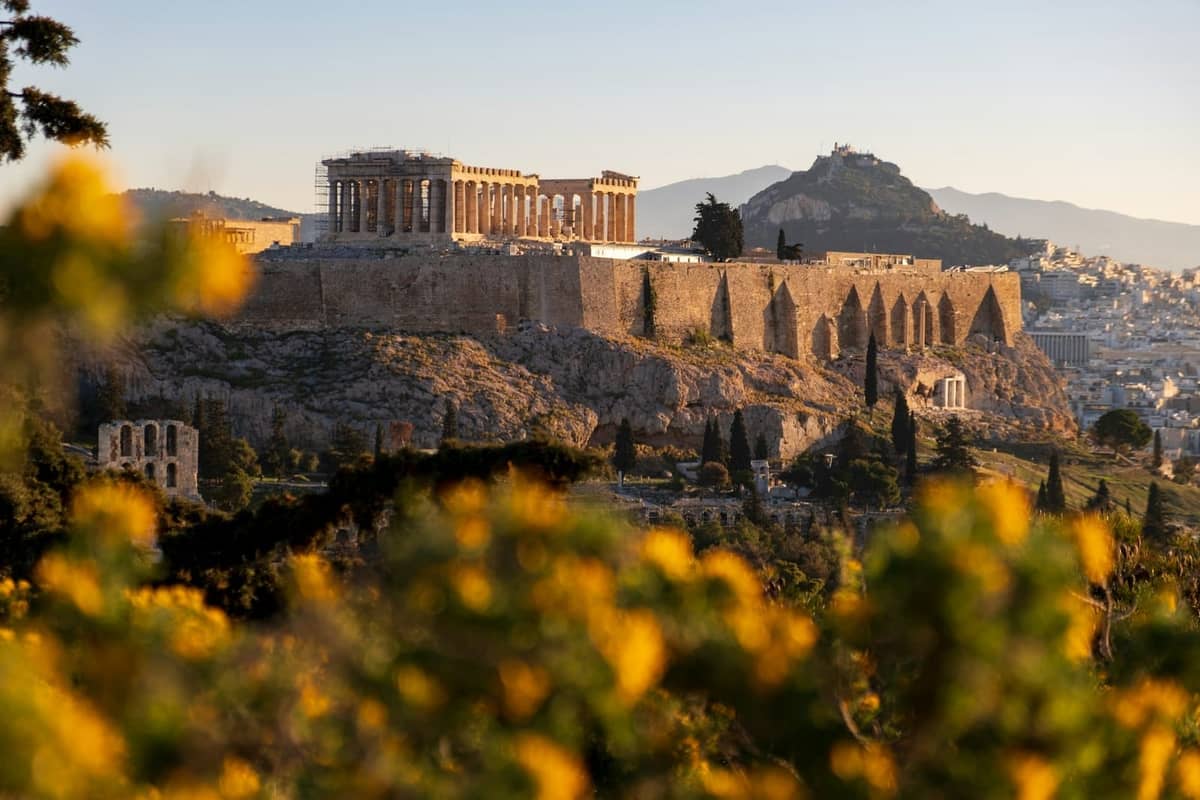
The core Athens itinerary — the Acropolis, the Acropolis Museum, the Ancient Agora, the National Archaeological Museum, and a wander through Plaka — is viable in every season. But the season shapes the experience significantly.
In summer, prioritize morning visits to all outdoor sites, and use afternoons for indoor museums, the Benaki Museum, or a trip to the coast via the Athens Riviera tram. In spring and autumn, you have the flexibility to spend full days outdoors without heat management becoming a logistical problem. In winter, the outdoor sites are quiet and often atmospheric — visiting the Temple of Olympian Zeus on a crisp January morning with almost no other visitors is a genuinely different experience from doing the same in August.
Summer also opens up Athens' outdoor nightlife and cultural events. The Athens Epidaurus Festival, which runs June through October, brings performances to ancient venues including the Odeon of Herodes Atticus. Evening bar-hopping through Gazi and Psyrri runs late into the night. For a full picture of what's on and where, the Athens nightlife guide covers the seasonal differences in detail.
Practical Entry and Logistics
Greece is part of the Schengen Area, so entry rules follow the Schengen framework. EU and EEA nationals can enter freely. Most visitors from the US, Canada, UK, Australia, and Japan can stay up to 90 days within any 180-day period without a visa. Visa requirements are subject to change; verify current rules through official embassy or government sources before travel.
Athens International Airport (ATH) connects to the city centre via Metro Line 3 (Blue Line) in approximately 40 minutes to Syntagma, by the X95 express bus in 40–60 minutes depending on traffic, or by taxi using official fixed-rate fares that are set by regulation and vary between day and night rates. Fares and transport ticket prices are updated periodically — confirm current amounts on the airport website or OASA (Athens Urban Transport) before you travel. The airport is located in Spata, about 30–35 km from central Athens.
FAQ
What is the best time to visit Athens, Greece?
April through early June and September through October are the most consistently recommended windows. Temperatures are comfortable (20–28°C), crowds are manageable, and prices are lower than peak summer. If budget is the priority, November through February offers the cheapest flights and hotels, with mild enough weather for city sightseeing.
Is Athens worth visiting in summer (July–August)?
Yes, but with caveats. Expect temperatures regularly above 35°C, large crowds at major sites, and higher prices for everything. The advantages are long days, a lively atmosphere, outdoor cultural events like the Athens Epidaurus Festival, and easy access to nearby islands. Plan all outdoor sightseeing for 8–11 AM and use afternoons for museums, shade, and the coast.
What is Athens like in winter?
Quieter and significantly cheaper, but not shut down. Daytime temperatures of 13–15°C are mild by European standards. Most major museums and archaeological sites remain open. Rainfall occurs mainly in short bursts rather than sustained grey days. Scheduled free-admission Sundays (November–March) can reduce sightseeing costs. It's a practical option for travelers focused on museums, food, and city culture rather than beach access.
When is the cheapest time to fly to Athens?
November through February typically offers the lowest fares and hotel rates, often 40–50% below peak summer prices. March and early April also offer good value before the spring travel surge. Within summer, early June tends to be cheaper than July or August before school holidays fully kick in.
What is the weather like in Athens in September and October?
September sees average highs around 28–30°C — warm but a step back from August's intensity. October cools further to around 20–22°C with the occasional shower. Both months are considered excellent for visiting: comfortable for walking, good for combining with a short island trip, and noticeably less crowded than July or August.