Athens on a Budget: How to Visit for Less
Athens is one of Europe's most affordable capitals, with free archaeological sites, cheap street food, and an excellent public transport network. This guide breaks down exactly what things cost, when to go for the best deals, and how to stretch every euro without missing anything important.
Plan and book this trip
Tools from our partner Travelpayouts help you compare flights and hotels. If you book through them, we may earn a commission at no extra cost to you.
Flights
Hotels map
TL;DR
- Athens is genuinely budget-friendly: a gyro costs €3.00–3.80, a metro ride €1.20, and hostel dorms start from €10–25 per night.
- The Acropolis standard ticket is €30, but state-run sites offer free admission on specific dates including every first Sunday from November to March — see free things to do in Athens for the full list.
- Spring (April–June) and autumn (September–October) offer the best combination of lower prices, manageable temperatures, and smaller crowds.
- A 24-hour unlimited transport pass costs around €4.50 and covers metro, bus, tram, and trolley — far cheaper than taxis for most city trips.
- Tipping is not mandatory in Athens; rounding up or leaving 5–10% in restaurants is appreciated but never expected.
Is Athens Actually Cheap? Setting Realistic Expectations
Athens on a budget is not just possible — it is one of the easiest propositions of any European capital. Compared to Paris, Amsterdam, or even Lisbon in recent years, Athens remains significantly cheaper for food, transport, and accommodation. The city's cost-of-living structure means that eating well, moving around, and accessing world-class culture does not require deep pockets. That said, costs have risen since the post-pandemic tourism surge, and a few categories — notably central accommodation in peak summer — can push the budget higher than visitors expect.
The key distinction is between tourist-facing prices and local prices. A coffee in Kolonaki's upscale cafes costs roughly twice what you pay in a neighborhood spot in Koukaki or Exarchia. Restaurants directly facing the Acropolis or lining Monastiraki Square charge a premium for location. Step one block off any major tourist street and prices drop noticeably. Athens rewards curious walkers who are willing to explore beyond the obvious.
ℹ️ Good to know
Athens is the capital of Greece and part of the Schengen Area, so EU citizens travel without border formalities. Non-EU visitors from countries like the US, UK, Canada, and Australia can stay up to 90 days in any 180-day period without a visa. Always verify current entry requirements before travel via official government sources, as regulations change.
Getting Into Athens Without Overpaying

Athens International Airport 'Eleftherios Venizelos' (IATA: ATH) sits in Spata, roughly 30–35 km east of the city centre. How you get from the airport to your accommodation sets the tone for your entire budget trip — and the difference between options is significant.
- Metro Line 3 (Blue Line) The most reliable option. Runs direct from the airport to Syntagma in around 40 minutes. A special airport fare applies — check the current rate on the OASA website before travel, as prices are updated periodically.
- Express Bus X95 Runs 24/7 between the airport and Syntagma Square. Journey time is 40–60 minutes depending on traffic. Cheaper than the metro, useful if arriving very early or late when the metro frequency drops.
- Express Bus X96 Connects the airport to Piraeus port — ideal if you're catching an early ferry. Also runs around the clock.
- Official Airport Taxi Fixed-rate fares set by law: approximately €40 during the day and €55 at night (roughly 12:00–05:00). Convenient but significantly more expensive than public transport. Only use taxis from the official rank outside arrivals.
- Suburban Railway (Proastiakos) Connects the airport to Athens' Larissa Station and other points. Useful for some accommodation locations but less direct than the metro for most city-centre hotels.
⚠️ What to skip
Avoid unlicensed taxis or drivers approaching you inside the terminal. Always use the official taxi rank or a pre-booked licensed transfer. The Beat app (a Greek ride-hailing service) works in Athens and can be a useful alternative to flag-down taxis.
Getting Around Athens Cheaply
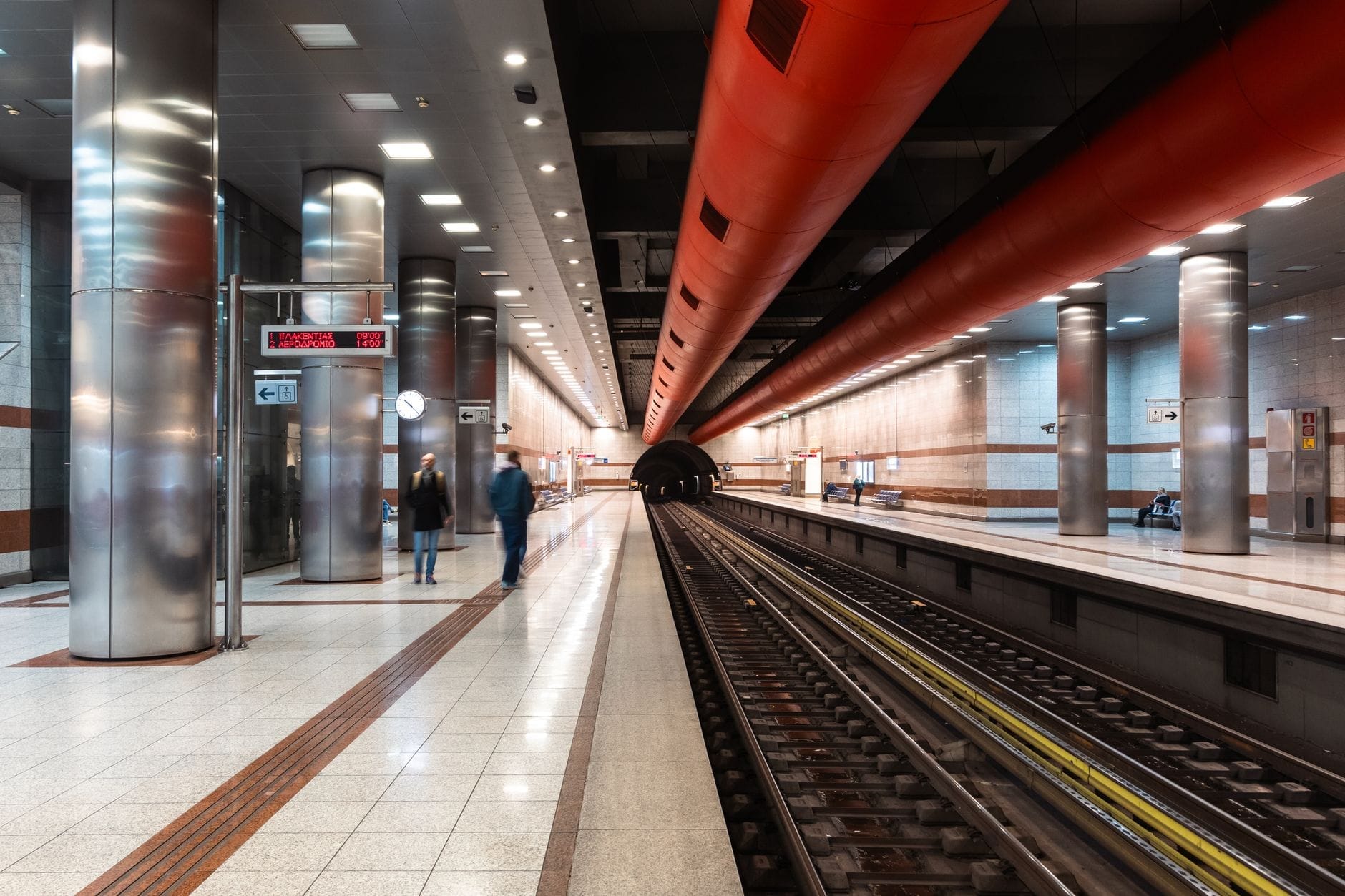
Athens has a well-integrated public transport network covering the metro, buses, trolleybuses, and tram. The system is operated by OASA and is genuinely cheap by European standards. For most visitors, getting around Athens by public transport is both easy and economical — especially with a multi-day pass.
- Single 90-minute ticket Around €1.20–1.40. Valid on metro, bus, tram, and trolley within the time window. Cannot be used for the airport journey on metro Line 3.
- 24-hour unlimited pass Around €4.10. Good value for any day you plan to make more than 3 journeys.
- 5-day unlimited pass Around €8.20–9.00. Excellent value for a week-long trip — covers most of your ground transport costs in one purchase.
The metro is air-conditioned and runs frequently, which matters enormously in Athens summers when surface temperatures can hit 35–38°C. Walking is also practical across much of central Athens — the pedestrianized circuit linking Dionysiou Areopagitou street past the Acropolis, through Thissio, and around to Monastiraki covers several major sites entirely on foot. This is not just a money-saving tip; it is genuinely one of the best ways to experience the city.
✨ Pro tip
Validate your ticket at the machine before boarding every time — even with a pass. Inspectors check regularly, and an unvalidated ticket results in a fine. The validation machines are at metro turnstiles and on platforms for buses and trams.
Free and Low-Cost Athens Attractions
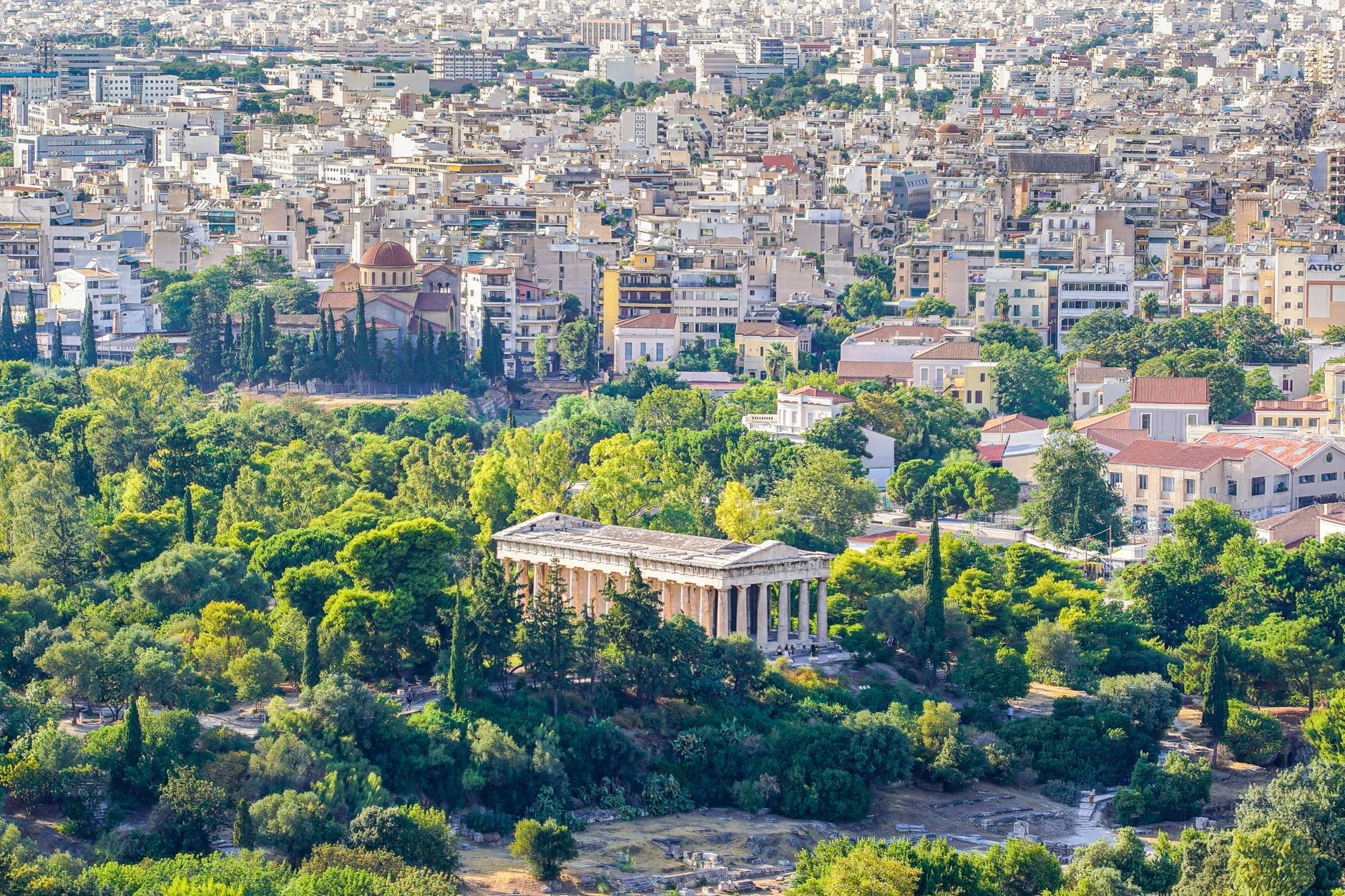
The assumption that culture in Athens is expensive is not accurate. Yes, the Acropolis now costs €30 for a standard ticket year-round — the seasonal discount was discontinued. But dozens of other worthwhile experiences cost nothing, and state-run sites operate scheduled free admission days throughout the year.
Free admission to most Greek state archaeological sites and museums applies on the following dates: 6 March (Memory of Melina Mercouri), 25 March (Greek Independence Day), 18 May (International Museum Day), 28 October (Ohi Day), the last weekend of September (European Heritage Days), and every first Sunday from November through March, with additional free Sundays recently introduced in winter. If your travel dates overlap with any of these, prioritize the big-ticket sites accordingly. The Hellenic Ministry of Culture's Odysseus portal publishes the current list — always verify before your visit.
- Areopagus Hill Free to climb at any time. The rocky outcrop directly below the Acropolis offers one of the best elevated views of Athens and is entirely open access. Slippery when wet — wear sensible shoes.
- Philopappos Hill A short walk from the Acropolis Museum. Free parkland with pine trees and views across to the sea. The monument at the summit is accessible without charge.
- National Garden Athens' central public park, free to enter and open daily. Useful respite from the heat, with shaded paths, a small pond, and a café. Located directly behind the Hellenic Parliament on Syntagma Square.
- Monastiraki Flea Market Wandering the market costs nothing and is one of the more genuinely interesting street-level experiences in Athens. Concentrated on Sundays when vendors spill out across Avyssinias Square.
- Kerameikos Archaeological Site Often overlooked because it is quieter than the Acropolis. On free admission days it is exceptional value; the site includes one of Athens' best ancient cemeteries and a well-curated on-site museum.
- Stavros Niarchos Foundation Cultural Centre Free to enter. The rooftop park has excellent views across to the sea and the city. Hosts free events regularly. Located in the coastal suburb of Kallithea, reachable by tram.
For a structured approach to spending nothing, the dedicated free things to do in Athens guide covers this in full detail, including which museums have permanent free collections and which neighbourhoods are worth exploring purely on foot.
Eating Well in Athens Without Spending Much

Athens has an exceptional food scene and much of it is affordable. The standard reference point is the pita gyro: a souvlaki wrap with meat, tzatziki, tomato, and fries. In most neighbourhoods away from the tourist core, this costs €3.50–4.50. It is filling, fresh, and genuinely how Athenians eat on the go.
For sit-down meals, the practical benchmark is the neighbourhood taverna rather than anything near the Acropolis or Monastiraki Square. A full meal with a beer or glass of house wine typically runs €10–15 per person in areas like Koukaki, Exarchia, or Gazi. Psyrri has a good concentration of mid-range options that are a significant step down in price from the tourist-facing restaurants on Adrianou street in Plaka. The Athens Central Market (Varvakeios Agora) on Athinas street is worth a visit both for the experience and for picking up cheap fresh produce, olives, and cheese if you have access to a kitchen.
- Order the dish of the day (mageirefta) at traditional tavernas — these are pre-cooked stews and baked dishes, usually the cheapest items on the menu and often the best.
- Bakeries (fournos) are everywhere and sell cheese or spinach pies (tiropita, spanakopita) for €1.50–2.50 — a solid breakfast or snack.
- Greek coffee culture is strong. A freddo espresso or freddo cappuccino (the standard cold coffee format) costs €2–3.50 in most cafes. Avoid ordering 'iced coffee' by name — ask for the local version.
- Tap water in Athens is safe to drink, and many restaurants will provide it if you ask — you do not strictly need to order bottled water.
- The neighbourhood of Exarchia has some of the cheapest eating options in central Athens, with several small tavernas serving lunch specials under €8.
Budget Accommodation: Where to Stay and What to Pay

Hostel dorm beds in Athens typically range from €15–30 per night, with some lower-end options available under €20. Private rooms in budget guesthouses and smaller hotels start around €50–70 for a double in mid-season. The cheapest options are concentrated in and around Monastiraki, Psyrri, and Koukaki — all walkable to the main sites. Koukaki in particular has grown significantly as an accommodation base: it sits directly south of the Acropolis Museum, is well-served by public transport, and feels considerably less frantic than Plaka.
Timing matters significantly for accommodation costs. November through March is genuinely cheaper — rates drop across the board, and the free Sunday admissions at archaeological sites fall in this window. Summer (June through August) is peak pricing season: hotels are in high demand and the city is very hot, with daytime highs regularly above 35°C. If budget is your primary concern, April, May, October, and early November offer a useful middle ground — comfortable temperatures, smaller crowds, and prices noticeably lower than July or August.
💡 Local tip
If you're staying more than a few nights, look for accommodation in Koukaki or Thissio rather than Plaka or directly around Monastiraki Square. You'll save on room rates, sleep more quietly, and still be within 15 minutes' walk of the Acropolis and Ancient Agora.
Practical Money Tips and Common Budget Mistakes
Athens operates on the Euro (EUR). ATMs are widely available throughout the city. For safety basics and awareness of areas to approach with extra attention, the Athens safety tips guide covers the specifics. The overall picture is that Athens is a safe city for tourists, but standard precautions apply in crowded areas like Monastiraki and on the metro.
Tipping in Athens is not mandatory. Service charges are included in many restaurant bills. Leaving a small amount — rounding up, or 5–10% for good service — is appreciated and common, but no one will expect it. Taxi drivers typically receive a small round-up of the fare. The notion that you must tip generously at every meal is not accurate for Athens.
- Avoid restaurants that display photos of every dish on large boards outside — these are almost always tourist-oriented and priced accordingly.
- If a restaurant charges a 'bread and cover' fee (typically €0.50–1.50 per person), this is legal and standard in Greece. You can decline the bread if you prefer.
- The combo archaeological site ticket including the Acropolis has been discontinued; always check the Hellenic Ministry of Culture's Odysseus portal for the current ticket structure before purchasing tickets separately.
- Book Acropolis tickets in advance online — the queue at the gate can be long in summer, and timed-entry slots can book up on busy days.
- Electricity in Athens runs at 230V/50Hz with Type C and F sockets (Europlug/Schuko). UK and US visitors will need an adapter.
If you have more than two days in the city, the 3 days in Athens itinerary maps out a sensible sequence that balances the major sites with neighbourhood exploration — useful for managing entry fee timing around free admission days. For day trips on a budget, day trips from Athens covers affordable options including sites reachable by public transport.
FAQ
How much money do I need per day in Athens on a budget?
A realistic budget for a careful traveler is around €50–70 per day, covering a hostel dorm bed (€10–25), street food and one sit-down meal (€10–15), public transport (€4–6), and one paid attraction or museum. On free admission days, the culture cost drops to zero and €40–50 becomes very achievable.
Is the Acropolis free at any point?
Yes. State archaeological sites including the Acropolis offer free admission on several specific dates: 6 March, 25 March, 18 May, 28 October, the last weekend of September, and every first Sunday from November through March, with additional free Sundays recently introduced in winter. Verify the current list on the Hellenic Ministry of Culture's Odysseus portal before your trip, as the schedule can be updated.
What is the cheapest way to get from Athens airport to the city centre?
The express bus (X95 to Syntagma, X96 to Piraeus) is typically the cheapest option and runs 24/7. Metro Line 3 to Syntagma takes around 40 minutes and is fast and reliable, though a special airport fare applies. The official airport taxi has a fixed daytime rate of around €40 — convenient but considerably more expensive than public transport.
When is the cheapest time to visit Athens?
November through March is the low season, when accommodation prices are lower and the first Sunday of each month brings free museum and site admissions. The trade-off is cooler, occasionally rainy weather with daytime temperatures around 13–15°C. April–May and October are the most practical compromise: lower prices than peak summer, pleasant temperatures, and fewer crowds.
Is Athens a good destination for budget family travel?
Athens works well for families on a budget. Children and young people often receive free or reduced admission at state sites — currently EU citizens up to 25 and non-EU citizens up to 18 have free entry at many archaeological sites; check the Odysseus portal for current rules. The city is walkable for older children, has good public green spaces like the National Garden, and street food options mean feeding kids does not have to be expensive. For more detail, see our guide to Athens with kids.