The Acropolis of Athens: What to Expect Before You Climb the Hill
The Acropolis of Athens is the defining landmark of Greece and one of the most significant ancient sites in the world. This guide covers everything from the Parthenon's construction history to crowd patterns, transit options, and what the experience actually feels like at different times of day.
Quick Facts
- Location
- Acropolis hill, above Plaka, central Athens
- Getting There
- Metro Line 2 (Red), Acropoli station — 10-minute walk to main entrance via Dionysiou Areopagitou St.
- Time Needed
- 2 to 3 hours on-site; allow extra time for the south slope
- Cost
- Paid admission; tickets via the Hellenic Ministry of Culture official e-ticketing platform (verify current prices before visiting)
- Best for
- History enthusiasts, architecture lovers, first-time Athens visitors
- Official website
- http://odysseus.culture.gr/h/3/eh355.jsp?obj_id=2384
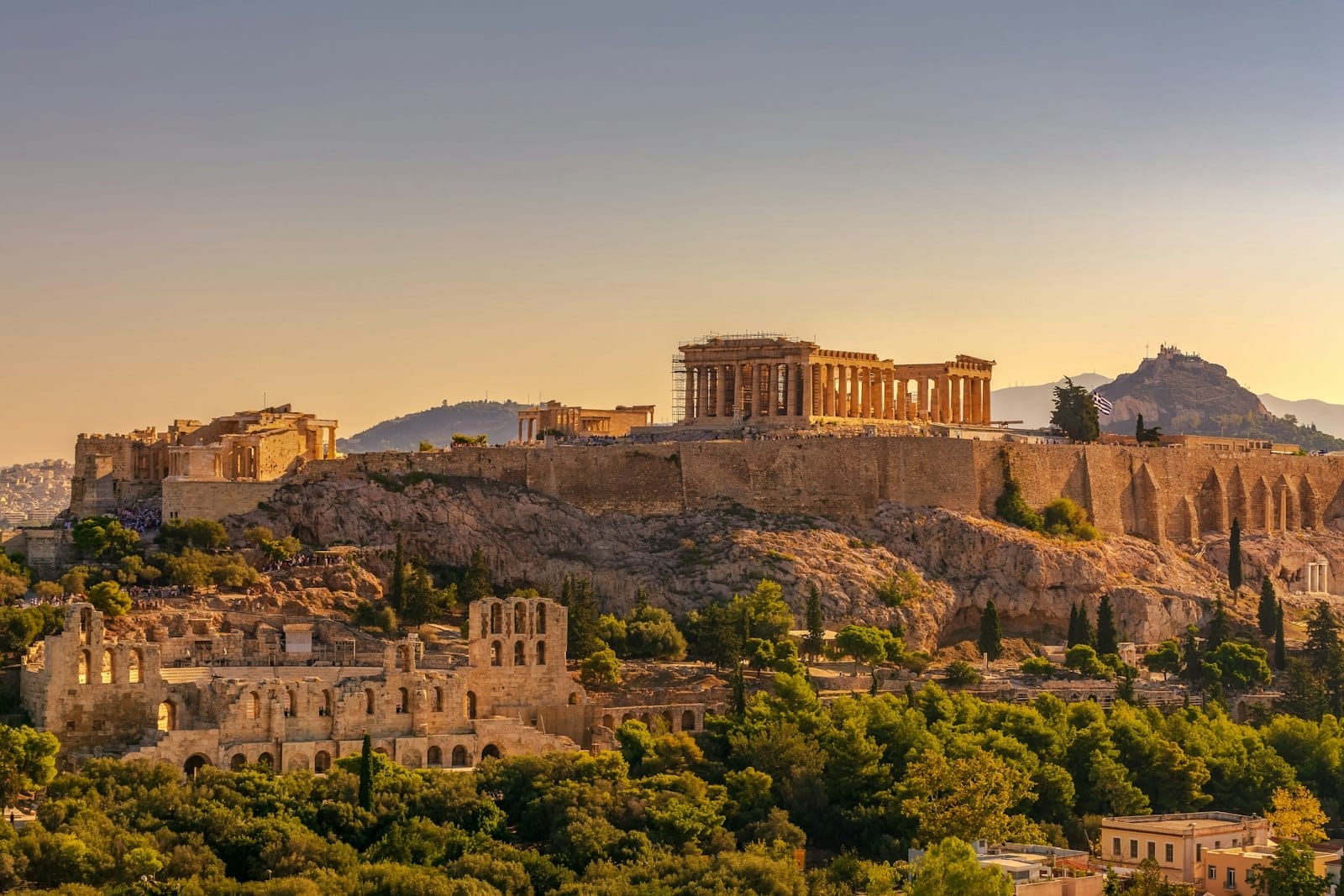
What the Acropolis Actually Is
The Acropolis of Athens is an ancient citadel perched on a flat-topped limestone hill 156 meters above sea level, rising sharply from the low-rise neighborhoods of central Athens. Its platform measures roughly 170 by 350 meters, and it holds four major monuments: the Parthenon, the Erechtheion, the Propylaia, and the Temple of Athena Nike. The entire complex is a UNESCO World Heritage Site, formally inscribed in 1987, and it is managed by the Ephorate of Antiquities of the City of Athens (EFAPA), under the Hellenic Ministry of Culture.
This is not a reconstructed ancient site. Much of what you walk through are original stones placed over 2,400 years ago, albeit in various states of preservation. The hill has been a sanctuary, a fortress, a Christian church, a mosque, and a powder magazine at various points in history. What stands today reflects the extraordinary building program initiated under the Athenian statesman Perikles in the 5th century BC, when Athens was at the height of its political and cultural power.
For travelers with limited time in the city, the Acropolis is legitimately the non-negotiable stop. But understanding what you are looking at before you go makes the experience substantially richer. A visit pairs naturally with the Acropolis Museum just below the south slope, which houses the original sculptures removed from the monuments for preservation.
The Monuments: A Brief Orientation
The Parthenon (447–432 BC)
The Parthenon is the dominant structure on the hill, and it dominates for a reason. Architects Iktinos and Kallikrates, working under the sculptor Pheidias, designed a temple of extraordinary optical refinement. The columns are not perfectly straight or evenly spaced; they taper, lean inward slightly, and are placed with subtle corrections to prevent the visual illusion of sagging or splaying. These adjustments, known as entasis and curvature, are invisible to the untrained eye but contribute to the impression that the building is somehow more solid and alive than the stones that compose it.
The temple was dedicated to Athena Parthenos, the patron goddess of Athens, and originally housed a colossal gold-and-ivory statue of the goddess, now lost. The exterior frieze depicted the Panathenaic procession; large portions of this sculpture were removed in the early 19th century by Lord Elgin and are now held in the British Museum, a matter of ongoing international dispute.
The Erechtheion (421–406 BC) and the Porch of the Caryatids
The Erechtheion stands on the north side of the plateau, and its most photographed feature is the Porch of the Caryatids: six female figures serving as columns supporting the porch roof. What you see on the structure today are replicas; the originals are preserved in the Acropolis Museum. The Erechtheion was built on the most sacred ground of the hill, housing shrines to both Athena and Poseidon, and its irregular floor plan reflects the complex religious requirements of the site rather than any architectural miscalculation.
The Propylaia (437–432 BC) and Temple of Athena Nike (427–424 BC)
The Propylaia is the monumental gateway through which all visitors entered the Acropolis in antiquity and through which most still enter today. Designed by Mnesikles, it is built on a slope and integrates ramps and stairs into its structure. The small Temple of Athena Nike stands on a projecting bastion to the right as you approach, and is often overlooked by visitors eager to reach the Parthenon. It is worth pausing for: it is the oldest purely Ionic temple on the Acropolis, and its compact scale makes the refinement of its carving immediately legible.
Tickets & tours
Hand-picked options from our booking partner. Prices are indicative; availability and final rates are confirmed when you complete your booking.
Guided tour of the Acropolis, Parthenon and Museum in Athens
From 50 €Instant confirmationFree cancellationAthens full-day tour with Acropolis and Cape Sounion
From 92 €Instant confirmationFree cancellationGuided tour of the Acropolis and Parthenon in Athens
From 34 €Instant confirmationFree cancellationAcropolis and museum tickets with three audio tours
From 80 €Instant confirmation
How the Experience Changes by Time of Day
💡 Local tip
Book your timed entry ticket in advance through the official Hellenic Ministry of Culture e-ticketing system. Tickets sell out, particularly in summer, and walk-up entry is not guaranteed during peak season.
The Acropolis opens at 08:00 (with closing times varying seasonally; check current hours before you go), and the first two hours of the day are noticeably different from what comes later. The morning light hits the Parthenon from the east, casting long shadows through the columns, and the plateau is cool enough to make a slow walk around the perimeter genuinely pleasant. Crowd density at this hour is a fraction of what arrives by mid-morning. By 10:00 the tour groups begin flowing up from the base in numbers, and by 11:30 the pathways near the Parthenon can feel pressured.
Midday in summer is genuinely harsh. Temperatures on the exposed limestone plateau regularly exceed 35°C, and there is almost no shade on the upper site. The stone radiates heat upward, the sun reflects off pale marble aggregate, and the combination is physically taxing. Visitors who arrive between 11:00 and 15:00 in July and August should come prepared with water, sun protection, and realistic expectations about comfort.
Late afternoon, from about 16:00 onward, brings a shift. The crowds begin thinning as tour groups complete their schedules, the temperature drops slightly, and the light turns warm and directional, falling across the column drums at an angle that makes the marble glow. If you can time your visit to arrive around 16:30 to 17:00, particularly outside of peak summer, the combination of softer light and reduced crowds is significantly better than anything the morning offers.
⚠️ What to skip
The Acropolis hill has highly uneven terrain and naturally polished marble surfaces that become slippery when wet. Wear flat, closed-toe shoes with grip. High heels and sandals with smooth soles are a genuine hazard, particularly on the Propylaia ramp.
Getting There and On-Site Navigation
The most straightforward approach is via the Metro Line 2 (Red Line) to Acropoli station, which puts you at the base of Dionysiou Areopagitou Street, the wide pedestrian boulevard running along the south slope. From there it is a level ten-minute walk to the main entrance near the south slope archaeological area. The street is pleasant to walk and passes the entrance to the Theatre of Dionysus and the Odeon of Herodes Atticus on the way.
An alternative approach from the north comes through Plaka and up through Anafiotika, the whitewashed Cycladic-style quarter that clings to the north slope. This route is steeper and less signposted, but it avoids the main entrance crowds for part of the walk and offers a different perspective on the hill before you summit.
Accessibility on the upper site is limited by the terrain. A lift was installed on the northwest side of the hill to assist visitors with mobility limitations, but the plateau surface itself remains uneven. Visitors requiring step-free access should contact the site directly or consult the Ministry of Culture's current accessibility information before visiting, as provisions can change.
The South Slope and What Surrounds the Summit
The south slope of the Acropolis is a distinct archaeological area that many visitors bypass in the rush to reach the top. It contains the Theatre of Dionysus Eleuthereus, the oldest stone theatre in the world and the place where Sophocles, Euripides, and Aeschylus staged their plays. Just west of it stands the Odeon of Herodes Atticus, a 2nd-century AD Roman structure still used for performances today. If you are visiting Athens during the Athens Epidaurus Festival (typically summer months), checking whether a performance is scheduled at the Odeon is worthwhile. Consult the Odeon of Herodes Atticus page for current programming details.
To the west of the Acropolis hill, the Areopagus Hill offers a free alternative viewpoint with a clear sightline to the Parthenon. It is rough underfoot but accessible to most visitors, and the views from the flat rock at the top are among the best in the city. Below it, the Ancient Agora extends north and west, giving context to the civic world that operated in the shadow of the sanctuary above.
Photography: What Works and What Does Not
The Parthenon photographs best from the northeast corner of the plateau, where you get the longer flank of the building with the east facade visible. Early morning gives you frontal light on the east side; late afternoon gives warm raking light on the north colonnade. Midday produces flat, bleached images.
The wider views of Athens from the plateau are substantial: on a clear day you can see Piraeus and the Saronic Gulf to the southwest, Mount Hymettus to the east, and Mount Lycabettus to the northeast. A compact telephoto lens is useful for isolating the Caryatid porch of the Erechtheion from a distance without crowding. Tripods are not permitted on-site.
Context: Why This Site Matters
The Acropolis functioned as an Athenian sanctuary from at least the archaic period, roughly the mid-6th to early 5th centuries BC. Before that, the hill had been inhabited since Neolithic times and served as a Bronze Age citadel with Mycenaean fortification walls, traces of which are still visible on the north side. After the Persian sack of Athens in 480 BC destroyed the archaic monuments on the summit, the Periclean building program began in 447 BC, creating the monuments we see today within a generation.
The site has been managed formally as an archaeological site since 1833, the year after the establishment of the modern Greek state. The decades since Greek independence have seen cycles of excavation, documentation, restoration, and debate about how far conservation should go. The ongoing restoration work conducted by the Acropolis Restoration Service is visible on scaffolding that surrounds portions of the Parthenon and other monuments; this is worth knowing in advance so it does not come as a surprise.
For travelers who want to understand the full picture of what the monuments looked like and what was removed from them over centuries, the Acropolis Museum on Dionysiou Areopagitou Street is essential. It was designed specifically to house the surviving sculptural programs from the Acropolis and presents them with clarity and light that the site itself cannot offer.
Insider Tips
- Buy a combination ticket if you plan to visit multiple archaeological sites in Athens. The Acropolis combination ticket covers several additional sites including the Ancient Agora, the Roman Agora, Kerameikos, the Temple of Olympian Zeus, and others, and represents significantly better value than paying separately. Verify which sites are currently included when you purchase.
- The entry queue at the main gate on the south slope can stretch significantly by 09:30 even if you have a timed ticket. Arrive five minutes before your slot rather than exactly at it, and use the time while waiting to study the Beule Gate and the Agrippa Monument to your right.
- Water fountains on the upper site are limited and often in poor condition. Carry at least 750ml of water per person in summer. There is a basic cafe kiosk near the top, but it is expensive and frequently crowded.
- The north slope path through Anafiotika provides a quieter approach to the ticket area from the Plaka side and gives you a sense of the hill's scale from below before you commit to the climb. It also places you near a different perspective on the Erechtheion before you reach the main plateau.
- Check the Acropolis Restoration Service schedule if restoration scaffolding on the Parthenon is a concern for your photography. The scaffolding configuration changes periodically, and some seasons offer cleaner views of certain facades than others.
Who Is The Acropolis For?
- First-time visitors to Athens for whom the Acropolis is a necessary orientation point to understanding the city's layered history
- Architecture enthusiasts interested in the optical refinements and constructional logic of classical Greek temple design
- History and archaeology readers who want to stand where the key events of 5th-century Athenian political life took place
- Photographers working in early morning or late afternoon light who want the Parthenon in serious conditions rather than midday postcard shots
- Travelers combining the site with the Acropolis Museum and the south slope theatres for a full-day archaeological itinerary
Nearby Attractions
Other things to see while in Plaka:
- Anafiotika
Tucked onto the northeastern slope of the Acropolis, Anafiotika is a cluster of whitewashed houses built in the mid-19th century by craftsmen from the Aegean island of Anafi. Free to wander and open at all hours, it feels more like a Cycladic village than the capital of Greece.
- Odeon of Herodes Atticus
Built in AD 161 on the southwest slope of the Acropolis, the Odeon of Herodes Atticus is one of the best-preserved Roman theatres in the world. By day it reads as archaeology; by night, during the Athens Epidaurus Festival, it becomes one of the most atmospheric performance venues on earth.
- Theatre of Dionysus
Cut into the south slope of the Acropolis, the Theatre of Dionysus Eleuthereus is one of the oldest theatres in the world and the stage where Sophocles, Euripides, and Aristophanes first presented their plays in Athens. It is not a reconstruction or a replica — it is the original ground where dramatic art as we know it was invented.