Anafiotika: Athens' Pocket-Sized Island Village Above Plaka
Tucked onto the northeastern slope of the Acropolis, Anafiotika is a cluster of whitewashed houses built in the mid-19th century by craftsmen from the Aegean island of Anafi. Free to wander and open at all hours, it feels more like a Cycladic village than the capital of Greece.
Quick Facts
- Location
- Northeastern slope of the Acropolis, above Plaka, Athens
- Getting There
- Metro Line 2 (Red) – Akropoli station, approx. 10-min walk
- Time Needed
- 45 minutes to 1.5 hours
- Cost
- Free – no admission fee
- Best for
- Quiet exploration, photography, escaping the tourist crowds below
What Is Anafiotika?
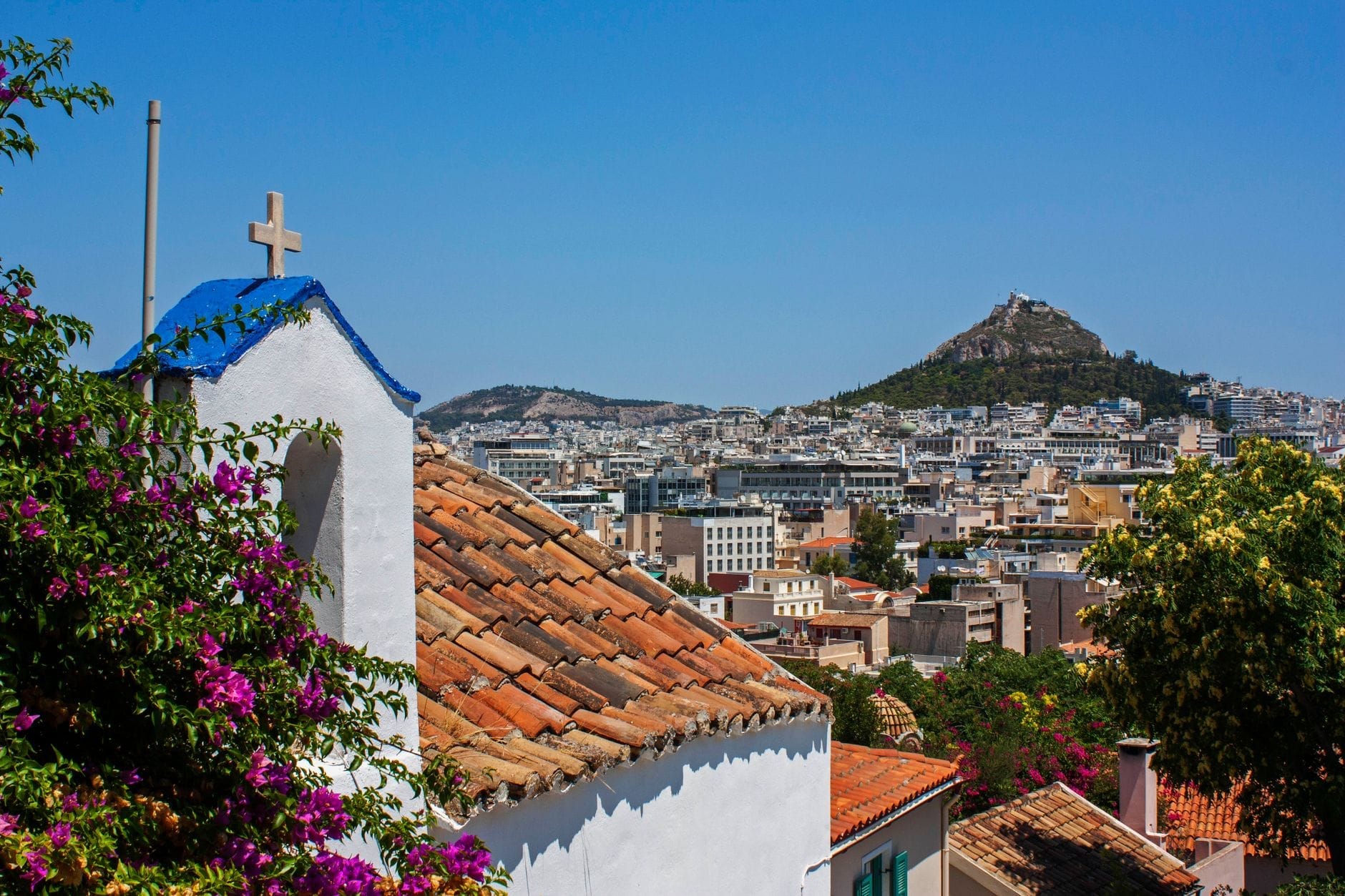
Anafiotika (Αναφιώτικα) is one of Athens' most unusual corners: a genuine residential micro-neighborhood of roughly 40 to 45 small whitewashed houses clinging to the rocky northeastern slope of the Acropolis, directly above the tourist lanes of Plaka. The name translates loosely as 'little Anafi,' a direct reference to the small Cycladic island whose workers built these homes in the 1860s.
There are no ticket booths, no entrance gates, and no guided queues. You enter through narrow alleyways barely wide enough for two people to pass side by side, and within a minute of leaving the busier streets of Plaka, the noise drops, the pace slows, and the architecture shifts entirely. Cats lounge on whitewashed walls. Bougainvillea spills over doorsteps. The city below feels distant.
💡 Local tip
Use the church of Agios Georgios on Stratonos Street as your navigation anchor. From there, look uphill and follow the narrow stepped paths into the neighborhood. Most visitors find it within a few minutes; getting briefly turned around is part of the experience.
The History Behind the Houses
In 1834, shortly after Athens was declared the capital of the newly independent Greek state, the government issued a decree designating the slopes of the Acropolis as an archaeological zone. Construction was officially prohibited. The decree was largely ignored in practice.
When King Otto commissioned major building works for his palace in the mid-19th century, skilled construction workers were brought in from Anafi, one of the most remote islands in the Cyclades. They came with their building traditions intact: small, cubic, flat-roofed white houses arranged closely together, a layout shaped more by Aegean island life than by any Athenian urban plan. Working by day on royal projects, they built their own homes at night, reportedly to exploit a legal ambiguity that protected structures completed overnight from immediate demolition.
The result was a transplanted Cycladic village on an Attic hillside. Over the following century, population declined and many of the original Anafi families left. Today only a handful of people live here permanently, but the structures remain, protected by heritage status and maintained as a living piece of architectural and social history.
Anafiotika sits above Plaka, Athens' oldest continuously inhabited neighborhood, and the contrast between the two is striking. Plaka has restaurants, souvenir shops, and signage in multiple languages. Anafiotika has almost none of that.
Tickets & tours
Hand-picked options from our booking partner. Prices are indicative; availability and final rates are confirmed when you complete your booking.
Guided tour of the Acropolis, Parthenon and Museum in Athens
From 50 €Instant confirmationFree cancellationAthens: Temple of Olympian Zeus E-ticket with audio tour on your phone
From 10 €Instant confirmationAthens full-day tour with Acropolis and Cape Sounion
From 92 €Instant confirmationFree cancellationAthens National Archaeological Museum e-ticket and audio tour
From 22 €Instant confirmation
What to Expect When You Arrive
The transition from street level to Anafiotika is abrupt. You leave behind the wider roads and tourist commerce of Plaka and enter a network of paths so narrow that walls brush both shoulders. The stone underfoot is uneven, worn smooth in places by decades of foot traffic, and in wet weather it becomes slippery. Wear shoes with grip.
The houses themselves are small by any standard, many no larger than a single room. Walls are painted bright white, doors are often painted blue or terracotta, and the overall visual effect closely resembles villages on Santorini or Mykonos, except that you're a 10-minute walk from the center of a European capital. Small gardens and potted plants occupy every available ledge. The smell in late spring is dominated by jasmine and herbs.
Two small churches punctuate the neighborhood. The church of Agios Georgios is the easier one to find, at the lower boundary near Stratonos Street. The church of Agios Simeon sits deeper into the hillside. Both are modest structures, unlocked at irregular hours, and worth a quiet moment if you find them open.
⚠️ What to skip
This is a residential area, not a theme park. Some of these houses are still occupied. Keep noise low, stay on the paths, and do not try to enter private courtyards or photograph through windows. Treating it like a living neighborhood rather than a set piece makes the visit better for everyone.
How It Changes by Time of Day
Early morning, before 9am, Anafiotika is at its quietest. The light is soft and angled, ideal for photography, and you may have long stretches of the path entirely to yourself. The air still holds overnight cool, and the only sounds are birds and the occasional distant traffic from the city below. This is the most atmospheric time to visit.
By mid-morning, visitors start filtering up from Plaka, and by midday in peak season the paths can feel congested. The narrow lanes were not designed for streams of tourists moving in both directions, and the experience suffers when crowded. On summer afternoons the stone walls and ground radiate heat, and there is almost no shade. If you visit in June through August, the early morning window becomes even more important.
Late afternoon brings a second quieter period. As the main Acropolis visitor traffic winds down and day-trippers return to their hotels, Anafiotika thins out. The light at this hour turns golden and falls at a useful angle for the white walls. The few residents who sit outside tend to do so in the evening, and there is a brief window between late afternoon and dusk when the neighborhood feels briefly inhabited rather than observed.
If you are planning a broader day around the Acropolis area, consider pairing Anafiotika with a visit to the Acropolis Museum in the morning and walking up through Plaka to Anafiotika afterward, when the museum crowds have thinned.
Photography and Views
Anafiotika is extremely photogenic, and most visitors know it. The challenge is taking photographs that reflect the place rather than just documenting that you were there. The best frames tend to be close and tight: a single blue door against white plaster, a cat on a sun-warmed step, bougainvillea against old stone. Wide shots often include other photographers.
For views of the city, climb to the highest accessible paths near the base of the Acropolis rock. From here you can see across Plaka, toward Monastiraki, and on clear days far into the Attic plain. The Acropolis walls rise directly above. It is not a panoramic viewpoint in the formal sense, but the informal framing of the city through whitewashed houses is unlike anything available from the official lookout points.
For more structured panoramic views over Athens, Areopagus Hill is a short walk away and offers an unobstructed perspective toward the Agora and the sea.
💡 Local tip
Shoot in the first 90 minutes after sunrise for warm light and empty lanes. A 35mm or 50mm lens equivalent keeps compositions tight and avoids the distortion that makes narrow alleys look artificially cramped.
Getting There and Getting Around
The easiest approach on foot is from Plaka. From Monastiraki Square, walk southeast along Adrianou Street into Plaka, then turn uphill toward the Acropolis rock. Stratonos Street runs along the southern and eastern base of the hill and is the clearest route to the Anafiotika entrance paths. Allow about 15 to 20 minutes of walking from Monastiraki.
By metro, the closest station is Akropoli on Line 2 (the Red Line). From there, walk north along Dionysiou Areopagitou, turn into Plaka, and follow signs or navigation toward Stratonos. The walk from the station takes about 10 minutes on flat ground before the uphill section begins.
There is no vehicle access into Anafiotika itself. The neighborhood is entirely pedestrian, and the stairs and stepped paths mean that wheelchairs and strollers cannot navigate most of the area. Visitors with limited mobility can see the lower fringes from Stratonos Street, but the core of the neighborhood requires steady footing on uneven stone.
For broader orientation when planning a day in this part of the city, the guide to Athens walking tours covers several routes that pass through or near Anafiotika.
Is Anafiotika Worth It? An Honest Assessment
Anafiotika can disappoint visitors who have seen heavily filtered photographs and arrive expecting a pristine, quiet village. In high season, particularly July and August, the lanes fill with people doing exactly what you are doing: looking for the feeling of a quiet Aegean island 10 minutes from the Acropolis. The photographs on social media represent the place at its ideal, not its average.
That said, the historical and architectural reality is genuinely interesting, and the brief physical separation from the rest of Athens is real even when other visitors are present. The neighborhood is small enough that crowds move through; if you wait, a lane clears. And unlike most of what you will pay to see in Athens, entry costs nothing.
Visitors who should consider skipping it: those who struggle with stairs or uneven terrain, anyone visiting only in the middle of a summer afternoon, and travelers with very limited time who have not yet seen the Acropolis, the Agora, or the Acropolis Museum. Those should take priority.
If Anafiotika appeals to you, it fits naturally into a broader walk through Athens' ancient sites that covers the same part of the city.
Insider Tips
- Arrive before 8:30am in summer. The lanes are empty, the light is ideal for photography, and the temperature is still bearable. By 10:30am it is a different experience entirely.
- The cats are not a coincidence. Locals feed them, and they are accustomed to people. They make excellent photographic subjects and reliably position themselves in the best light.
- If you find the church of Agios Simeon unlocked, step inside. It is tiny, cool, and almost always empty. A rare quiet moment in a part of Athens that is rarely quiet.
- Combine your visit with a walk along Stratonos Street to the south, which offers unobstructed views toward the Odeon of Herodes Atticus and Philopappos Hill without the ticket cost of either.
- Navigation apps sometimes route you through the steepest entry points. A gentler approach comes from entering Plaka at street level near Lysikratous Street and following the hill gradually upward rather than taking the stairs directly from Stratonos.
Who Is Anafiotika For?
- Photographers looking for early-morning shots with natural light and minimal crowds
- Architecture and urban history enthusiasts interested in vernacular Cycladic building traditions
- Travelers who want a genuine contrast to the scale and formality of the main ancient sites
- Couples or solo visitors who appreciate slow, unstructured exploration over organized tours
- Anyone visiting Plaka who has 45 spare minutes and wants to understand why this neighborhood is different from every other part of the city
Nearby Attractions
Other things to see while in Plaka:
- The Acropolis
The Acropolis of Athens is the defining landmark of Greece and one of the most significant ancient sites in the world. This guide covers everything from the Parthenon's construction history to crowd patterns, transit options, and what the experience actually feels like at different times of day.
- Odeon of Herodes Atticus
Built in AD 161 on the southwest slope of the Acropolis, the Odeon of Herodes Atticus is one of the best-preserved Roman theatres in the world. By day it reads as archaeology; by night, during the Athens Epidaurus Festival, it becomes one of the most atmospheric performance venues on earth.
- Theatre of Dionysus
Cut into the south slope of the Acropolis, the Theatre of Dionysus Eleuthereus is one of the oldest theatres in the world and the stage where Sophocles, Euripides, and Aristophanes first presented their plays in Athens. It is not a reconstruction or a replica — it is the original ground where dramatic art as we know it was invented.