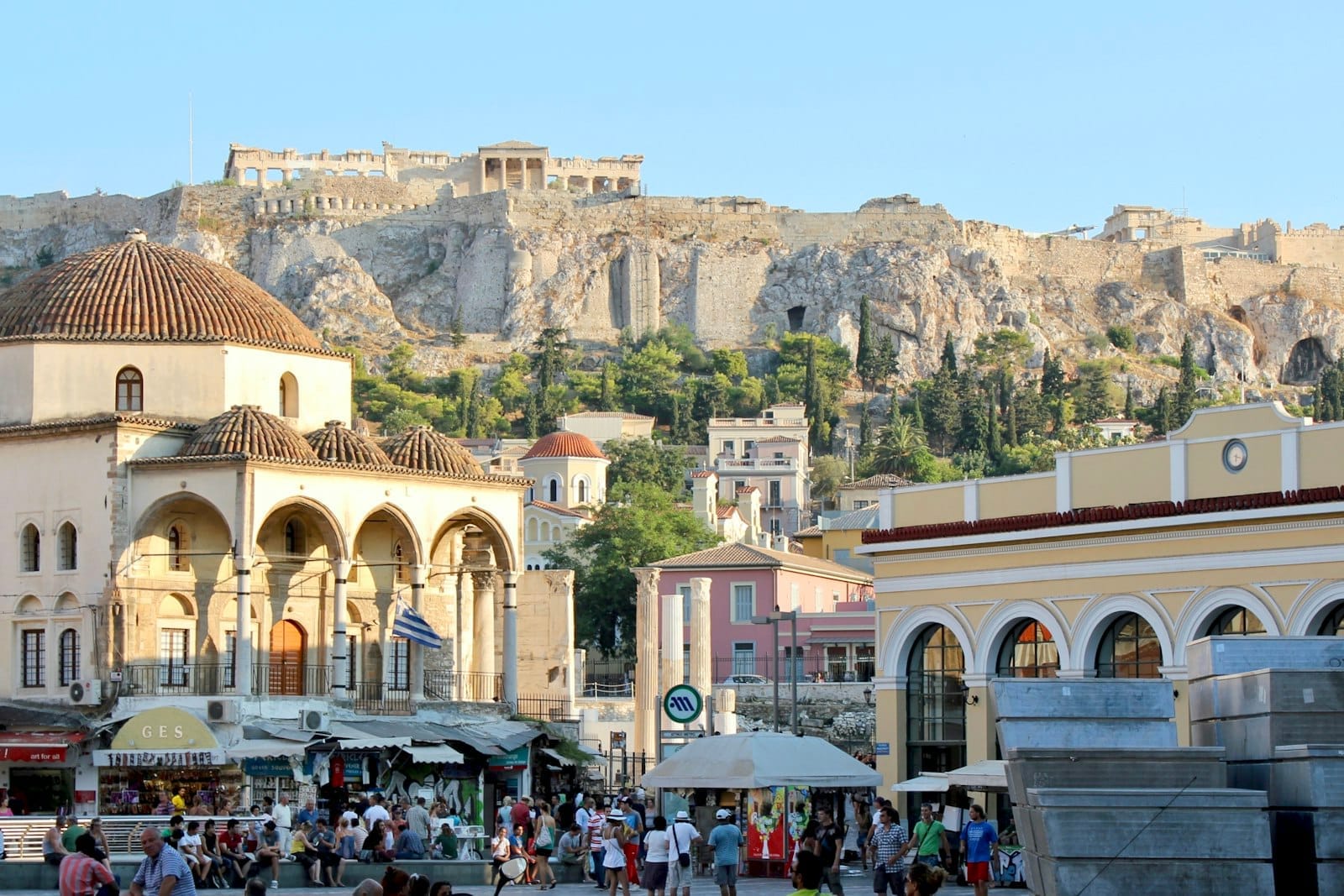
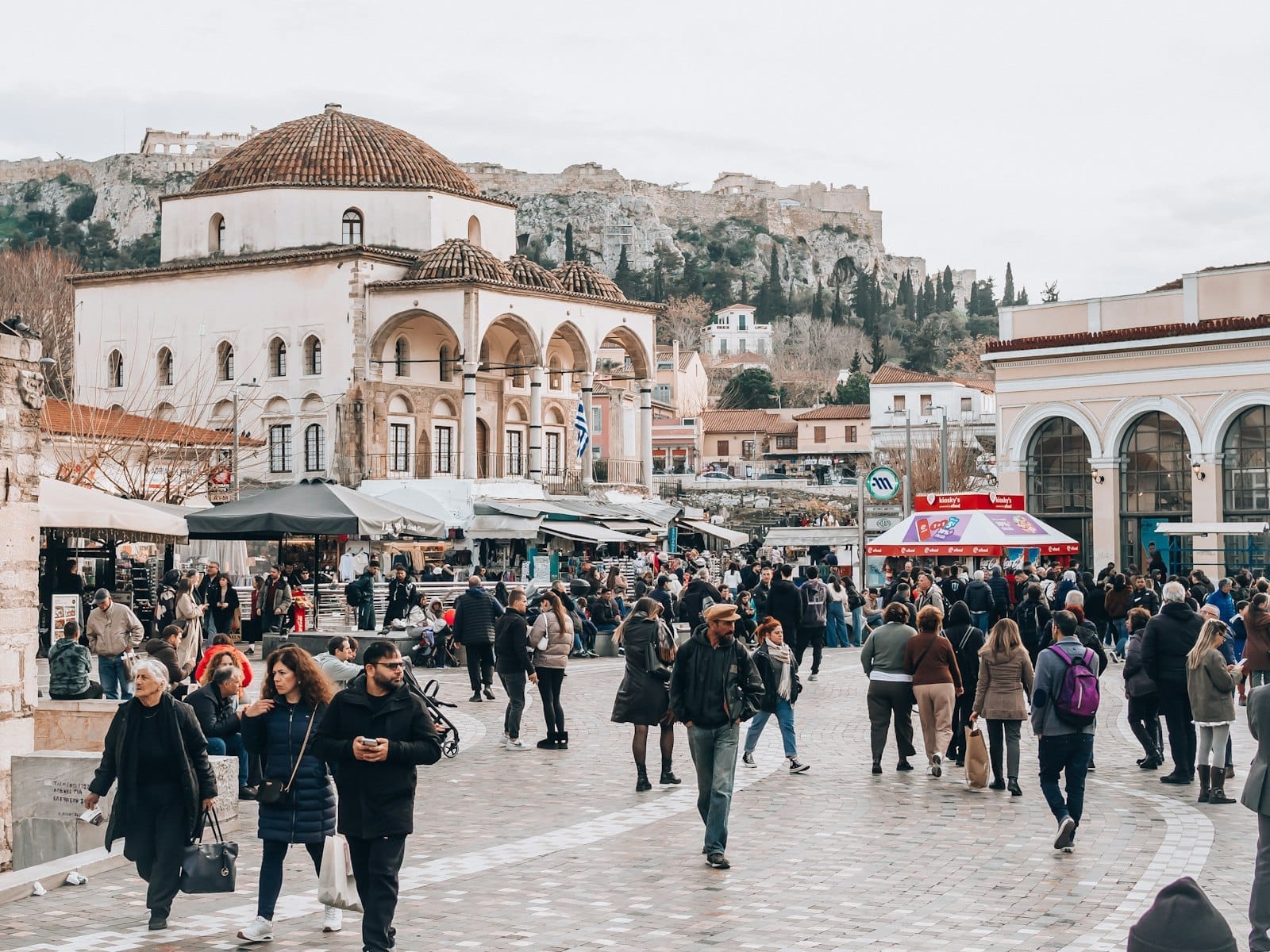
Monastiraki sits at the crossroads of ancient and modern Athens, where Roman ruins share space with souvlaki stalls and a sprawling flea market. It is the city's most visited neighborhood and one of its most accessible, anchored by a metro station serving two lines and surrounded by key archaeological sites. Whether you're arriving for the first time or planning a full day of exploration, Monastiraki is the natural starting point.
Monastiraki is Athens at its most concentrated: a square where metro lines cross beneath ancient ruins, where the smoke from gyros drifts past the columns of Hadrian's Library, and where every street radiates toward something historically significant. It is loud, crowded, and completely impossible to ignore.
Orientation
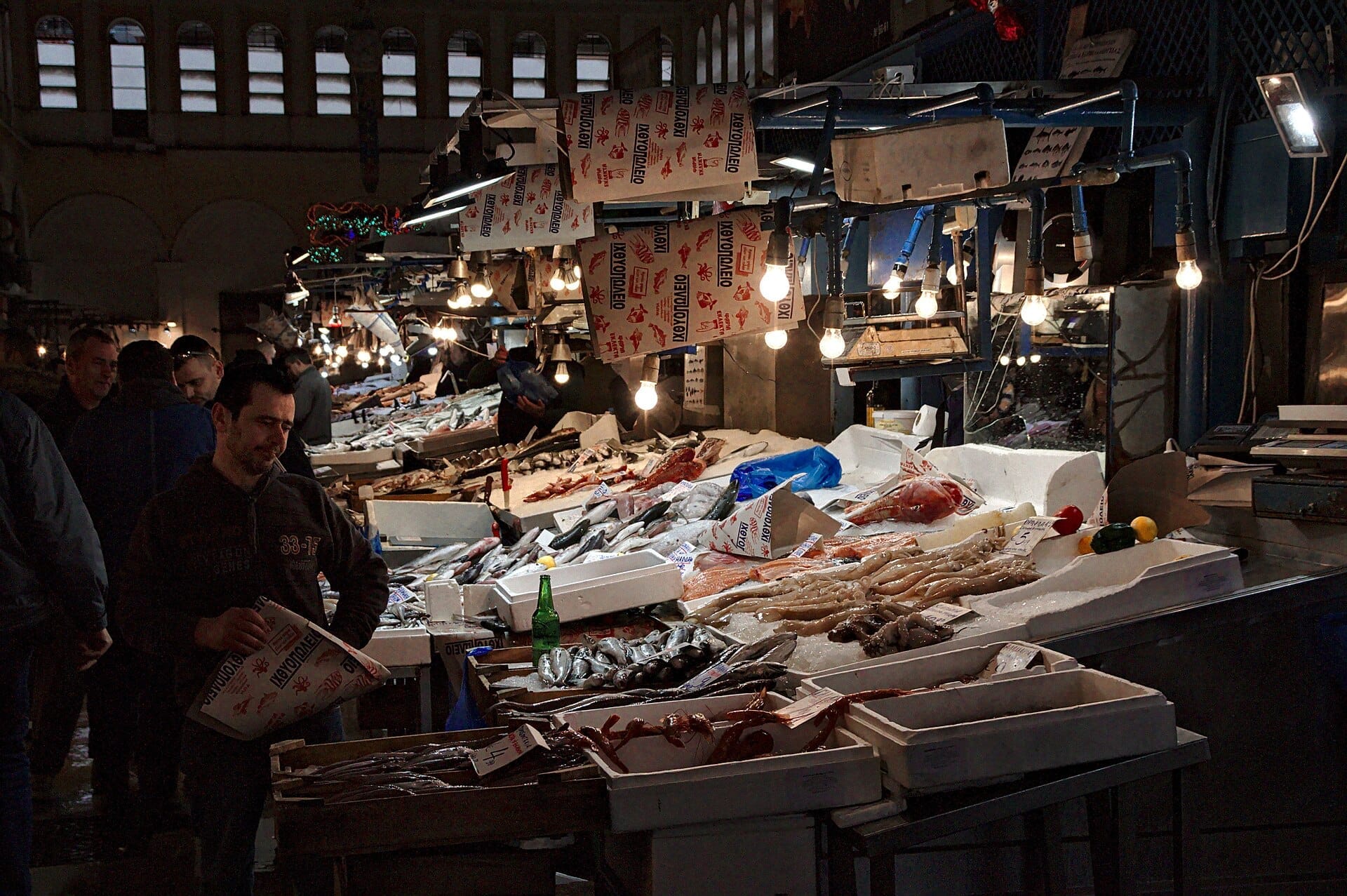
Monastiraki occupies the geographic heart of central Athens, positioned at the base of the Acropolis hill and directly west of Plaka. The neighborhood is anchored by Monastiraki Square, a broad open plaza that functions as one of the city's primary transit and pedestrian intersections. From the square, Ermou Street runs east toward Syntagma Square, while Athinas Street heads north toward the Athens Central Market. To the west, the ground-level train tracks of Line 1 curve past Thissio, and to the south the streets climb toward the Acropolis and into the quieter lanes of Plaka.
The boundaries of Monastiraki are somewhat fluid, but the core area is generally understood to stretch from the Ancient Agora in the west to roughly the edge of Syntagma's commercial district in the east, and from the flea market streets of Ifestou and Avyssinias Square in the north down to the archaeological sites bordering Plaka in the south. It overlaps with Psyrri immediately to the northwest and with Plaka to the southeast, making it a natural connector between Athens' main tourist areas.
Monastiraki metro station sits directly on the square and serves both Line 1 (the green line, running between Piraeus and Kifisia) and Line 3 (the blue line, running from the airport through Syntagma and westward). This makes it one of the most strategically useful stations in the city. Thissio station, one stop west on Line 1, offers another entry point and sits closer to the archaeological park. The entire area is also walkable from Syntagma in about ten minutes on foot along Ermou Street.
Character & Atmosphere
Monastiraki operates at a different pace depending on when you arrive. Early in the morning, before 9am, the square belongs mostly to locals heading to work and delivery drivers stocking the surrounding shops. The coffee spots open early and the light at that hour falls flat and golden across the columns of Hadrian's Library, which stands directly on the north edge of the square. The city feels manageable then, even briefly peaceful.
By mid-morning, the crowds build fast. The Monastiraki Flea Market on Ifestou Street and the surrounding lanes begins to fill with vendors and browsers. The streets narrow north of the square into a dense grid of shops selling leather goods, antiques, vintage clothing, icons, ceramics, and tourist merchandise. On Sundays, the open-air section around Avyssinias Square expands significantly, with dealers spreading out across the pavement. This is when the neighborhood is at its most chaotic and, for the right traveler, its most interesting.
Afternoons in high season bring peak tourist density around the square and the adjacent archaeological sites. The heat radiates off the stone surfaces, and the air smells of grilled meat, sunscreen, and exhaust from the occasional scooter threading through pedestrian zones. The rooftop bars above the square are already filling by 4pm, their terraces offering some of the best unobstructed views of the Acropolis in Athens. As the light shifts into the golden hour, those views become genuinely dramatic.
After dark, Monastiraki transitions again. The flea market closes, but the restaurants, bars, and gyros counters on Mitropoleos Street stay busy well into the early hours. The square itself remains lit and active, with a mix of tourists eating at outdoor tables and Athenians passing through on their way to Psyrri or Thissio. It is not a quiet neighborhood at night, but it is generally safe and well-trafficked. Pick pocketing is the main concern in dense crowd situations, as it is across most of central Athens.
⚠️ What to skip
The area around Monastiraki Square is heavily trafficked and attracts opportunistic pickpockets, particularly around the metro exits, the flea market, and crowded restaurant terraces. Use a secure bag, keep your phone in a front pocket, and be aware of your surroundings in large crowd situations.
What to See & Do
Monastiraki is surrounded by a remarkable concentration of ancient sites. Several of them are accessible directly from the square or within a five-minute walk. This is one of the few places in any European city where you can step off a metro train and find yourself standing in front of 2,000-year-old ruins.
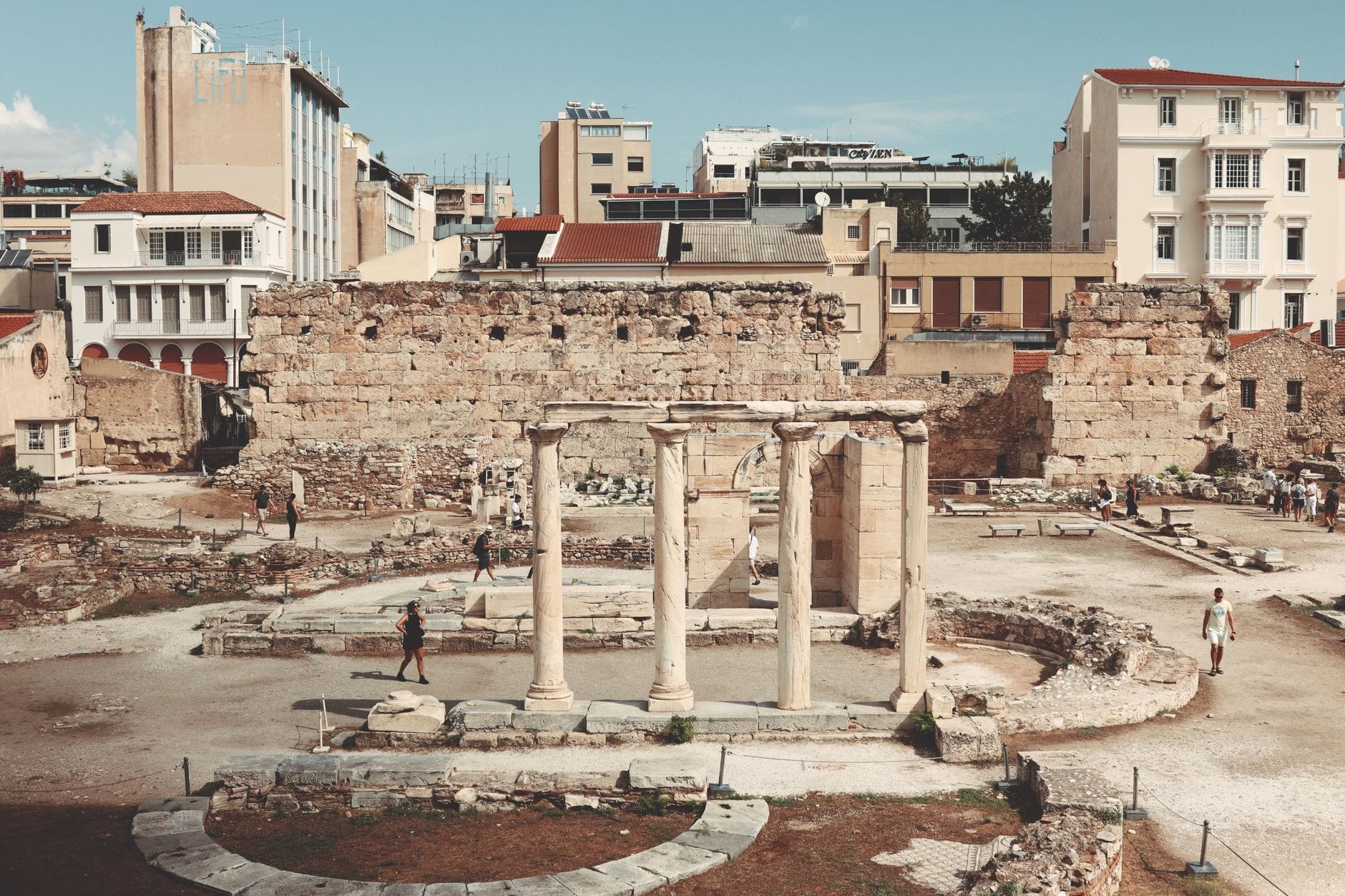
Hadrian's Library: The imposing wall of this Roman-era library complex lines the northern edge of the square. The ruins inside the compound include column bases, mosaics, and the outlines of a massive reading room.
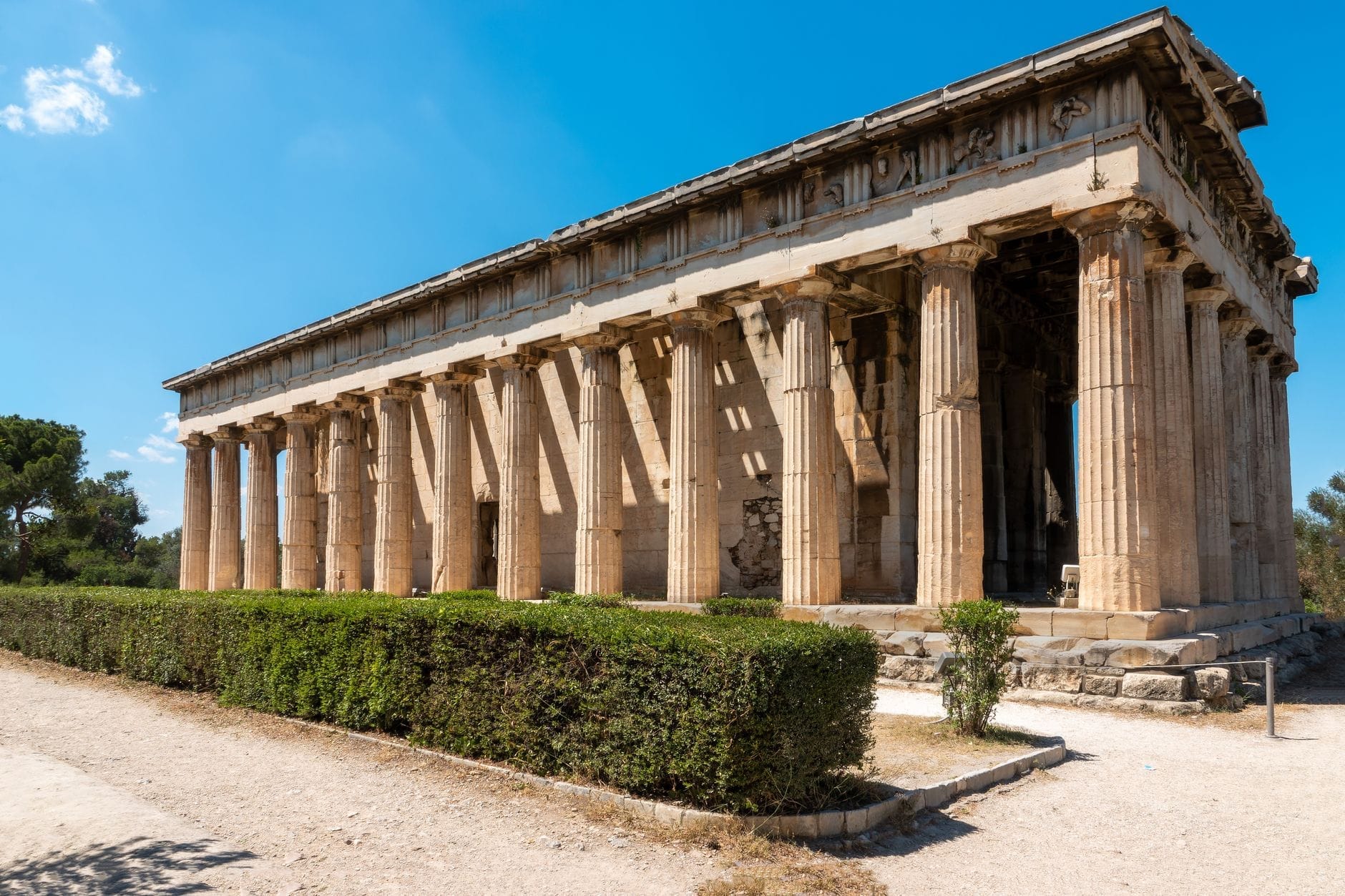
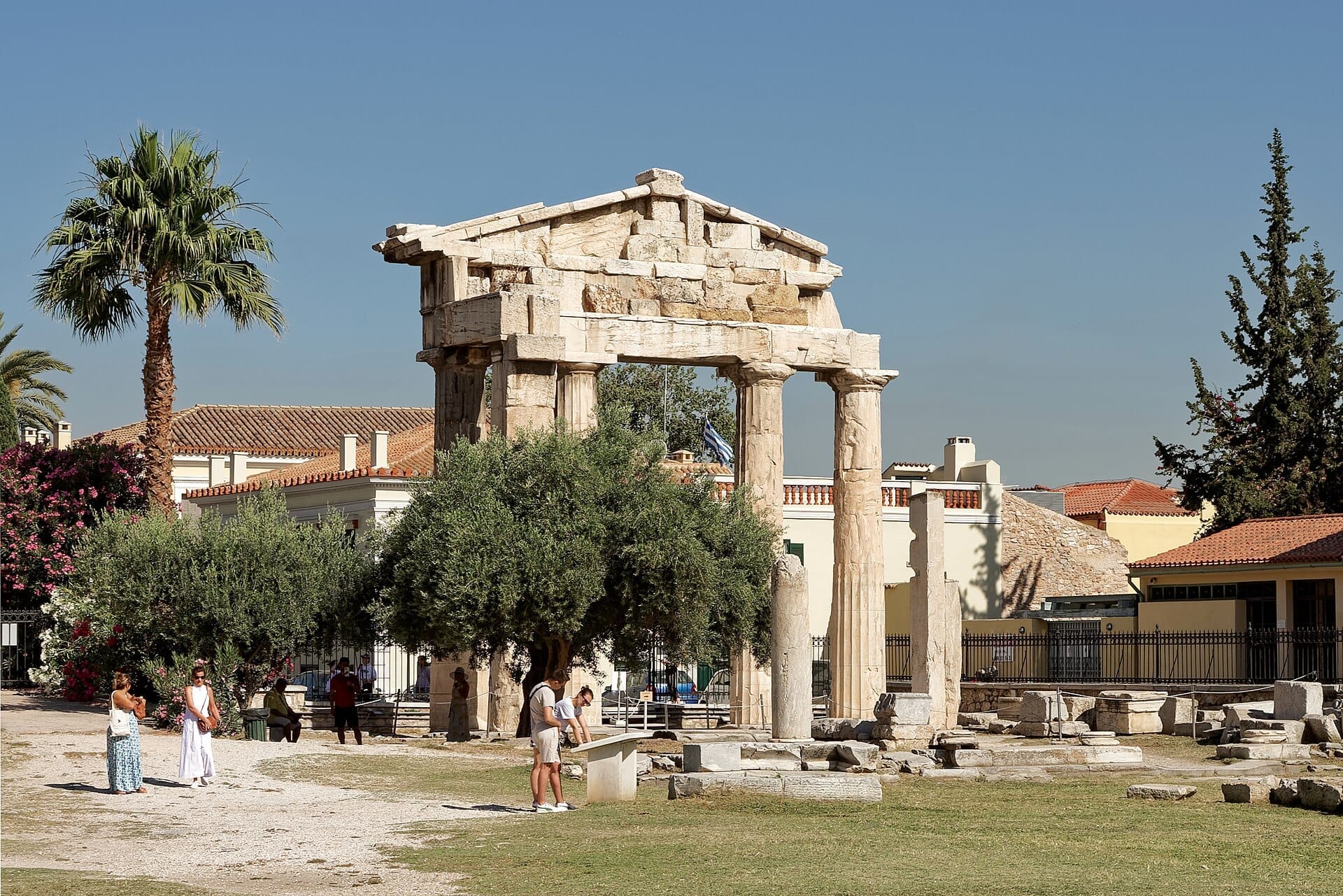
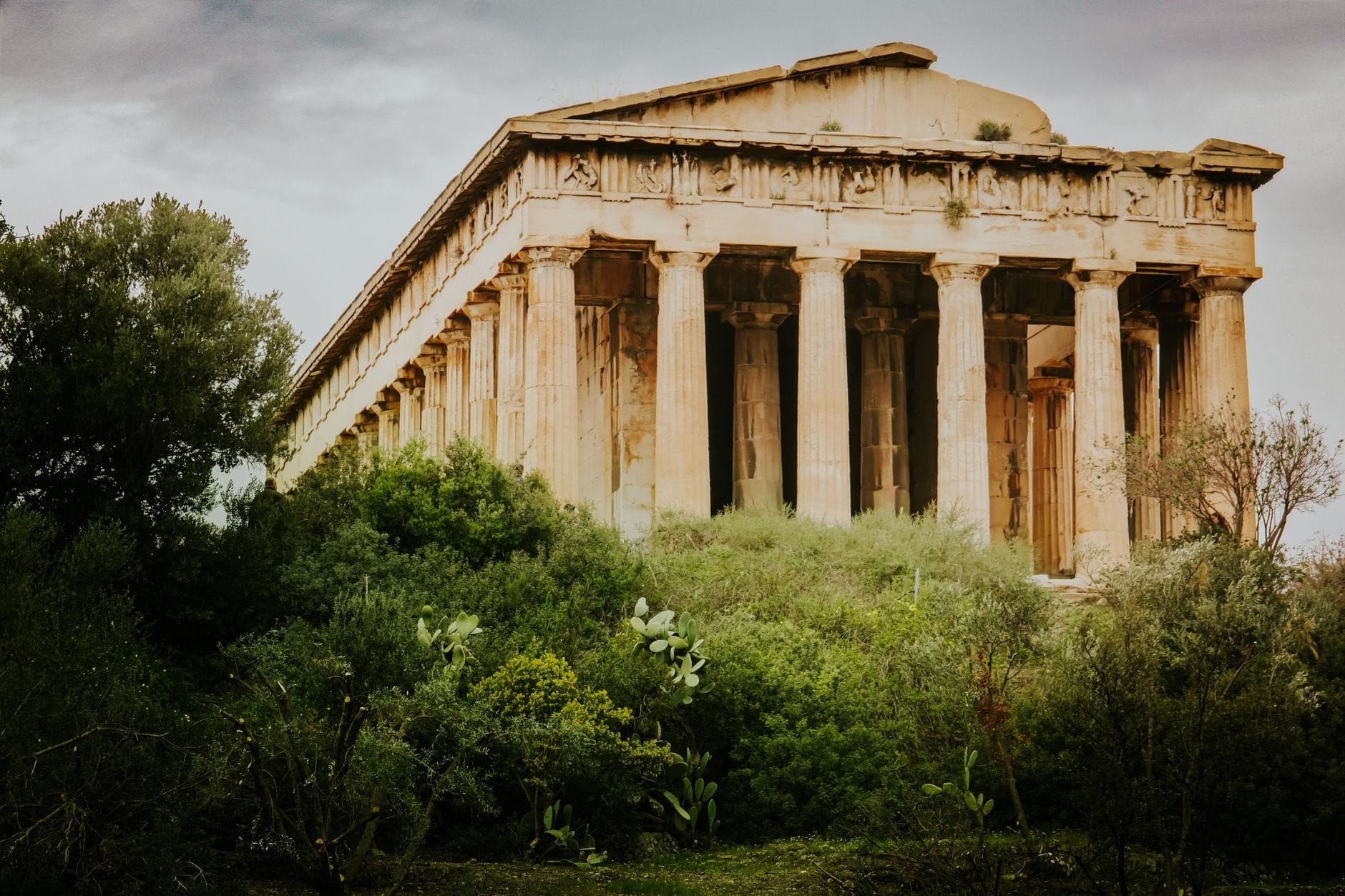
Ancient Agora: A few minutes' walk west of the square, this was the civic heart of classical Athens. The site contains the remarkably intact Temple of Hephaestus and the reconstructed Stoa of Attalos, which now houses an on-site museum.
Roman Agora and Tower of the Winds: East of Hadrian's Library, this smaller site contains the elegant octagonal Tower of the Winds, a first-century BC marble clocktower that is one of the best-preserved ancient structures in the city.
Monastiraki Flea Market: The streets of Ifestou and Pandrossou and the open space of Avyssinias Square form the core of the flea market. Best explored on a Sunday morning when it expands into a proper open-air bazaar.
Rooftop viewing terraces: Several bars and cafes above the square offer direct sightlines to the Acropolis. These spots are especially worth visiting in the late afternoon when the light hits the Parthenon from the west.
The Acropolis itself is not within Monastiraki but is a ten-to-fifteen minute walk south through Plaka or up the Acropolis path from Thissio. The Acropolis Museum is similarly nearby, located on the south slope of the hill in the Makriyanni district. Most visitors use Monastiraki as a base and walk to both sites. If you are following a structured sightseeing route, the Kerameikos Archaeological Site, the ancient cemetery and city gate of classical Athens, is a ten-minute walk northwest, just past the edge of Psyrri.
💡 Local tip
The Ancient Agora and the Roman Agora are separate sites with separate entrance fees. If you are interested in both, allocate at least two hours and bring water. The Ancient Agora in particular is larger than it looks from the entrance.
Eating & Drinking
The food scene in Monastiraki covers an enormous range, from some of the best-value fast food in Athens to rooftop cocktail bars charging premium prices for the view. Mitropoleos Street, running east from the square toward Syntagma, is lined with small souvlaki and gyros counters that are among the most popular in the city. The portions are generous, the prices are low, and the queues during peak hours are real. These are not tourist traps; they are places where Athenians eat too.
For sit-down meals, the streets around the square offer a mix of tavernas with outdoor seating, mezze restaurants, and modern Greek kitchens with more developed menus. The quality varies considerably and the most prominent outdoor terraces directly on the square tend to be less interesting than spots one or two streets away. Walking north into the grid of the flea market area, or east toward the Monastiraki-Psyrri boundary, you will find smaller, less tourist-oriented restaurants.
Coffee culture is strong throughout the neighborhood. Greek coffee, freddos (iced espresso or cappuccino), and filter coffee are available at almost every corner. Cafes open early and fill quickly with both locals and visitors. The rooftop bars above the square shift from coffee service in the morning to cocktails and wine in the afternoon, all with the Acropolis as a backdrop. Prices at these rooftop venues are higher than street level, but the views justify the markup for at least one visit.
ℹ️ Good to know
Athens has a thriving street food culture centered on souvlaki and gyros. A full pita with meat, tomatoes, onions, and tzatziki costs just a few euros at the counters on Mitropoleos Street. This is a practical, delicious, and genuinely local way to eat. Check the Athens food guide for a broader overview of the city's food scene.
Getting There & Around
Monastiraki is served directly by two metro lines at Monastiraki station. Line 1 (green) connects to Piraeus to the southwest and to Omonia, Viktoria, and Kifisia to the north. Line 3 (blue) connects east to Syntagma and then on to the airport at Athens International Eleftherios Venizelos, and west through Keramikos toward Nikaia. If you are arriving directly from the airport, the blue line drops you at Monastiraki station in approximately 45 to 50 minutes (verify current schedules and fares before travel, as these are subject to change).
Thissio station, one stop west on Line 1, is a useful alternative entry point for visitors heading to the Ancient Agora or continuing south toward the Acropolis pedestrian promenade on Apostolou Pavlou Street. The walk between Thissio and Monastiraki stations along the archaeological park perimeter takes about ten minutes and is pleasant. For a broader overview of navigating the city by metro and bus, the getting around Athens guide covers all transit options in detail.
On foot, Monastiraki is well-connected to all the major central neighborhoods. Syntagma Square is a ten-minute walk east along Ermou Street, a pedestrianized shopping thoroughfare. Plaka is reachable in five minutes by walking south from the square. Psyrri is immediately northwest, accessible by walking through the flea market streets or via Agion Anargyron Street. The Acropolis path from Thissio leads south along the hill and is one of the most pleasant walking routes in the city. Taxis and ride-hailing apps operate throughout the area, though getting a vehicle to stop directly on the square during peak hours can be slow due to pedestrian traffic.
Where to Stay
Staying in or immediately around Monastiraki puts you within walking distance of the Acropolis, the major archaeological sites, Plaka, Psyrri, and the metro. For first-time visitors who want maximum access to central Athens without relying heavily on transit, it is one of the most practical locations in the city. The where to stay in Athens guide provides a full breakdown of neighborhoods by traveler type.
The tradeoff for this central location is noise. The square is active until late at night, and the surrounding streets are busy from early morning. Light sleepers should look for accommodation set back from Monastiraki Square itself, ideally on streets that do not front the metro or the main pedestrian arteries. Hotels on the edges of the neighborhood, toward Thissio or the quieter parts of Plaka, offer better sleep without sacrificing walkability.
The accommodation mix in the area includes budget hostels, mid-range boutique hotels, and a smaller number of higher-end properties. Several hotels have rooftop terraces with Acropolis views, which adds significant value to the room rate. If an Acropolis view room is a priority, Monastiraki and the adjacent Plaka and Makriyanni areas are the neighborhoods where this is genuinely achievable without staying somewhere very expensive.
Honest Assessment
Monastiraki is not a relaxed neighborhood. It is dense, loud, and during summer months extremely crowded. The tourist infrastructure is visible everywhere: souvenir shops, overpriced rooftop bars, and tour groups assembling on the square. None of this makes it a bad place to spend time, but travelers expecting a quiet residential neighborhood or an off-the-beaten-path experience will not find it here.
What Monastiraki does offer is unmatched convenience and an atmosphere that is genuinely interesting in spite of the crowds. The ancient sites are extraordinary and accessible. The food at street level is among the best-value eating in Athens. The transport links are excellent. And the energy of the square, especially on a summer evening when the Acropolis is lit up and every outdoor table is occupied, is something that is difficult to replicate elsewhere in the city. For travelers following a 3-day Athens itinerary or a one-day Athens itinerary, Monastiraki is essentially unavoidable, and that is not a criticism.
TL;DR
Monastiraki is one of the most centrally located neighborhoods in Athens, within easy walking distance of the Acropolis, Ancient Agora, Roman Agora, and Hadrian's Library.
Monastiraki metro station serves two lines including the airport blue line, making it the easiest neighborhood to reach from almost anywhere in the city.
The flea market on Ifestou Street and Avyssinias Square is at its best on Sunday mornings; Mitropoleos Street offers some of the city's best-value souvlaki.
Noise is a genuine issue: the square stays busy late into the night, and light sleepers should look for accommodation set back from the main plaza.
Best suited to first-time visitors, travelers prioritizing access to ancient sites, and anyone who wants to walk to most of Athens' major landmarks from a single base.
Three full days is the right amount of time to cover Athens at a comfortable pace, from the Acropolis and its world-class museum to the ancient Agora, Monastiraki, Kolonaki, and beyond. This guide breaks it all down day by day, with booking tips, honest crowd warnings, and the practical details most itineraries skip.
Twenty-four hours in Athens is enough to cover the Acropolis, the Acropolis Museum, the historic neighborhoods of Plaka and Monastiraki, and a spectacular sunset viewpoint. This itinerary is built around realistic walking distances, smart timing, and clear guidance on what to skip when time is short.
Athens holds one of the densest concentrations of ancient history on earth. This guide covers the city's major archaeological sites and museums, from the Acropolis and Ancient Agora to lesser-known gems like Kerameikos, with practical tips on tickets, timing, and what to expect at each.
Athens is one of the best cities in Europe to eat well without spending much. This guide covers the essential dishes, where to find them, realistic prices for 2026, and how to avoid the tourist traps that line the most photographed streets in the city.
Athens rewards those who wander beyond the obvious. From a Cycladic island village clinging to the Acropolis rock to a thermal lake on the coast, these are the experiences that make the city feel like yours. This guide covers the lesser-known sites, quiet hills, and local haunts that most visitors walk straight past.
Summer in Athens means intense heat, peak crowds, and some of the longest days in Europe. This guide breaks down what each month actually looks like, how to handle the heat, and how to get the most out of your visit in June, July, or August.
Athens nightlife runs on its own schedule, with dinners starting at 10pm and clubs peaking between 3 and 5am. This guide covers every major district, the best bars and clubs, what things cost, how to dress, and how to navigate the city after dark like a local.
Athens is one of Europe's most affordable capitals, with free archaeological sites, cheap street food, and an excellent public transport network. This guide breaks down exactly what things cost, when to go for the best deals, and how to stretch every euro without missing anything important.
Athens is generally a safe city for tourists, but petty theft, taxi scams, and a few neighborhood considerations are worth knowing before you arrive. This guide covers the real risks, the overhyped ones, and exactly how to stay out of trouble.
Athens rewards shoppers who know where to look. This guide breaks down the city's best markets, shopping streets, and neighborhoods by type, with practical advice on timing, pricing, and what's actually worth buying versus what to skip.
Athens is one of Europe's most walkable capitals, with millennia of history packed into a compact city center. This guide covers the best guided walking tours, self-guided routes, practical logistics, and clear advice on timing, pricing, and what to avoid.
Athens is far more family-friendly than most travelers expect. From interactive museum programs and funicular rides to free outdoor ceremonies and canal kayaking, this guide covers the best activities for children of all ages, honest pricing breakdowns, and practical logistics for navigating Athens with kids.
Athens holds one of the densest concentrations of world-class museums anywhere in Europe. This guide covers every major collection, from the Acropolis Museum's Parthenon sculptures to the Benaki's sweep of Greek history, with practical advice on what to prioritise and when to go.
Athens rewards visitors year-round, but the experience changes dramatically by season. This guide breaks down every month by weather, crowd levels, and cost so you can plan around what actually matters to you.
Athens rewards those who look up, and out. The city's hills, ancient rock outcrops, rooftop bars, and clifftop temples frame the Parthenon, the Saronic Gulf, and the sprawling Attic basin from every angle. This guide covers the best viewpoints in Athens, from completely free hilltop climbs to spectacular paid experiences.
Athens sits at the center of one of Europe's richest regions for day tripping. Within a few hours you can stand at the Oracle of Delphi, swim off a car-free Saronic island, or walk through a Bronze Age citadel. This guide covers the best day trips from Athens, organized by type and travel time.
Athens is one of Europe's most rewarding cities on a tight budget. From ancient hilltop views and marble stadiums to flea markets and ceremonial guards, this guide covers the best free experiences in the Greek capital, plus the specific days when even major paid sites open their gates for nothing.
Athens has one of the most affordable and well-connected urban transport networks in Southern Europe. This guide covers everything from metro fares and airport express buses to taxi flat rates, tram routes, and the ticketing mistakes that catch most first-time visitors off guard.
Athens rewards visitors who go beyond the obvious. This guide covers the best things to do in Athens Greece, from ancient sites and world-class museums to rooftop bars, coastal escapes, and neighborhood walks, with practical advice on tickets, timing, and what to skip.
Choosing where to stay in Athens shapes your entire trip. This guide breaks down every major neighbourhood by walkability, noise level, price range, and proximity to the sights that matter, so you can book with confidence rather than guesswork.